Some places ask you to slow down before you even step out of the car, and Wildflower Lookout does exactly that. Tucked into the rolling countryside of Ronks, Pennsylvania, this four-acre flower farm turns rows of seasonal blooms into something that feels hand-painted across the hills.
You come for the colors, but you stay for the quiet, the pollinators, the sunset views, and the simple pleasure of wandering without a schedule. If you love places that feel beautiful without feeling overproduced, this Lancaster County farm is worth knowing.
A Four-Acre Farm That Grows Beauty on Purpose
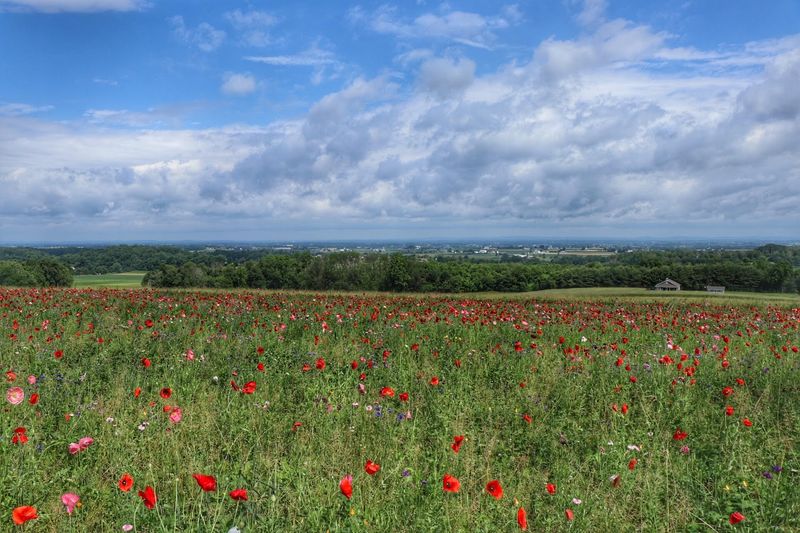
Wildflower Lookout feels special because it is not trying to imitate a polished botanical garden. It is a working four-acre flower farm in Ronks, Pennsylvania, where beauty grows in practical rows, with soil, weather, labor, and patience all showing through.
You can sense that someone planted this view on purpose, then trusted the season to finish the painting.
The farm is family-run, and that gives the place a welcoming, personal rhythm instead of a commercial one. Visitors mention the sweet people behind it, the clean grounds, and the feeling that the fields are cared for without being overly staged.
That balance is what makes the experience feel honest.
You are not just looking at flowers here. You are walking through a living crop that supports bees, butterflies, photographers, families, and anyone needing a quiet hour outside.
The result is simple, colorful, and surprisingly grounding.
The Back-Road Arrival Is Part of the Mood
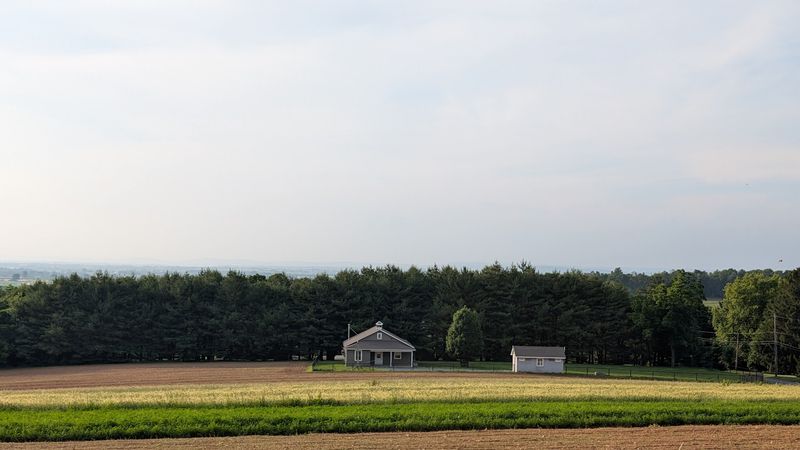
Getting to Wildflower Lookout already feels like a gentle reset. The farm sits at 46 Peach Ln. in Ronks, Pennsylvania, surrounded by the quiet farmland that makes Lancaster County so memorable.
Before you reach the flowers, you pass fields, fences, low hills, and wide pieces of sky that help you leave city noise behind.
The location matters because the farm does not feel dropped into the countryside. It belongs there, rising slightly above the surrounding land and opening into views that stretch across working farms and distant green ridges.
Even if you arrive before peak bloom, the setting still has enough beauty to make the trip feel worthwhile.
I like that the approach is not dramatic in a flashy way. It is slower than that, almost like the landscape is preparing you to pay attention.
By the time you park, your pace has already changed.
Rows So Straight They Feel Almost Imaginary
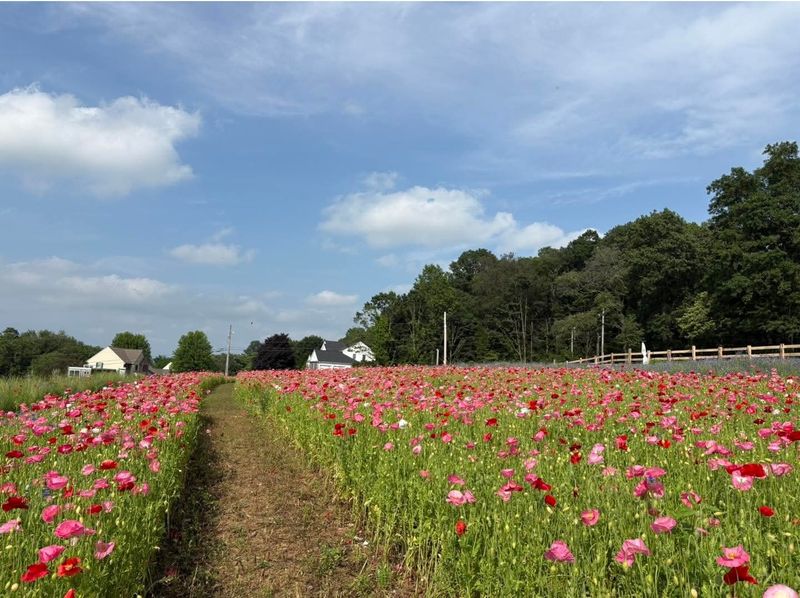
The rows are the reason Wildflower Lookout earns its name. Instead of scattered plantings, the blooms stretch across the field in long bands, creating a striped effect that looks almost too orderly for something as unruly as flowers.
From a slight distance, the colors stack together like fabric, paint, or a quilt laid over the hillside.
Walking between those rows is different from viewing them from above. Up close, you notice bent stems, buzzing insects, uneven soil, and the small imperfections that make the scene feel alive.
Then you step back again, and suddenly the whole field snaps into pattern.
That shift is part of the fun. One moment you are studying a single bloom, and the next you are seeing broad ribbons of yellow, purple, white, pink, or orange.
It is organized, but never stiff, which makes it quietly mesmerizing.
Poppies, Bachelor Buttons, Sunflowers, and Seasonal Surprises
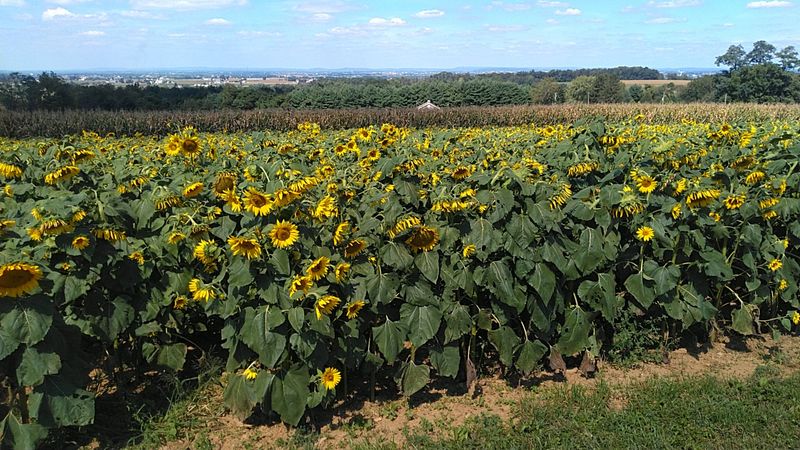
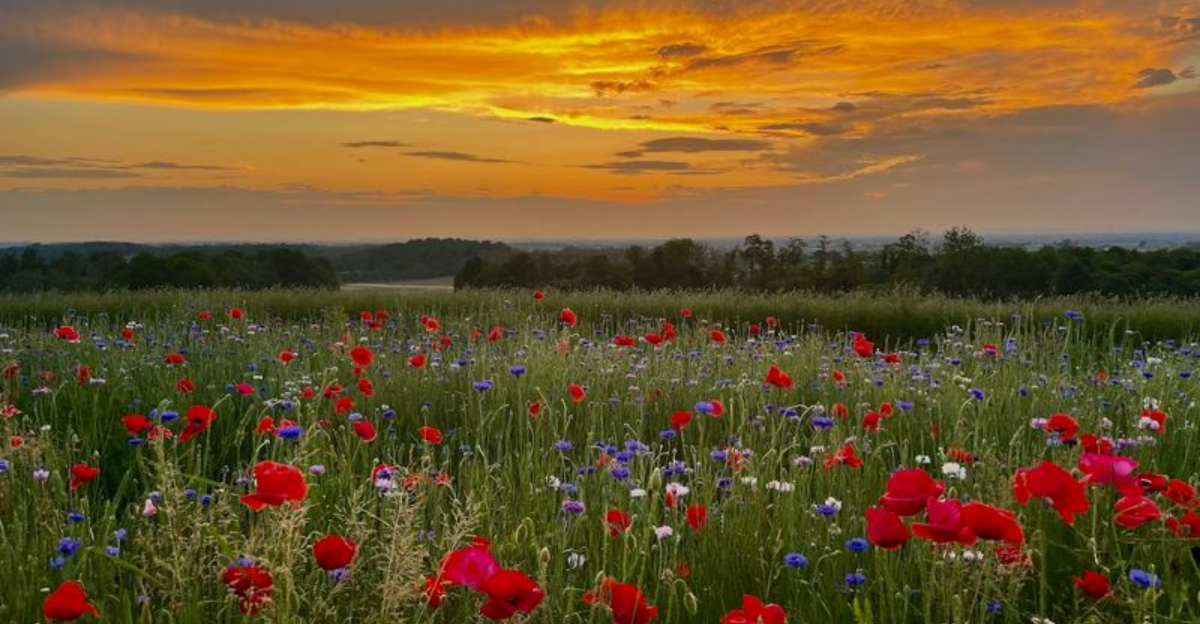
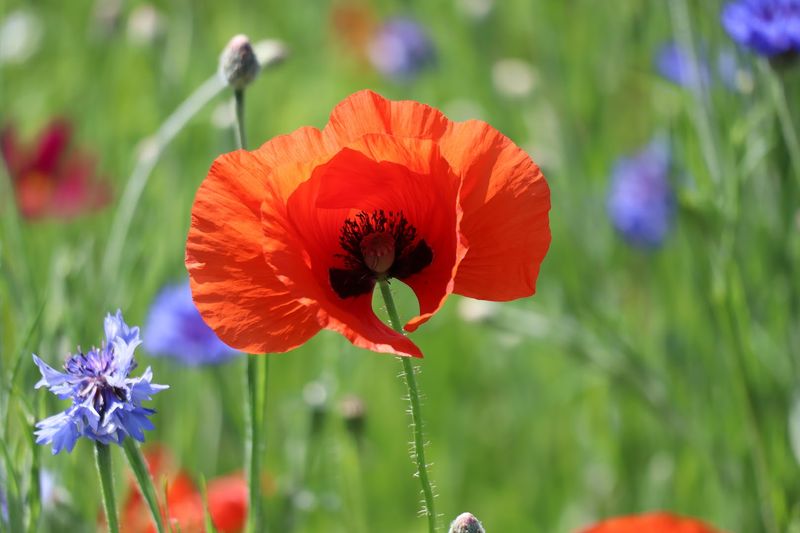
What you see at Wildflower Lookout depends heavily on when you visit, and that is part of its charm. Early in the season, poppies and bachelor buttons are often among the first stars, usually appearing around the beginning of June when conditions cooperate.
Later, the mood changes as other wildflowers and cut flowers take their turn.
Sunflowers are a major draw in late July and August, especially when their bright faces begin opening across the field. Some visitors come specifically for that golden stretch, while others prefer the mixed wildflower rows that feel softer and more varied.
No single visit tells the whole story.
The farm’s season typically runs from mid-to-late May into October, but bloom cycles are never guaranteed. Weather, planting schedules, and natural timing all matter.
Checking the farm’s website or social media before going can save disappointment and help you catch the colors at their best.
The Living Painting Moment at Golden Hour
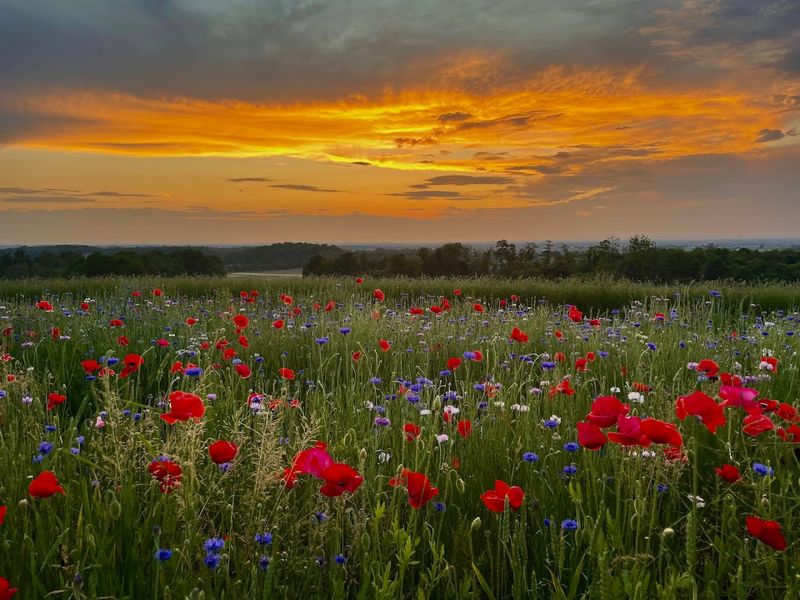
The living painting effect is strongest when the light gets low. At Wildflower Lookout, early morning and late afternoon soften the edges of the rows, deepen the colors, and cast gentle shadows across the field.
Suddenly the flowers stop looking like separate plants and start reading as layered brushstrokes across the land.
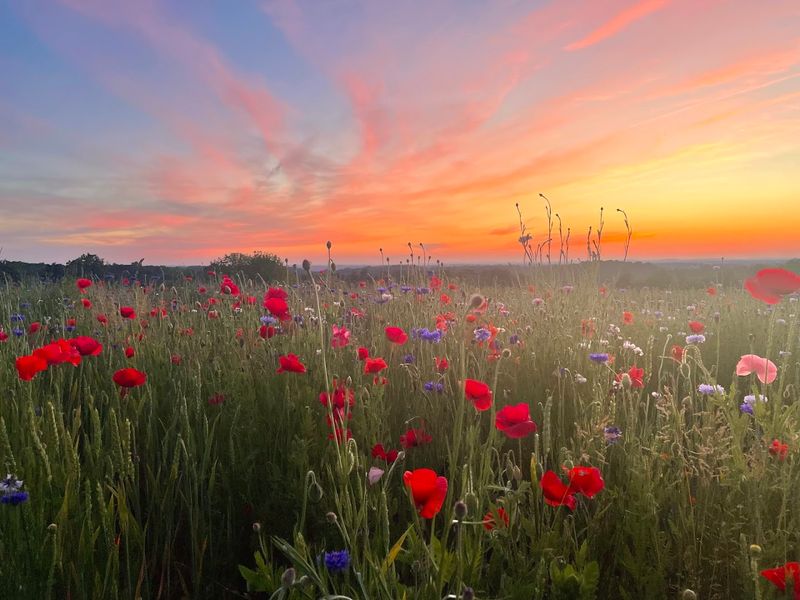
Sunset is especially popular here, and it is easy to understand why. The farm’s raised position gives you open views over Lancaster County, so the sky becomes part of the scene rather than just a backdrop.
Visitors often mention the sunsets as one of the most memorable parts of the experience.
If you are planning photos, golden hour is your friend. If you are not taking photos, it is still the time when the place feels most atmospheric.
Stand still for a minute, and the whole field seems to glow around you.
A Slow Place With Picnic Tables and Open Air
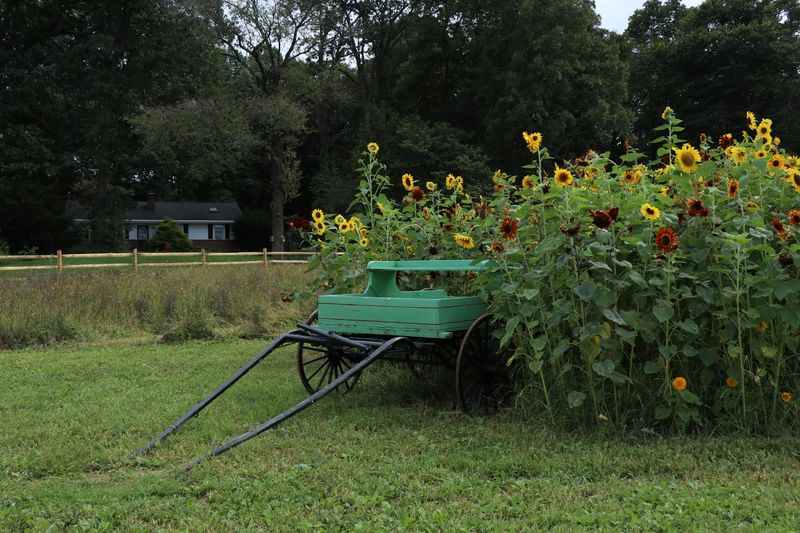
Wildflower Lookout is best enjoyed without rushing. It is not a theme park, and it does not need to be packed with activities to feel rewarding.
The main experience is simple: walk the paths, look closely, sit for a while, and let the countryside do more than your schedule usually allows.
Weekday mornings tend to be quieter, which makes the farm feel even more spacious. There are picnic tables where you can pause, take in the view, or let kids reset before wandering again.
That small invitation to sit matters because the whole place rewards lingering.
You may hear bees before you notice them, or catch flowers moving slightly in the wind. Those tiny details are easy to miss if you arrive expecting entertainment.
Come expecting calm instead, and the farm makes much more sense. It is peaceful in a very practical, unfussy way.
The Pollinators Make the Fields Feel Awake
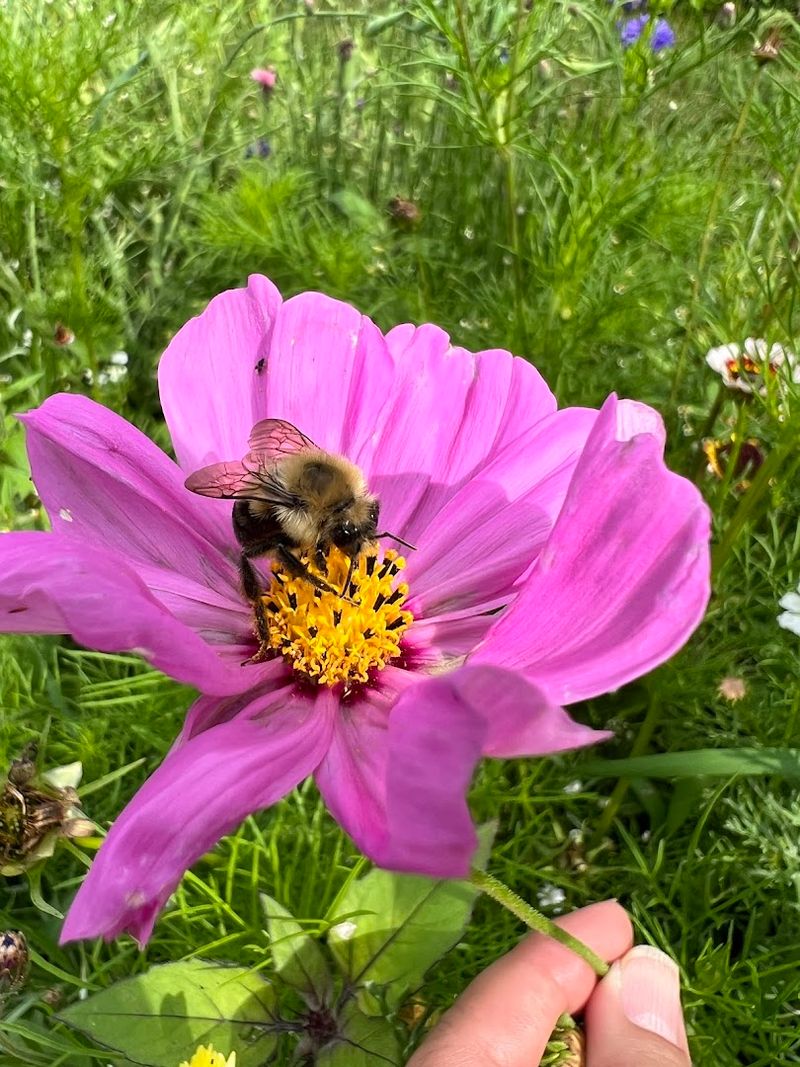
The flowers are beautiful, but the pollinators make Wildflower Lookout feel truly alive. Bees move steadily from bloom to bloom, butterflies drift through the rows, and small insects keep the field in constant motion.
Once you start watching them, the visit becomes more than a pretty walk.
This ecological side gives the farm extra meaning. The blooms are not just arranged for visitors and cameras; they also provide habitat and food for pollinating insects.
That practical purpose adds depth to the beauty, especially if you enjoy noticing how landscapes function.
You do not need to be a gardener to appreciate it. Stand quietly near a row, and you can see the work happening right in front of you.
The hum, flutter, and movement remind you that the field is not a decoration. It is a small, busy world doing exactly what it was planted to do.
Bring a Camera, but Let the Field Do the Work
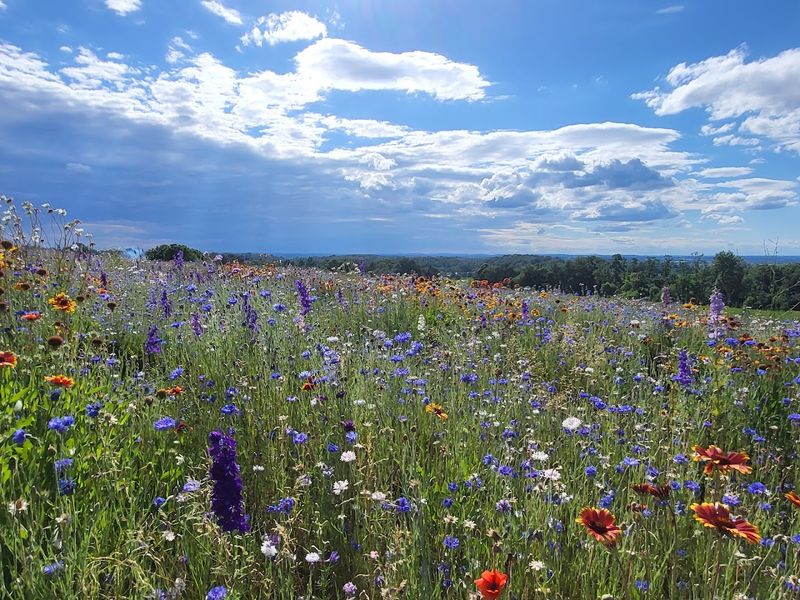
Wildflower Lookout has become a favorite for photographers because the field does so much of the composing for you. The rows create natural leading lines, the open sky gives breathing room, and the surrounding farmland adds depth without clutter.
Even a phone camera can catch something lovely here if you pay attention to light.
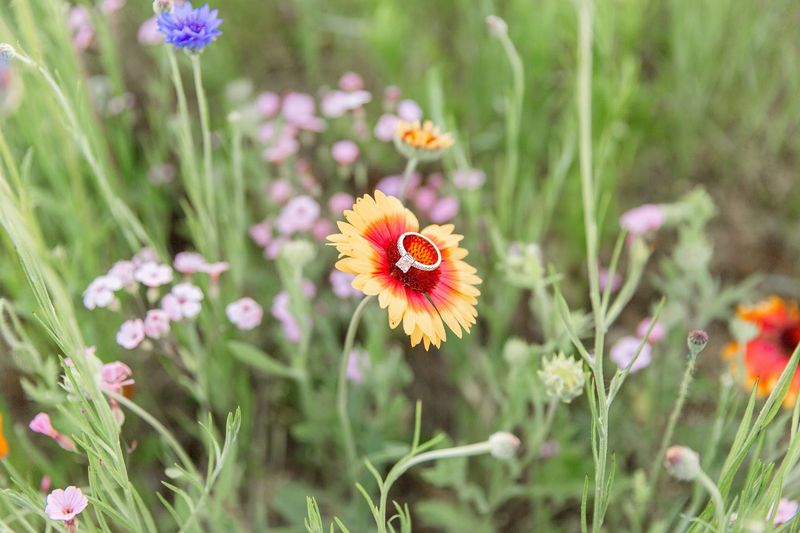
General admission allows visitors to walk and take photos, while private field rentals offer more controlled space for sessions. Reviews mention props, chairs, a changing area, and a bathroom trailer, which can be helpful for portraits, engagements, family pictures, or senior photos.
Still, the best shots often come from simple moments.
Try crouching low between the rows, shooting toward the sunset, or letting one flower blur in the foreground. You do not need to overthink it.
The farm already has color, structure, and mood. Your job is mostly to notice where they meet.
The Admission Box Is Part of the Honor-System Charm
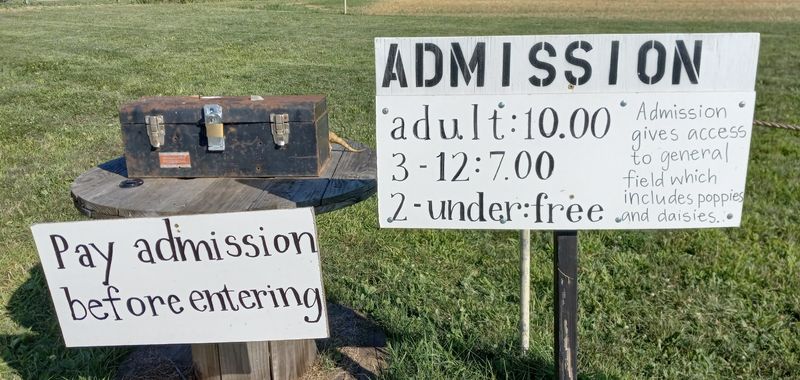
One detail that makes Wildflower Lookout feel different from larger attractions is its simple admission setup. Visitors have mentioned paying with cash or a QR code, with in-season admission commonly noted around ten dollars and off-season visits sometimes listed lower.
It feels informal, but it also reflects the real work behind keeping a flower field open.
That fee can surprise some visitors, especially if they arrive during a weaker bloom period. The best way to avoid that mismatch is to check current bloom updates before you go, then decide whether the timing fits your expectations.
Flowers are seasonal, and a farm cannot perform on demand.
I actually find the honor-system feeling refreshing when expectations are clear. You are helping support planting, maintenance, paths, facilities, and access to a private farm landscape.
Paying, then wandering respectfully, keeps this quiet place available for the next visitor.
Facilities That Make a Flower Field Easier to Enjoy
A wildflower field sounds simple, but a few practical comforts can make the visit much easier. Wildflower Lookout has earned positive comments for having bathroom facilities on site, including mentions of a clean trailer and even air conditioning.
That matters if you are visiting with kids, dressed for photos, or spending time there on a hot August day.
Photographers also appreciate the changing area and small props available around the grounds. These details do not turn the farm into a studio, but they make sessions smoother and more flexible.
You can still feel the rural setting while having just enough support to stay comfortable.
The parking and paths are part of a real farm environment, so practical shoes are a good idea. Expect uneven ground, sun exposure, and the possibility of mud after rain.
If you prepare for those basics, the whole experience feels more relaxed.
Why Bloom Updates Matter More Than Hype
Wildflower Lookout is beautiful, but it is also seasonal, and that truth matters. Some visitors arrive during peak color and feel like they have found a hidden gem.
Others arrive between bloom cycles, after heat, or late in the season and see fewer flowers than expected.
That does not mean the farm is inconsistent in a careless way. It means flowers follow weather, planting schedules, rain, sun, pests, and time.
The farm has posted bloom updates in the past when fields were not ready, and checking those updates is one of the smartest things you can do before driving out.
Think of the visit less like buying a guaranteed show ticket and more like timing a natural event. Early June may bring poppies and bachelor buttons, late July and August often bring sunflowers, and fall may feel softer.
The reward is better when you plan with the season, not against it.
Who Will Love This Lancaster County Lookout Most
Wildflower Lookout is for people who enjoy quiet beauty more than packed itineraries. Families can use it as a gentle outdoor outing, couples can treat it like a scenic date, and solo visitors can wander without feeling awkward.
If you like flowers, photography, sunsets, or Lancaster County landscapes, you will probably find something here that stays with you.
It is especially good for anyone who appreciates places built through real care. The rows may look effortless from a distance, but they represent planting, tending, maintaining paths, welcoming visitors, and adjusting to weather.
That behind-the-scenes work gives the farm a sincerity that polished attractions sometimes lack.
The best visitors are the ones who arrive with flexible expectations. Some days are bursting with color, while others are quieter and more about the view.
Either way, you get open sky, farmland, flowers, and a reason to slow down. That is enough.