

Ready to feel small in the best possible way?
Along the edges of the United States, the ocean has chiseled towers of stone into shapes that look planned, even though they are purely wild.
These sea stacks tell a story of time, pressure, and patience that you can actually stand beside and feel in your bones.
If you have ever wanted proof that nature is the greatest sculptor, this coastal lineup will win you over.
Haystack Rock — Cannon Beach, Oregon
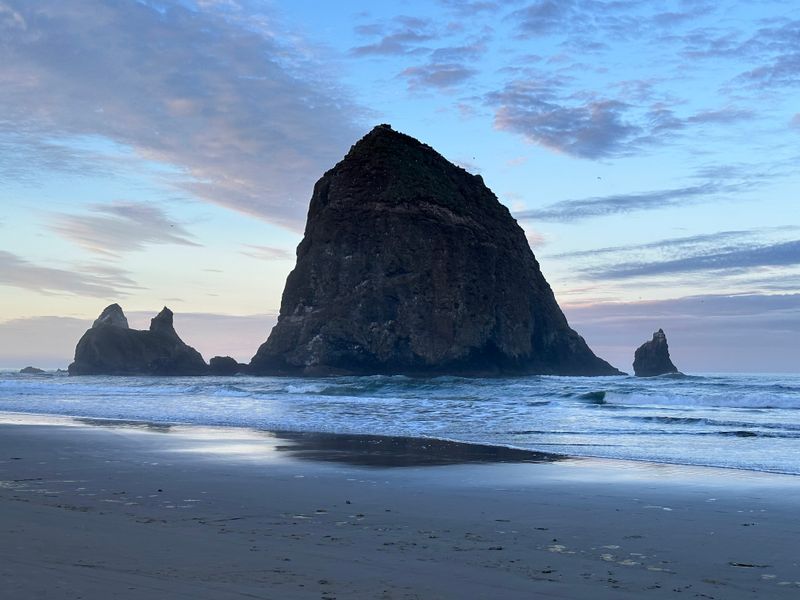
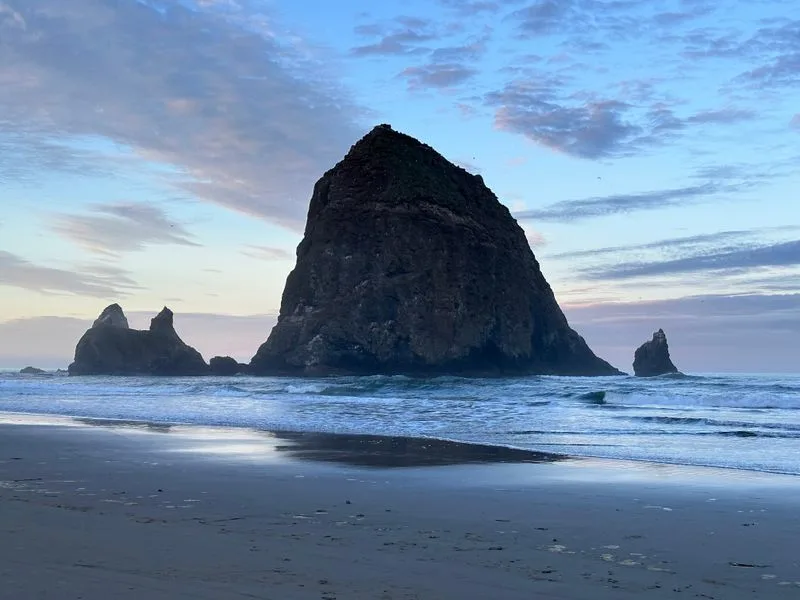
Stand on Cannon Beach at low tide and Haystack Rock commands your entire field of view, a clean basalt monolith that looks purpose-built by a patient artist. You notice straightaway how the ocean has pared away everything unnecessary, leaving a 235-foot silhouette that reads like a lesson in subtraction. Walk closer and tide pools glitter at its base, where anemones, starfish, and scuttling crabs turn geology into a living gallery.
What makes this stack so striking is the way the basalt resists while surrounding materials surrender, a slow contest recorded in every pockmark and ledge. You can almost trace wave directions by the polished faces and scalloped notches that align with Pacific swells. Gulls and puffins stitch the verticals with motion, using tiny ledges that waves once bit into, proof that erosion can create habitat as well as form.
From the beach, the stack’s geometry stays crisp even in fog, a dark chess piece against pearly light. Photographers chase that moment when sunlight slants under clouds and edges the stone with fire, and you will probably do the same. But even without the glow, the silhouette alone says enough, showing how one hard core can outlast headlands and cliffs until only the essential shape remains.
Step back and the broader story comes into view: volcanic flows, tectonic uplift, and millions of hammering waves turning raw basalt into sculpture. You are watching a work in progress, not a finished statue, because every winter storm resets the chisel. Let the hiss of receding foam be your soundtrack, and feel the scale by measuring your footsteps across the damp sand. Here, nature edits with water, wind, and time, and Haystack Rock is the cleanest sentence on the page.
Face Rock — Bandon, Oregon
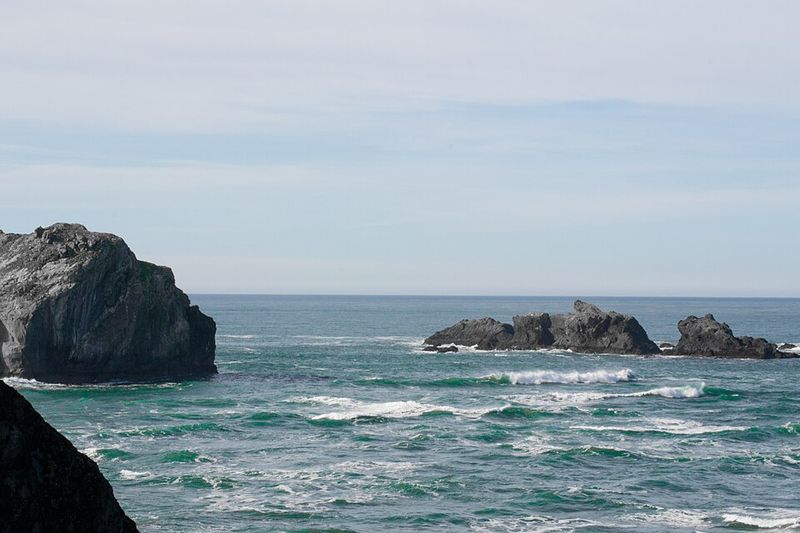
At Bandon, you meet Face Rock the way you meet someone in a crowd, catching the profile first and then the expression. The head tilts skyward, lips softened by centuries of grinding surf, giving you that uncanny sense that stone can breathe. Local legend says a princess turned to rock, but geology tells you selective erosion carved the resemblance one patient wave at a time.
The magic is how the ocean reads fractures like a sculptor reads grain, removing weaker planes and sparing the strong. From the right angle, the brow and chin align so perfectly that you blink, half expecting the face to move. You can trace the old bedding lines and joints that guided the sea’s chisel, proving that chance plus persistence can imitate intention.
Walk the beach at low tide and reflections complete the illusion, the wet sand doubling the visage and stretching it into a dream. Sea foam strands the neck, birds wheel overhead, and you feel invited to keep looking until your eyes learn the trick. Even the surrounding smaller stacks play supporting roles, like fragments chipped from a larger block.
Come in fog for a softer portrait, or at sunset when the rock warms to copper and the features deepen. You are not just sightseeing; you are reading a time-lapse sculpture where every gust and breaker writes another line. The face may be coincidence, but the emotion it stirs is real, an intimate moment between you and a coastline that makes icons without trying. Stand there, breathe with the surf, and let the legend and the layers merge into one unforgettable gaze.
The Needles — Tillamook Head, Oregon
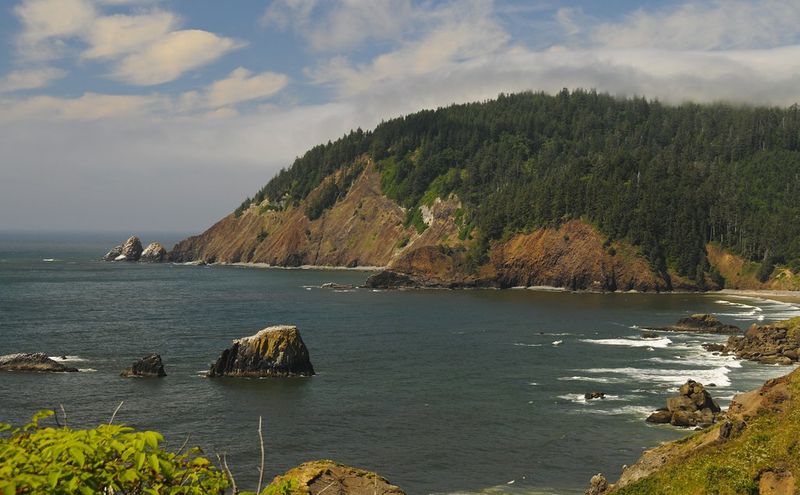
Off Tillamook Head, The Needles rise like broken teeth, sharp basalt spires that make you immediately respect the sea’s long patience. They are the survivors of a once continuous headland, the parts too tough to grind down quickly. When waves hit, spray climbs their faces in ghostly veils, and you can feel the power that carved such severe geometry.
From a viewpoint, the arrangement looks almost architectural, as if the ocean kept only the pillars it needed for drama. Basalt columns suggest cooling patterns from ancient lava flows, now edited by fracture and frost. You watch cormorants stitch the gaps and realize the spires host life precisely because they are difficult to reach.
Their sharpness tells you erosion here is still active, not a relic from calmer days. Winter storms sharpen the edges, not by polishing but by tearing away weak corners and leaving knives of stone. You read the sea like a sculptor’s hand, chisel marks as ledges, hammer blows as missing blocks.
Stand in the wind and you will lean without meaning to, matching the way these spires lean toward open water. That posture comes from relentless push and pull, a balance between collapse and endurance. You are witnessing unfinished work, the beauty of raw cuts and open seams. The Needles do not pretend to be delicate; they show the bones. And somehow that honesty makes them even more compelling.
Ruby Beach Sea Stacks — Olympic National Park, Washington
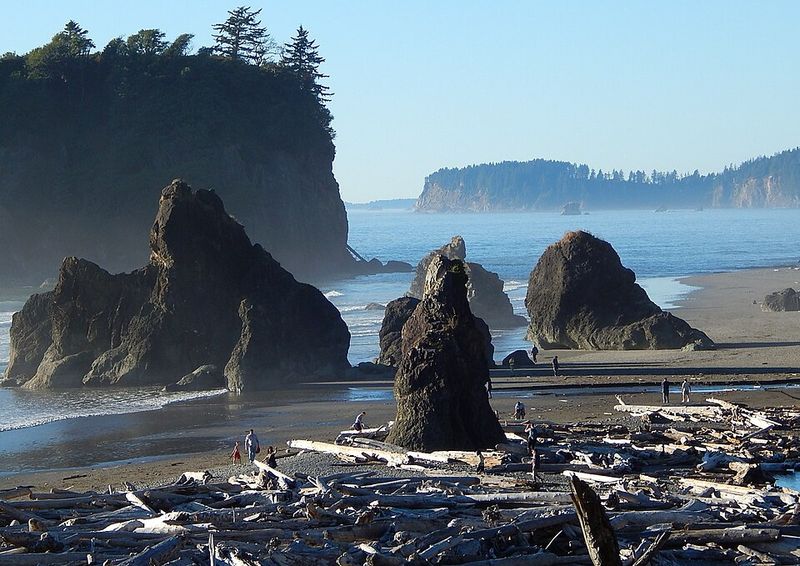
Ruby Beach greets you with driftwood barricades and a sweep of wet sand that mirrors the sky, and then the sea stacks take over the scene. Scattered offshore, they feel solitary yet connected, like punctuation marks writing the story of a violent coast. You sense right away that winter storms do most of the editing here.
These stacks mix basalt with ancient marine sediments, a patchwork the ocean reads line by line. Softer layers recess into fluted channels while tougher ribs stand proud, so each tower wears its geological biography on the outside. When fog settles, the silhouettes layer into grays, creating a depth that makes walking the beach feel like drifting through a charcoal drawing.
At low tide, tide pools appear like jeweled negatives of the stacks, tiny worlds where anemones and sculpins carry on unfazed. The isolation of each pillar underscores the scale of erosion chewing at the broader coastline. You can stand between logs as big as cars and still feel small beside a single black wall of stone.
Listen for the clatter of cobbles as waves retreat, the soundtrack of abrasion that slowly sculpts every ledge. You are watching a process that rewards attention, the kind where noticing a notch today helps you see change next season. Come prepared to linger, because the light changes everything, from steel blue mornings to embers at sunset. Ruby Beach proves that wild weather does not destroy beauty; it reveals it, chiseling clarity out of chaos one storm at a time.
Rialto Beach Sea Stacks — Washington
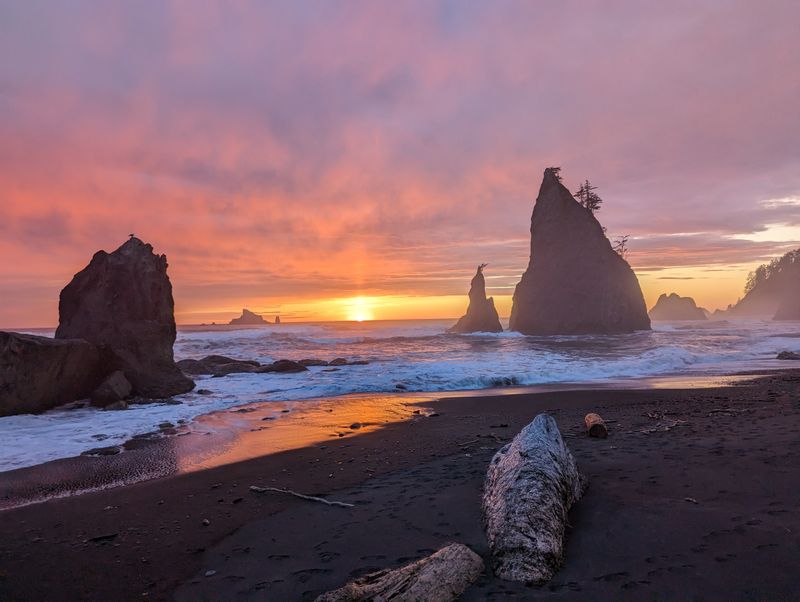
Rialto Beach is a mood before it is a place, all mist and rolling surf that swallows distance until the stacks appear like memories. They are tall and narrow, rising out of fog with a quiet authority that makes you slow down. The sound is constant, a low percussion that feels like the coastline’s heartbeat.
Here, erosion plays favorites. Softer surrounding rock yields fast, retreating like sand from a wave, while these resilient pillars refuse to go quietly. If you trace the edges, you see where fractures direct the ocean’s effort, creating fins, chimneys, and narrow bridges that morph season to season.
Walk north toward Hole-in-the-Wall and the story sharpens, with arches hinting at future stacks once their roofs collapse. The beach itself is a working stage, driftwood tossed into sculptures that echo the verticals offshore. Fog turns the scene to monochrome and then lifts to reveal surprising greens on ledges where hardy plants root.
You will feel the scale when gulls pass in front of a stack and look tiny, just flecks against stone. Wait for a lull between sets and the reflections stretch long on the shining sand, doubling the drama. This is coastal evolution in real time, and you are standing close enough to hear each edit. The stacks are not ruins; they are refusals, reminders that strength sometimes looks slender but survives storm after storm.
Sea Lion Rock — Cape Flattery, Washington
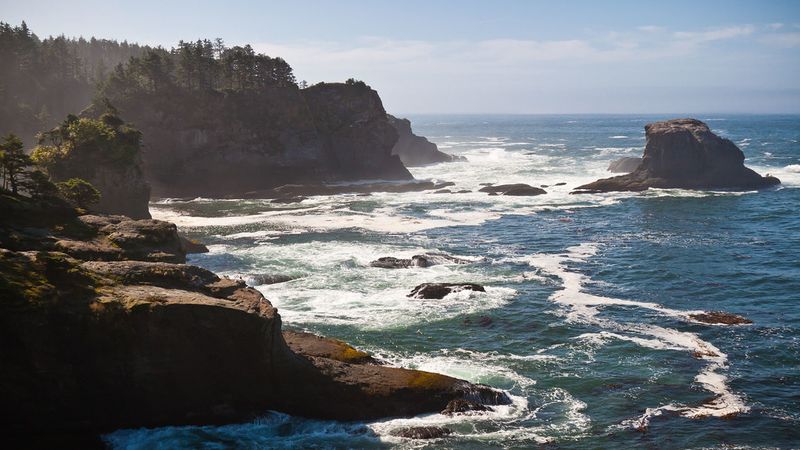
At Cape Flattery, the continent ends in a tangle of cliffs and deep green water, and Sea Lion Rock anchors the view like a sentinel. The swell here is energetic, focused by headlands and submarine contours that turn waves into sculptors with purpose. You feel the exposure immediately, wind carrying salt and the bark of distant pinnipeds.
Sea Lion Rock sits just offshore, a massive block shaped by relentless impact and the prying of sea caves that nibble at its sides. Stand at the lookout platforms and you will see undercut lines that tell where storm surge reaches on wild winter days. Basalt holds form while softer seams recess, carving shelves where birds rest between foraging runs.
The boundary between land and ocean is not a tidy edge here; it is a zone of negotiation measured in spray and echo. Watch as sets wrap around the rock, colliding on the far side in geysers of white that sparkle briefly before raining back as glitter. That energy is why this stack exists at all, a leftover from eroded cliffs that could not take the pounding.
You come for the view but stay because the scene keeps changing, each set drawing different contours on the water. The scale reminds you that the Pacific names the tune and the shoreline dances. In a place that feels like the roof of the Lower 48, Sea Lion Rock is both monument and metronome. Stand there, hold the rail, and let the rhythm teach you how stone learns to stand.
Anacapa Arch Rock — Channel Islands, California
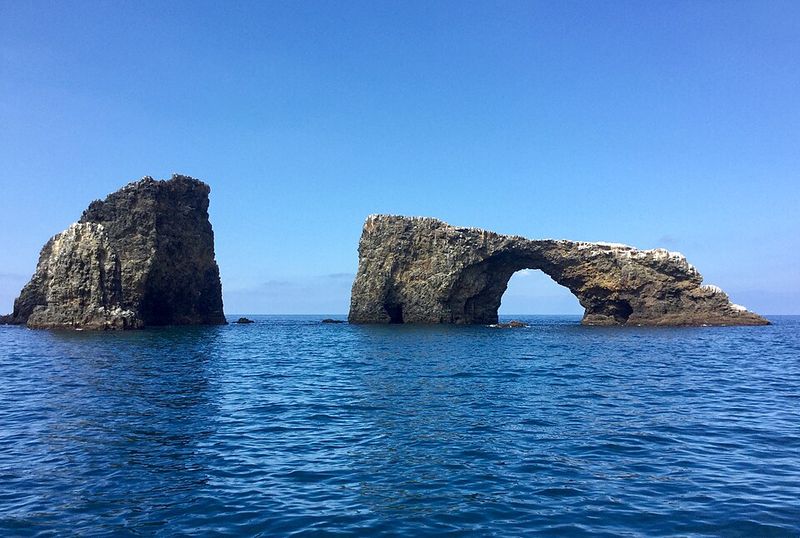
Anacapa’s Arch Rock steals headlines, but look just beyond the span and you find freestanding stacks that tell the next chapter. Arches fail when roofs thin, and what remains are pillars that carry the shape forward. You can stand on a boat deck and feel the timeline: arch, partial collapse, then isolated towers enduring the swell.
The rock here is volcanic, fractured and angular, and the sea knows exactly where to pry. Kelp beds fringe the base, softening the color palette with olive ribbons while cormorants dot the ledges like punctuation. On clear days, the water goes turquoise and the shadows under the arch turn ink-black, defining edges with theater lighting.
Think of this as a lesson in transitional forms. The arch shows stresses distributed across a span, while the stacks reveal what strength remains when that span fails. You can almost hear the creak and groan of storm seasons past, each one finding a weakness and widening it by a finger’s width.
From a photographer’s angle, the composition writes itself, but the science is just as generous. Joint patterns set the script, and wave direction delivers the performance. You are not watching destruction; you are watching refinement, the coast simplifying itself to what can last longest. Take your time following the skyline, and you will see future stacks prewritten in the arch’s ribs, waiting for their turn to stand alone.
Morro Rock — Morro Bay, California
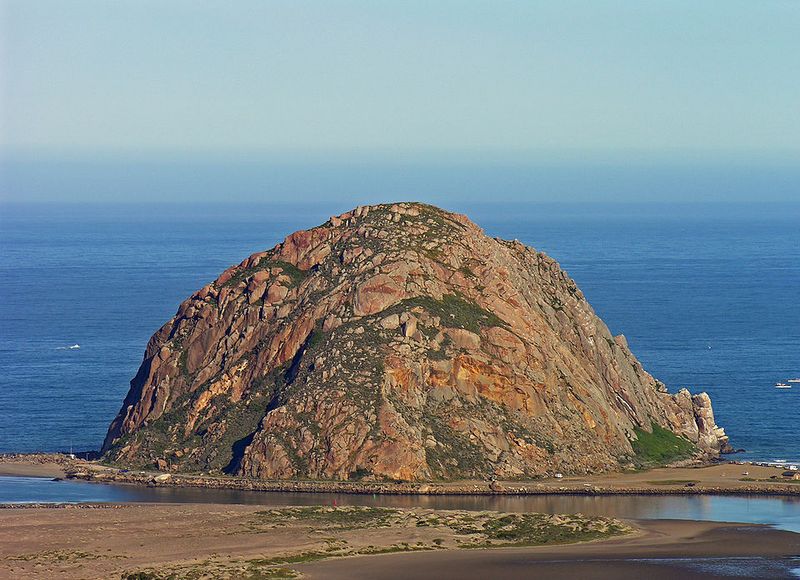
Morro Rock is not delicate. It is a volcanic plug, a hardened throat of magma that the coastline could not erase, towering over the mouth of Morro Bay with unapologetic mass. Where many sea stacks are leftovers of softer cliffs, this one is the core that stayed when everything else wore down.
Walk the waterfront and the scale messes with your sense of distance, boats gliding like toys beneath the cliffed dome. Light scratches texture from smooth to rugged across its face, and pelicans ride thermals along the windward side. The rock’s presence shapes currents and sandbars, sketching patterns that change with season but always point back to that stone anchor.
You are seeing erosion through subtraction at its most literal. The surrounding materials vanished, leaving the resistant heart to stand against salt and wind. Even from far down the strand, the profile holds steady, a landmark you can navigate by without thinking.
Photographers chase fog breaks and sunset belts, but the everyday view is enough to make you stop. Morro Rock proves that nature does not only carve; it also reveals, unwrapping a structure until the essential remains. You feel steadier just looking at it, as if the coast borrowed some confidence from magma turned monument. Come close, listen to the gulls, and let the bay’s quiet water tell you how big silence can be.
Keyhole Rock — Pfeiffer Beach, California
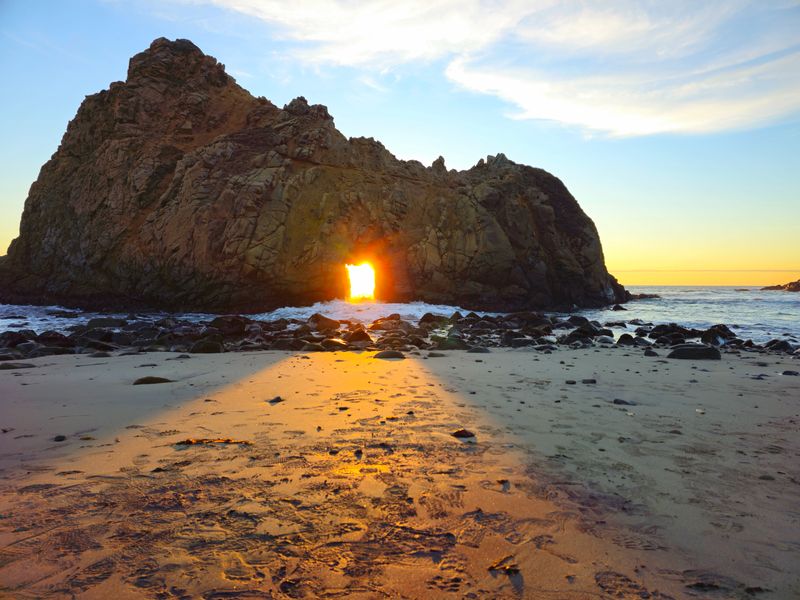
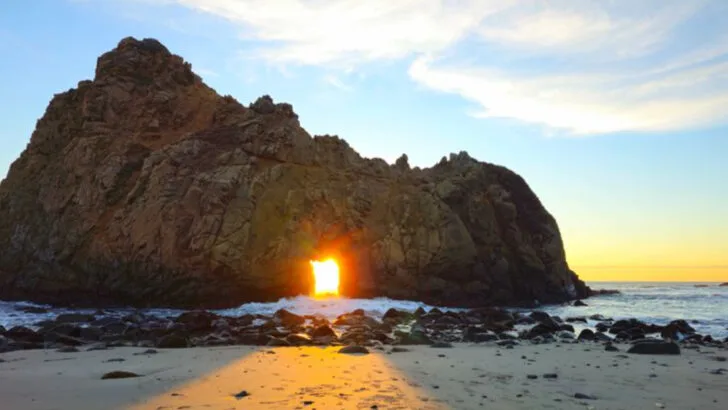
Keyhole Rock feels like a secret being whispered through stone, especially in winter when the sun threads the arch with a blade of light. The sea stack is stout and compact, its weaknesses exploited into a portal that turns the surf into a moving spotlight. You stand there with a crowd and still feel personally addressed.
Wave direction matters here, the Pacific pressing lines of force through joints until a window appears. On some evenings, spray catches the sunbeam and blooms into gold dust, the kind of theater you cannot choreograph. The stack itself hints at future shapes too, with fractures that may split into new fins as seasons work their will.
Pfeiffer’s beach throws in purple sand streaks, iron-stained and photogenic, underscoring that geology is painting while it sculpts. You can frame the arch tight or go wide to include rugged headlands that tell where this fragment came from. Either way, the message holds: the coast loves to make passageways before it makes pillars.
Stand for a few sets and you will learn the rhythm, the pause before a big breaker, the roar, the glittering ebb. You are watching erosion’s rehearsal for a future stack once the roof finally gives and the doorway becomes a gap. For now, the keyhole remains, an invitation to look through stone and feel time compressed into a sunlit minute. Let the tide tug your ankles and carry the lesson home.
Shark Fin Cove Stack — Davenport, California
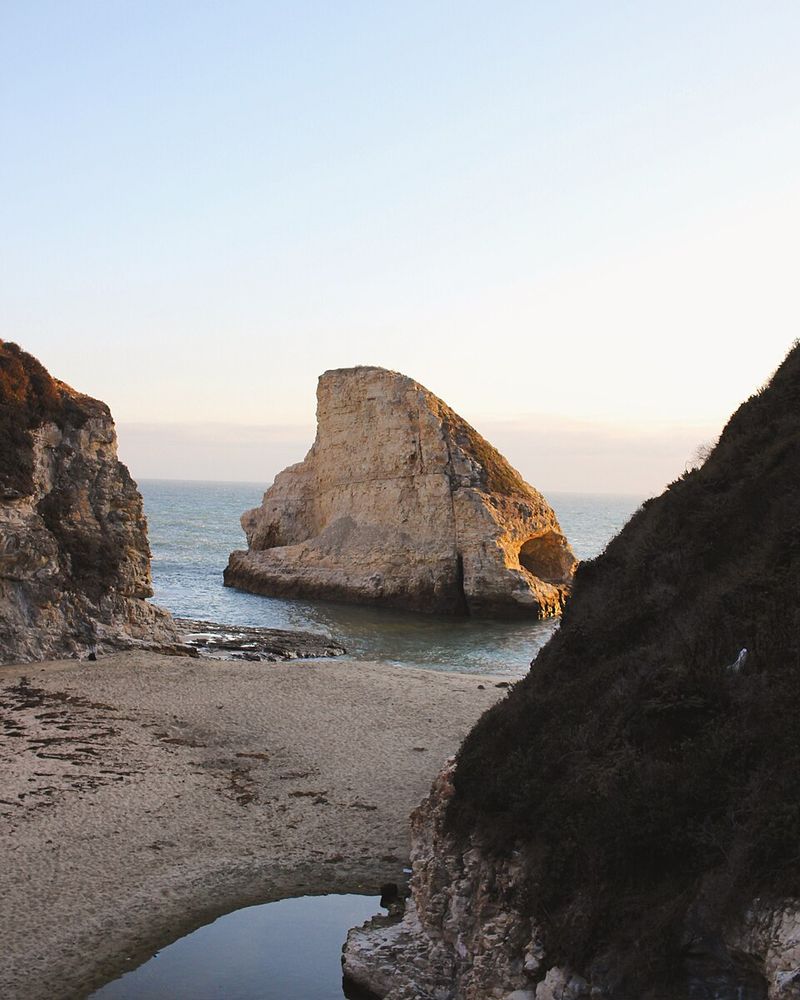
Shark Fin Cove earns its name at a glance. The sea stack is a triangular blade rising from jade water, a pure shape that reads instantly against the horizon. That crisp outline comes from waves running along weaknesses, paring the rock into a fin with a leading edge and a trailing curve.
The cove itself is a theater box, cliffs forming a balcony from which you watch the ocean rehearse its lines. A sea cave yawns nearby, telling you this fin had siblings and will have descendants as the roof collapses in stages. Different swells write different contours on the foam, but the stack keeps its profile like a logo carved in stone.
Light at sunset skims the planes and turns the rock a warm honey, deepening the color contrast with the water. Big winter days remind you the artist here is not gentle, sending sheets of spray higher than seems possible. If you look closely, you can track bedding and joints that guide every cut, a roadmap of future edits.
From the beach, the fin feels close enough to touch, and that intimacy is part of the charm. You are seeing how shape alone can define identity, even when the material and process match a hundred other stacks. Stand a while, time your photos between sets, and listen to the shingle rattle under retreating waves. The coastline loves a strong silhouette, and this one is unforgettable.
Otter Point Sea Stacks — Acadia National Park, Maine
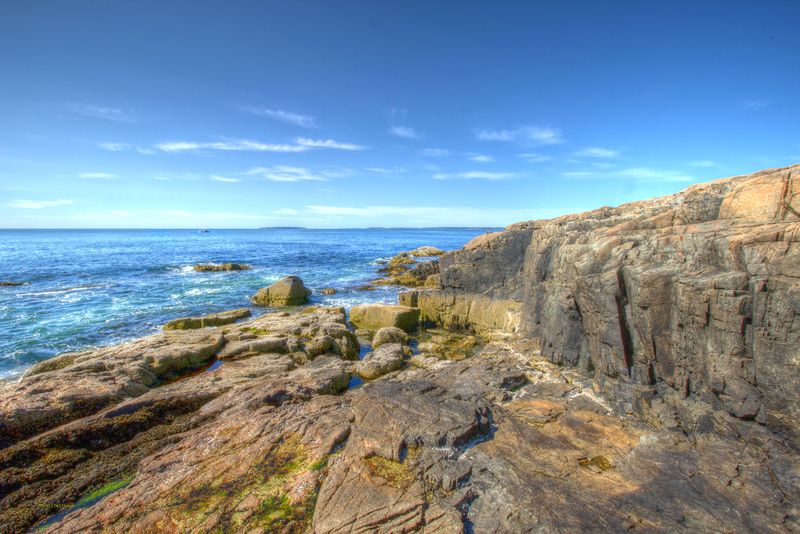
On Maine’s coast, the Otter Point area trades in granite, not basalt, and the difference shows in every crisp edge. These stacks and ledges feel squared and sturdy, shaped by freeze-thaw as much as surf. You walk among tide-splashed blocks while spruce and fir hang above like spectators in a granite amphitheater.
Here, storms have a colder bite. Water seeps into cracks, freezes, expands, and pops grains free, turning joints into planes that the Atlantic can polish or batter. The result is less spire and more buttress, a set of strong forms that look engineered even though they are anything but.
The Atlantic is no slouch, though. Long-period swells slam these stones with a thud you feel in your chest, and sea smoke in winter turns the scene to myth. Barnacles pave the lower reaches, writing a tide line you can read from a distance.
You will notice that color does work here too: pink feldspar lights the stone, black biotite freckles it, and lichen scrawls in green. Stand back on the cliff path and the stacks align with promontories, a lesson in how retreat creates punctuation marks along the coast. You are watching a colder toolkit at work, one that chips rather than melts, and the sculpture looks all the cleaner for it. Bring layers, bring patience, and let the Atlantic tell you how granite learns to stand.
St. Lazaria Sea Stacks — Alaska
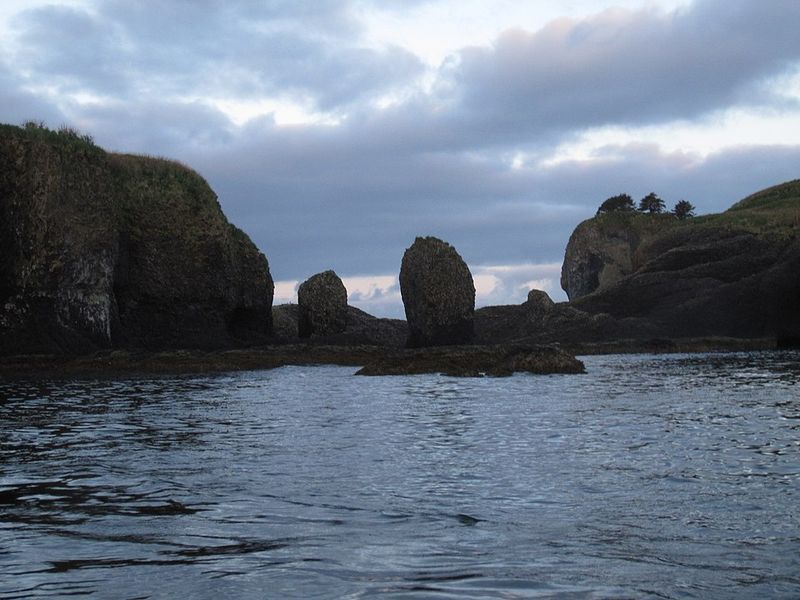
Off Southeast Alaska, St. Lazaria hides small miracles in a stormy neighborhood. The sea stacks here are dark and knuckled, dotted with green where plants seize any pocket of soil. Thousands of birds treat the ledges like bleachers, turning each face into a living cliff.
What you notice first is how quiet the shaping feels, even with rough weather. Erosion keeps working in the background, widening notches, undercutting shelves, and pinching off fins that will someday drift as separate towers. The island’s volcanic bones give the sea clear instructions about where to pry.
Fog often drapes the scene and makes distance slippery, so stacks appear, vanish, and reappear as if breathing. That rhythm suits a place that does not announce itself, it invites patience instead. From a skiff, you can watch swell lines fold around points and collide in rippled patterns that redraw every minute.
You are witnessing millennia of quiet persuasion rather than spectacle, and the results are no less beautiful. The wildlife underscores the long timeline, generations nested on formations that will outlast all of us. St. Lazaria proves that sculpting can be soft-spoken, a whisper that still moves stone. If you come, bring good optics and a willingness to wait; the coast will reveal itself when it is ready.
Mokolii (Chinaman’s Hat) — Oahu, Hawaii
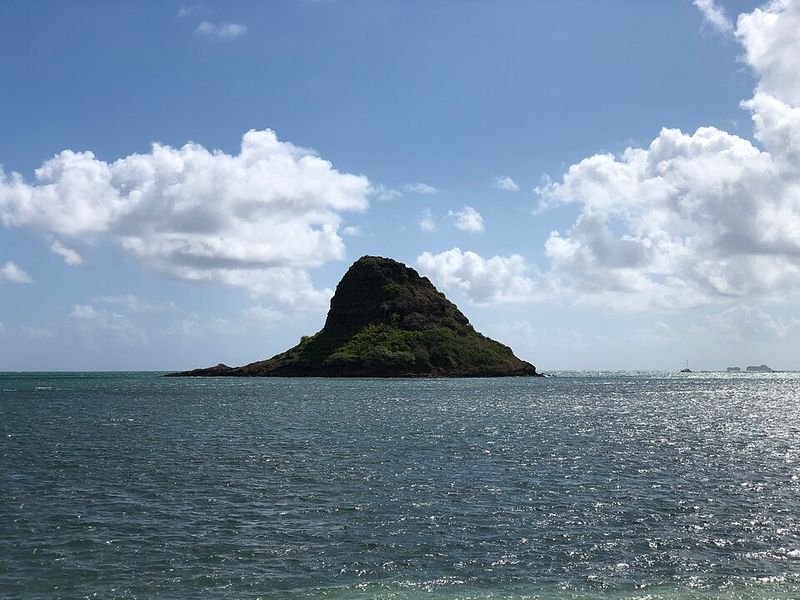
Mokolii pops from Kaneohe Bay like a perfect icon, a small basalt stack with a conical profile that reads instantly against the Koolau backdrop. Volcanic in origin, it is a page from Hawaii’s book where fire lays the groundwork and water edits the details. You can kayak out when conditions are friendly and feel the texture of the rock under your hands.
The island’s shape owes as much to differential weathering as to initial eruption, with harder cores holding while rims wear down. Tides wrap around it in glassy currents, and at low water you can glimpse ledges that mark earlier shorelines. Fringing reefs filter the swell, so the sculpting is steady rather than violent.
From shore, the stack looks perfectly placed, a punctuation mark that finishes the sentence of the bay. Clouds scroll above like subtitles while the water switches from aquamarine to deep blue with angle and sun. The name Chinaman’s Hat sticks because the silhouette is so clean, a reminder that strong shapes survive and become symbols.
Standing there, you feel how Hawaii blends tools, using both eruption and erosion to make its art. You are invited to witness rather than conquer, to move with the tide and read the stone’s soft edges. Mokolii is modest in height but generous in presence, proof that sculpture does not need to be massive to be memorable. Let the trade winds carry the lesson across the water and back to you.
Proposal Rock, Neskowin, Oregon
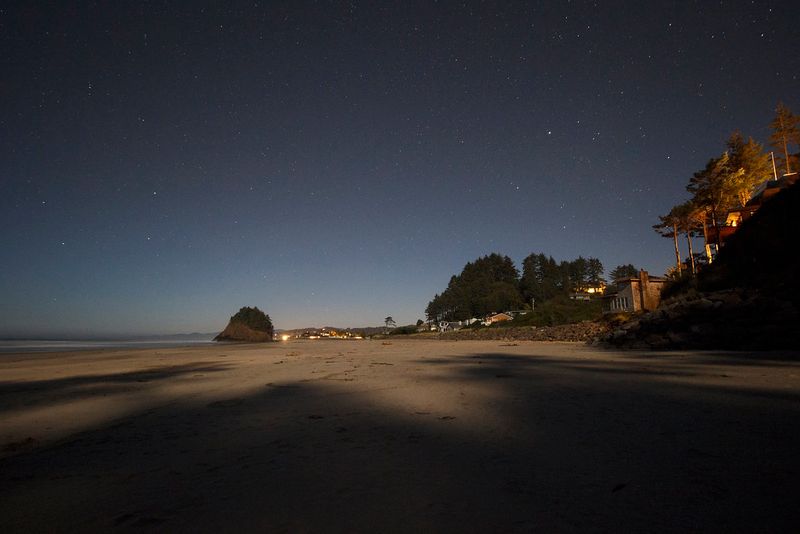
Rising dramatically from the waves off the Oregon coast, Proposal Rock near Neskowin is a striking testament to nature’s sculpting power. This 100-foot-tall sea stack stands as a lone sentinel offshore, separated from the mainland by tidal sands and the restless Pacific.
Its rugged silhouette, shaped over millennia by wind, waves, and relentless erosion, evokes both mystery and romance. Local legend adds a layer of enchantment: the rock is said to have been named after a Native American couple’s engagement, though the truth may be lost to time.
What makes Proposal Rock so captivating is its dual identity as both an artistic masterpiece of geology and a natural landmark woven into human imagination. Its surface bears the marks of countless storms, each wave carving and reshaping the stone, creating jagged edges, crevices, and natural arches that are constantly evolving. From the shore, the rock’s reflection in tide pools and the rhythmic crashing of waves at its base create a scene both serene and dramatic.
Accessible at low tide, the surrounding beach offers an intimate vantage point, allowing visitors to witness firsthand how the ocean’s slow, patient work can transform stone into something almost mythical.
Proposal Rock is a reminder that the world’s most extraordinary sculptures often take millions of years—and require no chisel, only the persistent hand of nature.