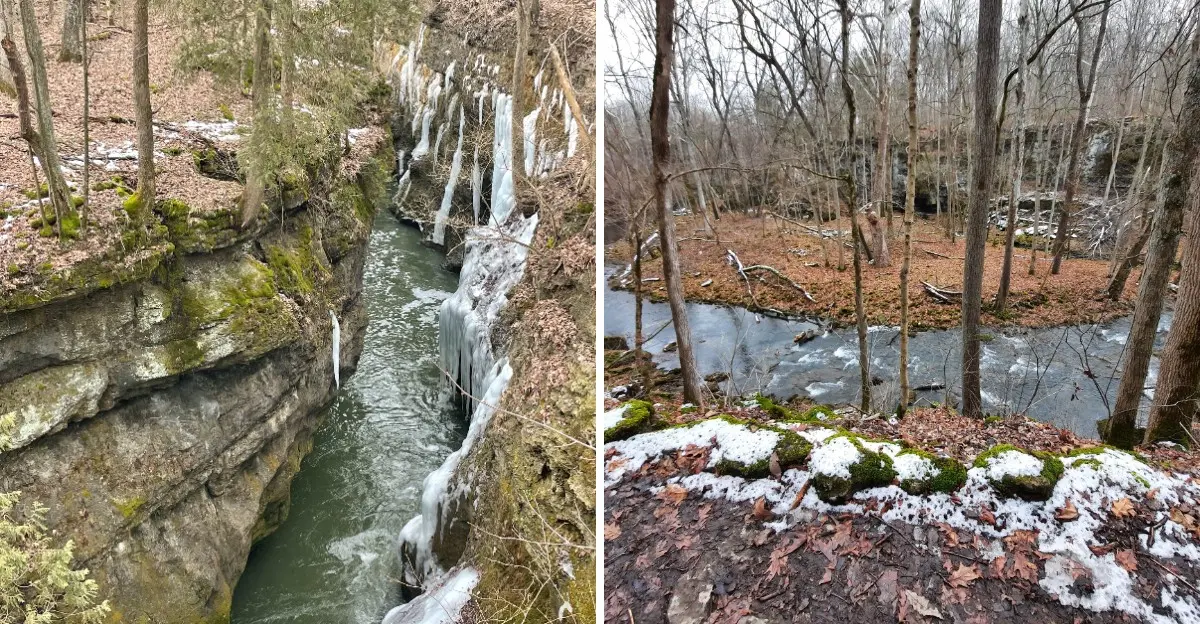
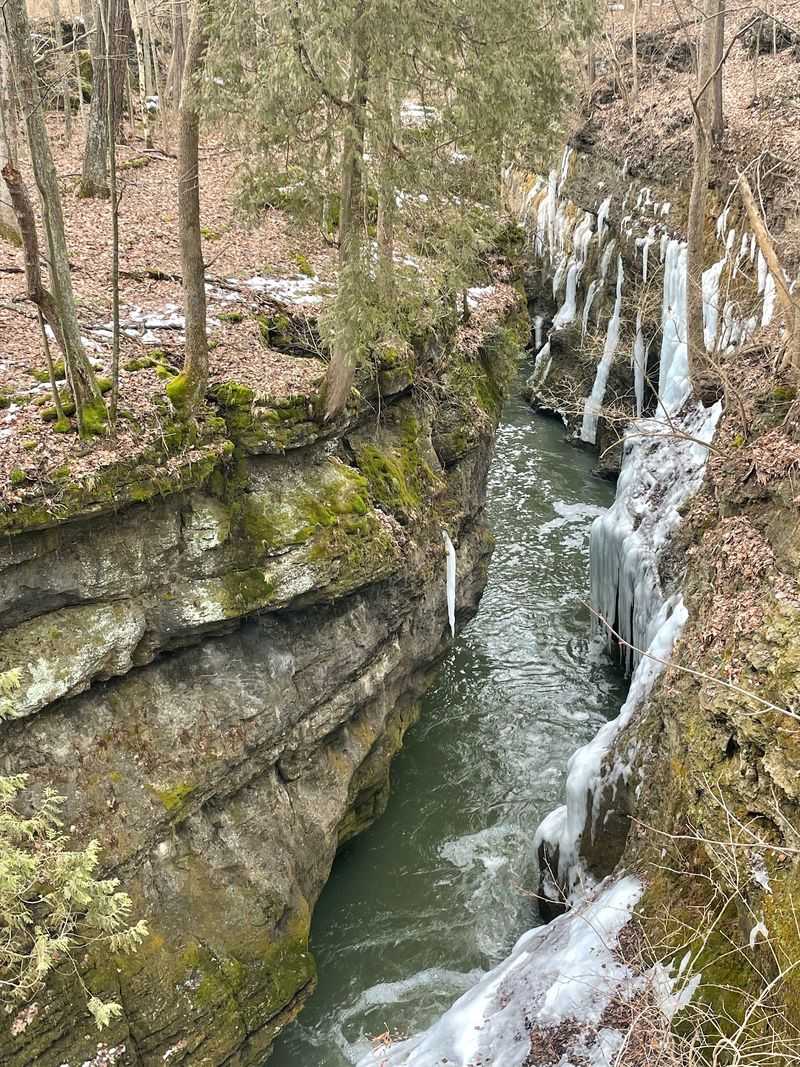
At one spot, a whole river squeezes through a rock channel about six feet wide. Add snow, and that narrow slot of rushing water looks almost unreal.
The rock walls here date back roughly 400 million years. Glacial meltwater carved the canyon thousands of years ago, and it still shows every cut and crack.
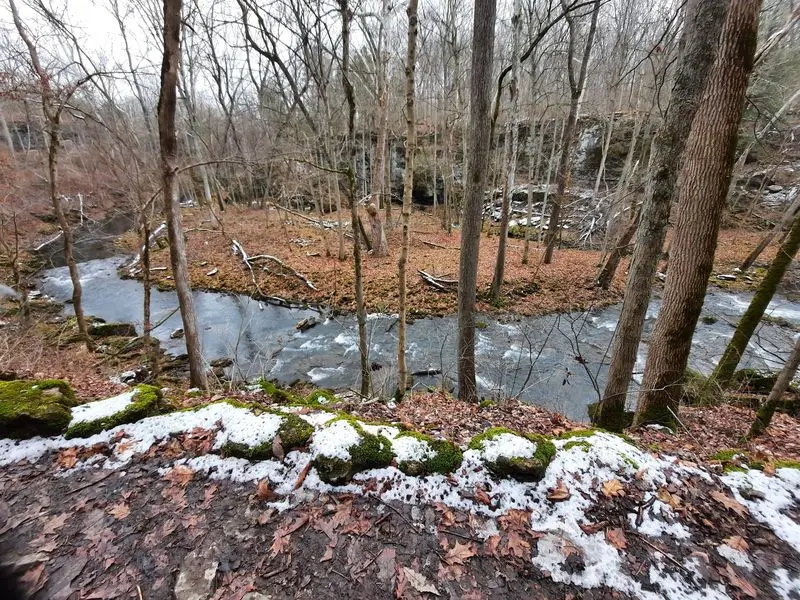
I like how winter strips the trees bare and opens up the views. The cliffs, slump blocks, and dark water suddenly stand out against all that white.
I can’t imagine a better cold-weather walk in Ohio for anyone who loves quiet trails. The paths stay open all year, from just before sunrise until just after sunset.
So why save this canyon for summer when snow makes it feel like a secret?
The River Squeezes Into a Six-Foot Slot, and Winter Makes It Dramatic
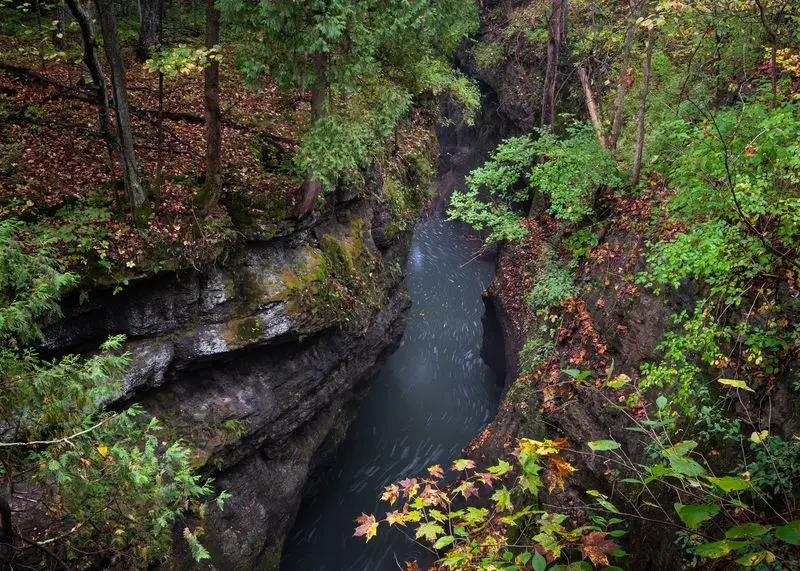
Six feet. That’s how narrow the gorge gets at one point at Clifton Gorge State Nature Preserve.
The Little Miami River funnels through that tight channel with real force.
Geologists think the deep, narrow passage formed as potholes grew larger in the tough dolomite bedrock. Over time, those holes joined together and the river claimed them.
Winter is a smart time to see it. With the leaves gone, your view down into the gorge opens up in a big way.
Snow on the ledges adds contrast to the dark water. The river keeps moving while everything around it goes still and white.
The preserve protects a two-mile stretch of the Little Miami State and National Scenic River. That stretch earned National Natural Landmark status, so this isn’t just a pretty creek.
Bring a camera, but keep your feet planted when you take photos. Rocks near the edge can get slick in cold weather.
Stay behind railings and on marked paths at all times. The view is best enjoyed from somewhere stable, not from the lip of a snowy cliff.
Three Miles of Trail Give You Choices on a Snowy Day
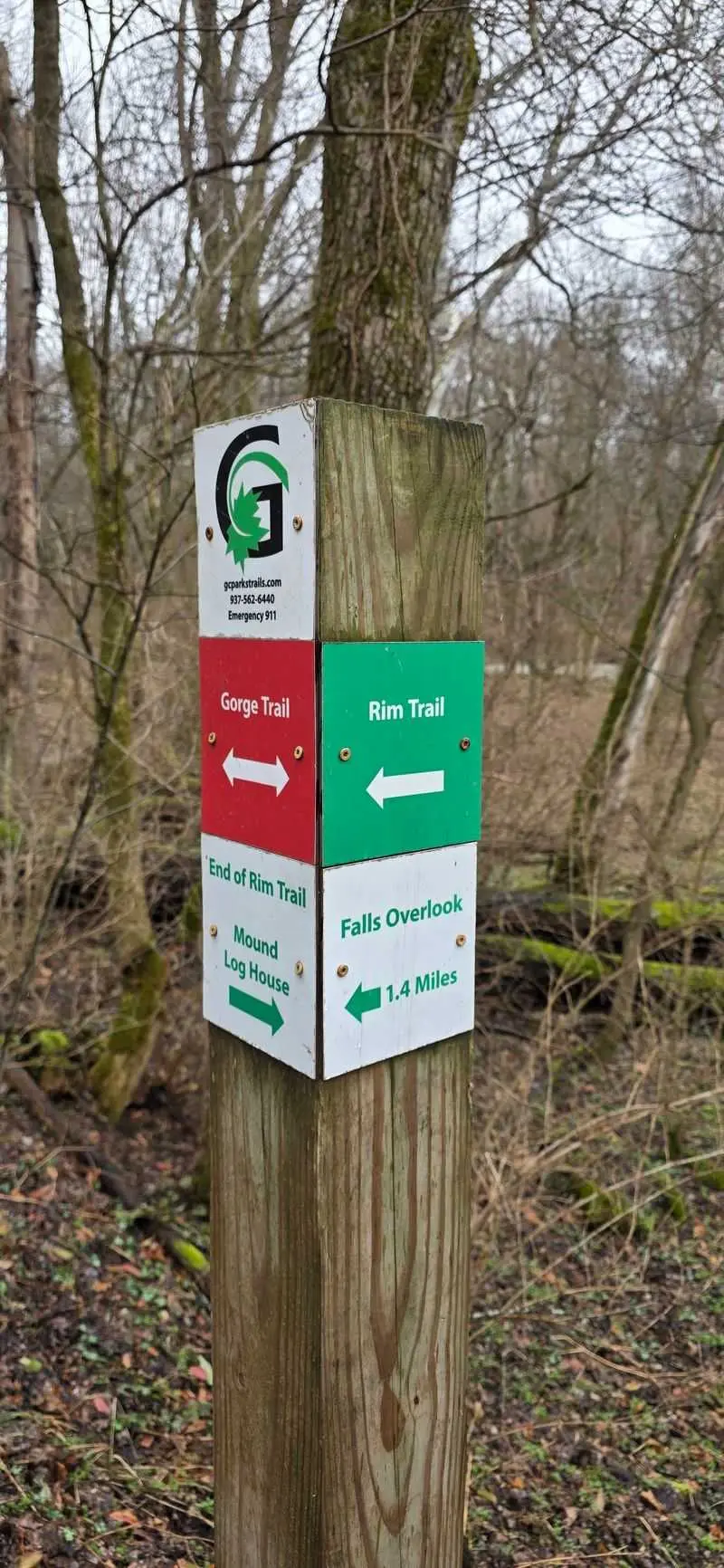
Short on daylight? The trail system here is compact, with about three miles of paths in total.
That makes it easy to plan a winter walk around your energy level.
The Rim Trail runs about one mile and stays up top. The Gorge Trail also covers about a mile, but it drops closer to the river.
Combine those two and you get a loop of roughly two miles. It’s a tidy way to see the canyon from above and below.
The Narrows Trail and the Orton Trail each add about half a mile. They’re handy if you want a quick add-on without committing to a long hike.
Some sections are rated moderate to strenuous. Expect rocks, roots, and uneven ground, which feel trickier under snow or ice.
Sturdy footwear is a must here, and traction devices can help in icy weather. Trekking poles are a good idea too, especially on steep stairs.
Interpretive signs line the trails and explain the natural and cultural story. They also give you a great excuse to stop and catch your breath.
Rocks This Old Make Your Snow Boots Feel Brand New
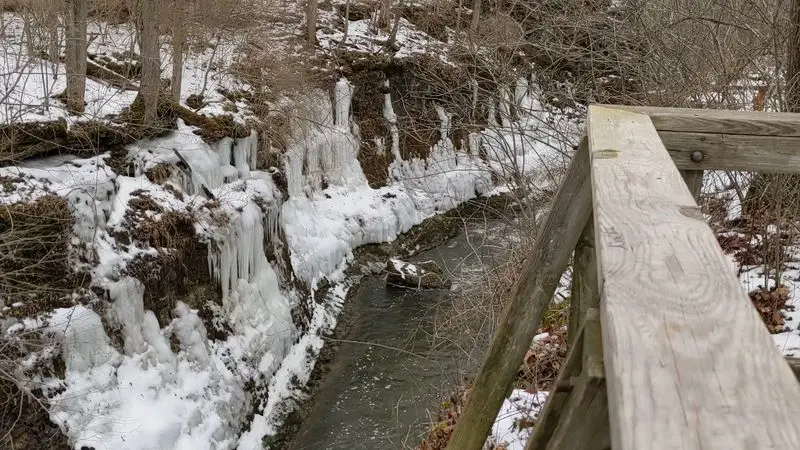
Roughly 400 million years. That’s the age of the bedrock exposed in these cliffs, dating back to the Silurian Period.
Back then, this part of Ohio looked nothing like it does today. The dolomite and shale layers you see now formed long before any glaciers arrived.
Then came the ice. Meltwater from glaciers carved the canyon somewhere between 15,000 and 28,000 years ago.
Experts call the gorge an outstanding example of interglacial and post-glacial canyon cutting. In plain words, water did serious work here, and it shows.
Winter helps you read that history. Snow settles into the cracks and ledges, which makes each rock layer pop out more clearly.
Look closely and the walls almost look like stacked pages. Every layer is a chapter, and the river keeps turning them slowly.
It’s a fun thing to point out to kids on the walk. Few science lessons come with a waterfall soundtrack and fresh snow.
The Ohio Department of Natural Resources manages the preserve. Its signs along the trail help explain what you’re looking at.
Giant Fallen Boulders Turn the Valley Floor Into a Rocky Maze
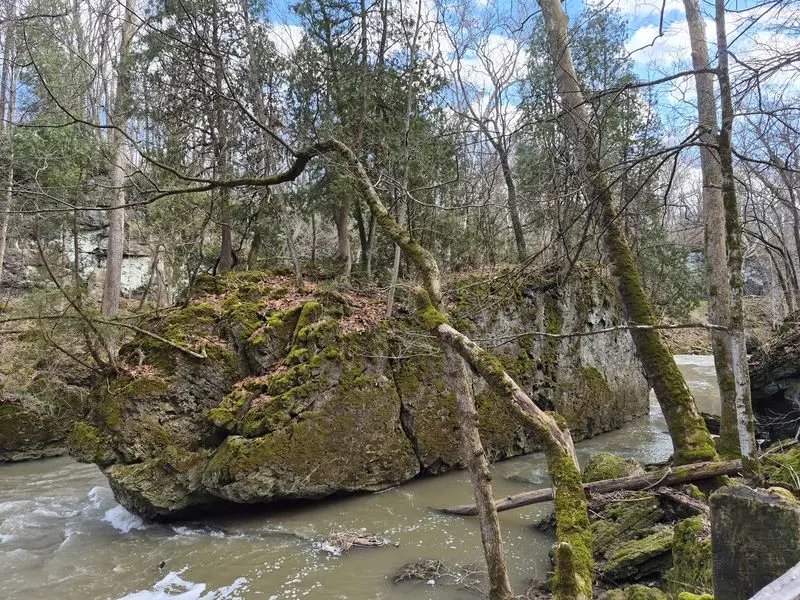
Massive chunks of cliff once broke away and tumbled down into the valley. Geologists call them slump blocks, and they’re scattered along the floor of the gorge.
Some are the size of small sheds. In winter, snow piles on top of them like frosting on giant stone cakes.
Those blocks are proof the canyon keeps changing. Overhangs weaken, crack, and finally drop, reshaping the river’s path a little each time.
The Gorge Trail gets you closer to these boulders. You’ll see how they create little pockets, shadows, and swirls in the water.
Please admire them from the trail, though. The preserve protects fragile plants, and many areas stay closed to help them grow.
Snow can also hide gaps and loose stones near the blocks. Staying on the path keeps both you and the ecosystem safe.
If the slump blocks catch your curiosity, the Exploration Center even includes a replica slump block cave. It opens seasonally, so plan a return trip for warmer months.
Honestly, these rocks make a strong case for coming back twice.
Northern Trees Feel Right at Home When the Snow Flies
Hemlocks in southwest Ohio? Yes, and the gorge explains why.
Cool, moist, shaded north-facing slopes create a habitat more like places farther north. Plants such as hemlock, Canada yew, arbor vitae, and mountain maple grow here.
Red baneberry also lives in these chilly pockets. These species likely hung on in the gorge after the glaciers pulled back.
In winter, the evergreens become the stars. Their dark green needles look sharp against snowy rock walls and pale, bare branches.
Clifton Gorge State Nature Preserve supports more than 450 identified plant species. Several of them are listed as endangered, so protection matters a lot here.
You may notice requests to brush off your shoes. That small step helps keep unwanted seeds from hitching a ride into sensitive areas.
Staff and volunteers also work to remove invasive plants like honeysuckle. That effort gives native plants more room to thrive.
A snowy walk is a good chance to spot evergreen shapes you’d miss in summer. Without the leafy crowd, every hemlock gets its moment in the spotlight.
Bring Binoculars, Because Bare Branches Make Birds Easier to Spot
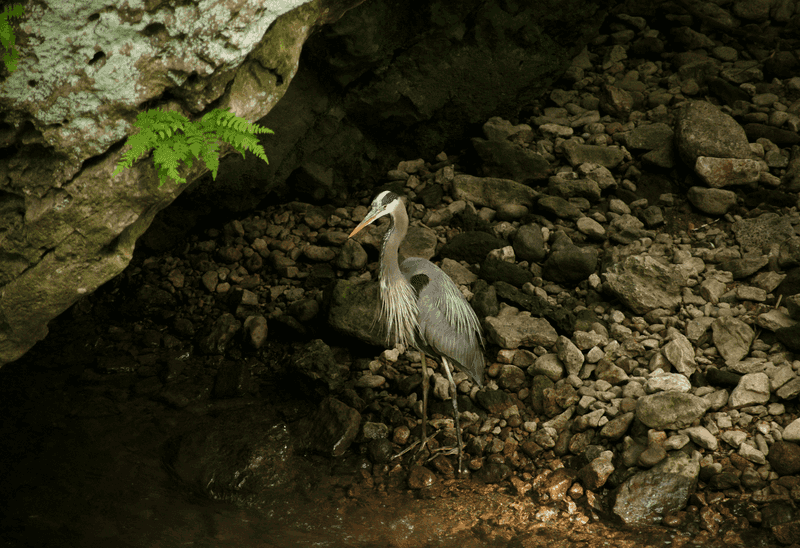
Bird lovers already know this preserve well. In warmer months, species like the Cerulean Warbler draw serious attention.
Winter brings a different cast. Common woodland birds stick around, and winter finches sometimes show up too.
Leafless trees work in your favor. A bird hopping on a bare branch stands out much more than one hiding behind summer leaves.
Snow also makes movement easier to catch. A flash of color against a white slope is hard to miss.
Pack binoculars and a small field guide or bird app. A thermos of something warm won’t hurt either.
Move slowly and pause at overlooks for a few minutes. Birds often return once things go quiet, and quiet is easy to find here in winter.
Keep your voice low and your snacks sealed. Feeding wildlife isn’t a good idea, even when a hungry bird looks very convincing.
Pets aren’t permitted on the trails at Clifton Gorge State Nature Preserve. That rule helps keep wildlife calm, so leave your dog at home for this outing.
An Annual Winter Hike Adds History to the Fresh Powder
Hikers in winter coats, a guide pointing at cliffs, snow underfoot. That’s the general idea behind the Winter Hike hosted by the Ohio Department of Natural Resources.
The annual event covers Clifton Gorge and neighboring John Bryan State Park. It often follows a three-mile trail with stops along the way.
Historical reenactors and naturalists frequently join the route. They help bring the area’s past and wildlife to life between stretches of walking.
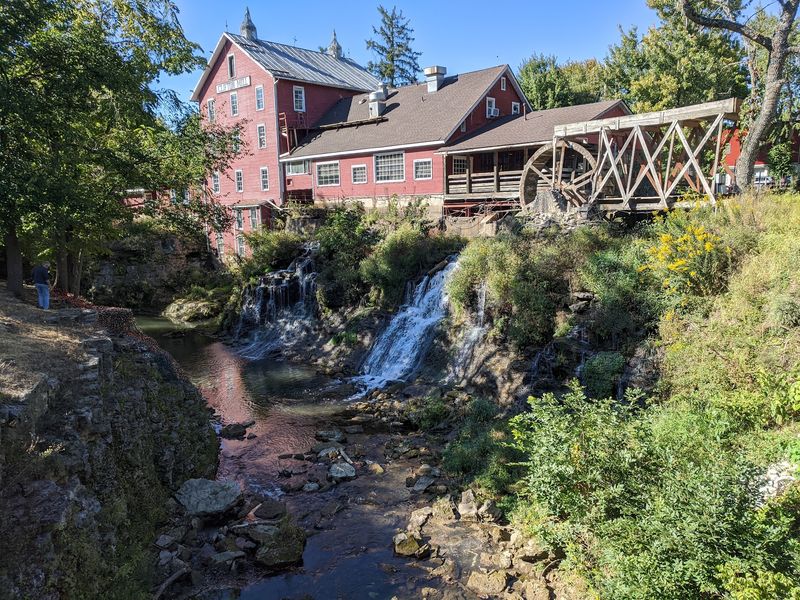
That past is rich. The gorge served as a refuge for the Shawnee, and the river later powered mills in the 1800s.
Grist mills, cotton mills, and paper factories all used the water’s force. Most of that industry faded by the late 1800s.
During winter events, the Exploration Center may offer a spot to warm up. Snacks and hot drinks can make a chilly day a lot friendlier.
Event dates change each year, so check with ODNR before you go. Dress in layers and expect the trail to be uneven.
Group hikes are also a great way to learn trails you can explore solo later.
Know Where to Park and What You’ll Find Before You Bundle Up
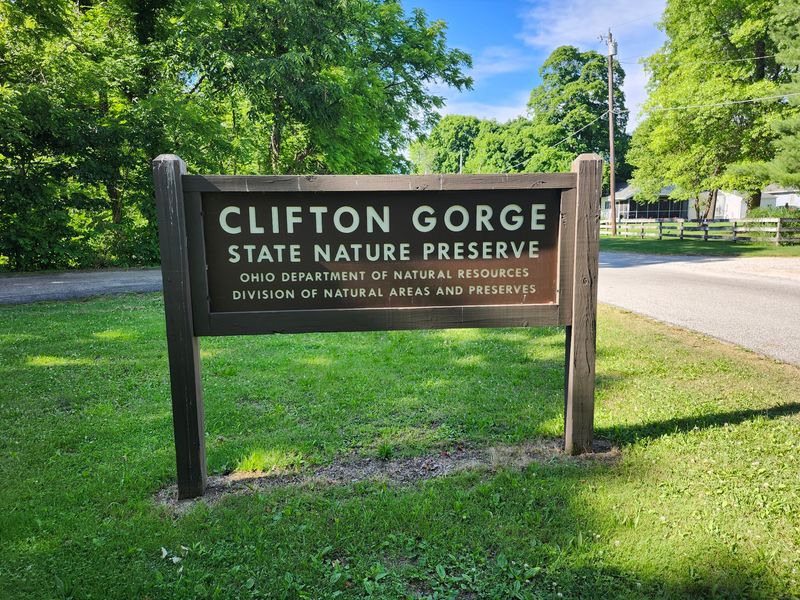
Getting there is easy. Plug in 2381 OH-343, Yellow Springs, OH 45387, and you’ll land at the preserve in Greene County, Ohio.
It sits about three miles east of Yellow Springs. The village of Clifton is right next door to the northeast.
Trails open year-round from a half-hour before sunrise to a half-hour after sunset. In winter, that window shrinks, so start early.
Parking is available for visitors. Picnic tables sit near the parking area and the nature center, though snow may claim them first.
A portable restroom is located near the nature center. Benches inside the gorge give you places to rest along the way.
The Clifton Gorge Exploration Center opened in June 2025. It runs April through October, Friday through Sunday, so it’s mostly closed in winter outside special events.
Inside, you’ll find aquariums with native fish and turtles, plus mussel displays and mill history. It’s worth a warm-weather visit on its own.
Check ODNR for trail closures before heading out. Construction and weather can shift access, so a quick look saves you a wasted drive.
Keep Walking Into John Bryan State Park When Your Legs Want More
Two miles might not satisfy you. Good news: the trails at Clifton Gorge State Nature Preserve connect directly to John Bryan State Park.
That link lets you stretch a short walk into a much longer adventure. You can follow the Little Miami River farther downstream and keep the scenery going.
Plan your turnaround point before you start. Winter daylight disappears faster than you’d expect, and the cold gets sharper near dusk.
Pack water, snacks, and an extra layer. A small headlamp is smart insurance, even if you plan to finish early.
Keep in mind the rules can differ once you cross into the state park. The preserve focuses on protecting rare plants, so its paths feel more hands-off.
Combining both properties gives you a fuller picture of this Ohio river valley. Cliffs, woods, and water all share the stage.
When you finish, you’ll have earned a warm drink and a seat somewhere cozy. Yellow Springs is only a few miles away.
And the snowy gorge behind you? It’ll still be waiting for your next quiet walk.