
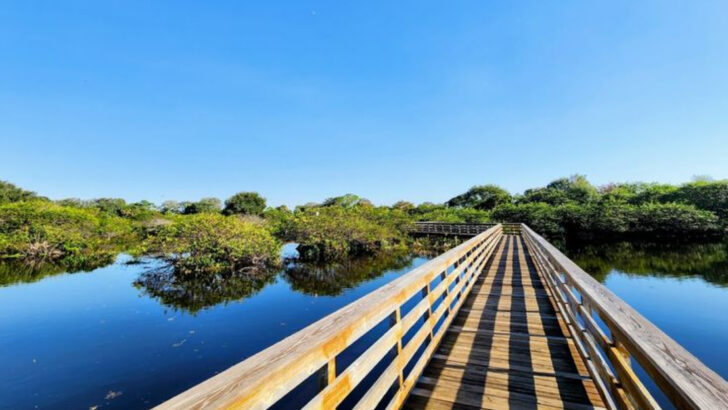
When most people think of Florida boardwalks, they picture sandy shores and ocean waves. But some of the most stunning walkways in the entire country are tucked deep inside Florida’s swamps, forests, and wetlands — far from any coastline.
These hidden gems put you face-to-face with ancient cypress trees, rare orchids, and wildlife that seems completely unbothered by your presence. If you’ve never explored Florida’s inland boardwalks, you’re missing a side of this state that will genuinely surprise you.
Corkscrew Swamp Sanctuary — Naples, FL
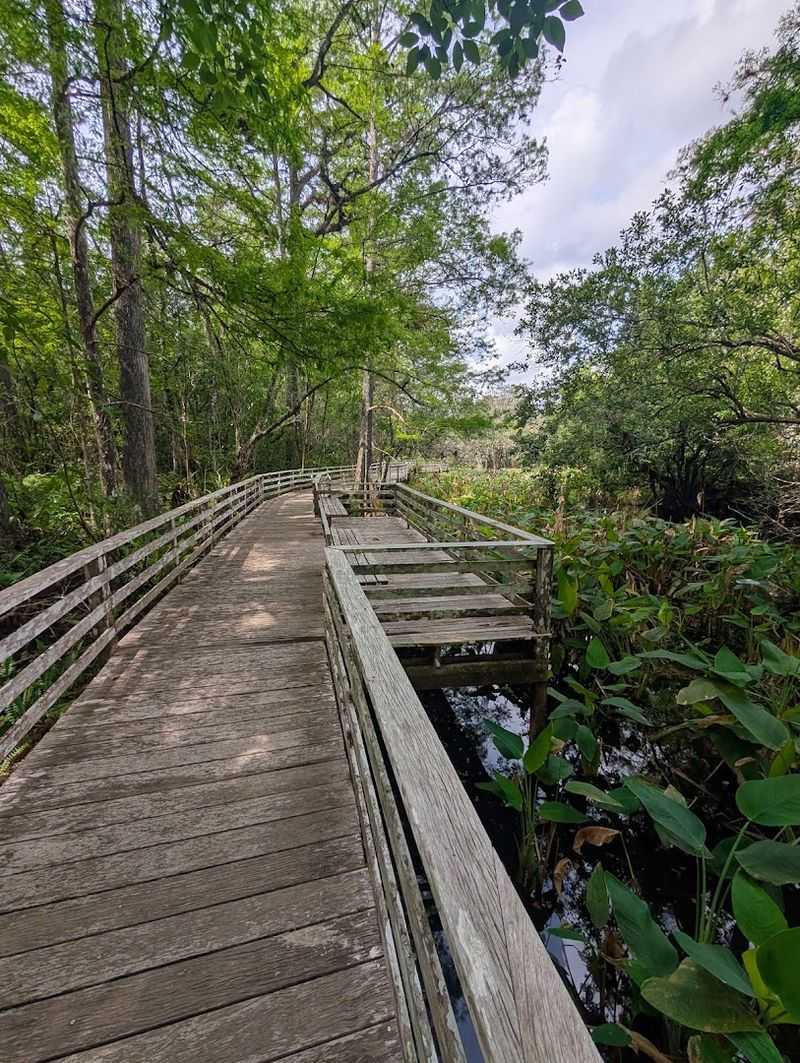
Step onto the boardwalk at Corkscrew Swamp Sanctuary and something shifts almost immediately — the air cools, the light narrows into thin columns, and the noise of the outside world just disappears. Managed by the National Audubon Society, this 2.5-mile trail passes through one of the largest old-growth bald cypress forests left in North America.
Some of these trees are estimated to be over 500 years old.
The canopy here is so dense and ancient that bird calls echo differently underneath it — a subtle acoustic quality that’s genuinely hard to explain until you’re standing in the middle of it. Moss-draped limbs hang over dark, mirror-still water, and the whole scene has a cathedral-like weight to it.
First-time visitors often go quiet without realizing they’ve done it.
Wildlife sightings here include wood storks, barred owls, river otters, and white-tailed deer. The sanctuary is open year-round, but late fall through early spring tends to offer the clearest water and most concentrated wildlife activity.
Admission is charged, and the trail is well-maintained and fully accessible, making it one of the most rewarding easy walks in the entire state.
Big Cypress Bend Boardwalk — Ochopee, FL
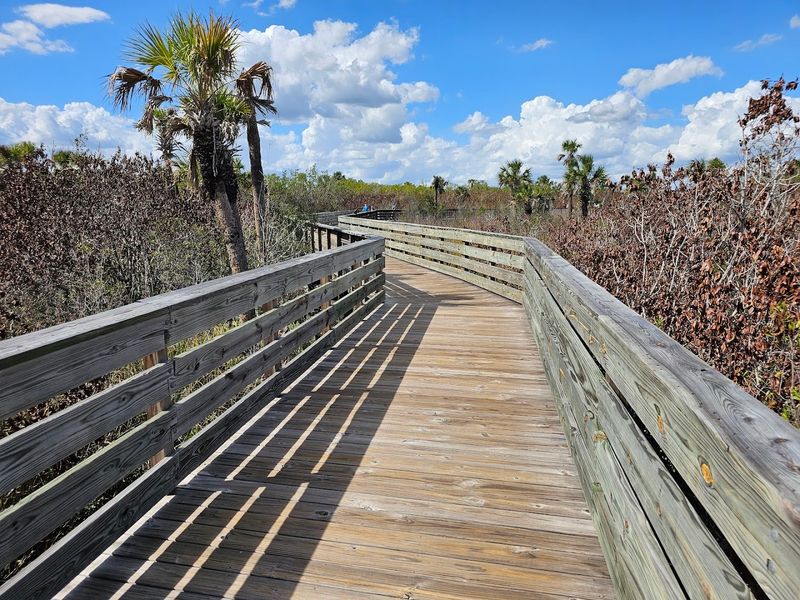
Just off the Tamiami Trail, tucked into the Big Cypress National Preserve, this boardwalk does something that longer, more polished trails sometimes fail to do — it pulls you straight into the ecosystem rather than letting you observe it from a comfortable distance. The tree canopy closes in fast, the air smells like wet earth and bark, and within a few steps you feel genuinely surrounded.
Best of all, it’s completely free.
Anhinga birds are one of the signature sights here. Unlike most water birds, anhingas lack the waterproofing oils that keep feathers dry, so after diving for fish they climb onto low branches and spread their wings wide to dry in the sun.
They do this directly over the boardwalk, close enough that you can see individual feathers. It’s one of those wildlife moments that feels almost theatrical.
Because this spot sits outside the major state park circuit, foot traffic stays low — meaning wildlife encounters here are less interrupted than at more popular destinations. Alligators are a regular presence in the water below, and the dense tree cover makes this one of the better spots for spotting wading birds in a truly wild setting.
Fakahatchee Strand Preserve State Park — Copeland, FL
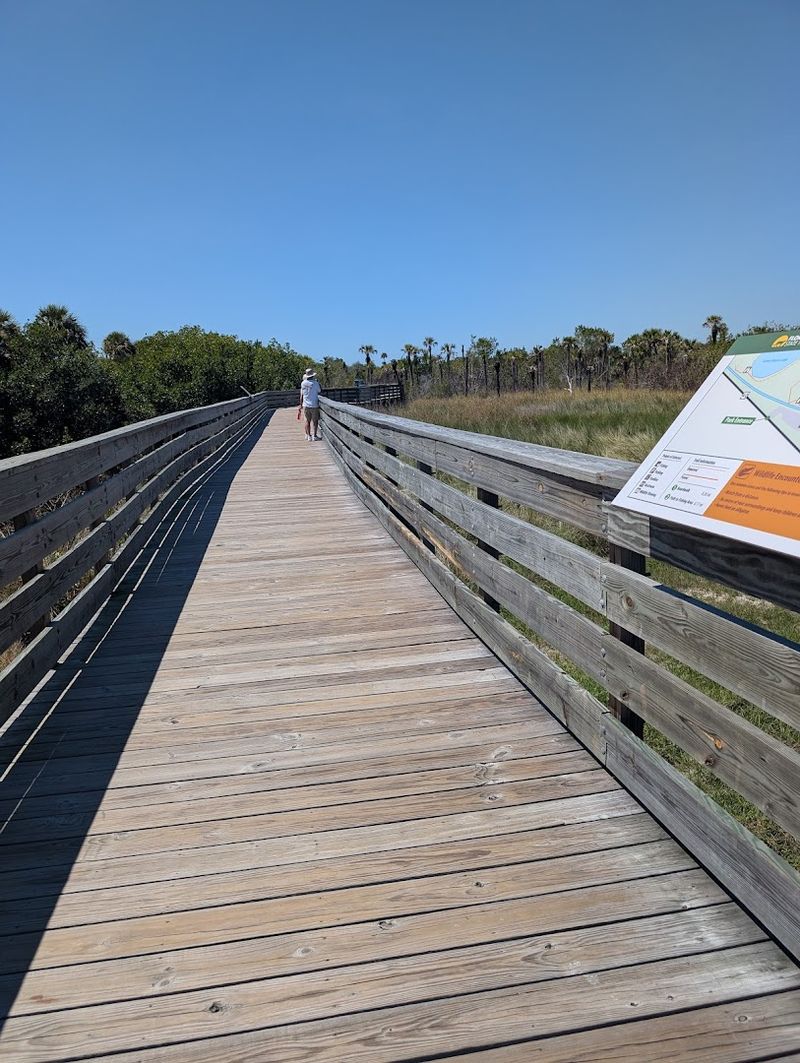
Ecologists sometimes call Fakahatchee Strand the “Amazon of Florida” — not as a tourism tagline, but as a genuine ecological comparison. This narrow forested wetland corridor is one of the most biologically dense places in North America, and the boardwalk here takes you directly through its heart.
Royal palms and bald cypress grow side by side above dark, slow-moving water in a combination that’s almost nowhere else in the world.
The ghost orchid — one of the rarest flowering plants in North America — has been documented blooming in the wild along this boardwalk. It doesn’t bloom on any predictable schedule, and even when it does, spotting one takes patience and a good eye.
But Fakahatchee is one of the very few places on Earth where a regular visitor has any realistic shot at seeing one outside of a greenhouse.
The boardwalk is relatively short but dense with detail at every step. Bromeliads cling to cypress trunks, tree frogs cling to handrails, and the stillness of the water below reflects the canopy above like a second forest growing downward.
Visiting in the early morning during spring gives you the best combination of light, wildlife activity, and manageable humidity.
Myakka River State Park — Sarasota, FL
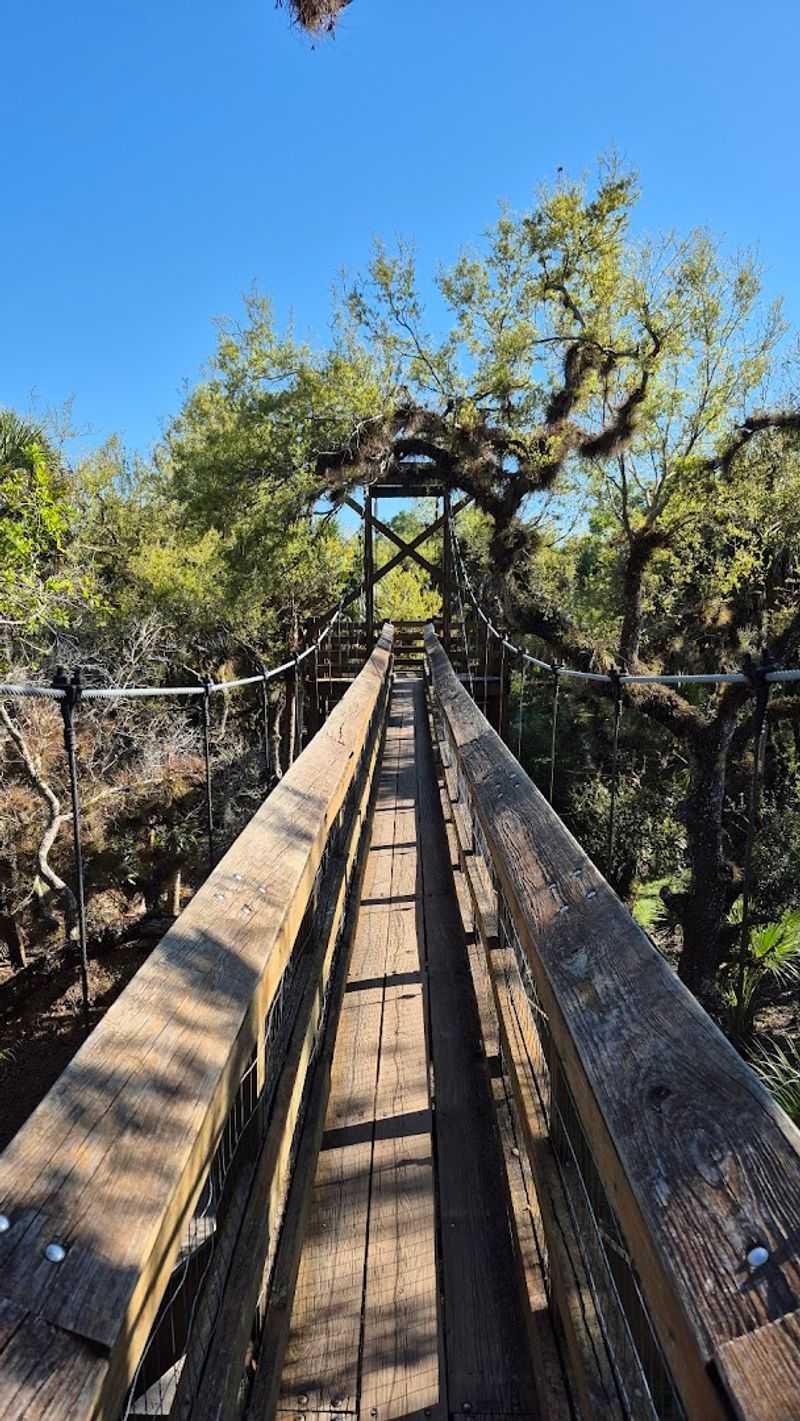
Myakka River State Park covers nearly 58 square miles, making it one of Florida’s largest state parks, and its boardwalk stretches directly over the surface of Upper Myakka Lake — a shallow, wildlife-packed body of water that feels more like a wildlife documentary set than a public park. The elevated walkway puts you above the action in a way that’s both thrilling and oddly calming.
During the dry season, alligators concentrate around the lake as water levels drop and food sources compress into a smaller area. Seeing 20 or 30 alligators in a single glance from the boardwalk isn’t unusual — no special timing required, no guided tour necessary.
Sandhill cranes, great blue herons, anhingas, and roseate spoonbills are regular company along the water’s edge.
Beyond the boardwalk, Myakka offers canopy walkways, airboat tours, and miles of hiking trails — but the lake boardwalk alone justifies the drive. Sunrise visits are particularly rewarding, when low light sits on the water and alligators bask in the earliest warmth of the day.
The park charges a modest vehicle fee, and the boardwalk itself is flat, shaded, and accessible for visitors of most mobility levels.
Highlands Hammock State Park — Sebring, FL
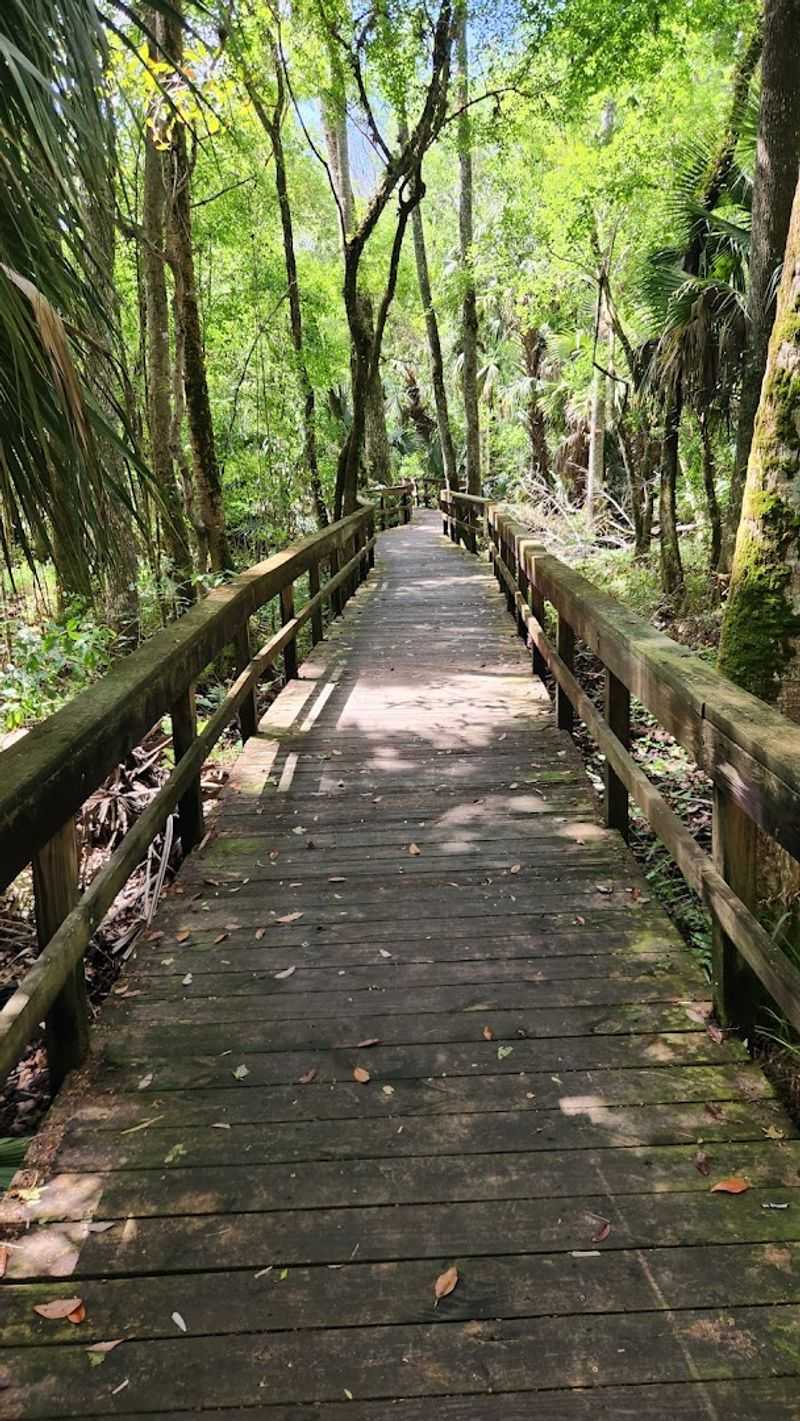
Highlands Hammock opened in 1931, making it one of Florida’s original four state parks — and the forest it protects looks like it hasn’t changed much since then. The boardwalk loops through a hardwood hammock where the ground rises just enough above the surrounding wetlands to support trees of remarkable age and scale.
Several cypress trees along the trail have trunk diameters wide enough for two adults to stand behind side by side.
Walking this trail is a rare encounter with trees that were already centuries old before European settlers arrived in the region. That kind of age shows itself in the texture of bark, the gnarled spread of root systems, and the sheer physical presence of trunks that seem less like trees and more like architectural features.
The black water surrounding the boardwalk reflects everything above it with almost perfect clarity.
Deer, wild turkeys, armadillos, and Florida scrub-jays have all been spotted along or near the trail. The park is located in the geographic center of Florida, which means it draws fewer out-of-state visitors than the coastal parks — a fact that keeps the atmosphere quieter and the wildlife less skittish.
Weekday morning visits are especially peaceful here.
Lettuce Lake Regional Park — Tampa, FL
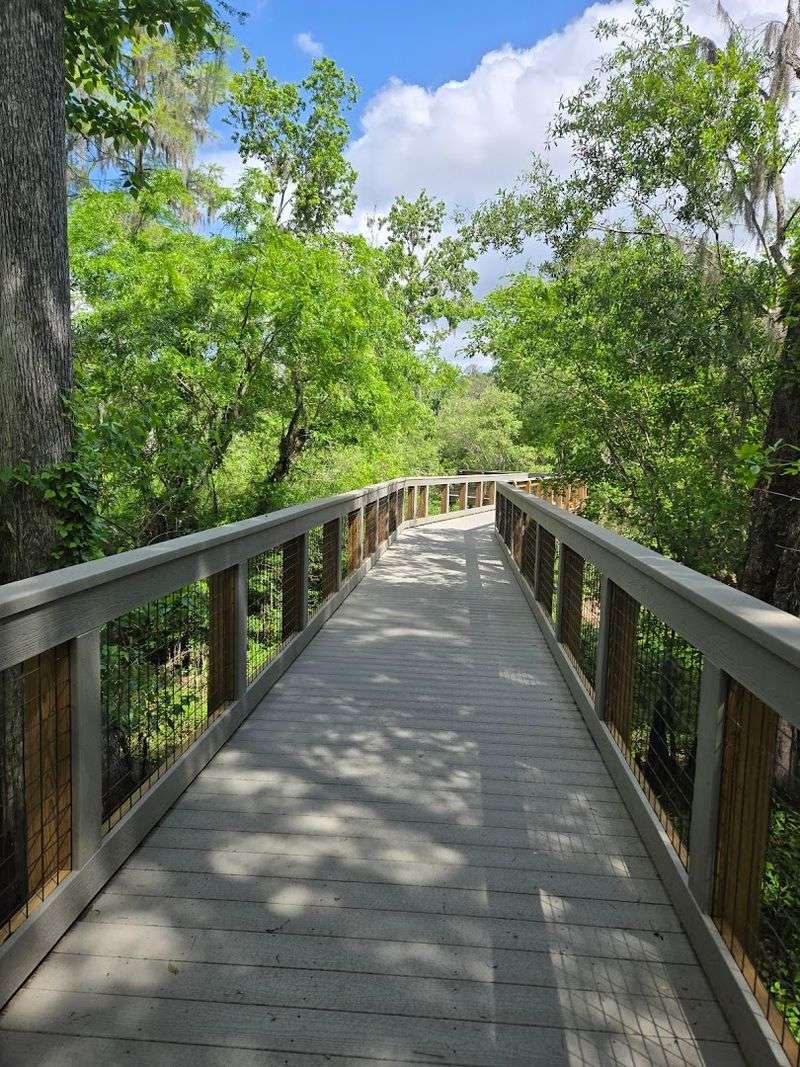
Tampa is mostly known for Busch Gardens, Ybor City, and the beaches of nearby Clearwater — which makes Lettuce Lake Regional Park one of the city’s best-kept secrets. This county park on Tampa’s eastern edge offers a boardwalk that loops through a cypress and tupelo swamp along the Hillsborough River, and the experience feels nothing like what most people expect from an urban green space.
The moment you step onto the boards, the city noise drops away.
An observation tower at the trail’s midpoint lifts you above the swamp canopy for a view that reframes the whole surrounding landscape. From up there, the urban sprawl beyond the tree line looks surprisingly small.
First-time visitors often stand up there longer than they planned, just taking in the contrast between the wild swamp below and the city visible in the distance.
River otters are spotted here with enough regularity that morning visitors factor otter-watching into their routines. Early hours along the river channel near the boardwalk give the best odds, though nothing is ever guaranteed with wild animals.
The park is free to enter, the trail is flat and stroller-friendly, and the whole loop takes under an hour — making it one of the most accessible wild experiences in the Tampa Bay area.
Lower Suwannee National Wildlife Refuge — Chiefland, FL
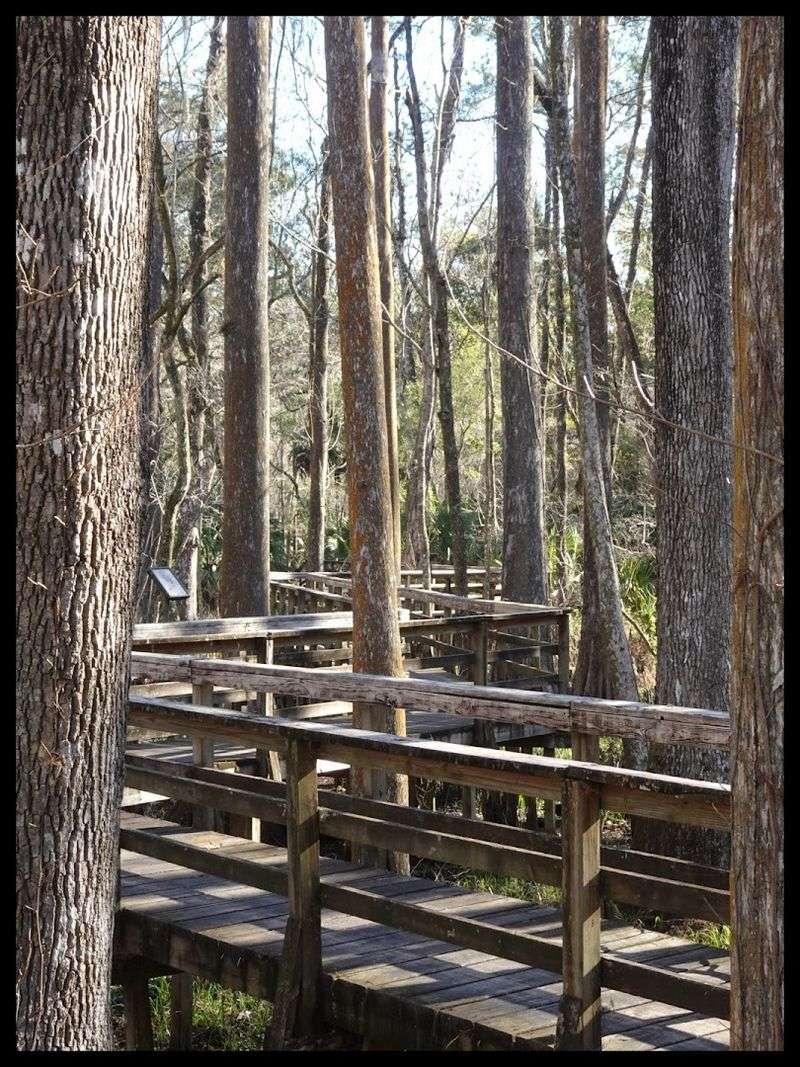
The Suwannee River runs the color of dark tea — not from pollution, but from tannins that leach naturally out of decaying leaves and wood along its banks. Standing on the boardwalk at the Lower Suwannee National Wildlife Refuge and looking down at that deep amber water against the green of the surrounding vegetation is one of the more visually striking sights in north Florida.
It looks like something out of a nature documentary.
This is rural, unhurried Florida — a long way from theme parks or beach resort infrastructure. The refuge protects a wide stretch of river delta and coastal lowland, and the boardwalk system threads through forest and open marsh along one of the least developed stretches of the Suwannee.
The quiet here is genuine. Not “quiet for Florida” quiet — actually quiet, the kind where you can hear individual insects.
Black bears, white-tailed deer, wood ducks, and swallow-tailed kites have all been documented in this area. The refuge is free to visit and sees relatively modest traffic compared to more famous Florida destinations, which keeps wildlife encounters more natural and less staged.
If you’re traveling the Tamiami Trail or passing through north-central Florida, this boardwalk rewards the detour.
Sweetwater Wetlands Park — Gainesville, FL
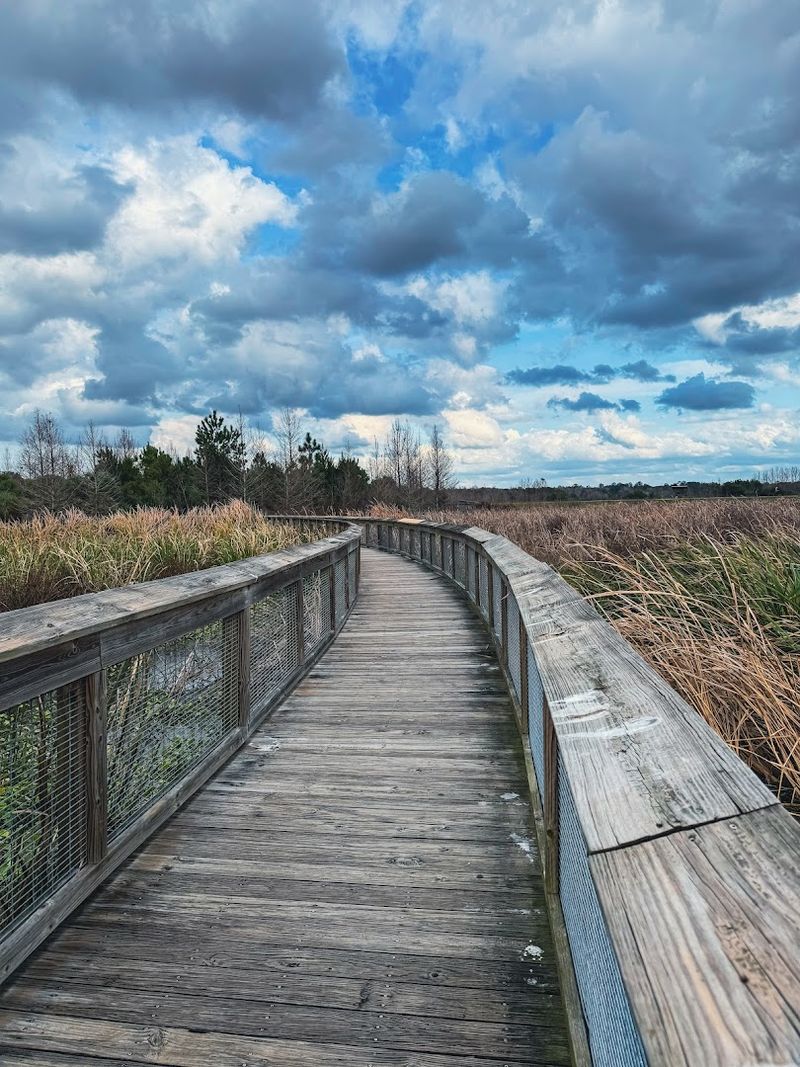
Sweetwater Wetlands Park has an origin story that sounds unlikely for one of Florida’s best birding spots: it was built by the city of Gainesville as a water treatment system for reclaimed water. That utilitarian beginning makes what the park has become all the more remarkable.
Wildlife moved in enthusiastically, and the constructed marsh now supports a biodiversity that rivals many protected natural areas in the state.
Over 200 bird species have been recorded here, including roseate spoonbills — those improbably pink wading birds that stop even non-birders in their tracks — along with limpkins, purple gallinules, anhingas, and a rotating cast of migratory species. The boardwalk sections allow close observation of feeding and nesting behavior at distances that most wildlife refuges simply don’t permit.
You don’t need a telephoto lens to get a good look.
The park is open daily, free to enter, and located just minutes from the University of Florida campus in Gainesville. Mornings are the most active time for wildlife, and the trail network is easy enough for casual walkers while offering enough variety to keep serious birders busy for hours.
Bring sunscreen — the open marsh sections offer very little shade, especially in the warmer months.
Wakodahatchee Wetlands — Delray Beach, FL
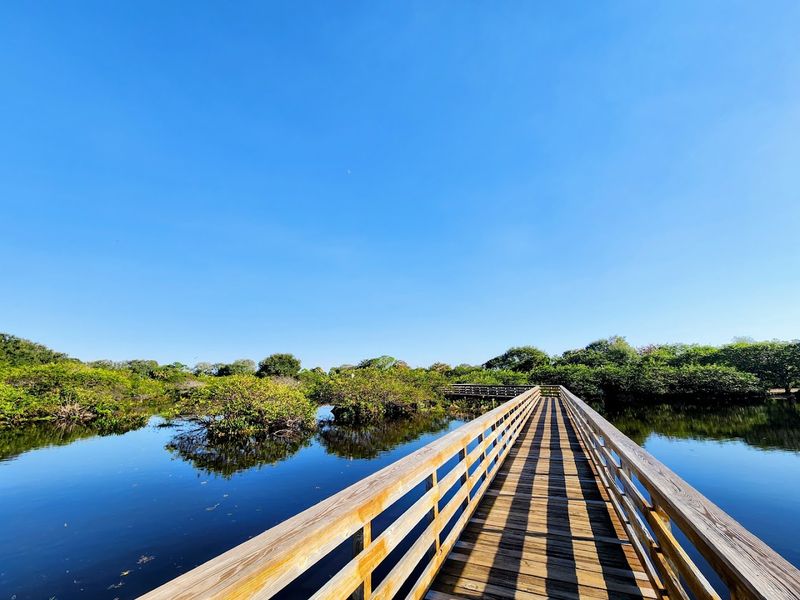
Wakodahatchee Wetlands sounds like it was always meant to be a wildlife sanctuary, but it started as a practical solution to a water management problem. The City of Delray Beach constructed it on treated wastewater discharge land in the mid-1990s, and what grew from that decision has become one of the most celebrated birding boardwalks in the entire southeastern United States.
The name itself comes from the Seminole language and means “created waters.”
The three-quarter-mile loop passes through a freshwater marsh where nesting birds — tricolored herons, anhingas, cormorants, and moorhens — build colonies directly over the boardwalk. During nesting season, from roughly February through April, the noise and activity above your head is almost overwhelming in the best possible way.
Chicks visible in nests, adults bringing fish, territorial disputes playing out at eye level.
Alligators are a constant presence in the water below, usually unbothered by the steady stream of visitors on the boards above them. Marsh rabbits are often spotted on the banks at the trail’s edges.
The park is free and open to the public, but it fills up fast on weekend mornings during nesting season — arriving early is strongly recommended if you want the boardwalk to yourself for even a few minutes.
Green Cay Wetlands — Boynton Beach, FL
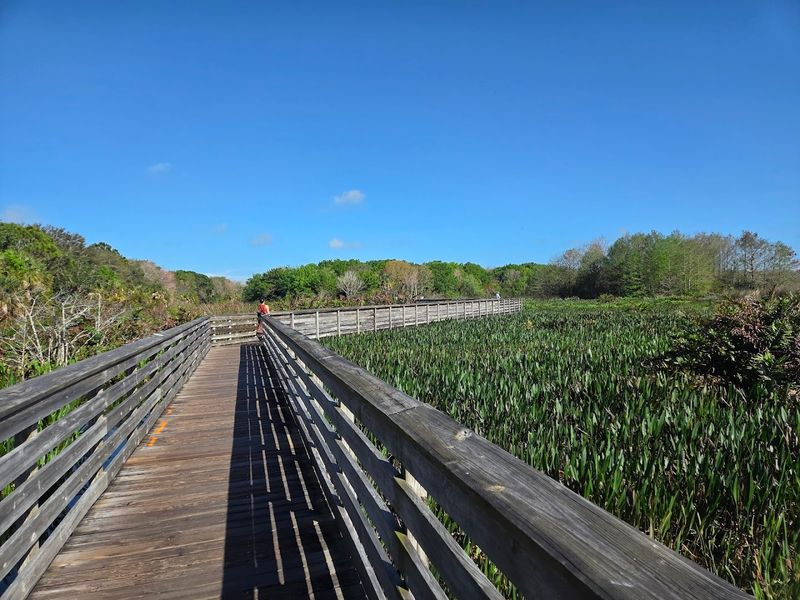
Green Cay Wetlands sits just a few miles from the Atlantic coast in Boynton Beach, but stepping onto its 1.5-mile boardwalk loop feels like entering an entirely different Florida. The freshwater marsh stretches out in all directions, cattails and pickerweed swaying in the breeze, and the water is shallow enough that wading birds seem to be walking on a mirror.
It’s one of those places where the reflection is almost as interesting as the thing being reflected.
Black-necked stilts, least sandpipers, American bitterns, and great blue herons are regular residents here. The bittern is worth mentioning specifically — it’s a secretive bird that freezes and points its beak skyward when it feels threatened, blending into the reeds so effectively that most people walk right past one without knowing it.
Green Cay is one of the more reliable spots to actually find one if you move slowly and look carefully.
The boardwalk is free, open daily from sunrise to sunset, and managed by Palm Beach County. It’s flat, wide, and accessible, making it a favorite for families, photographers, and older visitors who want a genuinely wild experience without difficult terrain.
Weekend mornings draw a crowd, but the marsh is large enough that the wildlife doesn’t seem to mind much.
Six Mile Cypress Slough Preserve — Fort Myers, FL
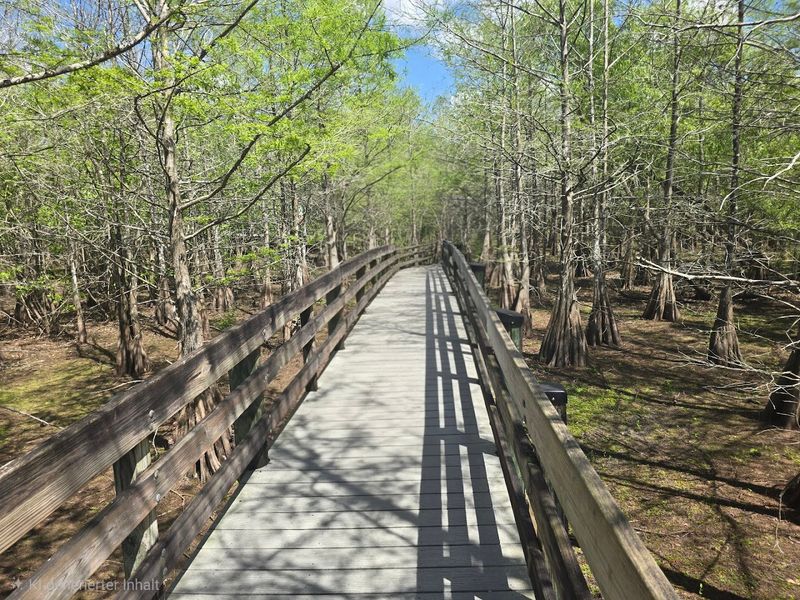
Six Mile Cypress Slough is a narrow, forested wetland corridor that runs through the middle of Fort Myers — and the fact that it survived the development pressure that reshaped nearly everything around it feels like a minor miracle. The boardwalk here stretches nearly 1.3 miles through a classic Florida slough, where water moves slowly southward through a channel of cypress, red maple, and pop ash trees.
The forest closes in on both sides and the outside world genuinely disappears.
Wood ducks are one of the most photographed residents of the slough — their coloring is almost cartoonishly vivid, and they tend to appear near cypress trunks in the early morning when the light is low and golden. River otters, white ibis, barred owls, and Florida softshell turtles round out the regular wildlife roster.
During wet season, the water level rises and the whole slough takes on a different character — deeper, quieter, more reflective.
Lee County manages the preserve and charges a small parking fee. Guided walks led by trained naturalists are offered on weekend mornings and are genuinely worth the extra time — the naturalists here are knowledgeable and enthusiastic in a way that makes even familiar species feel newly interesting.
The boardwalk is fully accessible and well-maintained, and the interpretive signs along the trail are among the best-written of any Florida preserve.