
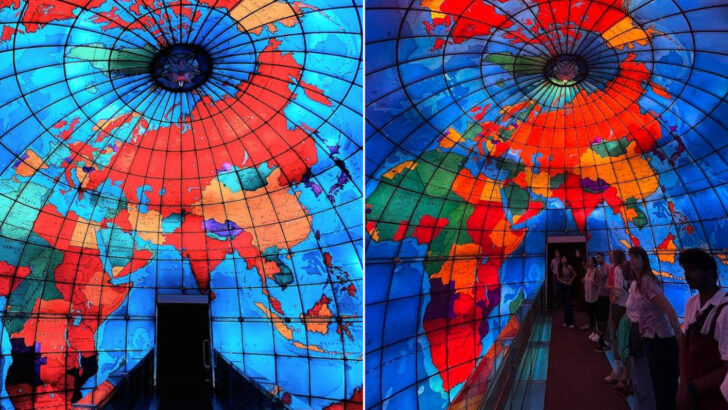
Hidden inside a stunning library in the heart of Boston, Massachusetts, lies one of the most jaw-dropping experiences you can have without ever leaving the country. The Mapparium at the Mary Baker Eddy Library is a three-story stained glass globe that lets you walk right into the center of the world.
Built in the 1930s, this one-of-a-kind marvel combines history, art, and science in a way that feels almost magical. Whether you are a geography lover, a curious traveler, or just looking for something truly unforgettable, the Mapparium is a must-see Boston gem.
The Stained Glass Globe Itself
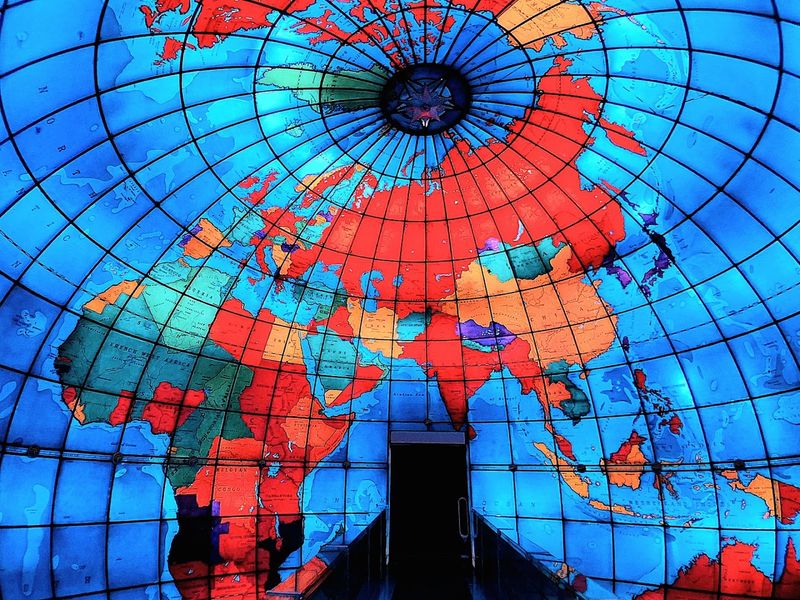
Imagine standing inside a giant glowing ball of color, surrounded by the entire world. That is exactly what it feels like to step into the Mapparium at the Mary Baker Eddy Library in Boston.
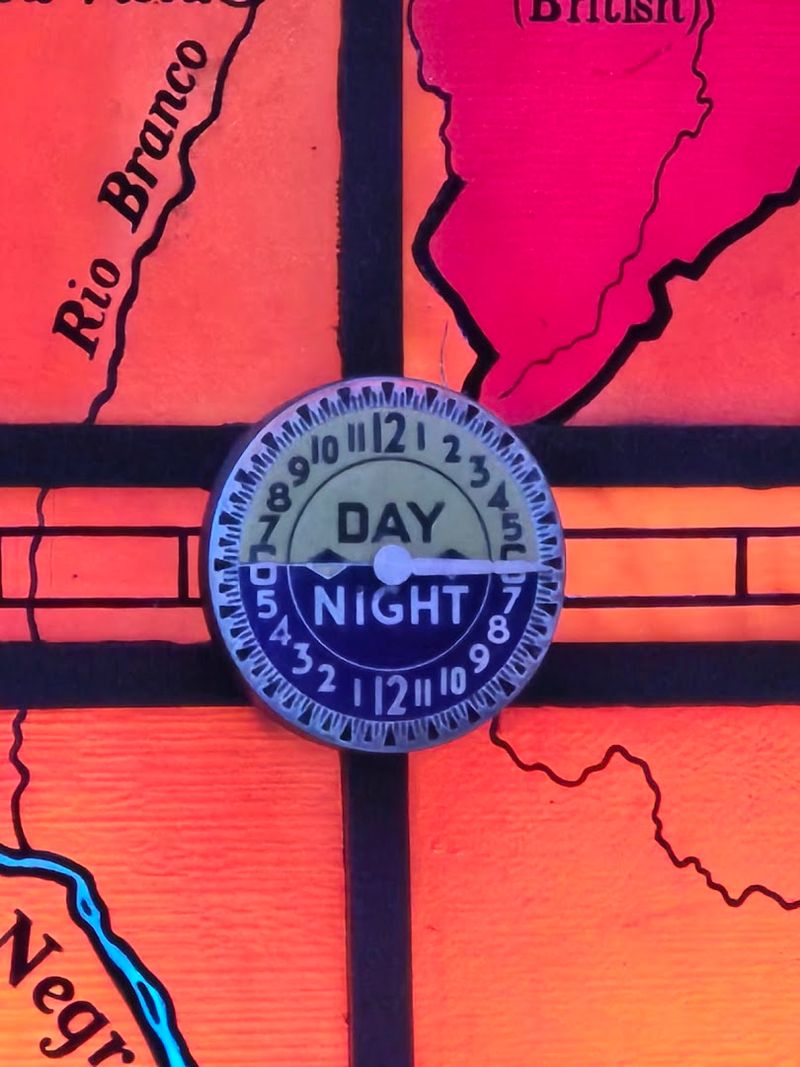
The globe is 30 feet in diameter and made up of 608 hand-crafted stained glass panels, each one lit from behind to create a breathtaking kaleidoscope of color.
The map was designed to reflect the world as it looked in 1934, so you will notice borders and country names that have changed dramatically over the decades. That makes the experience part history lesson, part art installation, and part time machine.
Countries that no longer exist and territories that have since been renamed are all frozen in glass.
Architects and artists worked together to make sure every continent, ocean, and border was accurately represented on the curved surface. The result is something that has never been replicated anywhere else in the world.
Visiting the Mapparium feels less like touring a museum exhibit and more like stepping into another dimension entirely, one wrapped in glowing light and nearly a century of world history.
The Glass Bridge Walkway
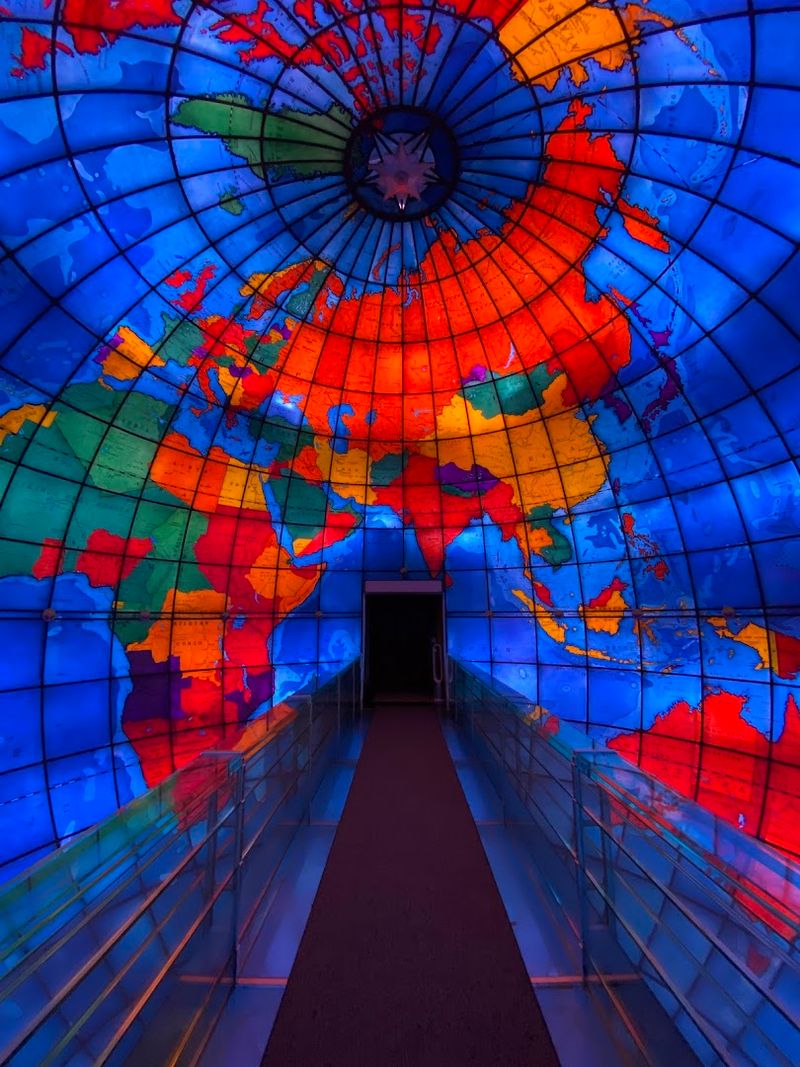
Walking across the glass bridge inside the Mapparium is the kind of experience that makes your heart beat just a little faster. The transparent walkway stretches from one side of the globe to the other, giving visitors a front-row seat to one of the most visually stunning rooms on the planet.
Below your feet, through the glass, you can see the curved base of the globe stretching away.
The bridge was designed to place visitors at the true geographic center of the globe, meaning you are literally standing at the center of the world. Every direction you look, stained glass panels glow with the colors of continents, oceans, and borders.
It is an immersive experience that photographs and videos simply cannot capture fully.
Visitors often say the bridge feels surprisingly sturdy despite its transparent appearance, and most people quickly forget their nerves once the light show begins. Tour guides sometimes encourage guests to whisper to each other from opposite ends of the bridge, showcasing the globe’s famous acoustic trick.
Standing on this walkway, surrounded by a glowing world, is one of those rare travel moments you remember for the rest of your life.
The Incredible Acoustics
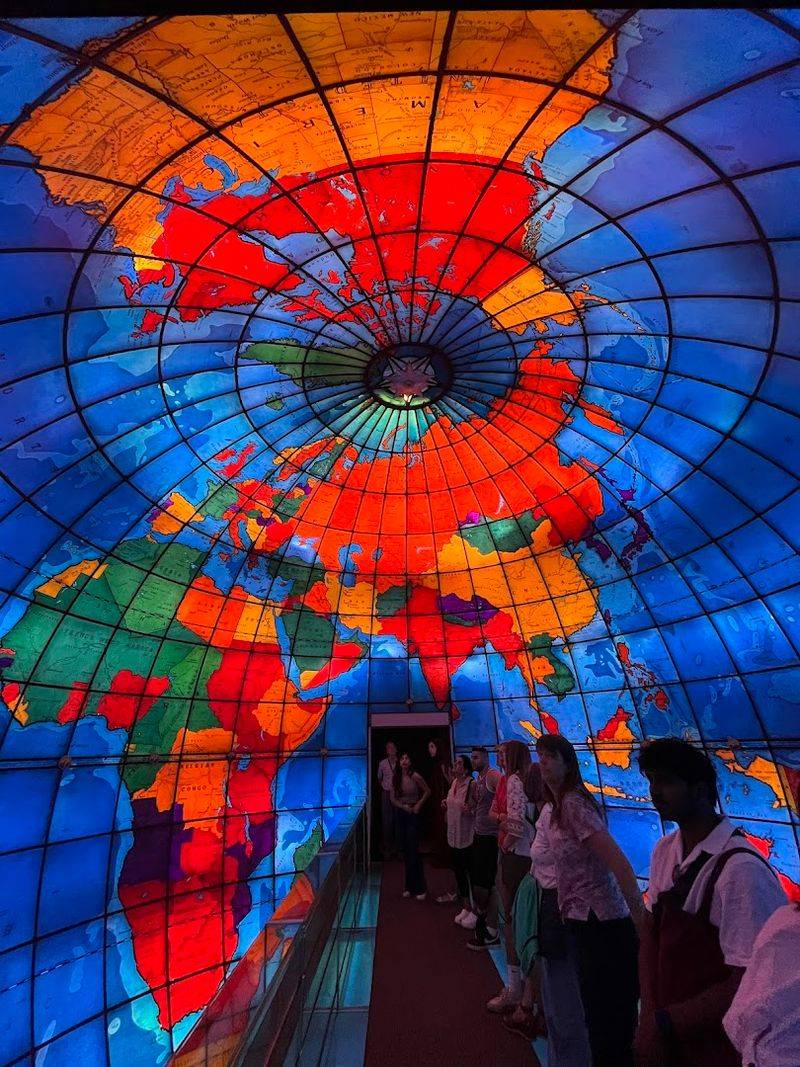
Here is something that surprises almost every visitor: the Mapparium is not just a visual wonder, it is an acoustic one too. Because the globe is a perfect sphere with smooth, hard glass surfaces, sound behaves in completely unexpected ways inside it.
A whisper spoken at one end of the bridge can be heard clearly by someone standing at the opposite end, almost like a secret telephone line made of air.
Stand right in the center of the bridge and say something out loud, and your voice bounces back to your own ears in surround sound. It is disorienting in the best possible way, like hearing yourself from every direction at once.
This acoustic phenomenon is not a trick or a sound system, it is pure physics at work inside a perfectly shaped room.
Tour guides love demonstrating this feature, and visitors of all ages get a kick out of testing it themselves. The effect is so pronounced that the library actually asks guests to minimize noise during the light show so the narration can be heard clearly by everyone.
Science class never felt this cool. The acoustics alone make the Mapparium worth every penny of the affordable admission price.
The 1934 World Map Frozen in Time

One of the most fascinating things about the Mapparium is that it shows the world exactly as it was in 1934, and nothing has been updated since. That means you are looking at a political map that predates World War II, the Cold War, decolonization, and dozens of other massive global changes.
Countries that have since been divided, renamed, or dissolved are still displayed in their original form.
Geography enthusiasts find this especially thrilling. You can spot places like British India, the Belgian Congo, and Siam, names that have long since disappeared from modern maps.
It is a powerful reminder of just how much the world has shifted in less than a century. Historians, students, and curious travelers alike find themselves spending far longer than expected studying the panels.
The 1934 snapshot also sparks great conversations about politics, colonialism, and global change. For younger visitors, it can be a real eye-opener to see how different the world looked just a few generations ago.
The Mapparium does not try to tell you what to think about these changes, it simply shows you the world as it was and lets you draw your own conclusions. That intellectual freedom is part of what makes the experience so memorable.
The Light and Sound Show
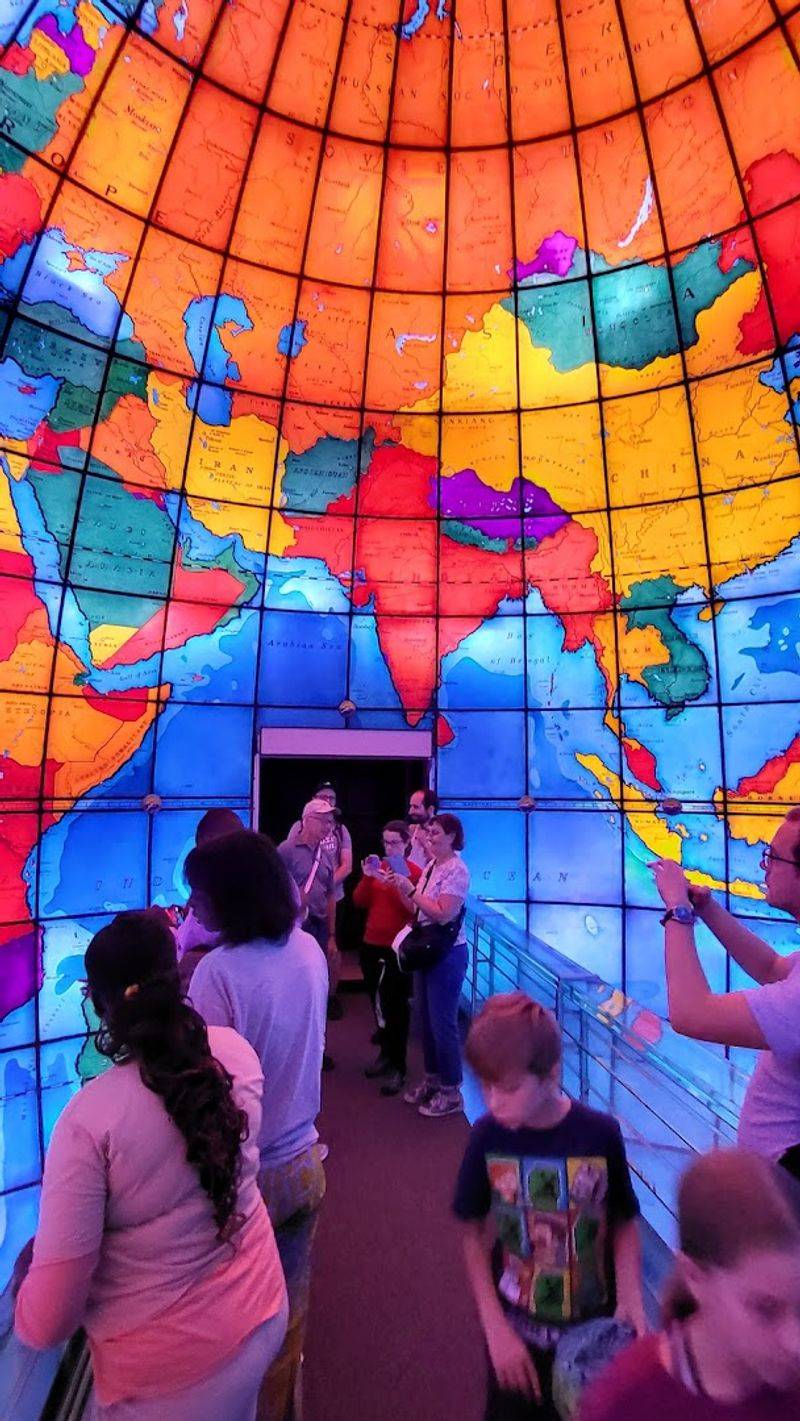
Once you step onto the glass bridge and the doors close behind you, the real magic begins. The Mapparium light and sound show lasts roughly six to ten minutes and takes visitors on a journey across the globe using shifting lights, narration, and ambient sounds.
Different regions of the world are highlighted in sequence as the narration unfolds, creating a deeply immersive storytelling experience.
The show covers themes of human progress, global connection, and the story of our shared world. Natural sounds like birdsong, flowing water, and children playing are woven into the audio to create an emotional atmosphere that feels both uplifting and reflective.
Several visitors have described feeling genuinely moved by the experience, and a few have even mentioned shedding a tear or two.
The narration was updated in 2021, and while some longtime fans preferred the original emotional script, the current version still delivers a powerful message. The combination of the glowing stained glass, the surround-sound acoustics, and the thoughtful narration creates something that feels far bigger than a six-dollar ticket should buy.
Arriving early is a smart move, since your admission covers the entire day and allows you to revisit the show as many times as you like.
The History of the Mapparium’s Construction
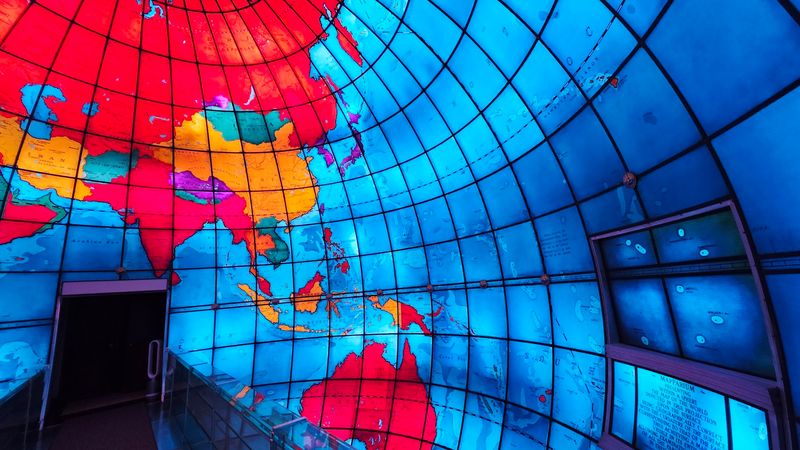
Chester Lindsay Churchill was the architect behind the Mapparium, and he completed it in 1935 as part of the Christian Science Publishing Society building. The project was an extraordinary engineering challenge for its time.
Each of the 608 stained glass panels had to be carefully shaped, colored, and fitted together to form a perfectly smooth, spherical interior surface.
The glass was created using traditional stained glass techniques, with colors chosen to represent different countries, oceans, and territories as they appeared on maps of the era. The entire structure was designed so that visitors could walk through its center on the glass bridge, a concept that was genuinely revolutionary for the 1930s.
Building something this precise without modern computer-aided design tools was a remarkable feat of craftsmanship.
Materials for the globe came from various parts of the world, which felt fitting for a structure meant to represent the entire planet. The exhibit inside the library, titled The Mapparium: An Inside View, features letters, documents, and artifacts that document the construction process in detail.
Exploring these materials gives you a whole new level of appreciation for what you are standing inside. The craftsmanship on display is just as impressive as the visual spectacle itself.
The Mary Baker Eddy Library Building
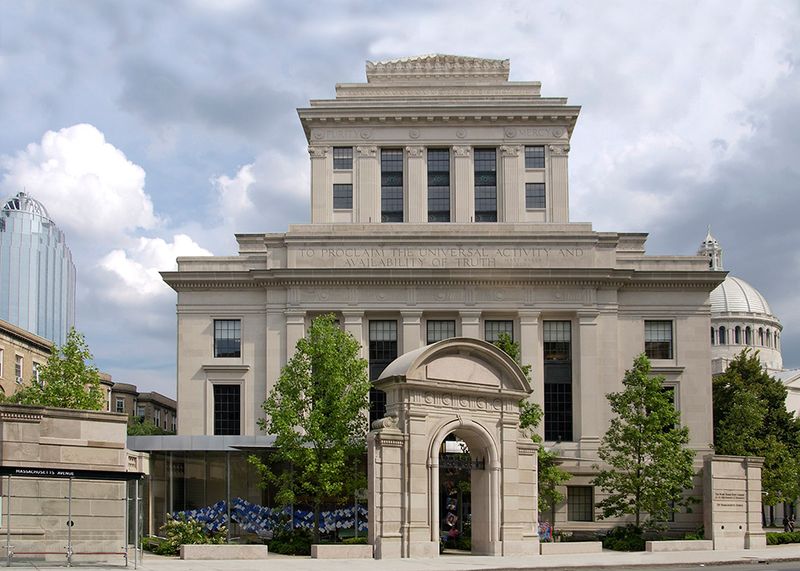
The Mapparium does not stand alone. It lives inside the Mary Baker Eddy Library, a stunning neoclassical building located at 210 Massachusetts Ave in Boston’s Back Bay neighborhood.
The building itself is worth admiring before you even step through the front door. Its grand facade, detailed stonework, and elegant proportions reflect the architectural ambitions of the 1930s at their finest.
Inside, the library is a treasure trove of history and design. From the moment you walk in, thoughtful details catch your eye, from the custom door handles to the carefully designed lighting fixtures.
A chandelier in the main hall is said to track the month and day, a quirky and delightful detail that rewards observant visitors. The building also houses a research room, archival materials, and interactive exhibits about Mary Baker Eddy’s life and legacy.
The surrounding Christian Science Center complex adds even more to the experience. A large reflecting pool stretches between the library and the nearby church, creating a peaceful oasis in the middle of a busy city.
Even if you only came for the Mapparium, the beauty of the building and its surroundings will make you want to linger. Visiting the whole campus feels like a genuine escape from the urban rush outside its gates.
Admission Pricing and Visitor Tips
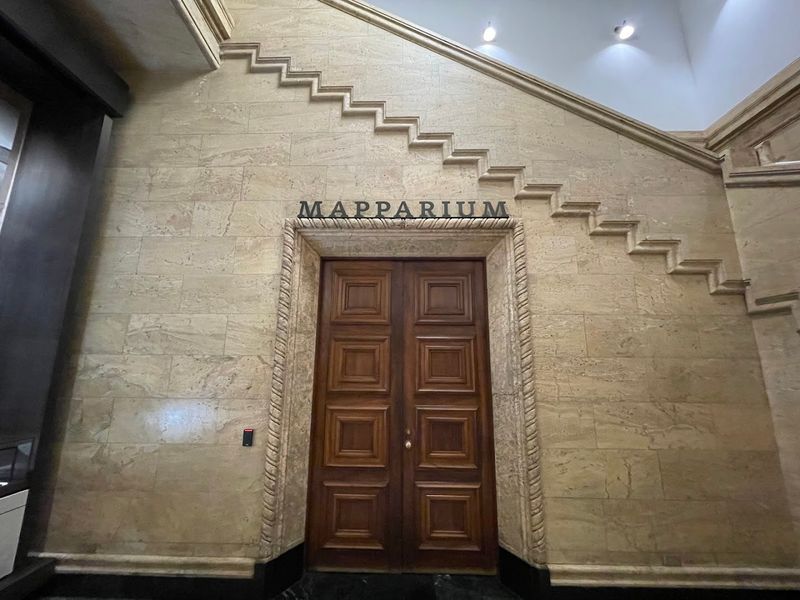
At just six dollars per adult and five dollars for students, the Mapparium is one of the best-value experiences in all of Boston. Children get in free, which makes it a fantastic option for families traveling on a budget.
Walk-in tickets are available, but calling ahead or checking the website is a smart move, especially during busy tourist seasons when spots can fill up quickly.
The library is open Monday through Thursday from 11 AM to 3 PM, so planning your visit around those hours is essential. Arriving early is especially worthwhile because your ticket covers the entire day, allowing you to revisit the globe or explore other exhibits at your own pace.
Strollers are not permitted inside the Mapparium, so parents with very young children should plan accordingly.
Parking can be found on nearby streets, and several visitors have reported finding spots without too much trouble. The staff is consistently described as warm, helpful, and enthusiastic, which adds a lot to the overall experience.
Photography is now allowed inside the Mapparium, a policy change that visitors have welcomed enthusiastically. Capturing the glow of 608 backlit stained glass panels from the center of the world is absolutely a photo opportunity worth taking.
Interactive Exhibits Beyond the Mapparium
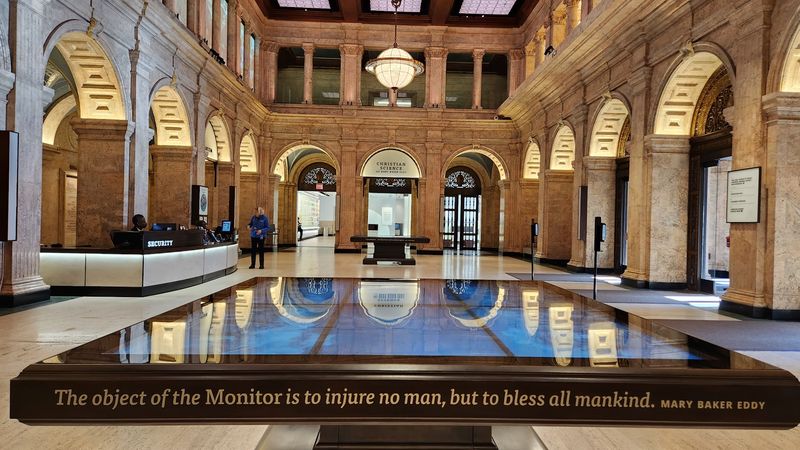
The Mapparium might be the star of the show, but the Mary Baker Eddy Library has plenty more to offer once you step back off the glass bridge. The main floor features a series of exhibits dedicated to the life and legacy of Mary Baker Eddy, the founder of Christian Science and one of the few women in history to establish a major religion.
Her story is genuinely fascinating, regardless of your personal beliefs.
Technology plays a big role in how the exhibits are presented. Large interactive touchscreen tables let visitors browse through historical editions of The Christian Science Monitor, the internationally respected newspaper that Eddy founded in 1908.
Augmented reality features and custom-designed display cases bring archival materials to life in ways that feel fresh and engaging rather than dusty and dated.
One reviewer who manages an innovation center described the technology as genuinely impressive, noting that the exhibits were thoughtfully designed and professionally executed. None of the exhibits feel preachy or agenda-driven, and multiple visitors of different religious backgrounds have noted feeling completely comfortable exploring the space.
The library does a remarkable job of presenting history and ideas in a way that invites curiosity rather than judgment, making it a welcoming place for absolutely everyone.
Why the Mapparium Is a Must-See Boston Attraction
Boston is packed with world-class attractions, from the Freedom Trail to Fenway Park, but the Mapparium manages to stand completely apart from all of them. There is simply nothing else like it anywhere in the world.
You cannot replicate the experience of standing at the geographic center of a glowing, three-story stained glass globe and feeling the entire planet surrounding you in every direction.
Visitors consistently rate it five stars, with reviewers calling it jaw-dropping, stunning, and unlike anything they have ever experienced. The combination of visual art, acoustic wonder, historical significance, and emotional storytelling packs an enormous amount of meaning into a space that takes about twenty minutes to tour.
That efficiency makes it perfect for travelers with busy itineraries who still want something genuinely memorable.
Many visitors admit they only discovered the Mapparium by word of mouth or a chance recommendation, which is a shame because it deserves far more attention than it typically receives. For six dollars and twenty minutes of your time, you get an experience that stays with you for years.
The next time someone asks what to do in Boston, put the Mapparium at the very top of your list. You will not regret it for even a second.