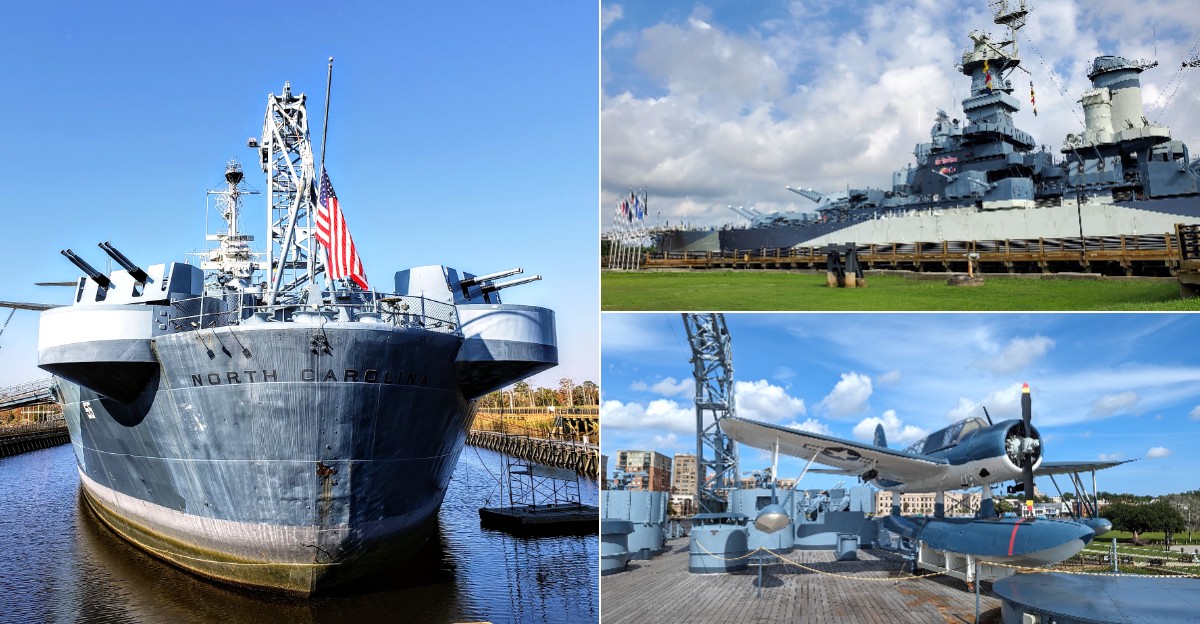
The massive gray hull rises from the Cape Fear River, and standing beside it makes you feel wonderfully small.
Battleship North Carolina is docked across the river from downtown Wilmington, where it has welcomed visitors since the early 1960s.
Commissioned in 1941, this mighty ship took part in major Pacific campaigns during World War II.
Self-guided tours lead you through crew quarters, the galley, engine rooms, and up toward the massive gun turrets.
Kids love climbing the ladders and imagining life at sea for the more than two thousand sailors who once served aboard.
Wear comfortable shoes, be ready for steep steps, and plan plenty of time to explore every deck.
Meet the Ship from the Shore
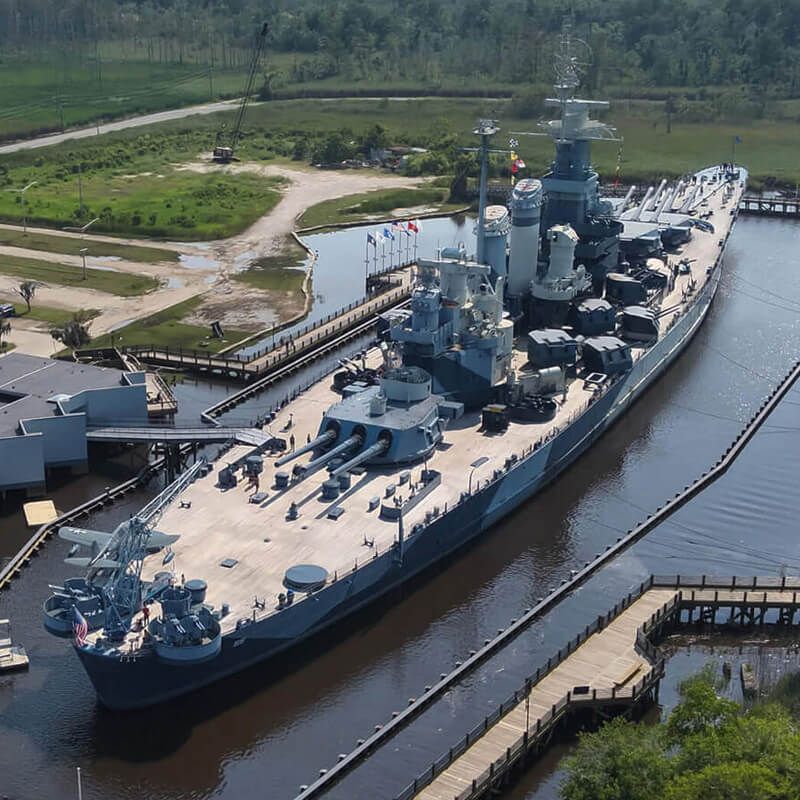
The first glimpse can stop you in your tracks. Long rows of steel, towering structures, and enormous guns make the ship look almost too big to explore. At Battleship North Carolina, 1 Battleship Rd NE, Wilmington, NC 28401, that impressive view is only the beginning.
Start outside and take a slow look at the whole vessel before boarding. From a distance, you can pick out the front and rear gun turrets and see how much room the ship needed for its crew. The walkway around the ship offers more angles for photos and helps you understand its size.
This battleship served during World War II and now stands as a memorial to the people who served aboard her. Inside, preserved spaces and exhibits tell their stories in ways a picture alone cannot. Before heading onto the ship, check the visitor center for current tour information, tickets, and any areas that may be closed for maintenance.
Give yourself enough time to explore without rushing. Many visitors spend two hours or more aboard, especially if they stop to read the signs. A visit works best when you treat the ship as both a remarkable machine and a place where real people lived.
Stand Beside the Main Guns
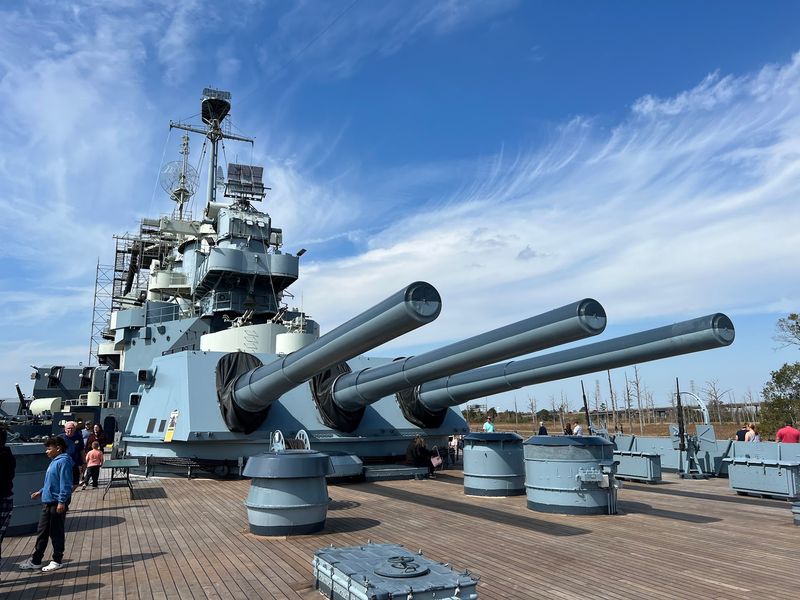
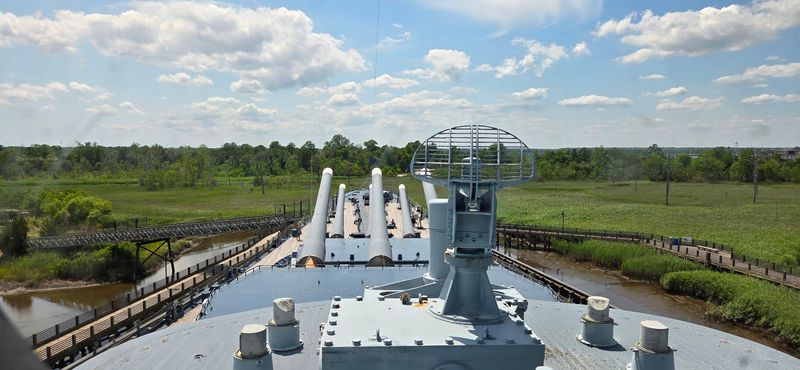
Those giant barrels are hard to ignore. The ship’s main guns fired 16 inch shells, and seeing the turrets up close makes their size easier to grasp. They also show why a battleship needed so many sailors working together.
As you walk the open deck, notice how much space the turrets take up. Each one was part of a larger system that stored shells, moved them into place, and aimed the guns. It took careful training to make those steps work safely, especially during battle.
Look for exhibit signs that explain the weapons rather than guessing what every piece does. Some tour areas may let you see more of a turret’s inner workings, but access can change. Never cross a barrier or try to climb onto equipment that is not part of the marked route.
The guns offer an easy starting point for talking with children about teamwork. Ask them how many different jobs they think were needed to fire one gun. Then compare that answer with what they learn while exploring the ship.
Take photographs from a safe spot on the deck, and leave room for other visitors to pass. Even without firing, these weapons tell a powerful story about the demands sailors faced at sea.
Follow the Crew’s Daily Routine
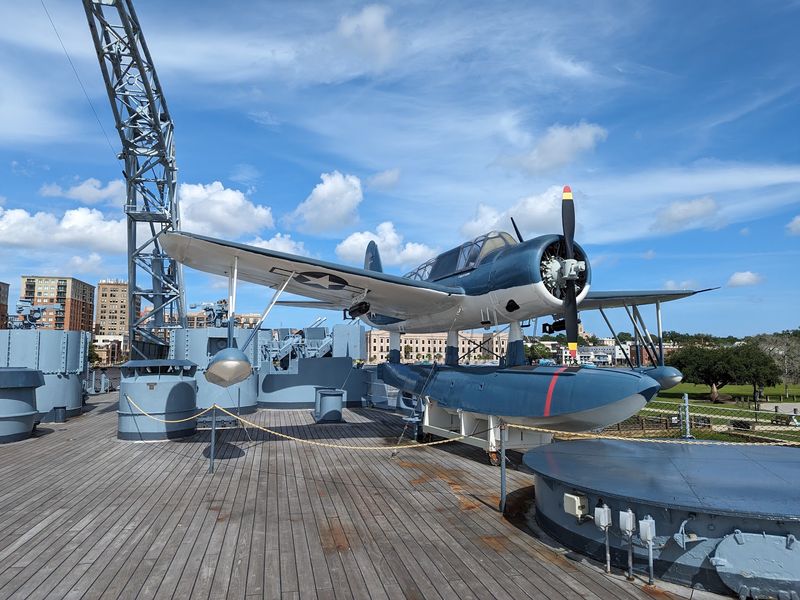
A row of bunks can say as much about war as a row of guns. Below deck, living spaces show how sailors shared a crowded home for long stretches at sea. There was little privacy, and ordinary tasks had to fit around the ship’s busy schedule.
Look for the sleeping areas, eating spaces, and other rooms used in daily life. Imagine getting dressed, finding a meal, and reporting for work while hundreds of others did the same. The narrow passages help explain why keeping belongings neat mattered aboard a working ship.
Signs and crew memories add human details that a list of dates might miss. A sailor could be tired, hungry, homesick, or excited, just like anyone else. Reading those accounts slowly gives the rooms more meaning than a quick walk through them.
Children can pick one everyday activity and compare it with life at home. Where would they sleep, wash up, or spend a little free time? Questions like those make the history personal without pretending that wartime service was easy.
Some spaces are small, so let others finish looking before stepping inside. Pause now and then to picture the ship filled with voices and footsteps, not just museum visitors.
Head Down to the Machinery Spaces
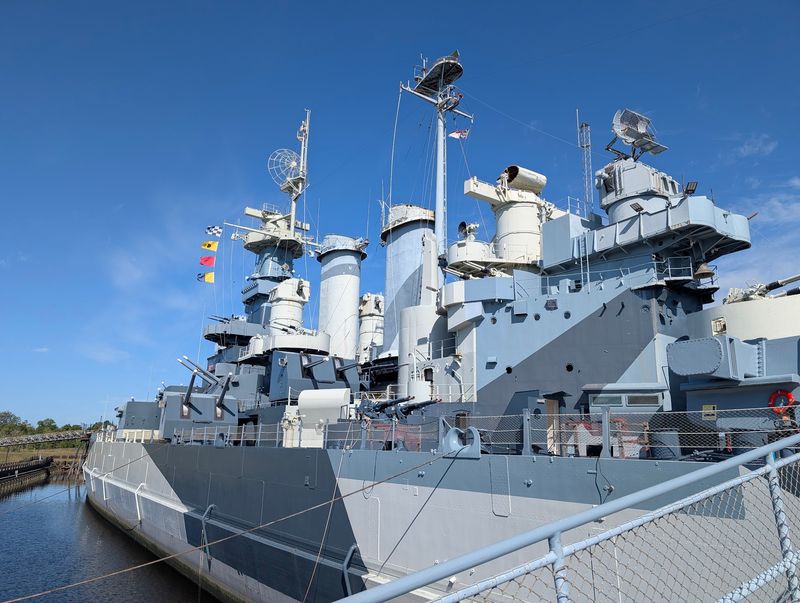
Far below the open deck, the ship feels like a maze of pipes and machinery. These spaces helped turn a massive steel vessel into something that could move across the ocean. Even when the equipment is quiet, its scale hints at the noise and heat sailors once knew.
Follow the marked tour route to see the machinery areas that are open to visitors. Stop at the signs for plain explanations of what different systems did. You do not need to understand every gauge to appreciate how closely the parts had to work together.
Think about the crew members assigned to these rooms. Their work was less visible than the action on deck, but the ship depended on them. Keeping machinery running during a long voyage took skill, attention, and steady teamwork.
Lower spaces can feel warm, particularly in summer. Wear comfortable shoes, bring water if permitted, and take breaks before you feel worn out. If you dislike tight rooms, it is fine to skip a space and continue along a route that feels comfortable.
Watch your footing as you move between compartments. The ship was designed for service, not for the wide hallways found in modern museums. Moving slowly also gives you more time to notice the smaller details.
Find Your Way Through the Ladders
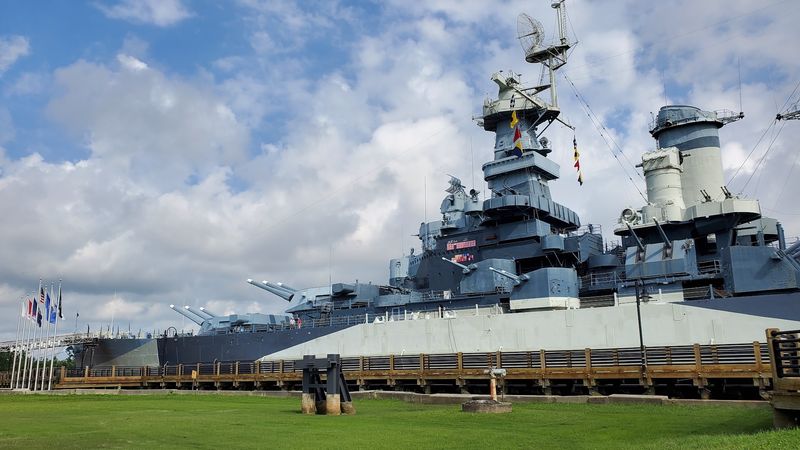
Going from one deck to another can feel like learning a new way to walk. The ship has steep ladders, raised doorways, and tight turns that are very different from ordinary stairs. They make exploring exciting, but they also deserve your full attention.
Hold the handrails and take one step at a time. Shoes with a good grip are more helpful than sandals that might slip. Keep your hands free when possible, and let someone finish a ladder before you begin.
The low openings between rooms can surprise taller visitors. Look ahead for signs, watch your head, and do not rush to keep up with a group. If you are visiting with children, remind them that this is a historic ship rather than a playground.
Many lower areas require climbing and may not work for every visitor. The surrounding walkway and main deck can offer ways to enjoy the ship without following the full interior route. Ask staff about current access before buying tickets if stairs or narrow spaces could be a problem.
Those unusual passages are also part of the lesson. Every climb shows how sailors traveled between jobs, meals, and sleeping spaces each day. Take your time, stay aware of others, and let the ship set your pace.
See Where Orders Took Shape
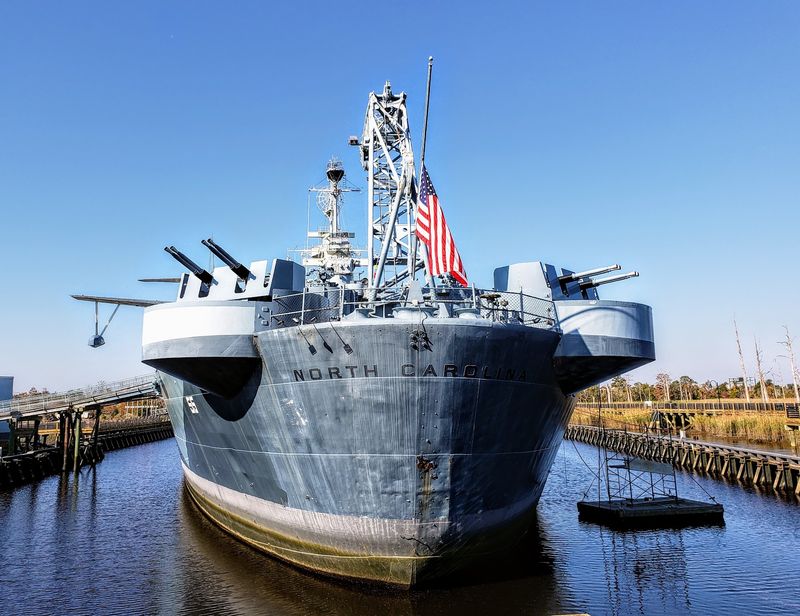
High on the ship, the view changes from crowded rooms to a commander’s outlook. The bridge area helps visitors picture how officers watched the water and directed the vessel. It was a place for serious choices, not simply a spot with a good view.
Notice the controls, windows, and instruments in the spaces open on your route. Ask what information the crew needed before changing course or responding to danger. The answers often involved people in other parts of the ship sending reports and following orders.
That connection makes the bridge a useful place to think about communication. Without clear messages, even a powerful ship could struggle to act as one team. Read the nearby signs to learn what a room was used for before moving on to the next one.
Some visitors enjoy tracing a message in their minds. Imagine someone spotting a problem, reporting it, and waiting while crew members in several areas respond. It is a simple way to understand why training mattered as much as equipment.
Keep hands off preserved controls unless a sign clearly invites you to touch them. Access to particular rooms can vary, so follow posted directions. Whether you spend two minutes or twenty, this part of the visit turns the ship into more than a collection of steel.
Listen for the People Behind the History
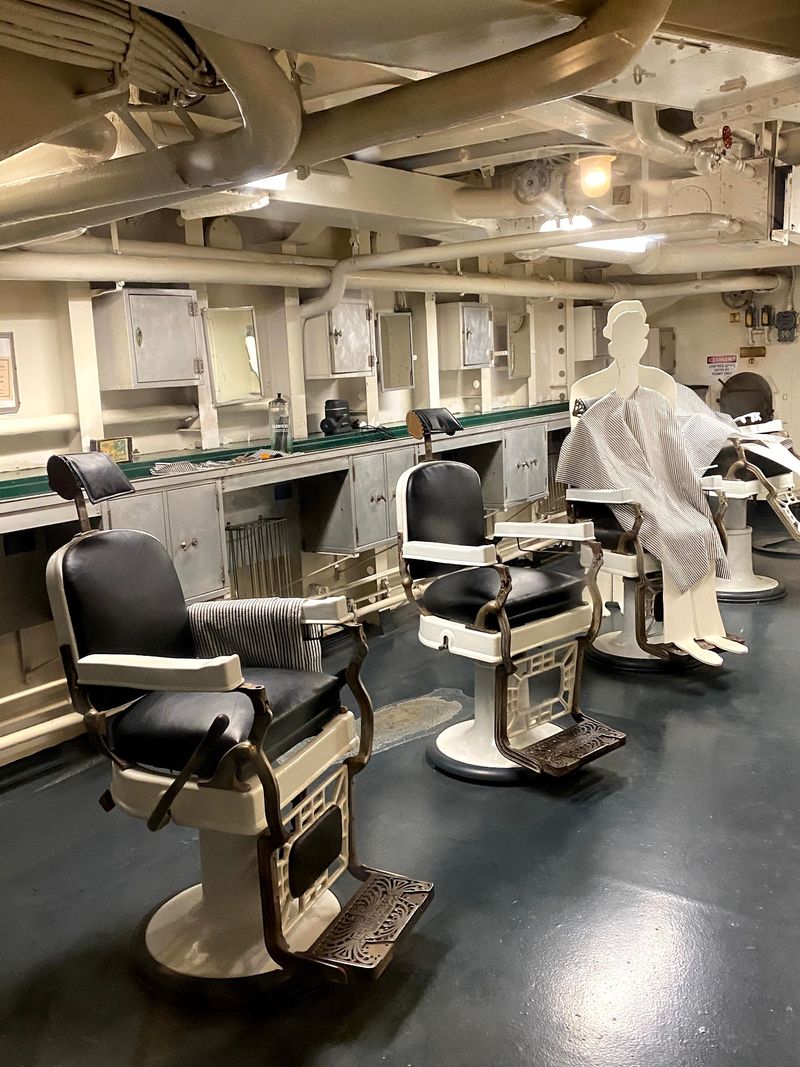
A photograph of a young sailor can make a huge battleship feel suddenly personal. Throughout the museum, displays help connect the ship’s World War II service with the people aboard. Their experiences give meaning to the rooms, equipment, and battle history around you.
Take time to read more than the largest headline on each sign. Crew photographs and remembered details can reveal what sailors did during ordinary days and difficult moments. If you are touring with family, invite everyone to share one fact they did not expect to learn.
The ship also serves as a memorial. That purpose calls for a little care as you explore, especially near displays about service and loss. You can still be curious and have fun while treating those stories with respect.
A guided tour may offer more background if one is available during your visit. Check current choices with the museum, since tour times and access can change. A self guided visit also works well when you pause to read and give yourself time to think.
Before leaving a display, look back at the nearby room. Try to connect the person’s story with the space where they might have worked or rested. History becomes easier to remember when it has a human face.
Plan a Visit You Can Enjoy
A little planning can turn a hurried stop into an afternoon you remember. The ship has many decks and exhibits, so leave at least a couple of hours for a self guided visit. Add extra time if you like reading signs, taking photographs, or resting between climbs.
The museum lists daily operating hours, but check its official website before you go. Hours, ticket prices, guided tour choices, and open areas can change. Arriving earlier in the day may also make a warm weather visit more comfortable.
Dress for walking rather than for a quick indoor exhibit. Choose sturdy shoes and comfortable clothes, and consider bringing water if current rules allow it. Use the restrooms before boarding so you can focus on exploring.
Families can make a simple plan together. Pick a few must see spaces, such as the guns, living quarters, or machinery areas, then leave room for surprises. If someone in your group cannot manage steep ladders, ask staff which parts are accessible.
Finally, remember that the ship is both a museum and a memorial. Follow barriers, give other visitors space in narrow passages, and take breaks whenever you need them. The best visit is not the fastest one. It is the one that lets you notice how much work and history the vessel holds.