
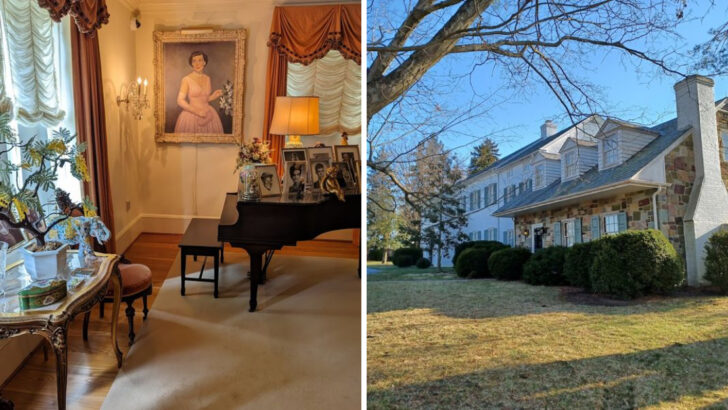
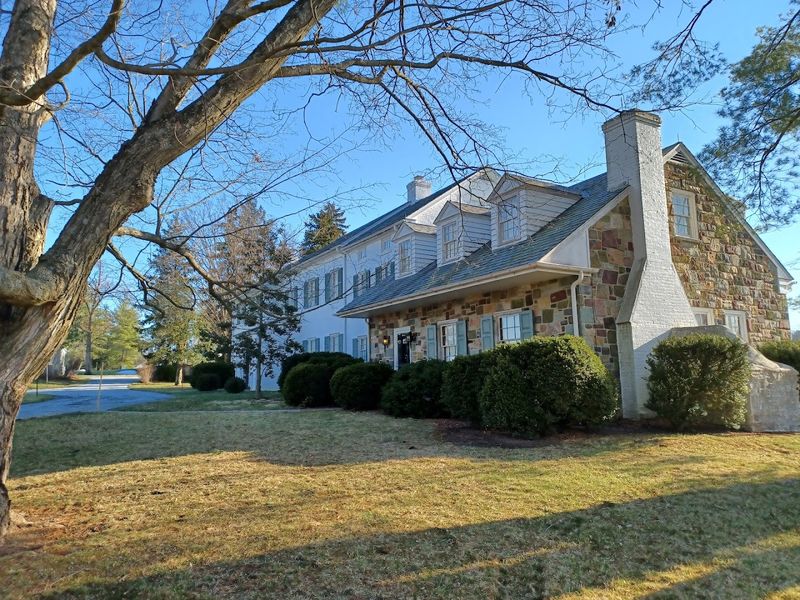
Tucked just beside the rolling fields of Gettysburg, Pennsylvania, the Eisenhower National Historic Site offers something rare — a chance to walk through the only home a U.S. president ever truly called his own.
Unlike grand White House rooms built for ceremony, this modest farmhouse tells the story of a man, his wife, and their quiet life away from the spotlight.
Visiting feels less like touring a monument and more like stepping into someone’s living room, full of personal touches that make history feel remarkably close.
The Only Home the Eisenhowers Ever Owned
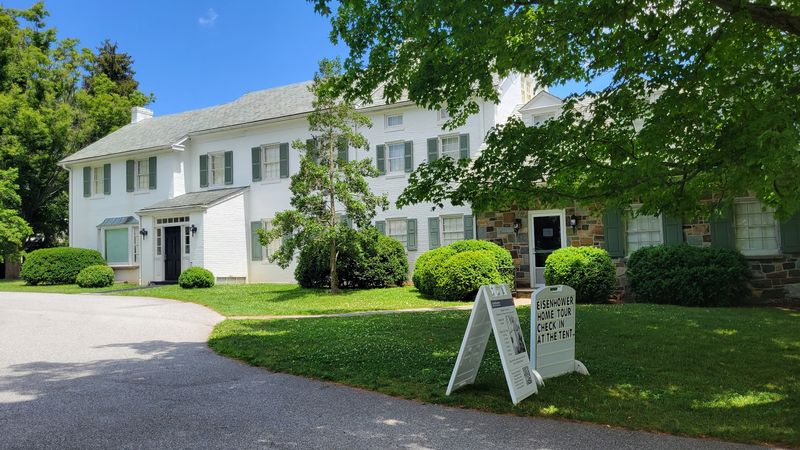
After a lifetime of packing boxes and moving between military posts around the world, Dwight and Mamie Eisenhower finally did something most people take for granted — they bought a home. That moment came in 1950, and it happened right here in Gettysburg, Pennsylvania.
For a couple who had lived in government quarters and borrowed spaces for nearly four decades, this farm represented something deeply emotional: permanence.
Ike was already a five-star general and a celebrated World War II hero when they purchased the property. Still, neither he nor Mamie wanted something flashy or imposing.
They wanted a place that felt real — somewhere they could actually breathe. The farmhouse, though rundown at the time, had good bones and even better potential.
Visitors today often feel surprised by how personal the space feels compared to other presidential sites. There are no velvet ropes blocking off every corner, no overwhelming grandeur demanding your admiration.
Just a home that belonged to two real people who happened to shape the twentieth century. Knowing it was their one and only owned property makes every room feel quietly extraordinary.
A Peaceful Escape from the White House
Imagine carrying the weight of leading the free world every single day. Now imagine driving out to a quiet farm where the biggest sound is wind moving through the fields.
That was exactly what the Gettysburg retreat offered President Eisenhower during his two terms in office from 1953 to 1961.
The farm became his mental reset button. On weekends when the pressure of Cold War diplomacy, budget battles, and global crises became too heavy, Ike would head to Gettysburg.
He painted in his studio, played golf on a small putting green he had installed on the property, and walked the land with the kind of calm that only open space can provide.
Mamie loved it here too. She found the slower rhythm of farm life grounding in ways that Washington, D.C. simply could not offer.
The couple entertained friends informally, cooked meals that felt nothing like state dinners, and simply existed as two ordinary people for a little while. For visitors today, standing on that same ground brings a surprisingly moving reminder that even the most powerful leaders need a quiet place to come home to.
A Cold War Meeting Ground
Not every important meeting between world leaders happens in a marble-floored conference room. Some of history’s most significant conversations took place right here on this quiet Pennsylvania farm.
Eisenhower understood something clever — that a relaxed setting could soften tensions in ways that formal diplomacy sometimes could not.
Soviet Premier Nikita Khrushchev visited the farm in September 1959, a moment that made headlines around the world. The two men walked the grounds together, looked at the cattle, and spoke in a setting that felt almost neighborly.
It was a deliberate choice by Eisenhower, who believed that showing Khrushchev ordinary American life might bridge some of the ideological distance between their two nations.
Other world leaders also made the trip to Gettysburg. British Prime Minister Harold Macmillan, French President Charles de Gaulle, and several others found themselves sitting in the farmhouse living room or strolling across the pasture, talking through some of the most dangerous geopolitical issues of the era.
The farm functioned as an unofficial annex to the White House — informal enough to encourage honesty, yet significant enough to make history. Few visitors realize just how much of the Cold War was quietly shaped right here.
A Working Farm with Real Purpose
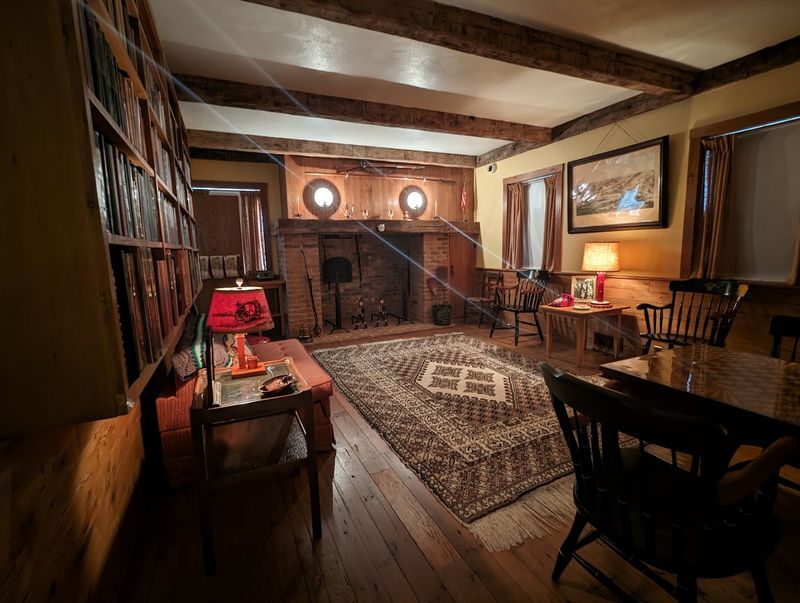
Owning a farm was never just a symbolic gesture for Eisenhower — he actually worked it. With genuine enthusiasm, he threw himself into cattle breeding, soil improvement, and land management.
His herd of Black Angus cattle became something he was genuinely proud of, and he tracked their bloodlines and health records with the same precision he once applied to military strategy.
He was particularly interested in conservation agriculture, which was a forward-thinking approach for the 1950s. Eisenhower worked with local agricultural experts to improve the quality of his soil through crop rotation, cover crops, and careful testing.
The farm became a small but meaningful example of responsible land stewardship during a time when American farming was changing rapidly.
Visitors today can still see the pastures where his cattle grazed, and the barn structures that supported the operation. There is something grounding about realizing that the man who commanded the D-Day invasion also spent his free time worrying about soil pH levels and calf weights.
It humanizes him in an unexpected way. The farm was never just a backdrop — it was a real, functioning agricultural operation that Eisenhower cared about deeply and personally managed throughout his retirement years.
Mamie Eisenhower’s Personal Touch
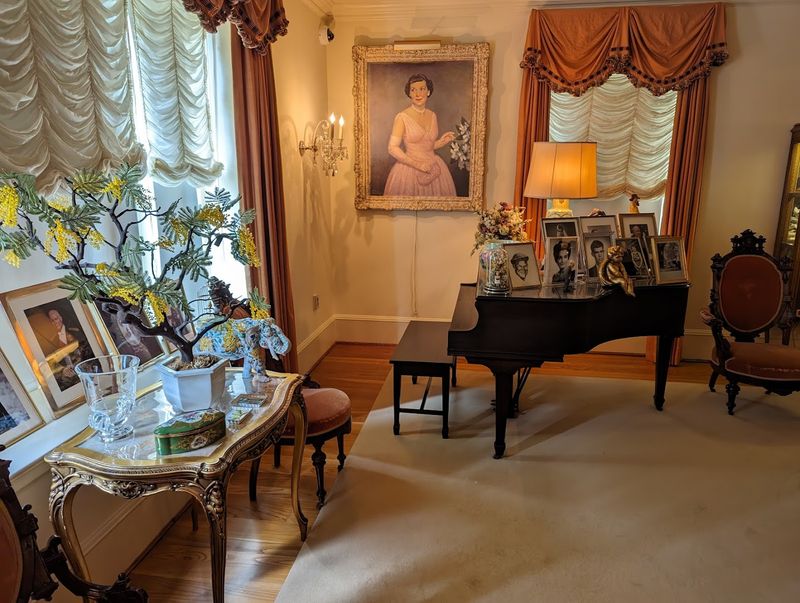
Walk through the front door of the Eisenhower farmhouse and you will immediately feel Mamie’s presence everywhere. She was the one who truly shaped this home, and she did it with the confident eye of someone who had waited a long time for a space she could call completely her own.
When the couple purchased the property, the original structure was in rough shape. Mamie saw past the damage and envisioned something warm, livable, and full of color.
Her signature style leaned heavily toward pink — a color she famously adored — and it shows up throughout the house in fabrics, wallpaper, and accessories. She worked closely with designers and contractors throughout the 1950s renovation, making decisions that ranged from the kitchen layout to the bathroom tiles.
Every choice reflected her personality: cheerful, practical, and deeply focused on comfort over formality.
What makes Mamie’s role so compelling is that this renovation was not a public project — it was personal. She was creating a sanctuary for herself and her husband, not a showroom.
The result is a home that feels genuinely inhabited rather than staged. Touring the rooms she designed gives visitors a window into her world that no biography could fully capture.
She was far more than a First Lady — she was the heart of this home.
Surprisingly Modest, Deeply Lived-In Interiors
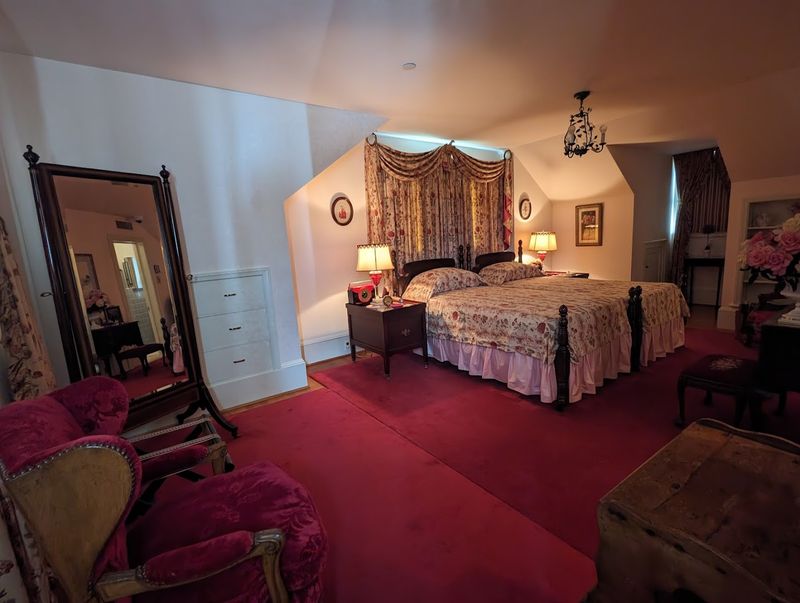
There is a moment that catches most visitors off guard the first time they step inside the Eisenhower farmhouse. They expect grandeur — some echo of presidential power reflected in towering ceilings or gilded furniture.
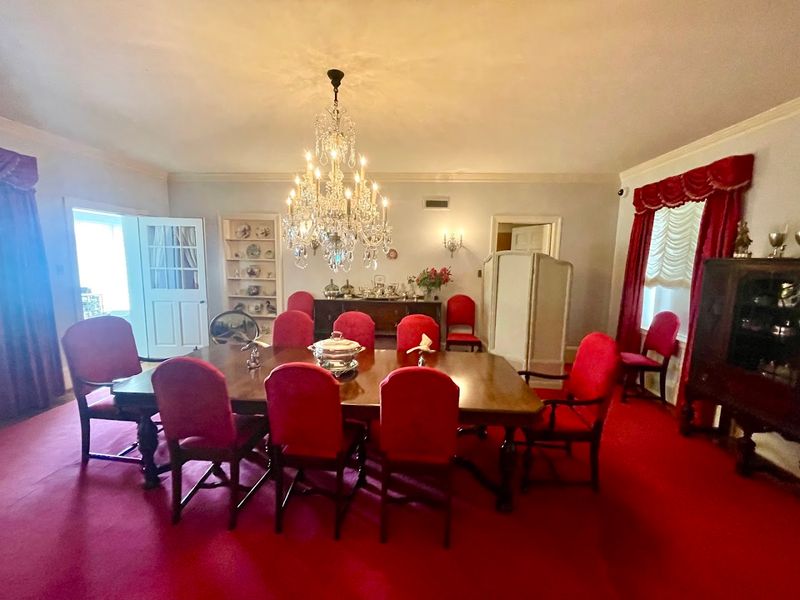
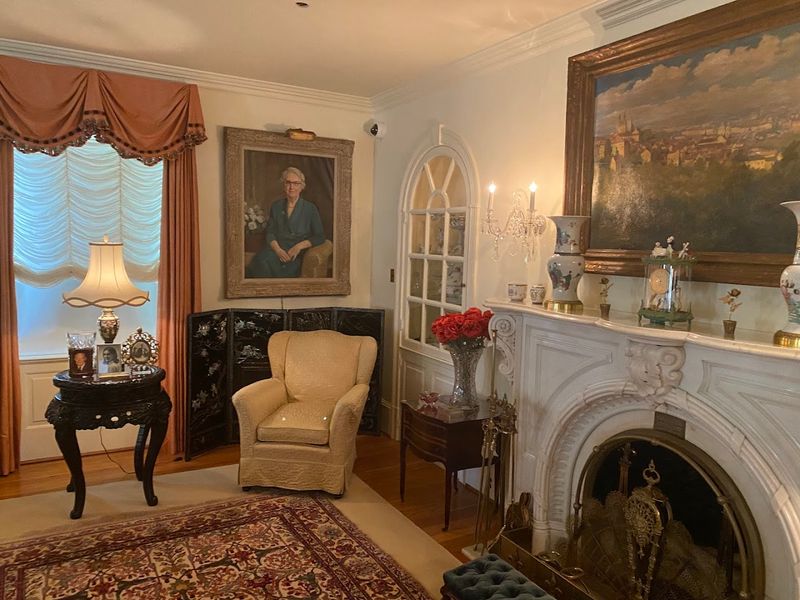
Instead, they find something that looks a lot like a home their grandparents might have lived in. Comfortable chairs, family photos, everyday dishes — a life clearly and genuinely lived.
The rooms are not large by any standard of wealth or prestige. The kitchen is functional rather than impressive.
The bedrooms feel cozy rather than commanding. Personal belongings are scattered throughout — books Eisenhower actually read, gifts from foreign dignitaries displayed alongside ordinary knick-knacks, and Mamie’s collection of small decorative pieces that she gathered over a lifetime of traveling the world.
That sense of authenticity is what separates this site from many other presidential homes. Nothing here was arranged purely for public consumption.
The Eisenhowers lived in these rooms, ate at that table, and watched television in that sitting area. The National Park Service has worked carefully to preserve that lived-in quality so that visitors can feel the difference between a museum and a home.
Spending time in these rooms quietly reminds you that even history’s biggest figures were, at their core, just people.
Unique Features You Can Still Explore
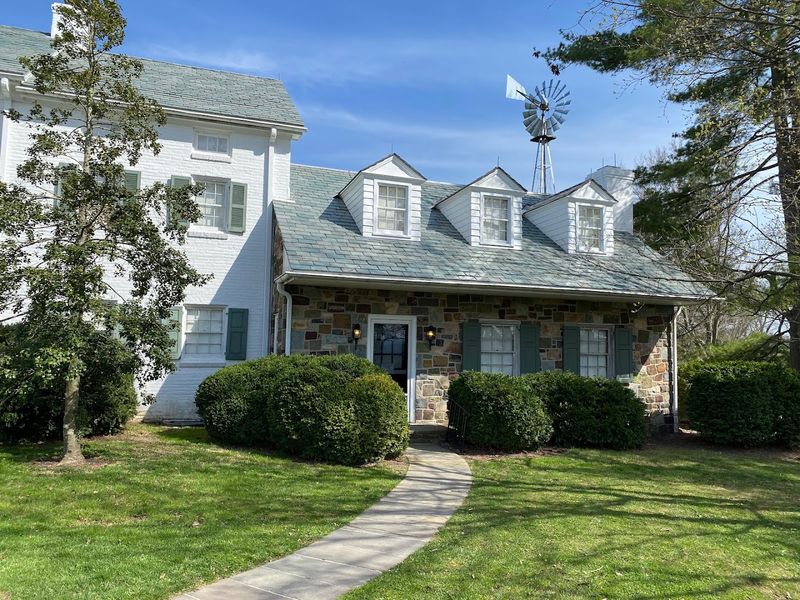
Beyond the farmhouse itself, the property holds several fascinating structures that most visitors do not expect to find. The 1887 bank barn is one of the most striking — a classic Pennsylvania agricultural building built into a hillside so that both levels can be accessed from ground level on different sides.
It survived long before the Eisenhowers arrived and still stands as a reminder of the land’s deeper agricultural history.
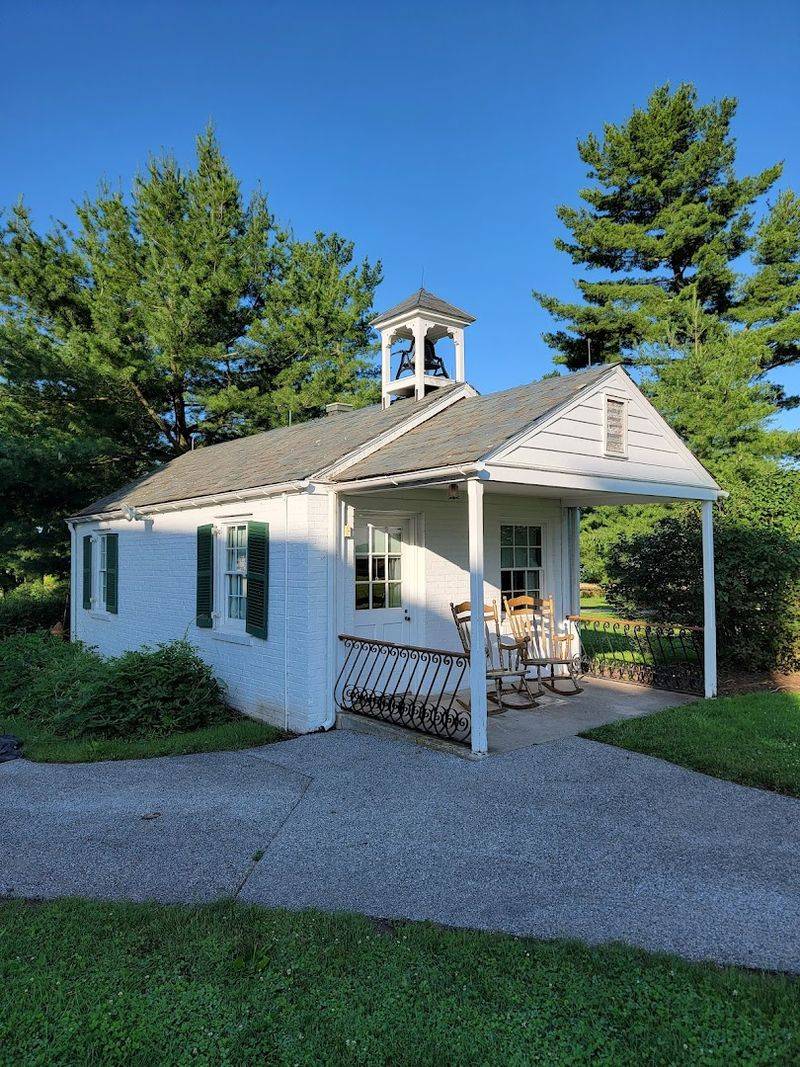
Perhaps the most surprising feature is the small milk house, which was quietly repurposed during Eisenhower’s presidency. Secret Service agents used it as a security post, monitoring the property while trying to blend into the rural landscape as inconspicuously as possible.
Standing beside it today, you can almost picture the tension between protecting a sitting president and maintaining the casual atmosphere Ike worked so hard to create here.
There is also a skeet shooting range on the property, a putting green, and a small greenhouse that Mamie used for growing plants. Each of these features adds another layer to the story of how the Eisenhowers actually spent their time here.
Exploring the full grounds rather than just the farmhouse interior gives visitors a much richer picture of daily life — one that was surprisingly active, varied, and rooted in genuine enjoyment of the land.
A Front-Row Seat to Gettysburg History
Living next door to one of the most significant battlefields in American history was not a coincidence for Eisenhower — it was a deliberate choice rooted in deep personal meaning. As the Supreme Commander of Allied Forces during World War II, he had spent years thinking about military strategy, sacrifice, and the cost of conflict.
Gettysburg, where over fifty thousand soldiers became casualties in three days in July 1863, resonated with him on a profound level.
He walked the battlefield regularly, sometimes alone, sometimes with visiting dignitaries or military historians. He knew the terrain intimately and could discuss the tactical decisions of both Union and Confederate generals with impressive detail.
For Eisenhower, Gettysburg was not just a tourist attraction next door — it was a living classroom about leadership, courage, and consequence.
Visitors to the Eisenhower farm today can look across the fields and see the same ridgelines and monuments that Ike saw from his porch. The two sites — the battlefield and the farm — are managed together under the National Park Service, and many visitors choose to explore both in a single day.
Doing so creates a powerful historical conversation across nearly a century, connecting the Civil War era to the Cold War through the landscape they both share.
Preserved Just as He Left It
In 1967, Dwight and Mamie Eisenhower made a remarkable decision. Rather than selling the farm or passing it to family members, they donated the entire property to the National Park Service.
Their wish was straightforward — they wanted the public to be able to experience it, and they wanted it preserved as close to its original condition as possible. That decision has made all the difference for visitors today.
The National Park Service accepted the gift and has spent decades honoring that intention. Furniture remains in its original placement.
Personal items that the Eisenhowers chose to leave behind are still displayed exactly where they left them. Restoration work has focused on maintaining authenticity rather than upgrading or modernizing any aspect of the property.
The result is one of the most genuinely preserved presidential homes in the entire country.
Walking through the farmhouse today, you get the distinct feeling that the Eisenhowers simply stepped out for a walk and might return at any moment. That quality — rare in any historic site — is what makes this place so emotionally affecting for many visitors.
History here does not feel distant or dusty. It feels present, warm, and remarkably close.
The preservation effort is quiet but extraordinary, and it honors the Eisenhowers’ legacy in exactly the way they hoped it would.
Essential Visitor Information
Planning a visit to the Eisenhower National Historic Site is straightforward, but knowing a few key details ahead of time will make your experience much smoother. The farm is located at 243 Eisenhower Farm Road, Gettysburg, PA 17325.
Access to the property is managed through the Gettysburg National Military Park Visitor Center, where you can purchase shuttle tickets that transport you directly to the farm. Private vehicles are not permitted on the farm road itself, so the shuttle is your primary way in.
Tours are available seasonally, typically running from spring through fall, though hours can vary. Guided tours led by knowledgeable park rangers are highly recommended because they bring the rooms and stories to life in ways that self-guided exploration simply cannot match.
Children often find the ranger-led programs especially engaging, since they are designed to be interactive and age-appropriate.
Admission fees are modest, and the site is part of the National Park system, meaning America the Beautiful passes are accepted. Wear comfortable shoes since you will be walking both indoors and across the outdoor grounds.
Arriving early in the day helps you avoid crowds, especially during peak summer months. Photography is encouraged throughout the property, so bring your camera.
Allow at least two hours to fully appreciate everything the farm has to offer.