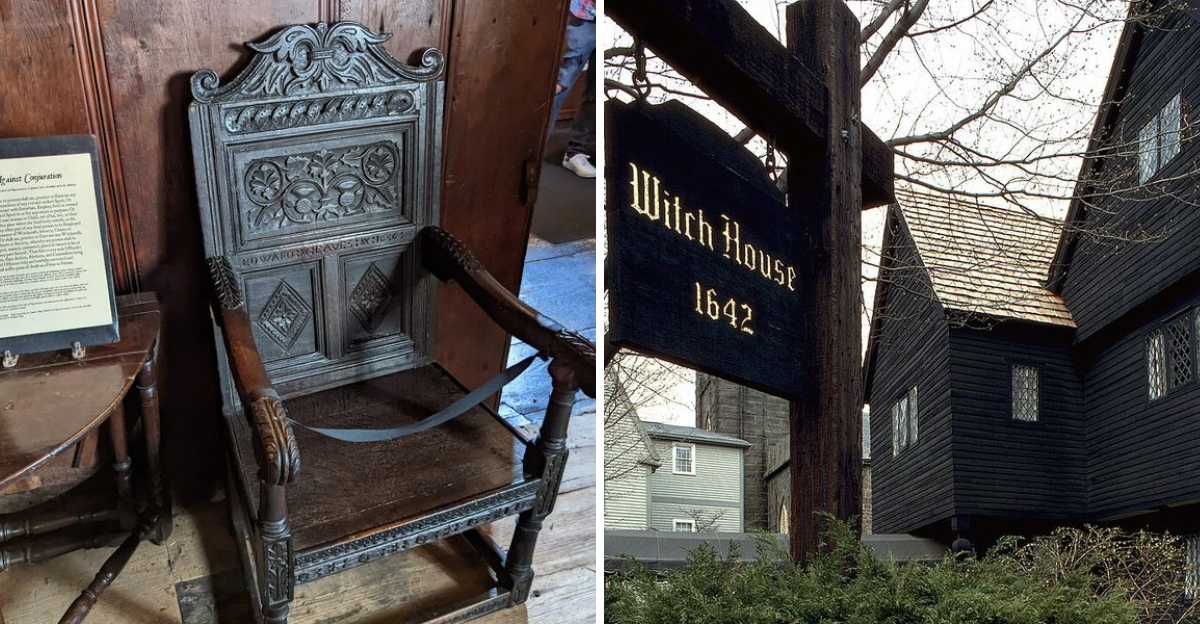
Tucked along Essex Street in Salem, Massachusetts, stands a dark, angular house that has witnessed one of the most terrifying chapters in American history.
The Witch House is the only building still standing with a direct connection to the Salem Witch Trials of 1692, making it unlike any other landmark in the country.
Inside its creaking rooms and shadowy hallways, real decisions were made that changed — and ended — the lives of innocent people.
If you’ve ever wanted to stand exactly where history happened, this is the place.
The Only Surviving Structure Tied to the Trials
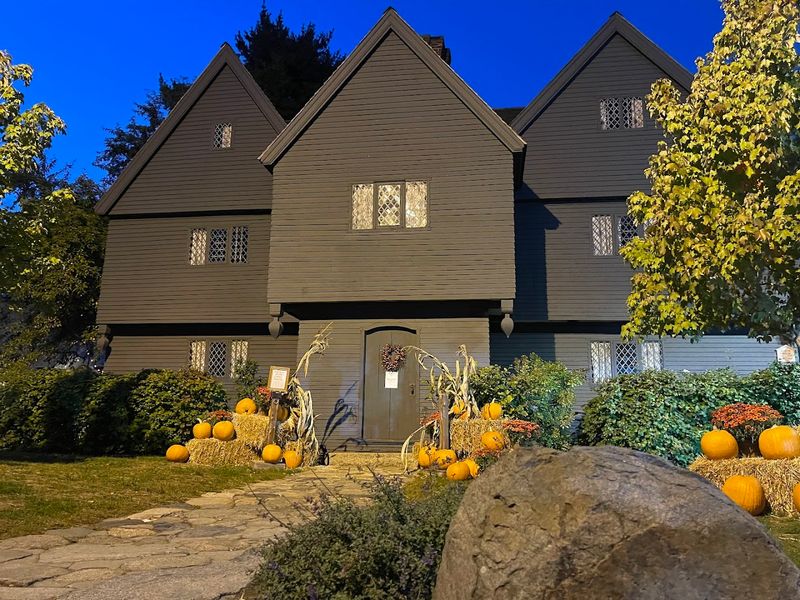
Most historic sites can only point to a plaque or a patch of ground and say, “something happened here.” The Witch House in Salem is different — the actual building is still there, still standing, still carrying the weight of 1692 on its old wooden beams.
No other structure in Salem can claim a direct physical connection to the Salem Witch Trials. Other related buildings have been demolished, burned, or lost to time.
This one survived, and that alone makes it extraordinary. Walking up to its dark facade feels like approaching a door that opens directly into the past.
Historians and preservationists consider it one of the most irreplaceable colonial-era structures in New England. Whether you’re a history enthusiast, a curious traveler, or a student doing research, seeing this building in person gives you something no textbook can — a real, tangible link to events that shaped American law, religion, and culture forever.
Home of Judge Jonathan Corwin
Jonathan Corwin wasn’t just a homeowner — he was one of the most powerful men in Salem during the witch trials. As a magistrate, he had the legal authority to question accused individuals and decide whether their cases would move forward to trial.
His decisions helped determine who lived and who died.
Corwin purchased the house around 1675, and it remained in his family for generations. When the hysteria of 1692 erupted, his home became more than a private residence.
It became a place where the machinery of accusation and judgment quietly turned.
Understanding Corwin’s role helps visitors appreciate why this particular house matters so much. He wasn’t a bystander — he was an active participant in a system that condemned innocent people.
Visiting his former home forces you to reckon with how ordinary people in positions of power can contribute to extraordinary injustice. That’s a lesson that feels just as relevant today as it did over three hundred years ago.
A Place Where Accusations Were Examined
Picture being dragged before a magistrate in your own neighbor’s house, terrified, confused, and unable to prove something that isn’t even real. That was the reality for many people accused of witchcraft in 1692.
Some of those pretrial examinations took place right here, in the rooms of the Witch House.
These weren’t formal courtroom trials — they were early-stage interrogations meant to decide whether there was enough evidence to send someone to the higher court. The atmosphere must have been suffocating.
Accusers would point and scream, and the accused had almost no way to defend themselves within the belief system of the time.
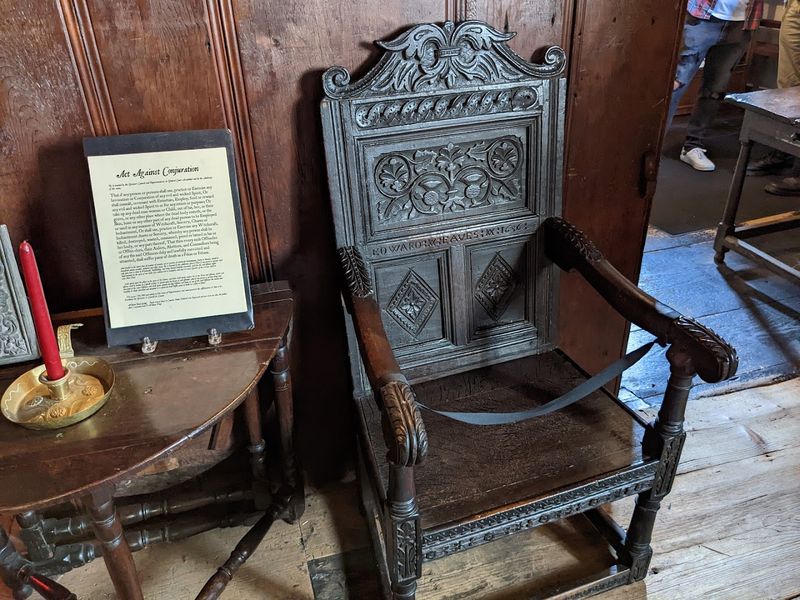
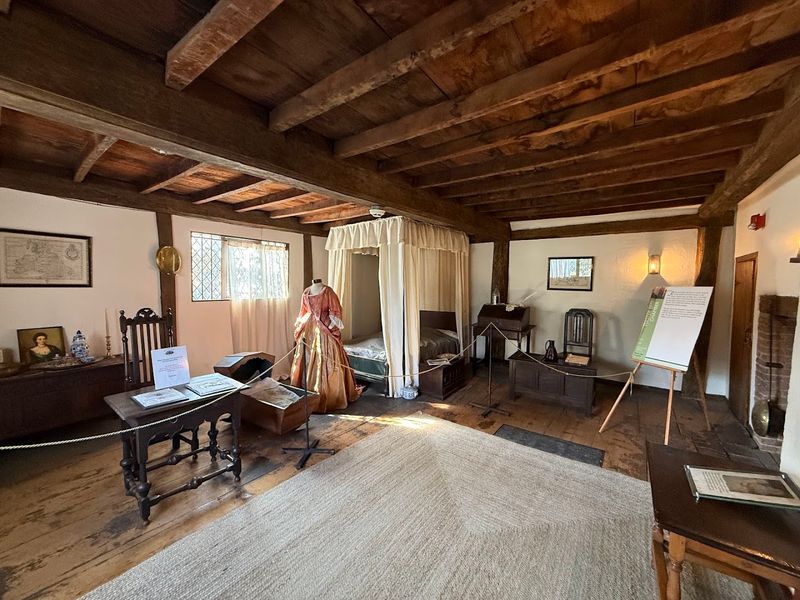
Walking through the house today, it’s worth pausing in each room and imagining what those scenes looked like. The low ceilings, the dim lighting, the heavy wooden furniture — all of it creates an atmosphere that makes the past feel uncomfortably close.
History isn’t always comfortable, and the Witch House doesn’t let you forget that.
Deep Connection to the Salem Witch Trials
More than 200 people were accused of witchcraft during the Salem Witch Trials. Nineteen were executed by hanging, one man was pressed to death with heavy stones, and several others died in prison while awaiting trial.
The scale of the tragedy is staggering, especially when you remember that every single person accused was innocent.
The Witch House sits at the center of this story. It connects visitors not just to one person or one event, but to the entire web of fear, suspicion, and religious extremism that made the trials possible.
Corwin’s involvement placed this building at the heart of the crisis from the very beginning.
Spending time here gives you a fuller picture of what 1692 actually meant for real families in a real community. It wasn’t folklore or legend — it was a legal and social catastrophe that tore Salem apart.
The house stands as a reminder that mass hysteria has consequences, and those consequences fell hardest on the most vulnerable members of society.
Built in the 17th Century
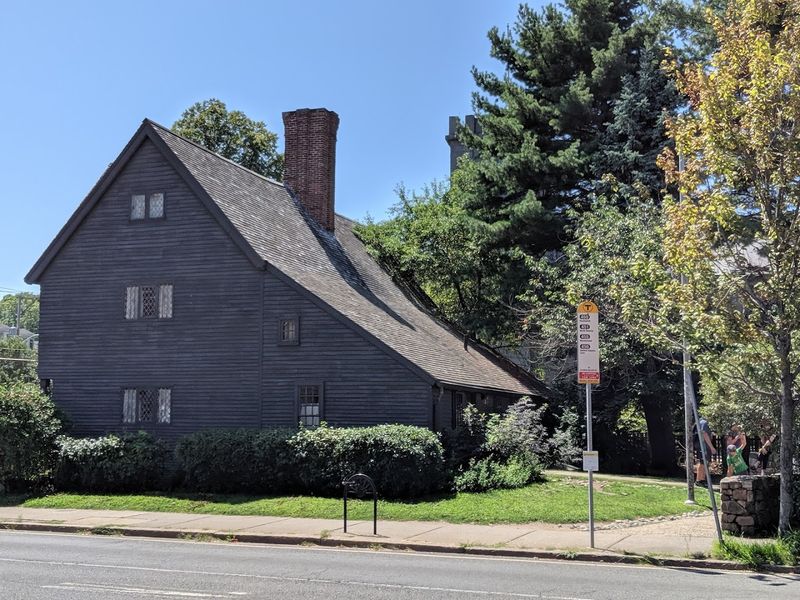
There’s something quietly remarkable about standing in front of a building that was already old when the witch trials happened. The Witch House dates back to around 1675, possibly earlier, which means it had already been standing for nearly two decades before 1692 ever arrived.
The architecture itself tells a story. Steep, angular gables jut toward the sky in a way that looks almost theatrical, but it’s completely authentic to the period.
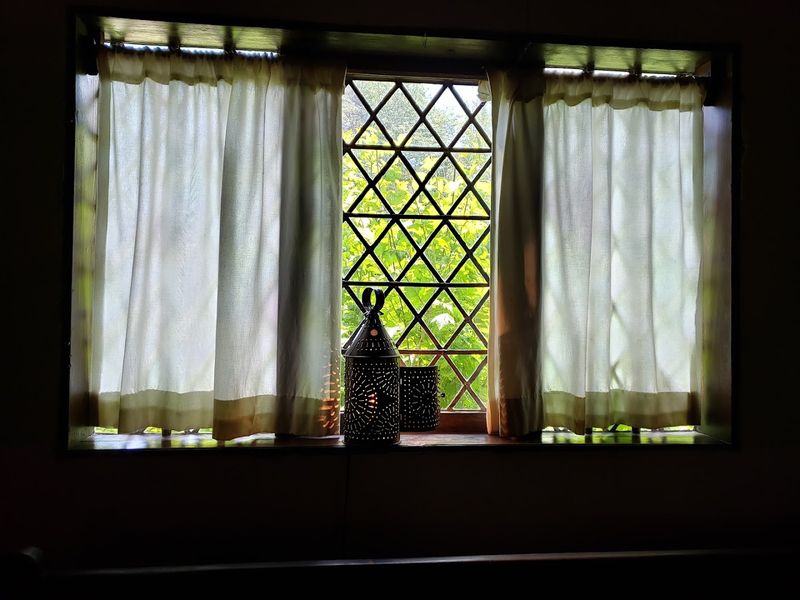
Diamond-pane windows, heavy timber framing, and a prominent central chimney were all standard features of prosperous New England homes in the late 1600s. Nothing about the exterior was designed to look spooky — it just does, because time and history have a way of doing that to old buildings.
For anyone interested in colonial architecture, this house is a rare surviving example of how wealthy Puritan families actually lived. Most buildings from this era are long gone.
The fact that this one still exists — and still looks so much like it did centuries ago — is a genuine architectural miracle worth appreciating on its own terms.
Restored and Saved From Demolition
In the 1940s, the Witch House came dangerously close to disappearing forever. A road-widening project threatened to demolish the structure, and without intervention, one of America’s most historically significant buildings would have been reduced to rubble to make way for traffic.
Thankfully, local preservationists and historians pushed back hard. The building was carefully moved a short distance and underwent a major restoration effort to return it to its 17th-century appearance.
Additions that had been tacked on over the centuries were removed, and the house was painstakingly brought back to a form that reflected Corwin’s era.
That effort paid off in a big way. Today, the house looks much as it would have in the late 1600s, giving visitors an authentic experience rather than a heavily modernized version of history.
The story of its near-demolition is also a reminder of how easily irreplaceable history can be lost. Salem’s commitment to saving this building helped spark a broader movement toward historic preservation in the city — one that continues to shape how the community honors its complicated past.
What You’ll See Inside Today
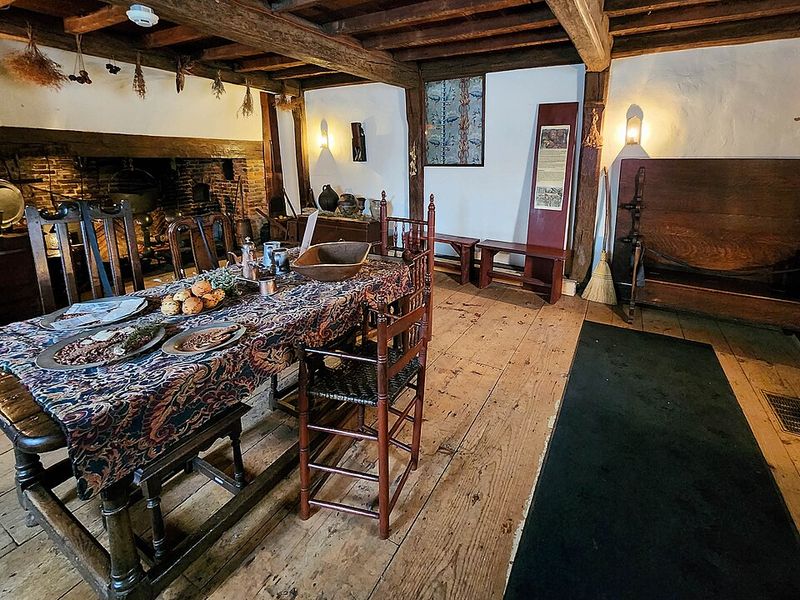
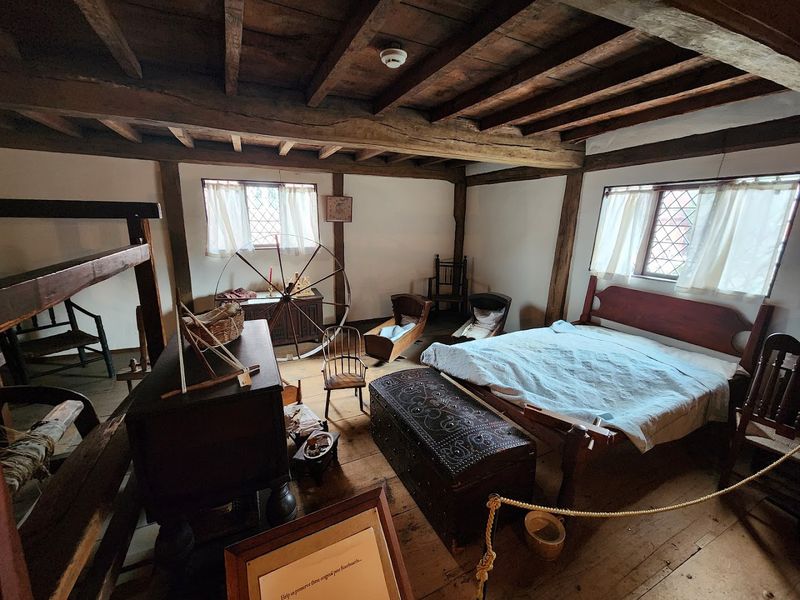
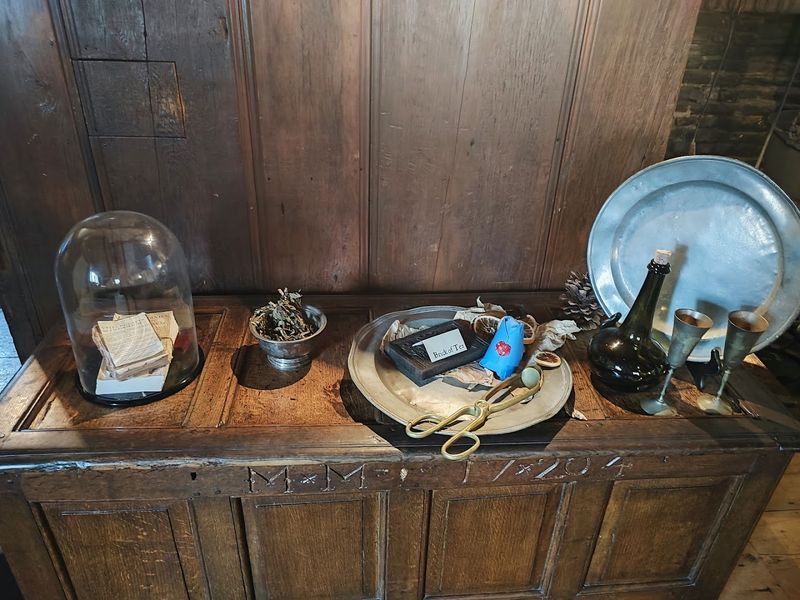
Stepping through the front door feels like stepping into a time capsule. The interior of the Witch House has been carefully arranged with period-accurate furnishings that reflect how a prosperous colonial family would have lived in the late 1600s.
Heavy wooden chairs, simple tables, iron cooking tools, and pewter dishware fill the rooms with quiet authenticity.
Interpretive displays throughout the house give visitors important context about the trials themselves — who was accused, how the legal process worked, and what daily life looked like for Puritan families in colonial New England. You don’t need to be a history expert to follow along.
The information is presented clearly and is easy to absorb as you move from room to room.
Self-guided tours let you set your own pace, which is great if you want to linger in a particular room or read every display panel carefully. There’s no rushing, no tour group to keep up with.
Just you, the creaking floorboards, and three centuries of history surrounding you on all sides. It’s a genuinely immersive experience that holds up even for repeat visitors.
Separating Myth From Reality
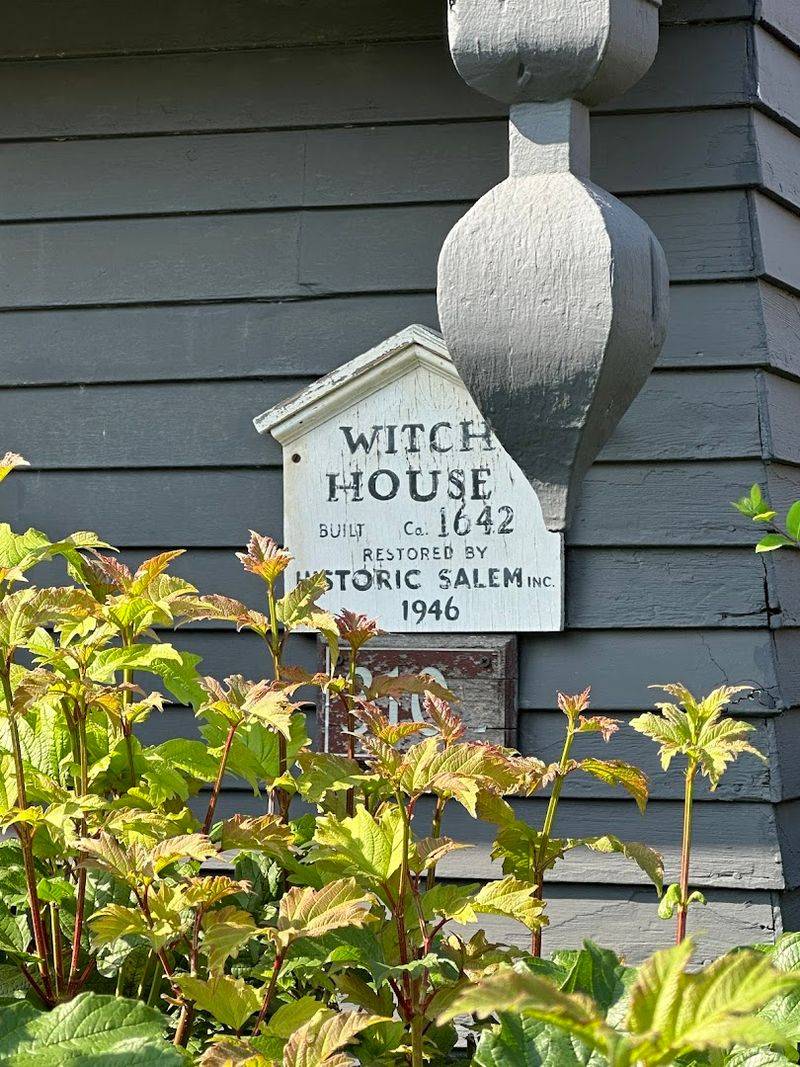
Here’s a fact that surprises a lot of visitors: no accused witches actually lived in this house. The name “Witch House” can be a little misleading if you walk in expecting a dungeon or a cell where prisoners were kept.
The real story is both more subtle and more chilling than that.
The house mattered because of who lived there — Jonathan Corwin, a magistrate with the power to determine people’s fates. His role in the pretrial examinations made this building a place where the legal machinery of the hysteria operated.
That’s a very different kind of darkness than folklore might suggest, but arguably a more disturbing one.
Understanding this distinction actually deepens your appreciation for the site. The witch trials weren’t driven by monsters in haunted houses — they were driven by ordinary people operating within a broken system.
Corwin was a respected community leader, not a villain from a storybook. Grasping that uncomfortable truth is part of what makes a visit to the Witch House genuinely educational rather than just atmospherically spooky.
Why It Still Feels Chilling Today
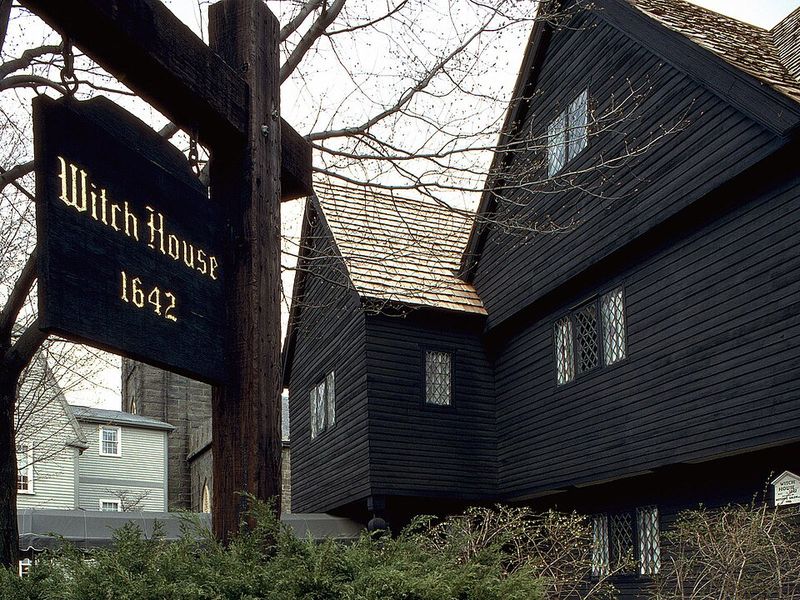
Some historic sites feel distant — like looking at something behind glass. The Witch House doesn’t feel that way.
There’s a heaviness to the air inside that’s hard to explain but easy to feel. Standing in rooms where real people were questioned about crimes they didn’t commit has a way of making history feel uncomfortably personal.
The human stories behind the trials are what linger long after you leave. A teenage girl falsely accused by her neighbors.
A farmer who refused to enter a plea and was pressed to death with stones. A minister whose own congregation turned against him.
These weren’t abstract historical figures — they were real people with families, fears, and futures that were cut short by mass hysteria.
The Witch House keeps those stories alive in a way that no documentary or textbook quite manages. Being physically present in a space connected to those events creates an emotional connection that sticks with you.
Visitors often describe leaving the house feeling sobered, reflective, and newly aware of how quickly justice can collapse when fear takes over a community.
Visitor Information and Tips
Planning your visit a little in advance goes a long way, especially if you’re coming in October. The Witch House is located at 310 Essex St, Salem, MA 01970, and it’s typically open daily from mid-April through mid-November.
Winter hours are more limited, so check the official website before heading out during the colder months.
Tickets are usually purchased on-site at the gift shop, and the self-guided format means you can explore at your own pace without feeling rushed. Arriving early in the day is strongly recommended if you’re visiting in October — Salem becomes one of the busiest tourist destinations in the country during Halloween season, and lines can get long by mid-morning.
Pairing your visit with other nearby Salem historic sites makes for a richer, more complete understanding of 1692. The Peabody Essex Museum, the Salem Witch Trials Memorial, and the Burying Point Cemetery are all within easy walking distance.
Wear comfortable shoes, bring a light jacket in fall, and give yourself at least an hour inside the house to truly soak it all in.