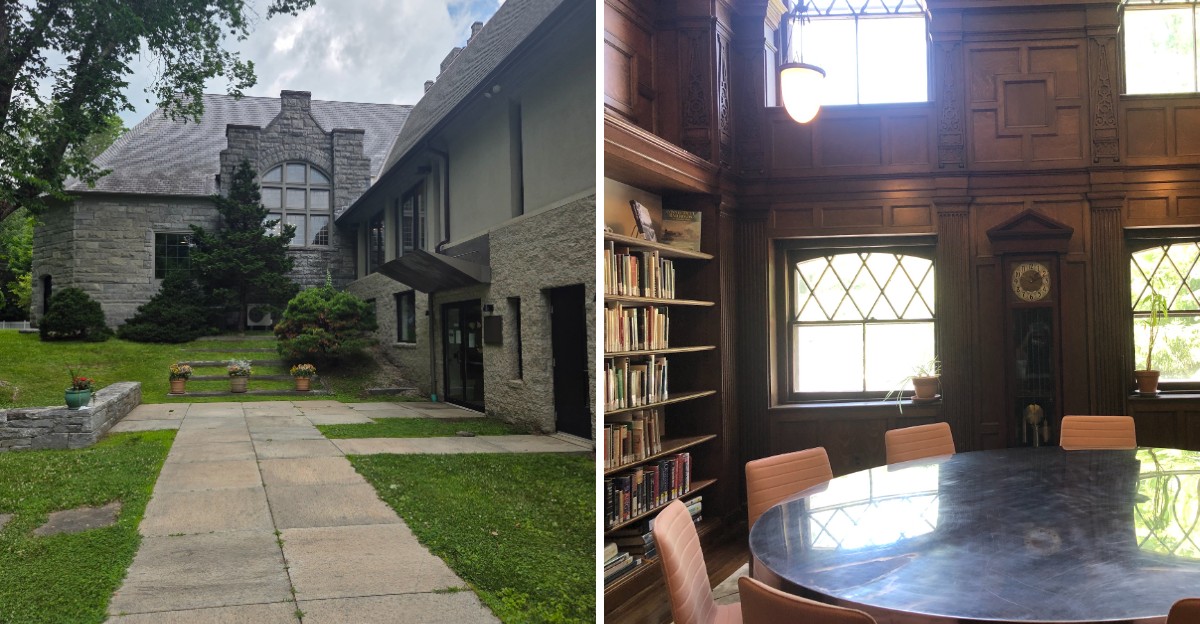
What if your next trip to the library felt like a journey back to colonial Connecticut?
In Salisbury, Scoville Memorial Library carries a story that reaches all the way back to 1771, when a collection of 200 books from London helped spark a remarkable local tradition.
Walking through its doors means stepping into a place where centuries-old stories still have a physical presence.
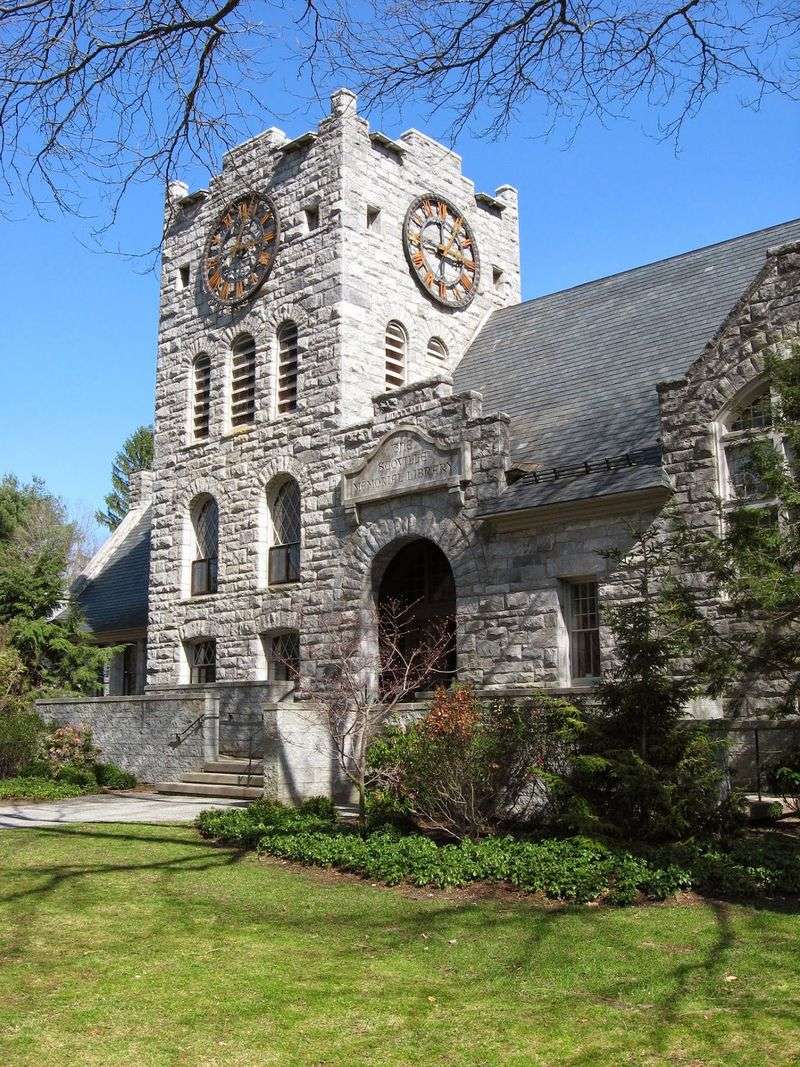
The gray marble building adds another layer of history, with its clock tower, historic reading room, and fascinating details tucked around the interior.
There’s even a 15th-century stone carving from England waiting inside.
Yet this isn’t some dusty relic frozen in time.
Modern books, digital resources, community programs, and local-history collections share the same space, creating an unforgettable mix of old and new in one of Connecticut’s most fascinating libraries.
A Library With Roots Dating to 1771
Back in 1771, when America was still a collection of British colonies, a man named Richard Smith made an extraordinary offer to the residents of Salisbury. He proposed bringing 200 books all the way from London if the townspeople would help cover the costs.
Thirty-nine residents stepped forward with contributions, and just like that, the Smith Library was born.
Imagine how precious books were back then. There were no bookstores on every corner, no online shopping, and certainly no quick deliveries.
Each volume had to travel across the Atlantic Ocean by ship, making them incredibly valuable treasures.
This collection became the foundation for what would eventually become Scoville Memorial Library. The fact that everyday citizens pooled their resources to bring learning materials to their community shows how much early Americans valued education and knowledge.
That same spirit continues today, more than 250 years later, making this one of the oldest continuous library collections in the entire United States.
The Town’s Remarkable Early Library Tradition
Salisbury’s commitment to libraries didn’t stop with Richard Smith’s book collection. The community kept building on this tradition through several important collections, including the Bingham Library for Youth and the Church Library.
These separate collections served different purposes but all shared the same goal of spreading knowledge throughout the town.
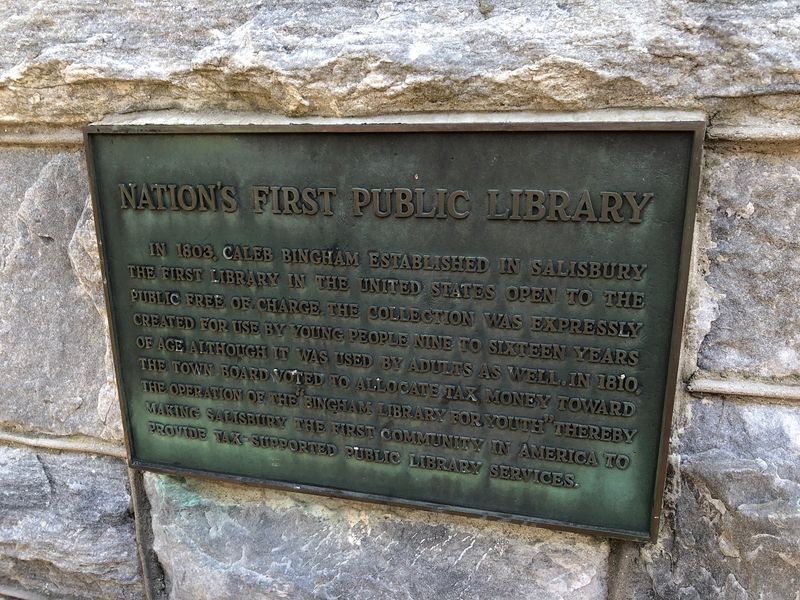
Then something groundbreaking happened in 1810. The town voted to use taxpayer money to fund the Bingham Library.
This might not sound like a big deal today, but back then it was revolutionary.
According to Scoville Memorial Library, this decision made it the first publicly funded library in the entire country. Think about that for a moment.
While most communities still relied on private donations or subscription fees for library access, Salisbury decided that everyone deserved free access to books, regardless of whether they could afford to pay. This forward-thinking approach predated Andrew Carnegie’s famous library movement by nearly a century and helped establish the American tradition of free public libraries we enjoy today.
Meet the Scoville Memorial Building
The impressive structure that houses the library today didn’t appear until the 1890s. Jonathan Scoville, a local resident who clearly valued education and community, left $12,000 in his will specifically for constructing a library building.
His family added more money to the fund, ensuring the project would create something truly special.
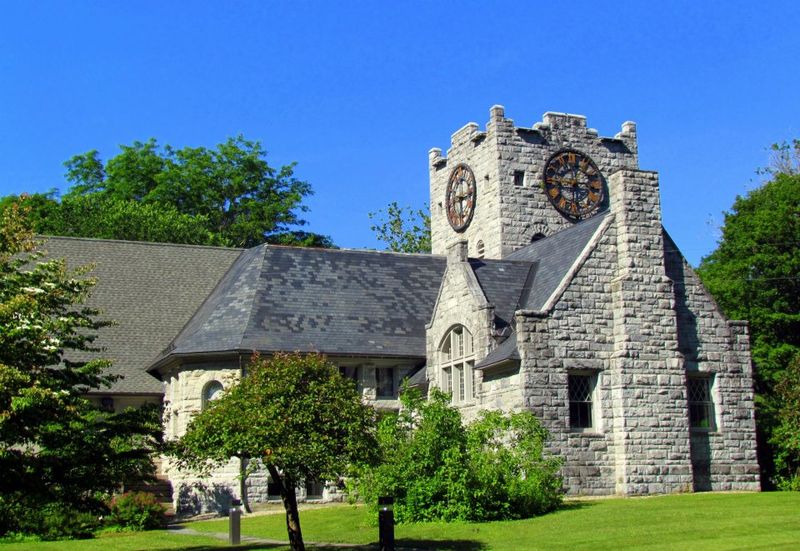
The result was this stunning gray marble building that still stands proudly on Main Street. The Scoville family’s generosity gave the town’s centuries-old book collection a permanent home worthy of its historical importance.
Walking up to the building, you can immediately tell it was designed to last for generations. The solid construction and elegant design reflect the pride the community took in their library.
The building wasn’t just meant to store books. It was created as a cultural center where people could gather, learn, and connect with their neighbors.
Today, visitors from all over come to see this architectural treasure that successfully combines beauty with function, standing as a testament to one family’s lasting gift to their community.
Look Closely at the Native Stone and Historic Details
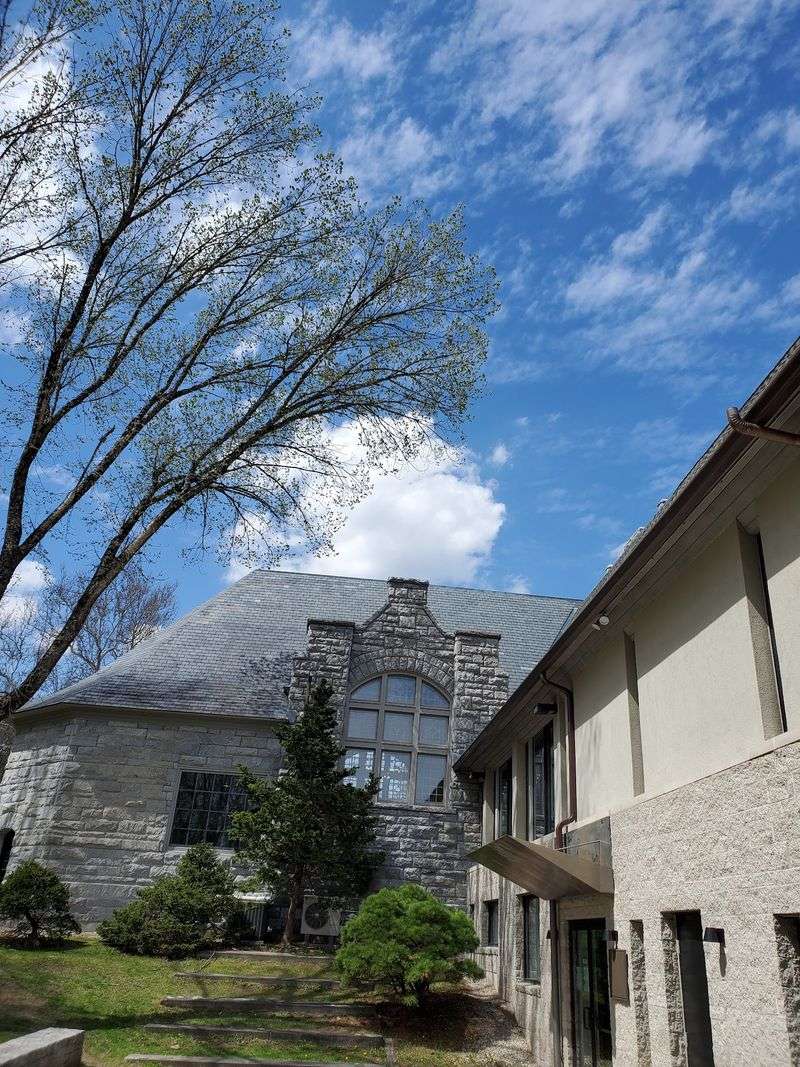
Building materials tell their own stories, and this library’s original construction used native stone quarried right near Lion’s Head Road in Salisbury. Using local materials created a genuine connection between the building and the landscape surrounding it.
Every stone came from the same hills and valleys that residents saw every day.
The original design included far more than just bookshelves and reading tables. Plans called for a proper reading room, a dedicated children’s corner, a reference department, extensive stacks for the growing collection, an auditorium, a piano, a stage, and even a balcony.
The architects envisioned a true community center.
These thoughtful details reveal how seriously the town took this project. They didn’t just want a place to store books.
They wanted spaces where children could discover their first favorite stories, where adults could attend lectures and performances, and where the whole community could gather for important events. The building was designed to serve multiple generations, and remarkably, it still does exactly that today.
The Clock Tower Still Marks the Building
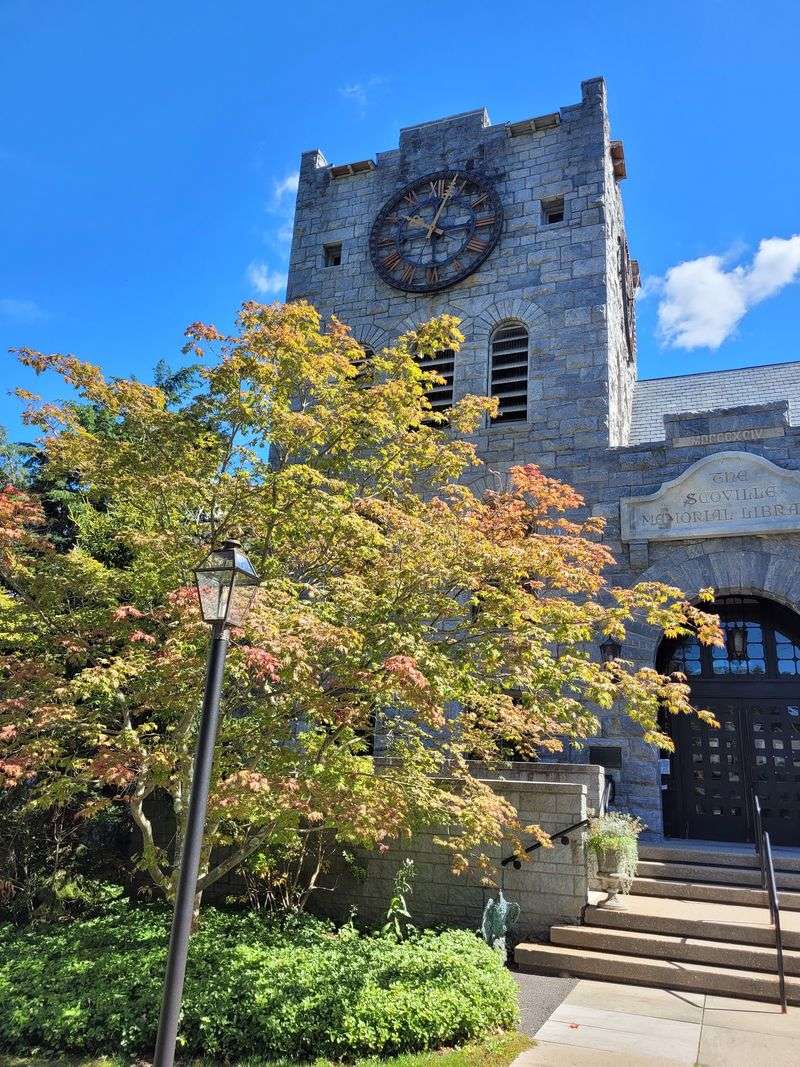
One architectural feature impossible to miss is the tower clock, another generous donation from a Scoville family member named Grace. This isn’t just any ordinary timepiece.
According to library records, it continues chiming the quarter hours using four, eight, twelve, and sixteen notes from Parsifal, Wagner’s famous opera.
Imagine hearing those musical notes ringing out across downtown Salisbury every fifteen minutes. The clock doesn’t just tell time.
It adds a soundtrack to daily life in this historic town.
There’s something comforting about a clock that has marked the passing hours for over a century. It chimed when horse-drawn carriages passed by, when the first automobiles appeared on Main Street, through two world wars, and continues today as people check their smartphones beneath its tower.
The clock represents continuity in a constantly changing world. For longtime residents, those familiar Parsifal notes probably feel like an old friend, a reliable presence that connects past and present.
Visitors often pause to listen, drawn by the unexpected beauty of operatic music in a small Connecticut town.
A Medieval Stone Carving From England
Hidden among the American history surrounding you sits an unexpected treasure from across the Atlantic Ocean. Inside the reading room, mounted above the original fireplace, hangs a genuine 15th-century stone carving sent from Salisbury Cathedral in England to its namesake town in Connecticut.
This remarkable gift creates a tangible link between two communities separated by three thousand miles of ocean.
The carving dates back to medieval times, when skilled craftsmen spent years creating intricate stonework for great cathedrals. Somehow, this piece survived centuries of history, weathered wars and social upheavals, and made the journey to America.
Standing before this carving, you’re looking at something created when Columbus was a child, before Europeans even knew the Americas existed. The cathedral’s gesture in sending it to Connecticut’s Salisbury strengthened the bond between these sister cities.
It reminds visitors that Salisbury, Connecticut, named after the English cathedral town, carries forward traditions and connections reaching back through centuries. The carving remains in its original placement above the fireplace, exactly where it was installed when the building first opened.
Historic Collections Meet a Modern Library
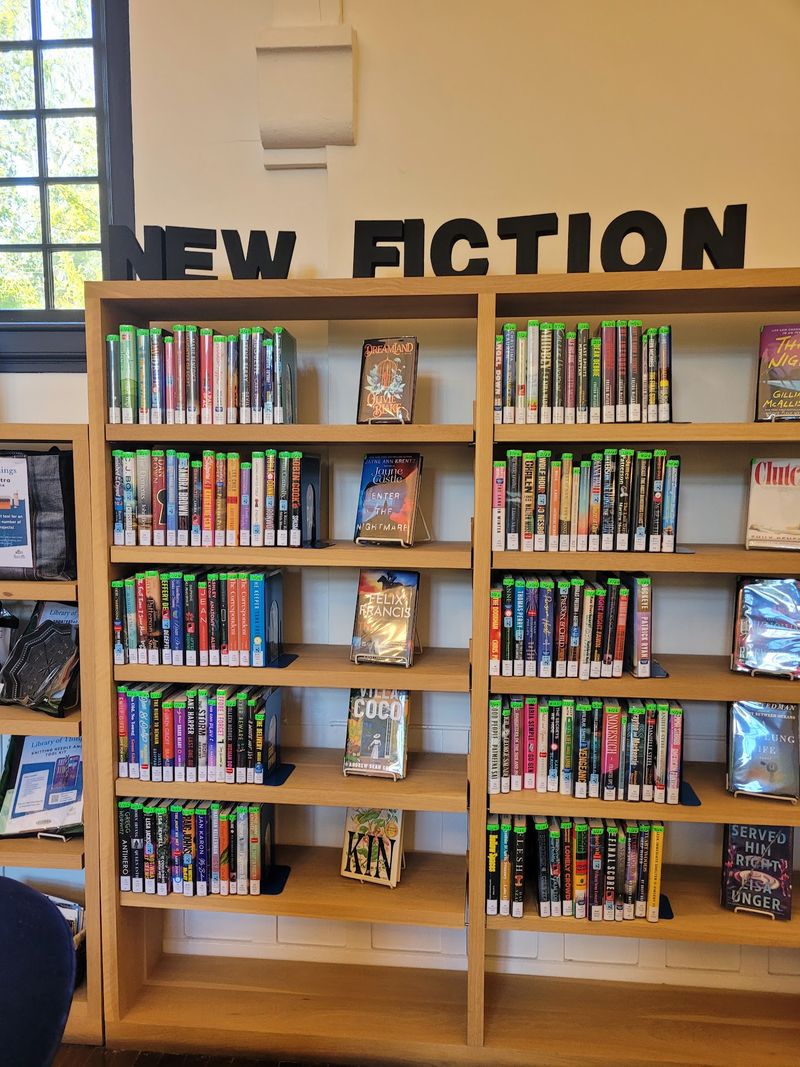
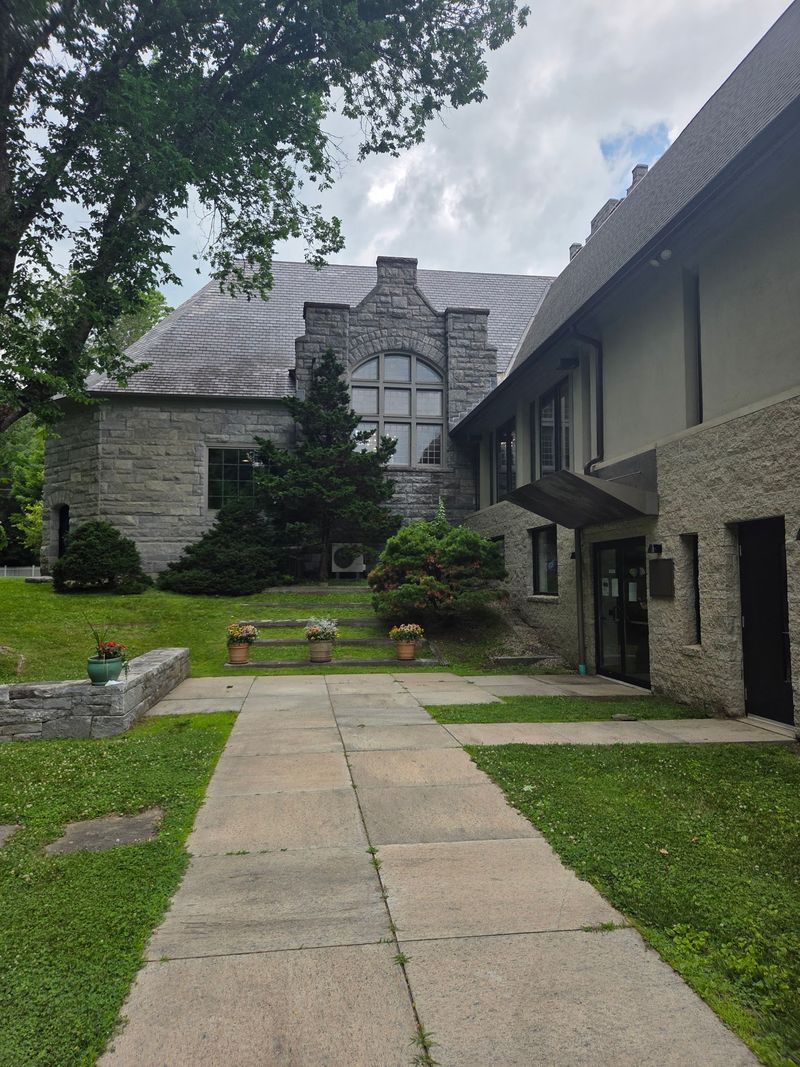
Libraries need to grow and change to serve their communities, and Scoville Memorial has done exactly that while respecting its historic character. A rear addition completed in 1981 provided much-needed extra space without altering the original building’s appearance.
This expansion created room for offices, more books, and spaces where community groups could hold events.
Today’s collection has grown far beyond those original 200 volumes from London. The library now holds more than 30,000 items spanning every format you can imagine.
You’ll find traditional hardcover books alongside audiobooks for your commute, DVDs for movie nights, large-print materials for easier reading, historical maps showing how the area has changed, newspapers keeping you current, periodicals covering specialized interests, and digital resources accessible from home. The library successfully bridges centuries, offering Benjamin Franklin-era historic materials right alongside the latest bestsellers and streaming content.
This combination makes it special. You can research local history from the 1700s in the morning, then check out a brand-new thriller for the afternoon.
Few institutions manage to honor their past while embracing the future quite so successfully.
Explore Salisbury’s History Inside the Library
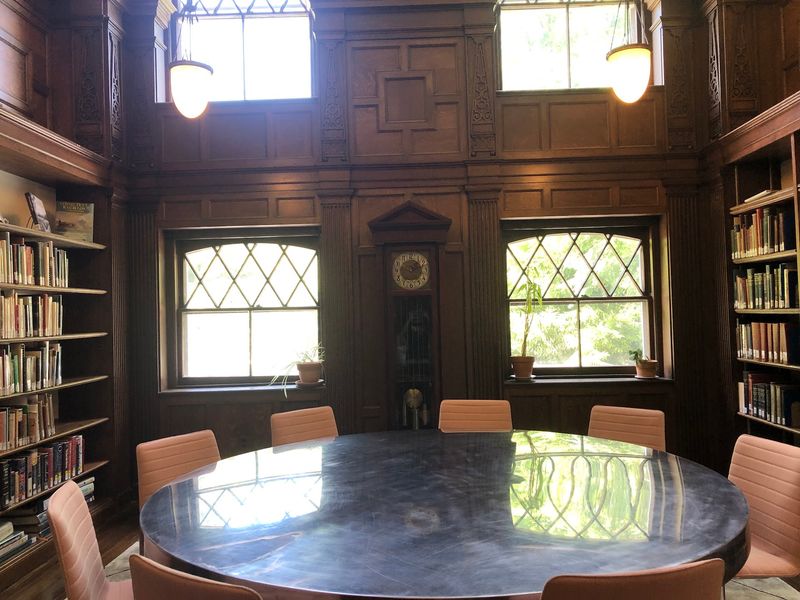
History buffs will find themselves in paradise here. Scoville Memorial Library maintains extensive local-history materials that document how Salisbury and the surrounding area developed over more than two centuries.
The collection includes everything from old books written by local authors to newspapers that reported daily life decades ago, from detailed maps showing property boundaries and landscape changes to genealogy resources helping families trace their Connecticut roots.
The Lakeville Journal archives alone offer a fascinating window into community life through the years. Reading old newspapers reveals how people lived, what they worried about, what they celebrated, and how the town evolved.
The library’s dedicated History Room provides a quiet space where serious researchers can examine these materials properly. Whether you’re tracking down your great-great-grandparents, researching your historic home, working on a school project about local history, or just curious about how Salisbury looked a century ago, the staff can help you find relevant resources.
This collection preserves stories that might otherwise be lost, keeping the community’s memory alive for future generations to discover and learn from.
A Historic Landmark That’s Still Part of Community Life
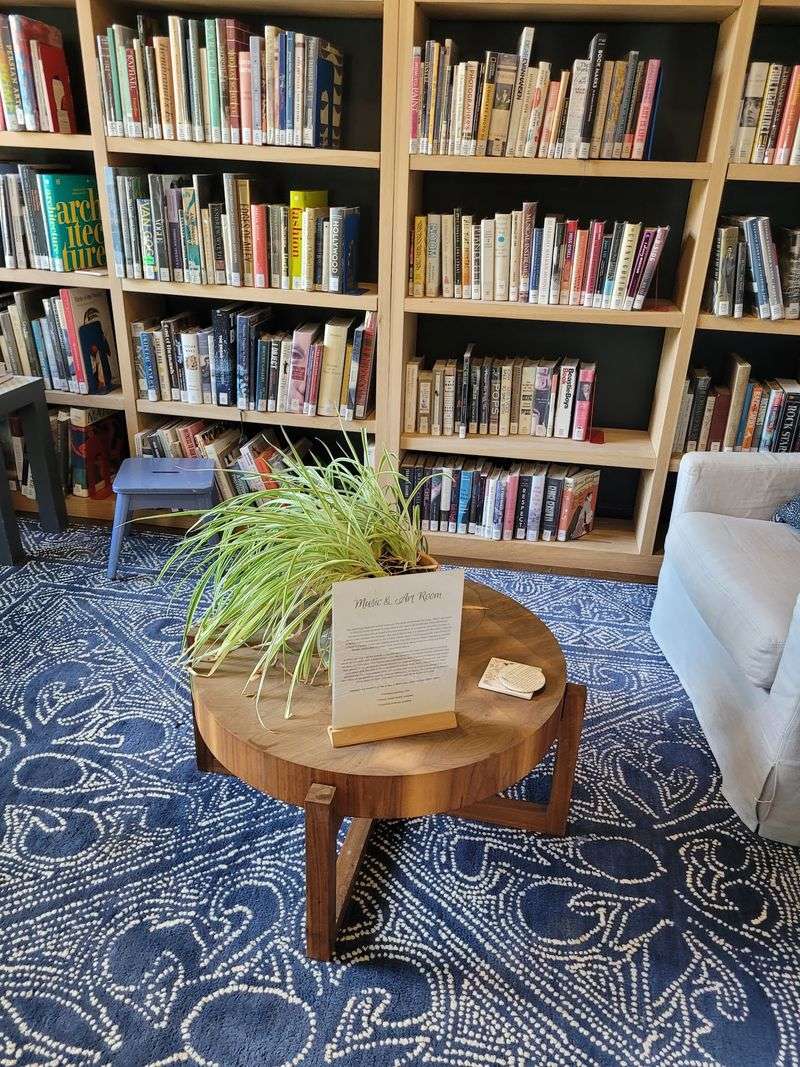
Some historic buildings become museums, beautiful but untouchable. Scoville Memorial Library took a different path.
While carefully preserving its historic character, it remains a vibrant, active community center serving residents’ daily needs. The library hosts regular programs bringing people together to learn, create, and share experiences.
Public computers provide internet access for job applications, homework, and staying connected. Wi-Fi extends throughout the building, letting visitors work on their own devices.
Children’s services introduce young readers to the joy of books through story times and special activities.
Teen services give middle and high school students their own space and programs. Meeting rooms welcome community groups needing a place to gather.
The library staff continuously updates programs to meet changing community needs. This active use keeps the building alive in a way preservation alone never could.
Instead of a monument to the past, it’s a living institution where history and contemporary life intertwine naturally. People don’t just visit to admire the architecture.
They come to check out books, attend programs, meet neighbors, and participate in community life, just as residents have done for over 250 years.
Plan Your Visit
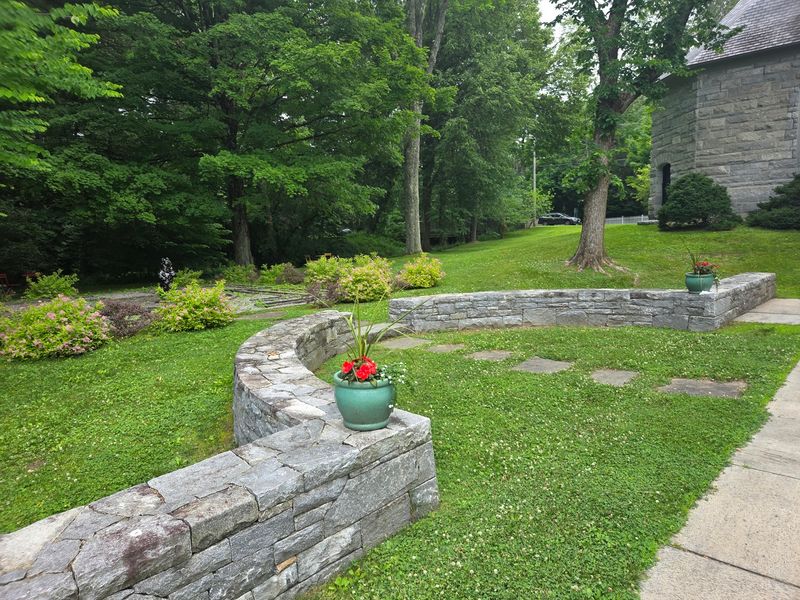
Ready to experience this historic treasure yourself? Scoville Memorial Library sits at 38 Main Street in Salisbury, making it easy to find in the center of town.
The library maintains a regular schedule designed to accommodate different visitors’ needs throughout the week.
Current hours are Tuesday, Wednesday, and Friday from 10 a.m. until 5 p.m., giving you a full afternoon to explore. Thursday offers extended hours from 10 a.m. to 7 p.m., perfect for working people who need evening access.
Saturday runs from 10 a.m. to 4 p.m., and Sunday provides afternoon hours from 1 to 4 p.m. The library stays closed on Mondays.
If you have questions, call 860-435-2838 to speak with staff members who can help. Anyone particularly interested in examining the historic collections or spending time in the History Room should definitely call ahead to ensure someone can assist with those special materials.
Before making a trip, check the library’s official website for current programs, any temporary closures, holiday hours, or special events happening during your visit. This beautiful piece of Connecticut history welcomes visitors who appreciate where the past and present meet.