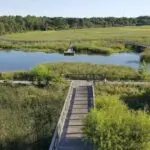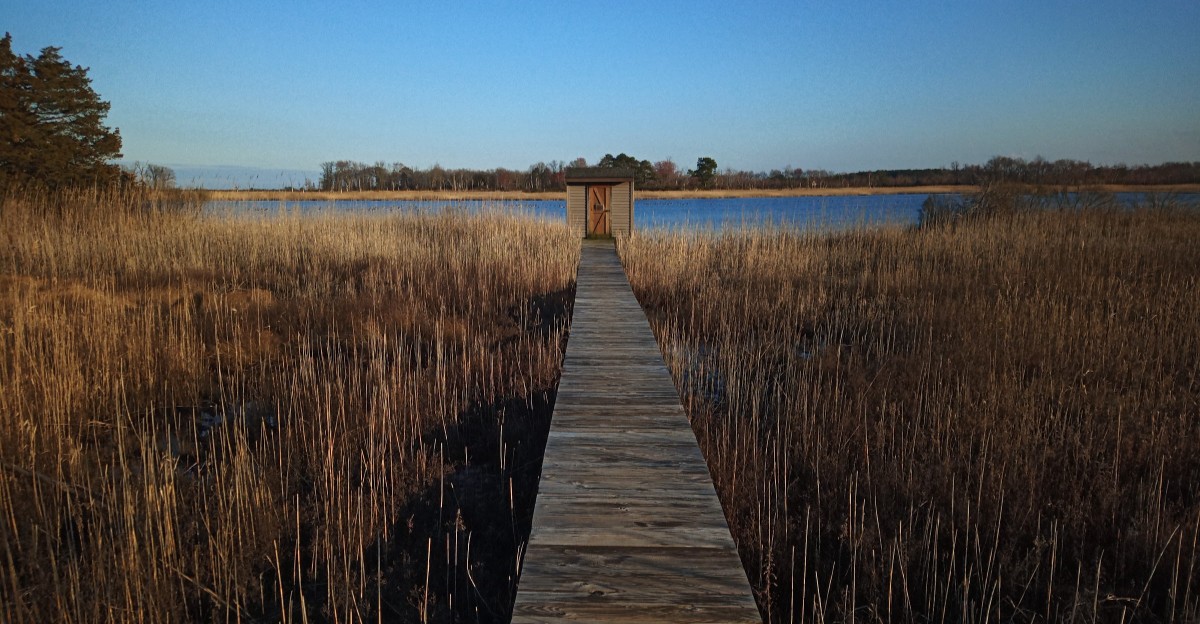
One step onto this boardwalk, and Delaware’s marshland starts unfolding around you.
Just outside Milton, the Boardwalk Trail at Prime Hook National Wildlife Refuge slips through wetlands where birds call from the reeds and trees rise from soggy ground.
The trail is only a half-mile loop, but it delivers plenty of wild scenery in a short walk.
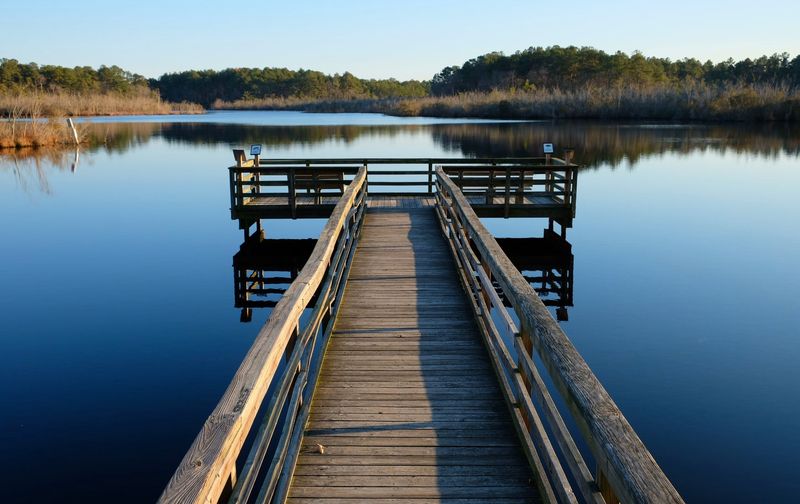
The wooden path crosses about 600 feet of freshwater marsh, giving you a close-up view of a habitat that feels worlds away from nearby roads and towns.
Keep your eyes moving, because herons, waterfowl, and other birds can appear around the bends.
You won’t need a long hike or a packed itinerary here.
Just bring comfortable shoes, take your time, and let this little boardwalk pull you straight into the marsh.
Walk Straight Into Prime Hook’s Marshland
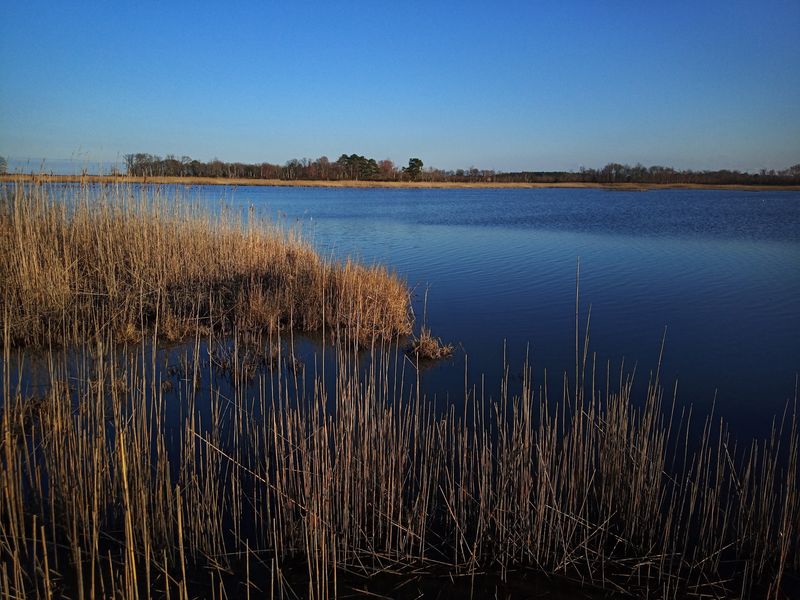
Some places make you work hard before they reward you. Prime Hook’s Boardwalk Trail skips that part and drops you right into the wetlands within minutes of leaving your car.
The loop is only about half a mile long, so almost anyone can finish it. Young kids, grandparents, and folks who just want a quiet stroll will all feel comfortable here.
Along the way, the path passes through three kinds of land: dry uplands, shady forested wetlands, and open marsh.
That means you get a little taste of everything the refuge protects, all in one short walk. You will hear frogs, feel the breeze shift as the trees open up, and smell the earthy scent of wet ground.
It feels like stepping into a nature documentary, only you are the one holding the camera.
Plan on about 30 minutes if you walk steadily. If you like to stop and look around, give yourself an hour.
Trust us, you will want the extra time once the marsh opens up in front of you.
Follow 600 Feet Of Boardwalk Over The Marsh
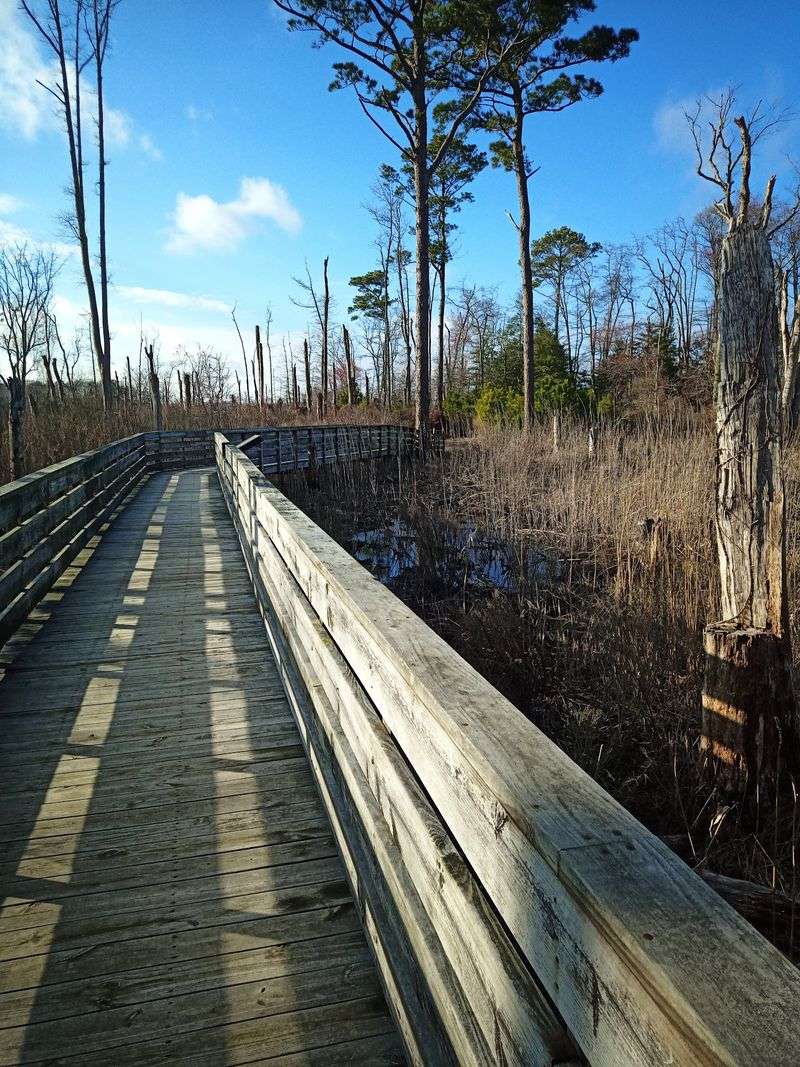
Picture two football fields laid end to end, then imagine walking that distance above a marsh. That is roughly what the 600-foot boardwalk section feels like, and it is the star of the whole trail.
Raised planks carry you over freshwater marsh where cattails, reeds, and grasses grow thick. Because you are lifted up, nothing blocks your view.
You can look out across the wetland in every direction and spot things you would miss on the ground.
Here is a fun bonus: the boardwalk keeps your shoes dry and protects the fragile plants below. Wetland soil is soft and easy to damage, so the walkway lets people enjoy the habitat without harming it.
Take your time on this stretch. Lean on the railing, listen to the rustle of the reeds, and watch for ripples in the water.
Turtles, frogs, and small fish often hang out just below. Many visitors say this is the moment the walk stops feeling like a simple stroll and starts feeling like an adventure.
Look For Birds Hidden In The Wetlands
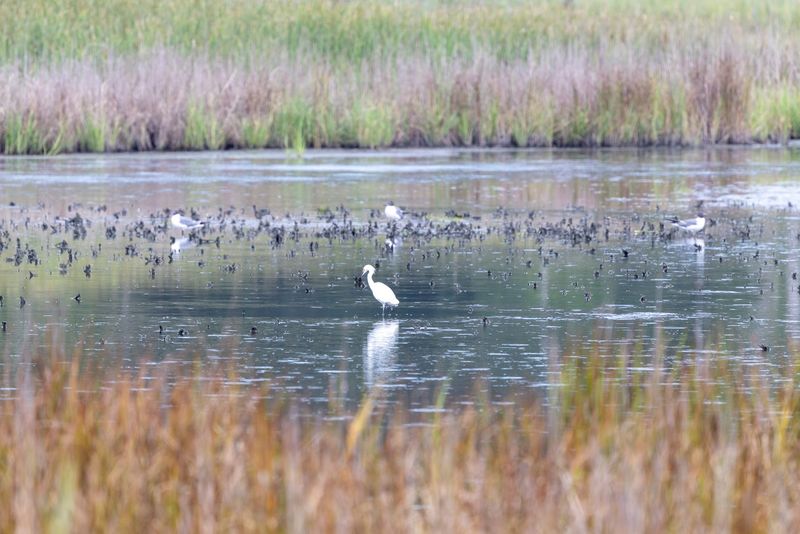
Did you know that millions of birds use an invisible highway in the sky each year? It is called the Atlantic Flyway, and Prime Hook sits right along it.
Because of that, the refuge is like a giant rest stop for travelers with feathers. Hundreds of bird species have been recorded here.
Depending on when you visit, you might see tall herons wading slowly, bright white egrets, ducks paddling in the water, or hawks circling overhead.
Songbirds love the wooded parts of the trail, while shorebirds prefer the muddy edges. The trick is to move quietly and look carefully.
Many birds blend into the grass so well that you might walk right past them.
A small pair of binoculars makes a huge difference. A free bird app or a pocket field guide can help you figure out who you are looking at.
Try keeping a list of every bird you spot. Kids especially enjoy turning it into a scavenger hunt, and you might be surprised how long your list gets.
Watch The Seasons Change Around The Marsh
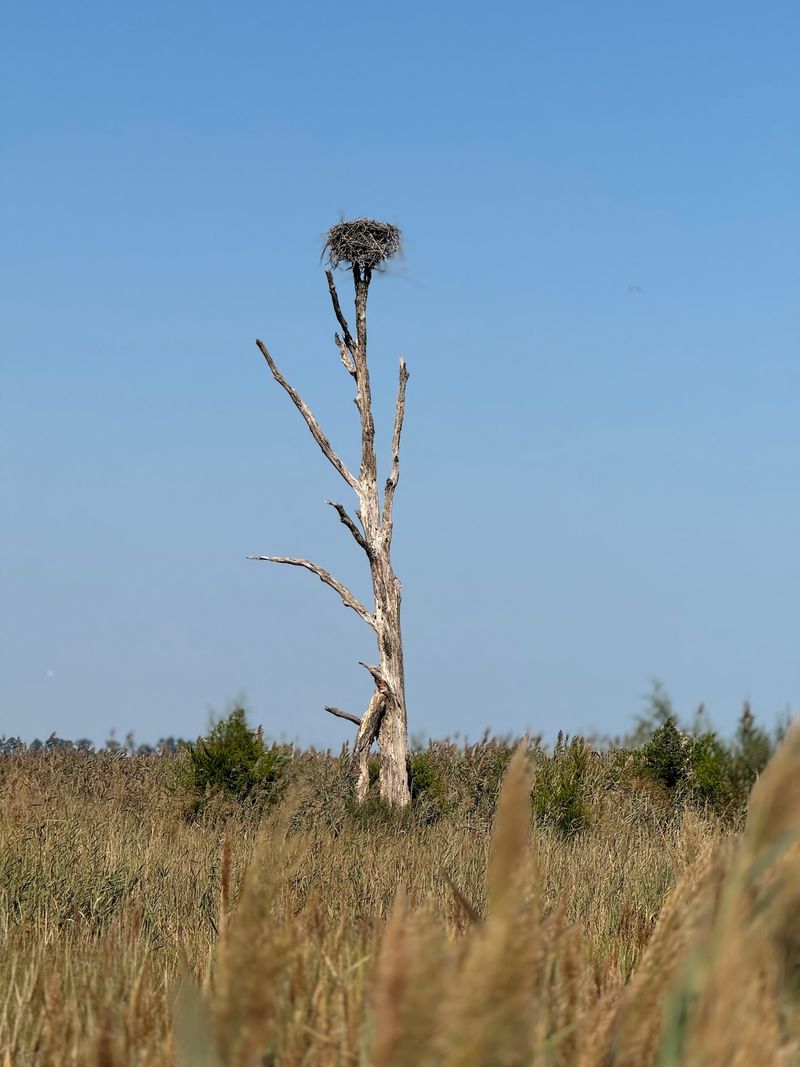
Visit in April, then come back in November, and you might think you found a totally different place. The marsh changes its outfit and its guests every few months.
Spring is a busy time. Migrating waterfowl, colorful songbirds, and shorebirds pass through, and the plants turn fresh and green.
The air fills with chirps and calls from morning until evening.
Summer belongs to the herons and egrets. These long-legged hunters stand still in the shallow water, waiting to snatch fish and frogs.
The marsh grows tall and lush, and dragonflies zip around the boardwalk.
Fall and winter bring the big crowds of birds. Huge flocks of geese and ducks arrive, sometimes filling the sky with noisy honking.
The grasses turn gold and brown, giving the whole place a cozy, quiet feel.
Every season has its own charm, so do not think of this trail as a one-time trip. Coming back throughout the year is the best way to see everything the marsh has to offer.
Bring A Camera For Wildlife Watching
Slow walkers, this trail was made for you. The Boardwalk Trail was designed for watching and photographing wildlife, not for racing to a finish line.
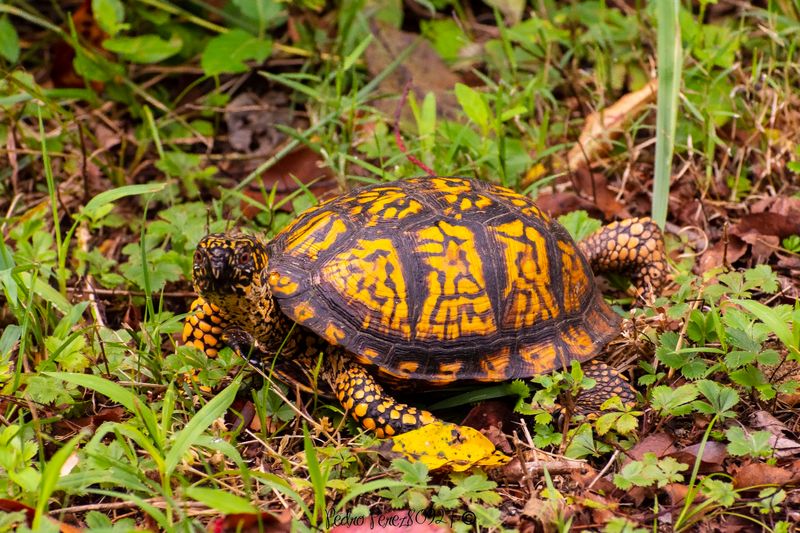
Wildlife can show up when you least expect it. A deer might step out of the trees, a turtle might sun itself on a log, or a heron might lift off right beside the walkway.
Keeping your camera ready means you will not miss those quick moments.
A phone camera works fine for scenery. For birds, though, a camera with a zoom lens helps a lot, since many animals stay far from people.
Early morning and late afternoon usually bring the best light and the most active critters.
Here is a helpful tip: find a good spot and simply wait. Animals often return once things grow quiet.
Patience is the secret skill of every good nature photographer.
Also remember to look down sometimes. Wildflowers, butterflies, and tiny frogs make wonderful close-up shots, and they are much easier to catch than a flying hawk.
Notice The Mix Of Forest And Wetland Habitat
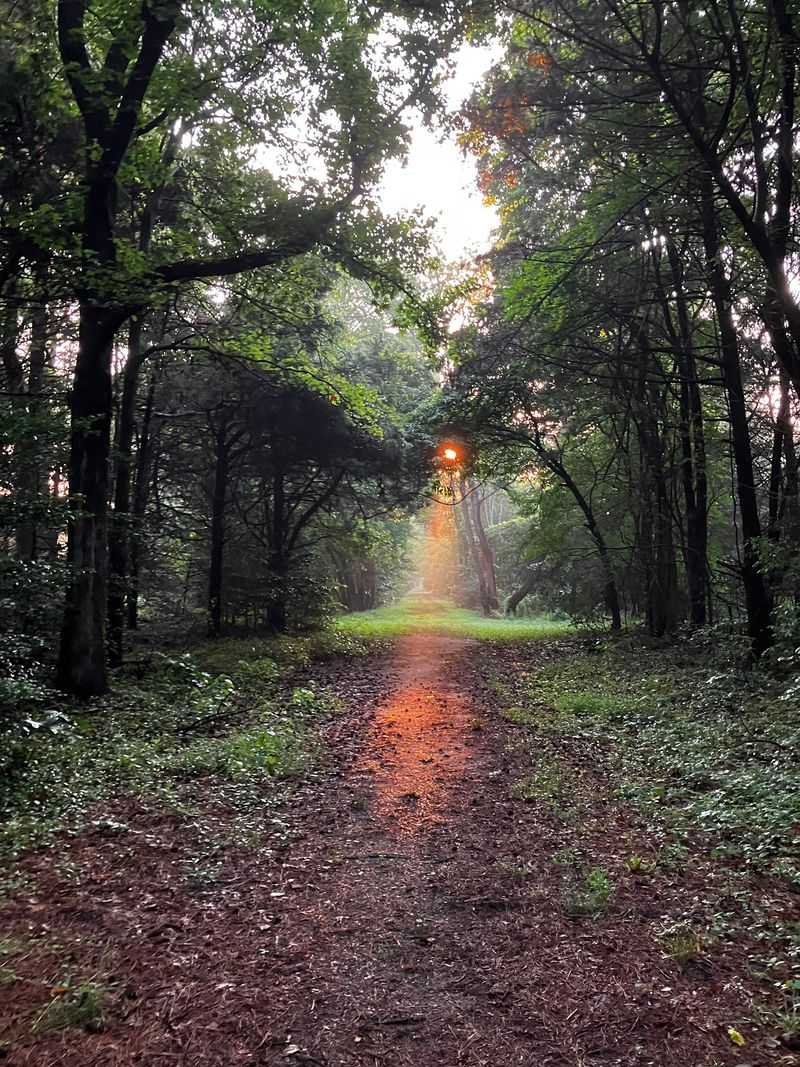
Think of the trail like a sampler plate at a restaurant. Instead of just one dish, you get small bites of several habitats, all within a half-mile loop.
First come the uplands, where the ground stays drier and trees grow tall. Next you move into forested wetlands, which are woods that stay soggy for much of the year.
Trees here have learned to live with wet roots, and the air often feels cooler and damp.
Finally, the trees open up into freshwater marsh, full of grasses and reeds. Each zone hosts different plants and animals.
Woodpeckers might tap in the forest, while red-winged blackbirds call from the cattails.
Paying attention to these changes makes the walk more interesting. Notice how the light shifts, how the sounds change, and how the plants look different as you go.
It is a bit like a living science lesson. Teachers and parents can use the trail to show kids how land and water work together to support so many kinds of life.
Pair The Boardwalk With Another Refuge Trail
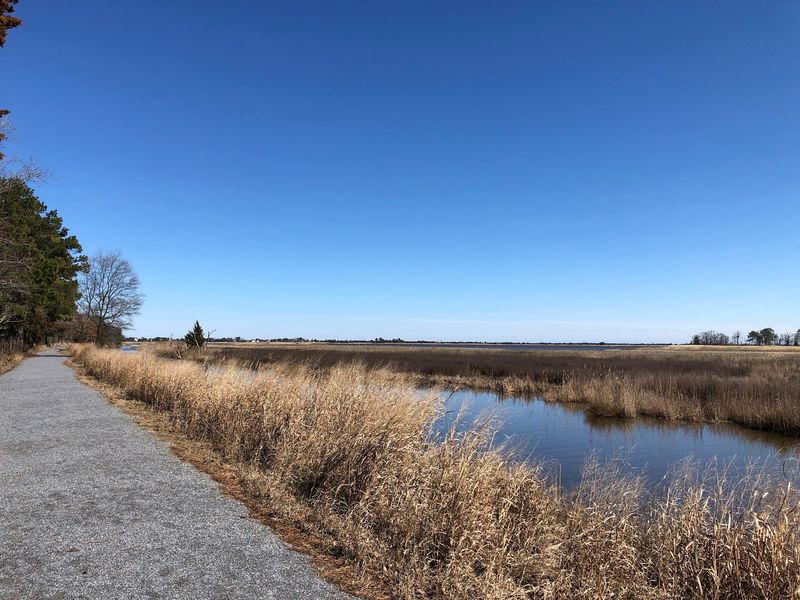
Finished the loop and still feeling energetic? Good news: Prime Hook has more trails waiting nearby, so your day does not have to end yet.
The Dike Trail is a favorite for its accessible observation platform. It gives you a raised spot to scan the wetlands, and it works well for wheelchairs and strollers too.
If you prefer the shade of trees, try the Pine Grove Trail. Tall pines line the path, and the scent alone makes it worth a visit.
The Blue Goose Trail offers another peaceful wooded walk where songbirds often flutter between branches.
Then there is the Photography Blind Trail, which leads to a special hiding spot for watching wildlife. Each trail adds its own flavor to your trip.
A smart plan is to pick two or three trails and pack a snack. Picking up a refuge map at the visitor center helps you see how everything connects.
That way, you can build an outing that fits your energy level and how much time you have.
Stop At The Photography Blind
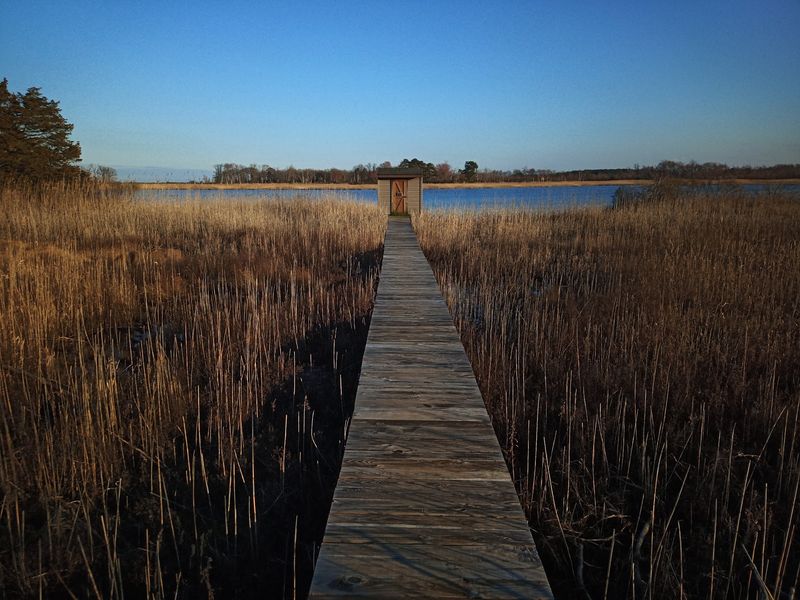
Imagine sitting inside a cozy wooden hideout while ducks paddle by, totally unaware you are there. That is the magic of the photography blind at Prime Hook.
The Photography Blind Trail leads to an enclosed shelter with windows looking out over the refuge. Because you are hidden, animals act naturally.
Birds feed, rest, and squabble without flying off at the sight of people.
The blind works on a first-come, first-served basis. Arriving early in the morning gives you the best chance of getting a spot, and wildlife tends to be busiest then anyway.
Once inside, keep your voice low and move slowly. Sudden noises can still scare animals away, even from behind walls.
Bring a small stool cushion, water, and plenty of patience.
You do not need fancy gear to enjoy it, either. Simply watching through the openings can be peaceful and fun.
Many visitors say a quiet half hour in the blind feels like peeking into a secret world most people never get to see.
Take In More Than Just The Boardwalk
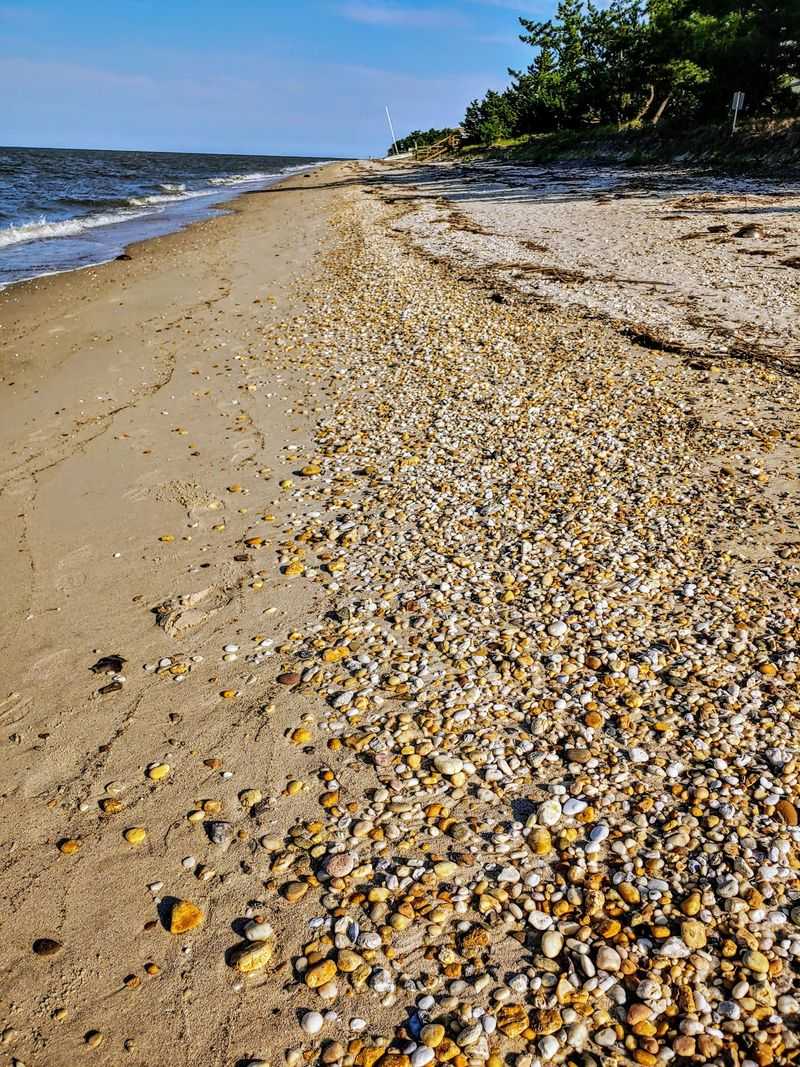
Over 10,000 acres. That is how much land Prime Hook protects, and the boardwalk covers only a tiny slice of it.
The refuge includes freshwater and saltwater wetlands, forests, open fields, ponds, and shoreline along Delaware Bay. Each area supports its own mix of wildlife, from fiddler crabs on muddy banks to foxes slipping through the fields.
After your walk, hop back in the car and explore. Driving slowly along refuge roads is a great way to spot birds and deer, especially near dawn or dusk.
Pull over safely at viewing areas and scan the water with binoculars.
Fun fact: the name Prime Hook likely comes from an old Dutch phrase meaning plum point, after the beach plums that grew here long ago.
Want to stretch your legs again? Additional trails and overlooks are scattered around the property.
Bring a refuge map, plenty of water, and a sense of adventure. The more you explore, the more you realize how much life fits into this coastal corner of Delaware.
Plan Your Visit
A little planning goes a long way toward a great day at the marsh. Prime Hook National Wildlife Refuge sits at 11978 Turkle Pond Rd, Milton, DE 19968.
The visitor center is generally open every day from 9 a.m. to 4 p.m. Hours can shift depending on weather and volunteer help, so checking ahead is smart.
The refuge grounds open half an hour before sunrise and close half an hour after sunset.
Best of all, there is no entrance fee. You can enjoy the trails, wildlife, and views without spending a dime.
The Boardwalk Trail is wheelchair accessible, which makes it a welcoming option for families and visitors with mobility needs. Strollers roll along it nicely as well.
Now for the itchy part. From June through September, mosquitoes, ticks, and biting flies can be plentiful.
Pack insect repellent, wear long sleeves and light colors, and check for ticks afterward.
Bring water, binoculars, and a camera. With those basics covered, you are ready for a memorable walk into the wild.