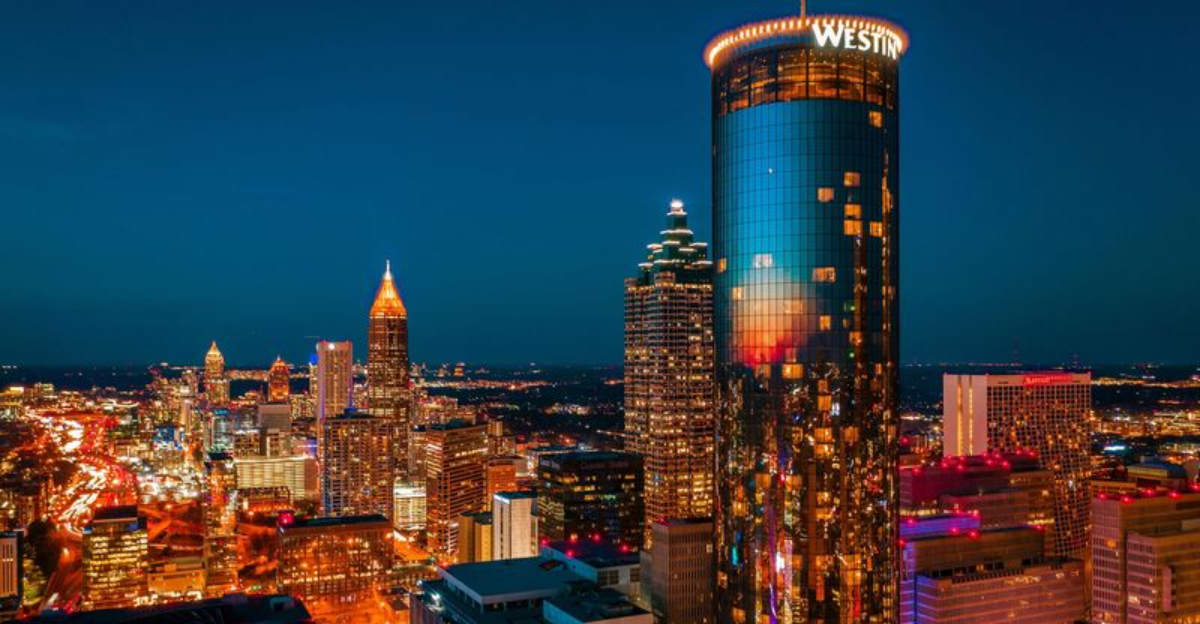
Atlanta doesn’t just have a skyline—it has a statement.
Steel, glass, and concrete shoot into the Georgia sky like the city is still racing upward, daring anyone to look away. These towers weren’t built to blend in.
They were built to be seen.
From Midtown’s glowing giants to Downtown’s sharp-edged classics, each building carries a piece of Atlanta’s story. Some shine like beacons after dark.
Others tower over the streets like silent giants watching the city move below.
Together, they create one of the South’s most unforgettable city views—a mix of power, style, and pure ambition. If you’ve ever looked up in Atlanta and felt small, these ten skyscrapers are the reason why.
Bank of America Plaza
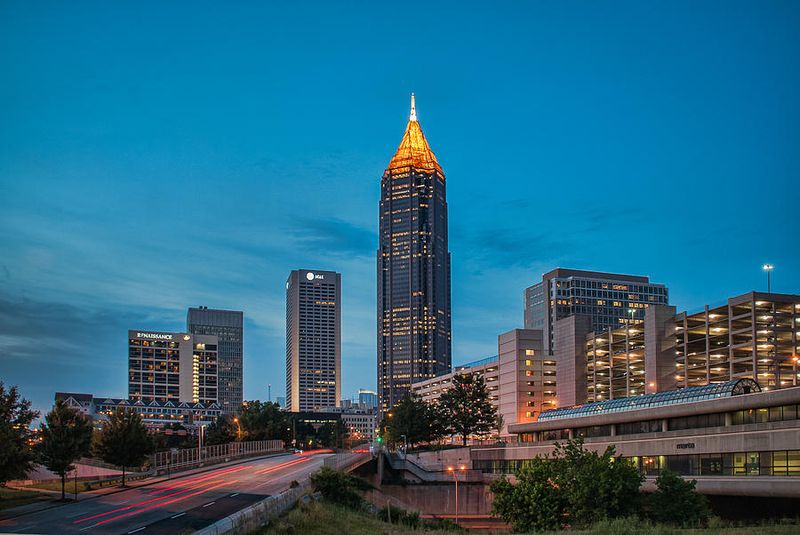
Standing at 1,023 feet, this giant has ruled Georgia’s skyline since 1992. The building’s golden spire lights up every night, becoming a beacon visible throughout the city and creating one of Atlanta’s most photographed views.
What makes this tower special isn’t just its height. The 55-story structure combines elegant modernism with practical office space, housing thousands of workers daily.
Its location in Midtown puts it at the heart of Atlanta’s business district, where deals are made and careers are built.
The building’s design by Pickard Chilton uses reflective glass and granite to create a shimmering effect during daylight hours. At night, the illuminated top becomes Atlanta’s crown jewel.
The spire alone rises 91 feet above the roof, making sure this building remains the undisputed champion of Georgia’s vertical landscape.
Locals often use it as a navigation landmark when giving directions across the city.
Truist Plaza
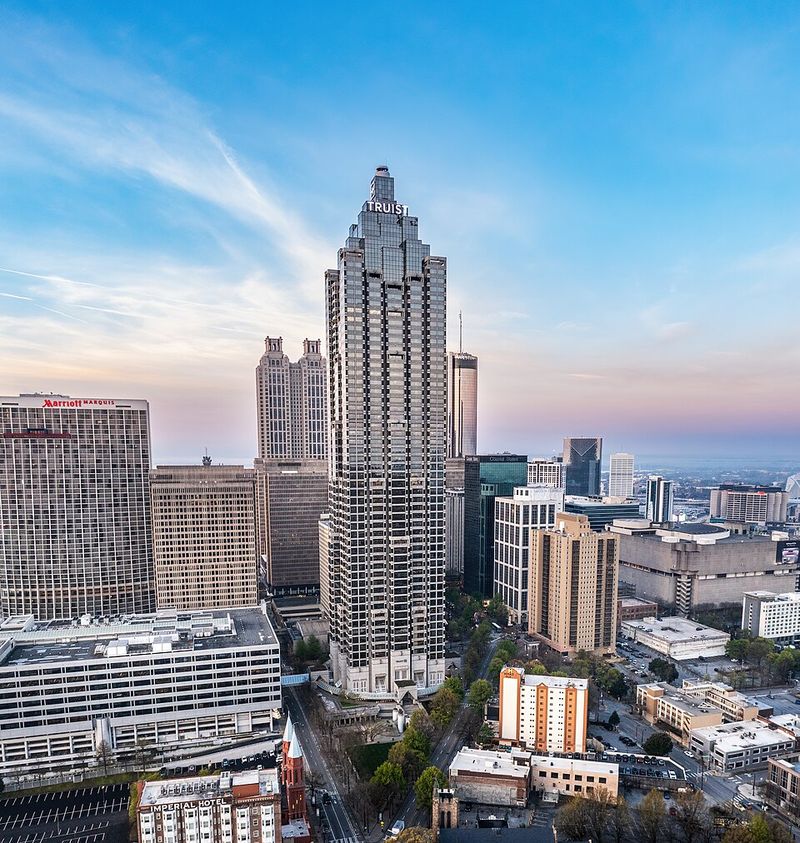
This 871-foot postmodern masterpiece changed everything when it opened in 1992. Before this tower joined the skyline, Atlanta’s financial core looked completely different.
The building brought thousands of banking jobs downtown and helped cement the city’s reputation as a southern financial powerhouse.
The 53-story structure showcases the bold architectural style popular in the late 1980s and early 1990s. Its stepped crown and geometric patterns make it instantly recognizable from any angle.
Glass and steel combine to create surfaces that reflect Atlanta’s changing weather and light throughout each day.
Inside, the building operates like a small city with restaurants, shops, and conference facilities serving the business community. The lobby features polished marble and dramatic lighting that impresses visitors immediately upon entry.
Multiple elevator banks whisk workers to their offices high above the bustling streets below, where Atlanta’s business decisions shape the region’s economy.
One Atlantic Center
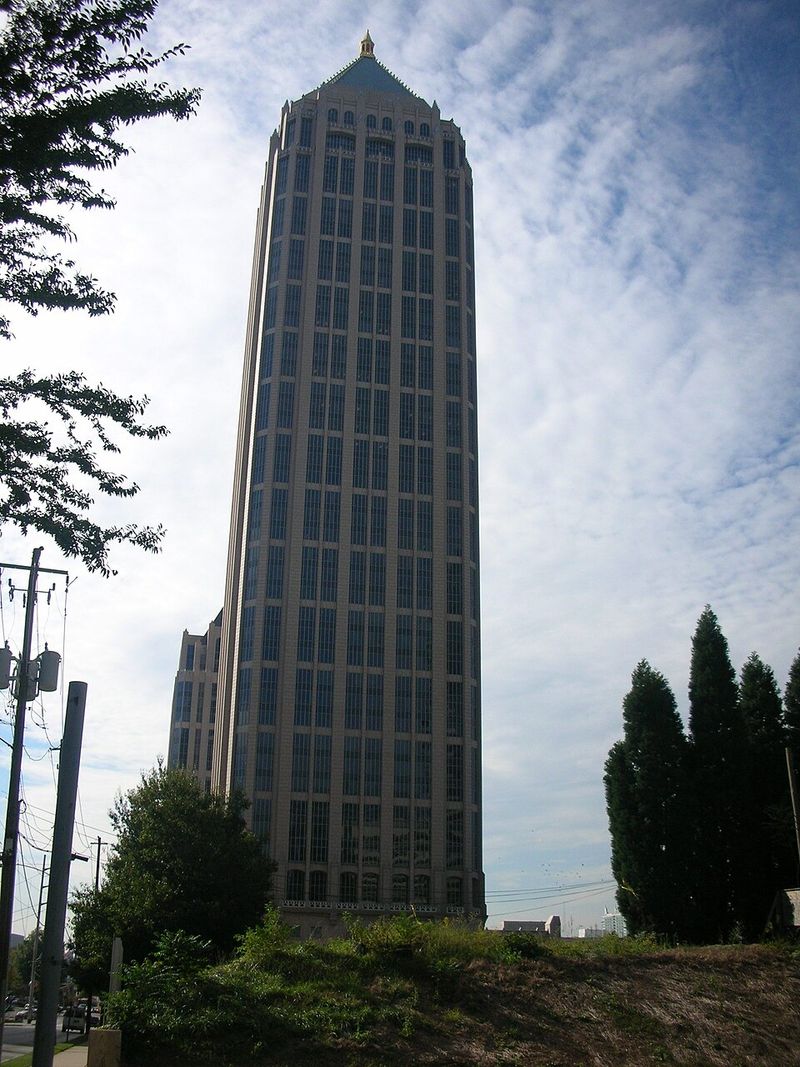
Everyone calls it “The Pink Building” and for good reason. This 820-foot tower wrapped in rose-colored granite stands out from every other skyscraper in the city.
When it opened in 1987, people had never seen anything quite like it in Atlanta’s skyline.
The glowing pyramid crown lights up each evening in various colors, celebrating holidays and special events throughout the year. This 50-story giant was designed by Philip Johnson and John Burgee, two architects known for creating buildings that refuse to blend into the background.
The pink granite came from quarries specifically selected to create this unique appearance.
Located at the intersection of West Peachtree and 14th Street, the building anchors Midtown’s northern edge. Its distinctive appearance makes it a favorite subject for photographers and artists capturing Atlanta’s urban character.
Workers inside enjoy panoramic views stretching all the way to the North Georgia mountains on clear days, making those high-floor offices especially desirable.
191 Peachtree Tower
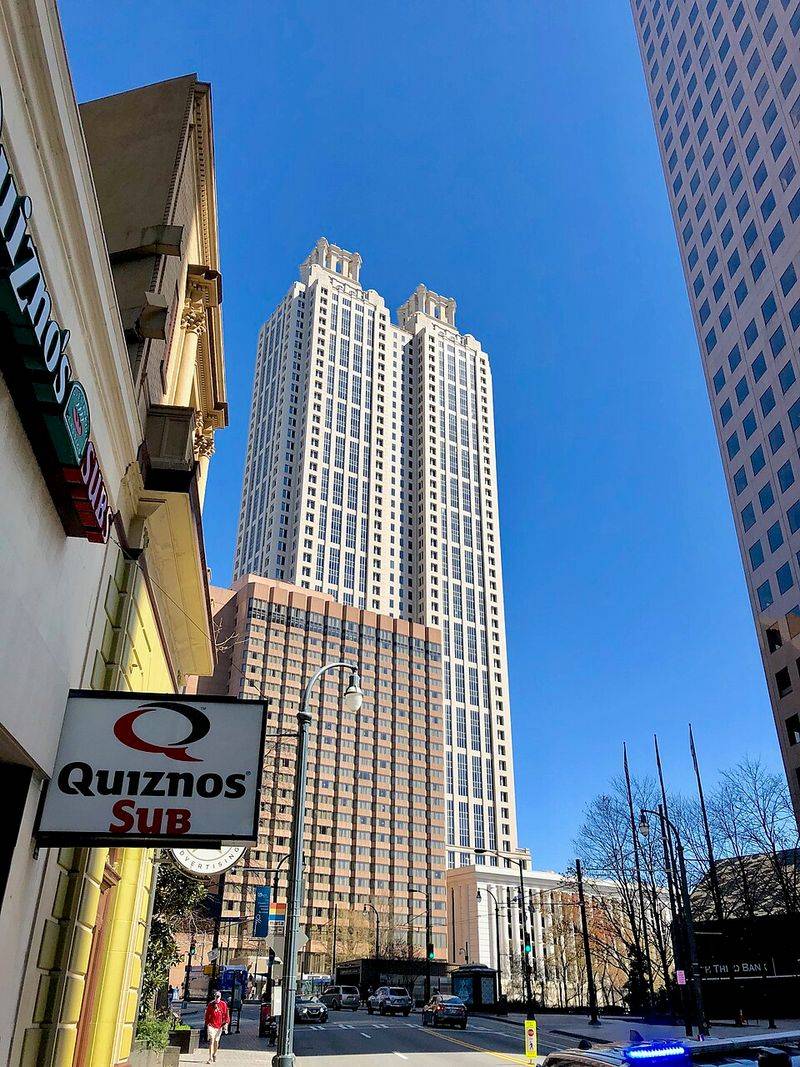
Twin golden crowns sit atop this 770-foot Downtown landmark like royal headgear on Atlanta’s skyline. The building earned its distinctive look in 1991 when architects at Johnson/Burgee created those memorable illuminated peaks that glow against the night sky.
The 50-story tower uses polished granite in warm earth tones that contrast beautifully with surrounding glass buildings. This choice gives the structure a sense of permanence and strength that mirrors the corporations housed inside.
The twin spires aren’t just decorative—they’re a bold statement about architectural creativity in an era of cookie-cutter designs.
IBM originally anchored the building as its major tenant, bringing significant technology presence to Atlanta’s core. The tower’s prime location near Five Points places it at the intersection of Atlanta’s business and government districts.
Underground connections link it to other buildings through Atlanta’s network of pedestrian tunnels, allowing workers to move between locations without facing Georgia’s summer heat or winter chill outside.
1072 West Peachtree
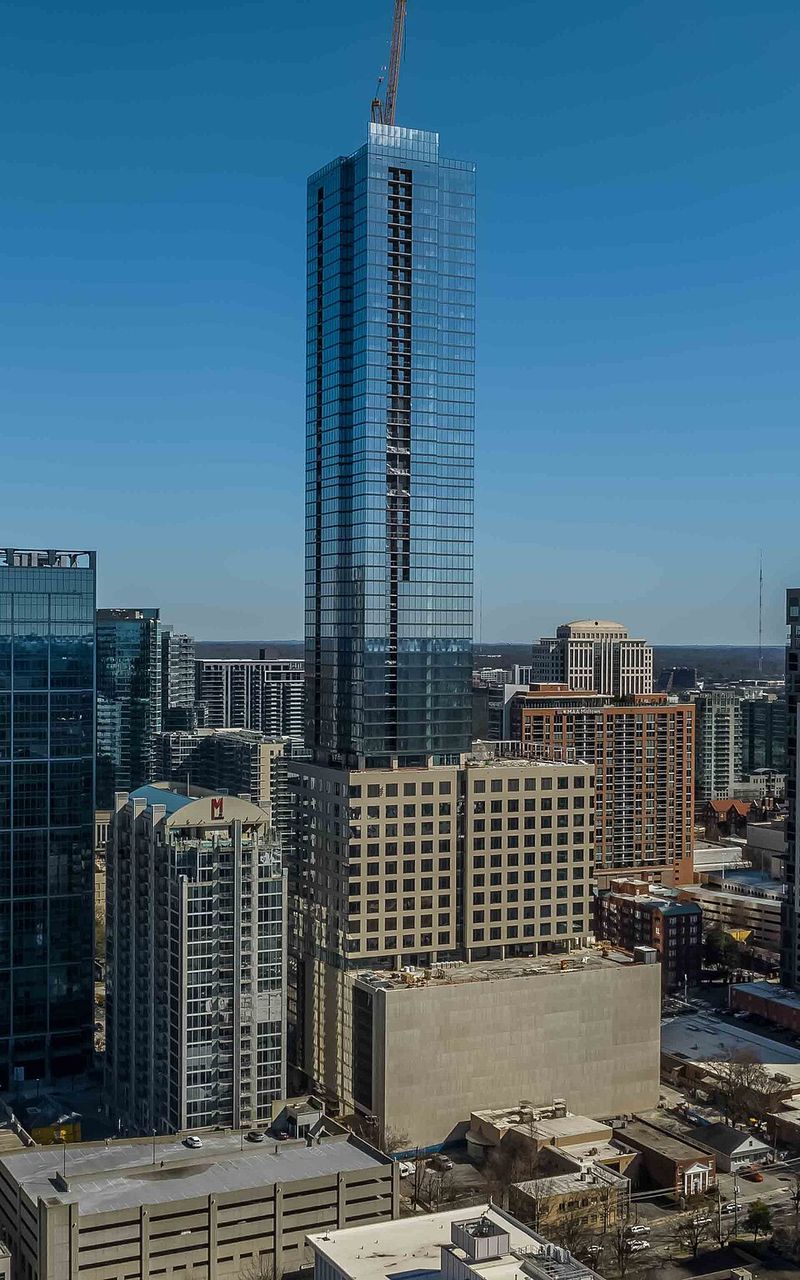
Atlanta keeps growing upward, and this 771-foot newcomer proves it. Completed in 2023, the building represents the latest chapter in the city’s vertical expansion story.
Its modern glass exterior reflects contemporary architectural trends while fitting seamlessly into Midtown’s established skyline.
Unlike older office-only towers, this 46-story structure mixes residential units with commercial space. People actually live here, high above the city streets, enjoying amenities previous generations of skyscrapers never offered.
Rooftop terraces, fitness centers, and retail spaces create a vertical neighborhood where residents rarely need to leave the building.
The tower’s design incorporates sustainable features and energy-efficient systems that older buildings lack. Floor-to-ceiling windows provide stunning views while modern insulation keeps heating and cooling costs down.
Its location near Piedmont Park gives residents easy access to green space, combining urban convenience with natural beauty. This building shows how Atlanta’s skyline continues evolving to meet changing needs and expectations from new generations of city dwellers.
The Westin Peachtree Plaza
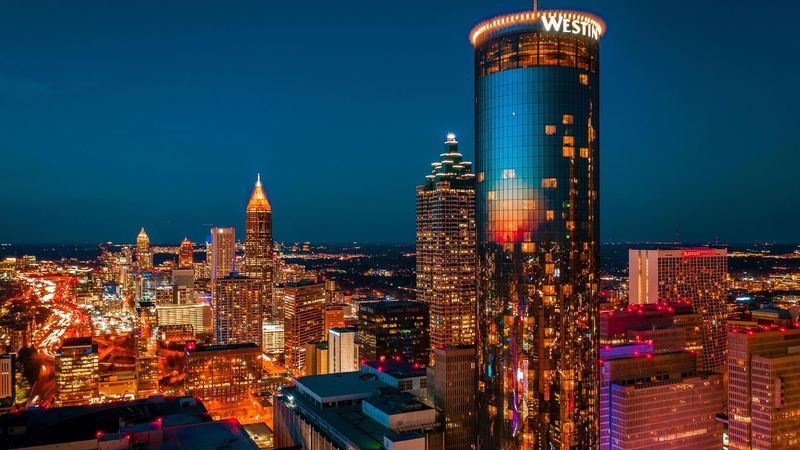
Round buildings are rare, but this 723-foot glass cylinder became Atlanta’s signature hotel when it opened in 1976. Architect John Portman designed it to look unlike anything else in the city, and nearly fifty years later, it still turns heads.
The 73-story structure held the title of world’s tallest hotel for several years after construction.
That revolving restaurant on top? It’s become legendary among locals and tourists alike.
The Sun Dial Restaurant rotates slowly, giving diners constantly changing views of Atlanta’s sprawling landscape below. Glass elevators on the building’s exterior provide thrilling rides up the tower’s side, adding excitement to every hotel stay.
Portman’s vision transformed hotel design by creating dramatic interior atriums and mixing public spaces with private rooms. The building welcomed countless conventions, tourists, and business travelers who needed accommodation in downtown Atlanta.
Its cylindrical shape solved practical problems while creating an architectural icon that photographs beautifully from every angle around the city.
Georgia-Pacific Tower
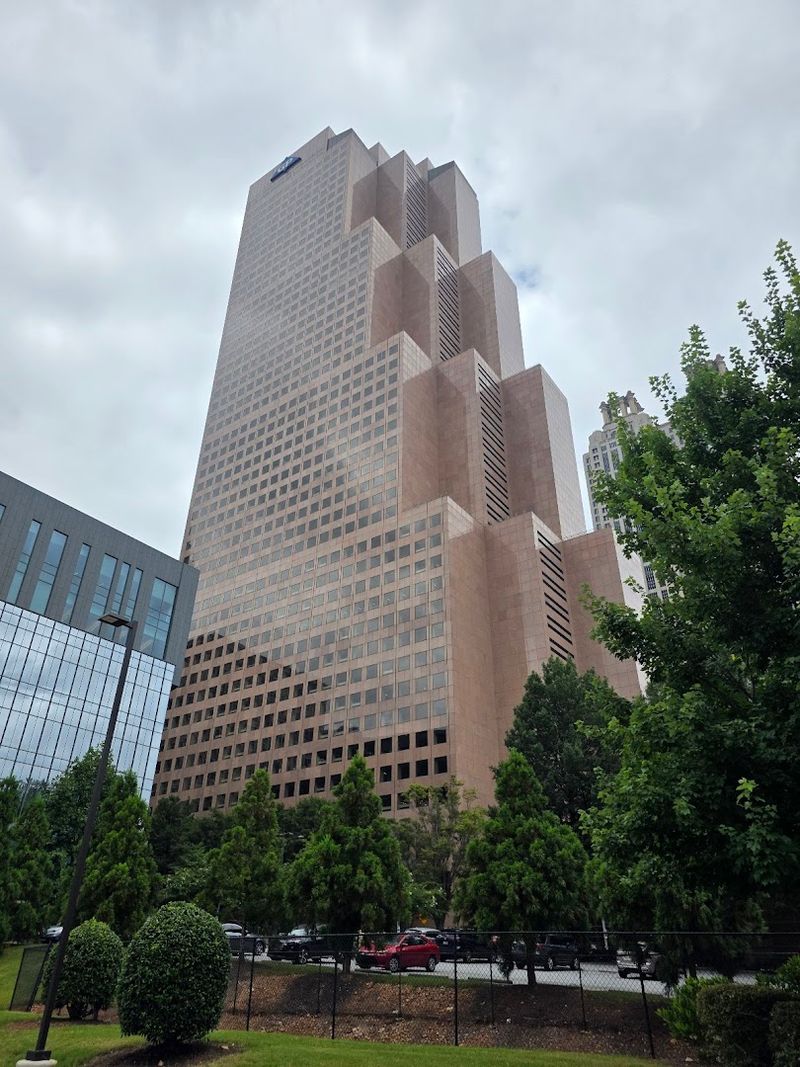
Corporate America planted its flag in Atlanta through buildings like this 697-foot tower. Since 1982, this 52-story structure has housed one of the nation’s major paper and building products companies.
The building’s clean lines and professional appearance perfectly capture the business-focused aesthetic of its era.
The tower’s marble and granite exterior projects stability and success—exactly what corporations wanted their headquarters to communicate. Inside, efficiently designed floor plates maximize usable office space while providing natural light to workers throughout the day.
The building helped establish Downtown Atlanta as a legitimate alternative to traditional business centers in older American cities.
Georgia-Pacific’s decision to locate here influenced other corporations to follow suit. The tower stands as proof that Atlanta successfully transformed from a regional hub into a national business destination.
Its location near Centennial Olympic Park connects it to Atlanta’s sports and entertainment venues. Workers heading to lunch can easily walk to dozens of restaurants, showing how successful downtown planning creates livable urban spaces beyond just office towers.
Promenade II
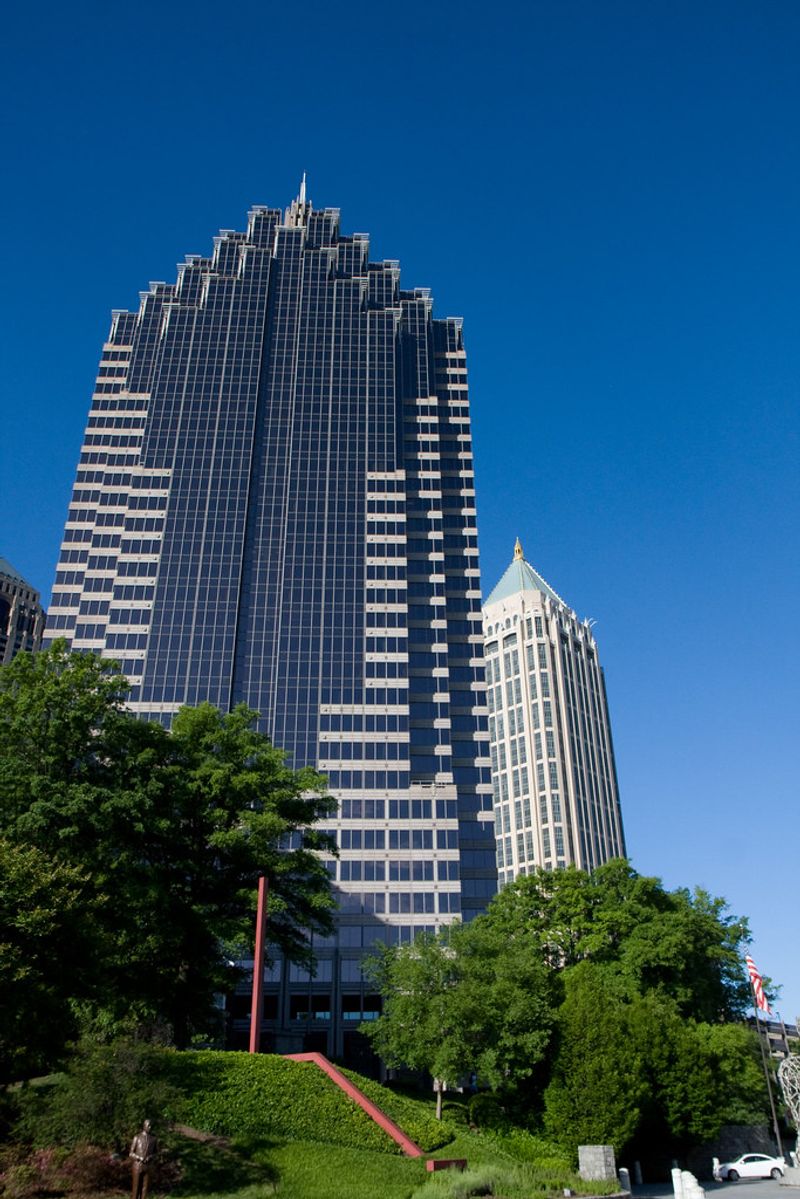
Sharp angles and gleaming glass define this 691-foot addition to Midtown’s growing cluster of skyscrapers. The 40-story building uses a stepped crown design that creates visual interest against the sky.
Completed in 1990, it represented Midtown’s emergence as a serious rival to Downtown’s traditional dominance.
The building’s reflective exterior acts like a mirror for Atlanta’s weather and surrounding architecture. Clouds drift across its surface throughout the day, creating an ever-changing appearance that keeps the tower from looking static or boring.
The design allows maximum natural light penetration while managing Georgia’s intense summer heat through specialized glass coatings.
Modern office towers like Promenade II changed how Atlantans thought about where business should happen. Midtown offered newer buildings, better parking, and proximity to residential neighborhoods that Downtown couldn’t match.
The tower helped prove that successful office buildings didn’t need to cluster in one traditional business district. Today it stands among dozens of other towers that followed its lead northward along Peachtree Street, creating the diverse skyline Atlanta enjoys.
1180 Peachtree
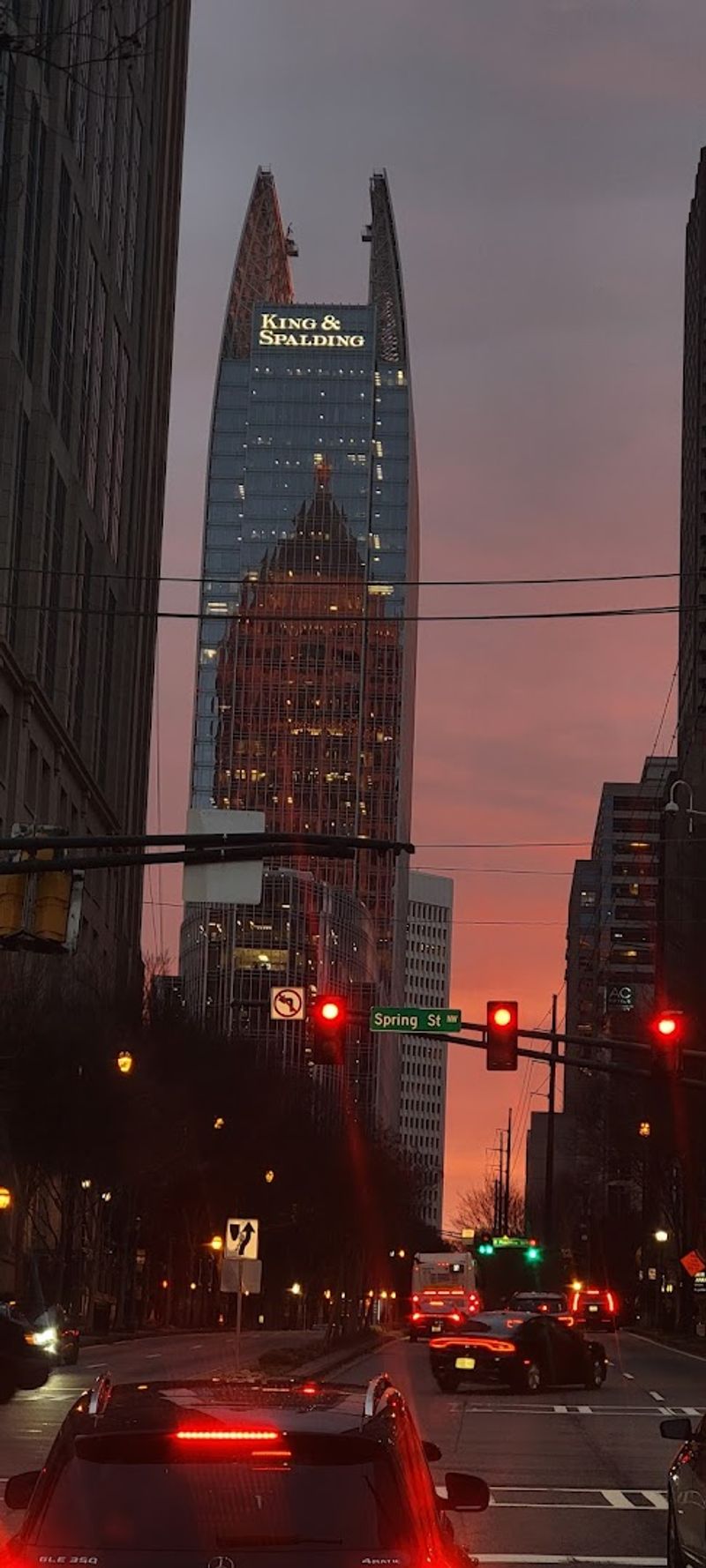
Where business meets culture, you’ll find this 657-foot tower standing near Atlanta’s celebrated arts venues. The building earned its alternate name “Symphony Tower” from its proximity to the Woodruff Arts Center, home to the Atlanta Symphony Orchestra.
This 41-story structure opened in 1998, bringing modern office space to an area previously known more for museums than boardrooms.
The tower’s sleek design features a distinctive notched corner that creates architectural interest without resorting to flashy colors or unusual shapes. Its champagne-colored glass gives the building a sophisticated appearance appropriate for its location between business and cultural districts.
The refined exterior fits perfectly with the upscale neighborhood surrounding it.
Workers here enjoy easy access to the High Museum of Art, Symphony Hall, and Alliance Theatre—cultural amenities that make lunch breaks and after-work hours more interesting. The building proved that office towers could enhance cultural neighborhoods rather than overwhelm them.
Its success encouraged similar developments that respected the character of Atlanta’s diverse districts while still reaching for the sky.
Atlantic Center Plaza
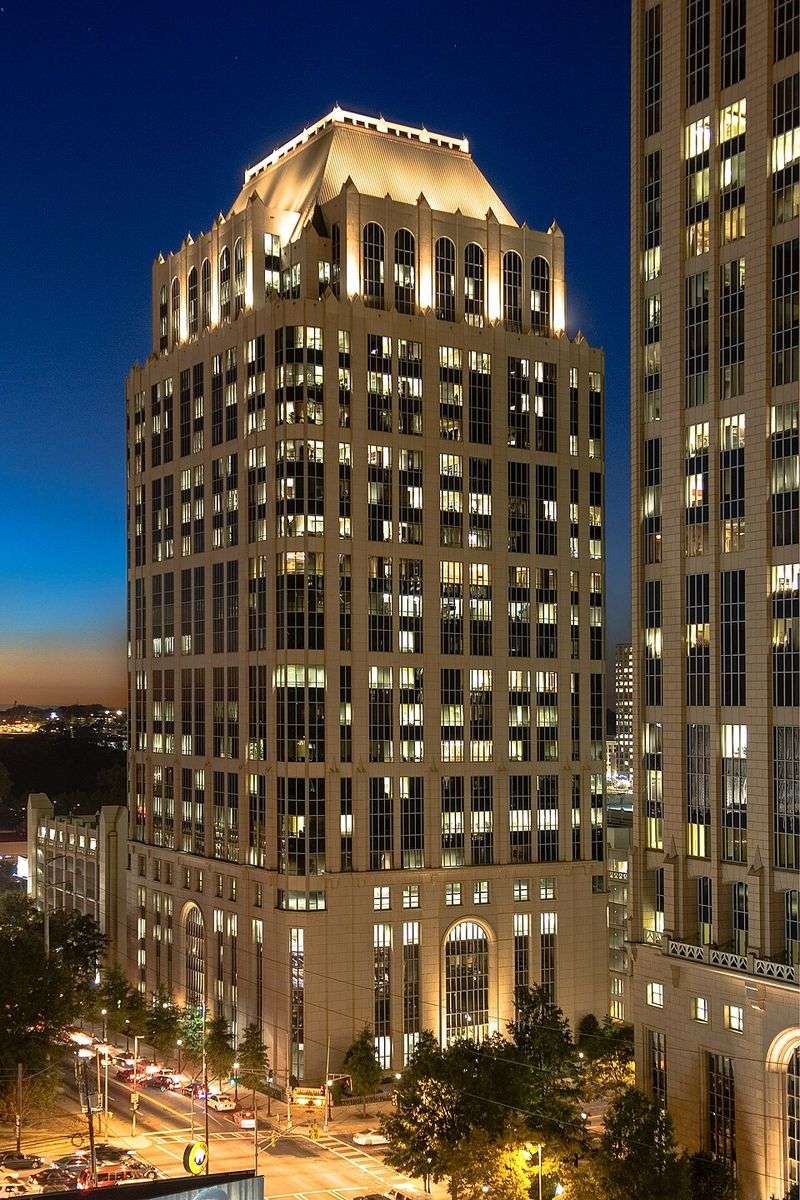
Completing our list at 625 feet, this Midtown tower rounds out Georgia’s tallest buildings with classic late-1980s styling. The 47-story structure opened in 1989 during Atlanta’s explosive growth period when new towers seemed to appear almost monthly.
Its straightforward design focused on functionality rather than architectural showmanship.
The building’s brown-tinted glass and granite base create a professional appearance that has aged well over the decades. While not as flashy as some neighbors, Atlantic Center Plaza has quietly served Atlanta’s business community for over thirty years.
Its dependable presence shows that not every great building needs unusual shapes or bright lights to contribute meaningfully to a city’s skyline.
The tower occupies a prime location that connects it to MARTA’s Midtown station, making commutes easier for workers throughout the metro area. This accessibility proved crucial as Atlanta’s traffic worsened over the years.
The building demonstrates how practical considerations like transit access matter just as much as dramatic design when creating successful urban development that serves real needs beyond just looking impressive.