

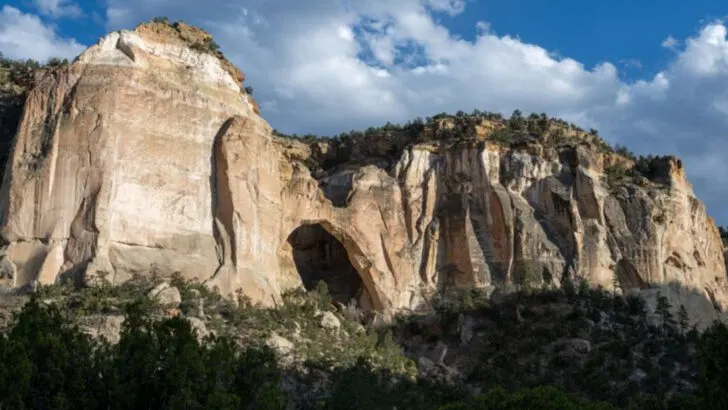
Think Utah owns the arch game?
Not even close.
Across the rest of America, hidden spans of stone soar over creeks, deserts, forests, and lava fields, each one telling a different geologic story.
From redrock icons to limestone legends, these arches deliver jaw dropping views and true adventure without the Utah crowds.
Lace up your boots, grab a map, and get ready to chase stone windows from Arizona to Wisconsin and beyond.
Tonto Natural Bridge — Arizona
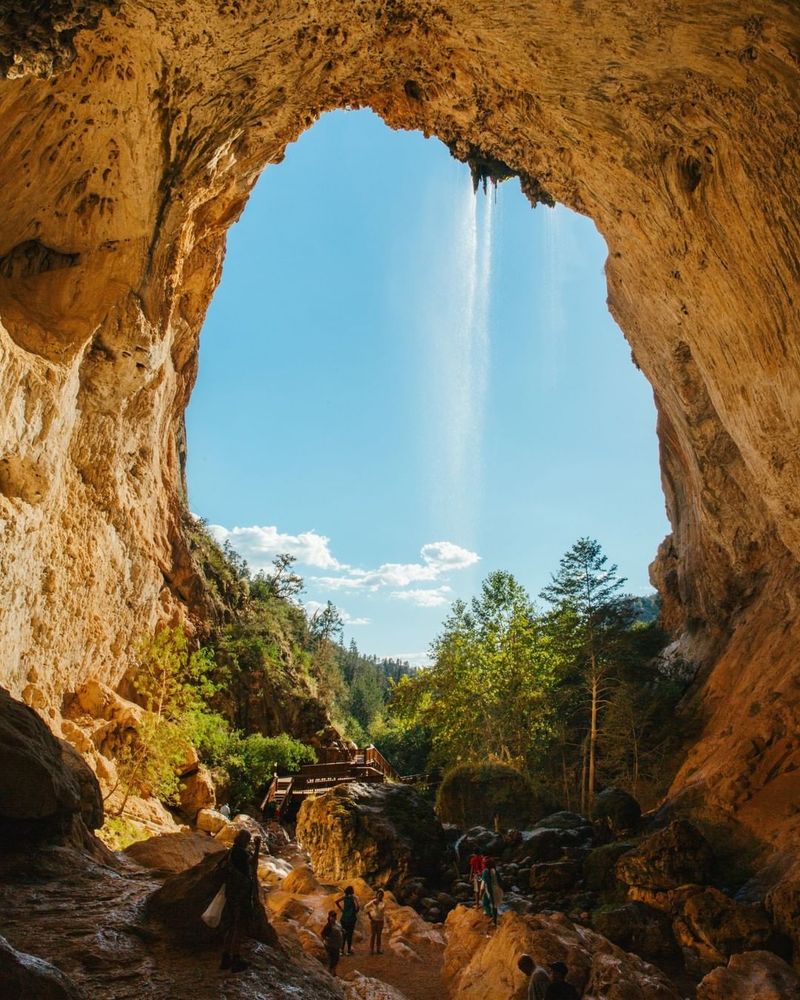
There is something almost otherworldly about stepping beneath Tonto Natural Bridge and hearing water whisper through a cathedral of mineral drapery. This giant travertine span formed as calcium rich springs laid down rock over time, slowly building a bridge instead of carving one away. You get cool shade, echoing acoustics, and the scent of damp stone and pine while the Arizona sun blazes outside.
The park offers several short yet steep trails that lead to different vantage points, including viewpoints from above and a rugged path down to the grotto. Expect some scrambling and slick patches because algae and mist keep the rocks damp, so traction matters. The payoff is a view through the arch to a ribbon of sky and trees, like a framed portrait painted by geology and water.
Come early to beat both the heat and the crowds, and bring water plus shoes with grippy soles. Rangers sometimes close trails after rain for safety, so checking conditions before you go helps avoid disappointment. If you listen closely under the bridge, you can hear tiny rivulets dripping like a natural metronome, counting the slow work of time.
Spring and fall bring ideal temperatures, but even in summer the cavern air feels noticeably cooler under the span. The travertine textures look best with angled light, making morning and late afternoon prime for photos. Just remember that wet rock and camera gear can be a sketchy combo, so keep straps secure and movements deliberate.
Picnic areas and overlooks make it easy to linger, and the surrounding pines create a mountain oasis vibe rare in Arizona. You leave understanding how water can be both sculptor and mason, layering rock instead of wearing it down. Few arches feel as alive as this one, constantly growing, dripping, and evolving with every season.
Wrather Arch — Arizona
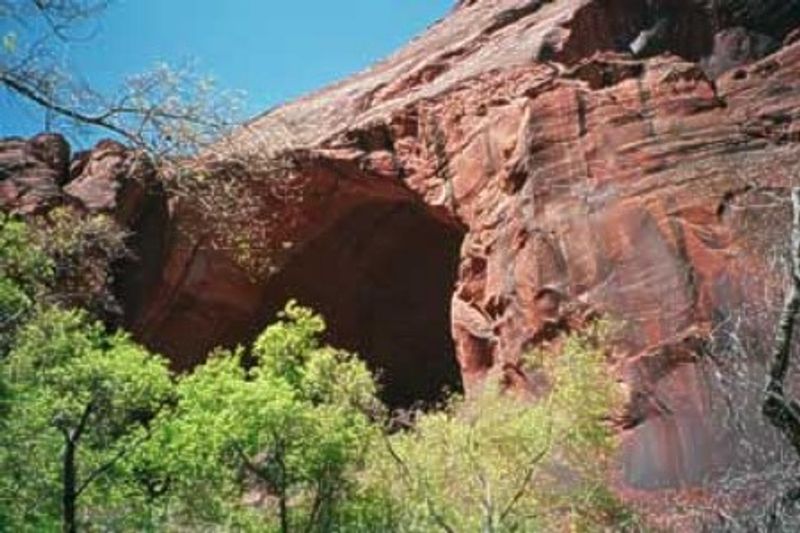
Wrather Arch hides deep in Paria Canyon, far from road noise and cellphone bars, and that remoteness is exactly its magic. You earn the view with miles of sand walking, wading, and route finding, then suddenly the span appears like a stone ribbon suspended between walls. It is one of the largest arches outside Utah, yet you will likely share it with only ravens and wind.
The approach across the canyon demands preparation, permits, and respect for flash flood forecasts. You will pass sculpted narrows, iron stained alcoves, and sprawling benches before angling toward the arch’s alcove. When the light slants just right, the opening glows copper and rose, making the shadowed interior look like a theater stage set for geology.
This is not a casual stroll, so think desert smart: carry ample water, electrolytes, and a reliable map or GPS track. Your shoes will see sand and possibly ankle deep water, so expect grit and damp socks. The isolation is part of the appeal, but it also means your safety net is the one you bring.
Photographers should plan for mid to late afternoon when side light carves contours across the arch’s face. A wide lens helps capture the full span without losing the canyon context, while a longer lens isolates textures and cross bedding lines. Tripods can be cumbersome in sand, so a sturdy travel setup pays off.
Standing beneath Wrather, you feel the hush that big landscapes impose, a quiet that pulls your shoulders down and your attention up. The arch frames sky and cliff like a window that never closes, steady against the endless churn of weather and time. If solace and scale are your priorities, this out of the way giant answers with understatement and grandeur.
Devil’s Bridge — Arizona
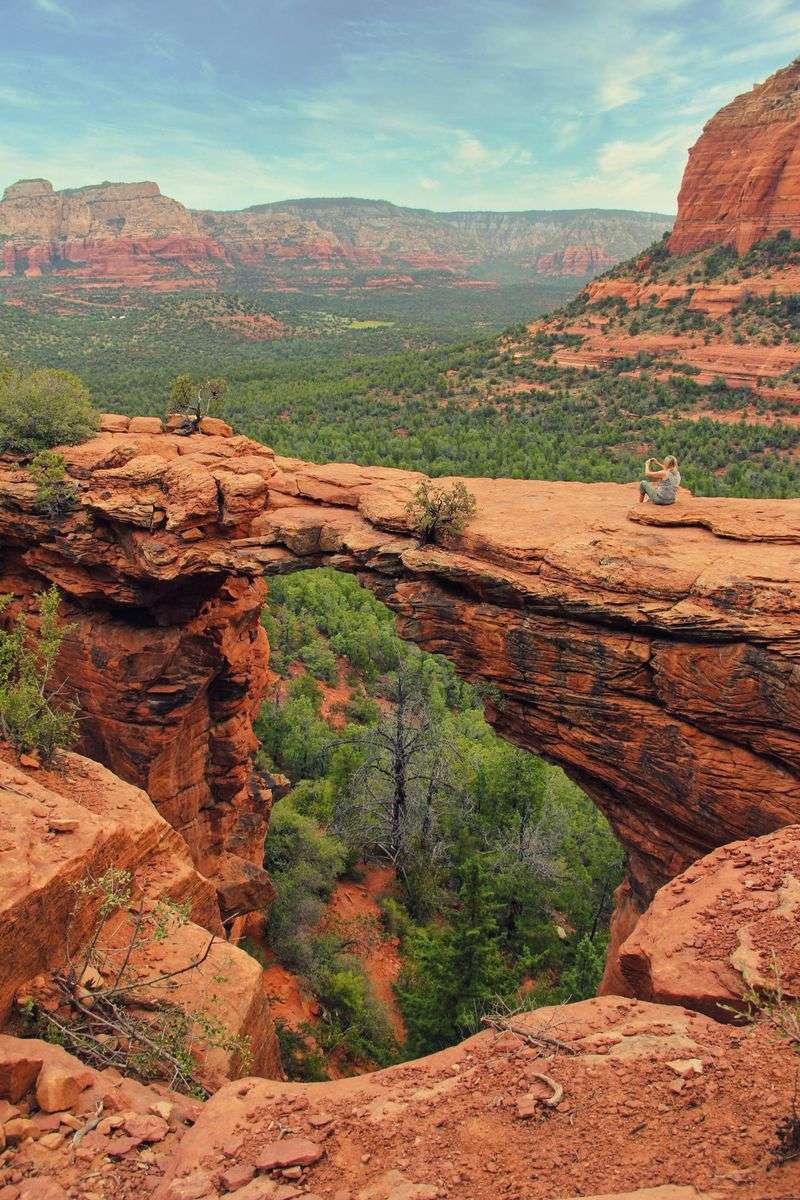
Devil’s Bridge near Sedona is the crowd pleaser, the classic postcard arch with a narrow top that makes your heart thump just looking at it. The hike is short by Arizona standards, but the final stairs and ledges keep things interesting. Once you arrive, the view spills out in every direction, a panorama of buttes, mesas, and rust red cliffs.
It is popular for sunrise and even busier by mid morning, so start early and you might get a few quiet minutes on the span. The rock feels gritty underfoot, which helps with traction, but wind can add nerves when you step onto the bridge. There is no need to venture far out for a great photo because the perspective looks dramatic even from the shoulder.
Parking fills quickly, and a high clearance vehicle helps if you plan to drive the rougher approach road. Otherwise, tack on some extra walking and embrace the slow buildup as the arch appears. Bring water, a hat, and patience for the line that forms as hikers take turns on the bridge.
Golden hour paints the sandstone with soft light that smooths shadows and deepens color. If you want that cinematic silhouette shot, aim for late afternoon when the sun angles behind the arch. Cloudy days can be beautiful too, adding drama to the red against gray skies.
Despite the crowds, this arch still delivers a little adrenaline and a lot of scenery. The drop looks bigger when you are on the span than it does in photos, so move mindfully and keep your focus. Step back after your turn, breathe, and soak in the way desert light turns rock into fire.
Natural Bridge — Virginia

Natural Bridge in Virginia feels like an open air cathedral cut into limestone, with Cedar Creek threading softly through its nave. The span is immense, towering so high that birds ride drafts under the arch like tiny kites. History hangs here too, from Indigenous stories to colonial era lore and early travelers who marveled at the improbable stone.
A paved path follows the creek, making access easy for most visitors and inviting slow, thoughtful walks. Interpretive signs share geology and history without breaking the spell of the place. When light filters through leaves, it patterns the bridge with shifting lace, and water sounds blend with the rustle of trees.
Come early or on weekdays if you want a quieter experience because this site draws families, school groups, and road trippers. The bridge’s sheer height makes even wide angle photos feel small, so experiment with foreground creek reflections. Long exposures can turn the water into silky threads under the arch, adding calm to the composition.
Fall color wraps the limestone in gold and copper, while spring brings wildflowers stitched along the banks. Summer shade keeps temperatures pleasant, and winter reveals the structure’s bones as foliage drops. No matter the season, you will want to pause where the creek bends and the arch seems to float above it.
Nearby attractions include caverns and scenic byways, but the bridge itself holds attention longer than expected. Standing beneath it, you feel history, geology, and time braided together, like the creek has been telling the same story for centuries. You leave looking up, a little humbled by a stone curve that refuses to collapse.
Ayres Natural Bridge — Wyoming
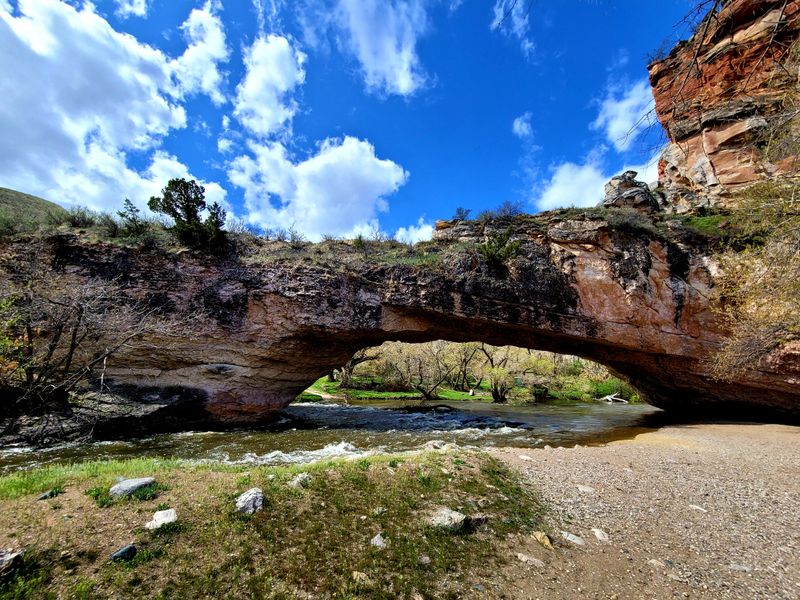
Ayres Natural Bridge is a true riverside gem, a limestone arch with La Prele Creek running under it like a living ribbon. The park feels intimate, tucked in a canyon where cottonwoods flicker and the water chats over stones. It is one of the few natural bridges with a permanent stream beneath, which adds sound, sparkle, and cool air.
Because this is a county park, the mood leans relaxed rather than rugged, with picnic tables, lawns, and shady nooks. That makes it perfect for road trippers who want a scenic pause between Wyoming’s bigger name stops. You can walk under the span, watch reflections shimmer on the rock, and spot swallows slicing arcs in the sky.
Summer weekends get lively, so early or weekday visits feel more contemplative. If you bring kids, the shallow creek edges offer a safe place to splash while you enjoy the view. A short trail climbs to an overlook, giving you the arch’s profile and a sense of how it anchors the canyon walls.
Photographers should try for morning or late afternoon when light bounces from the water to highlight the underside. Polarizers help manage reflections and deepen the creek’s greens and blues. A picnic blanket, a book, and a lingering lunch can turn a quick stop into a memorable afternoon.
What sets Ayres apart is how approachable it is without losing magic. The constant movement of water reminds you that bridges are born from erosion’s patient work. Sit still for five minutes, and the scene arranges itself: dappled sun, river music, and a limestone arc holding everything together.
Natural Bridge State Park — Wisconsin
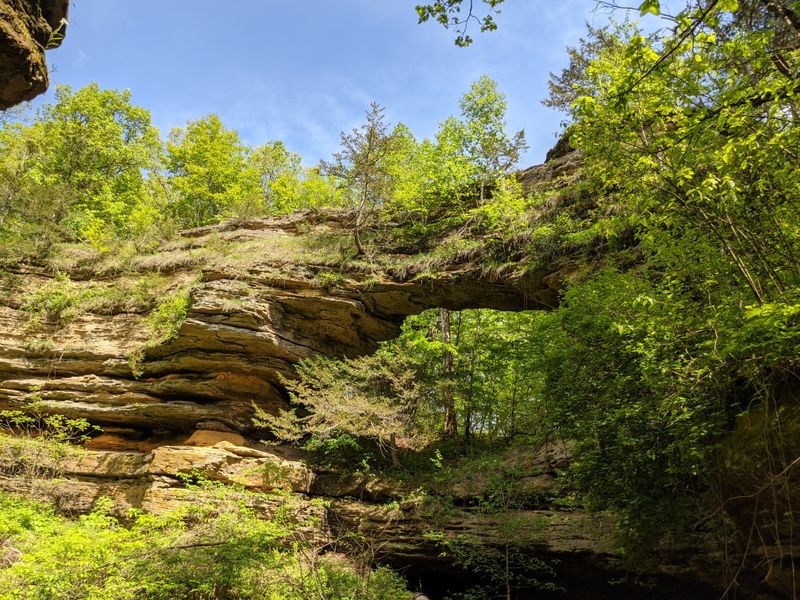
Nestled in the rolling hills of Sauk County, Wisconsin, Natural Bridge State Park is home to one of the Midwest’s most remarkable geological features: a massive sandstone natural bridge formed over thousands of years by glacial meltwater and erosion.
Unlike the dramatic redrock arches of the Southwest, this natural bridge is carved from ancient sandstone, offering a unique glimpse into the region’s glacial history. The bridge itself spans roughly 75 feet, rising high above the surrounding forest floor, creating a striking contrast against the dense woodlands of maple, oak, and pine that surround it.
Visitors can explore the bridge via well-marked hiking trails that wind through the park, offering vantage points to admire the arch from multiple angles.
Seasonal changes make the scenery even more captivating: vibrant fall foliage drapes the sandstone in warm hues, while spring and summer bring lush greenery and the sounds of nearby streams.
The park also includes a picnic area and educational signage explaining the geologic processes that shaped the bridge, making it a perfect destination for both casual visitors and geology enthusiasts.
For anyone interested in natural arches outside the Southwest, Wisconsin’s Natural Bridge is a hidden gem that combines geological wonder with peaceful forest beauty.
Arch Rock — Nevada
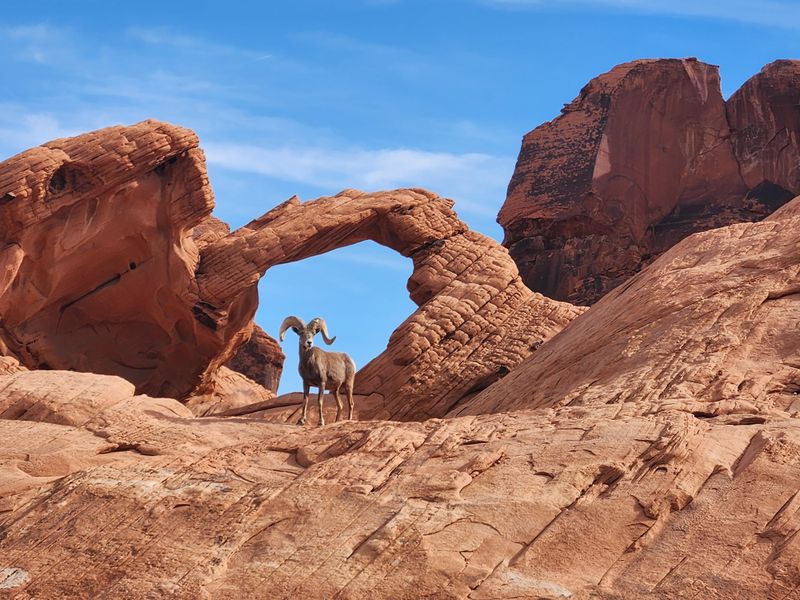
Arch Rock in Valley of Fire State Park is a pure study in curve and color. The red sandstone seems to hold sunrise like a secret, warming from ember to flame as the light rises. Through the opening, the desert stretches in quiet waves, punctuated by creosote and jagged ridgelines.
This is a drive up friendly stop with short walks to the arch and surrounding viewpoints. Even so, tread lightly because the formation is fragile and the park enforces rules to protect it. Take your time circling for angles that align distant hills within the arch’s frame.
Early and late light bring out cross bedding and varnish patterns that midday glare tends to flatten. A wide lens captures the sweep, while a polarizer tames the sky without killing the rock’s glow. On windy days, sand lines the base like a faint halo, adding texture to foregrounds.
Valley of Fire often surprises first timers with its concentration of shapes, slots, and color shifts. Arch Rock serves as a perfect introduction before you move deeper into the park’s labyrinth of domes and corridors. Carry water even for quick stops because the desert’s dry air sneaks up fast.
Stand quietly and you may hear ravens wing past, their calls ricocheting against the stone. The arch is not huge, but its proportions feel pleasing, a balanced curve etched by time and wind. Step back, squint a little, and the desert composes a photograph for you.
Window Arch (City of Rocks) — Idaho
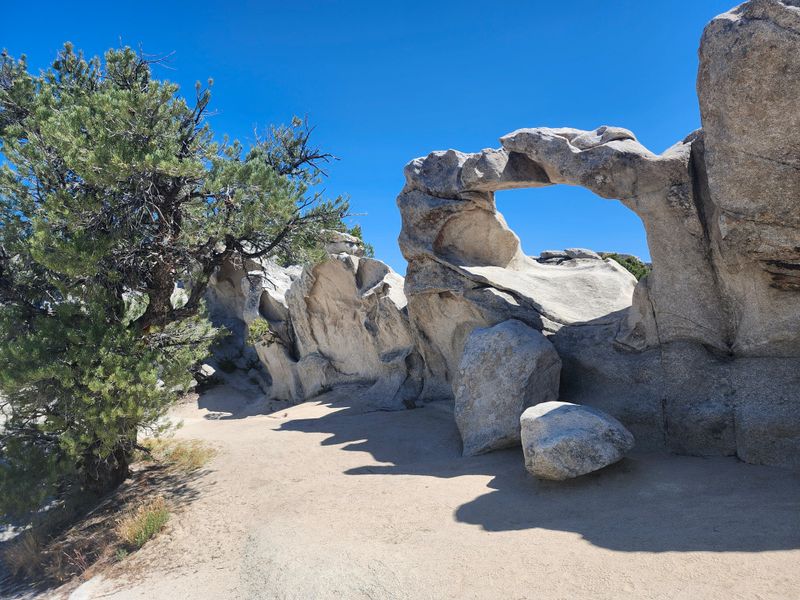
Window Arch in Idaho’s City of Rocks rises out of granitic chaos, a surprise portal amid spires better known for climbing than arches. The rock sparkles with quartz and feldspar, catching sunlight in a way sandstone never does. You feel the difference under your hands too, gritty and crystalline instead of soft and dusty.
Short trails and cross country paths thread through sagebrush to reach the arch, with route finding that feels playful rather than daunting. Keep an eye out for climbers topping out nearby, adding scale to the skyline of fins and domes. The arch itself frames a high desert scene of juniper, big sky, and stubborn boulders.
Because this is granite, freeze thaw and exfoliation shape openings differently than erosion through soft layers. That makes Window Arch a great case study in how arches form beyond sandstone country. The textures pop in raking light, so aim for morning or late day when shadows carve the granite’s facets.
City of Rocks invites lingering: bring a picnic, trace boulder problems, and wander without a rigid plan. It is easy to find solitude if you drift a few turns past the busiest pullouts. The silence here is a tapestry of breeze, insect buzz, and the clink of cams from climbers.
Photographers will want both wide and short telephoto lenses to balance context and detail. A small tripod helps with precise compositions among the boulders. By the time you leave, the granite’s sparkle will be stuck in your memory like sunlight on water.
Rockbridge State Nature Preserve – Ohio
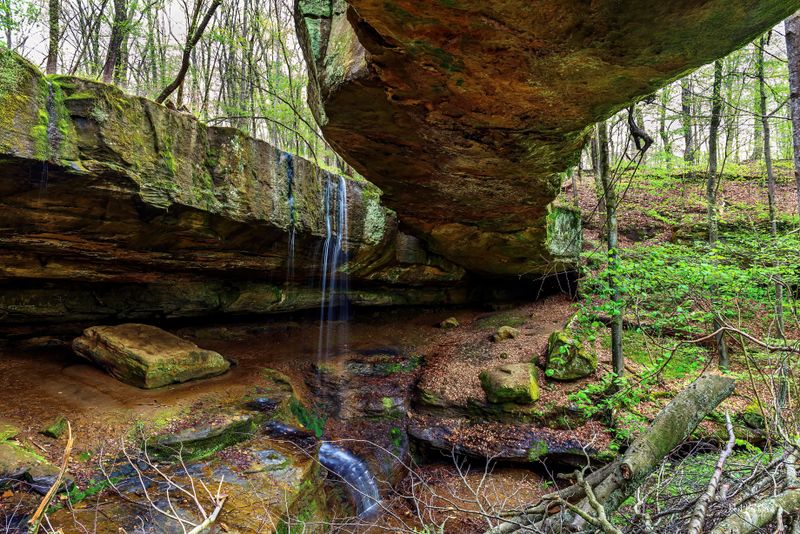
Tucked away in Hocking County, Ohio, Rockbridge State Nature Preserve is a stunning example of the Midwest’s natural arches and geological formations.
The preserve’s centerpiece is a massive sandstone rock bridge, formed over thousands of years as water slowly eroded the surrounding rock, leaving a natural arch that spans roughly 100 feet. Unlike the desert arches of the Southwest, this bridge is set within a lush forest of maple, oak, and hickory, giving it a distinctly green and serene atmosphere year-round.
Visitors can access the bridge via a well-maintained hiking trail that winds through the preserve, leading past fascinating rock outcroppings, small cliffs, and forested hollows.
The trail also features interpretive signage explaining the geologic history of the area and how the sandstone was shaped by glacial meltwaters, frost, and erosion. In spring, wildflowers carpet the forest floor; in fall, the vivid foliage creates a dramatic backdrop for the arch.
Photography enthusiasts often come to capture the bridge framed by colorful trees or the soft light of early morning. Rockbridge State Nature Preserve is more than just a hike—it’s a chance to experience Ohio’s hidden natural arches and enjoy a peaceful, forested escape that highlights the subtle beauty of Midwestern geology.
La Ventana Arch — New Mexico
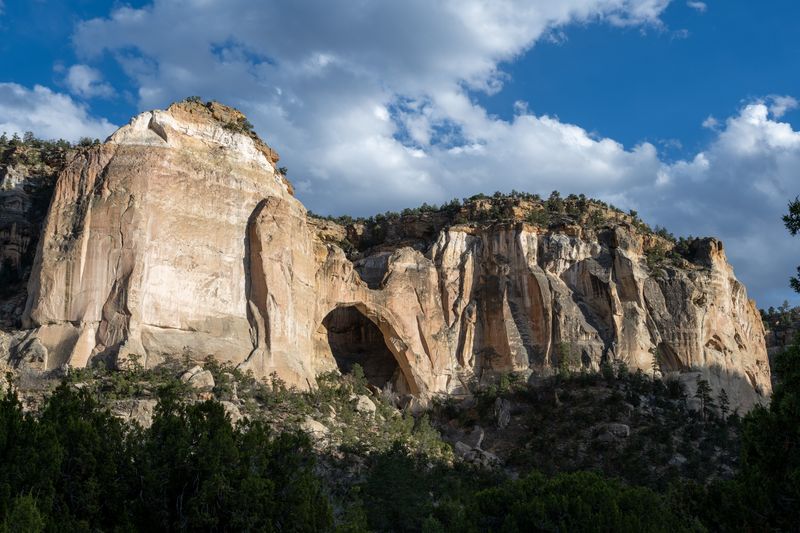
La Ventana Arch stands like a grand window into New Mexico sky, perched at the edge of El Malpais’ rugged lava country. The surrounding landscape feels young and raw, all broken basalt and dark flows, while the arch glows warm against it. Pullouts and a short path make access easy, yet the view feels vast and untamed.
Even from the parking area, the scale hits you: a towering opening in cream and gold sandstone, catching sunset like a lantern. Walk closer and the contrast between smooth arch and jagged lava fields sharpens into a striking tableau. You can almost feel heat radiate from black rock while a breeze threads through piñon and juniper.
Come late in the day for side light that paints the arch and deepens the sky. A wide lens fits the whole scene, but a mid range zoom reveals streaks, cross bedding, and mineral stains. This is an easy stop on a broader loop through El Malpais, where lava tubes and cinder cones expand the geologic story.
Respect closures and stay on trails because desert crust and fragile plants bounce back slowly. The silence out here has weight, interrupted by the occasional raven or distant rumble of thunder. After sunset, the arch becomes a silhouette, and stars begin to collect above like spilled salt.
La Ventana offers the drama of a huge span without a demanding hike, which makes it perfect for families and road weary travelers. It is also a reminder that arches form in many contexts, even alongside volcanoes. Stand beneath it, look out across the lava, and feel the land writing itself in stone and time.