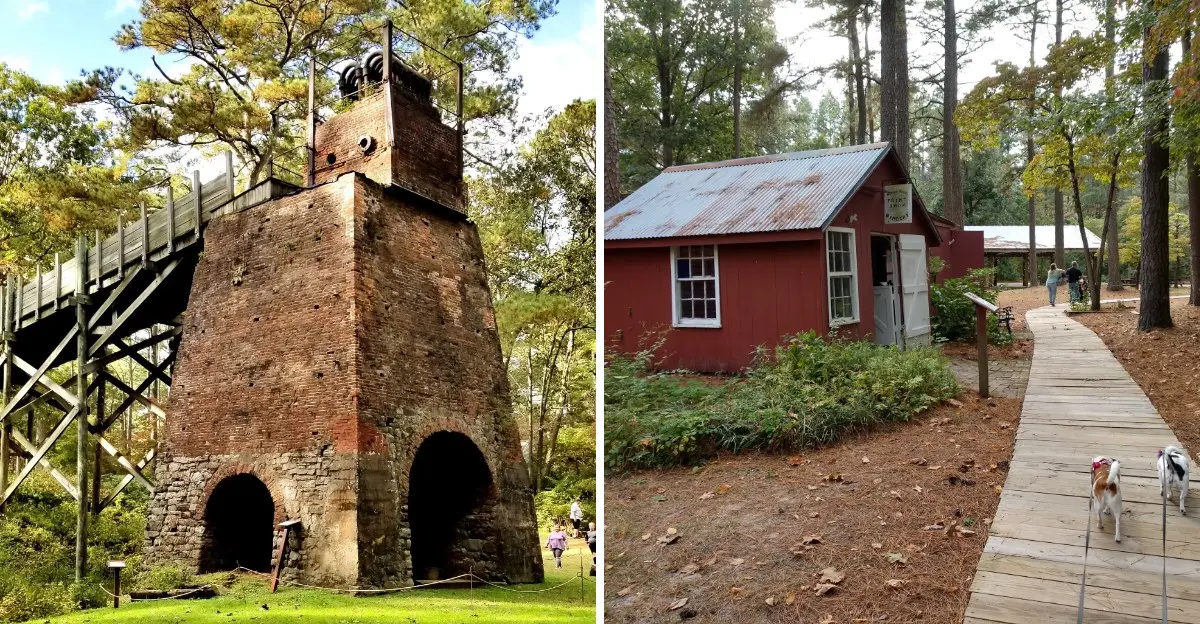
A towering old iron furnace still stands in the middle of a Maryland forest. Around it sits a tiny village where blacksmith demos and antique looms keep old skills alive.
I love that an American chestnut tree has been spotted on the grounds. Those trees are incredibly rare now, so finding one feels like a bonus prize.
Wooden walkways lead you from workshop to workshop at your own pace. Kids can see how people worked, wove, and printed long before anyone owned a screen.
Grandparents tend to enjoy it just as much, which says a lot.
Then there are the trails. They wind through woods and swamp right behind the village, so a history lesson can turn into a nature walk without moving the car.
I can’t imagine a better way to slow a busy weekend down. So where exactly is this place hiding?
An Iron Village Waiting In The Worcester County Woods
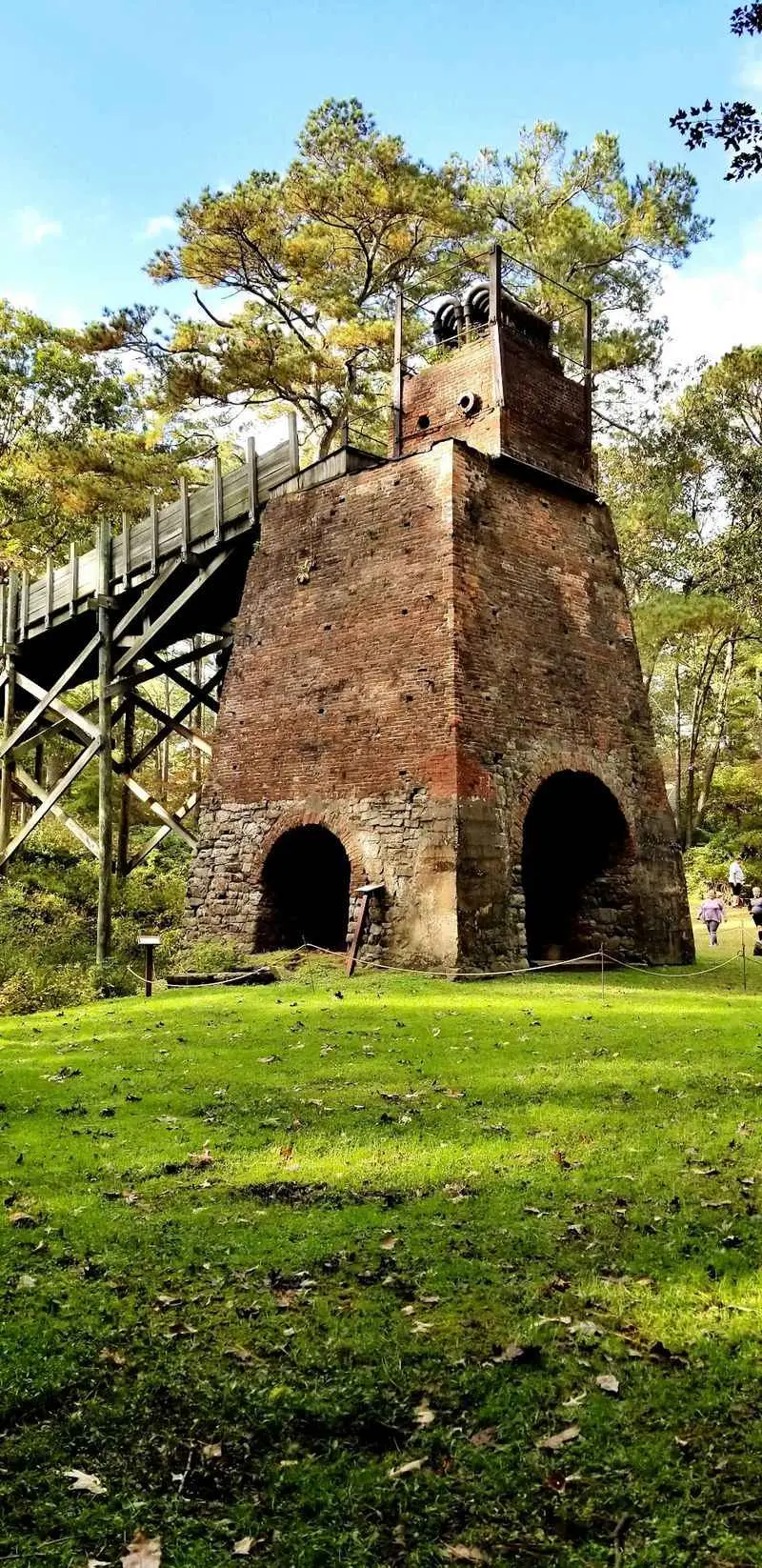
Deep in Worcester County, Furnace Town Historic Site (Nassawango Iron Furnace) sits quietly outside Snow Hill. It’s a living history village built around an old iron ore furnace on Maryland’s Eastern Shore.
The whole place tells the story of a small community that once revolved around making iron. Think of it as a self-guided peek at company-town life, minus the grueling shifts.
You wander at your own speed, which is a gift for families with tiny legs in the group. Several historic buildings hold exhibits, tools, and displays that explain how folks lived and worked here.
It’s officially listed as a historical landmark, yet it never feels stiff or dusty. The setting is woodsy and calm, with paths that loop you naturally from one stop to the next.
The furnace itself is the star, rising above the grounds like a stone giant. Everything else, from workshops to gardens, orbits around it.
For Maryland families, this is a refreshing break from crowded attractions. It blends history, nature, and hands-on learning in one compact outing.
Honestly, it’s the kind of place that makes you wonder why more people don’t talk about it. Lucky you, now you know.
The Old Furnace That Started The Whole Story
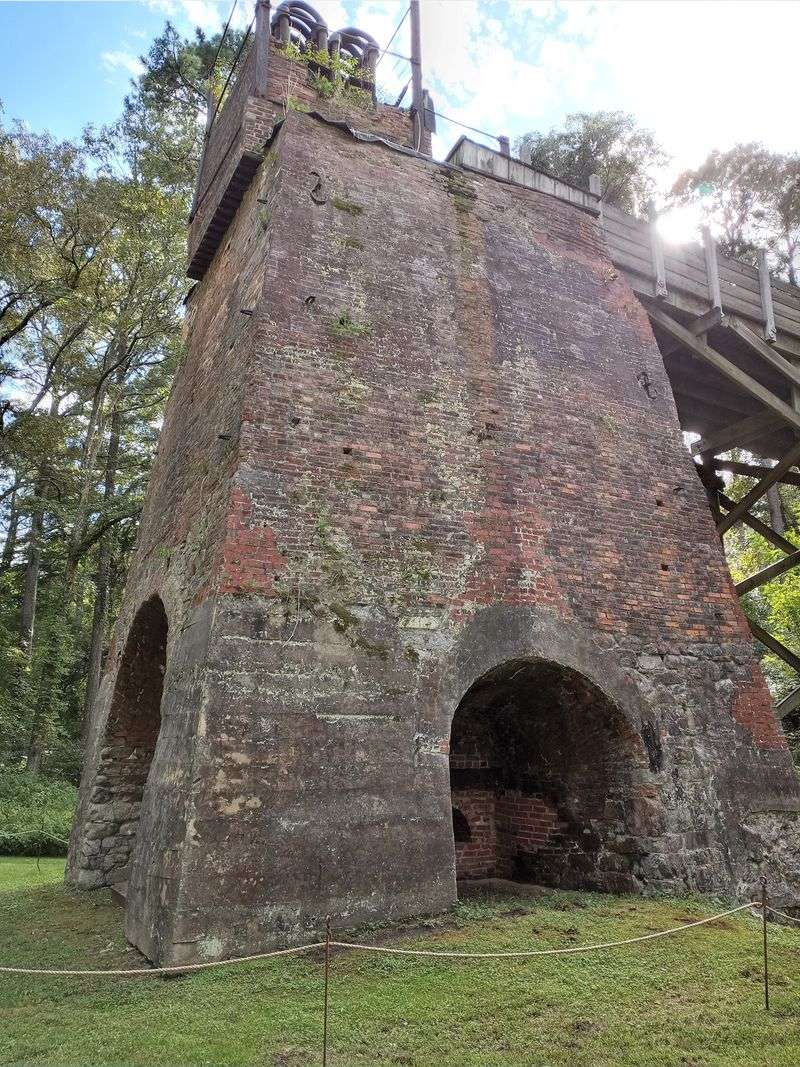
Iron once ruled this patch of forest. The Nassawango Iron Furnace was the beating heart of the community, and the village grew up around its work.
Today the furnace still stands as the site’s most striking feature. It’s big, sturdy, and surprisingly photogenic for something built to melt rock.
Here’s a smart move. Walk behind the furnace on the grassy area to find the back side, where extra signs share more about how it operated.
That same back area connects to a viewing platform and the start of the nature trail. So the furnace doubles as a handy landmark for getting your bearings.
Historical markers around the grounds help fill in the details. Kids can read along or simply stare up at the structure and ask a dozen questions.
Parents might enjoy explaining how raw ore turned into usable iron. It’s a real-world science lesson that doesn’t feel like homework.
The exhibits also connect the furnace to wider Worcester County history. You leave understanding why a tiny settlement existed here at all.
Not bad for a pile of old stone. It still has plenty to say, and it says it well.
Sparks Fly When The Blacksmith Gets To Work
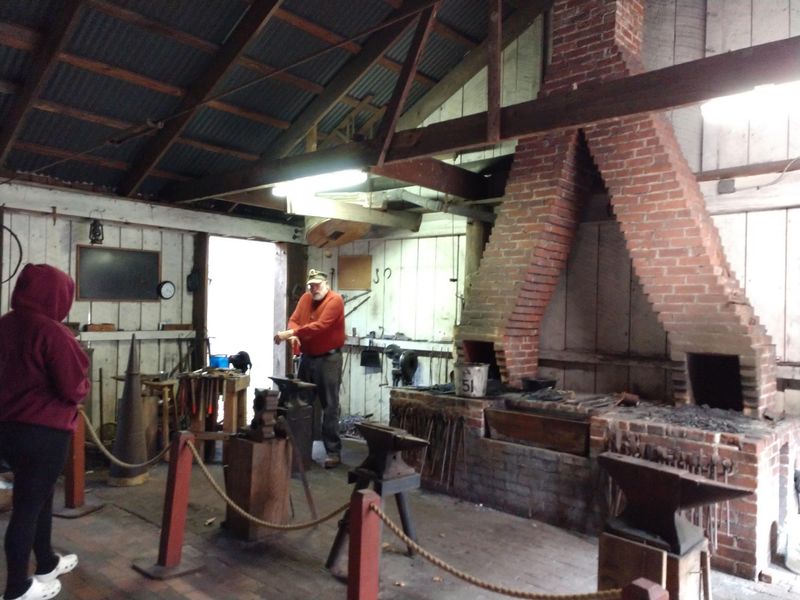
Clang, clang, clang. Few sounds grab a kid’s attention faster than a hammer hitting hot metal on an anvil.
Blacksmith demonstrations are among the most talked-about experiences at Furnace Town. Watching raw iron bend into shape makes the village’s history feel wonderfully real.
It also ties straight back to the furnace. The iron made here needed skilled hands to become tools, hardware, and everyday objects.
The site has long featured workshop reenactments, giving visitors a glimpse of trades that kept communities running. These aren’t museum pieces behind glass but skills shown in action.
Demo schedules can vary, so check before you go if seeing the forge is your top goal. Special event days may offer extra chances to catch the action.
Younger kids usually love the drama of glowing metal. Older kids often get curious about how the tools work and why the fire matters.
Adults aren’t immune either. There’s something oddly satisfying about watching a craftsman turn heat and muscle into something useful.
Just keep little ones a safe distance back. The sparks are part of the show, and the show is a good one.
Looms, Herbs, And Little Buildings Full Of Surprises
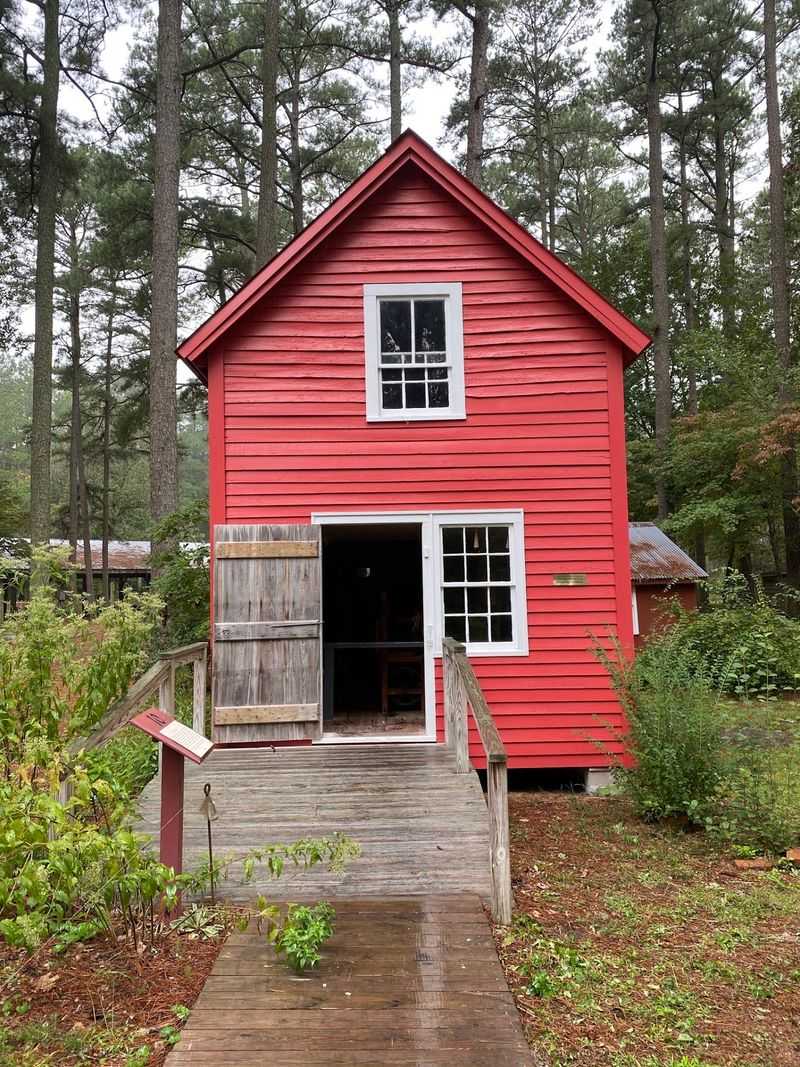
Antique looms clack away in the weaving house, and they’re far more impressive up close. A skilled weaver showing how those machines work can turn a quick stop into a mini lesson.
The weaving house does carry a strong fragrance inside. If anyone in your crew is sensitive to scents, a shorter visit may be the comfy choice.
Beyond the looms, several historic buildings hold neatly arranged exhibits. Each one explains a different piece of daily life in an iron-making village.
Herb gardens add a lovely touch between buildings. They hint at how residents grew what they needed for cooking and home remedies.
Families have pointed out that following the walkway shows you nearly everything. It’s a refreshingly simple layout that keeps everyone moving without getting lost.
Some exhibits also feature local animals, which adds a natural history twist. That’s a nice bonus for kids who prefer critters to old tools.
One favorite bit of trivia involves lunch pails. Ask the staff, and you might learn where that everyday phrase actually came from.
Small buildings, big stories. Leave time to poke into each one.
Trails Through The Woods And Swamp Out Back
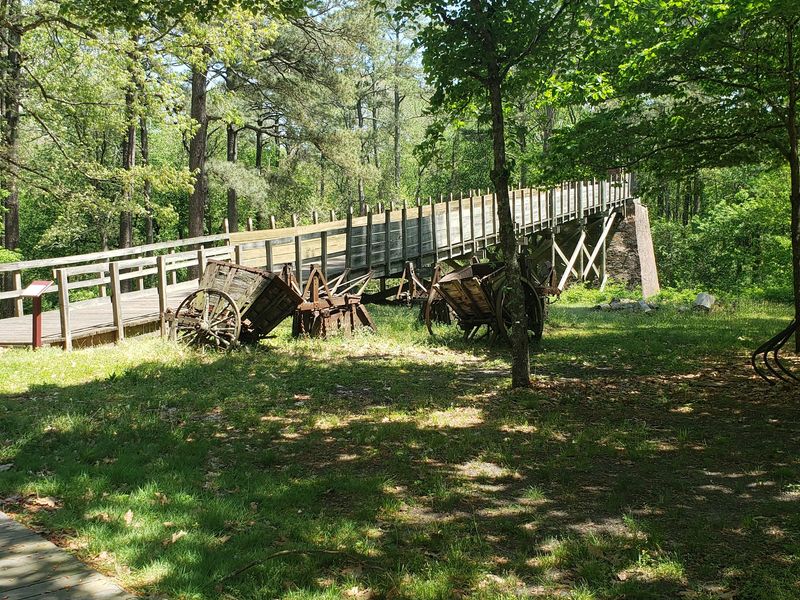
History buffs, meet your outdoorsy cousin. Trails are the most mentioned feature at this site, and they lead right into the woods and swamp behind the village.
The nature trail starts near the back of the furnace by the platform. It’s an easy add-on once you’ve finished exploring the buildings.
Plenty of first-time visitors skip it and later wish they hadn’t. Plan your timing so the walk doesn’t get squeezed out at the end.
The setting changes the mood completely. One minute you’re learning about iron, and the next you’re surrounded by trees and quiet wetlands.
Keep an eye out for that rare American chestnut tree spotted on the grounds. Those trees were wiped out widely by a blight, so any sighting is special.
Dogs are welcome here, which makes the trail a hit with four-legged family members. Bring a leash and water for everyone.
Bug spray is a smart idea in warmer months near swampy ground. Sturdy shoes help too.
For Maryland families craving fresh air, this pairing of history and nature is hard to top. Two outings, one parking spot.
Fairs, Fire, And Halloween Fun All Season Long
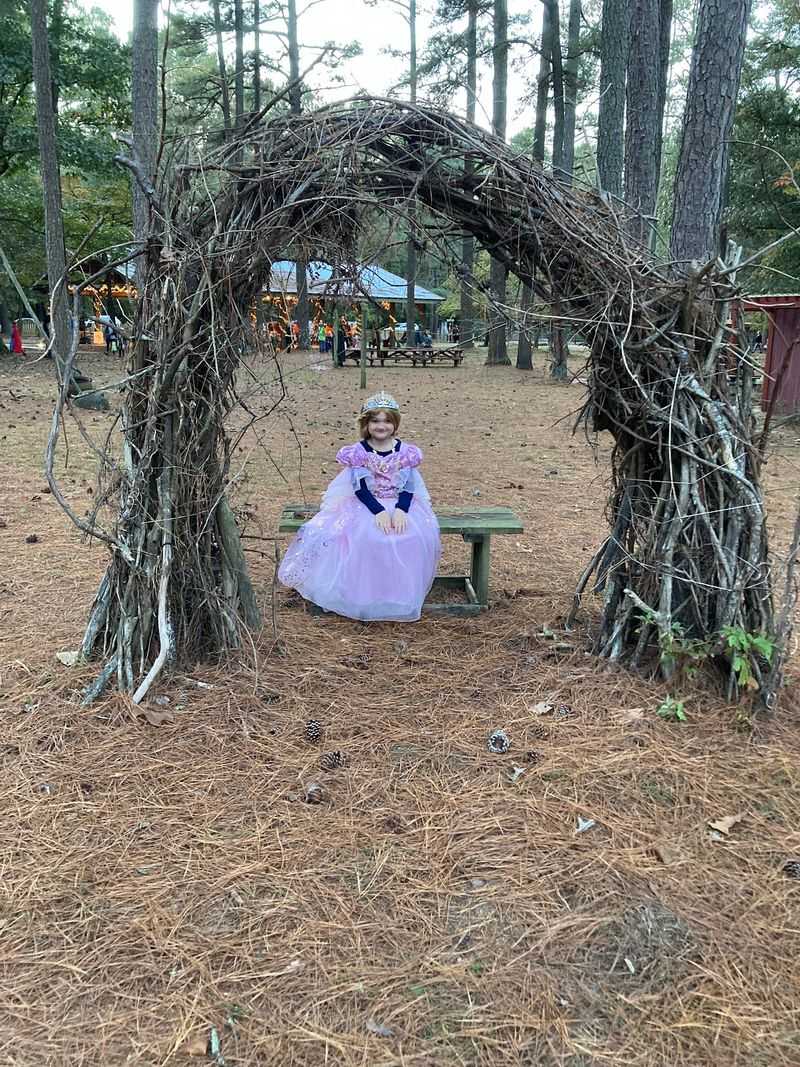
Knights in a Maryland forest? Absolutely.
The Renaissance Fair is one of the site’s most talked-about events, mixing artists, medieval flair, and a fun scavenger hunt.
That’s just one highlight on a busy calendar. The site has hosted Halloween in the Woods, a Fire Festival, summer music events, and artisan Saturdays once a month.
Families who came for the Halloween event recall kids having a blast. The wooded setting makes spooky season feel extra atmospheric without being too scary.
After-hours concerts have also brought people out once the sun dips. It’s a whole different vibe from a daytime stroll.
Community groups use the grounds too. A local Jeep Poker Run even made the village a stop on its route.
A Native American cultural activity at the pavilion once surprised daytime visitors. Moments like that make repeat trips worthwhile.
Event dates, themes, and admission can change from year to year. Check the schedule before planning around a specific festival.
The best part is that every return visit can feel new. Same furnace, fresh reasons to come back.
Strollers, Picnics, And Grandparents All Welcome
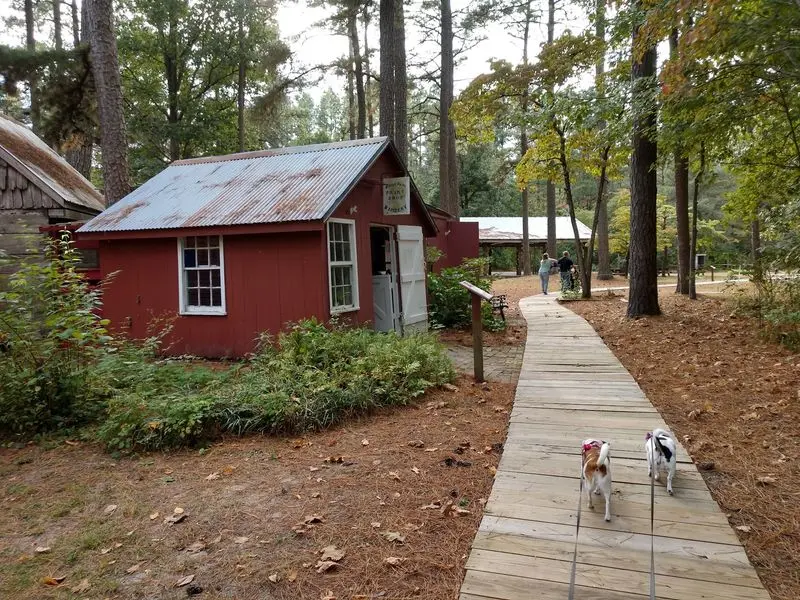
Wooden walkways and ramps make this village surprisingly stroller-friendly. That’s a big deal for parents juggling toddlers and diaper bags.
Families with grandparents and grandchildren have visited together and loved it. The easy pace lets every generation enjoy the day without anyone feeling rushed.
A picnic area gives you a spot to refuel. Packing lunch keeps the outing budget-friendly and the kids happily snacking.
Restrooms are clean, and parking is plentiful. Those small comforts matter more than any brochure admits.
The gift shop deserves a peek before you leave. It carries historic-style toys that offer kids a taste of old-fashioned play.
Staff and volunteers earn steady praise for being helpful and knowledgeable. A quick question can open up a fascinating story you’d never find on a sign.
School groups visit often, and it’s easy to see why. The exhibits explain things clearly enough for kids to share what they learned on the ride home.
Fair warning, some youngsters may start asking for a loom of their own. Consider yourself warned.
Good To Know Before You Head To Snow Hill
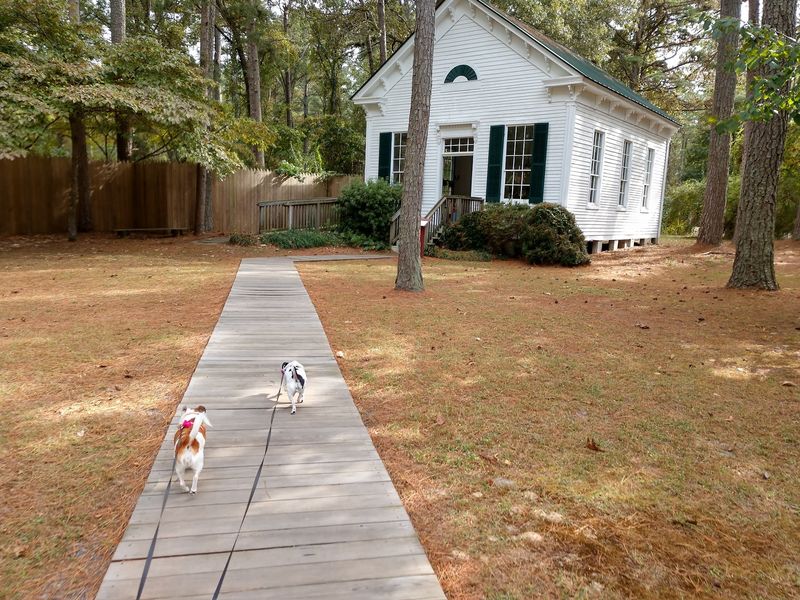
Timing matters here. Furnace Town Historic Site (Nassawango Iron Furnace) is typically open Thursday through Sunday from 10 AM to 4 PM.
It’s usually closed Monday through Wednesday. Seasonal changes can happen, so check before you go.
You’ll find it at 3816 Old Furnace Rd, Snow Hill, MD 21863. The rural setting on Maryland’s lower Eastern Shore is part of the charm.
From the Baltimore or DC areas, expect a solid drive, likely around three hours depending on traffic. Pairing it with an Ocean City or Snow Hill weekend makes great sense.
Give yourself at least two hours for the village alone. Add extra time if you want the trail, a picnic, or playtime.
Admission details can vary, especially on festival days. Confirm current pricing ahead of time so there are no surprises.
Arriving earlier helps if you want to see everything without rushing. Late arrivals often leave the trail for next time.
Wear comfortable shoes, bring water, and pack bug spray in summer. Dogs are welcome, so the whole family can come along.
Why This Quiet Village Deserves A Spot On Your Weekend List
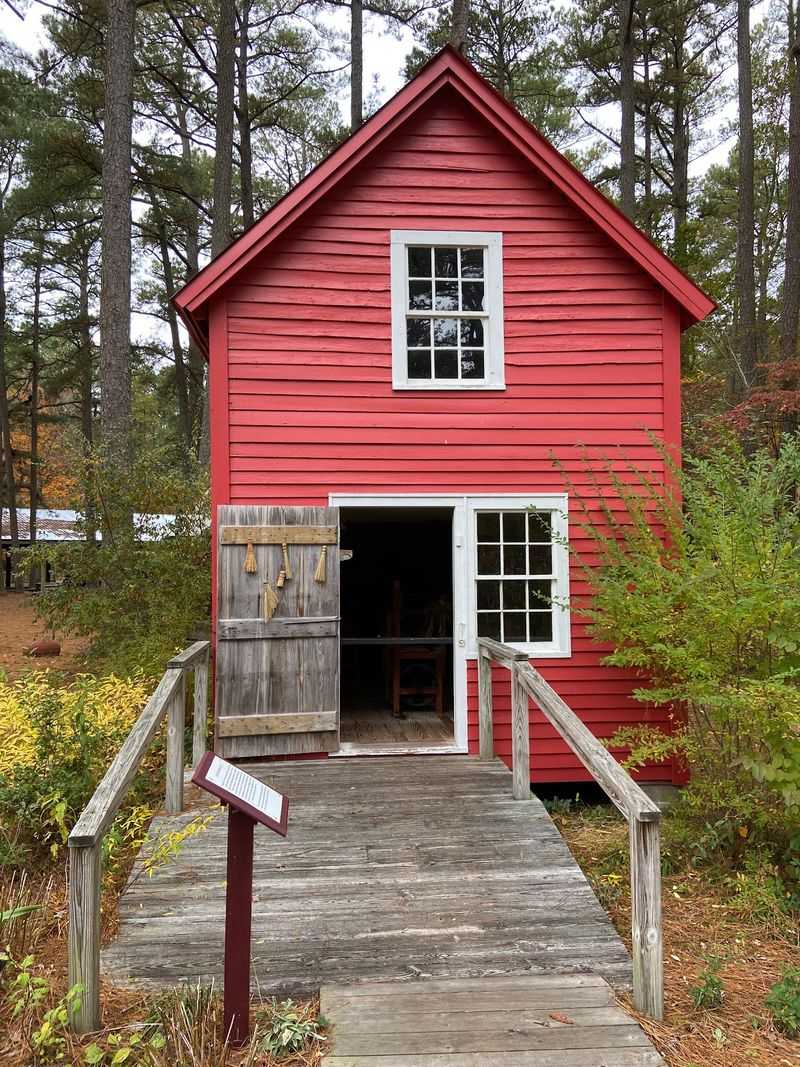
A 4.7-star rating from more than 300 reviews says plenty. Few historic sites manage to win over kids, grandparents, and dog owners all at once.
Furnace Town Historic Site (Nassawango Iron Furnace) pulls it off with an easy mix. You get a towering furnace, hands-on workshops, and woodsy trails in one compact visit.
The quiet atmosphere is a big part of the appeal. It feels peaceful in a way busier attractions rarely do.
Some visitors describe the grounds as almost magical. With the trees, old buildings, and gardens, that word doesn’t feel like a stretch.
It’s even a popular wedding venue, which tells you how lovely the setting is. Still, you don’t need a big occasion to enjoy it.
For proud Maryland locals, this is a chance to celebrate a piece of Eastern Shore history. For newcomers, it’s a fun way to learn what shaped Worcester County.
I believe the best outings spark questions long after you leave. This one should keep the kids talking all the way home.
So pack a picnic and grab the leash. The blacksmith is waiting.