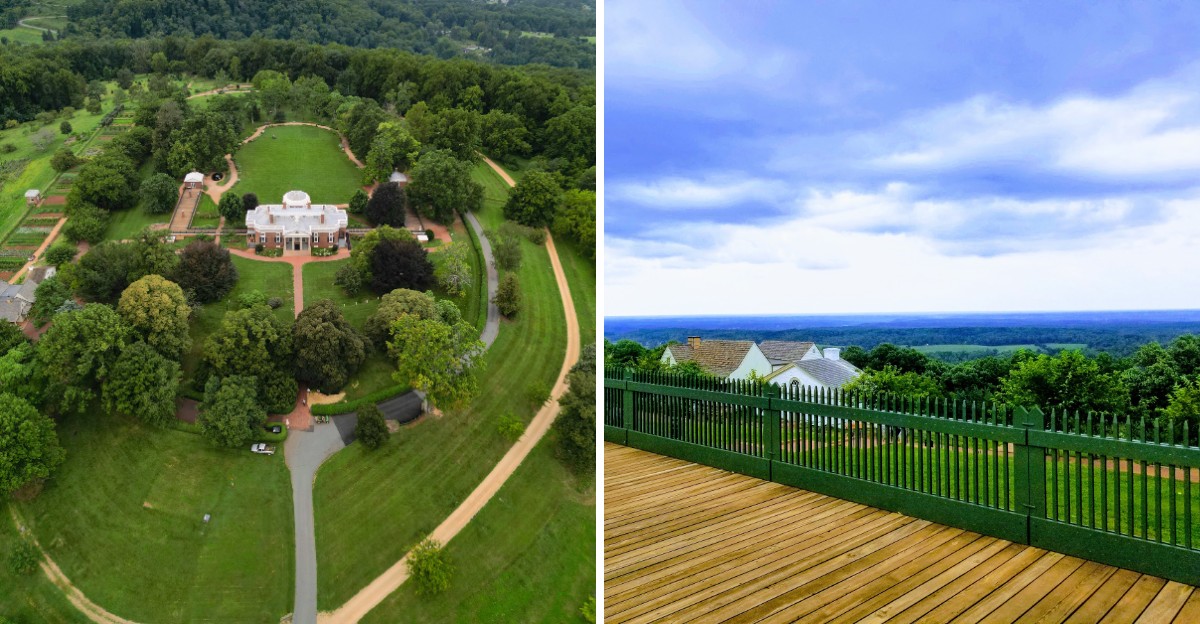
Monticello hits differently when you see it with your own eyes.
A picture in a schoolbook cannot show the scale of Jefferson’s home, the mountain setting, or the amount of work that once happened here.
Kids can walk through rooms, peek into gardens, and see the places where life unfolded.
Then the story gets more complicated.
Monticello was shaped by Jefferson’s ideas, interests, and ambitions, but it was also a plantation where enslaved people lived and worked.
Those stories belong in the visit, too.
That mix can make history feel real.
Instead of memorizing dates and famous names, children can connect people, places, choices, and consequences.
From the house to Mulberry Row, every stop adds another piece to the picture. Here is how to help your family understand what you are seeing.
Start With the Monticello House

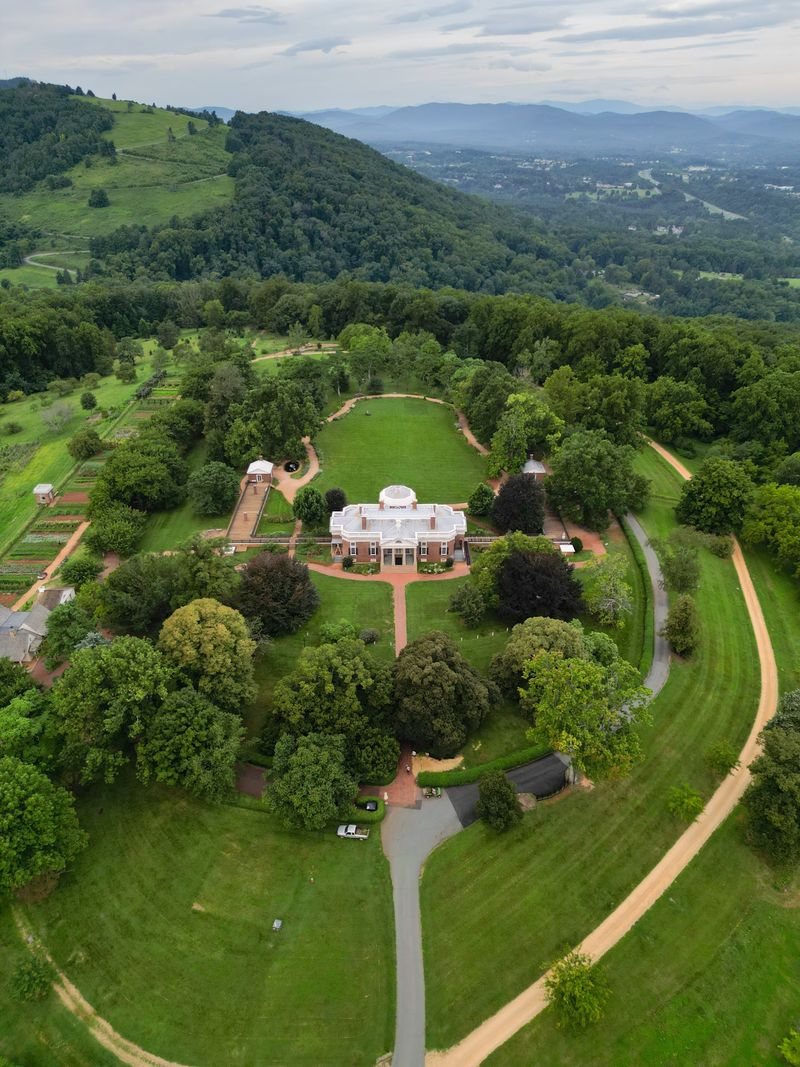
The house on the hill looks like a picture from a history book, until your kids walk right up to it. Suddenly, Thomas Jefferson is not just a name on a worksheet.
He becomes a person who chose how his home would look and how its rooms would work.
The Highlights Tour introduces visitors to the first floor, West Lawn, and South Wing. It also connects Jefferson’s life and architecture with the realities of slavery at Monticello.
Before entering, ask your children to notice one feature they want to learn more about. A doorway, window, or unusual room can be the start of a good conversation.
Remember that the house tells only part of the story. Enslaved people built, maintained, and supported this home, though they could not enjoy the freedom Jefferson wrote about.
Help kids listen for whose work made each space possible. After the tour, let everyone share one thing that surprised them.
Their answers may be more thoughtful than any quiz you could give them.
Spot Jefferson’s Design Choices
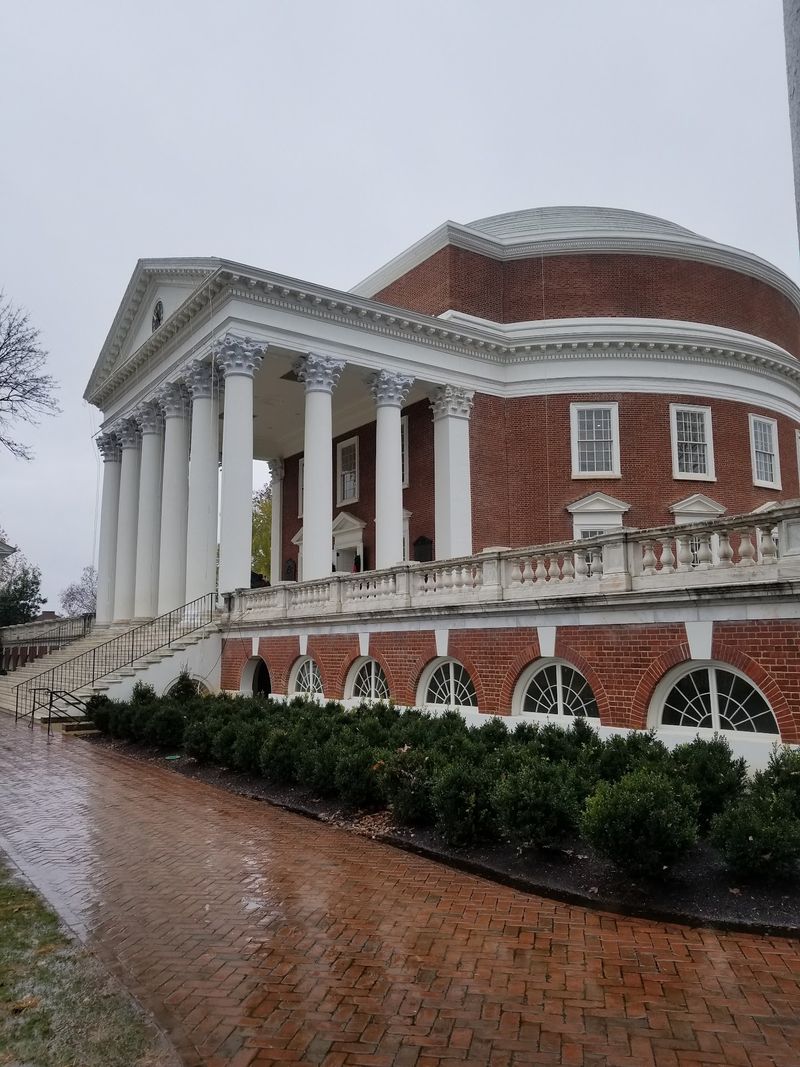
A dome on a house? That detail alone can get a child’s attention.
Jefferson studied architecture and spent years shaping Monticello, so its appearance gives families a way to talk about how his ideas became real objects.
Stand back where you can see the roofline, then invite kids to find the dome, windows, and terraces. Look for shapes that repeat and details that seem different from houses in your neighborhood.
You do not need to know every design term. Simply asking why someone might choose a certain feature helps children think like designers.
Monticello also offers a chance to discuss the people behind a grand building. Jefferson planned its design, while enslaved workers and other laborers helped make and care for it.
Admiring a clever feature should not erase the hands that created it. If your family likes sketching, bring a small notebook and let each child draw a favorite detail.
Their drawings can become a reminder that buildings hold many stories, not just the architect’s.
Follow the Garden Paths
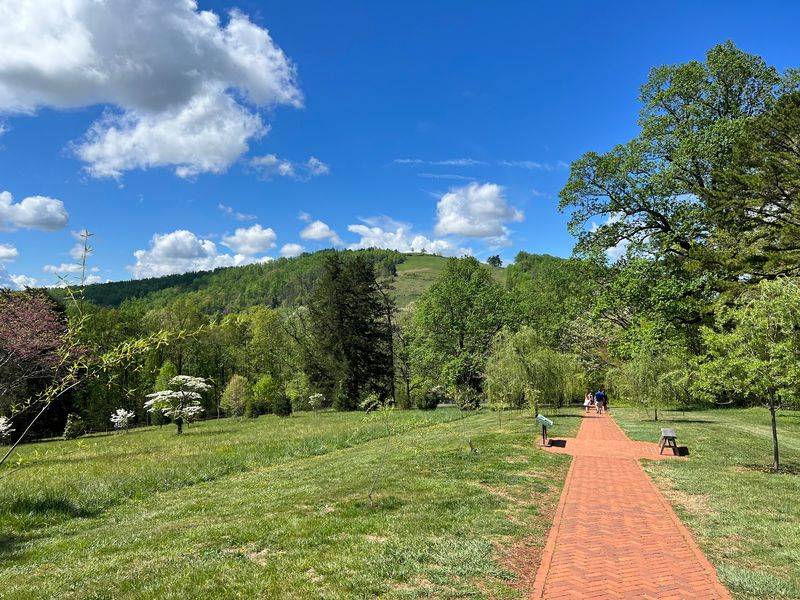
Some children understand a place best when they can move through it. At Monticello, paths and garden spaces offer a break from indoor listening while keeping the history lesson going.
Jefferson had a strong interest in plants and agriculture. As you walk, ask kids what it takes to grow food on a mountaintop: good soil, water, tools, time, and daily work.
Look closely at what is growing during your visit, since gardens change with the seasons. Give younger children a simple mission, such as finding three different leaf shapes or noticing where a path leads.
Then connect the pleasant view to the people who worked the land. Enslaved people performed much of the labor that kept Monticello running, and their experiences belong in any discussion of the gardens.
The grounds are also a good place to pause if your family needs a slower pace. Wear comfortable shoes, stay on marked routes, and leave plants where they grow so the next visitors can enjoy them too.
Find the Stories on Mulberry Row
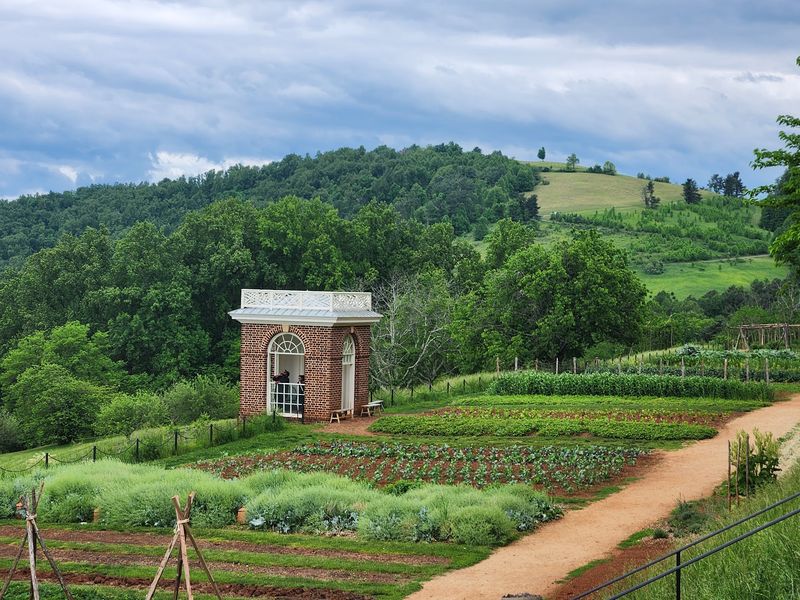
Mulberry Row can change the way a family sees the house above it. What may first look like a quiet path was once a busy place where people lived, worked, and carried out skilled tasks.
Walk slowly enough to read the interpretive displays together. They draw on documents and archaeological evidence to explain the lives of enslaved people and the work that supported the plantation.
Ask your kids to name the kinds of skills they notice, rather than thinking of workers as one unnamed group. A craftsperson, cook, or other worker had knowledge and a life beyond the task described on a sign.
It helps to tell children why some buildings or details are no longer visible. Historians use objects, records, and the ground itself to learn about places that changed over time.
If a display raises a difficult question, you do not need a perfect answer. Read it carefully, talk honestly, and keep learning together.
That quiet attention is one way to show respect for the people whose stories belong here.
Talk Honestly About Slavery
Jefferson wrote about liberty, yet he enslaved people at Monticello. Kids often notice that contradiction quickly.
Give them room to say that it feels unfair, because it was.
Programs and exhibits at Monticello explore the lives, families, work, and legacies of the enslaved community. Help children understand that these were individual people, not just a number in a history lesson.
They had relationships, skills, hopes, and choices within harsh limits. Read names aloud when you encounter them, and let the stories guide your conversation.
Try asking what the people in an exhibit wanted others to know about their lives. Avoid turning their experiences into a puzzle Jefferson can solve for your family.
He is a major figure in American history, but the people he enslaved deserve attention in their own right. If a child feels upset, take a pause and listen.
An honest visit does not have to provide easy answers. It can help kids learn to care about evidence, fairness, and whose voices history has too often left out.
Try the Griffin Discovery Room
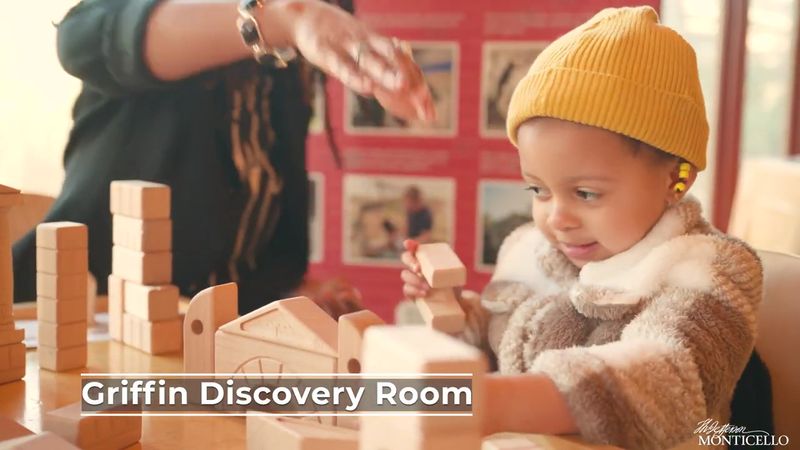
A child who has been quiet on a tour may suddenly light up when there is something to investigate. The Griffin Discovery Room gives younger visitors a hands-on way to explore the people who lived and worked at Monticello.
Documents, audio, and objects encourage kids to look closely and make connections. Let your child lead for a while.
Ask what caught their eye, what a clue might tell them, or what they would like to find out next. There is no need to rush through every activity.
Spending time with one interesting object may teach more than racing around the room.
Use the visit to practice an important history skill: separating what you know from what you are guessing. A document can answer one question and leave another open.
That is part of how learning works. Before you leave, invite everyone to pick one person or subject they want to follow elsewhere at Monticello.
A discovery made here can give your family a purpose for the rest of the day.
See What Archaeology Can Reveal
A tiny object in the soil might tell a bigger story than you expect. Archaeological work at Monticello helps researchers learn about daily life, including parts of the past that written records do not fully explain.
Check the official calendar for archaeology programs during your visit. When one is available, encourage kids to watch how carefully discoveries are handled and recorded.
Researchers do not simply dig for interesting things. They pay attention to where each object was found, because its location can help explain how people used a space.
Ask your children what a broken dish, a button, or a building trace might reveal. Then ask what it cannot tell us on its own.
That second question matters: historians compare physical evidence with records and other clues before drawing conclusions. Archaeology also shows that history is not finished.
New findings can add detail to stories people thought they already knew. Remind kids that the grounds are a protected historic site, so anything they notice should be left in place and reported to staff.
Pause for the Mountaintop View
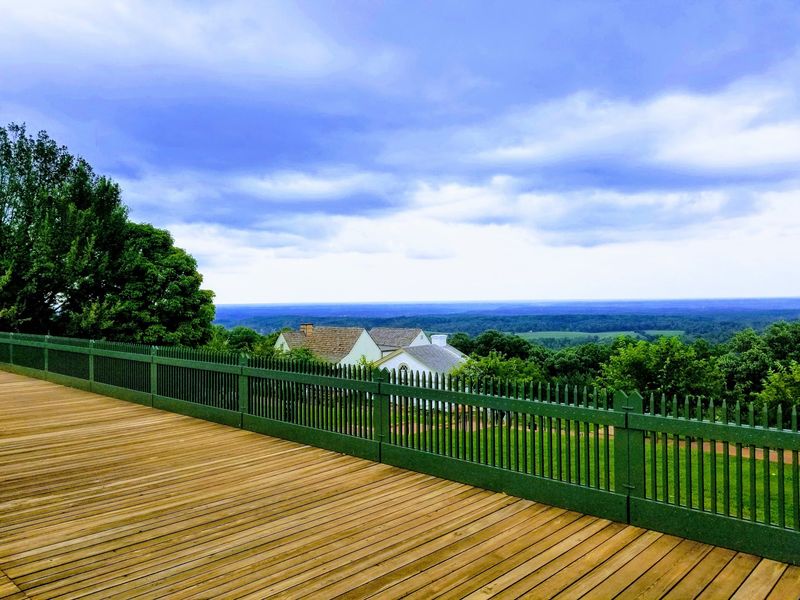
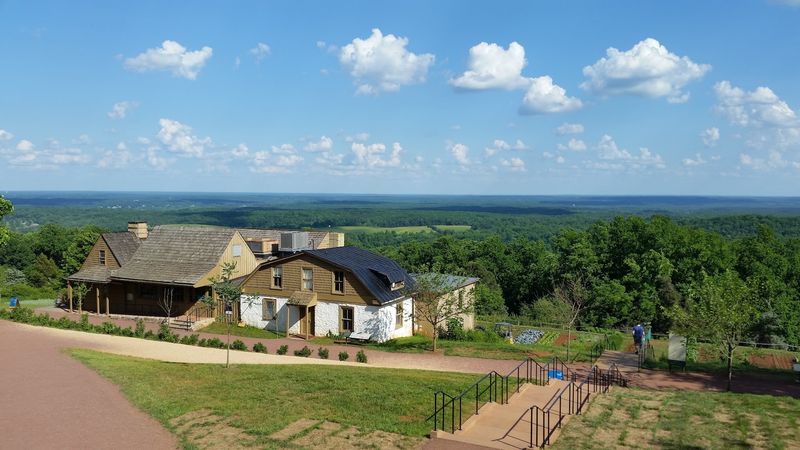
After several rooms and exhibits, the open sky can feel like a deep breath. Give your family a few minutes on the grounds to look beyond the house and notice the landscape around it.
From the West Lawn and other outdoor areas, kids can begin to picture Monticello as a whole place rather than one famous building. Ask them what they can see nearby and what seems far away.
How might living on a mountaintop have shaped travel, building, farming, and daily work? There is no need to turn every view into a lesson.
Sometimes a quiet pause helps children connect everything they have heard.
Keep the landscape’s history in mind, too. Its beauty exists alongside the stories of people whose labor maintained the home and grounds.
If you have time, visit an exhibit or revisit a place that raised questions earlier. A wide view may help kids understand how the house, work areas, gardens, and surrounding land fit together.
Bring water, watch your footing, and leave time for unhurried looking.
Plan an Easier Family Visit
A little planning can save the day when kids are eager to reach the house. Monticello is at 1050 Monticello Loop, Charlottesville, VA 22902.
Free parking is available at the visitor center, and a shuttle takes visitors to the mountaintop.
Tickets have scheduled arrival times, so aim to arrive at least 30 minutes early for parking and security. House tours can sell out, making advance reservations a smart choice.
Before leaving home, check Monticello’s official calendar for current hours, tour availability, special programs, accessibility details, and seasonal changes. It is also worth checking which activities suit your children’s ages and how much time your family wants to spend outdoors.
Expect to walk over varied surfaces. Comfortable shoes, water, and weather-ready clothing will help everyone stay focused on the visit instead of sore feet or a surprise shower.
Build in time for breaks rather than packing every minute. If plans change, choose one or two experiences that matter most to your family.
A curious, comfortable child will remember far more than a rushed one.