
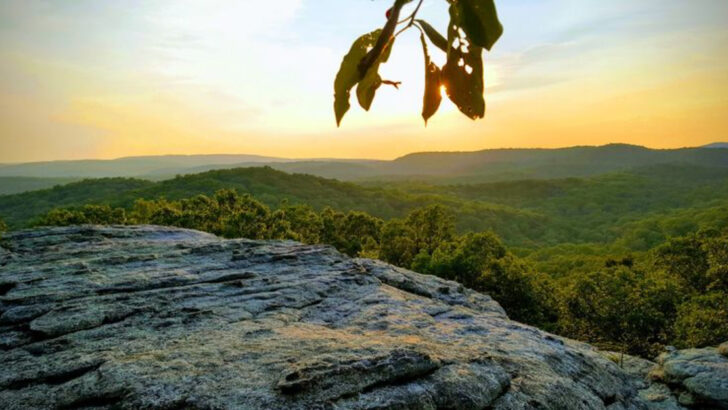
The most jaw-dropping sunrise in Illinois doesn’t rise over a city — it erupts over ancient stone.
At Garden of the Gods in Herod, the sky doesn’t simply brighten. It ignites.
Gold spills across 320-million-year-old sandstone, shadows stretch across the cliffs, and the entire forest below holds its breath.
You climb up in the dark, heart pounding, boots scraping against rock older than dinosaurs. Then it happens.
A thin ribbon of light cracks open the horizon, and those massive formations glow like they’ve been set on fire from within.
This isn’t just a pretty view. It’s wind, height, silence, and that sudden rush when the sun finally clears the trees and the world turns molten orange.
If you think Illinois is flat farmland and cornfields, this sunrise is ready to prove you spectacularly wrong.
The 320-Million-Year-Old Sandstone Rock Formations
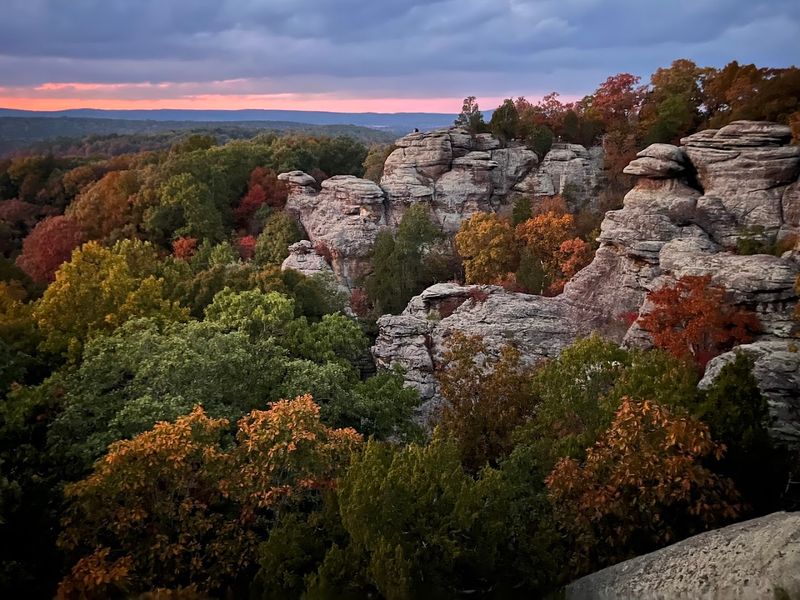
Standing face-to-face with a rock that is 320 million years old puts life in a completely different perspective. Long before dinosaurs roamed the earth, a shallow inland sea covered this part of Illinois, depositing layer after layer of sand that eventually compressed into the stunning sandstone formations you see today.
The geological story written into every crack and curve of these rocks is extraordinary.
Wind, water, and time worked together for hundreds of millions of years to sculpt these formations into the dramatic shapes visitors marvel at now. You can see rounded boulders, jagged spires, and smooth arching walls that look almost intentional, as if some ancient artist carved them by hand.
Informational signs along the trail explain the geology in a way that even kids find fascinating.
Touching the rock surface feels like pressing your palm against history itself. The rough, grainy texture of the sandstone tells a story no textbook can fully capture.
Geologists and casual visitors alike are regularly amazed that such dramatic formations exist in the flat American Midwest. Visiting Garden of the Gods is essentially taking a free geology class with the most spectacular classroom you have ever seen.
Sunrise Views From The Observation Trail Overlook
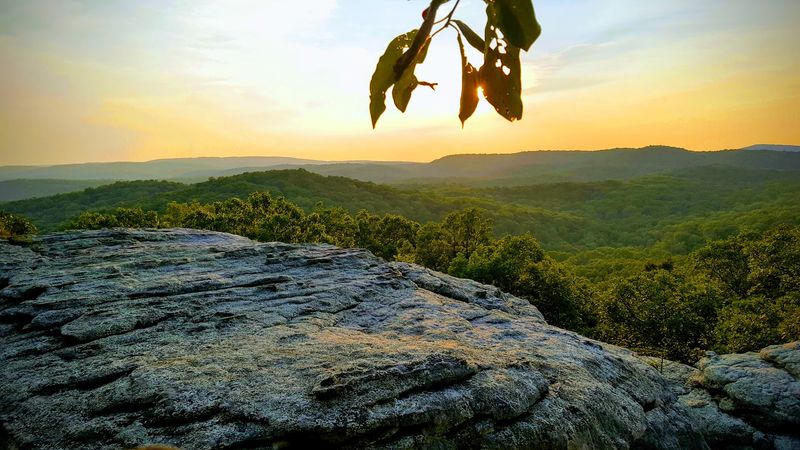
Early risers who make the short trek to the overlook just before dawn are rewarded with one of the most spectacular sunrises in all of Illinois. The sky transforms from deep navy to brilliant shades of orange, pink, and gold as the sun crests the forested hills below.
From this elevation, you can see for miles in every direction, with nothing but rolling treetops and open sky filling your view.
One January visitor described arriving at sunrise on a cold morning and encountering only two other people, calling it an awesome escape into nature. That kind of quiet, uninterrupted connection with the landscape is rare and genuinely precious.
The colder months actually offer some of the clearest, most dramatic sky colors because the air is crisp and free of summer haze.
Photographers absolutely love this spot, and for good reason. The way the morning light hits the sandstone rocks creates a warm, glowing effect that makes every photo look professionally staged.
Arriving about 30 minutes before official sunrise gives you time to find your perfect vantage point without rushing. Bring a jacket, a thermos of something warm, and a fully charged camera, because this view demands to be captured.
The Quarter-Mile Observation Trail (Paved and Accessible)
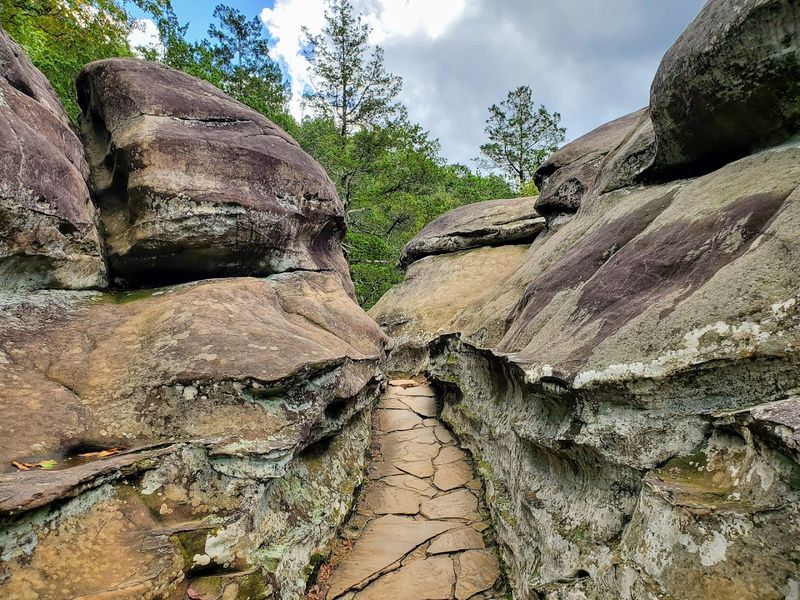
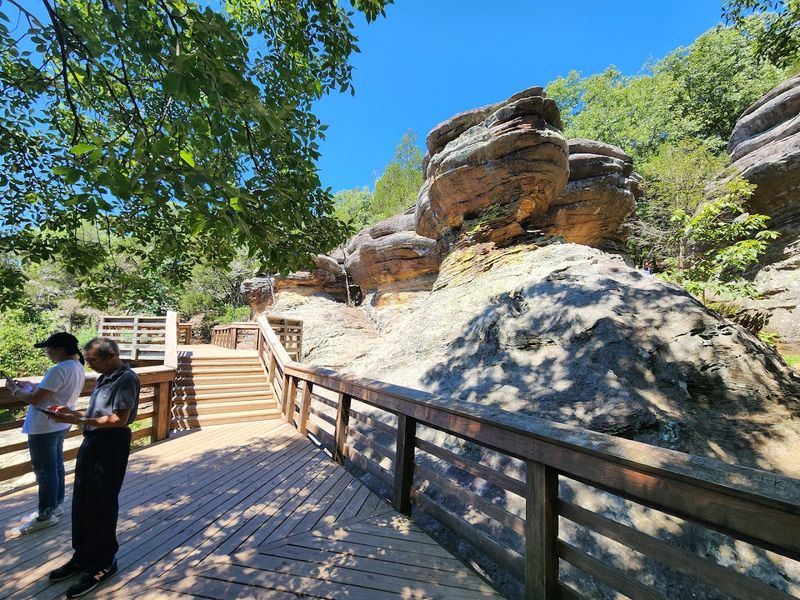
Not every incredible natural wonder requires a grueling all-day hike to experience, and Garden of the Gods proves that beautifully. The main Observation Trail is a quarter-mile paved loop that winds directly through the most dramatic rock formations in the park.
One visitor even completed it while hobbling with a makeshift cane and wearing flip-flops, which says a lot about how accessible this trail truly is.
The path is carved right into the stone in several sections, giving it a natural, almost magical feel as you walk between towering boulders. Benches are placed at key viewpoints along the way, making it easy for visitors of all fitness levels to stop, rest, and soak in the surroundings.
Families with young children, older adults, and people with minor mobility challenges can all enjoy this trail comfortably.
Even though the trail is short, the experience it delivers is anything but small. Every turn reveals a new formation, a new angle, or a new view of the surrounding forest valleys.
Most people take between 30 minutes and an hour to complete it, depending on how long they stop to admire the scenery. For first-time visitors especially, this trail is the perfect introduction to everything that makes this park extraordinary.
Off-Trail Exploration and Boulder Climbing
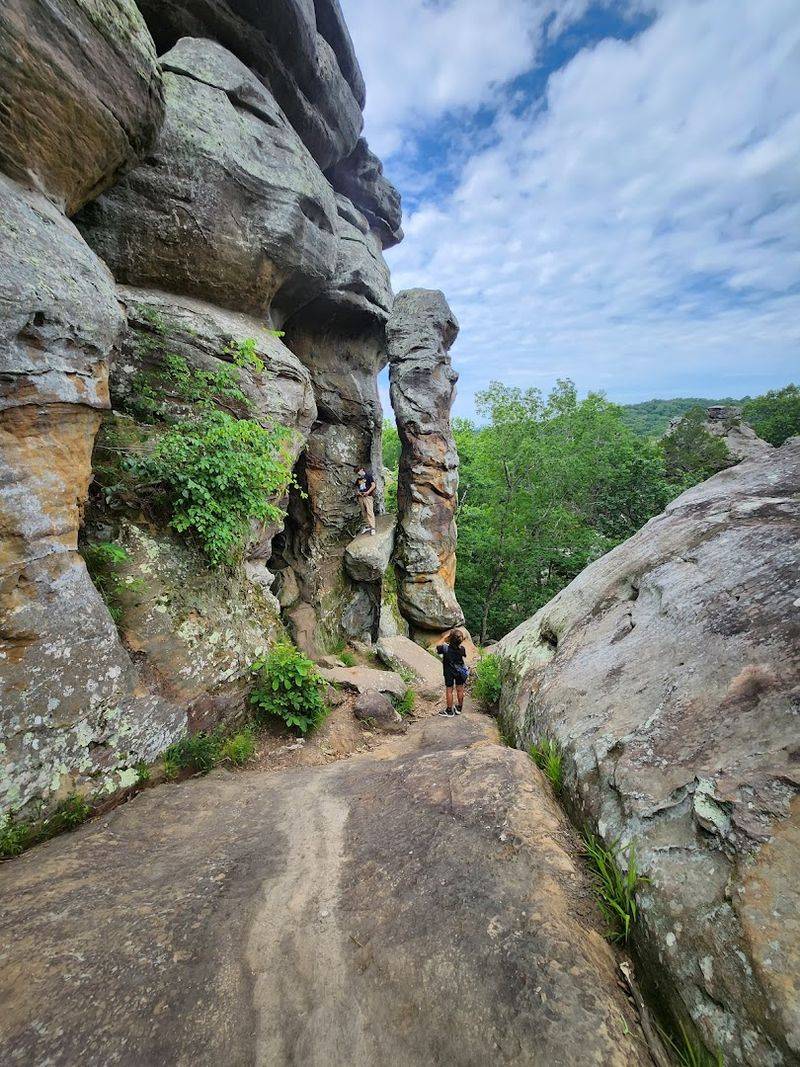
For those who want a little more adventure than the paved path offers, Garden of the Gods has plenty of room to roam. Scattered side paths and open boulder faces invite curious visitors to step off the main trail and explore on their own terms.
Climbing up onto the sandstone boulders gives you elevated views that most visitors never see, and the sense of discovery feels genuinely thrilling.
One reviewer described stepping out onto the sandstone boulders as getting an amazing view of the surrounding hills and valleys that the main trail simply cannot match. The rocks are solid and sturdy, though some surfaces can be slippery when wet, so solid footwear is strongly recommended.
Leather hiking boots or trail shoes with good grip make a significant difference in confidence and safety.
Parents should keep a close eye on younger children during off-trail exploration, as some cliff edges are steep and unguarded. The reward for careful exploration, though, is worth it.
Hidden nooks, cave-like overhangs, and sweeping elevated vistas make every extra step feel like a discovery. Experienced hikers often spend one to two hours exploring beyond the main trail, finding spots that feel entirely their own in this ancient, awe-inspiring landscape.
Camping Under a Star-Filled Sky at Garden of the Gods
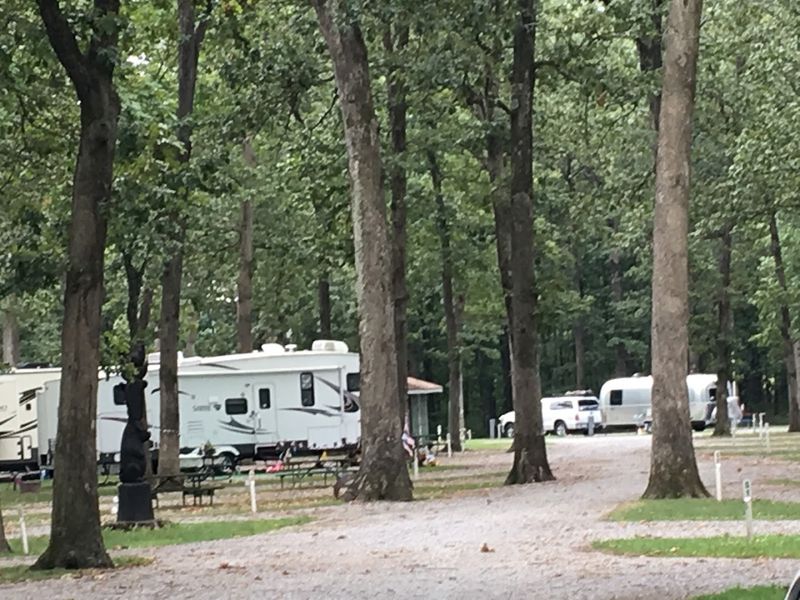
Few experiences rival falling asleep under a sky so packed with stars that it looks almost unreal. Garden of the Gods sits deep in Shawnee National Forest, far from major city lights, making it one of the best stargazing destinations in Illinois.
One couple who got married at the campsite here wrote that looking up at night revealed so many stars it felt otherworldly, and that description is spot-on.
The campground near Garden of the Gods offers sites with a genuine wilderness feel while still maintaining basic amenities. Early morning arrivals on weekdays tend to secure the best spots, especially during peak seasons when the park gets busier.
Arriving the evening before a planned sunrise hike means you are already on-site and ready to walk to the overlook without a long drive in the dark.
Camping here connects you to the landscape in a way a day visit simply cannot replicate. You hear the forest wake up before dawn, watch the sky shift from black to deep purple to blazing gold, and feel the cool morning air before the rest of the world catches up.
The combination of ancient rock formations, forest sounds, and a brilliant night sky makes this campground one of the most memorable in the entire state.
The Sacred History and Native American Connection
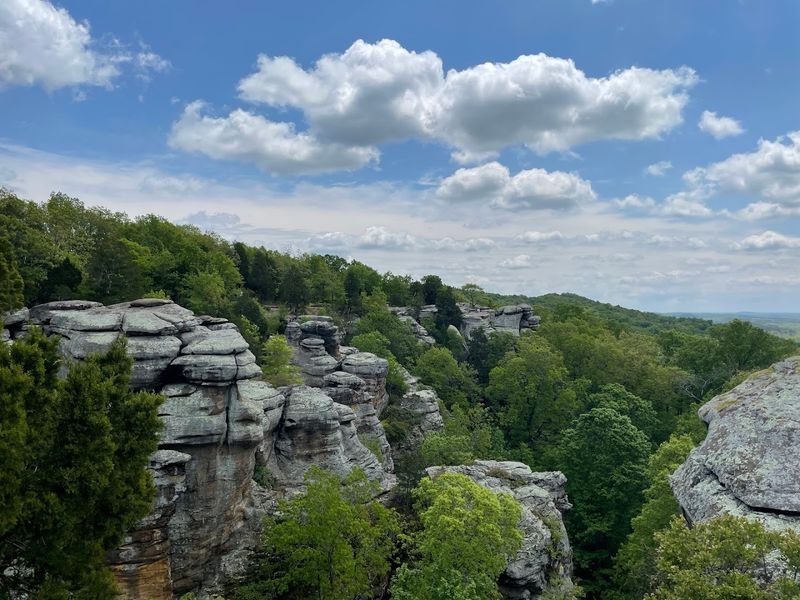
Long before Garden of the Gods became a popular hiking destination, it held deep spiritual significance for Native American peoples who recognized this landscape as something truly sacred. The towering rock formations, dramatic overlooks, and sense of otherworldly stillness made this place a site of reverence for generations.
One visitor captured this feeling perfectly, writing that they understood why Native Americans held this place sacred because it still is.
The name itself carries weight. Calling this place a garden of the gods reflects the almost supernatural beauty that greets every visitor who arrives here.
The formations seem too perfectly sculpted to be entirely accidental, and standing among them creates a quiet, humbling feeling that is hard to put into words. Many visitors describe a sense of peace and wonder that they rarely feel anywhere else.
Interpretive signs along the trail share some of the history and geological background of the area, giving visitors a richer understanding of what they are seeing. Reading these markers while walking the path adds meaningful context to the visual spectacle all around you.
Whether you approach this place from a scientific, spiritual, or simply curious angle, the sense that you are standing somewhere genuinely significant comes through loud and clear at every step.
What to Wear and Pack for Your Visit
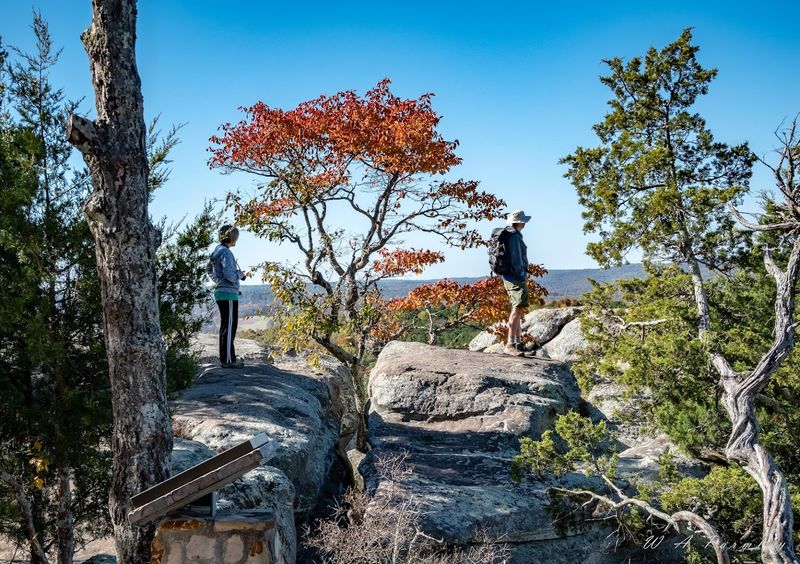
Showing up prepared makes a massive difference in how much you enjoy Garden of the Gods. The right footwear is probably the single most important thing to consider.
Hiking boots or sturdy trail shoes with good grip are strongly recommended, especially if you plan to venture off the main paved path onto the sandstone boulders, which can be slippery in wet conditions.
Water is essential even on short hikes. The quarter-mile loop may not seem long, but the sun, the climbing, and the excitement of exploring can leave you thirstier than expected.
Bringing a reusable water bottle with at least 16 to 32 ounces of water per person is a smart baseline. Pack a light snack too, because most people end up staying longer than they originally planned once they see how beautiful it is.
Layering your clothing is wise regardless of the season. Mornings near the overlook can be significantly cooler than the afternoon, especially in spring and fall.
A light jacket or zip-up fleece stored in a small daypack gives you flexibility without bulk. Sunscreen and insect repellent round out the essentials, particularly during warmer months when both sun exposure and tick activity are at their peak in the Shawnee National Forest area.
Nearby Attractions, Food, and Places to Stay
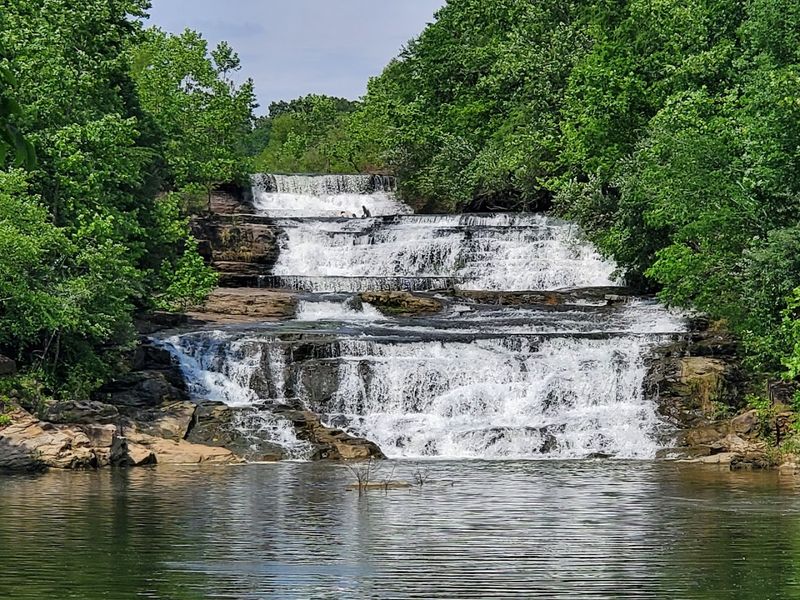
One of the best parts about visiting Garden of the Gods is that the surrounding area has more to offer than most people expect. Multiple reviewers have mentioned a beloved ice cream shop just down the road from the park that is absolutely worth a stop after your hike.
After climbing around ancient rock formations all morning, a scoop of locally made ice cream feels like the perfect reward.
Shawnee National Forest itself contains over 100 trails, so visitors who want to extend their trip beyond Garden of the Gods have no shortage of options. The forest includes other remarkable destinations like the Garden of the Gods Wilderness Area, Little Grand Canyon, and Garden of the Gods Scenic Byway.
Spending two or three days in the region gives you time to explore multiple highlights without feeling rushed.
Accommodations range from the on-site campground to nearby cabins, bed and breakfasts, and small hotels in surrounding towns. Booking in advance for weekend visits is strongly recommended, especially during fall foliage season when the area draws significantly larger crowds.
The combination of natural beauty, local charm, and accessible amenities makes this corner of southern Illinois a genuinely satisfying destination for solo travelers, couples, and families alike.
Tips for Visiting Garden of the Gods Like a Pro
Timing your visit wisely can completely transform the experience. Weekday mornings are significantly less crowded than weekend afternoons, and arriving early gives you the best parking spots, the calmest atmosphere, and the most dramatic light for photography.
Several seasoned visitors have noted that early mornings beat the crowds every single time, and that advice holds true in every season.
The park is open 24 hours a day, seven days a week, and admission is completely free. That combination of accessibility and zero cost makes it one of the best outdoor values in the entire state of Illinois.
Families especially appreciate being able to visit without worrying about ticket prices or reservation requirements. Just show up, lace up your shoes, and start exploring.
Fog, rain, and even light snow can make Garden of the Gods feel like an entirely different and equally magical place. One visitor came on a foggy January day and described it as a peaceful and beautiful walk despite the gray skies.
Being open to visiting in less-than-perfect weather often means fewer people and a more intimate connection with the landscape. Whatever the forecast, this park rarely disappoints, and nearly every visitor leaves already planning their next return trip.