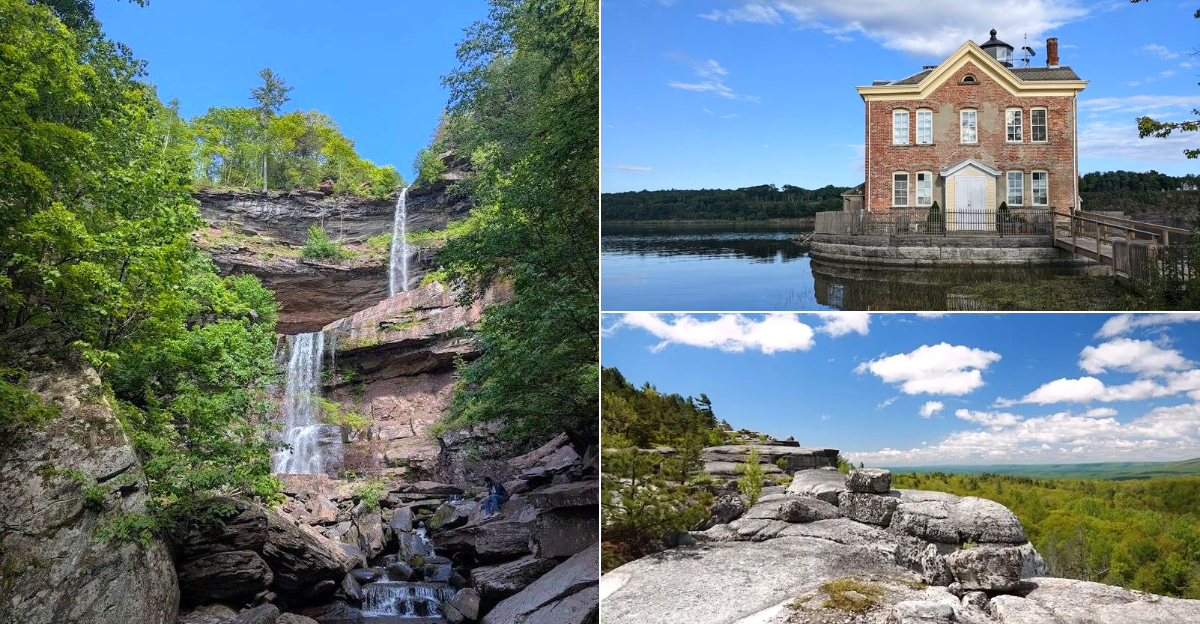
New York State is home to far more than its famous city skyline, and the natural and artistic landscapes scattered across the state are nothing short of extraordinary.
From the dramatic gorges of the Finger Lakes to the wild summits of the Adirondacks, every corner of New York carries a visual drama that stops you mid-step.
Ancient waterfalls pour through layered shale formations, sweeping river valleys glow gold in the afternoon light, and hilltop estates frame views so grand they feel like painted backdrops.
Whether you’re walking through a sculpted outdoor art park, crossing a bridge reborn as a pedestrian path, or gazing at a lighthouse perched at the edge of the Hudson, the scenery commands your full attention.
Bring your best lens or simply your own eyes, because New York’s landscapes deserve every bit of that attention.
1. High Falls Gorge – Wilmington, Essex County
There is something instantly cinematic about following water as it crashes through stone, especially when the path keeps lifting you into better views.
The sound arrives before the full scene does, building anticipation like a score swelling behind an opening shot.
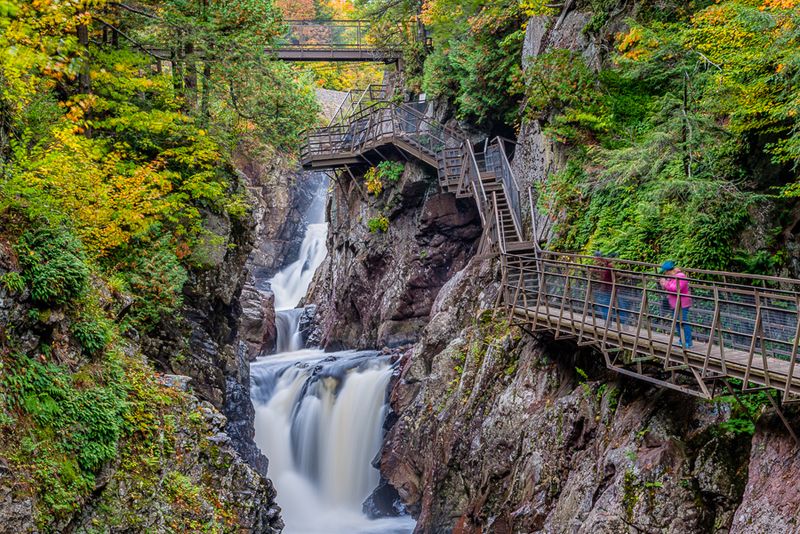
At High Falls Gorge in Wilmington, every bridge and walkway feels placed for maximum drama without asking you to work too hard for it.
This privately managed Adirondack attraction traces the Ausable River through a deep granite cleft, where four major waterfalls create constant motion and mist.
The walk is short and accessible for many visitors, yet the scenery feels oversized, with suspended viewpoints, close rock walls, and foaming water below.
After rain or during snowmelt, the volume intensifies, and the whole gorge seems to vibrate with energy.
I love how the route keeps changing perspective, from overhead panoramas to near-face-level encounters with rushing water.
In autumn, the contrast between fiery leaves and dark stone looks almost unreal, while winter can turn the gorge into an icy fantasy set.
Nearby Whiteface Mountain makes this an easy addition to a broader Adirondack day.
If you want a walk that feels thrilling, photogenic, and surprisingly convenient, this is a strong opener for your list.
2. Taughannock Falls State Park – Trumansburg, Tompkins County
The first feeling here is scale, the kind that quiets conversation because your eyes are busy measuring impossible cliff heights.
A flat walk beside the stream gradually tightens the frame, pulling you forward until the main reveal lands with real force.
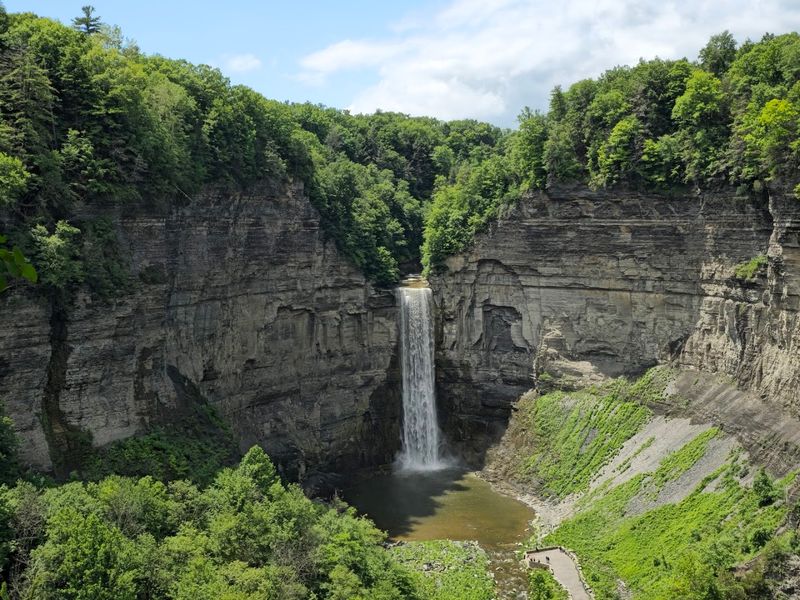
At Taughannock Falls State Park near Trumansburg, the payoff is one of the tallest single-drop waterfalls east of the Rockies.
The gorge trail is famously approachable, which makes the spectacle even more satisfying because you do not need a punishing hike to earn it.
Layered shale walls rise on both sides, and the creek acts like a leading line guiding you straight toward the 215-foot cascade.
After wet weather, the falls thunder; in drier seasons, the cliff architecture becomes the star.
I think this destination works so well because the pacing is nearly perfect.
You begin in a calm, open mood, then move deeper into a narrowing corridor until the waterfall appears like the final scene of a carefully edited sequence.
The rim trails offer broader views, but the gorge trail gives you that immersive, walking-into-the-picture sensation.
For visitors who crave drama without difficulty, this park is one of New York’s smartest cinematic walks.
3. Watkins Glen State Park – Watkins Glen, Schuyler County
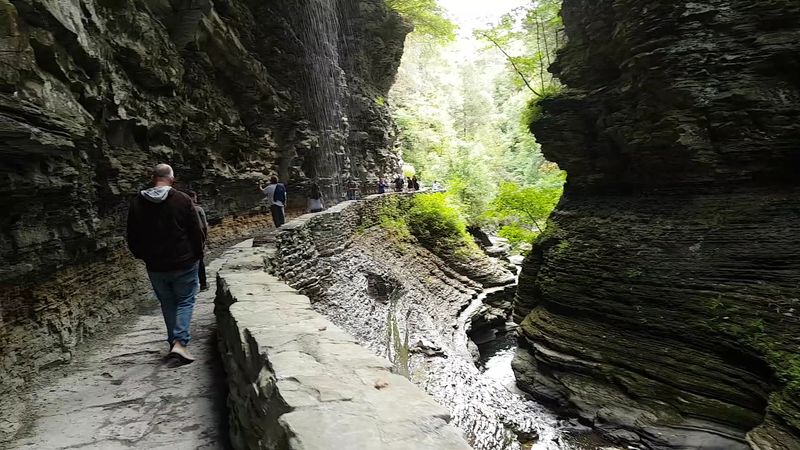
Few walks in New York feel more like stepping into a fantasy storyboard than this narrow, water-carved corridor.
Stone steps, curving bridges, and wet rock walls keep stacking one striking composition after another until you stop trying to count them.
At Watkins Glen State Park, the famous Gorge Trail turns an ordinary afternoon into a sequence of unforgettable reveals.
The park’s geology does most of the heavy lifting, with Glen Creek slicing through shale and creating nearly twenty waterfalls in a compact distance.
What makes it special is not just the number of cascades, but how closely the path threads beside, behind, and above them.
The Cavern Cascade section is the signature moment, where you pass behind falling water and feel the temperature drop instantly.
I always think of this place as pure movement.
There is no long lull, no extended stretch where the scenery settles down, because every bend introduces another staircase, chute, pool, or ledge.
In summer it glows green and cool, while in fall the gorge becomes richer and more theatrical under colored leaves.
Because it is so beloved, timing matters if you want the magic without the crowds.
4. Ausable Chasm – Ausable Chasm, Clinton County
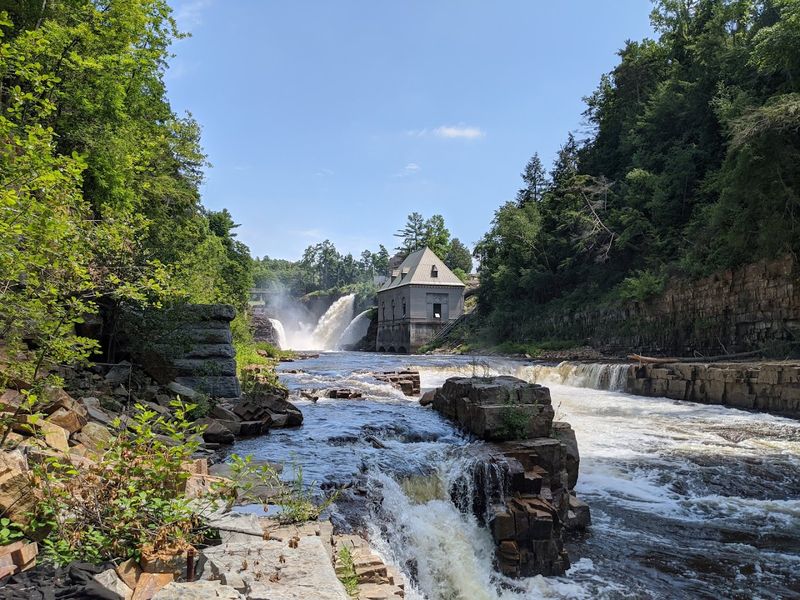
Adventure changes the mood here right away, because the landscape feels less like a park path and more like an action scene waiting to happen.
Cliffs rise, the river twists below, and each turn suggests that the next overlook could be even more dramatic than the last.
At Ausable Chasm in Clinton County, walking becomes a study in tension, depth, and movement.
Often called the Grand Canyon of the Adirondacks, this sandstone gorge was carved by the Ausable River over countless years.
The trail system mixes forest, cliffside views, bridges, and optional add-on experiences that can include rafting or tubing through the chasm.
Even if you stick to walking, the combination of high walls and rushing water gives the place unusual visual force.
I like that the scenery here has range.
One minute you are looking across broad wooded ridges, and the next you are peering into a narrow rock corridor where the river seems to disappear into shadow.
That contrast keeps the whole visit lively and cinematic instead of repetitive.
Good footing matters, especially if conditions are wet or if you choose sections with more elevation change.
Bring time for the viewpoints, because the best moments are often the ones where you simply stop and let the scale settle in.
5. Kaaterskill Falls – Haines Falls, Greene County
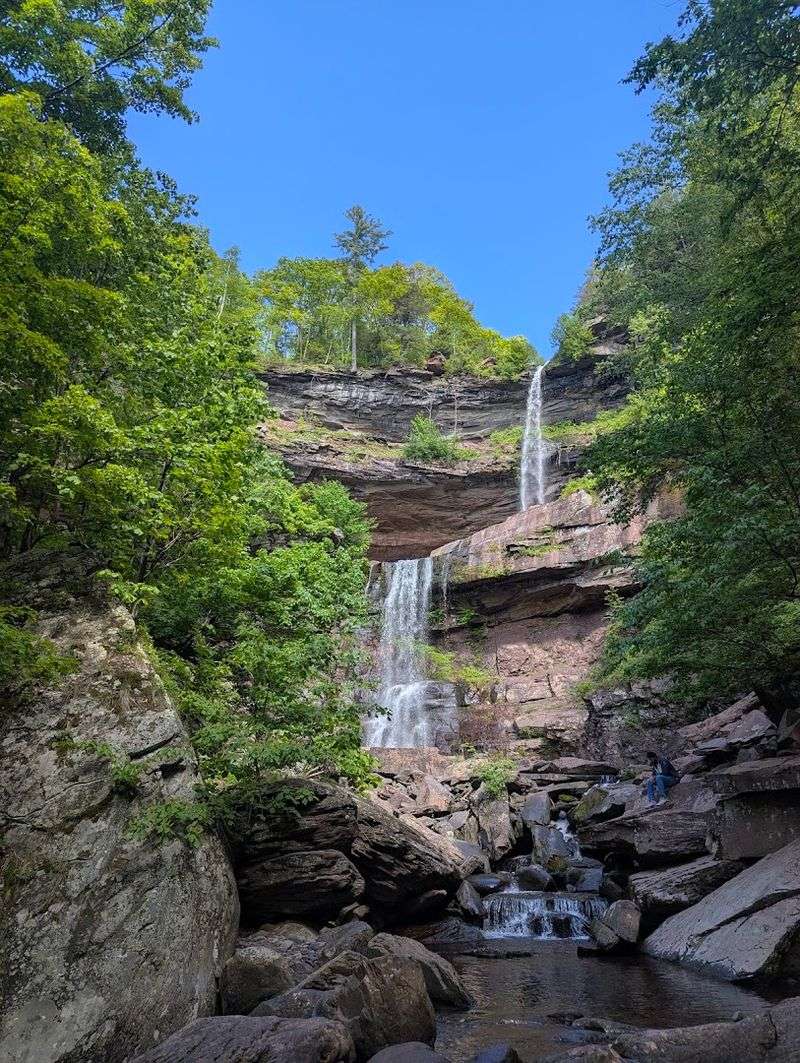
Mist, height, and Catskill legend all meet in one place here, creating a walk that feels charged before the waterfall even enters view.
The forested approach carries a slightly old-world mood, as if painters and poets might still be waiting around the bend.
At Kaaterskill Falls near Haines Falls, New York history and raw scenery share the same stage.
This two-tiered cascade, dropping roughly 260 feet in total, has inspired generations of Hudson River School artists and countless photographers since.
Modern trail improvements and viewing platforms have made the area safer, but the falls still retain that romantic, untamed presence people come for.
Depending on your route, you can experience distant overlook drama or a closer, more intimate perspective near the base access area.
I think the magic lies in how the falls appear between trees and cliff edges rather than all at once.
That gradual reveal gives the scene emotional lift, especially after rain when the water volume increases and the air feels cooler.
In autumn, the surrounding foliage adds color that can make the whole setting look almost painted.
Conditions and access can change, so checking current trail guidance is smart before you go.
Stay on designated paths, wear solid shoes, and respect barriers because the terrain here is beautiful but serious.
6. Minnewaska State Park Preserve – Kerhonkson, Ulster County
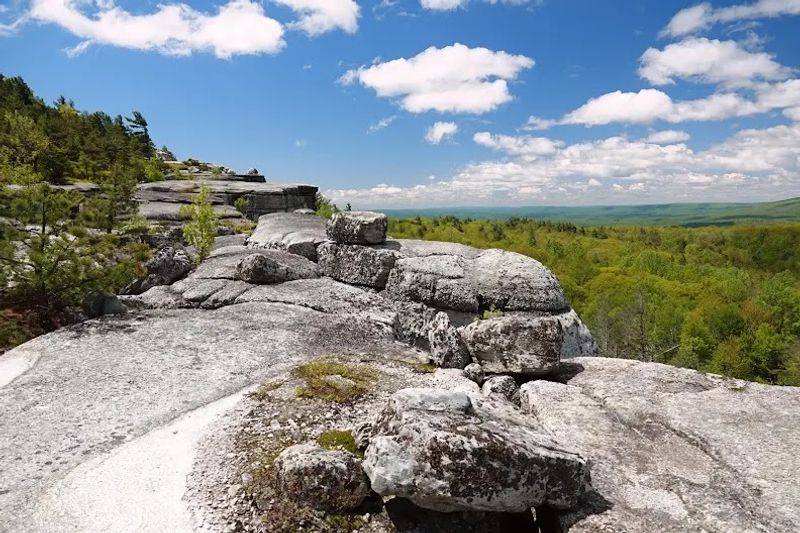
Open sky changes the whole feeling of a walk, especially when cliffs, lakes, and long horizons keep the scene wide and breathing.
Instead of closing around you like a gorge, this landscape expands outward, asking you to slow down and notice distance.
At Minnewaska State Park Preserve near Kerhonkson, the cinematic effect comes from scale, clarity, and light.
Part of the Shawangunk Ridge, the preserve is known for carriage roads, rugged footpaths, dramatic rock ledges, and pristine sky lakes.
Lake Minnewaska itself adds a reflective calm, while overlooks along routes such as the Millbrook Mountain area deliver sweeping Hudson Valley views.
The cliffs, shaped from hard conglomerate, catch sun beautifully and can make even a simple walk feel monumental.
I appreciate how flexible this destination is.
You can choose a relaxed lakeside outing or build a longer route that threads together forest, escarpments, and broad panoramas without losing the sense of elegance.
There is something clean and composed about the scenery here that reads beautifully in every season.
Spring and summer bring lush greens and sparkling water, while fall sharpens every ridgeline with color.
Start early if you want quieter trails and softer light on the cliffs, especially on popular weekends.
7. Letchworth State Park – Castile, Wyoming County
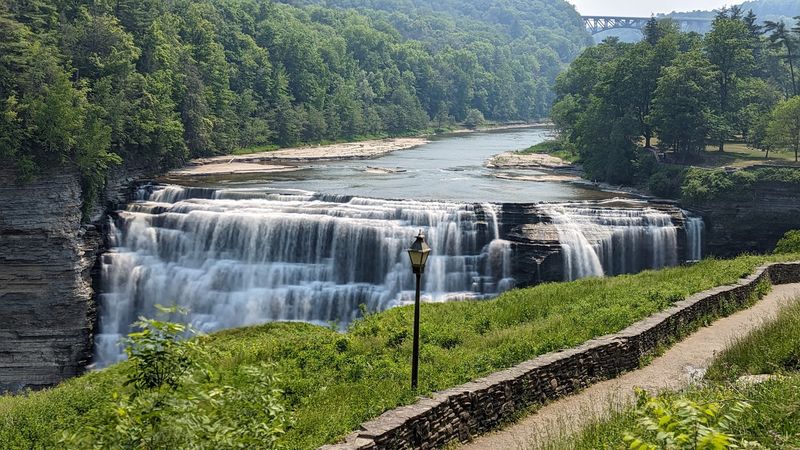
Big landscapes ask for a different kind of attention, and this one grabs it immediately with cliffs, distance, and roaring water.
The overlooks feel staged for maximum impact, yet the park still leaves room for quiet, reflective stretches between the grand reveals.
At Letchworth State Park near Castile, the walk feels like a road movie condensed into a trail day.
Known as the Grand Canyon of the East, the park follows the Genesee River as it cuts through a deep gorge framed by towering rock walls.
The three major waterfalls are the headline act, but the real cinematic quality comes from how often the terrain shifts between open vistas, wooded paths, and river viewpoints.
Historic stonework, bridges, and broad lawns add texture without reducing the wild scale.
I love how this park lets you choose your tempo.
You can hop between signature overlooks for dramatic visuals or settle into longer trails where the gorge keeps reappearing like a recurring character.
In fall, the color around the canyon becomes almost absurdly vivid, making every stop feel poster-worthy.
Sunrise and late afternoon are especially rewarding if you care about light and atmosphere.
Bring layers because the gorge can feel cooler and breezier than nearby areas, and give yourself enough time to explore multiple sections.
8. Storm King Art Center – New Windsor, Orange County
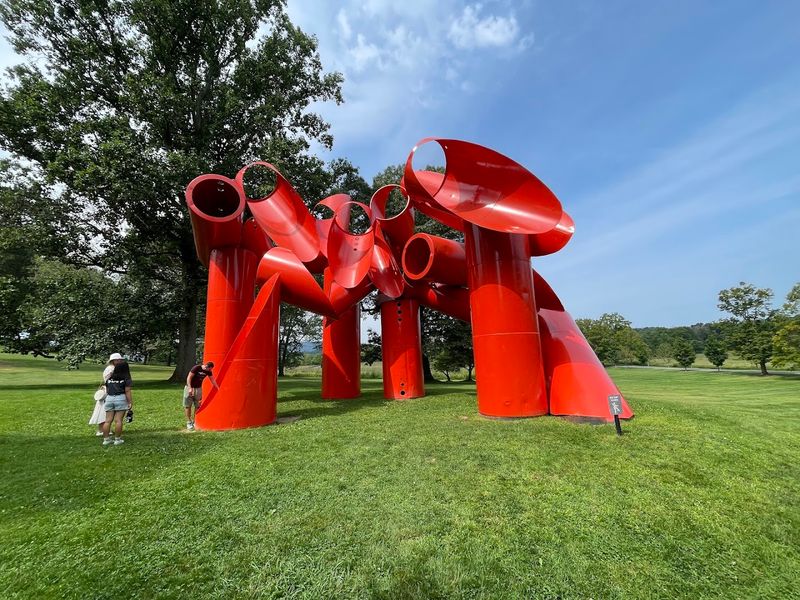
Sometimes the most cinematic walk is not purely wild, but carefully composed so art and landscape keep speaking to each other.
Wide meadows, shifting skies, and monumental forms create scenes that feel part gallery visit and part dream sequence.
At Storm King Art Center in New Windsor, your walk becomes a moving conversation between scale, silence, and surprise.
This expansive outdoor museum covers hundreds of acres in the Hudson Valley, with large-scale sculptures set among fields, hills, and groves.
Works by major artists appear at distances that make you notice approach, framing, and perspective in a very physical way.
Because the site is so open, weather and season dramatically change the mood from one visit to the next.
I find that Storm King slows people down in the best possible way.
You are not just trying to reach an endpoint; you are letting each sculpture reveal itself against mountains, clouds, or a line of trees.
That pacing gives the whole experience a meditative, cinematic rhythm that feels unusually personal.
Comfortable shoes are essential because the grounds are larger than many first-time visitors expect.
Visitors can walk, bike certain routes, or focus on one section if you prefer a shorter day, but lingering is the real secret here.
9. Walkway Over the Hudson – Highland, Ulster County
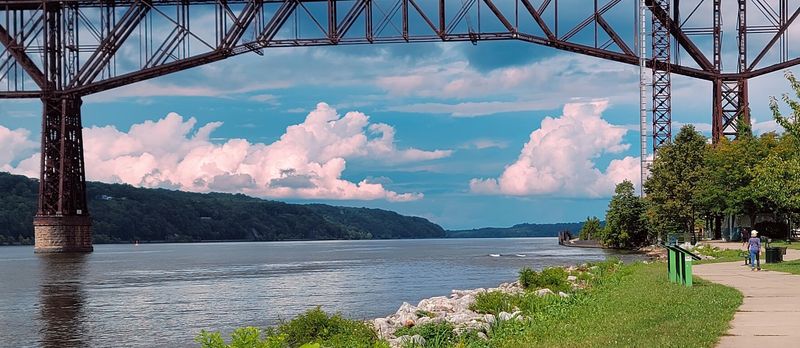
Height changes your relationship to a river, and this walk proves it in the most direct way possible.
Instead of tracing the shoreline, you move out above the Hudson itself, suspended between two communities with sky and water doing most of the visual work.
At the Walkway Over the Hudson in Highland, the simplicity of the experience is exactly what makes it cinematic.
This former railroad bridge, now a linear pedestrian park, stretches more than a mile between Highland and Poughkeepsie.
The elevation gives you huge views of the river, surrounding hills, and changing weather systems that can make the scene feel different within minutes.
Because the path is broad and straightforward, it welcomes casual strollers, runners, cyclists, and sunset seekers equally well.
I think this destination shines when you let yourself stop often.
The strongest moments are not about speed, but about watching boats pass below, light move across the water, or clouds stack over the valley.
At golden hour, the bridge can feel less like infrastructure and more like a viewing platform for a very patient film.
Pair the walk with nearby waterfront districts if you want food and local atmosphere before or after your crossing.
10. Olana State Historic Site – Hudson, Columbia County
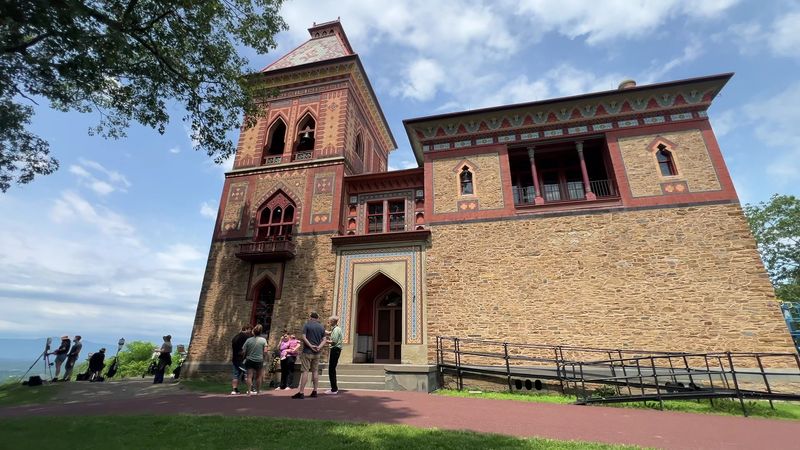
There is a painterly calm to this landscape that settles in before you fully understand why it feels so composed.
The roads curve gently, the views open at just the right moments, and the atmosphere carries both elegance and distance.
At Olana State Historic Site in Hudson, walking feels like entering the mind of an artist who knew exactly how scenery should unfold.
This was the home of Frederic Edwin Church, a central figure of the Hudson River School, and the grounds were intentionally shaped as a living landscape design.
Carriage roads lead through meadows, wooded patches, and carefully framed outlooks toward the Hudson River and Catskills beyond.
The Persian-inspired house adds architectural drama, but the wider estate is what gives the visit its lasting cinematic quality.
I love that Olana does not overwhelm you with constant spectacle.
Instead, it builds mood through proportion, light, and placement, so each overlook feels earned rather than shouted.
That restraint makes the biggest views more memorable, especially in late afternoon when the valley begins to glow.
Take your time here and resist the urge to rush straight to the house.
Some of the most rewarding moments happen along the approach roads, where the landscape opens gradually and quietly.
11. Catskill Center – Arkville, Delaware County
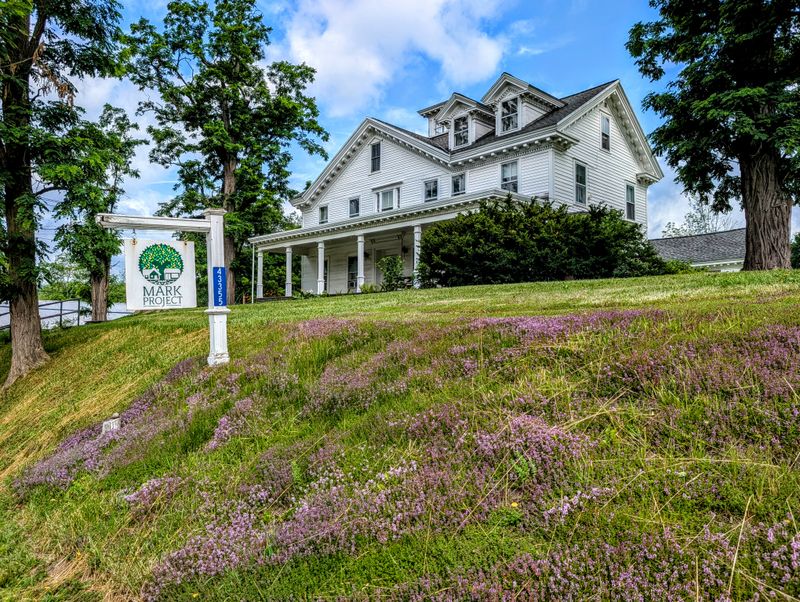
Not every cinematic walk needs a single famous landmark.
Sometimes the magic comes from entering a larger mountain story, where forests, ridgelines, and open sky create a mood that keeps unfolding over miles.
Around the Catskill Center in Arkville, you get that expansive sense of place that makes every step feel like part of a longer narrative.
The organization itself supports conservation and outdoor access across the Catskills, and the Arkville area places you near some of the region’s most evocative landscapes.
Depending on the route you choose nearby, you may find hemlock woods, old farm clearings, stream crossings, and broad views toward layered summits.
The appeal here is less about one dramatic reveal and more about sustained atmosphere rooted in geography and stewardship.
I think this stop works best for travelers who like feeling connected to a living region rather than checking off a single attraction.
The mountains around Arkville have a quieter cinematic quality, one built from haze, birdsong, changing weather, and those long blue ridgelines that seem to recede forever.
Even a modest walk can feel emotionally spacious here.
If your ideal movie moment involves mood, depth, and mountain character, this part of New York understands it beautifully.
12. Saugerties Lighthouse – Saugerties, Ulster County
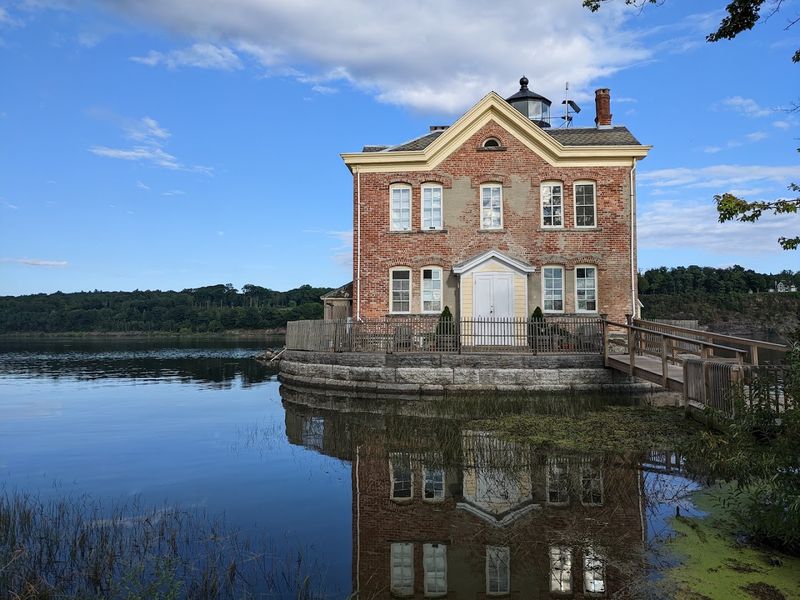
Tidal marsh, open river, and a lighthouse at the end of the path make this walk feel like a gentle closing scene.
Nothing here is overly dramatic, yet the quiet composition is exactly what gives it emotional pull.
At Saugerties Lighthouse in Ulster County, the cinematic moment comes from simplicity, atmosphere, and arrival.
The approach follows a flat trail and boardwalk through the Esopus Creek and Hudson River estuary environment, where grasses, birds, and shifting water levels shape the mood.
As you move outward, the lighthouse slowly becomes the visual anchor, turning a modest walk into a small but satisfying narrative.
The structure itself, dating to the nineteenth century, adds historic character without overwhelming the natural setting.
I like this destination because it feels intimate.
Instead of chasing cliffs or waterfalls, you are leaning into stillness, noticing reflections, breezes, and the way the river seems to widen around you.
At sunrise or sunset, that calm can feel surprisingly cinematic, especially when the sky softens over the water.
Check conditions before visiting because tides and weather can influence the feel of the route.
Bring binoculars if you enjoy birdlife, and walk slowly enough to appreciate how the marsh changes with light.