
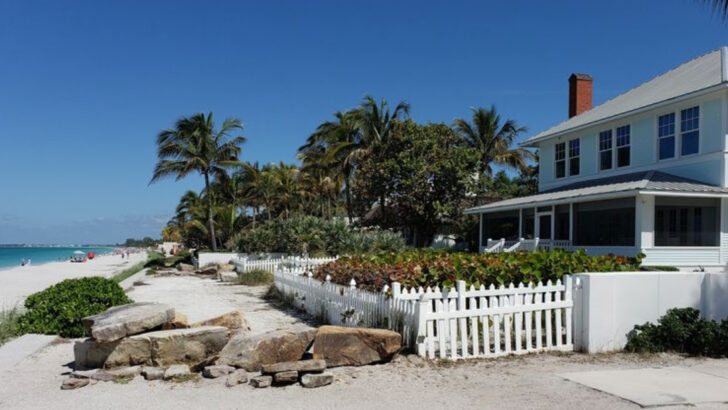
Florida’s Gulf Coast hides a slower, saltier world that most tourists never find.
Tucked between the busy beach resorts and theme parks are tiny fishing villages, spring-fed rivers, and historic waterfronts that look almost exactly as they did 50 or 100 years ago.
This road trip connects those forgotten corners into one unforgettable journey.
Pack light, drive slow, and get ready to fall in love with a Florida most people never knew existed.
Cedar Key – A Quiet Fishing Village Frozen in Time
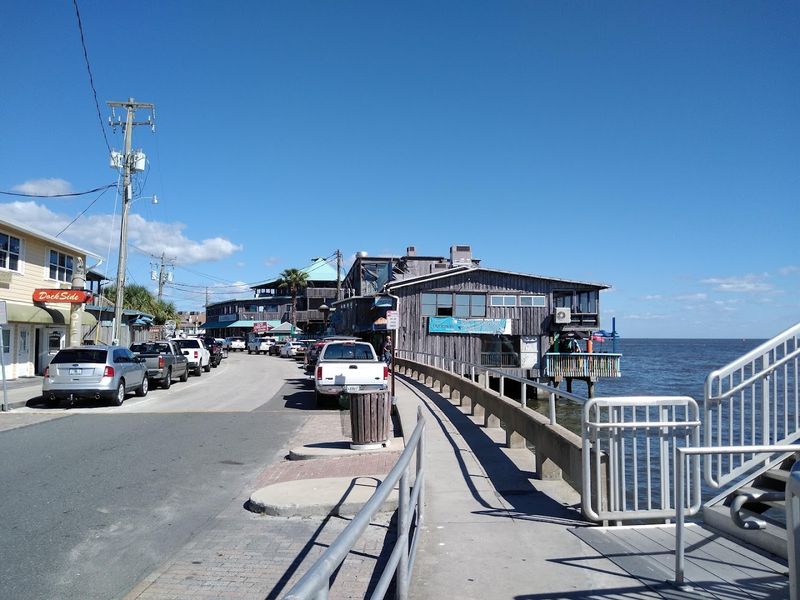
Forget everything you think you know about Florida beach towns. Cedar Key sits on a cluster of small islands about 50 miles southwest of Gainesville, and it operates on its own unhurried clock.
There are no chain restaurants here, no towering hotels, and no bumper-to-bumper traffic clogging the streets.
The town’s heart is its waterfront, where clam farmers, crab trappers, and weekend anglers share the same docks their grandparents used. Low wooden buildings painted in faded blues and greens line Second Street, giving the whole place a sun-bleached, timeless quality.
Seafood here is as fresh as it gets — pulled from the water that morning and served simply.
Cedar Key was actually one of Florida’s busiest port cities in the 1800s, shipping pencils made from local red cedar. When the timber ran out, the town quieted down and basically stayed that way.
That accidental preservation is exactly what makes it so special today. Sunsets from the city pier are genuinely jaw-dropping, painting the Gulf in shades of orange and pink that feel almost too beautiful to be real.
Plan to stay at least one night — leaving the same day would be a mistake you’d regret.
Yankeetown & Inglis – Where Nature Still Leads the Way
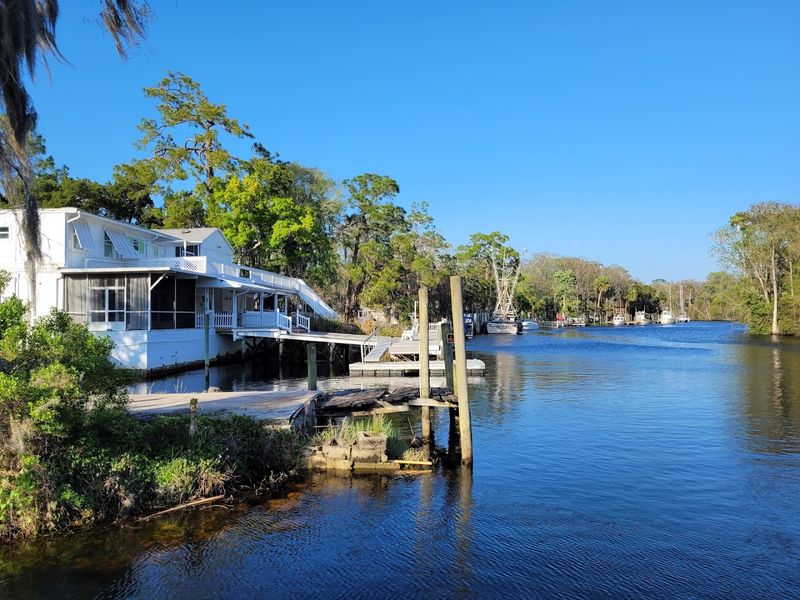
Some places refuse to be discovered, and Yankeetown is one of them. Sitting where the Withlacoochee River meets the Gulf, this tiny community and its neighbor Inglis have somehow avoided every wave of Florida development.
The result is a stretch of Old Florida so quiet you can hear herons landing in the marsh grass.
Kayaking is the best way to experience this area. Paddling trails wind through ancient cypress stands and tidal creeks where manatees occasionally surface beside your boat.
Birdwatchers come from all over the country to spot roseate spoonbills, ospreys, and wood storks along these shores. The fishing is exceptional too, with redfish and snook lurking in the grass flats just offshore.
Yankeetown got its unusual name from Midwestern transplants who settled here in the 1920s — locals from nearby towns started calling it that as a gentle joke, and the name stuck. Today the community is a mix of old fishing families and nature lovers who came for a weekend and never left.
Inglis adds a small-town downtown feel with a handful of local businesses serving the area. Together, these two towns offer a rare glimpse at pre-tourist Florida that feels completely genuine and unhurried.
Homosassa – Manatees and Roadside Florida Nostalgia
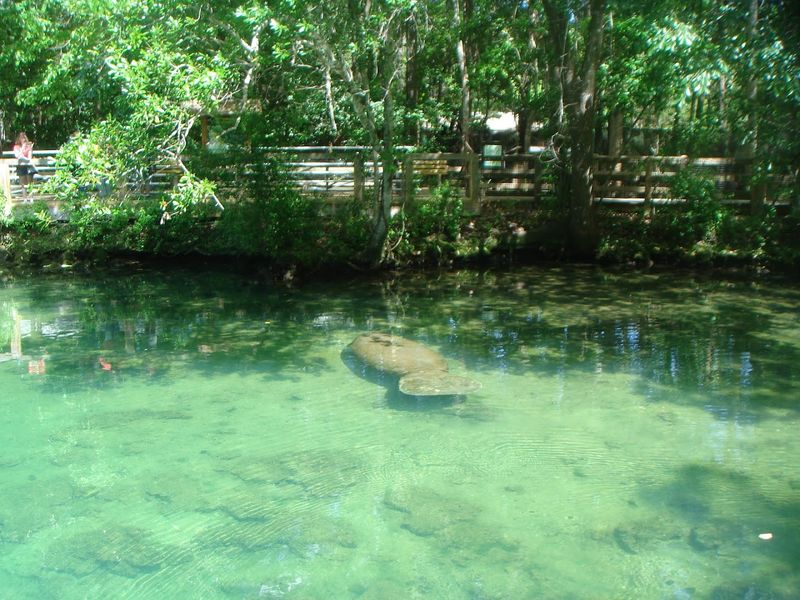
There is something almost magical about watching a 1,000-pound manatee glide silently through water so clear you can count the grass blades on the bottom. Homosassa Springs State Wildlife Park makes that experience possible year-round, drawing visitors into an underwater observatory where you watch these gentle giants from below the surface.
It is one of those Florida experiences that genuinely never gets old.
Beyond the manatees, Homosassa carries a wonderfully retro energy. Old Homosassa, the riverside neighborhood near the park, is dotted with fish camps, tiki bars, and seafood shacks that look lifted straight from a 1960s postcard.
The Yulee Sugar Mill Ruins Historic State Park nearby adds a layer of history — crumbling stone walls from an 1851 sugar plantation sit quietly in the woods just off the road.
Homosassa also sits at the edge of some of Florida’s best freshwater fishing territory, and the local guides who work these waters have stories that could fill several books. The town’s quirky roadside charm includes a few vintage souvenir shops and a handful of family-owned restaurants where the grouper sandwich is always the right choice.
Fun fact: a hippopotamus named Lucifer once lived at Homosassa Springs and was officially declared an honorary Florida citizen.
Crystal River – Classic Springs and Small-Town Charm
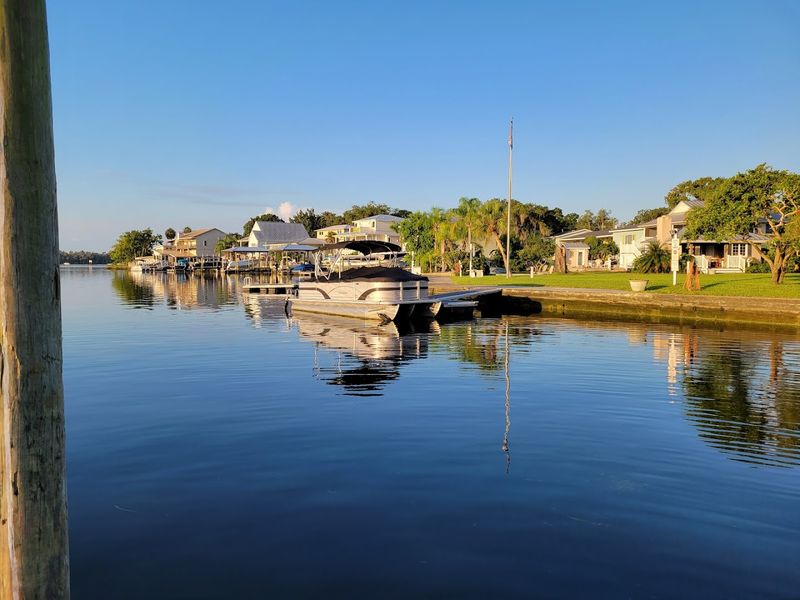
Crystal River earns its name honestly. Kings Bay, the heart of the town’s waterfront, feeds from dozens of natural springs that pump out millions of gallons of 72-degree water every day, keeping it impossibly clear regardless of the season.
That constant warmth is exactly why manatees pack the bay during winter months, sometimes numbering in the hundreds.
Unlike some spring towns that have leaned hard into commercial tourism, Crystal River has kept a relaxed, small-town personality. Downtown still has the feel of a working river community, with bait shops, local diners, and family-owned outfitters sitting alongside newer additions.
The pace is slow by design, and the locals seem to prefer it that way. Grabbing a table at a waterside seafood restaurant and watching boats drift by is basically the official Crystal River pastime.
Paddling or snorkeling in Kings Bay is easy to arrange through any number of local outfitters, and the experience of floating alongside manatees in their natural habitat is something genuinely hard to describe. The Three Sisters Springs area within Kings Bay is particularly stunning — a connected series of spring pools surrounded by old cypress trees.
Crystal River National Wildlife Refuge, one of the only refuges in the country dedicated entirely to protecting manatees, wraps the whole area in an extra layer of natural significance.
Weeki Wachee – Live Mermaids and Vintage Roadside Magic
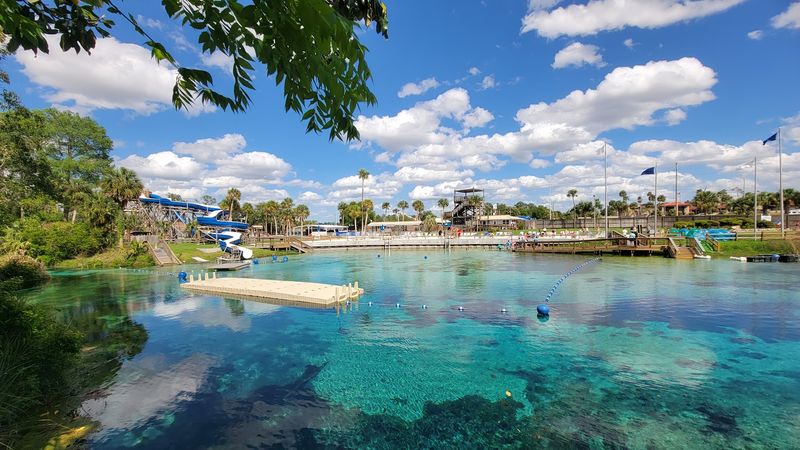
Back in 1947, a former Navy frogman named Newton Perry had an idea that sounded completely ridiculous: train young women to perform underwater ballet while breathing through air hoses, and charge people to watch through a glass window. Somehow, it worked spectacularly.
Weeki Wachee Springs has been drawing amazed crowds ever since, making it one of the longest-running roadside attractions in American history.
The mermaid shows are genuinely entertaining, mixing choreography, storytelling, and sheer athletic endurance in a way that feels both absurd and impressive at the same time. The spring itself is one of the deepest natural springs ever recorded in Florida, pumping out over 100 million gallons of water daily.
That flow powers the crystal-clear spring run where visitors can kayak, tube, or simply float downstream through a canopy of overhanging trees.
Weeki Wachee became a Florida State Park in 2008, which saved it from the uncertain fate many classic roadside attractions have faced. The park now combines the original mermaid theater with a water park, paddling trails, and wildlife programs.
Visiting feels like flipping through a vintage Florida travel brochure and finding that everything inside still actually exists. For anyone who loves mid-century Americana, this stop belongs at the very top of the list.
Tarpon Springs – Sponge Docks and Greek Heritage
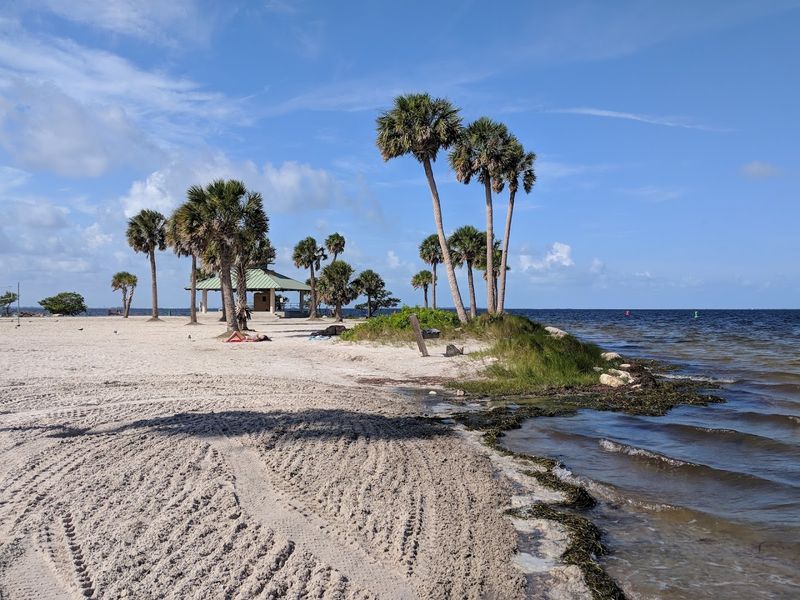
Walking along the Tarpon Springs sponge docks feels less like Florida and more like a Greek island village somehow transplanted to the Gulf Coast. The smell of fresh-baked baklava drifts out of bakeries, Greek Orthodox churches anchor the neighborhood, and working sponge boats still unload their hauls at the waterfront just as they did a century ago.
The cultural identity here runs deep and genuine.
Greek immigrants began arriving in Tarpon Springs around 1905, recruited specifically for their sponge-diving skills. At its peak, the sponge industry here made Tarpon Springs the wealthiest city per capita in the entire United States.
The industry collapsed briefly due to a blight in the 1940s but recovered, and today Tarpon Springs still produces and sells more natural sponges than anywhere else in the country.
Epiphany, the Greek Orthodox celebration held each January, draws thousands of visitors to watch young men dive into Spring Bayou to retrieve a ceremonial cross — a tradition maintained without interruption since 1903. Beyond the docks, the town offers excellent Greek restaurants, an interesting sponge museum, and quiet residential streets filled with early 20th-century architecture.
Tarpon Springs rewards slow exploration, especially if you take time to chat with shop owners whose families have been here for generations.
Dunedin – A Coastal Town That Refused to Overdevelop
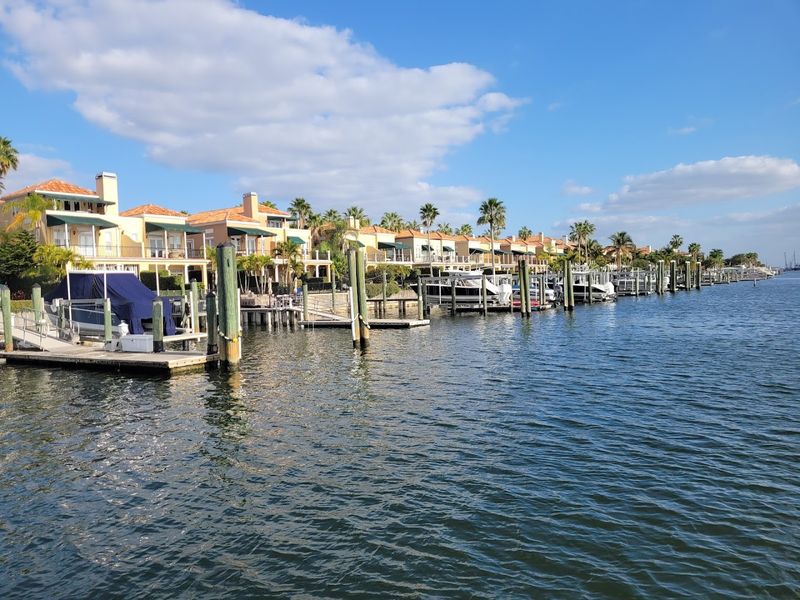
Dunedin quietly pulls off something most Florida coastal towns have completely failed at: staying genuinely charming without turning into a tourist trap. Main Street here is lined with locally owned shops, craft breweries, art galleries, and restaurants that actually reflect the community living around them.
There are no cookie-cutter chain stores interrupting the flow, which makes the whole downtown feel refreshingly real.
The town was founded by Scottish settlers in the 1870s — the name Dunedin comes from the Scottish Gaelic name for Edinburgh — and that heritage pops up in occasional festivals and a distinct civic pride that still feels alive today. The Pinellas Trail, a 38-mile paved trail running along a converted railroad corridor, passes directly through downtown and brings a steady stream of cyclists and walkers who stop to explore on foot.
Honeymoon Island State Park sits just minutes away, offering one of the least-developed Gulf beaches in the Tampa Bay area. Caladesi Island, accessible only by ferry from Honeymoon Island, consistently ranks among the best beaches in the entire country.
Together, these parks give Dunedin an outdoor resume that most bigger towns would envy. The combination of a lively small-town downtown and pristine natural beaches makes Dunedin one of the most well-rounded stops on this entire road trip.
Pass-a-Grille – Old Beach Florida at Its Purest
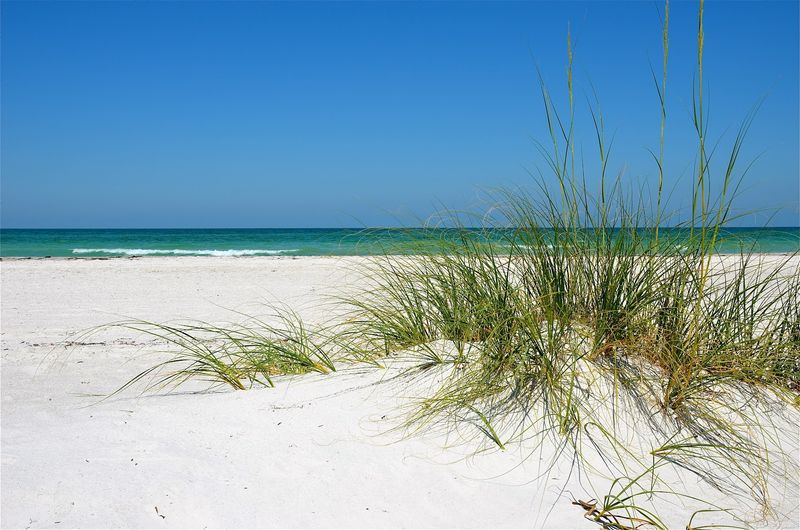
Tucked at the southern tip of St. Pete Beach, Pass-a-Grille operates in a different dimension from the rest of the Florida beach world. The streets are narrow, the buildings are low, and the loudest sound most mornings is the Gulf wind rustling through the sea oats.
No high-rises block the horizon here, and the absence of that vertical clutter makes the whole place feel wide-open and deeply calming.
The historic Don CeSar Hotel — the famous pink palace visible from miles along the beach — sits nearby, and its flamingo-colored towers have been a Gulf Coast landmark since 1928. But Pass-a-Grille itself stays quieter and more residential, a neighborhood of 1920s and 1930s beach bungalows where front porches face the street and neighbors still wave to each other.
The beach itself is uncrowded by Florida standards, with soft white sand and gentle Gulf waves perfect for swimming.
The small commercial strip on Eighth Avenue has just enough restaurants and shops to keep visitors comfortable without overwhelming the neighborhood’s character. Sunset watching from the Pass-a-Grille beach is a community ritual — locals bring chairs and gather near the water as the sky changes color over the Gulf.
It is one of those simple Florida pleasures that costs nothing and delivers everything.
Cortez – One of Florida’s Last Working Fishing Villages
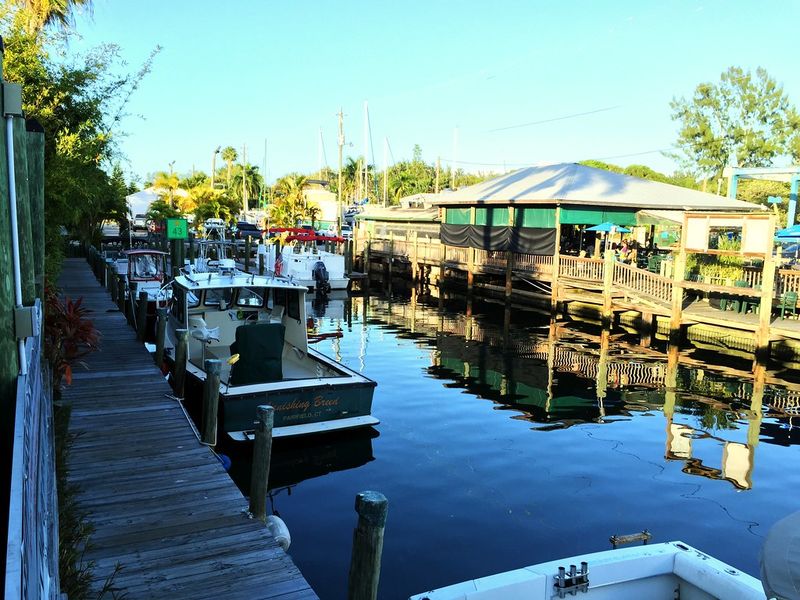
Most Florida fishing villages have been converted into waterfront dining districts or vacation rental neighborhoods. Cortez refused that path.
Situated just north of Bradenton Beach, this small community on Sarasota Bay has been a working commercial fishing village since the 1880s, and it remains one today. Real fishing boats leave before sunrise.
Real nets hang drying in the morning air. Real seafood gets processed and shipped from the same docks that have served this industry for over a century.
The Florida Maritime Museum, housed in historic buildings right in the village, tells the story of this community with impressive depth and respect. Photographs, old equipment, and oral histories bring the fishing culture to life in a way that feels personal rather than museum-dry.
Walking the village streets after a museum visit makes the living history around you feel even more meaningful.
Cortez faces constant pressure from surrounding development — the condos and resort properties of Anna Maria Island are visible just across the bridge — but a dedicated community organization has fought hard to preserve its character and historic structures. A handful of waterfront seafood markets sell the morning’s catch directly to visitors, which means the fish on your plate might have been in the Gulf just hours earlier.
For anyone serious about understanding Florida’s maritime roots, Cortez is absolutely essential.
Boca Grande (Gasparilla Island) – Elegant, Old-World Coastal Escape
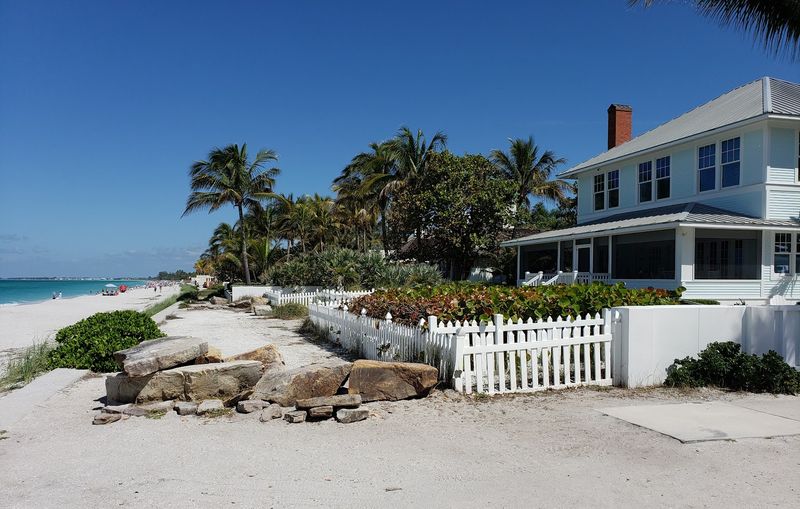
Gasparilla Island moves at the pace of a long afternoon nap. Connected to the mainland by a toll bridge, Boca Grande — the island’s main town — has an old-money elegance that feels entirely its own.
Banyan trees arch over quiet streets where residents get around by bicycle or golf cart. There is not a single chain store or fast-food restaurant on the island, a distinction the community actively protects.
The Boca Grande Lighthouse, built in 1890 at the island’s southern tip, has been beautifully restored and now houses a small museum about the island’s history. The lighthouse grounds offer sweeping views of Charlotte Harbor and the Gulf pass where massive tarpon school every spring — Boca Grande is considered the tarpon fishing capital of the world, drawing serious anglers from across the globe each May and June.
The town’s historic downtown has a gentle, unhurried energy. Old Florida storefronts house art galleries, independent bookshops, and restaurants serving fresh Gulf seafood with quiet elegance rather than tourist-menu predictability.
The Gasparilla Inn, a grande dame hotel operating since 1913, anchors the social life of the island and still hosts guests in a setting that feels genuinely from another era. Boca Grande is the kind of place that makes you wonder why you ever rushed anywhere in your life.