
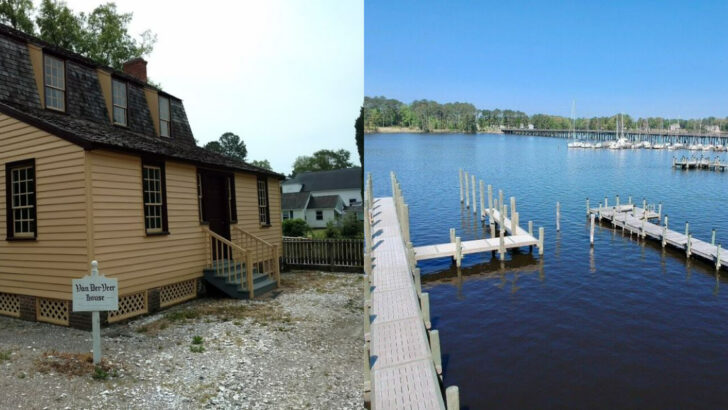
Tucked along the banks of the Pamlico River in eastern North Carolina, Bath is a town that most people have never heard of and that’s exactly what makes it special. Chartered in 1705, it holds the title of North Carolina’s first incorporated town, yet fewer than 300 people call it home today.
Walking its quiet streets feels less like a history lesson and more like accidentally stepping into a living photograph from the colonial era. If you’re looking for a place where time genuinely seems to have paused, Bath might be the most honest answer in the entire state.
A Town So Small You Can Miss It — But Shouldn’t
Bath sits quietly along the Pamlico River in Beaufort County, home to fewer than 300 residents and just a handful of streets laid out in a grid that hasn’t changed much since the early 1700s. There’s no traffic light, no commercial strip, and no reason to speed through — yet somehow that’s the whole appeal.
The town doesn’t compete for your attention; it simply exists.
Arriving here for the first time feels oddly personal, like finding a place that was never meant to go viral. The lawns between historic homes are unhurried and open, and the river is always visible from somewhere nearby.
You slow down not because a sign tells you to, but because the atmosphere makes rushing feel genuinely rude.
For anyone used to crowded historic sites with admission lines and gift shops, Bath offers something genuinely rare: a colonial town that still functions as a real, lived-in community rather than a curated attraction.
North Carolina’s First Town: What “Oldest” Actually Means
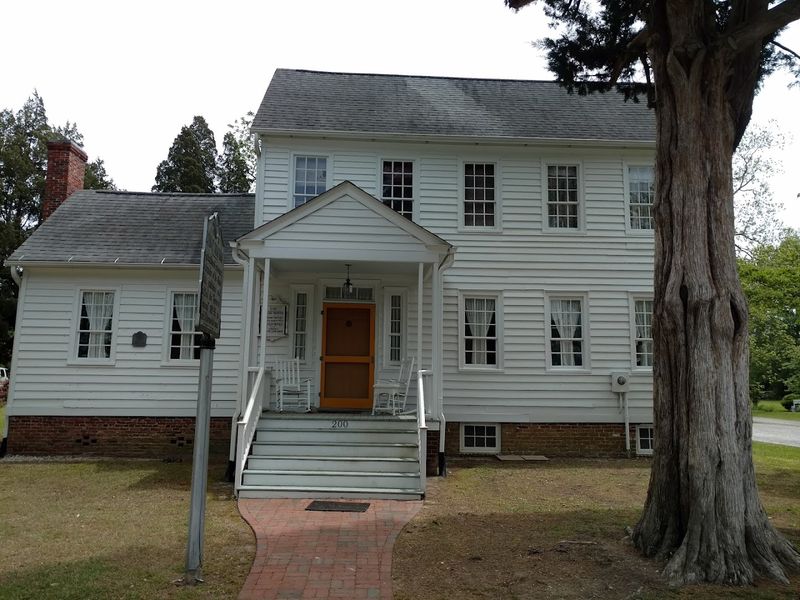
Bath was officially chartered on March 8, 1705, making it the first incorporated town in North Carolina — a fact that sounds like a trivia answer until you’re actually standing in it. Unlike many places that carry historical labels loosely, Bath earns the title through physical evidence: original structures, traceable lot lines, and a streetscape that hasn’t been dramatically redeveloped in three centuries.
What “oldest” really means here is that the town never grew big enough to tear itself down and rebuild. Cities that boomed in the 19th and 20th centuries often demolished their colonial bones to make room for progress.
Bath simply didn’t boom, and that quiet stagnation turned out to be an accidental act of preservation.
Walking through Bath with that context in mind changes how you see everything — the spacing between houses, the width of the roads, even the way the land slopes toward the river all carry the logic of 1705 colonial planning, not modern development.
The Pamlico River: Water That Shaped Everything
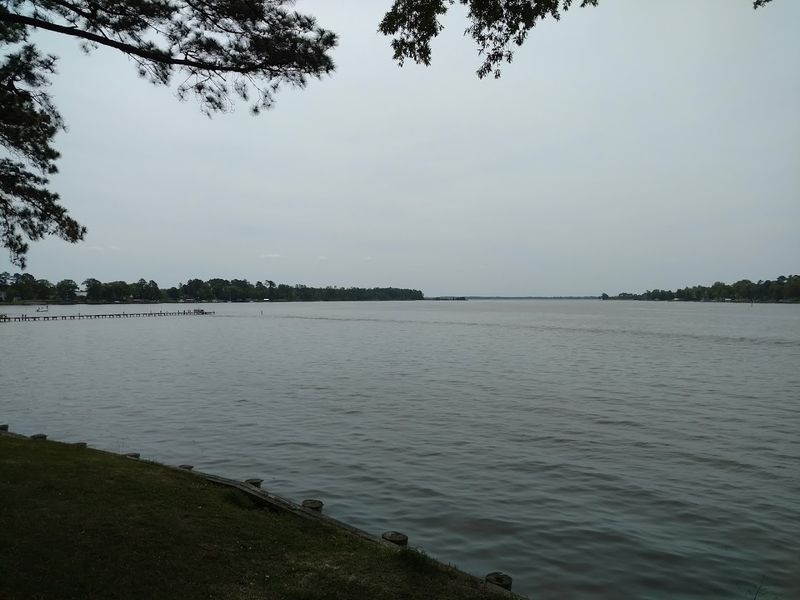
The Pamlico River isn’t just scenery in Bath — it’s the entire reason the town exists. Colonial settlers chose this location deliberately, placing it near a navigable route to the Atlantic that made trade in naval stores, furs, and tobacco not just possible but profitable.
The river was Bath’s original highway, and everything about the town’s layout was built around access to it.
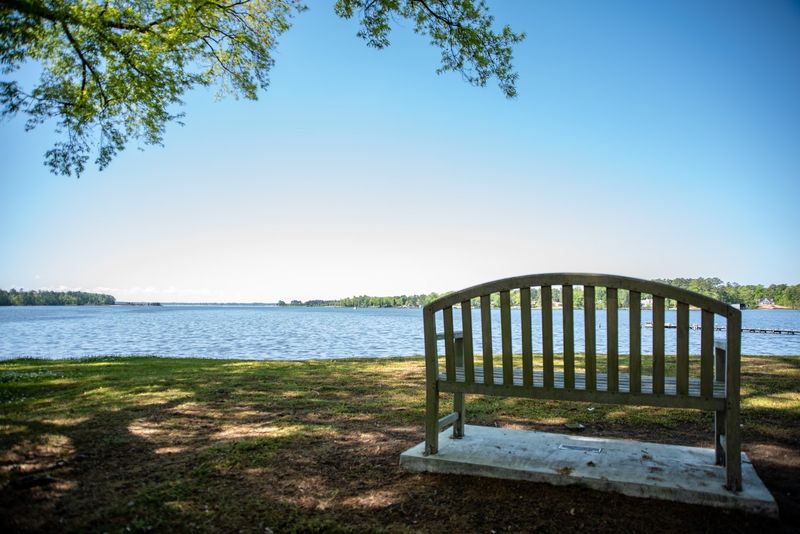
Today the water still dominates your first impression when you arrive. It’s wide, calm, and a deep brownish color from the tannins in the surrounding wetlands — not the postcard-blue of a tourist brochure, but genuinely beautiful in an honest, coastal-plain kind of way.
Marsh grass lines the far bank, and the whole scene has a stillness that feels almost theatrical.
Late afternoon is the best time to stand at the water’s edge. The light gets flat and golden, the humidity softens everything, and the river looks exactly like it might have looked to a settler arriving by boat in 1710.
St. Thomas Episcopal Church: The Oldest Church in the State
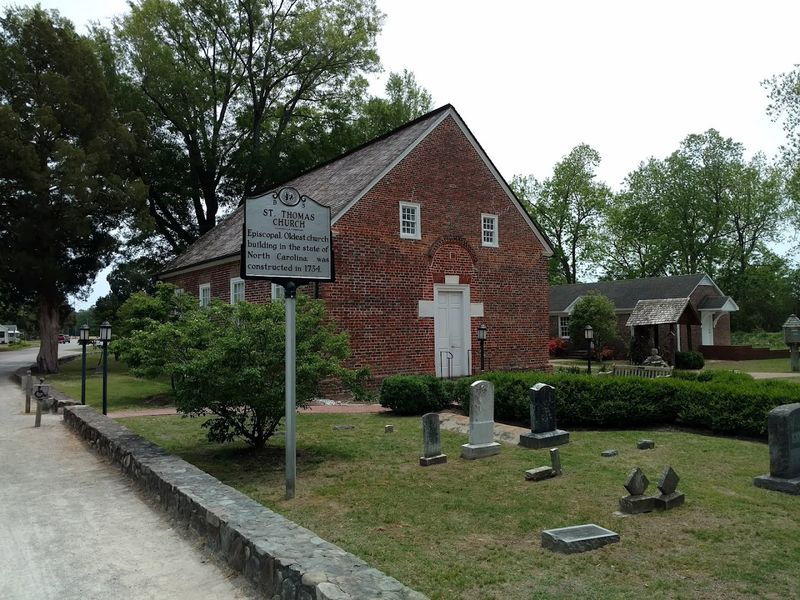
Built in 1734, St. Thomas Episcopal Church holds a distinction that’s easy to underestimate: it’s the oldest surviving church in North Carolina, and it has been in continuous active use since it was constructed. That’s not a restored replica or a museum piece — people still worship here on Sundays, which gives the building a living quality that most colonial structures simply don’t have.
Step inside and the original brickwork is right there, unpolished and unapologetic. The interior is spare in the way colonial Anglican churches often were — no elaborate decoration, just honest craftsmanship and natural light through small windows.
It’s the kind of space that makes you lower your voice without being asked.
The small cemetery beside the church is equally arresting. Several graves predate the American Revolution, and the worn inscriptions on the oldest stones are barely legible now — faded not by neglect but by sheer age.
Few places in the South offer that kind of quiet confrontation with how long ago 1734 actually was.
The Palmer-Marsh House: A Kitchen You Can Still Walk Through
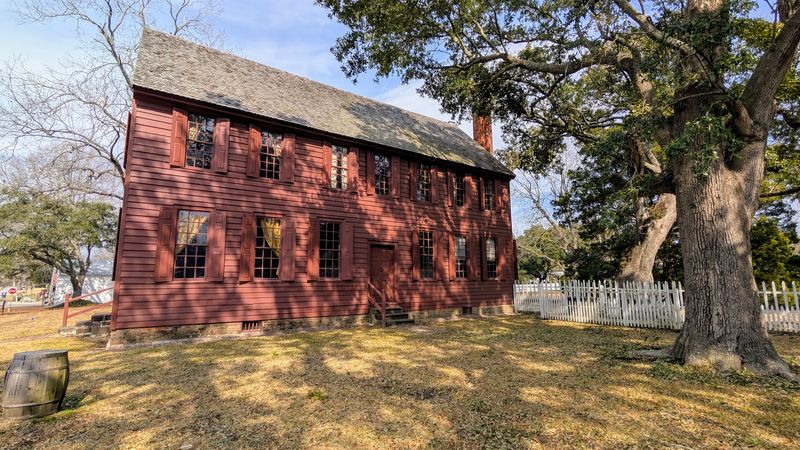
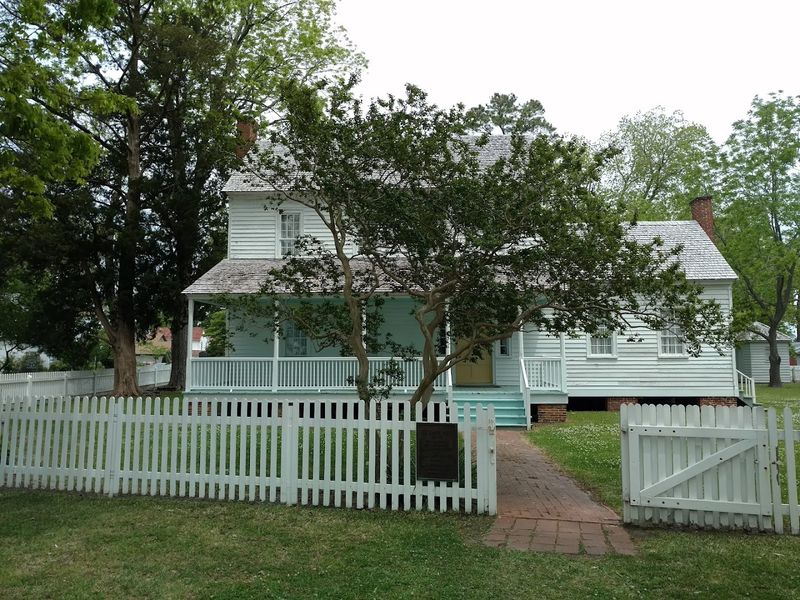
Dating to around 1751, the Palmer-Marsh House is one of the best-preserved colonial homes in eastern North Carolina, and what makes it stick with visitors isn’t its age — it’s how lived-in it feels. The detached kitchen, the low ceilings, the worn wooden floors: none of it has been over-restored to a glossy finish.
It looks like a home that was used hard for 270 years, because it was.
Walking through the layout gives you an immediate physical sense of how colonial domestic life was organized. The separation of the kitchen from the main house wasn’t an architectural quirk — it was a fire-safety strategy and a heat-management solution in a climate that gets brutally warm in summer.
Small decisions like that make the house read like a practical document rather than a showpiece.
Guided tours through the state historic site include access to the Palmer-Marsh House, and rangers tend to share details about daily life that don’t make it into the standard history books. Ask about the kitchen specifically — it’s worth the extra questions.
Blackbeard’s Stomping Grounds: A Real Pirate History Without the Theme Park Feel
Edward Teach — better known as Blackbeard — used Bath as a home base during the early 1700s, a fact that sounds like it should come with a gift shop and a costumed actor. It doesn’t.
Bath tells this story through historical markers and matter-of-fact local pride, which somehow makes it feel more real than any theme-park version could.
The connection goes deeper than just geography. Governor Charles Eden, Bath’s own colonial governor, reportedly gave Blackbeard legal protection — essentially allowing one of history’s most notorious pirates to operate with official cover from the town’s highest authority.
That’s the kind of morally complicated history that gets glossed over at bigger tourist sites but sits right out in the open here.
Blackbeard was eventually killed in 1718 during a naval battle off the North Carolina coast, but his years in Bath represent one of the stranger chapters in American colonial history. The town doesn’t dramatize it.
It just acknowledges it plainly, which is honestly more unsettling and more interesting than any dramatic retelling would be.
The Historic Bath State Historic Site: Where to Start Your Visit
If you arrive in Bath without a plan — which is easy to do given how little pre-trip information exists about the place — the state historic site’s visitor center is the right first stop. Rangers here manage access to the Palmer-Marsh and Van Der Veer houses, run guided tours on a regular schedule, and carry a depth of local knowledge that goes well beyond what’s printed on the trail map.
The visitor center itself is modest, which fits. There’s no elaborate introductory film or immersive exhibit — just good information presented clearly, with staff who seem genuinely interested in the history rather than just managing foot traffic.
It’s the kind of low-key orientation that sets the right tone for everything Bath has to offer.
Tours typically run on a set schedule, so checking the North Carolina State Historic Sites website before your visit is worth the two minutes it takes. Arriving just before a tour starts means you get the full guided experience rather than self-navigating around locked doors — and the guided version is noticeably better.
The Van Der Veer House: Simpler and Older Than It Looks
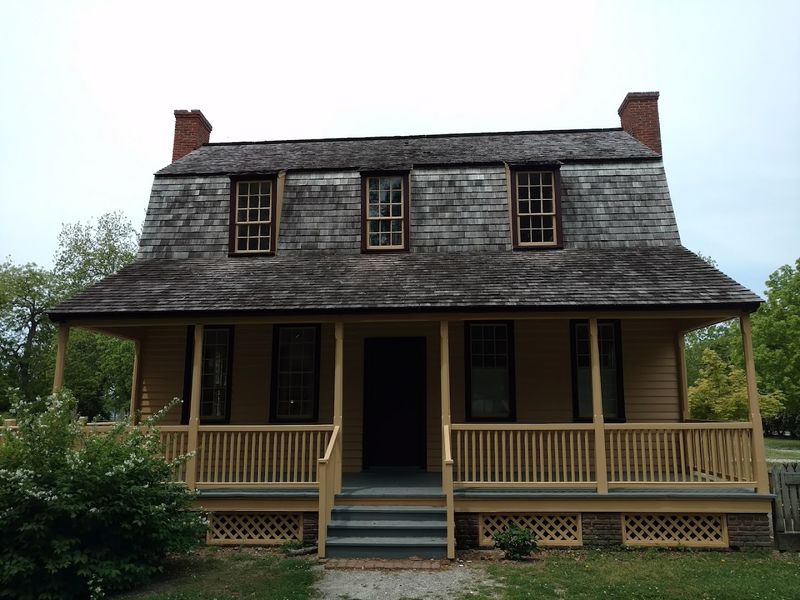
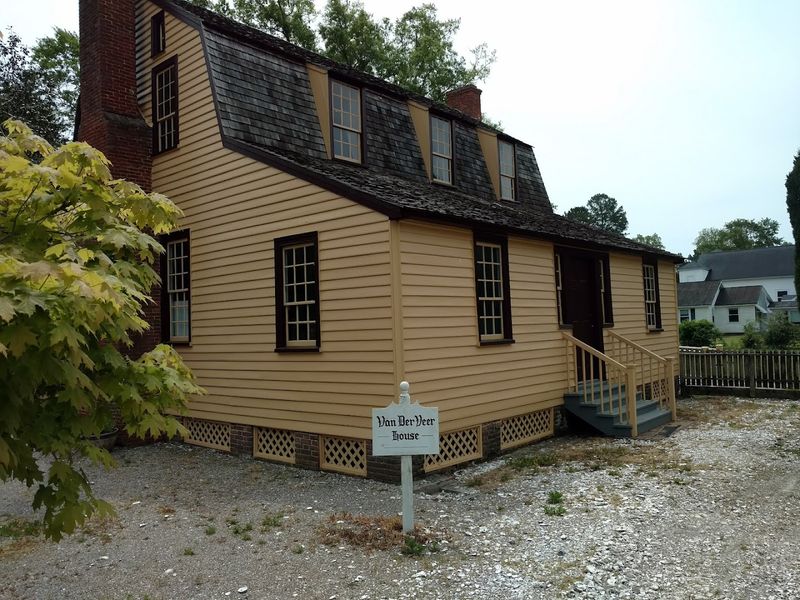
Standing next to the more prominent Palmer-Marsh House, the Van Der Veer House could easily get overlooked — but that would be a mistake. Its simplicity is exactly what makes it valuable as a historical document.
Where the Palmer-Marsh House reflects the taste and wealth of a prosperous merchant family, the Van Der Veer House gives a clearer, more honest picture of what middling colonial life actually looked like.
The structure is less ornamented, smaller in scale, and more straightforwardly functional in its design. That plainness tells its own story about the range of people who settled Bath in the early 18th century — not just wealthy traders and governors, but ordinary families building ordinary lives in a new and uncertain place.
One detail that tends to surprise visitors: the original lot lines from the 1705 town plan are still traceable from the front yard. Standing there and realizing you can see the bones of a 300-year-old street grid beneath the grass is one of those quietly remarkable moments that Bath specializes in delivering.
Light, Humidity, and the Coastal Plain Atmosphere
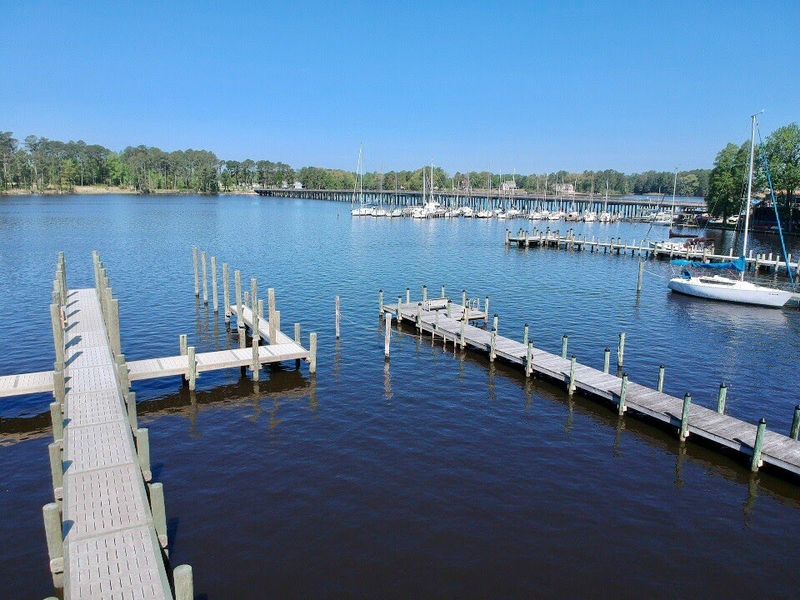
Eastern North Carolina has a quality of light in the late afternoon that’s genuinely hard to describe and nearly impossible to photograph accurately. It’s flat and golden, heavy with humidity during the warmer months, and it falls on everything — old brick, river water, live oak leaves — with an evenness that makes the whole landscape look like it’s been slightly overexposed in the best possible way.
In Bath, that light hits the colonial structures and the Pamlico River at the same time, and the combination produces something that photographers chase and almost always fail to fully capture. The humidity thickens the air just enough to soften hard edges, and the river picks up the color of the sky in a way that changes minute by minute as the sun drops.
Visiting in the spring or fall gives you the light without the most intense heat, but even a sweltering July afternoon in Bath has a particular beauty to it — the kind that makes you stop mid-sentence and just look around, which might be the most honest endorsement any place can earn.
What to Expect Practically (And What Bath Doesn’t Have)

Bath operates on its own terms, and those terms don’t include daily restaurant service, a hotel, or a convenience store within the town limits. The nearest place to find food and lodging is Washington, NC, roughly 15 miles to the west — a small city with enough options to cover the basics without much trouble, but far enough that arriving in Bath hungry and unprepared is a genuine possibility.
Knowing this ahead of time is the entire difference between a frustrating trip and a focused one. Pack a lunch, fill your gas tank before you arrive, and plan your visit around the historic site’s tour schedule rather than assuming you can wander in at any hour and find everything accessible.
The state site has posted hours, and some buildings are only open during guided tours.
Cell service is workable but not strong in parts of the area, so downloading offline maps and the historic site’s information before you leave is a practical move. Bath rewards preparation not because it’s difficult to visit, but because it has no infrastructure designed to compensate for a lack of it.
Why Small and Quiet Is Actually the Point
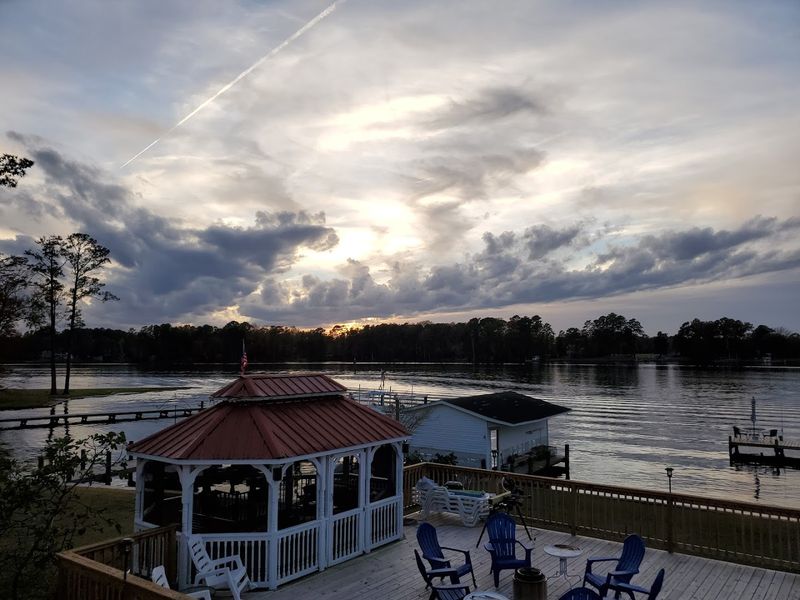
Most heavily promoted historic sites in the South come wrapped in infrastructure: admission gates, period-costumed interpreters, audio tours, souvenir shops, and carefully managed sightlines designed to keep you moving efficiently through the experience. Bath has none of that.
The streetscape is open and free, the river is right there, and the town simply exists without asking much of you in return.
That absence of staging is what makes Bath feel different from places that have been turned into products. There’s no version of Bath being sold to you — just the actual town, on an actual river, with actual 300-year-old buildings still standing in their original positions.
The lack of polish is a feature, not an oversight.
For anyone who has ever stood in a famous historic district and felt oddly disconnected from the history because of all the modern framing around it, Bath offers a genuinely different experience. The town just sits there on the water, the same way it largely has since 1705, and it asks only one thing: pay attention.