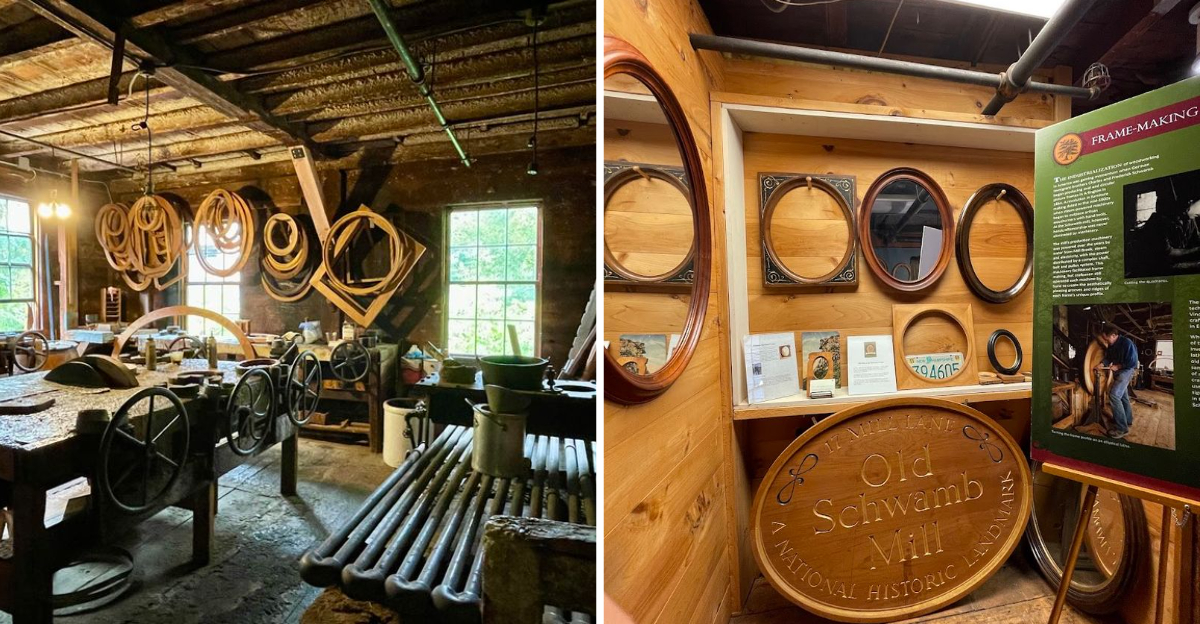
Tucked off a quiet Arlington lane, Old Schwamb Mill feels like the kind of place you could miss in seconds and remember for years. Inside, belts still turn, machines still work, and a centuries-long story keeps moving instead of sitting behind glass.
This is not just a preserved landmark – it is a rare working site where craftsmanship, local history, and everyday curiosity meet. If you like finding the kind of place that makes modern life suddenly feel very recent, keep reading.
A Side Street With 375 Years of Purpose
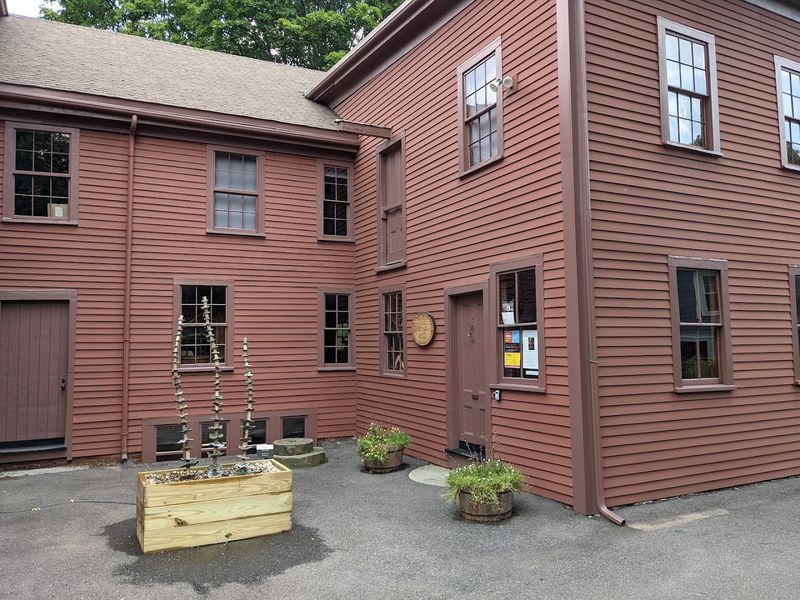
You could walk down Mill Lane in Arlington and never guess that one of the most important industrial survivals in the country is sitting right there. Old Schwamb Mill is recognized as the oldest continuously operating mill site in America, with activity on the property reaching back to the seventeenth century.
That fact lands differently when you realize this is not a grand museum complex with dramatic gates, but a modest building tucked into an ordinary neighborhood.
The setting is part of the appeal. Instead of feeling staged, the place feels woven into local life, which makes its long history even more impressive.
A gristmill once stood here, and documented operation stretches back to about 1684, giving the site a working identity that never really disappeared.
By the time the Schwamb brothers acquired it in the 1860s, the mill had entered a new chapter as a specialized frame-making shop. Their work connected the site to the rise of photography, portrait culture, and Victorian decorative taste.
That shift from grain to oval picture frames says a lot about how American industry adapted to changing demand.
Standing outside, you are not looking at a relic that stopped mattering. You are looking at a place that kept finding new reasons to stay useful.
The Machines Still Speak
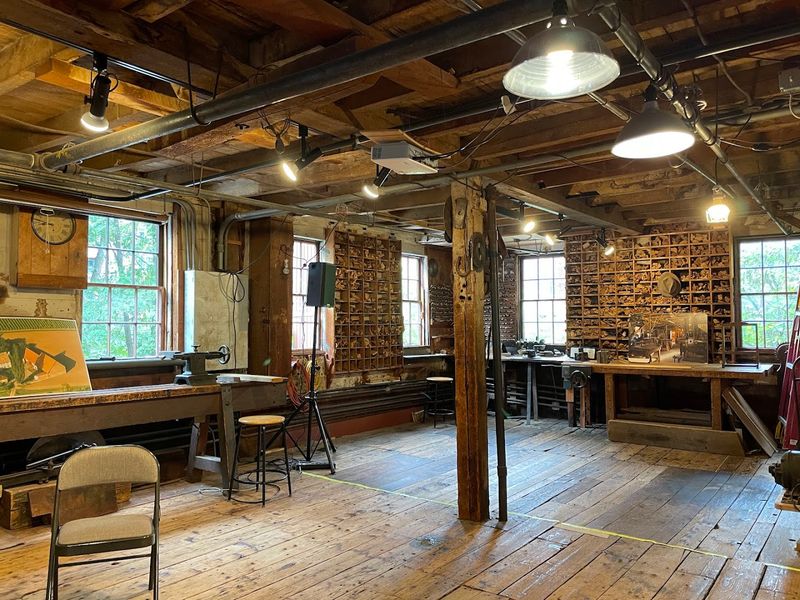
The first thing that grabs you inside is the machinery, because it does not look symbolic or decorative. Reviews repeatedly mention giant leather belts, pulley-driven equipment, and old woodworking tools that still run, which gives the mill an energy many historic sites simply cannot match.
Instead of reading about nineteenth-century production from a label, you get to see the physical logic of it in the room.
That matters because machines tell stories differently than documents do. Belts overhead, worn wooden floors, and specialized tools reveal how labor was organized long before digital controls and push-button convenience.
You can almost trace the motion from power source to finished object just by following the layout.
Several visitors describe the experience as something they had never seen anywhere else, especially when the lathe is in use. That reaction makes sense.
The shop preserves not only equipment, but also the relationship between craft, motion, noise, and precision that defined small-scale manufacturing in the late 1800s.
What stays with you is how practical it all feels. Nothing about the setup suggests nostalgia for its own sake.
The machines still communicate their purpose clearly, and that clarity is one reason the mill feels alive rather than merely old.
Why Oval Frames Changed Everything
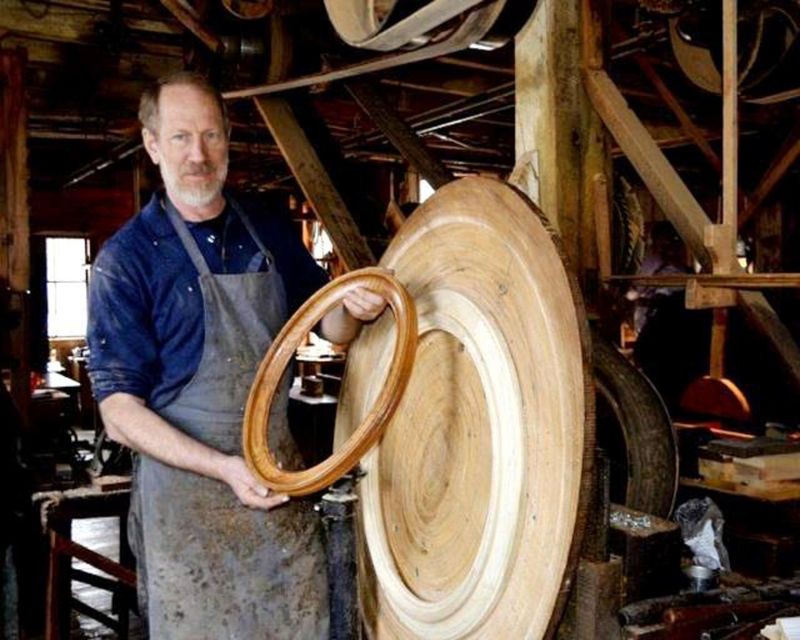
One of the most fascinating details here is that the mill became famous for something many people never think about anymore: oval and circular picture frames. After Charles and Frederick Schwamb bought the property in 1864, they turned the shop into a highly skilled woodworking operation producing frames that matched the era’s booming appetite for portrait photography.
Suddenly, the mill was tied to one of the most personal industries of the nineteenth century.
The timing could not have been better. As photography became more common during the Civil War era, families wanted keepsakes of loved ones, including soldiers who might never return home.
A carefully made oval frame in black walnut with a gold liner was not just decoration – it was part of how memory was displayed, protected, and honored.
That context gives the workshop real emotional depth. These were not anonymous industrial outputs tossed into a marketplace without meaning.
They entered homes, sat on mantels, hung on walls, and framed faces that mattered deeply to the people who bought them.
When you look at the mill through that lens, you are not simply seeing tools and lumber. You are seeing a business that helped Americans shape grief, pride, family identity, and remembrance in physical form.
A Visit Feels Personal, Not Packaged
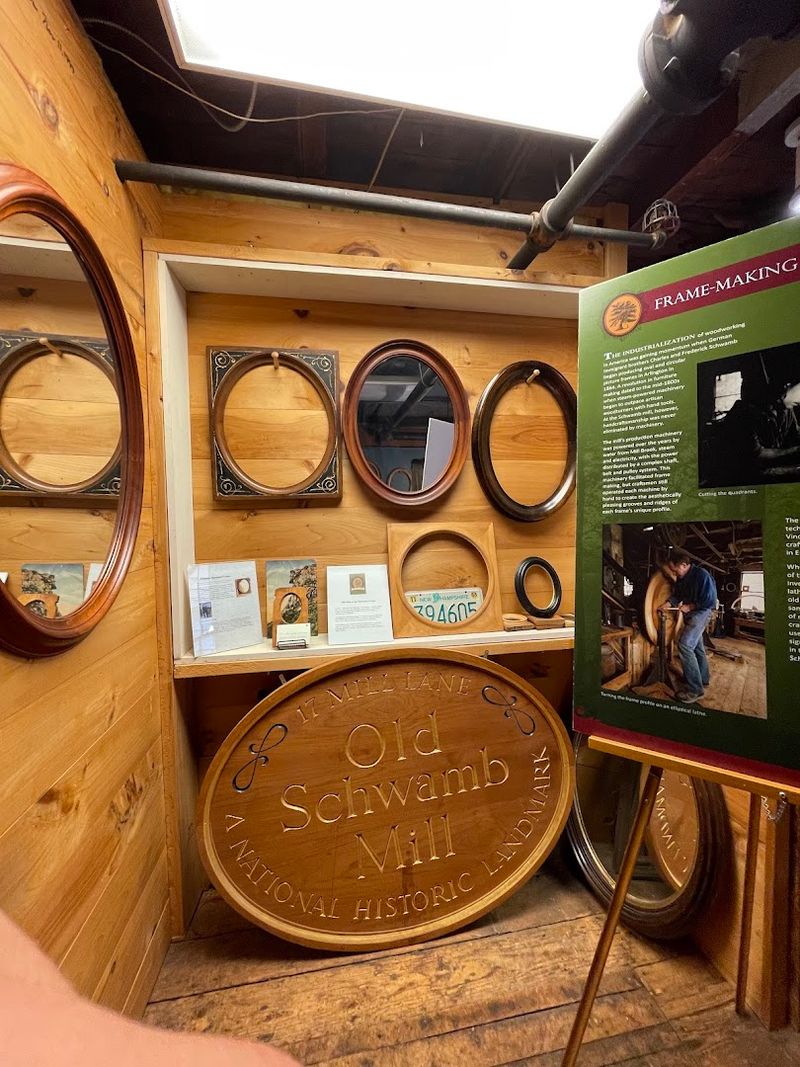
A big reason people leave impressed is that the visit feels human in scale. Reviews mention friendly guides, enthusiastic docents, and the sense that you are being welcomed into a place cared for by people who genuinely want you to understand it.
That creates a different experience from larger attractions where information can feel rehearsed and distant.
At Old Schwamb Mill, the interpretation is grounded in the building itself. Visitors talk about learning a lot, catching tours just as they start, and discovering rooms with details they would never have noticed on their own.
Even small moments, like ringing the bell at the door, seem to sharpen the feeling that you are entering a working historic site rather than a polished entertainment venue.
The personal approach also helps the complex history feel manageable. You do not need expert knowledge of industrial archaeology, decorative arts, or Arlington history to get something meaningful from an hour here.
A good guide can connect water power, machine belts, family business history, and surviving craftsmanship in a way that sticks.
That sense of conversation matters. It turns the mill from a fact-filled stop into a memorable encounter, the kind you end up describing later to someone who thinks there is nothing surprising left nearby.
More Than a Museum, Still a Working Place
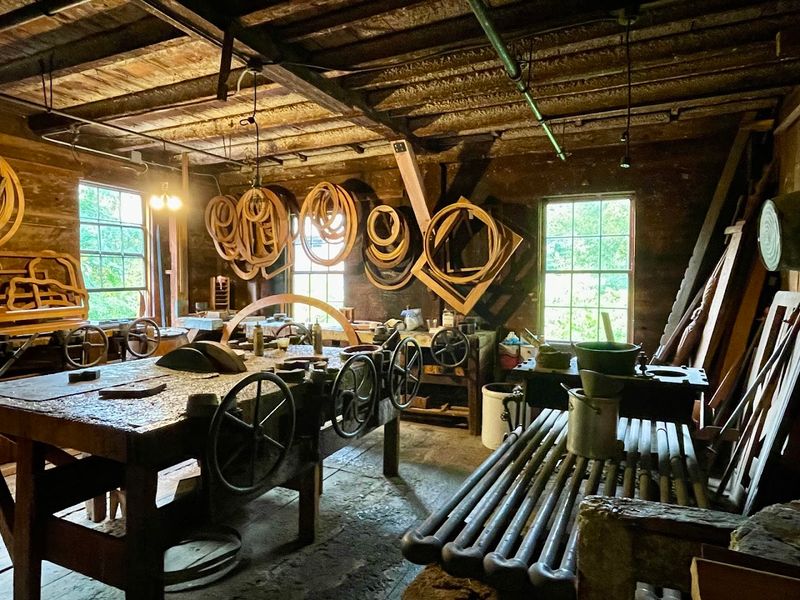
The phrase that best explains this site is simple: it still works. Multiple visitors note that custom picture frames are still made here today, which changes the entire meaning of preservation.
Instead of freezing the mill at a chosen date, caretakers have kept its original purpose legible by allowing craft and production to remain part of the story.
That continuity is rare and worth appreciating. Historic places often preserve objects, rooms, or facades, but fewer preserve process.
At Old Schwamb Mill, the surviving machinery, records, skills, and workshop layout make more sense because the site did not sever itself completely from the labor that defined it.
You can feel that in how people describe the building. They mention active tools, the possibility of seeing an artist at work, and the odd thrill of being surrounded by equipment from the late 1800s that is not merely resting in place.
A nonprofit now protects the mill, but the goal is clearly bigger than maintenance alone.
What you get is a living historical landmark, not a theatrical recreation. That difference matters because it keeps the site honest.
The mill is compelling not because someone invented an atmosphere, but because work, memory, and material culture still overlap there in a believable way.
Small Details Make the Place Stick
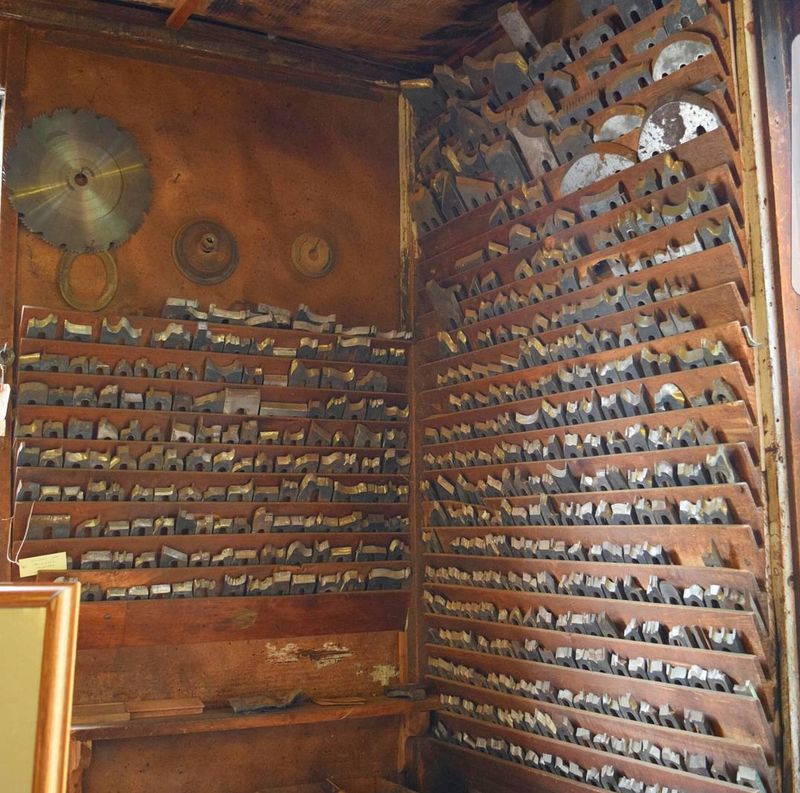
What lingers after a visit is often not the headline fact about age or rarity, but the small details. Reviews mention old paperwork, rooms full of character, floorboards that show their age, and even a memorable glue room that seems to have lodged itself in at least one visitor’s imagination.
Those observations tell you the mill is not sterile, and that is part of its power.
Historic texture can be hard to fake well, and here it does not need to be faked at all. Surviving surfaces, worn pathways, and specialized work areas show how the building earned its appearance over generations of use.
You are not looking at curated roughness designed to create atmosphere; you are seeing the marks left by actual production.
Even the cautions people share are revealing. This is an old building, and visitors are wise to watch their step and keep especially active children close.
That practical reality adds to the sense that the mill has been preserved with integrity instead of being remodeled into something smoother and less truthful.
The result is a place that rewards attention. If you read the walls, notice the tools, and take your time between rooms, the mill starts to feel less like a stop on an itinerary and more like a conversation with working history.
How to Plan a Smart Visit
If you want the best experience at Old Schwamb Mill, timing matters more than you might expect. Current public hours are limited, with regular opening times on Tuesday and Saturday from 10 AM to 4 PM, so checking the website before you go is a smart move.
One reviewer arrived during an unexpected closure for a private event, which is a useful reminder that small historic sites can run on flexible schedules.
Aim for a visit when demonstrations, tours, or special programs are happening. People especially recommend seeing the machinery in use, and several reviews mention community events, exhibits, music, and gallery offerings that add another layer to the trip.
This is the kind of place where a single hour can be satisfying, but a well-timed visit can give you much more.
The setting also makes it easy to treat the stop as a slow, local outing rather than a rushed checklist item. Some visitors mention shade, natural beauty, and even the appeal of lingering nearby.
Because the site is compact, you can pay close attention without feeling overwhelmed.
If you go in expecting spectacle, you may miss the point. If you go ready to notice craftsmanship, continuity, and quiet surprises, Old Schwamb Mill delivers exactly the kind of depth that side-street discoveries should.
Craft Survives Because People Show Up
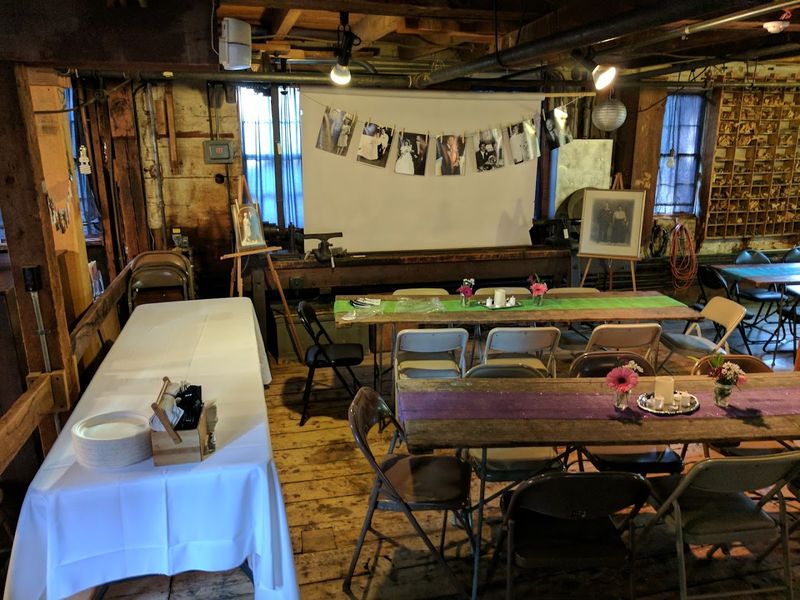
What makes this place feel hopeful is that the story did not survive by accident. For generations, local people kept deciding that the mill mattered, even when easier paths would have been to close it, clear it, or freeze it behind ropes.
That choice still shapes what you experience today.
You are not looking at a rescued shell dressed up to resemble usefulness. You are seeing a tradition carried forward by craftspeople, volunteers, and neighbors who understood that skills disappear when nobody practices them.
At Old Schwamb Mill, preservation works because participation never really stopped.
The Building Holds Its Own Memory
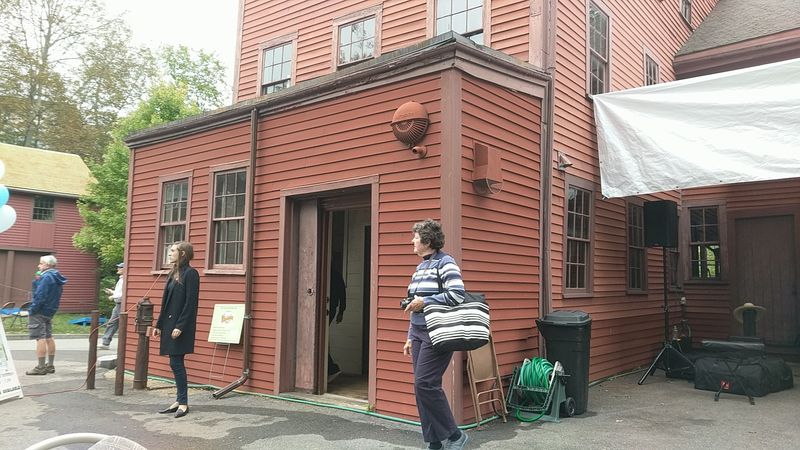
There is also something unusually moving about the building itself. The floors creak, the windows filter light softly, and the rooms seem to remember every adjustment made by the people who worked there before tourism was ever part of the picture.
Nothing feels overexplained, which is part of the charm.
You notice worn edges, practical layouts, and the kind of honest wear that no designer can fake. Instead of flattening history into a tidy exhibit, the mill lets age remain visible.
That honesty gives the whole visit a steadier emotional weight than many larger historic sites manage.
A Quiet Landmark That Feels Larger
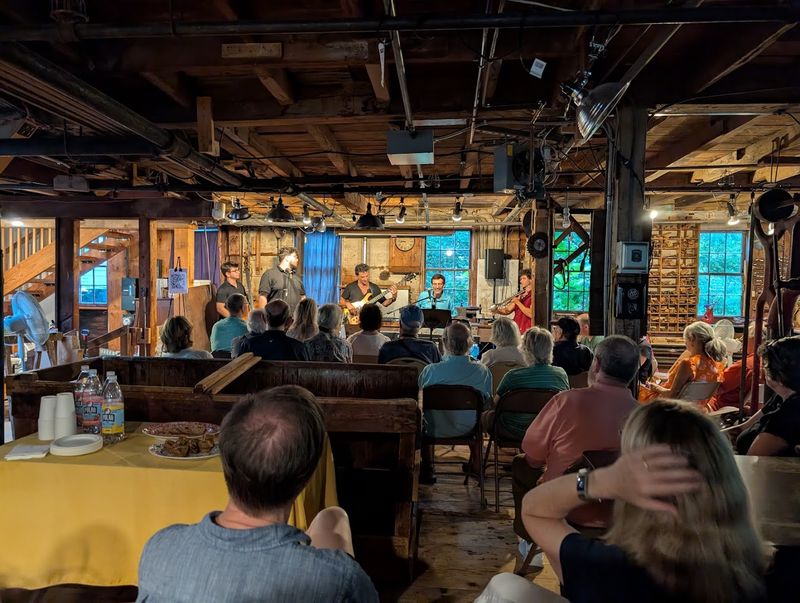
What stayed with me most is how modest the whole setting remains. In a country that often celebrates industrial history through giant complexes and dramatic ruins, this small mill on an Arlington side street makes its case quietly, almost stubbornly, through continuity.
It never needed grandeur to be important.
That is why the site feels bigger after you leave than it does when you arrive. You start to understand that American history was built as much in compact workshops as in famous factories.
Old Schwamb Mill turns that idea into something you can hear, see, and feel in real time.