Behind some of New York’s busiest streets are quiet sanctuaries where the echoes of centuries still linger. Inside these churches, carved wood, stained glass, and worn stone tell stories of changing neighborhoods, historic moments, and the people who shaped the city.
Across New York, historic churches preserve a side of the state that is often overlooked. From grand city landmarks to smaller community treasures, these buildings reveal connections to immigration, architecture, and the events that transformed New York over generations.
A visit to these churches offers more than a beautiful space to explore. It is a chance to slow down, look closer, and discover the history held within their walls.
Join us as we explore 12 New York churches where remarkable stories, stunning details, and unforgettable moments await around every corner.
Trinity Church NYC
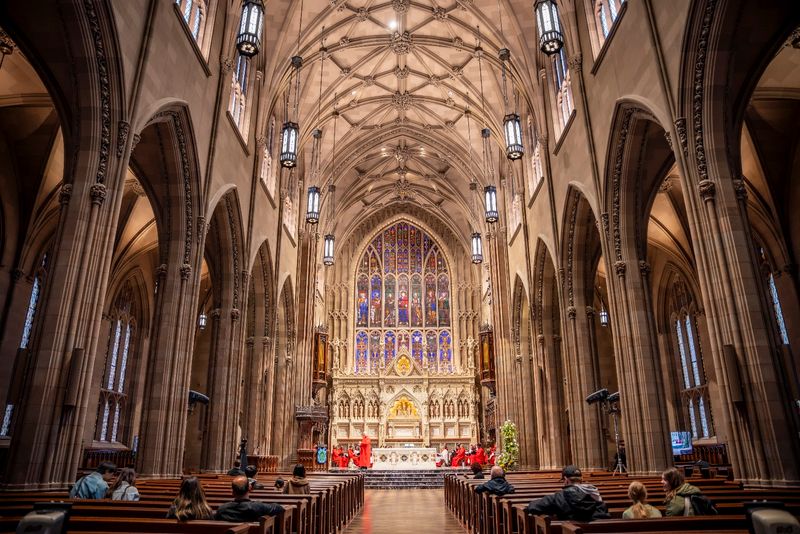
At the edge of rushing Lower Manhattan, a surprising calm settles in behind old stone walls and leaning grave markers. The noise of Broadway fades fast, and the sharp spire seems to pull your eyes upward before you even reach the door.
That feeling is part of what makes Trinity Church NYC so memorable. Built in 1846, it stands near Wall Street like a witness to centuries of change.
The churchyard holds the grave of Alexander Hamilton, which gives many visitors a real connection to early American history beyond anything learned in school.
Step inside and the city feels far away. Sunlight moves across stained glass, and the carved details reward slow looking.
After your visit, linger in the yard and read a few headstones. It turns a quick stop into a richer story about New York, power, memory, and the people who shaped it.
St. Paul’s Chapel
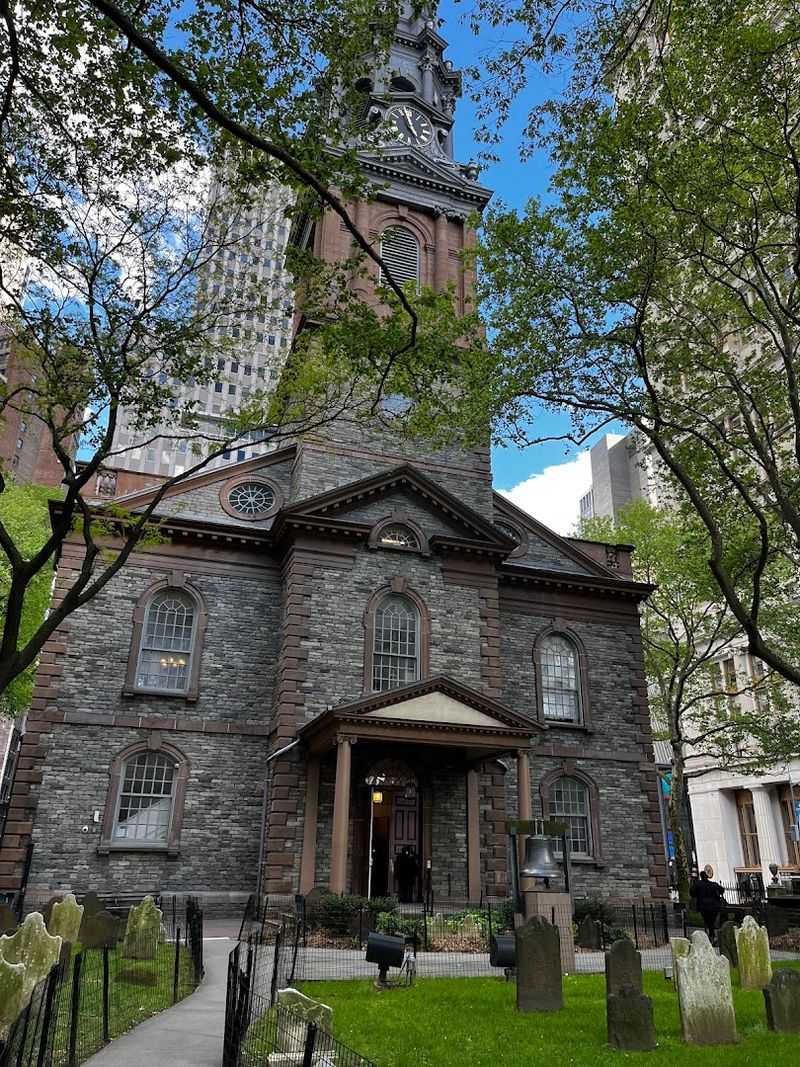
Quiet can feel powerful in a city that rarely slows down. Near the crowds and traffic of lower Broadway, St. Paul’s Chapel offers that rare stillness, the kind that makes people lower their voices without being asked.
Completed in 1766, it is Manhattan’s oldest surviving church building, and its age shows in the best way. George Washington worshiped here after his inauguration, and centuries later the chapel became a relief center for rescue workers after September 11.
That history gives the space a weight you can feel.
Inside, the wooden pews and pale light create a simple, steady beauty. Displays connected to the recovery effort add another layer that many visitors do not expect.
Give yourself time to read them carefully. A stop at St. Paul’s Chapel is worthwhile because it joins colonial New York, national memory, and human kindness in one small place.
St. Patrick’s Cathedral
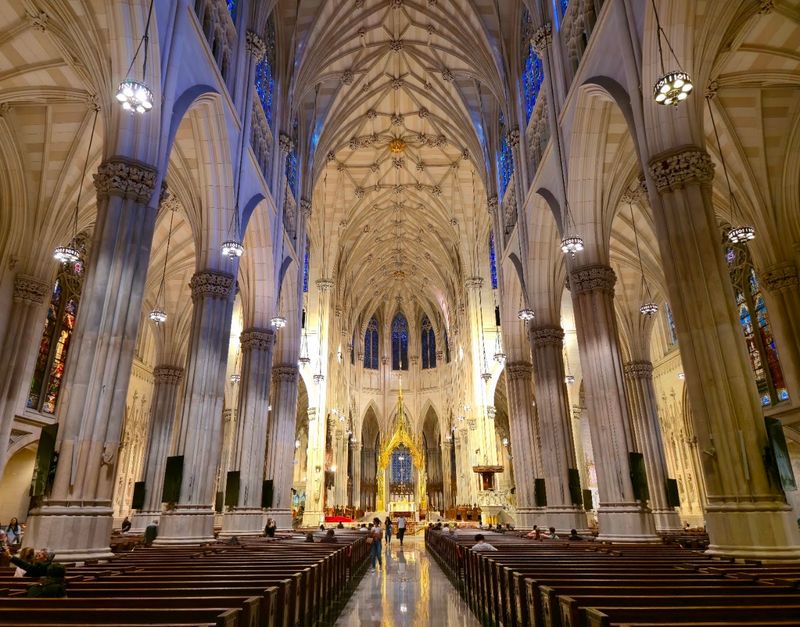
Few moments in Midtown feel as dramatic as turning a corner and seeing tall white spires rise above the stores and traffic. For a second, the shopping crowds and shiny windows around Fifth Avenue seem to fall away.
That contrast is part of the magic at St. Patrick’s Cathedral. Opened in 1879, it became one of New York’s best known religious landmarks, and its Neo Gothic design still feels grand today.
Marble columns, colorful stained glass, and a long central aisle make the interior feel larger than the city outside.
Even visitors who know it from postcards are often surprised by the quiet inside. Light flickers near prayer candles, and the side chapels invite slower attention.
Try visiting early in the day, when the space feels gentler and less crowded. St. Patrick’s is worth your time because it reveals calm, beauty, and history in the middle of modern Manhattan.
The Basilica of St. Patrick’s Old Cathedral
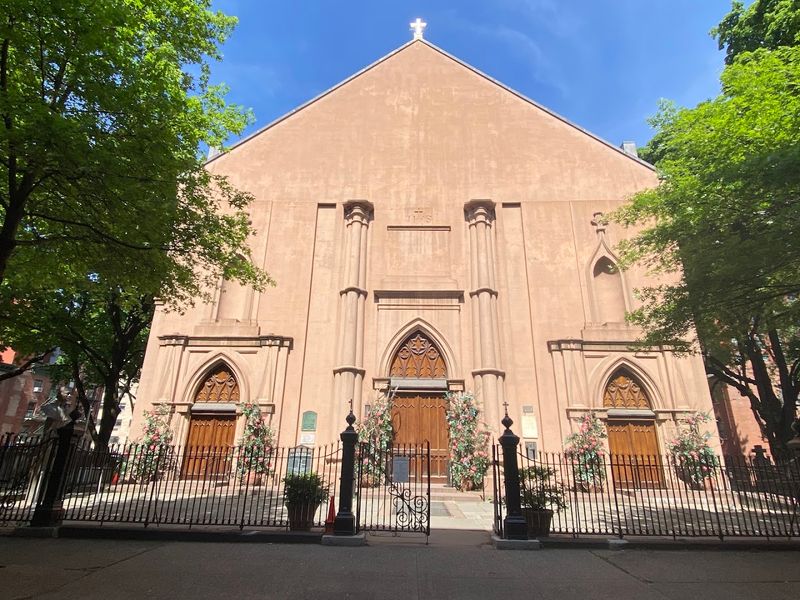
On a lively downtown block filled with restaurants, chatter, and passing delivery bikes, an older New York waits behind iron fencing and weathered walls. The change in mood is immediate, almost like stepping into a hidden chapter.
The Basilica of St. Patrick’s Old Cathedral opened in 1815 and once served as the city’s first Catholic cathedral. Its story is tied to immigrant families, neighborhood struggles, and the growth of Catholic life in New York.
The catacombs below add a rare, almost mysterious layer that sets this church apart from many others.
Mulberry Street is fun for a meal before or after, which makes the visit feel even more rooted in local history. Inside, the church balances elegance with a lived in feeling, not museum polish.
Look closely at the memorials and worn details. They remind you that faith, fear, and family all helped build the city around it.
Cathedral of St. John the Divine
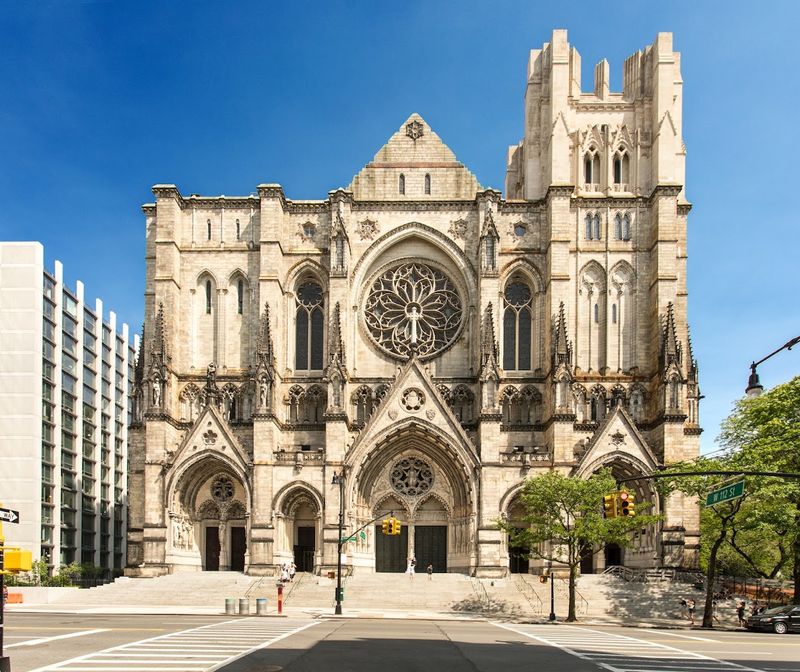
Scale hits you first here. The doors, the arches, the long stone spaces all seem built to make everyday worries feel smaller, and that reaction begins before you even understand what you are looking at.
The Cathedral of St. John the Divine, begun in 1892, is one of the largest churches in the world, and its mixed Romanesque and Gothic design gives it a special personality. Nothing feels tiny or rushed.
Wide aisles, huge columns, and glowing windows encourage you to wander slowly and notice changing textures, shadows, and sound.
The neighborhood around Morningside Heights adds to the experience, especially if you pair your visit with a walk near Columbia University or a stop in the nearby gardens. Inside, look for the details that show the building’s unfinished story.
That sense of becoming, not just being complete, is one reason the cathedral stays with visitors long after they leave.
St. Bartholomew’s Church
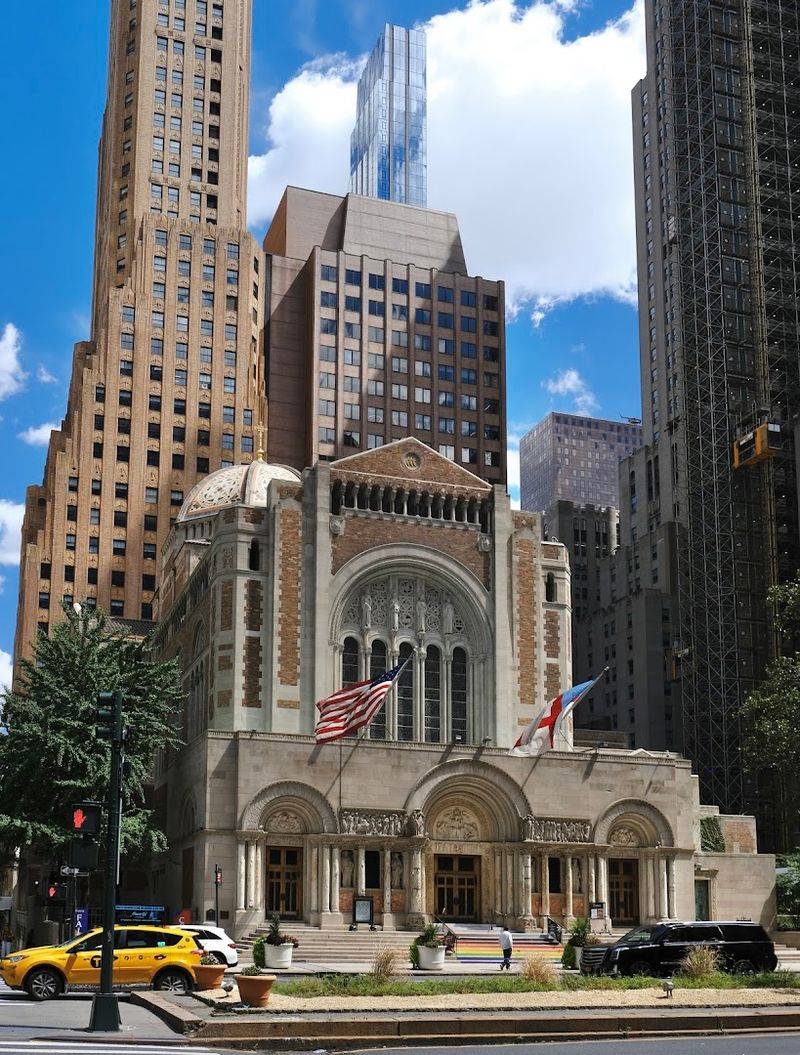
Park Avenue can feel polished and fast, full of office towers, taxis, and people hurrying to appointments. Then a richly carved entrance appears, and the mood changes from businesslike to almost ceremonial in a few steps.
St. Bartholomew’s Church, often called St. Bart’s, opened in its current form in 1918 and brings a different style to the city’s church landscape. Its impressive entrance was preserved from an earlier building, and the interior offers warm colors, mosaics, and a broad sense of space that feels both formal and welcoming.
What makes a visit rewarding is the way the church holds its own in one of Manhattan’s sleekest settings. The contrast sharpens your attention.
Sit quietly for a few minutes, then notice the craftsmanship around the altar and ceilings. Afterward, stepping back onto Park Avenue feels different, as if the city has briefly shown a softer, older face beneath its polished surface.
Marble Collegiate Church
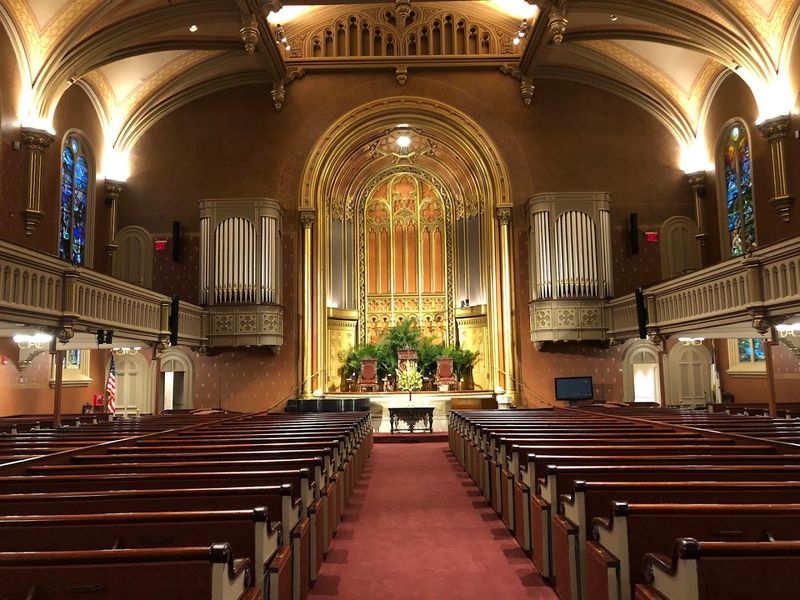
Not every historic place announces itself with huge size or dramatic silence. Some win you over more gently, with the feeling that many generations have gathered there and left a quiet warmth behind.
Marble Collegiate Church has that kind of presence. The current building dates to 1854, but the congregation reaches back to 1628, making it one of the oldest continuously worshiping groups in North America.
That long history gives the church a strong sense of continuity, even as the neighborhood around Twenty Ninth Street keeps changing.
The marble exterior is handsome, but the real pleasure comes from thinking about how many different eras have passed through the same doors. Nearby Koreatown adds another layer, and grabbing a snack after your visit makes the stop feel tied to today’s city as well as the old one.
Marble Collegiate rewards people who enjoy stories about endurance, community, and the long life of New York itself.
Grace Church
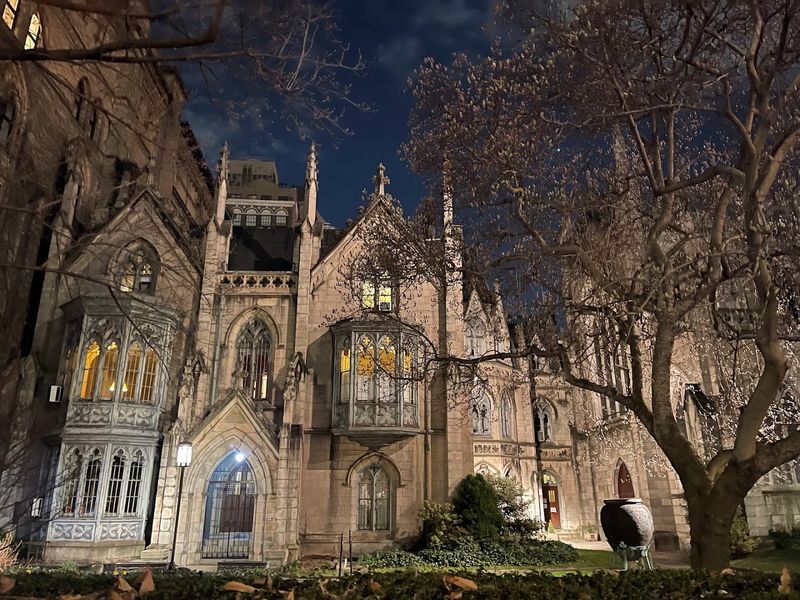
There is something almost storybook about finding a Gothic church along busy Broadway. Trees, stone, and pointed arches soften the surrounding movement, and suddenly the block feels less like a rush route and more like a place to pause.
Grace Church, completed in 1846, was designed by James Renwick Jr., the same architect linked to St. Patrick’s Cathedral. Its stained glass, carved stone, and carefully preserved Gothic Revival design make it one of Manhattan’s most beautiful historic churches.
Even people who visit mainly for architecture often leave talking about how balanced and peaceful the whole place feels.
Set aside time to walk around the exterior before going in. The details are easier to appreciate from different angles, especially when light catches the stonework.
Union Square is nearby, so the church fits well into a longer neighborhood walk. Grace Church is worth visiting because it offers visual beauty, city history, and a calm rhythm that feels rare on Broadway.
The Church of the Transfiguration
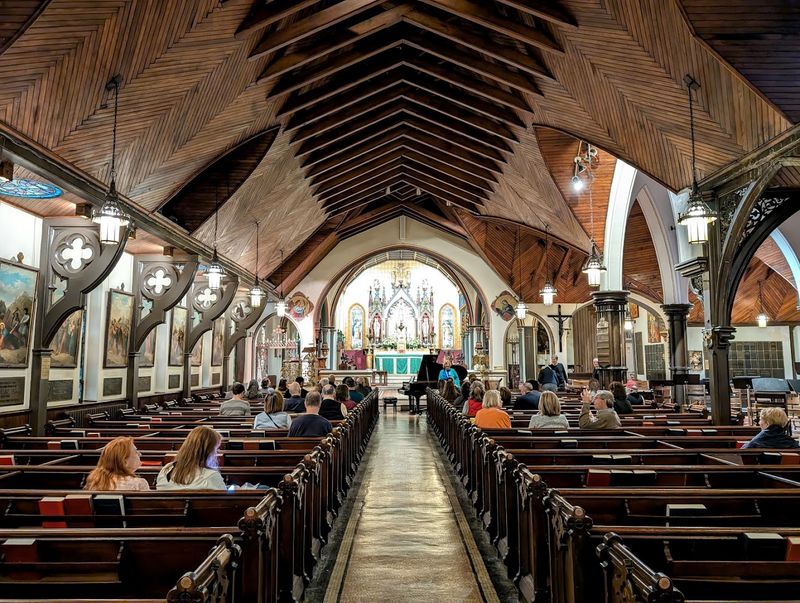
Some places feel beloved before you even know why. Hidden among taller buildings, this church carries a gentle charm that seems to invite curiosity, as if the city has been keeping a small secret in plain sight.
The Church of the Transfiguration, often called The Little Church Around the Corner, was built in 1849 and became famous for welcoming actors and artists when other churches would not. That open spirit is a big part of its story.
The building itself feels intimate rather than grand, which makes its history even more appealing.
Look around carefully and you may notice how the church seems to create its own pocket of quiet within busy Midtown. The nickname alone gives it character, but the deeper value comes from what it represented: hospitality.
If you are exploring nearby NoMad or heading toward Madison Square, this stop fits easily into the day. It stays memorable because kindness is built into its legend.
The Church of St. Mary the Virgin
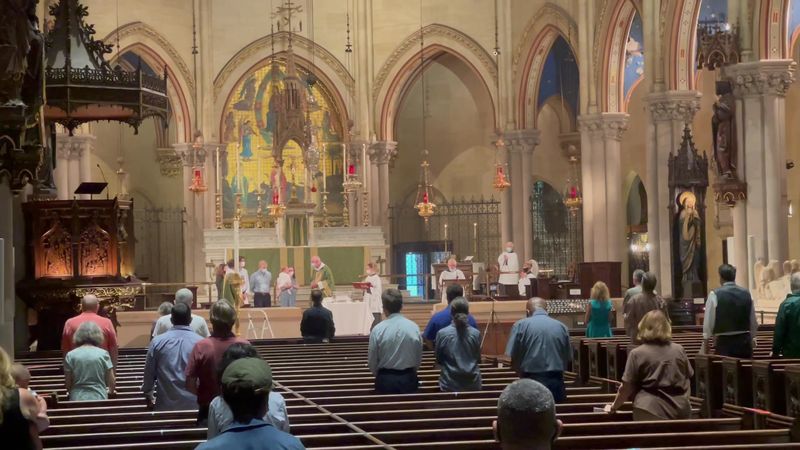
Just when the Theater District feels loudest, a doorway opens into shadow, color, and the faint glow of candles. The shift is so sudden that it can feel almost theatrical, though the mood inside is more reverent than dramatic.
The Church of St. Mary the Virgin was completed in 1895 and is known for its Anglo Catholic traditions and richly detailed Gothic interior. Ornate carvings, stained glass, and the deep visual focus around the altar make the sanctuary feel layered and solemn.
It is the kind of place where texture and ritual seem closely connected.
Because it sits near bright marquees and crowded sidewalks, the church offers one of the strongest contrasts on this list. Visit with time to sit quietly and let your eyes adjust.
Small details appear slowly. A stop here can pair well with dinner in the area, yet the church itself remains the most lasting part.
It gives Midtown a deeper, more reflective dimension.
St. Peter’s Roman Catholic Church
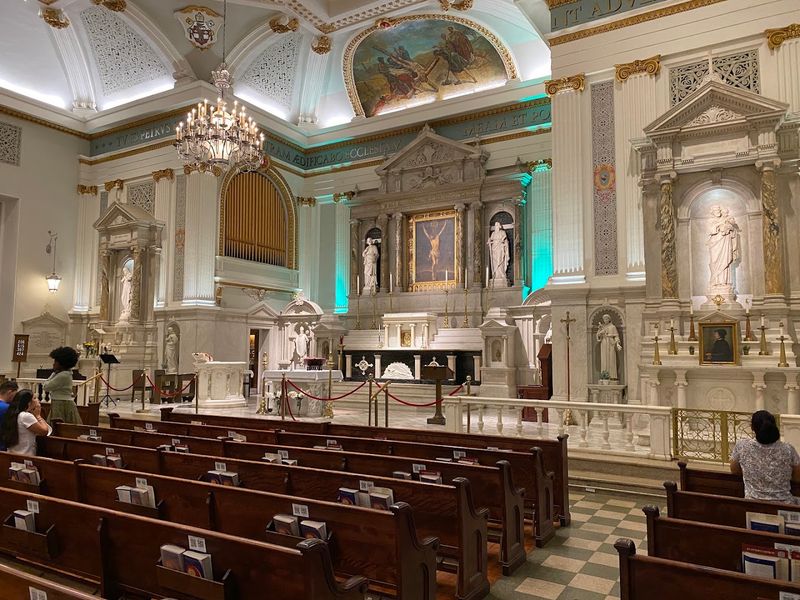
History can hide in plain sight downtown. Near government buildings, office workers, and rushing lunchtime crowds, an older rhythm survives behind church doors that have welcomed New Yorkers for generations.
St. Peter’s Roman Catholic Church, with its present building dating to 1838, stands close to City Hall and the Financial District. That location matters because it places the church right inside one of the busiest and oldest parts of Manhattan.
Over time, it has served immigrants, workers, families, and visitors moving through a constantly changing district.
The church may not grab attention as loudly as some larger landmarks, but that is part of its appeal. It feels rooted and dependable.
If you are already exploring lower Manhattan, add a short stop here and notice how the surrounding streets sharpen its historic value. Looking from the church back toward modern office buildings tells its own story about endurance, faith, and the many lives folded into downtown New York.
Church of the Ascension
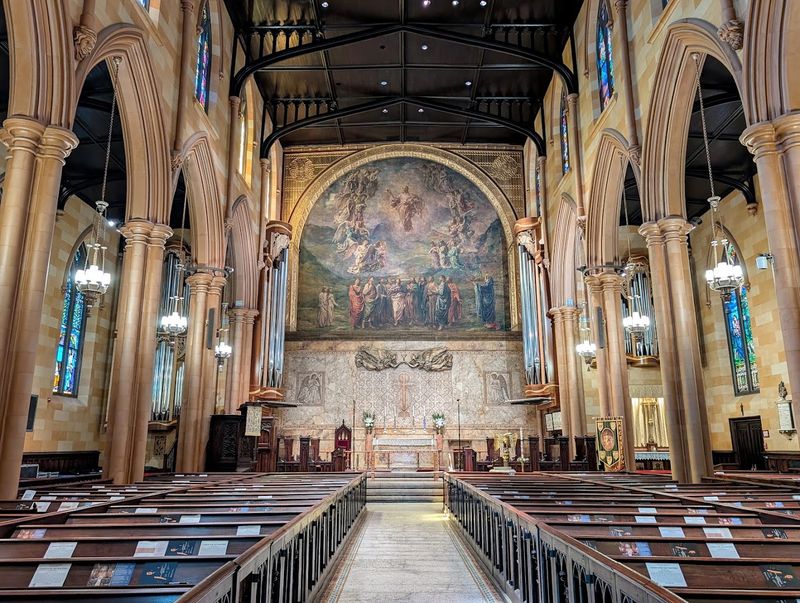
Some church interiors feel quiet at first and unforgettable a few minutes later. Your eyes adjust, details begin to emerge, and then a single work of art can suddenly change the whole visit.
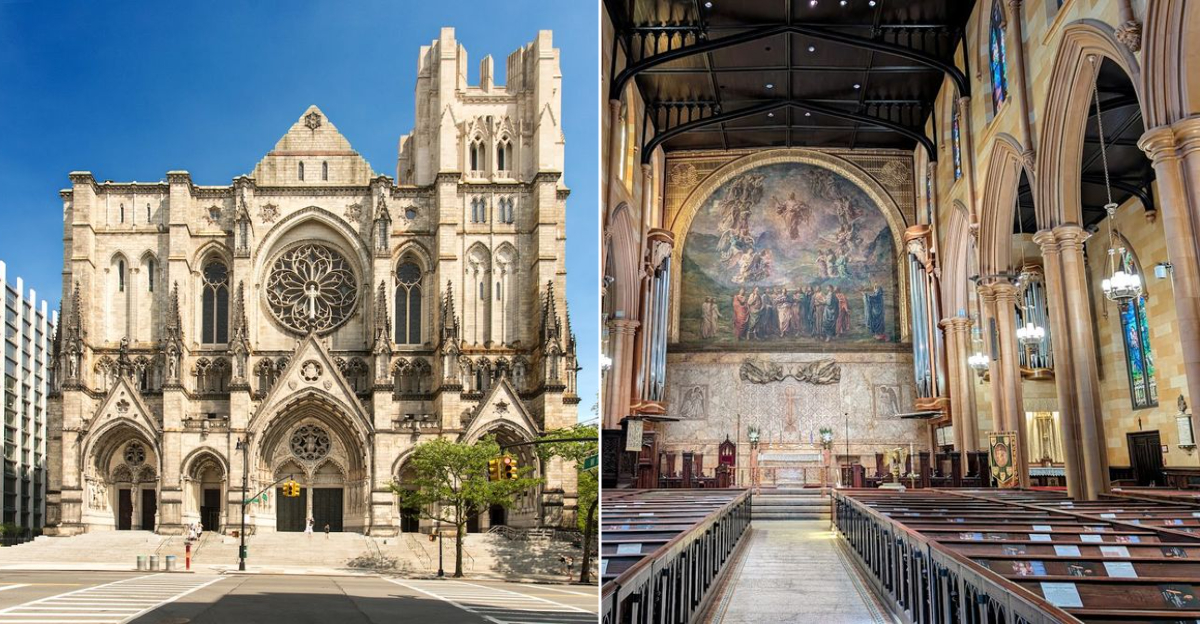
That is often the experience at the Church of the Ascension in Greenwich Village. Built in 1841, it is admired for its graceful Gothic design and for the major mural by John La Farge, a work many consider one of the finest church artworks in America.
The sanctuary has height and dignity, but it also feels thoughtful rather than overpowering.
The surrounding Village streets make a pleasant approach, especially if you enjoy slower neighborhood walking. Cafes, old townhouses, and shaded blocks set the tone before you arrive.
Once inside, give special attention to color and light, not just architecture. The church is worth visiting because it connects art, worship, and city history in a way that feels intimate, learned, and deeply human.