
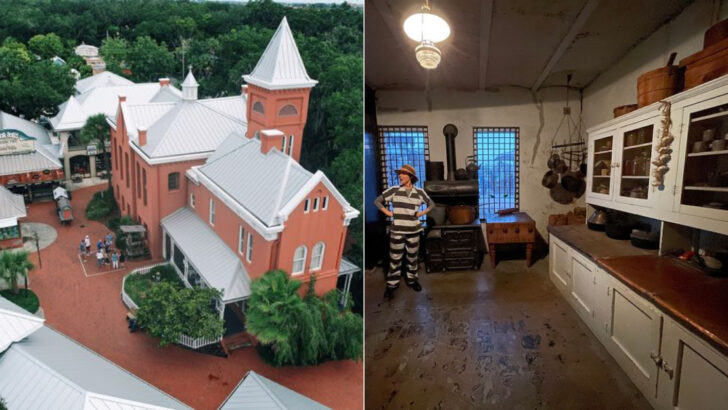
Hidden in plain sight along San Marco Avenue in St. Augustine, Florida, stands a building that looks more like a cozy Victorian home than a place where criminals once sat behind iron bars. Built in 1891 by the same company responsible for the infamous Alcatraz, the Old Jail Museum is one of America’s most fascinating and overlooked historical treasures.
For over 60 years, this compact structure served as St. Augustine’s working county jail, and today visitors can walk through its original cells, hear gripping stories from costumed guides, and get a real feel for what life was like behind bars more than a century ago. Whether you love history, ghost stories, or just a truly unique outing, this place delivers something unforgettable.
The Pauly Jail Building Company Connection to Alcatraz

Not many buildings can claim a direct bloodline to one of the most notorious prisons in American history, but the Old Jail Museum in St. Augustine proudly holds that distinction. The Pauly Jail Building Company of St. Louis, Missouri, was the contractor behind both this Florida jail and the legendary Alcatraz Island Federal Penitentiary.
That shared origin story gives the Old Jail a level of historical credibility that very few museums can match.
The Pauly Company was known for constructing strong, secure facilities during the late 1800s, and their work in St. Augustine reflects that same commitment to durability. The iron cell doors, reinforced walls, and overall layout were all designed to keep even the most dangerous prisoners contained.
Over 130 years later, much of that original construction still stands and remains accessible to the public.
Walking through these cells, you are literally touching the same craftsmanship that shaped American prison history. For history lovers and curious visitors alike, this connection alone makes the Old Jail worth a stop.
Knowing the same hands and blueprints that built Alcatraz also shaped this modest Florida building adds a layer of meaning that is genuinely hard to find anywhere else in the country.
Henry Flagler Funded the Jail to Protect His Hotel’s Image
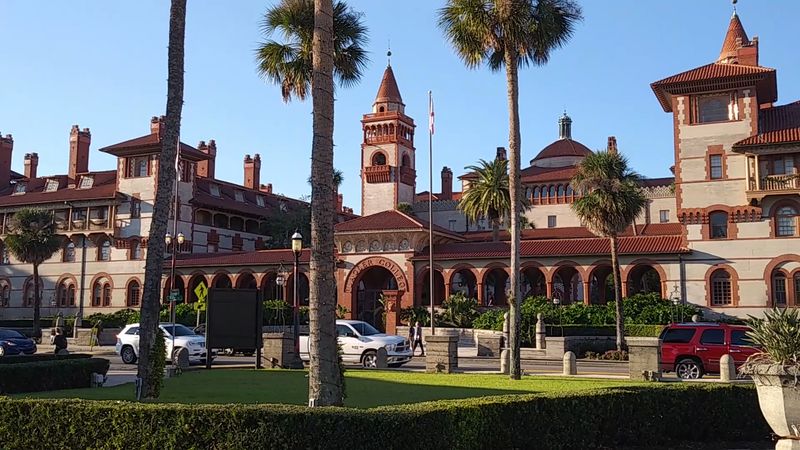
Here is a detail that sounds almost too quirky to be true: one of America’s wealthiest industrialists paid to build a jail because he did not want an ugly prison ruining the view near his luxury hotel. Henry Flagler, the Standard Oil co-founder who essentially built modern Florida, was developing his spectacular Hotel Ponce de Leon just down the road when he decided the existing county jail was an eyesore that could scare away wealthy tourists and investors.
His solution was both clever and generous. Flagler financed the construction of the new jail at 167 San Marco Avenue and insisted it be designed in the Romanesque Revival architectural style so it would blend in with the surrounding neighborhood.
From the outside, the building genuinely looks like a charming, well-kept home rather than a place of incarceration. Tourists walking by would never guess what was happening inside.
This backstory adds a wonderfully ironic twist to every tour. Flagler wanted beauty and prosperity for St. Augustine, and his investment in a disguised jail actually preserved an authentic piece of history for generations to come.
Without his vanity-driven decision, this remarkable building might never have been built to last the way it did.
The Romanesque Revival Architecture That Fooled Everyone
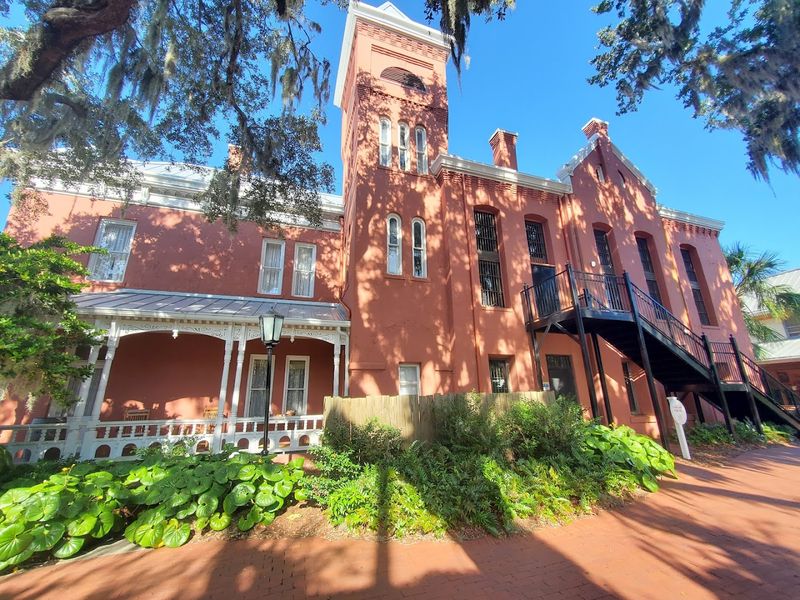
Pull up to 167 San Marco Avenue and you might spend a moment double-checking the address. The Old Jail does not look like a jail at all.
Its Romanesque Revival design features warm brick walls, rounded archways, and decorative details that make it appear far more like a comfortable family home than a correctional facility. That was entirely intentional, and it worked beautifully for decades.
Romanesque Revival was a popular architectural style in the late 19th century, often used for churches, courthouses, and civic buildings. Using it for a jail was an unusual choice, but Flagler’s influence meant the building had to meet a higher aesthetic standard than a typical county lockup.
The result is a structure that feels almost welcoming from the street, which makes the contrast of stepping inside all the more striking.
Visitors often say the moment they cross the threshold is when the experience really begins. The cheerful exterior gives way to iron bars, narrow corridors, and cramped cells that tell a very different story.
That architectural tension between outside charm and inside harshness is part of what makes touring the Old Jail such a memorable and thought-provoking experience for guests of all ages.
The Sheriff’s Family Quarters Located Right Inside the Jail
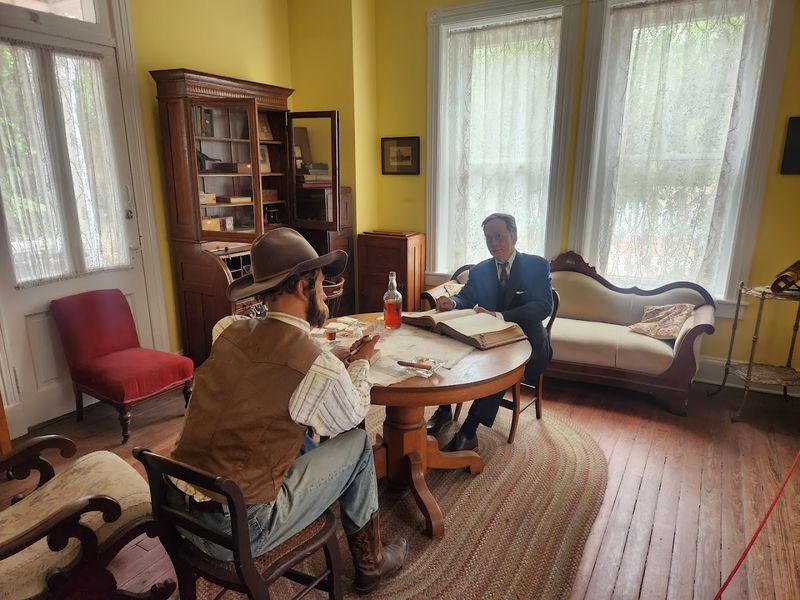
One of the most jaw-dropping surprises waiting inside the Old Jail is the discovery that the county sheriff and his entire family actually lived inside the building alongside the prisoners. Not in a separate wing across town, not in a comfortable house nearby, but right there, separated from the inmate population by just a hallway and a set of iron bars.
It is the kind of detail that stops visitors mid-step.
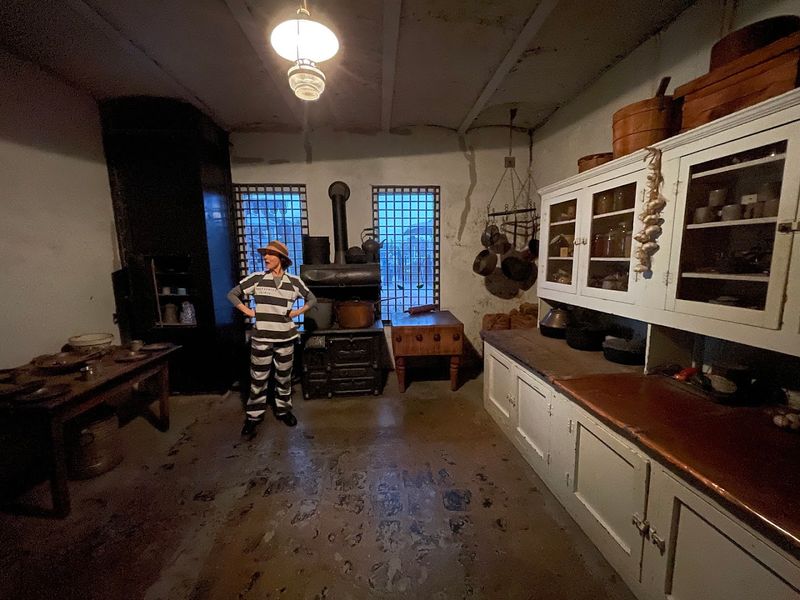
The sheriff’s quarters were designed to be functional and reasonably comfortable, with a kitchen, sitting area, and sleeping spaces. The family was essentially on call around the clock, with the sheriff responsible for maintaining order at all hours.
His wife often helped manage the facility as well, including preparing meals for the prisoners. Life inside those walls was never truly private for anyone involved.
Seeing the family spaces right across from the cells creates a powerful emotional contrast during the tour. Costumed guides do a wonderful job of explaining what daily life felt like for both the sheriff’s household and the inmates just steps away.
Reviewers frequently mention this detail as one of the most surprising and memorable parts of the entire visit, and it is easy to understand why once you see it in person.
The Maximum Security and Women’s Cell Sections
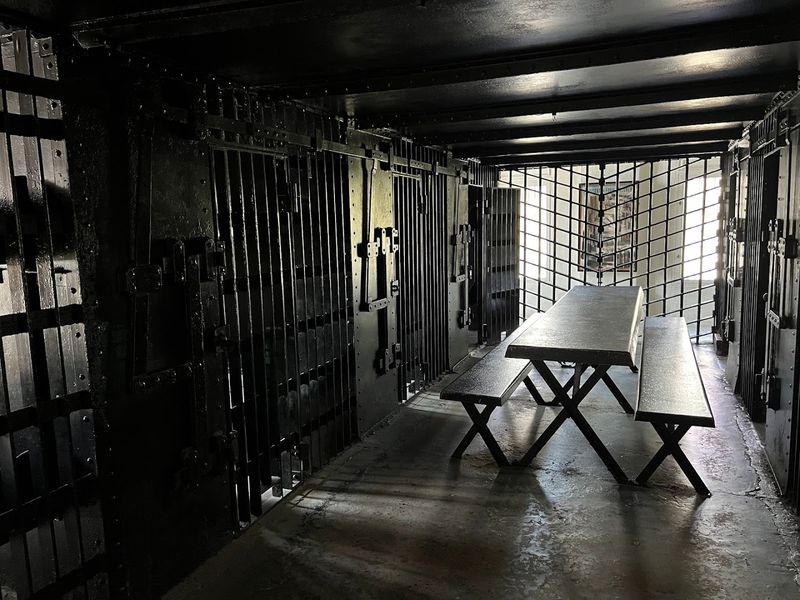
Not all prisoners at the old St. Johns County Jail were treated equally, and the building’s layout makes that clear the moment you start moving through its sections. The maximum security area housed the most dangerous inmates in conditions that were genuinely brutal by any standard.
Small, dark, and suffocatingly cramped, these cells give modern visitors a sobering look at how the justice system operated in the late 19th and early 20th centuries.
The women’s section tells its own distinct story. Female prisoners were housed separately, but their conditions were far from comfortable.
The space is noticeably smaller than the men’s sections, and the overall setup reflects how little thought was given to the specific needs of women in the criminal justice system of that era. Guides handle this history with care and context, making it educational rather than exploitative.
Walking through both areas back to back creates a vivid picture of a system built on hierarchy and harsh discipline. Many visitors leave these sections with a deeper appreciation for modern prison reform conversations.
The Old Jail does not shy away from the difficult parts of its past, and that honesty is exactly what transforms a simple museum visit into something genuinely meaningful and worth discussing long after you leave.
Costumed Actor Guides Who Bring the History to Life
Ask any visitor what made their trip to the Old Jail unforgettable, and the answer almost always comes back to the guides. Unlike traditional museum docents reading from a script, the Old Jail uses costumed actors who fully inhabit characters from the jail’s actual history.
Some play inmates, others step into the role of the sheriff or deputies, and every single one brings remarkable energy and knowledge to the experience.
Guides like Lizzie, Patrick, Viola, Cornelius, and Johnny P have earned enthusiastic praise in countless reviews for their ability to balance humor, compassion, and historical accuracy. They keep audiences engaged without dumbing down the difficult parts of the story.
Several reviewers noted that guides noticed language barriers or special occasions like birthdays and anniversaries and went out of their way to make those moments extra special.
Tours run approximately 30 minutes and depart every 15 to 20 minutes throughout the day, so you rarely have to wait long to get started. The interactive format means guests can ask questions freely and sometimes even get pulled into the action themselves.
One reviewer hilariously recalled being put in a cage and dubbed a jail bird during the tour. That kind of playful immersion is exactly what sets this experience apart from a standard history lesson.
One of the First Fingerprint Kits on Display in America
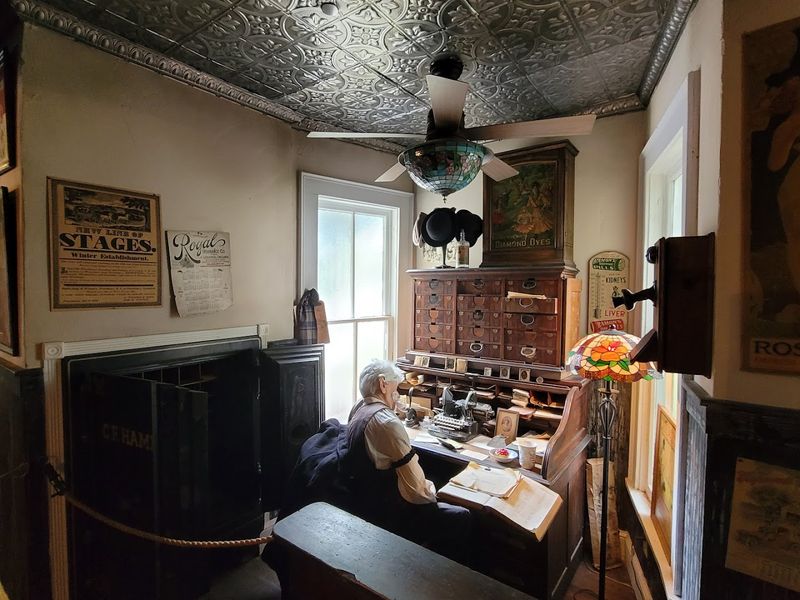
Tucked among the exhibits at the Old Jail Museum is a detail that tends to catch visitors completely off guard: one of the earliest fingerprint identification kits used in American law enforcement. At a time when forensic science was still in its infancy, the use of fingerprinting represented a genuinely revolutionary leap forward in how criminals were identified and tracked.
Seeing the actual equipment up close makes that history feel remarkably tangible.
Fingerprinting as a formal identification method was only beginning to gain traction in the United States around the turn of the 20th century. The fact that a small county jail in St. Augustine was using this technology speaks to how seriously law enforcement in the region took its responsibilities.
It also adds a fascinating layer of scientific history to what might otherwise feel like a purely architectural or social experience.
Visitors who love true crime, forensic science, or the history of law enforcement tend to be especially delighted by this exhibit. It serves as a reminder that the Old Jail was not just a place of confinement but also a working hub of early criminal justice innovation.
Details like this are what elevate the museum beyond a simple walk-through and turn it into a genuinely rich educational stop worth every minute of your time.
Over 60 Years as a Working County Jail
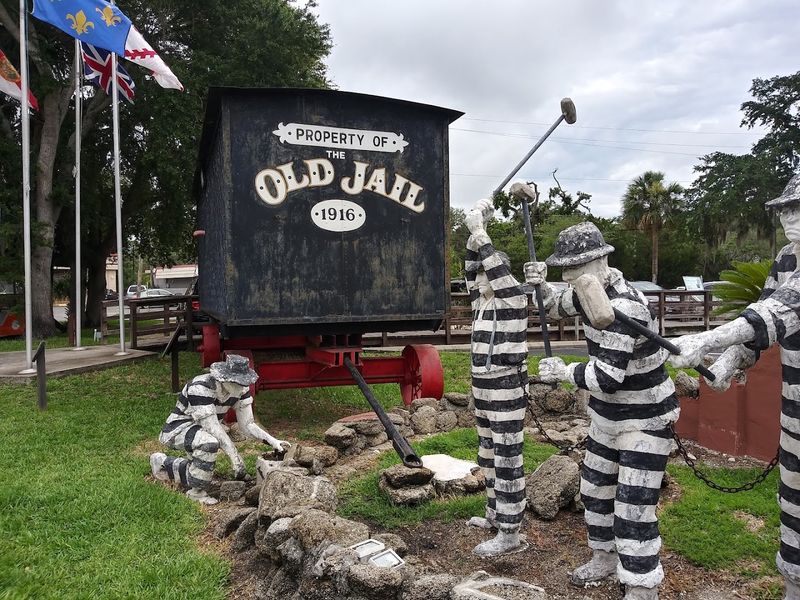
From 1891 all the way through the 1950s, the building at 167 San Marco Avenue was not a tourist attraction or a museum. It was a real, functioning county jail where real people were held, tried, and sometimes executed.
That uninterrupted span of over six decades means the walls of this building absorbed an enormous amount of human experience, both heartbreaking and dramatic, that guides work hard to honor and convey accurately.
During those years, the jail housed everyone from petty thieves to murderers, reflecting the full spectrum of crime and punishment in a rapidly growing Florida city. St. Augustine itself was changing dramatically during this period, shaped by tourism, racial tensions, and the economic ambitions of figures like Henry Flagler.
The jail sat at the center of all those social forces, making it a surprisingly rich window into regional history.
Understanding that this was not a staged replica but an actual working institution gives the tour an added emotional weight. The cells, the locks, the kitchen where the sheriff’s wife cooked meals, all of it was used by real people navigating real circumstances.
That authenticity is something no reconstruction could replicate, and it is a big part of why the Old Jail continues to earn such strong reviews from visitors year after year.
The Old Jail After Dark Ghost Tour Experience
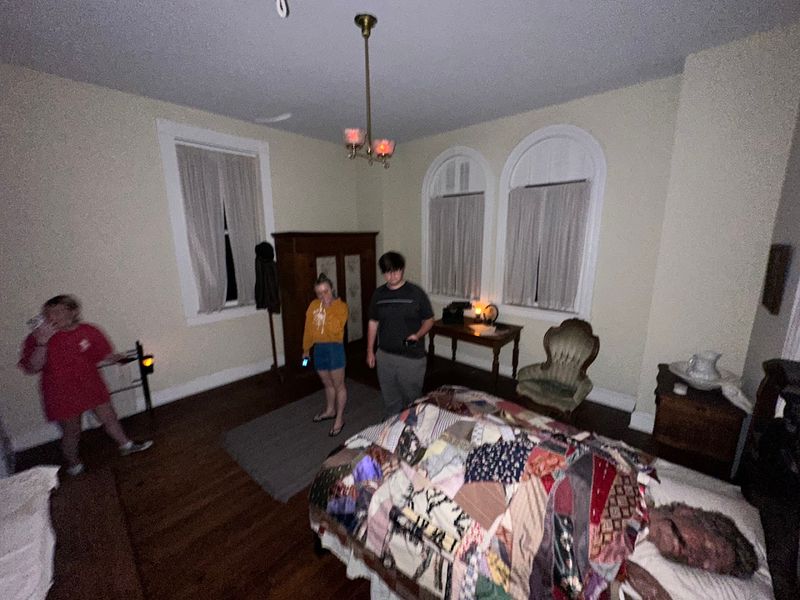
St. Augustine holds the reputation of being one of the most haunted cities in the United States, and the Old Jail Museum leans into that identity with a night tour that has earned its own passionate following. The Old Jail After Dark experience swaps the daytime’s educational tone for something decidedly more atmospheric, exploring the ghostly legends and paranormal research that have accumulated around the building over the years.
Deputy Scarlet, mentioned warmly in visitor reviews, became something of a fan favorite for her enthusiastic and knowledgeable take on the hauntings and the research her team has gathered. Ghost enthusiasts appreciate that the experience goes beyond generic spooky storytelling and actually references documented investigations and historical context.
That combination of genuine research and theatrical presentation makes the night tour feel credible rather than campy.
Visitor Teresa also received glowing mentions for guiding guests through the darker chapters of the jail’s history after sunset. Whether you are a true believer in the paranormal or simply enjoy a well-told eerie story, the After Dark experience offers something genuinely different from the daytime tour.
Several visitors recommend doing both to get the full picture of what this remarkable building has witnessed across more than a century of continuous human presence.
Practical Tips for Visiting the Old Jail Museum Today
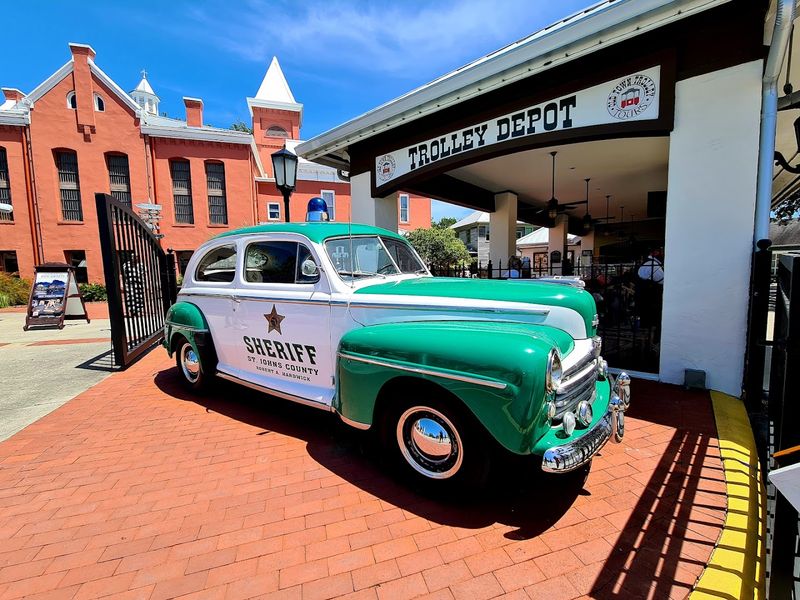
Planning a visit to the Old Jail Museum is refreshingly straightforward, and a few small tips can make the experience even better. The museum is open seven days a week from 9 AM to 5 PM, with tours departing every 15 to 20 minutes throughout the day.
Arriving early is a smart move, especially during peak tourist season, since the first tours of the morning tend to have smaller groups and a more relaxed atmosphere.
The address is 167 San Marco Avenue, St. Augustine, FL 32084, and free on-site parking is available, which is a genuine bonus in a city where parking can get complicated. The location also puts you close to other Old Town attractions, making it easy to build a full day of sightseeing around your visit.
Admission is reasonably priced and considered great value by the vast majority of reviewers.
One practical heads-up: some rooms inside can get warm, particularly during Florida’s summer months, so dressing in light, breathable clothing is a good idea. The tour itself runs about 30 minutes, making it manageable for kids and adults alike.
You can reach the museum at 904-829-3800 or visit staugustineoldjail.com for current pricing and any special event schedules. With a 4.6-star rating across over 7,500 reviews, this one genuinely earns its reputation.