
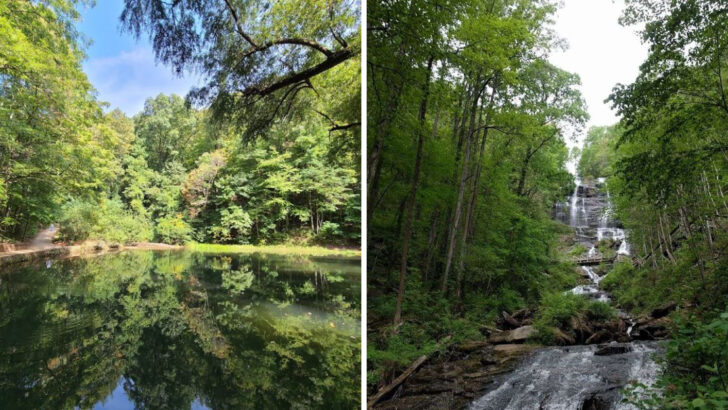
Tucked away in the misty mountains of North Georgia, Amicalola Falls stands as the tallest cascading waterfall east of the Mississippi River, dropping an incredible 729 feet.
Its name comes from the Cherokee word for “tumbling waters,” and one look at this natural wonder makes that name feel absolutely perfect.
Whether you are a seasoned hiker, a nature photographer, or simply someone looking for a breathtaking day trip, this waterfall delivers something truly unforgettable.
Dawsonville, Georgia is home to this gem, and it deserves a top spot on every outdoor adventure list.
Amicalola Falls: A Cherokee Treasure in North Georgia
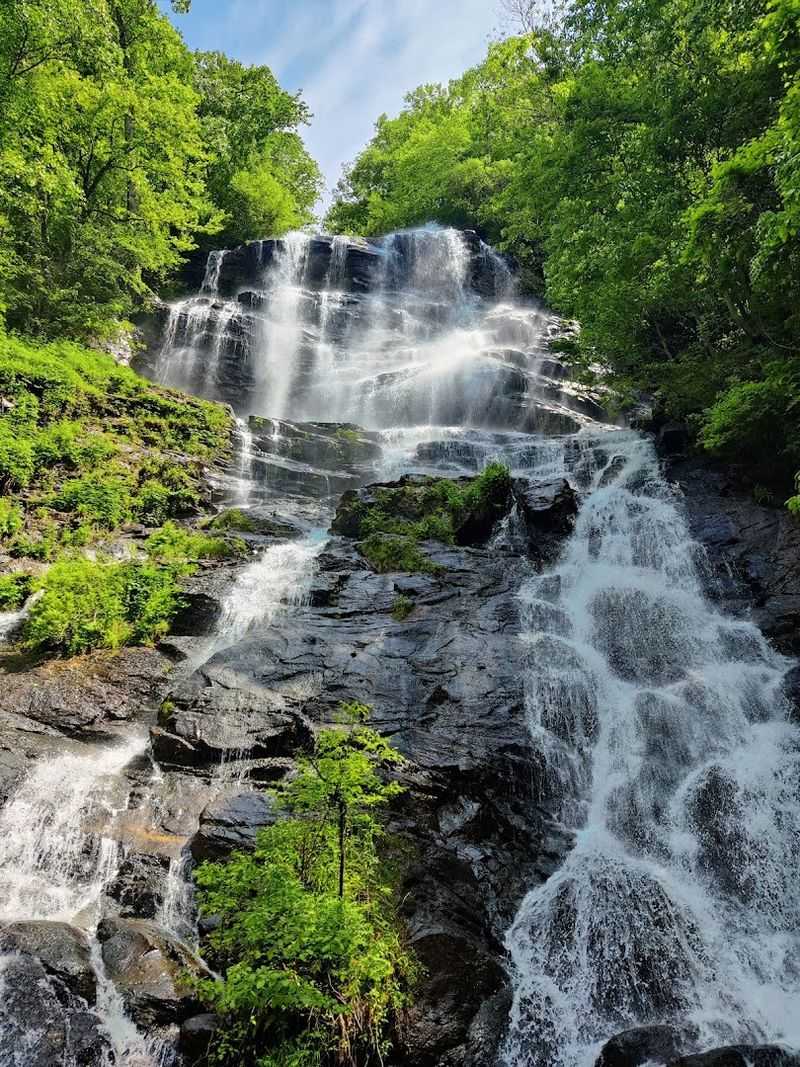
Long before tourists arrived with cameras and hiking boots, the Cherokee people named this waterfall “tumbling waters” — and honestly, no description fits better. Amicalola Falls is the tallest cascading waterfall east of the Mississippi River, and its presence in the Blue Ridge Mountains of North Georgia feels almost otherworldly.
Standing at the base and looking up at 729 feet of rushing white water is one of those experiences that genuinely stops you in your tracks. The sound alone — a constant, roaring rush — fills the entire valley around it.
You feel it in your chest before you even see it.
The falls are located inside Amicalola Falls State Park near Dawsonville, Georgia, making them easily accessible while still feeling wild and remote. The park draws hundreds of thousands of visitors every year, and it is easy to understand why.
Few natural landmarks in the eastern United States carry this level of raw, unfiltered power and beauty. First-time visitors often say they had no idea Georgia was hiding something this spectacular.
The 729-Foot Drop: Understanding the Cascades
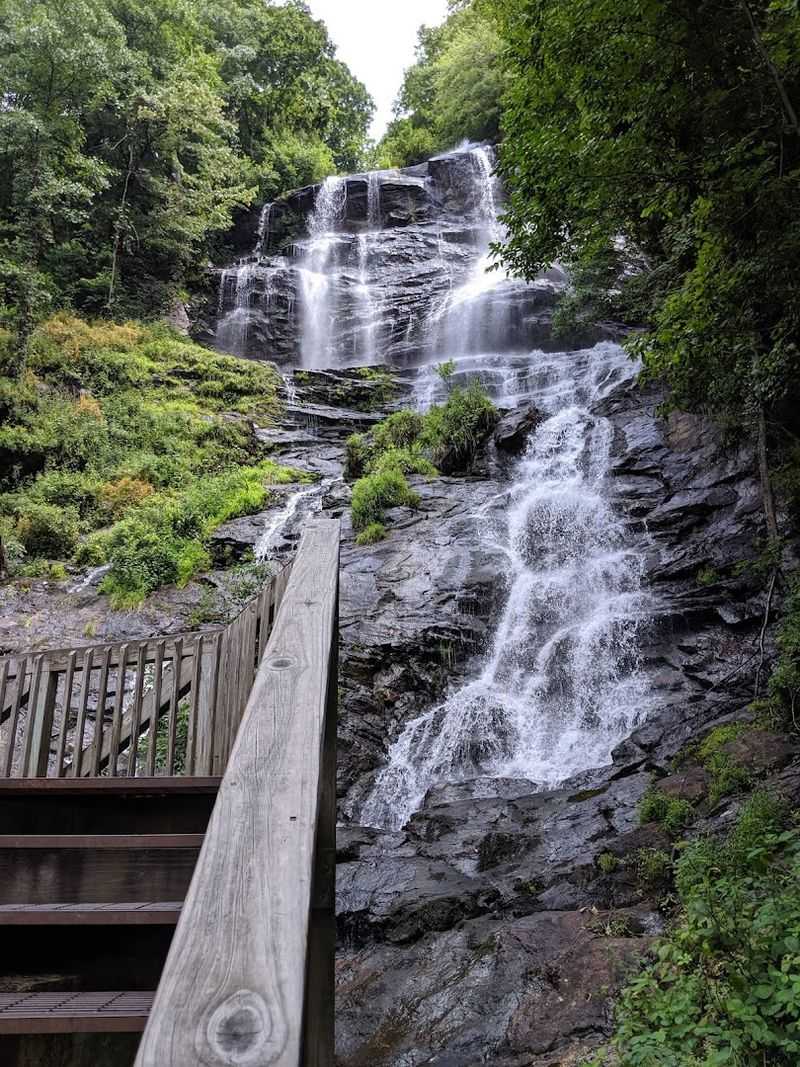
Not every waterfall earns its fame with a single dramatic plunge. Amicalola Falls builds its reputation tier by tier, cascading down a series of rocky steps that stretch 729 feet from top to bottom.
That layered descent is exactly what makes it a “cascading” waterfall rather than a freefall type like Niagara.
Each tier has its own personality. Some sections rush fast and narrow, squeezing between mossy boulders, while others fan out wide and slow, creating misty curtains that catch the light beautifully.
The variety keeps your eyes moving constantly as you explore different viewpoints along the trail system.
Fun fact: the 729-foot measurement refers to the total vertical drop across all tiers combined, not one single leap. This actually makes Amicalola taller than many famous waterfalls people assume are bigger.
For comparison, Niagara Falls drops roughly 167 feet. The sheer scale of Amicalola becomes more impressive the more you learn about it.
Every season changes how the cascades look and feel, from thundering spring torrents to quieter summer trickles, keeping repeat visits fresh and rewarding.
Hitting the Trails: From Casual Strolls to Serious Climbs
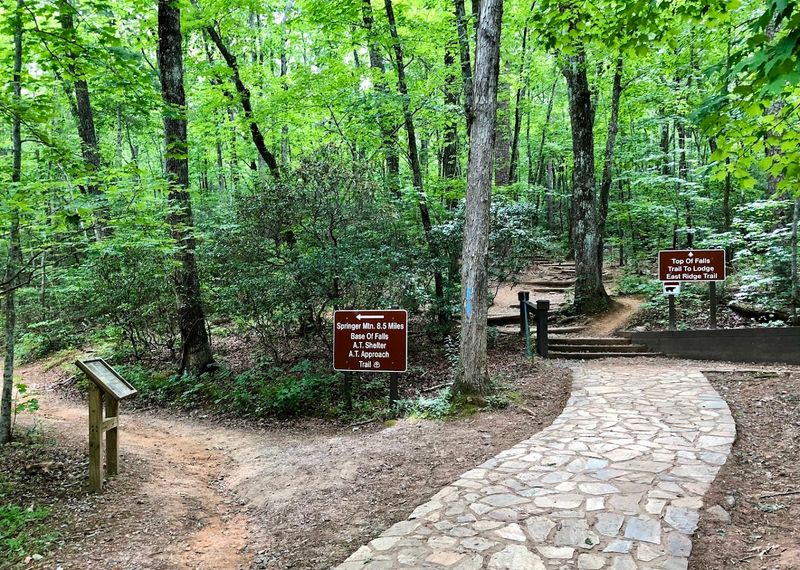
Pulling on your hiking shoes and heading up the trail at Amicalola Falls is a choice that rewards every fitness level differently. The most talked-about challenge is the 600-step stairway that runs alongside the falls, climbing steeply from the base to an upper observation area.
It is strenuous, no question — but the views at each landing make every burning step worth it.
For those who prefer a more relaxed pace, the moderate loop trail winds through shaded hardwood forest, offering filtered views of the falls and plenty of spots to rest and take in the scenery. Families with younger kids often prefer this route because the grade is gentler and the forest itself is beautiful enough to keep everyone entertained.
Trail conditions vary by season, so checking the state park website before your visit is always a smart move. Spring rain can make certain sections slippery, and summer humidity adds a layer of challenge to the climb.
Trekking poles are a helpful addition for anyone tackling the stairway, especially on the descent. No matter which trail you choose, the payoff at the end is always the same: one of the most spectacular waterfall views in the entire eastern United States.
Observation Decks: The Best Seats in the House
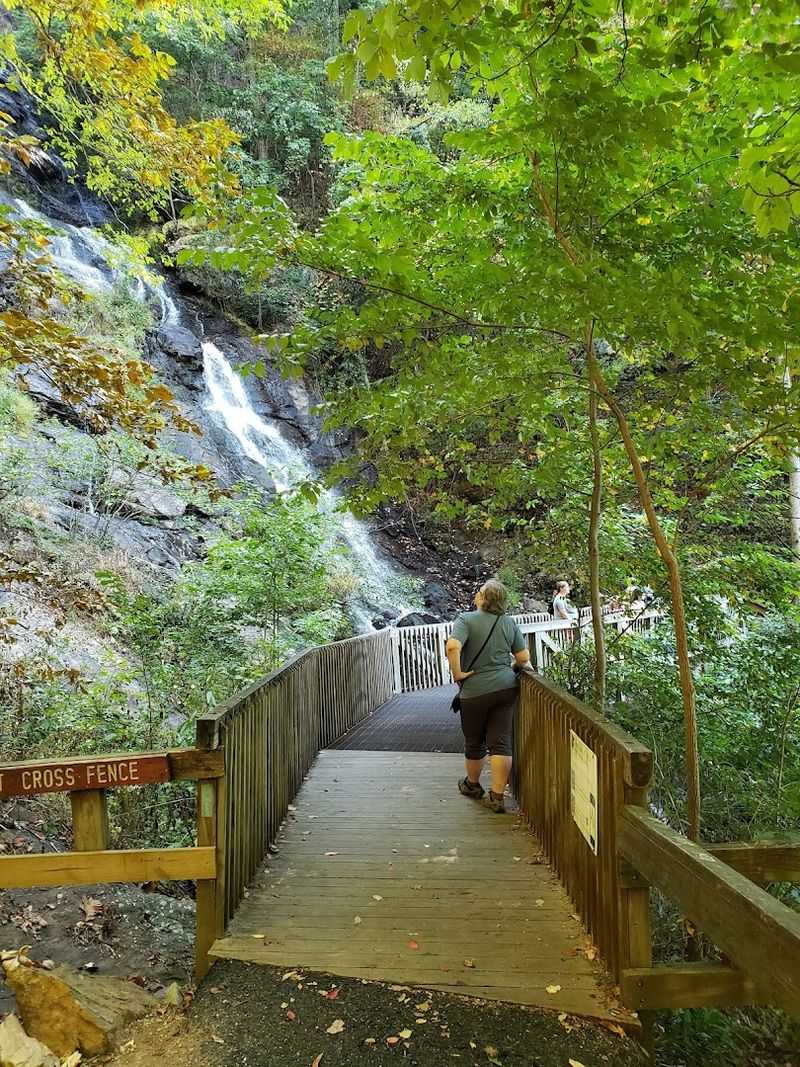
Imagine standing on a wooden platform with nothing but open air between you and a waterfall the height of a 70-story building. That is exactly the kind of moment Amicalola Falls State Park delivers through its network of observation decks placed at multiple elevations along the falls.
The upper deck sits above the main cascade and offers a sweeping view looking down the entire drop. It is the kind of perspective that makes you realize just how massive this waterfall truly is.
The mid-level deck puts you right in the action, close enough to feel the mist on your face on a good day. Down at the base, the lower viewing area lets you look straight up, which may be the most jaw-dropping angle of all.
Each deck is well-maintained and built with safety railings, making them suitable for visitors of all ages. Families with strollers or elderly visitors who cannot manage the full stairway can still access at least one deck from the main parking area with minimal effort.
Spending time at all three levels during a single visit gives you a completely different experience at each stop, almost like visiting three separate waterfalls in one afternoon.
Flora and Fauna: A Living Forest Surrounds the Falls
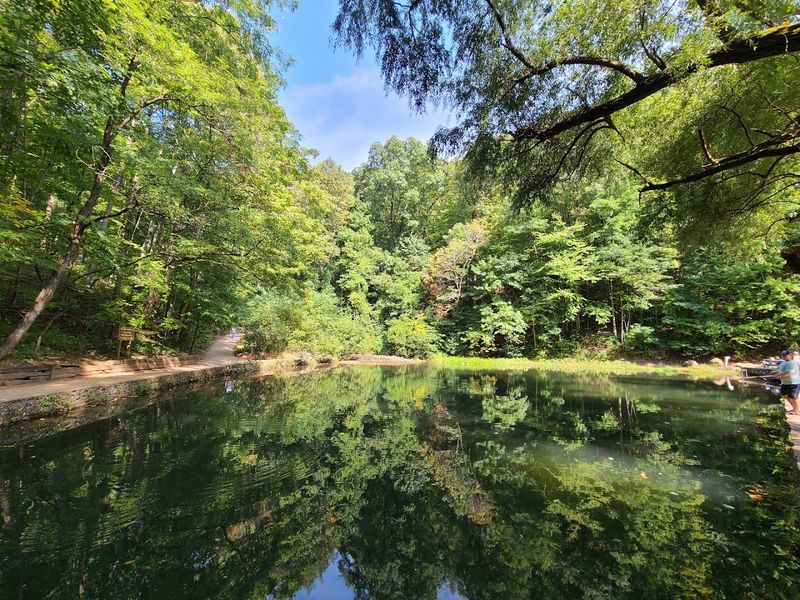
The waterfall is the star of the show, but the forest surrounding it deserves serious attention too. Amicalola Falls State Park sits within the southern Blue Ridge Mountains, a region famous for extraordinary biodiversity.
Mountain laurels and rhododendrons bloom in spectacular bursts of pink and white during late spring, turning the trailsides into something straight out of a painting.
Hardwood trees including oaks, tulip poplars, and hemlocks form a dense canopy that keeps the trails cool even in summer. Ferns and mosses carpet the forest floor, creating that deep-green, primordial atmosphere that makes North Georgia forests feel ancient and alive.
Keep your eyes open and you might spot salamanders tucked under rocks near the stream, a common but easy-to-miss resident of these wet mountain environments.
Birdwatchers will find plenty to celebrate here. Pileated woodpeckers, red-tailed hawks, and a rotating cast of migratory songbirds use the park throughout the year.
Early morning visits are best for wildlife sightings, before the crowds arrive and the forest quiets back down. Bringing a small field guide or downloading a bird identification app before your trip can turn a casual walk into a genuinely exciting naturalist adventure.
Photography Hotspots: Capturing the Perfect Shot
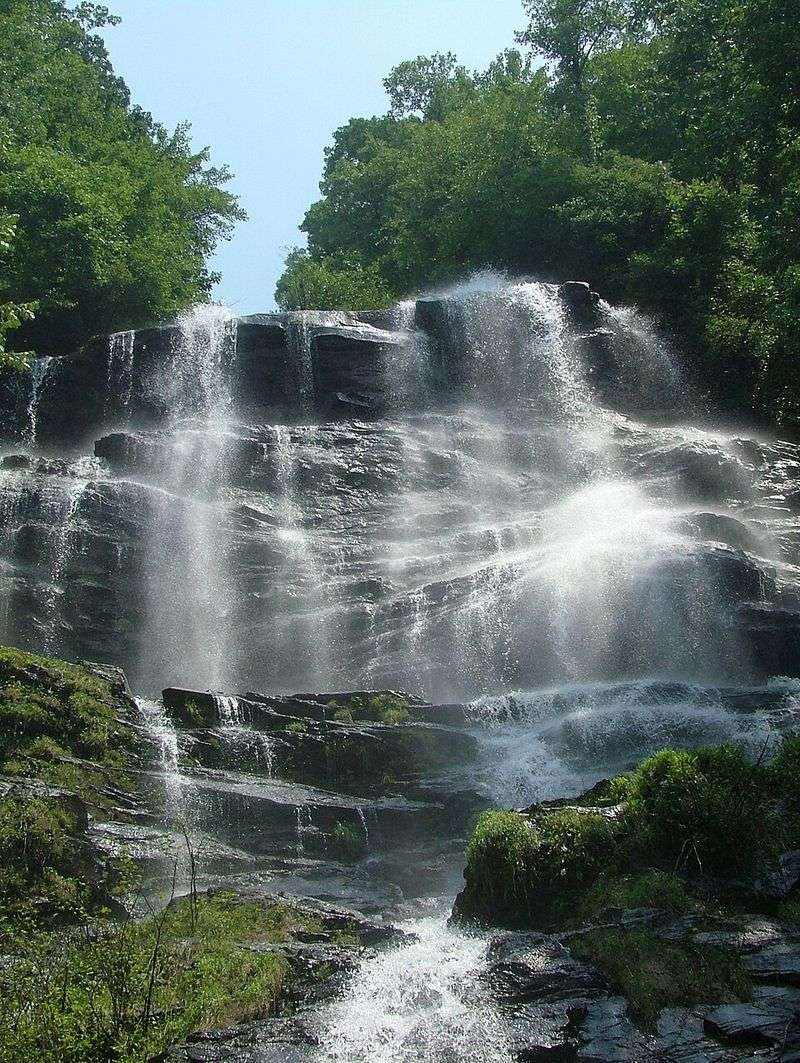
Few waterfalls in the eastern United States give photographers as many natural advantages as Amicalola Falls. The multiple tiers create layered compositions that work beautifully from both close and distant vantage points.
Misty conditions near the base frequently produce small rainbows that appear and disappear depending on the angle of the sun — and catching one in a frame feels like winning the lottery.
Timing matters enormously here. Sunrise light hits the upper falls first, casting a warm golden glow against the white water and dark rock face.
Late afternoon brings softer, more diffused light that works especially well for wide landscape shots from the upper observation deck. Midday sun creates harsh shadows and blown-out highlights, so most experienced photographers avoid it.
A tripod is worth carrying up the stairway for long-exposure shots that turn the rushing water into a silky blur. A polarizing filter helps cut glare off wet rocks and deepens the green of the surrounding foliage.
For smartphone photographers, the portrait mode or slow-shutter apps can mimic some of these effects without extra gear. The base of the falls during high water flow in spring is arguably the single most dramatic composition the park offers, and it is absolutely worth the climb down.
Gateway to the Appalachian Trail: Where Epic Journeys Begin
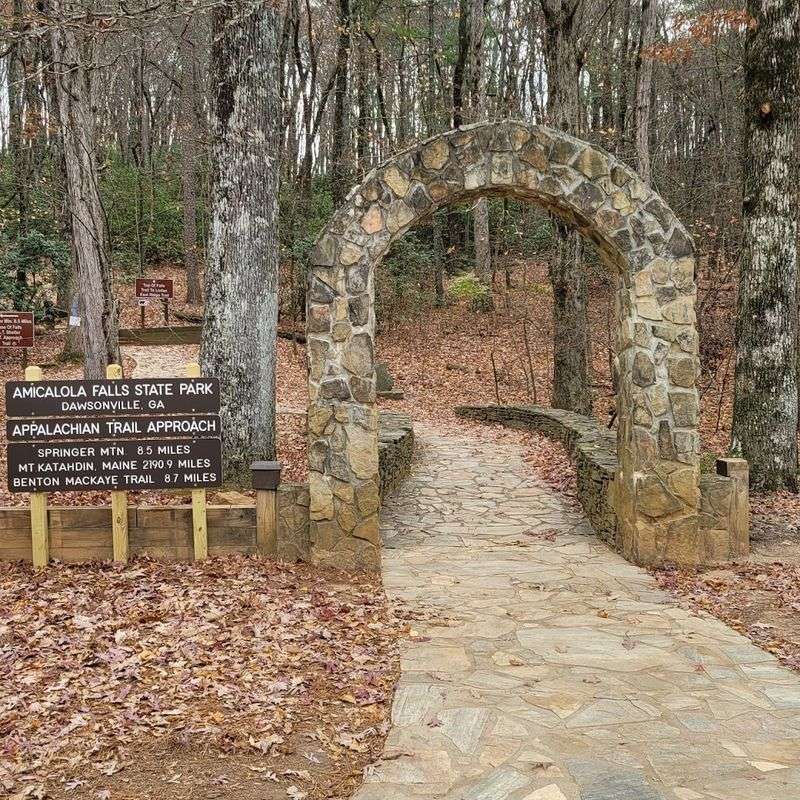
For a certain kind of traveler, Amicalola Falls is not just a destination — it is a starting line. The park serves as the official approach trailhead for the Appalachian Trail, the legendary 2,190-mile footpath stretching from Georgia all the way to Maine.
Every year, thousands of thru-hikers pass through here at the beginning of their journey northward.
The AT approach trail from Amicalola Falls to Springer Mountain, the official southern terminus of the Appalachian Trail, covers about 8.5 miles of moderately challenging terrain. Many hikers choose to start here rather than driving directly to Springer Mountain because the waterfall adds a meaningful and scenic beginning to what is often a life-changing adventure.
There is even a registration arch near the visitor center where hikers can officially sign in before heading out.
Even if a multi-month thru-hike is not on your agenda, watching fully loaded backpackers set off from this trailhead is genuinely inspiring. The energy around the park on a busy spring weekend, when dozens of hikers begin their journeys simultaneously, carries a kind of electric excitement.
Casual visitors often end up chatting with thru-hikers and leaving with a whole new perspective on what it means to truly explore the outdoors.
Seasonal Highlights: Every Visit Tells a Different Story
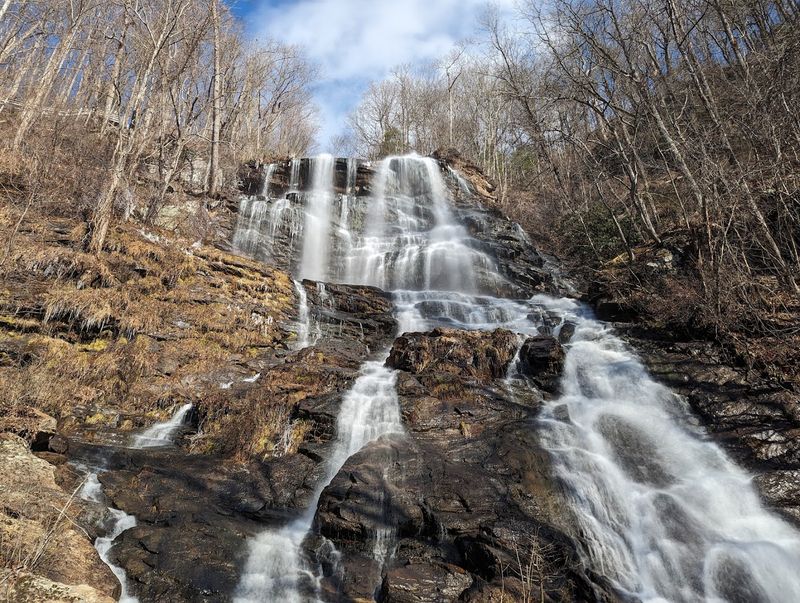
One of the most underrated things about Amicalola Falls is how dramatically it changes with the seasons. Spring is arguably the most powerful time to visit, when snowmelt and heavy rainfall push water volume to its peak.
The falls roar during this period, and the surrounding forest bursts with new green growth and wildflower blooms that frame every view beautifully.
Summer brings a quieter waterfall but a lush, heavily shaded forest that keeps temperatures cooler than the surrounding lowlands. Fall is when the crowds return in full force — and for good reason.
The hardwood forest surrounding the falls lights up in fiery shades of orange, red, and gold, creating one of the most photographed autumn scenes in all of Georgia. Typically, mid to late October offers the most vivid color.
Winter is the wildcard season that surprises most first-time visitors. When temperatures drop far enough, sections of the falls begin to freeze, creating dramatic ice formations that cling to the rock face and the edges of each cascade.
These frozen curtains of ice catch the pale winter light in stunning ways. The park is significantly less crowded in winter, meaning you might have some of the best views entirely to yourself on a cold weekday morning.
Amenities and Lodging: Stay Longer and Explore More
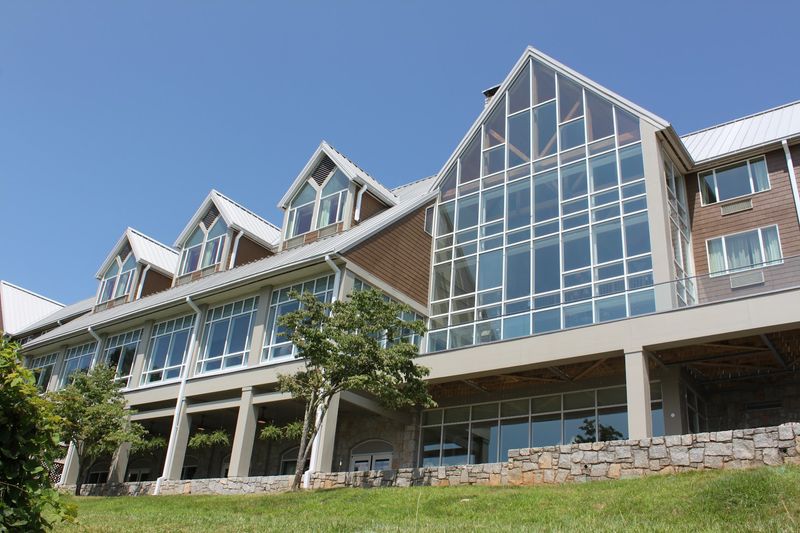
A day trip to Amicalola Falls is wonderful, but spending the night transforms the experience entirely. The park offers a surprisingly comfortable range of lodging options, anchored by the Amicalola Falls Lodge, which sits perched on a hilltop with sweeping views of the surrounding Blue Ridge Mountains.
Waking up to misty mountain mornings from a lodge room window is the kind of thing that makes you want to extend your stay immediately.
Rustic cabins scattered throughout the park offer a more private retreat, ideal for families or couples looking for a cozy base camp while they explore the trails. Each cabin comes equipped with basic amenities, and the sense of being nestled in the forest adds genuine charm.
Tent camping and RV sites are also available for visitors who prefer sleeping closer to nature.
Picnic areas near the falls and the visitor center make packing a lunch a smart and enjoyable option. The on-site restaurant at the lodge serves hearty Southern-style meals that hit the spot after a long day on the trails.
Booking accommodations well in advance is strongly recommended during fall foliage season and spring weekends, as availability fills up quickly. The park truly rewards those who slow down and stay a while.
Visitor Tips and Accessibility: Plan Your Trip Like a Pro
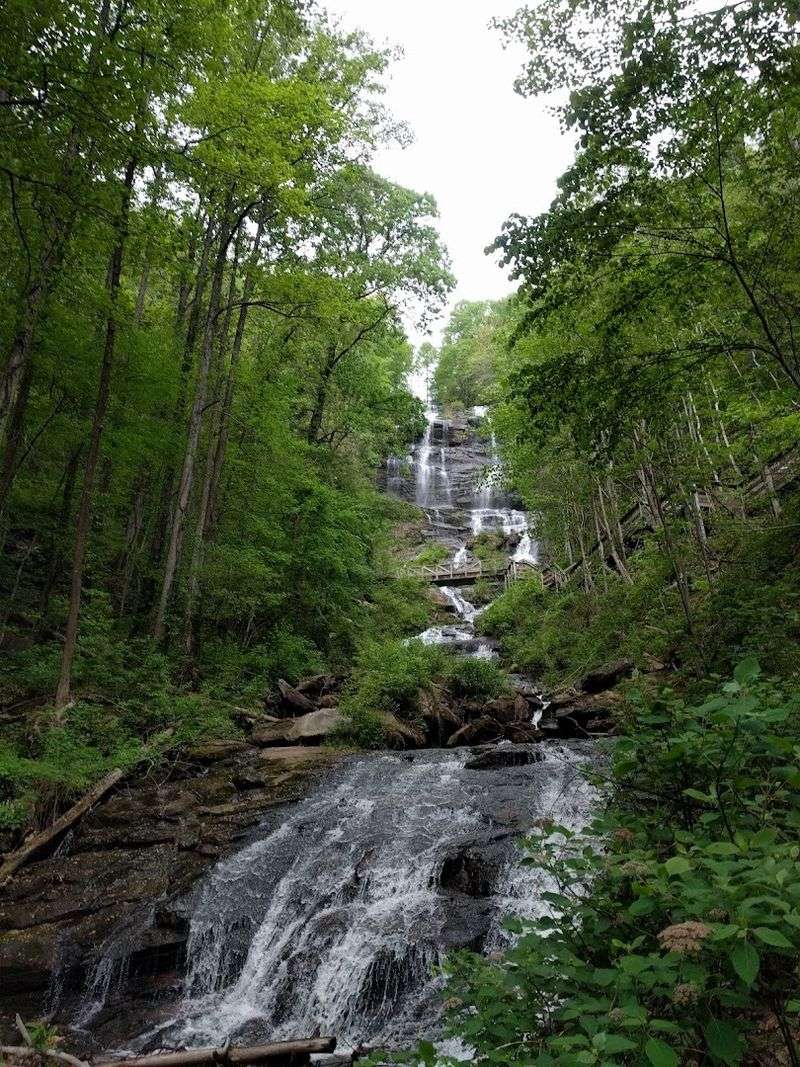
A little planning goes a long way at Amicalola Falls. The park is open year-round, and a per-vehicle parking fee is required at the entrance.
Arriving early on weekends, especially during fall foliage season, helps you snag a good parking spot and enjoy the falls before the crowds build up. Weekday visits offer a noticeably more peaceful experience overall.
Footwear is one of the most important things to get right. Sturdy, closed-toe shoes with grip are essential for the stairway and loop trails, especially after rain when rocks and wooden steps get slippery.
Bringing plenty of water is equally critical, particularly in summer when the climb up the stairway can leave you working up a serious sweat. Sunscreen and insect repellent round out the essentials for warmer months.
Accessibility at the park is worth noting for visitors with mobility considerations. The main observation area near the base of the falls is wheelchair-accessible via a paved path from the lower parking area, meaning everyone in your group can experience the waterfall regardless of physical ability.
The full 600-step stairway requires solid fitness and is not suitable for strollers or wheelchairs. Checking the Georgia State Parks website before your trip gives you the most current trail conditions and any seasonal closures to plan around.