
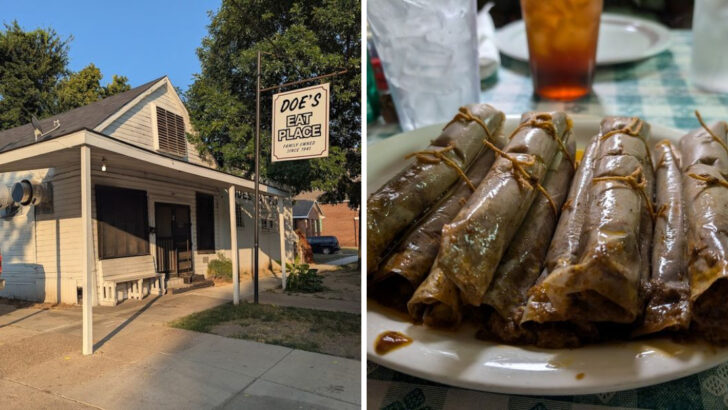
Tucked inside a modest building on Nelson Street in Greenville, Mississippi, Doe’s Eat Place has been serving some of the most talked-about tamales in the American South since the early 1940s.
What started as a family kitchen operation has grown into a legendary dining destination that draws food lovers from across the country.
The tamales here carry a flavor so rich and distinctive that many visitors swear they rival anything found south of the border.
If you have never heard of Delta-style hot tamales, Doe’s Eat Place is the perfect place to start your education.
A Mississippi Delta Restaurant With Legendary Tamales
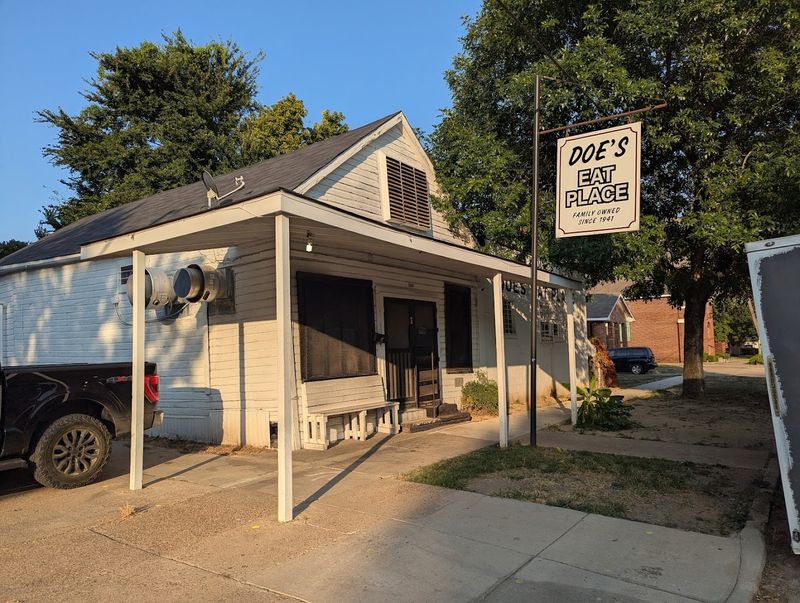
Walk past the front of Doe’s Eat Place and you might mistake it for someone’s home. That modest, unassuming exterior hides one of the most celebrated culinary destinations in the entire Mississippi Delta region.
Since the early 1940s, this Greenville institution has been quietly earning a massive reputation, one plate of hot tamales at a time. Locals have known about it for generations, but word has spread far beyond the Delta’s flat fields and winding rivers.
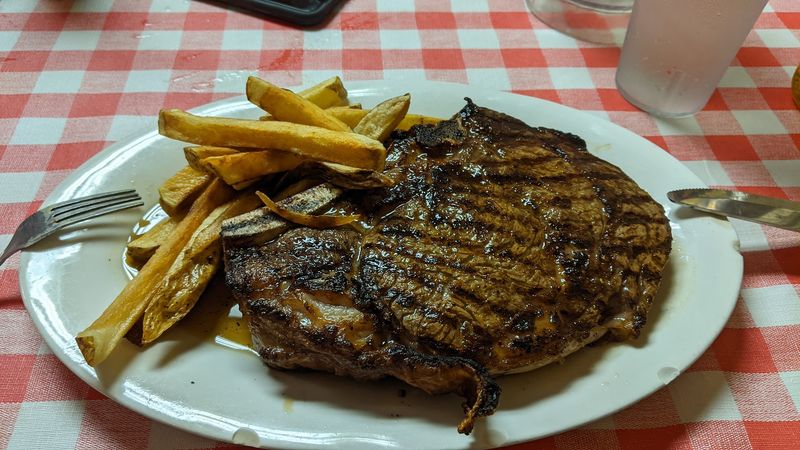
The restaurant’s fame rests on two pillars: thick, perfectly cooked steaks and handmade tamales with a flavor that feels deeply rooted in history. Food writers, travel bloggers, and culinary historians have all made the pilgrimage here, eager to taste what the fuss is about.
Doe’s is not just a restaurant — it is a living piece of Mississippi food culture. The tamales here helped shape the identity of an entire region, turning Greenville into a destination that food lovers put on their must-visit lists.
Coming here feels less like eating out and more like stepping into a story that has been unfolding for over eighty years.
The Story Behind Doe’s Eat Place
Every great restaurant has an origin story, and Doe’s Eat Place has one worth telling over and over again. Back in 1903, the Signa family opened a small grocery store on Nelson Street, serving the everyday needs of their Greenville neighborhood.
Decades passed before the real magic happened. In 1941, Dominick “Big Doe” Signa started selling hot tamales from the family kitchen, and hungry neighbors quickly took notice.
What began as an informal side hustle became something far bigger than anyone in the family could have imagined.
The transition from grocery store to restaurant happened organically, driven by demand and the undeniable quality of the food coming out of that kitchen. Customers kept coming back, word spread, and eventually Doe’s Eat Place became the anchor of Nelson Street’s culinary identity.
Today, the Signa family still runs the restaurant, carrying forward a tradition that spans multiple generations. There is something genuinely moving about a family business that has survived nearly a century of change while keeping its original spirit completely intact.
That kind of loyalty to craft and community is rare, and it makes every tamale taste just a little more meaningful.
How the Delta Tamale Tradition Began

Hot tamales and the Mississippi Delta might seem like an unlikely pairing at first glance, but history tells a fascinating story of cultural exchange. Researchers believe the tradition began when Mexican migrant workers arrived in the Delta during the early 20th century to help harvest cotton crops.
These workers brought their food traditions with them, including the art of making tamales. African American cooks who worked alongside them — and who fed field laborers throughout the region — began adapting the recipes using locally available ingredients like cornmeal and pork instead of traditional masa and different meats.
The result was something entirely new: a smaller, denser tamale with a flavor profile shaped by Southern cooking traditions. Over decades, this hybrid dish became deeply embedded in Delta food culture, appearing at roadside stands, family kitchens, and eventually beloved restaurants like Doe’s Eat Place.
Food historians often point to the Delta hot tamale as a perfect example of how cultures blend when people share meals and kitchens. What started as a practical adaptation of a Mexican staple became a regional treasure that tells the story of migration, labor, and culinary creativity all at once.
Few foods carry that much history in every bite.
Mamie Signa’s Recipe That Started It All

Behind every legendary dish, there is usually someone who took a good idea and made it extraordinary. At Doe’s Eat Place, that person was Mamie Signa, wife of Big Doe, and the woman whose hands shaped the tamale recipe that would eventually make culinary history.
Mamie took the basic concept of a Delta-style hot tamale and refined it with careful attention to seasoning, texture, and technique. She began preparing large batches for neighbors and customers who would knock on the family’s door asking for dinner, and her reputation grew quickly.
Her improvements were not dramatic overhauls — they were the quiet, patient adjustments of someone who genuinely cared about getting the flavor exactly right. That kind of dedication is hard to replicate, which is part of why the recipe has remained largely unchanged since those early days.
Mamie’s contribution to the restaurant’s success is impossible to overstate. She turned a simple, humble dish into the foundation of a family legacy that has lasted for generations.
Visitors who sit down to a plate of Doe’s tamales today are, in a very real sense, tasting the result of one woman’s commitment to feeding people well. That is a powerful thing to carry in a recipe.
What Makes These Tamales Different
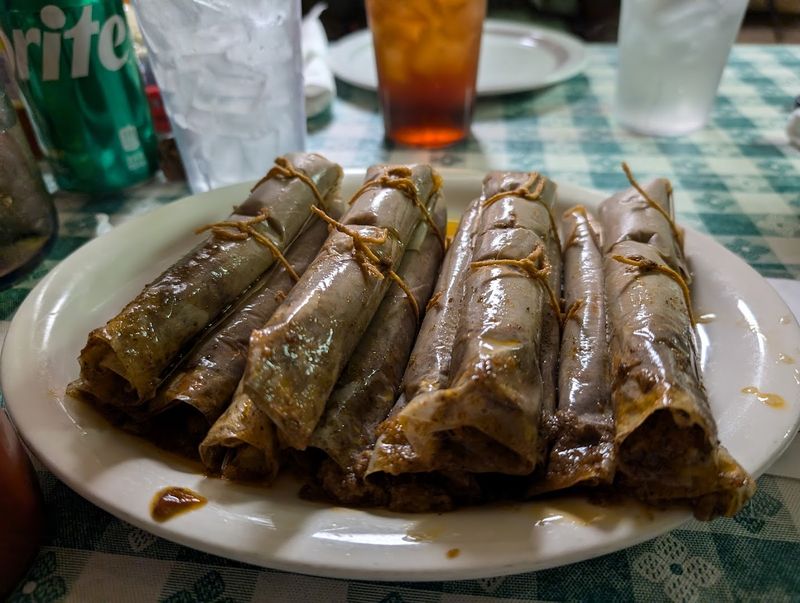
Order a plate of tamales at Doe’s Eat Place and you will immediately notice they look a little different from what you might expect. Delta-style tamales are smaller and more compact than the larger versions commonly found in Mexican restaurants or grocery stores across the country.
One of the biggest differences is the outer layer. Traditional Mexican tamales are made with masa, a dough prepared from nixtamalized corn.
Delta tamales, including those at Doe’s, typically use cornmeal, which gives them a slightly grainier texture and a heartier bite that feels distinctly Southern.
At Doe’s, the tamales are wrapped in waxed paper and simmered low and slow, which allows the flavors to develop deeply and the filling to stay incredibly moist. That simmering process creates a texture that is soft but structured — satisfying in a way that is hard to describe until you actually experience it.
The seasoning is bold without being overwhelming, with a savory warmth that lingers pleasantly after each bite. Topped with the restaurant’s homemade chili, the tamales take on an extra layer of richness that elevates the whole experience.
It is a combination that feels both familiar and completely unique, which is exactly what makes it so memorable.
A Recipe That Has Barely Changed Since 1941
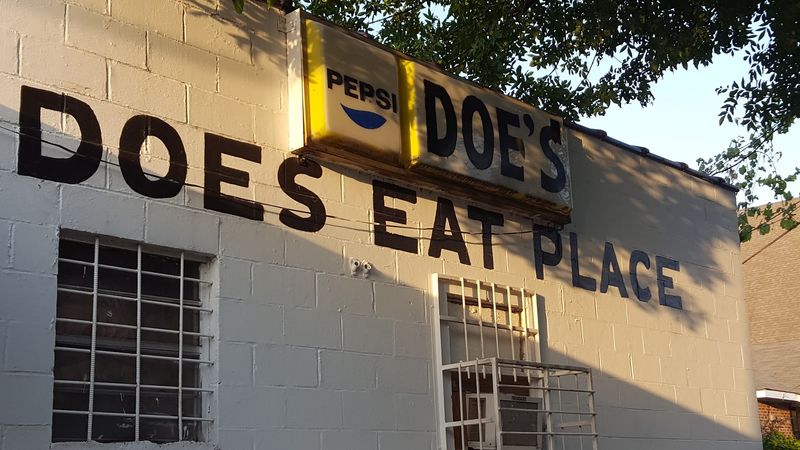
Consistency is one of the hardest things to maintain in any restaurant, and at Doe’s Eat Place, it has been maintained for over eight decades. The all-beef tamale recipe served today is essentially the same one that Big Doe and Mamie Signa developed back in 1941 — and that is not an accident.
The Signa family has always understood that changing the recipe would mean changing the experience, and loyal customers do not come back for surprises. They come back for the exact flavor they fell in love with the first time, whether that was last year or thirty years ago.
Keeping a recipe unchanged across generations requires discipline. Ingredients must be sourced carefully, preparation methods must be followed precisely, and shortcuts must be resisted even when they might save time or money.
At Doe’s, that discipline has been practiced without compromise for generations.
There is something deeply reassuring about eating food made from a recipe that predates most of the technology in your pocket. It connects you to a time when cooking was slower, more deliberate, and more personal.
Every tamale at Doe’s carries that weight — a flavor frozen in time, passed from hand to hand across eight decades of Mississippi Delta history.
A No-Frills Restaurant With Deep Character
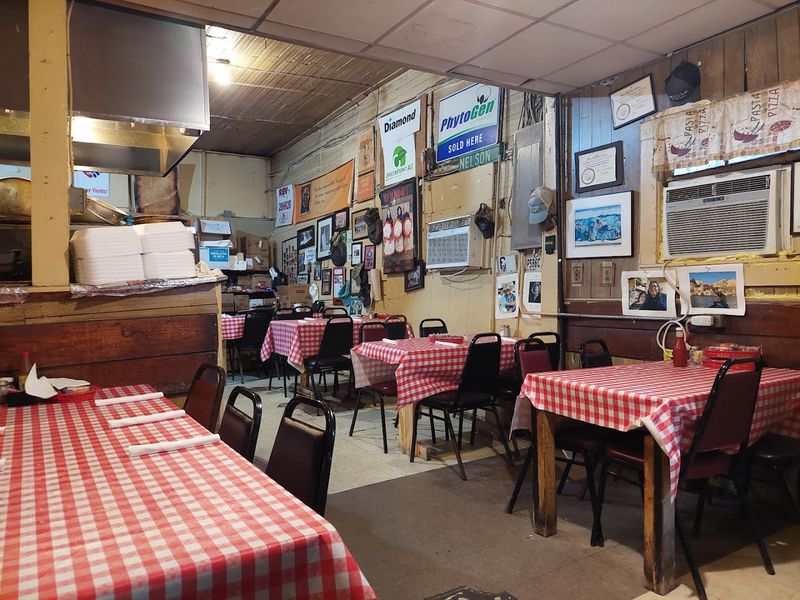
Some restaurants try hard to impress you before you even sit down — polished floors, dramatic lighting, menus printed on leather-bound boards. Doe’s Eat Place takes the opposite approach, and it works beautifully.
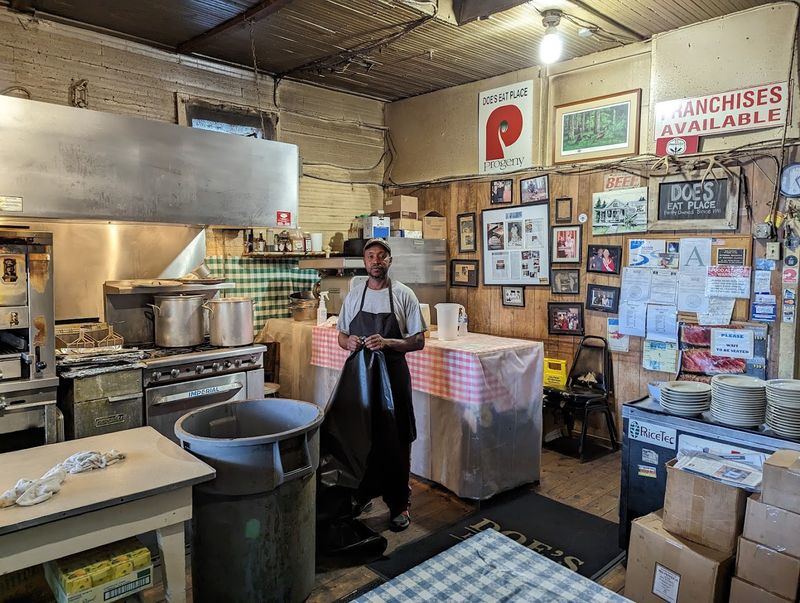
The building genuinely looks like a modest family home from the outside, and walking inside does not dramatically change that impression. Diners traditionally enter through the kitchen, where the sizzle of steaks and the steam rising from simmering tamales greet you like an enthusiastic host.
It is an experience that no amount of interior design budget could replicate.
The dining room is simple and unpretentious, with tables that have hosted governors, celebrities, and everyday Delta residents with exactly the same level of hospitality. There is no dress code, no velvet rope, and no attitude — just good food served by people who have been doing this for a long time.
That lack of pretension is actually one of Doe’s greatest strengths. Fancy restaurants can feel intimidating or performative, but Doe’s makes every visitor feel like a regular from the moment they walk in.
The character of this place comes not from decor but from decades of history soaked into its walls, and that kind of atmosphere cannot be manufactured or purchased at any price.
The Tamales That Put Greenville on the Culinary Map
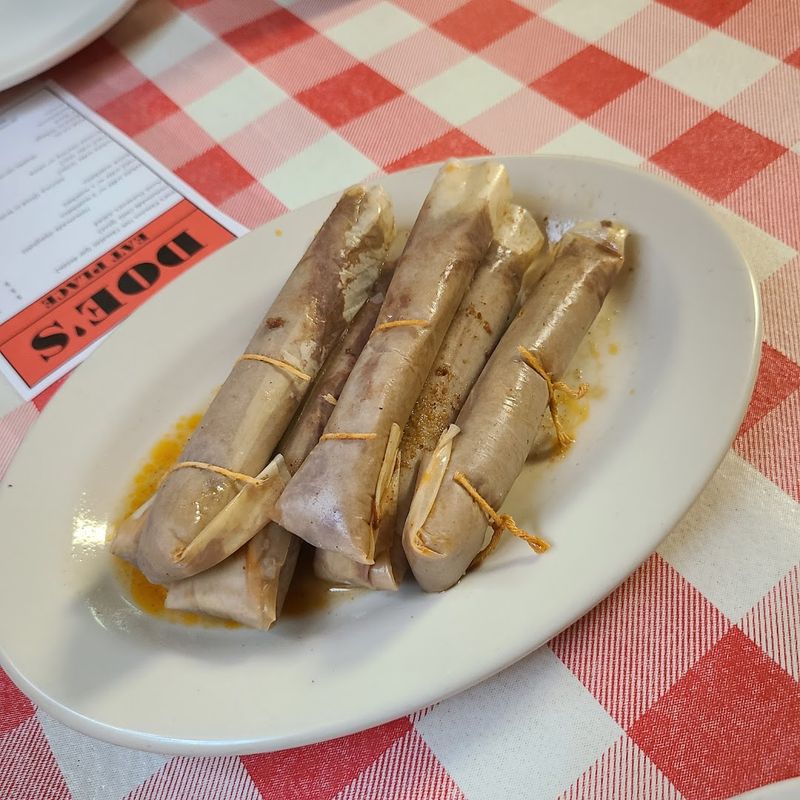
Greenville wears its food reputation proudly. The city has long been celebrated as the “Hot Tamale Capital of the World,” a title backed by a deep cultural history and a collection of restaurants that take tamale-making seriously.
Doe’s Eat Place stands at the center of that story.
For decades, food journalists and travel writers have been making the trip to Greenville specifically to eat at Doe’s. Their articles and reviews introduced the restaurant — and Delta-style tamales — to audiences who had never heard of either, slowly building a national reputation that the city now embraces fully.
The impact extends beyond tourism. Greenville’s tamale identity has inspired festivals, cookbooks, and documentary projects that explore the cultural roots of this unique regional dish.
Doe’s has been featured in countless food publications and television programs, each one adding another layer to its already substantial legend.
What is remarkable is that all of this attention has not changed the restaurant one bit. Doe’s remains exactly what it has always been: a family-run place on Nelson Street making the same tamales the same way for the same reason — because people love them.
That kind of authentic staying power is what separates a truly great food destination from a trendy one.
Essential Visitor Information for Doe’s Eat Place
Planning a trip to Doe’s Eat Place requires a little preparation, but the experience is absolutely worth the effort. The restaurant is located at 502 Nelson Street in Greenville, Mississippi, right in the heart of the Delta — a region that rewards slow travel and curious eaters.
Doe’s typically opens in the evenings and serves dinner through the week, but Sundays are generally a day off. Hours can vary, so calling ahead before making a long drive is always a smart move.
The restaurant’s limited seating fills up quickly, especially on weekends, which makes reservations strongly recommended for anyone hoping to avoid a wait.
Tamales are sold by the half-dozen or dozen, and ordering them topped with the house-made chili is the way most regulars prefer them. The chili adds a rich, savory layer that takes the already flavorful tamales to another level entirely.
First-timers should strongly consider starting with a full dozen.
The Signa family continues to operate Doe’s with the same values that have defined it for generations: quality ingredients, consistent preparation, and genuine hospitality. Whether you are a Delta local or a first-time visitor from across the country, walking through that kitchen door is an experience you will not forget.
Some meals leave you full; this one leaves you changed.