Florida has a way of hiding its most extraordinary landscapes behind the obvious ones.
Most visitors come for the coastline, and while the beaches are beautiful, the interior of the state holds a quieter, wilder kind of wonder that most people never stop long enough to find.
These ten viewpoints changed how we thought about Florida entirely, from wetland observation towers where alligators drift silently below to swamp boardwalks where ancient cypress trees rise into the mist.
If you’re ready to trade the beach chair for a pair of binoculars and comfortable walking shoes, Florida has been quietly waiting to show you something remarkable.
These are the viewpoints that made us fall for a side of the state we almost missed entirely.
1. Shark Valley Observation Tower, Miami, Miami-Dade County
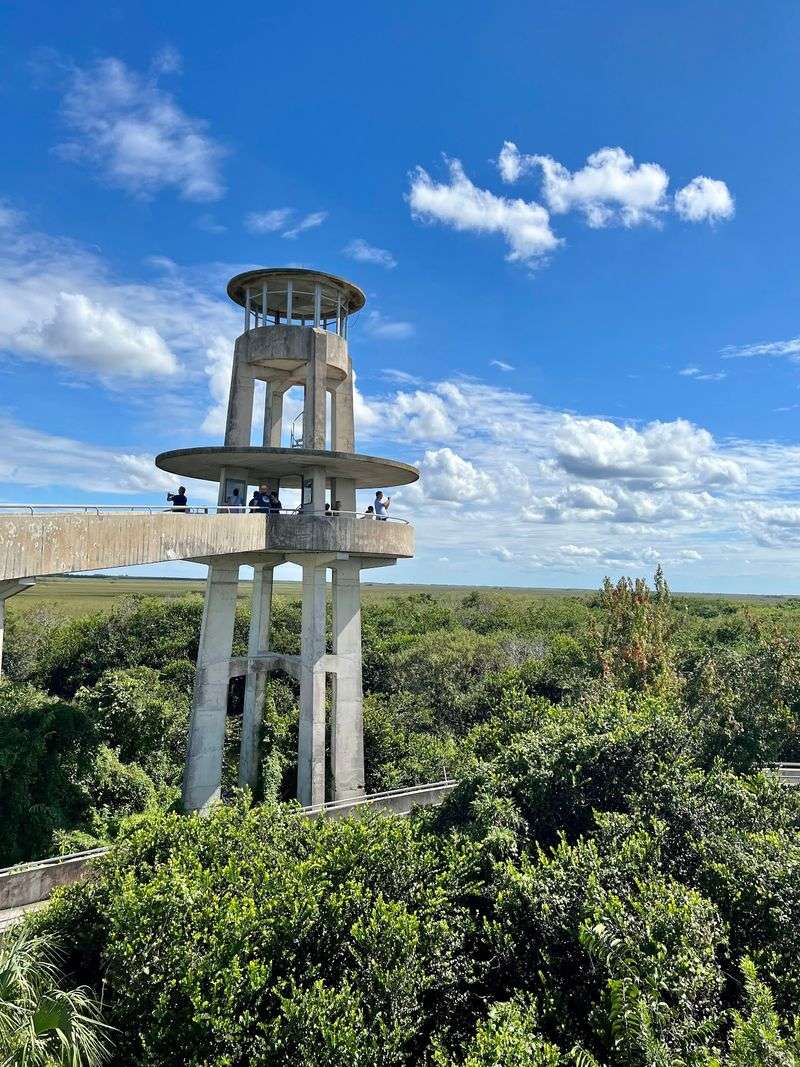
The view feels almost unreal when the flat Everglades suddenly opens in every direction.From the top of Shark Valley Observation Tower, west of Miami, visitors can see a huge sweep of sawgrass, water channels, and scattered tree islands that look like green dots on a silver map.
The tower is reached by a paved 15-mile loop, and most people get there by tram, bike, or a long walk.
Bring water, sunscreen, and patience, because the sun can be strong and wildlife appears on its own schedule.Alligators often rest beside the road, while herons, egrets, anhingas, and turtles make the slow landscape feel alive.
The name Shark Valley comes from the Shark River Slough, not from sharks swimming nearby, which is a fun detail to know before visiting.
Early morning is the best time for cooler air and softer light, especially if you want photos.Stay on the path, give animals plenty of space, and use binoculars if you have them.
This viewpoint proves that Florida can feel wide, quiet, and wild without a single ocean wave in sight.
2. Anhinga Trail Overlook, Homestead, Miami-Dade County
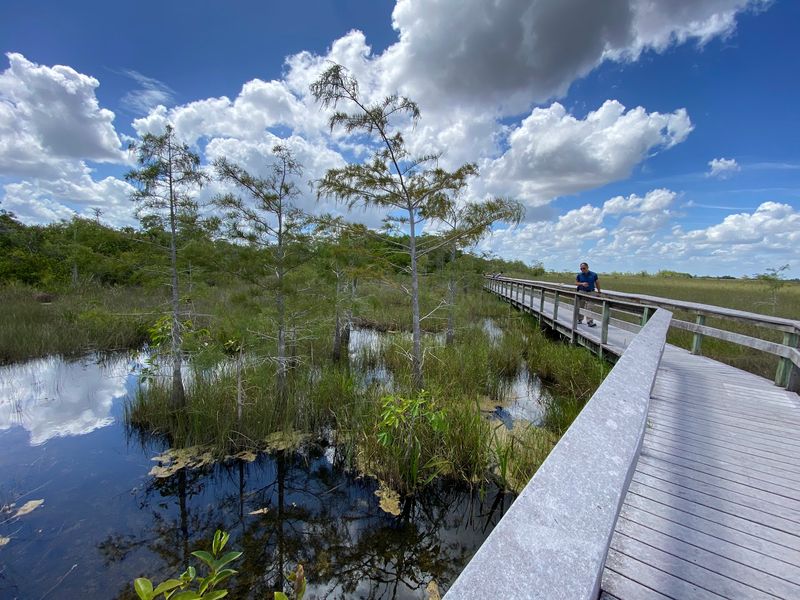
A short boardwalk can sometimes reveal more than a long hike, and that is the charm here.At Anhinga Trail Overlook near Homestead, the Everglades comes close enough to study without rushing or guessing.
Clear water, sawgrass, lily pads, and open pools make it one of the easiest places in South Florida to spot wildlife.
The trail is less than a mile, mostly flat, and friendly for families who want a big nature payoff without a hard climb.Anhingas perch with wings spread like black fans, alligators drift below the railings, and purple gallinules step across floating plants with bright yellow feet.
Visit in the dry season, from late fall through spring, when animals gather near deeper water and mosquitoes are usually easier to handle.
Move slowly, speak softly, and look under branches as well as across the marsh.The overlook is popular, but it still feels hidden because the best moments happen quietly.
One minute you are watching still water, and the next a fish jumps, a bird dives, or an alligator slides by like a shadow.
3. Washington Oaks Gardens State Park, Palm Coast, Flagler County
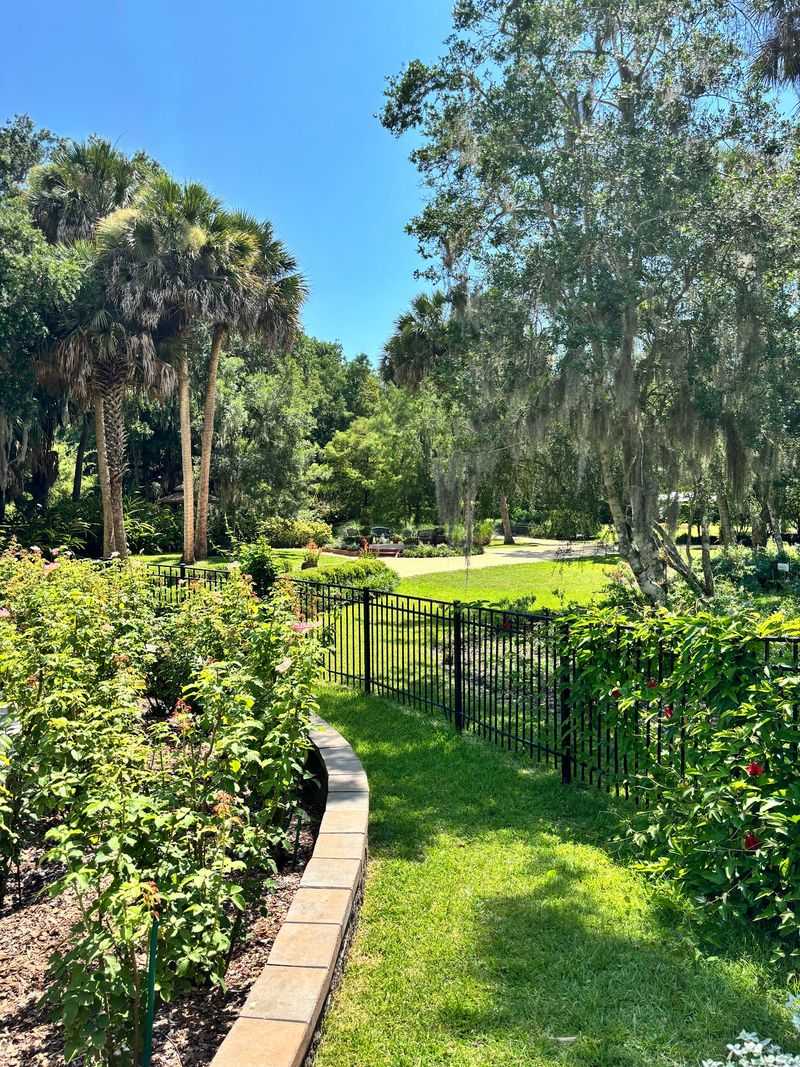
Not every ocean view in Florida is about soft sand and umbrellas.At Washington Oaks Gardens State Park in Palm Coast, the coastline is shaped by reddish coquina rocks, tide pools, and waves that splash against stone ledges.
The beach side feels rugged and dramatic, which surprises many visitors who expect the usual flat shore.
Across the road, the garden area offers a calmer kind of beauty with live oaks, palms, citrus trees, ponds, and blooming plants.Walking both sides of the park shows how one small place can hold two completely different moods.
The rocks are best seen at low tide, so check tide times before you go and wear shoes with grip if you plan to walk near them.
Photographers love the warm color of the coquina at sunrise, but families can enjoy the shaded garden paths later in the day.Do not climb on wet rocks when waves are strong, because they can be slippery and sharp.
This park reminds travelers that Florida beaches can be bold, textured, and full of history, not just postcard sand.
4. Paynes Prairie Preserve State Park, Micanopy, Alachua County
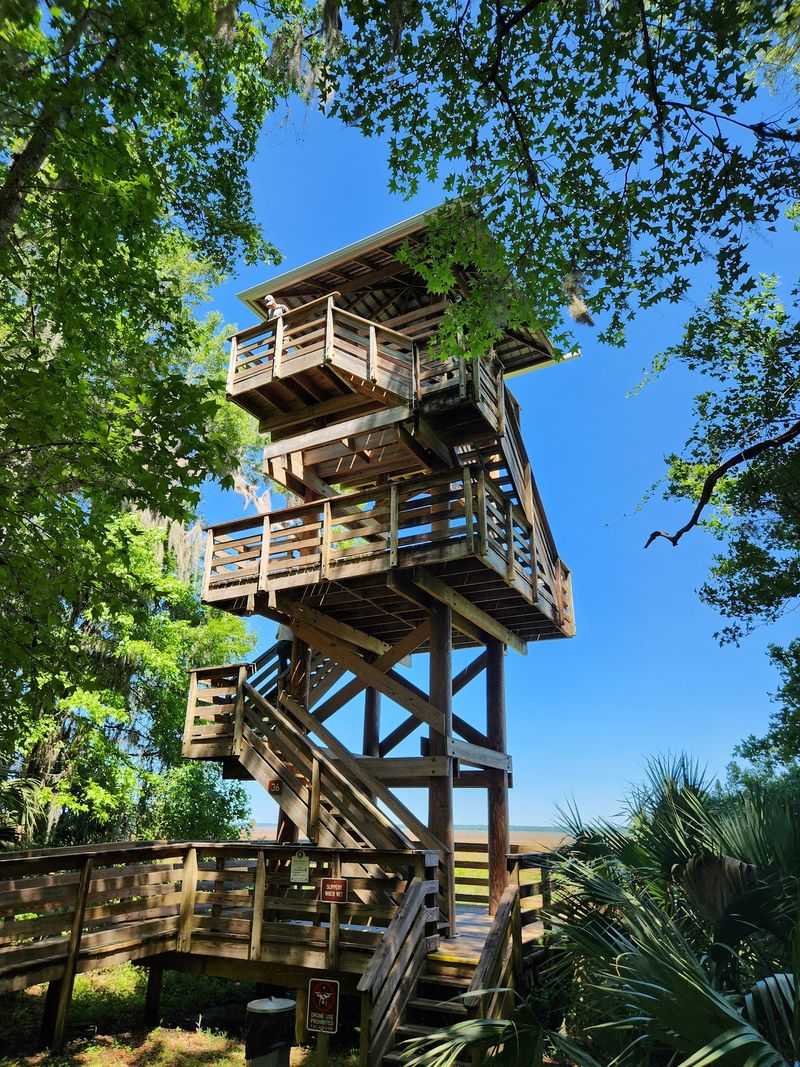
A prairie in Florida sounds like a mistake until you stand above Paynes Prairie and see the land stretch wide beneath the sky.Near Micanopy, this preserve protects a huge basin of marsh, grassland, lakes, and hammocks that changes with rain and season.
The observation tower near the visitor center gives one of the most surprising inland views in the state.
Instead of beach chairs and surf, you may spot wild horses, bison, deer, sandhill cranes, or alligators in the distance.The bison were reintroduced in the 1970s, adding a living link to Florida’s older prairie history.
Bring binoculars, because many animals stay far from the platform, and the fun is often in scanning the horizon carefully.
Trails such as La Chua Trail can offer closer wildlife views when conditions allow, but always check closures before going.Summer can be hot and buggy, while cooler months are more comfortable for walking.
Paynes Prairie teaches a simple lesson: Florida is not only coast and swamp, but also open grass, big clouds, and a wild sense of space.
5. St. Marks Lighthouse, St. Marks, Wakulla County
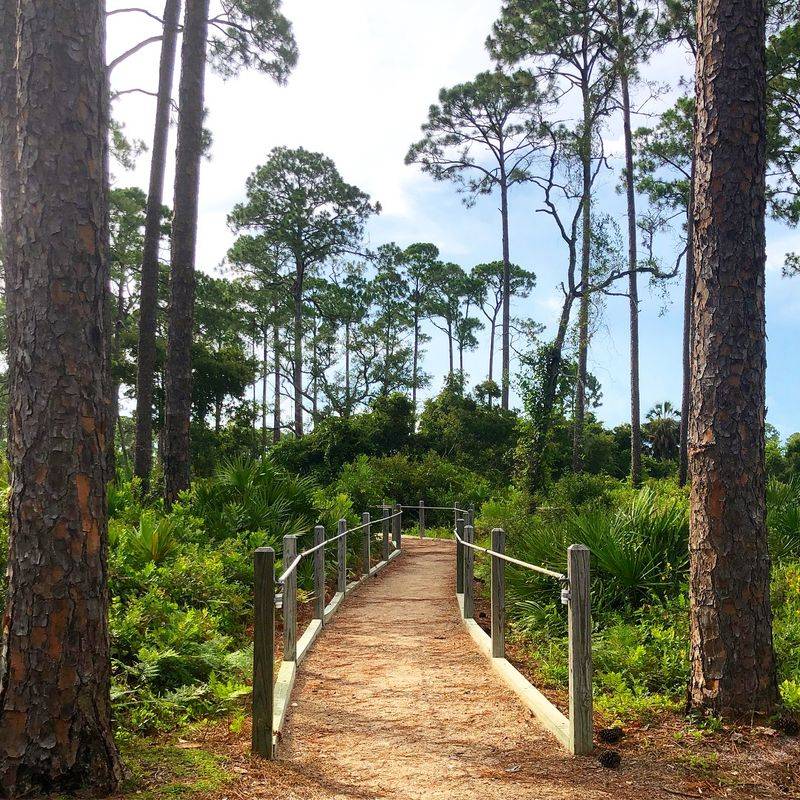
Soft marsh light gives this place a storybook feeling, especially when the white lighthouse rises beyond the grasses.St. Marks Lighthouse, inside St. Marks National Wildlife Refuge, has watched over this quiet part of the Gulf Coast since the 1800s.
The view is not flashy, but it stays with you because land, water, and sky blend so gently.
Visitors can look across salt marsh, tidal flats, and shallow pools where shorebirds feed and crabs move through the mud.In cooler months, the refuge becomes a favorite stop for migrating birds, making binoculars almost as useful as a camera.
The road to the lighthouse passes ponds where alligators, ducks, and wading birds often appear, so the drive itself feels like a slow nature tour.
Check refuge hours and lighthouse tour dates before visiting, because access can vary.Sunset is beautiful here, but bring insect repellent and keep an eye on the time so you are not rushed leaving.
This viewpoint shows a quieter Gulf, where Florida feels old, patient, and connected to tides, birds, and weather.
6. Corkscrew Swamp Sanctuary, Naples, Collier County
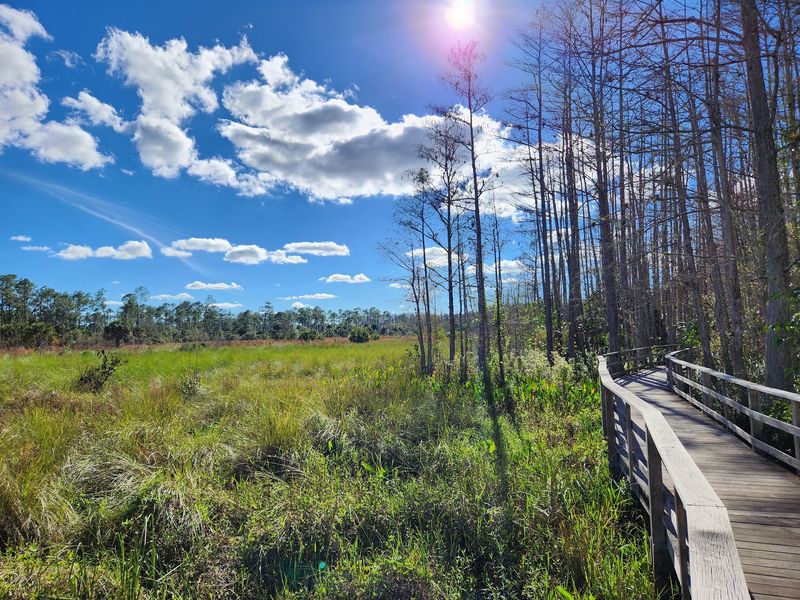
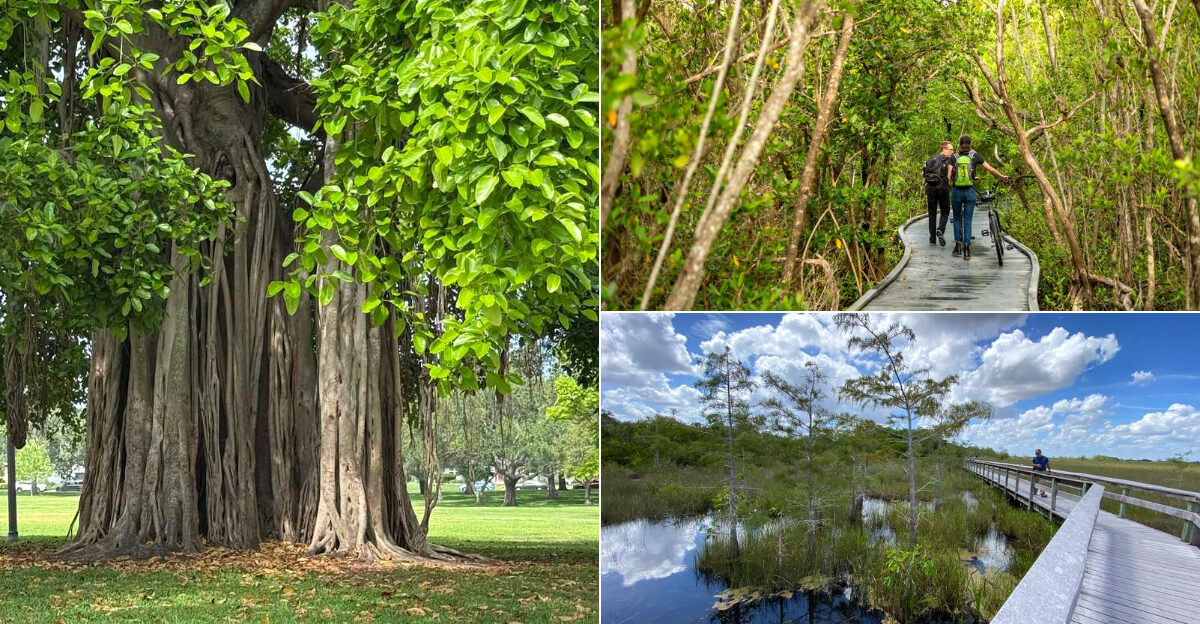
Under the tall cypress trees, the world seems to cool down and whisper.Corkscrew Swamp Sanctuary near Naples protects one of the largest remaining old-growth bald cypress forests in North America.
Its famous boardwalk carries visitors through pine flatwoods, wet prairie, marsh, and deep swamp without needing boots.
The viewpoint here is not one single platform, but a slow-changing window into a rare forest.Massive cypress trunks rise from dark water, air plants cling to branches, and barred owls or wood storks may appear when you least expect them.
The sanctuary is also important for the ghost orchid, a rare flower that has made this swamp known among plant lovers.
Reserve tickets ahead when required, arrive early for cooler air, and walk quietly to improve your chances of seeing birds and reptiles.The boardwalk loop is long enough to feel like an adventure, so bring water and comfortable shoes.
Instead of showing Florida from above, Corkscrew invites you to look inward, into shade, reflection, roots, and the hidden life of a living swamp.
7. Boyd Hill Nature Preserve, St. Petersburg, Pinellas County
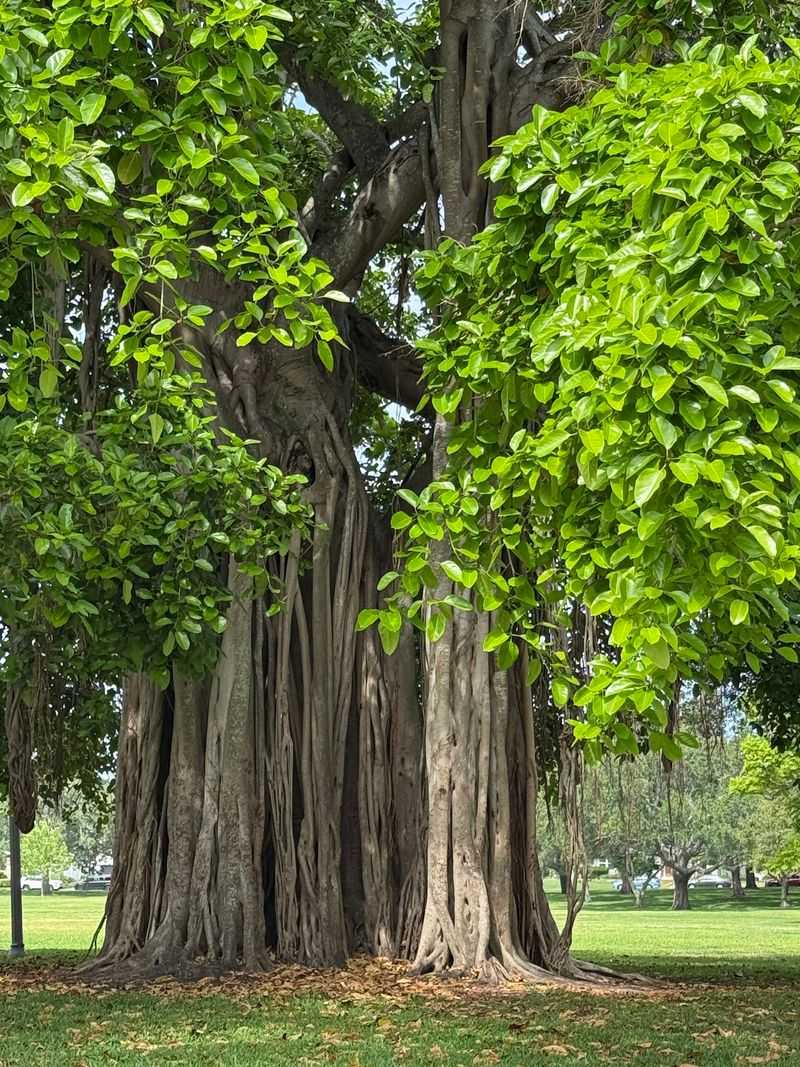
Right in a busy city, a trail can still make traffic feel far away.Boyd Hill Nature Preserve in St. Petersburg sits beside Lake Maggiore and protects several Florida habitats in one compact place.
From lake overlooks and shaded paths, visitors can see water, woods, scrub, and wetlands without leaving Pinellas County.
The preserve is especially helpful for travelers who do not have time to drive deep into the wilderness.You might spot ospreys, butterflies, wading birds, turtles, and, with luck, a gopher tortoise near sandy upland areas.
The trails are well marked, and the education center adds helpful context for kids and first-time visitors.
Go early if you want bird activity and cooler walking weather.Bring a hat, water, and shoes that can handle sand or damp spots after rain.
Because the preserve is managed for wildlife, stay on trails and resist feeding animals, even if they seem comfortable around people.
Boyd Hill proves that hidden viewpoints do not always require a remote road or a full-day plan.
Sometimes Florida’s wild side is tucked behind neighborhoods, waiting with lake breezes, pine scent, and an unexpected feeling of escape.
8. Myakka River State Park Canopy Walk, Sarasota, Sarasota County
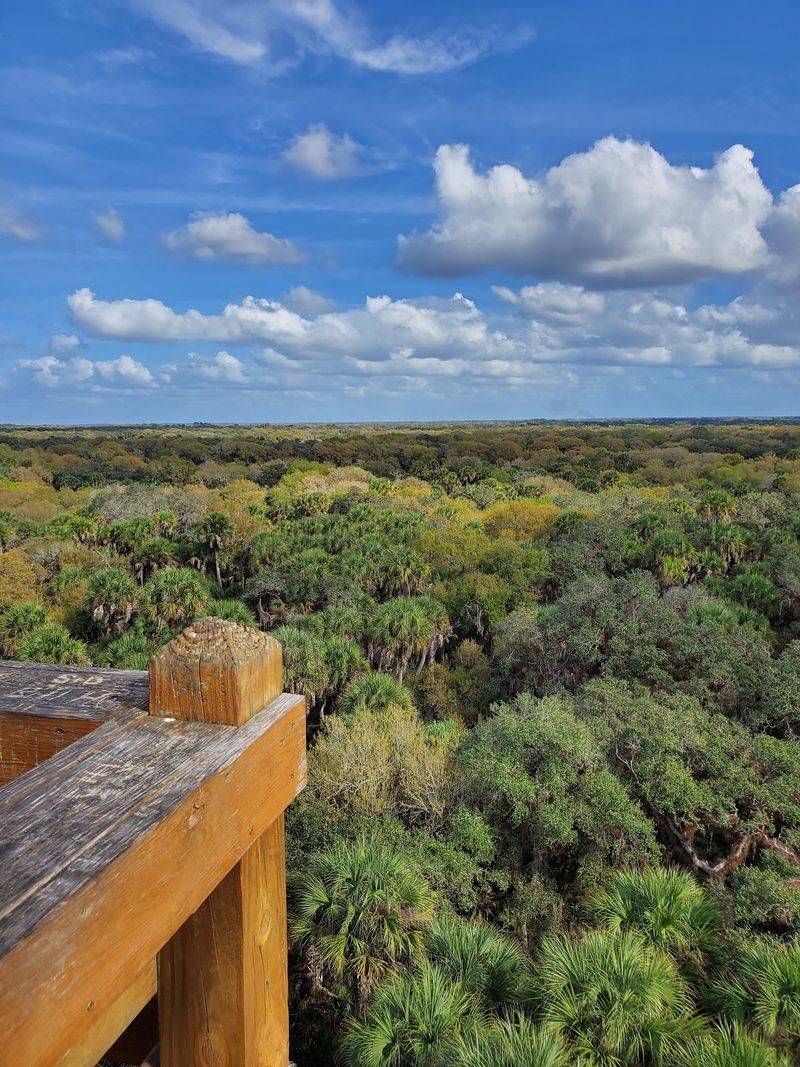
Climbing into the treetops changes how Florida looks and feels.At Myakka River State Park near Sarasota, the Canopy Walk lets visitors cross a short suspension bridge and then climb a tower for a view over the forest.
Suddenly, palms, oaks, and wetlands spread below like a green quilt.
The walkway is not very long, but it delivers a big sense of adventure, especially for kids or anyone who enjoys a small thrill.From the tower, you can look for birds moving through the canopy and watch how the river landscape opens beyond the trees.
Myakka is one of Florida’s oldest state parks, and its mix of prairie, hammock, river, and lake makes it feel much larger than one stop.
Wear sturdy shoes, hold the railing, and avoid the bridge during storms or high winds.After the canopy view, consider driving to the lake area or taking a boat tour if available.
Alligators are common in the park, so admire them from a safe distance.
This viewpoint lifts visitors above the usual eye level and shows Florida as a layered place, full of branches, water, birdsong, and hidden movement.
9. Ding Darling National Wildlife Refuge, Sanibel, Lee County
Pink birds in shallow water can make even a quiet morning feel bright.J.N.
Ding Darling National Wildlife Refuge on Sanibel protects mangroves, seagrass beds, mudflats, and open water that attract an amazing mix of birds.The viewpoints along Wildlife Drive give easy access to scenery that feels far removed from crowded shell beaches nearby.
Roseate spoonbills, pelicans, egrets, herons, ibises, and ospreys are regular highlights, though tides shape what you will see.Low tide often brings feeding birds closer to exposed flats, so check tide charts before planning your visit.
The refuge is named for Jay Norwood Darling, a cartoonist and conservation leader who helped protect wildlife habitat across the country.
You can drive, bike, or walk parts of the route, depending on the day and current rules.Bring binoculars, move slowly, and pull over only in allowed areas.
Mosquitoes can be active, and the sun can feel strong over open water, so pack repellent, water, and a hat.
This refuge shows Sanibel’s quieter heart, where the best view may be a spoonbill sweeping its bill through silver shallows.
10. Homosassa Springs Wildlife State Park, Homosassa, Citrus County
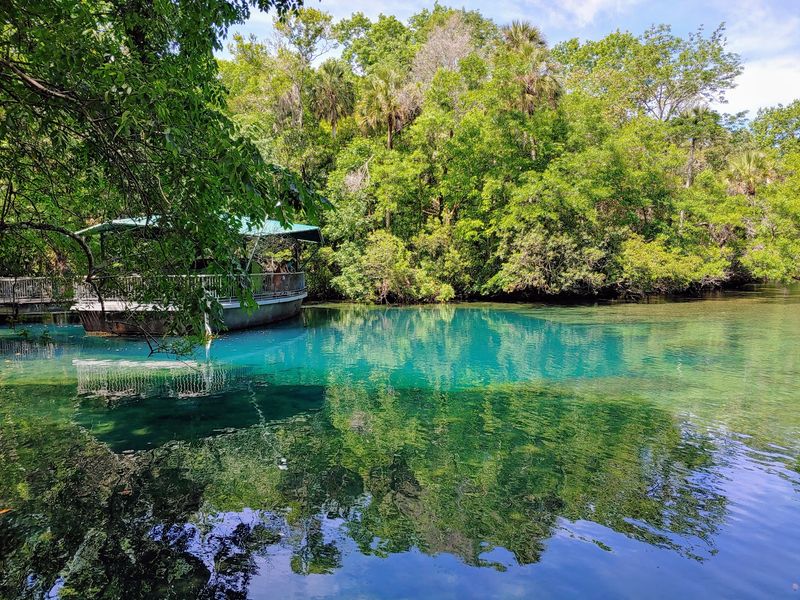
Clear spring water has a way of turning every visitor into a quiet observer.At Homosassa Springs Wildlife State Park in Citrus County, the main viewpoint centers on blue-green water where manatees, fish, and turtles move through the spring run.
The underwater observatory, often called the Fish Bowl, lets you watch life below the surface without getting wet.
The park also cares for native Florida animals that cannot return to the wild, including black bears, panthers, bobcats, flamingos, and birds of prey.That makes the visit part scenic stop and part learning experience, especially for families who want to understand local wildlife better.
Manatees are the biggest stars, and winter is often a strong season for seeing them in warm spring water.
Check feeding or program times when you arrive, because ranger talks can make the visit much more meaningful.Walk the boardwalks slowly, read the signs, and give yourself enough time to enjoy both the spring and the animal habitats.
Homosassa offers a different Florida view, not from a tall tower, but through clear water, where the state’s softer wild side floats gently past.