South Carolina’s oldest churches have survived hurricanes, wars, fires, and the slow passage of centuries, and they’re still standing, still active, and still carrying stories that no textbook adequately captures.
The state’s deep colonial roots mean that some of these congregations predate the American Revolution by decades, gathering communities that shaped the region long before it had a name.
Charleston alone contains a concentration of historic religious architecture that rivals cities ten times its size, but the stories extend well beyond the city limits.
Plantation chapels, ruins, and frontier meeting houses scattered across the Lowcountry and Midlands each hold a different thread of the state’s complicated, layered past.
These eleven South Carolina churches are worth the drive not just for their architecture, but for what they make you think about long after you leave.
1. Circular Congregational Church – Charleston, Charleston County
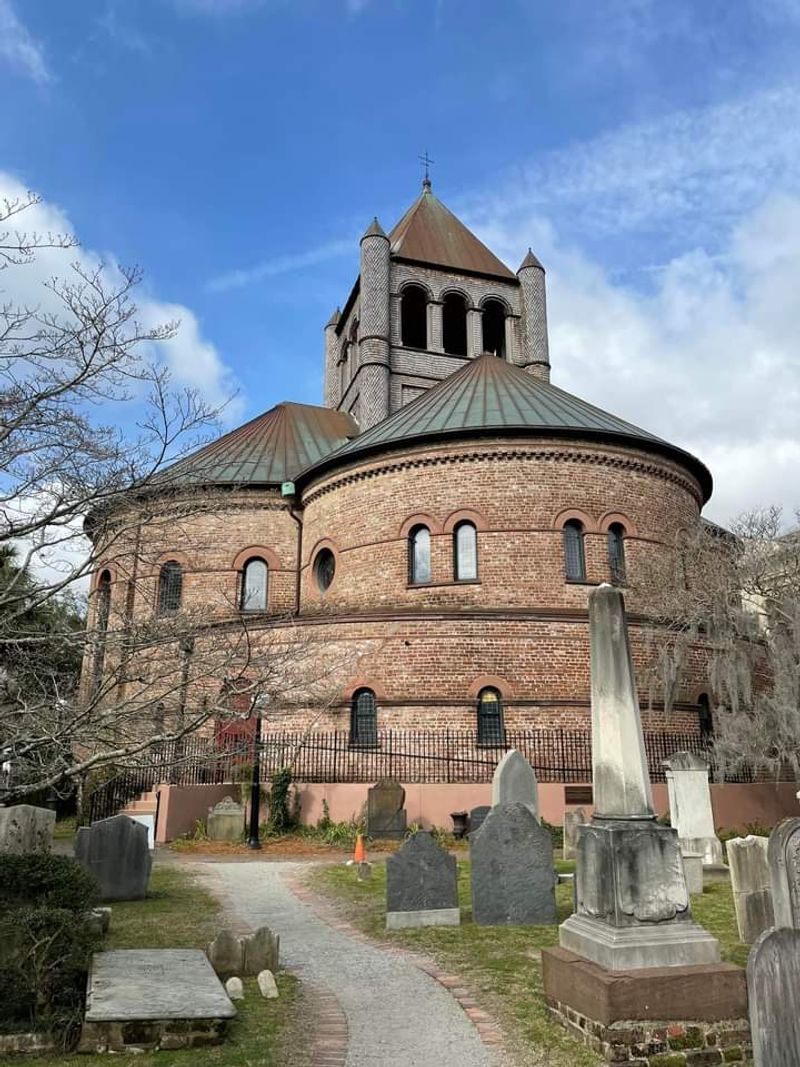
Quiet graveyard paths and a rare round sanctuary make this stop feel different before you even reach the doors.
The present Circular Congregational Church in Charleston stands on a site tied to one of the South’s oldest continuously worshiping congregations, organized in 1681.
Its unusual form is not a gimmick but a survivor’s answer to repeated fires, hurricanes, and rebuilding.
Charleston’s religious life was fluid in the colonial era, and this congregation reflected that independence, welcoming worshipers outside stricter Anglican patterns.
The current Romanesque style building dates largely to the late nineteenth century, yet the ground beneath it holds burials and memories stretching much farther back.
Walking here, you are really reading layered chapters of Charleston’s civic, spiritual, and social life at once.
During the Civil War, the church suffered damage, and later restoration shaped the structure you see today.
Its cemetery is especially moving because names from merchant families, reformers, and ordinary residents share the same worn landscape.
That democratic feeling is part of the story history books often flatten into dates and famous pastors.
What stays with you most is the sense that resilience here was communal, not abstract.
Every repair, funeral, and hymn added another ring to the place, much like the circular plan itself.
2. St. Philip’s Episcopal Church – Charleston, Charleston County
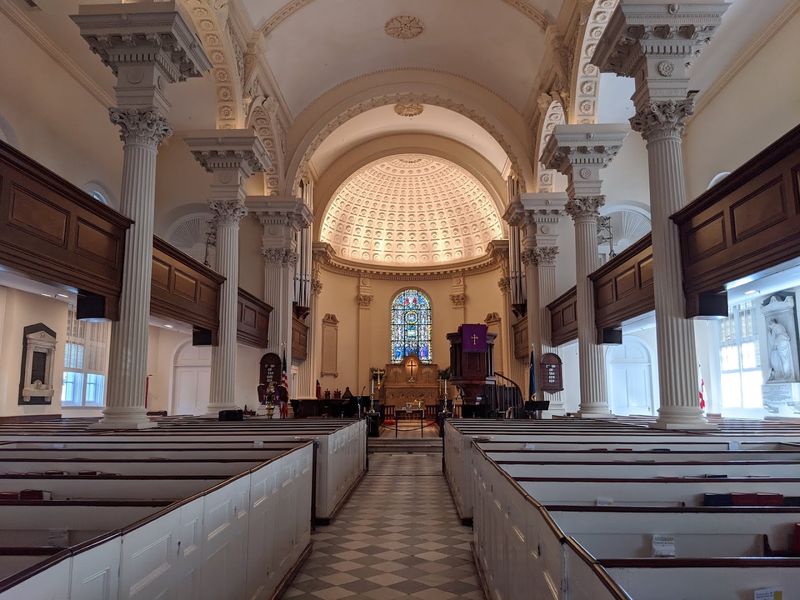
Bells, ironwork, and one of Charleston’s most recognizable steeples give this church an almost cinematic arrival.
St. Philip’s Episcopal Church traces its parish beginnings to 1680, making it central to the story of Anglican worship in colonial South Carolina.
The current building is younger than the parish itself, but that gap is exactly where its most interesting stories live.
Earlier structures faced storms, fire, and the upheaval of a city repeatedly tested by war and disaster.
The church moved from its original site near the Cooper River and eventually took shape on Church Street, where it became a social and spiritual landmark.
Inside and outside, you can still sense how closely religion, politics, and status intertwined in early Charleston.
Its graveyard reads like a who’s who of South Carolina history, yet the quieter lesson is about continuity.
Generations baptized children here, buried relatives here, and returned after catastrophe because public identity and private grief met in the same place.
That kind of repetition turns architecture into memory faster than any official monument can.
St. Philip’s also reflects Charleston’s habit of rebuilding beauty after loss without pretending the loss never happened.
The towering steeple you admire today rises from a tradition shaped by adaptation as much as ceremony.
3. St. Helena’s Episcopal Church – Beaufort, Beaufort County
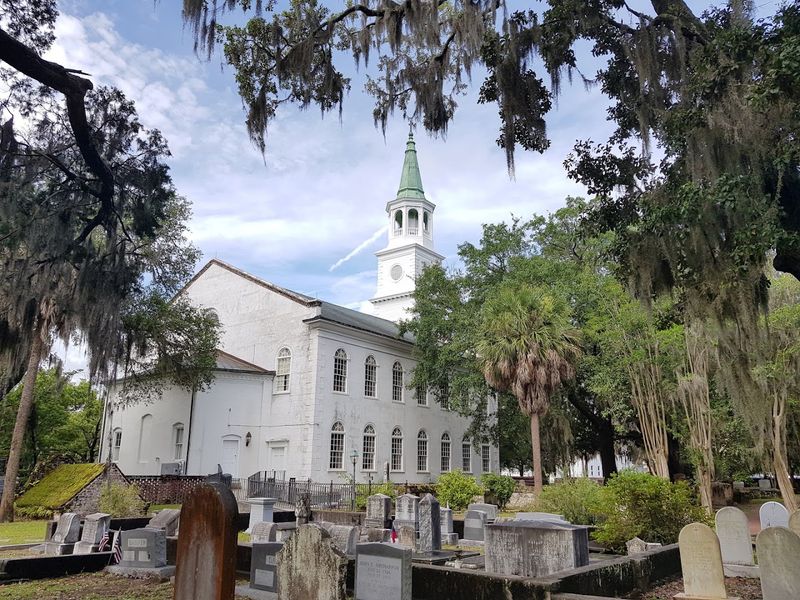
Live oaks, Spanish moss, and a churchyard full of weathered markers create a Lowcountry mood that feels suspended between gentleness and grief.
St. Helena’s Episcopal Church in Beaufort traces its origins to the early eighteenth century and remains one of South Carolina’s most important colonial parishes.
The setting is beautiful, but beauty here never hides the harder layers of regional history.
The parish was established in 1712, and the brick church largely took shape in the 1720s, serving a plantation world built on enslaved labor.
During the Civil War, Beaufort came under Union control early, and the church was used as a hospital.
That single fact changes the atmosphere because the pews and aisles stop feeling merely picturesque.
Local tradition also links the site to the early years of Reconstruction and to the complicated spiritual transitions of a transformed town.
In Beaufort, where occupation altered daily life sooner than in many Southern communities, sacred spaces became practical spaces almost overnight.
You can sense that adaptability in the building’s survival and in the stories residents still attach to it.
St. Helena’s is often admired for architecture and setting, both deservedly so.
Yet what makes it unforgettable is how clearly it reveals South Carolina’s entanglement of faith, power, war, and recovery.
4. French Huguenot Church – Charleston, Charleston County
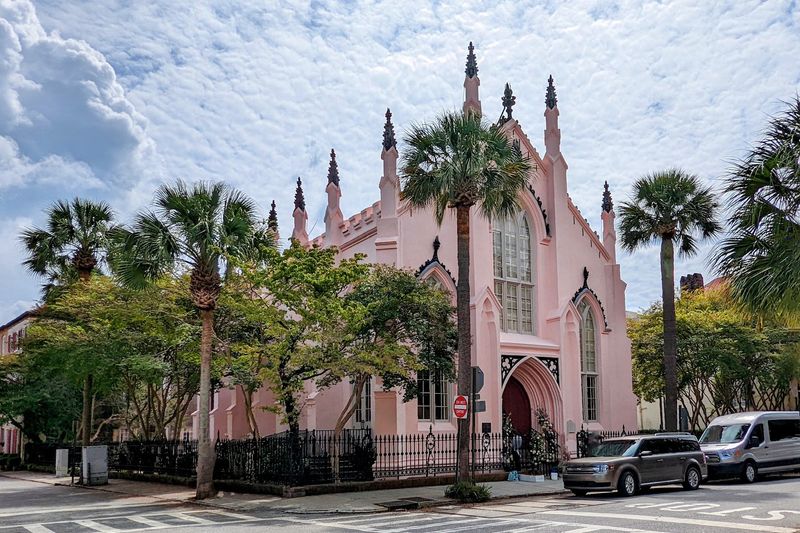
A narrow street, a blush colored facade, and a distinctly European silhouette make this church feel unlike anything else in Charleston.
The French Huguenot Church represents descendants of Protestant refugees who fled persecution in France and helped shape the city’s early cultural mix.
Even before you learn dates, the building announces a story of exile, adaptation, and stubborn spiritual identity.
The congregation began in the late seventeenth century, part of a broader Huguenot presence that brought language, trade networks, and craft traditions to colonial Charleston.
The current Gothic Revival sanctuary dates to the nineteenth century, replacing earlier structures while preserving the memory of that refugee community.
That continuity matters because migration stories are often reduced to economics when faith was equally powerful.
Services were once conducted in French, and the congregation long protected customs that connected worshipers to a homeland many had never seen.
In that way, the church became both sanctuary and archive, holding onto pronunciation, liturgy, and belonging across generations.
You can feel how survival depended not only on safety, but on the ability to remember together.
Architecturally, it is one of Charleston’s most striking churches, yet the deeper appeal is emotional rather than visual.
This place tells you that South Carolina’s early history was never culturally uniform, no matter how tidy some narratives sound.
5. St. Michael’s Episcopal Church – Charleston, Charleston County
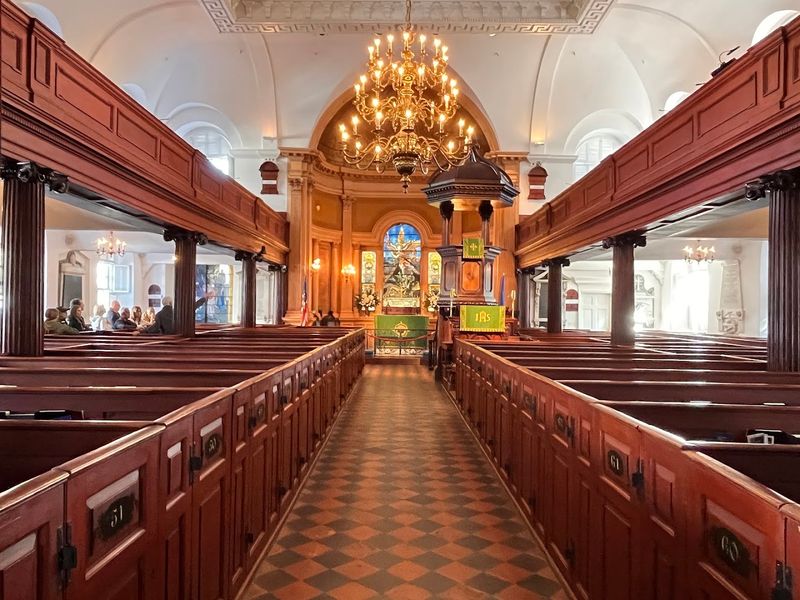
Sunlight on pale walls and a soaring white steeple can make this famous church seem almost too polished to carry hard history.
St. Michael’s Episcopal Church, completed in the 1760s, is the oldest surviving religious structure in Charleston and one of the finest Georgian churches in America.
Its elegance, though, sits directly beside stories of revolution, slavery, bombardment, and survival.
Built during the colonial era for an Anglican congregation, the church quickly became woven into the public life of an ambitious port city.
George Washington worshiped here during his Southern tour, a detail many visitors remember because it sounds monumental and safe.
Less discussed is how many ordinary Charlestonians marked marriages, deaths, and wartime fear within these same walls.
The church endured the Revolution, the Civil War, earthquakes, and hurricanes, each event leaving traces on the building and its community.
Its bells and clock have long ordered the soundscape of the city, reminding residents that sacred space can shape daily urban rhythm.
That kind of influence is easy to overlook because it feels so normal once it lasts long enough.
Visiting St. Michael’s, you notice not just beauty but endurance disciplined into form.
The pews, galleries, and grounds point toward a Charleston that was refined, unequal, devout, and remarkably resilient all at once.
6. First Scots Presbyterian Church – Charleston, Charleston County
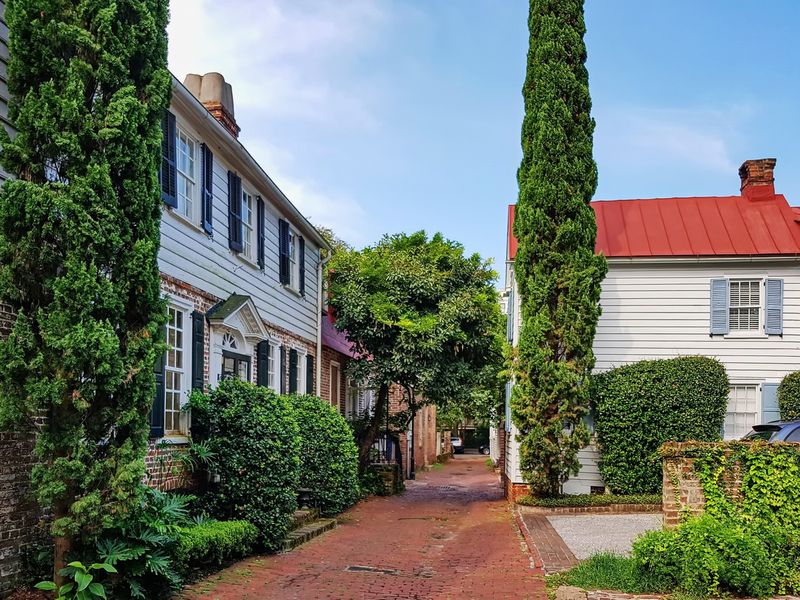
There is something grounding about a church that trades grandeur for proportion, brickwork, and a sense of steady conviction.
First Scots Presbyterian Church in Charleston, founded by Scottish immigrants in 1731, carries that feeling with unusual clarity.
Its story opens a window into how ethnic identity, commerce, and worship blended in a growing colonial port.
The congregation formed when Scots settlers and merchants wanted preaching and governance rooted in Presbyterian tradition rather than Anglican establishment.
That distinction mattered deeply in a city where church affiliation could signal culture, politics, and networks of trust.
The building that survives today, completed in 1814 after an earlier structure burned, preserves that legacy in restrained architectural form.
Inside, the church feels intimate compared with some of Charleston’s more theatrical sanctuaries, and that intimacy is part of its power.
You are reminded that endurance does not always arrive with dramatic ornament or public spectacle.
Sometimes it looks like a community quietly rebuilding after fire, continuing worship, and carrying old customs into a new century.
The church also reflects Charleston’s immigrant layering, where Scottish religious traditions took root without losing their distinct voice.
That makes it more than an old building because it documents how transplanted communities negotiated belonging while staying recognizably themselves.
7. Prince George Winyah Episcopal Church – Georgetown, Georgetown County
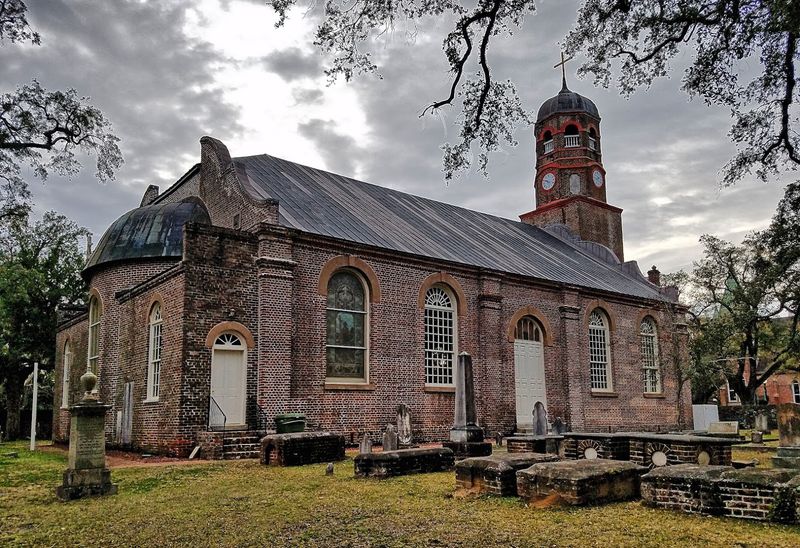
A river town hush and an old churchyard set the mood here long before the brick walls come fully into view.
Prince George Winyah Episcopal Church in Georgetown grew from a colonial parish established in the 1720s, serving one of the richest rice producing regions in British North America.
That prosperity funded beauty, but it also tied the church to a landscape shaped by brutal labor.
The present building dates mainly to the 1740s, with later additions and repairs reflecting centuries of use.
Because Georgetown developed differently from Charleston, the church offers a slightly quieter but equally revealing look at Lowcountry religious life.
Its history is bound to planters, merchants, enslaved Africans, and river commerce that carried both wealth and suffering.
Inside the churchyard, notable graves draw attention, yet the wider story lies in how the parish anchored a plantation economy’s moral vocabulary.
That tension is part of what makes old churches so compelling because they preserve devotion and contradiction in the same brick shell.
You are not asked to resolve that contradiction, only to recognize it honestly.
Prince George Winyah also shows how smaller towns held immense influence in colonial South Carolina.
The church became a marker of permanence in a region where fortunes rose from wetlands and could vanish just as quickly.
8. Sheldon Church Ruins – Yemassee, Beaufort County
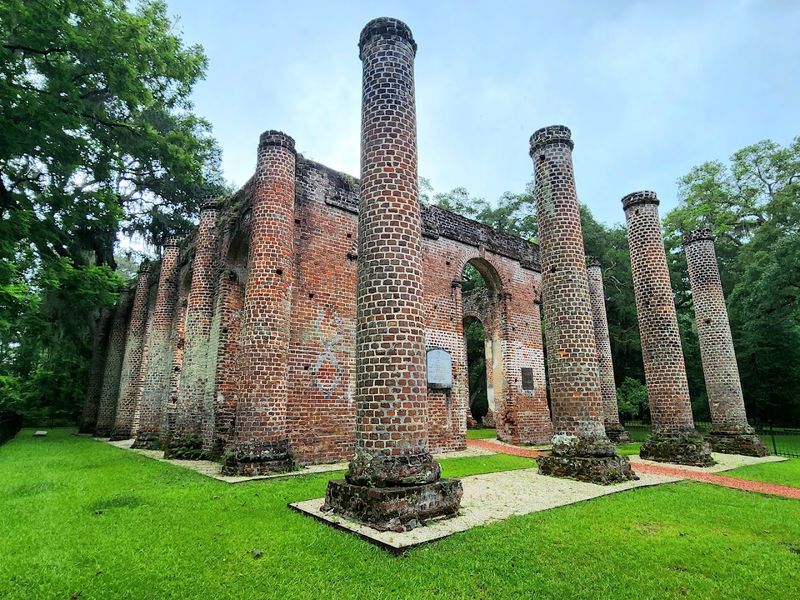
Open sky where a roof once stood gives this place the kind of silence that feels almost staged, yet nothing about it is artificial.
The Sheldon Church Ruins near Yemassee are the remains of Prince William’s Parish Church, originally built in the mid eighteenth century.
What survives today is less a building than a powerful argument for how memory can outlast destruction.
The church was likely burned during the Revolutionary War, rebuilt, and then damaged again during the Civil War, leaving the roofless shell visitors know now.
Those repeated losses matter because they compress two defining American conflicts into one haunting landscape.
When you stand among the columns, war stops being a chapter heading and becomes a physical absence.
Its rural setting adds to the feeling that history has been reclaimed by trees, light, and weather rather than museum labels.
Yet the ruin was once part of a working parish serving planters and families across the surrounding region.
That gap between daily use and present emptiness gives the site an emotional force few intact churches can match.
People often come for photographs, and it is undeniably photogenic.
Still, the deeper experience is the realization that sacred places can continue speaking even after function, furniture, and congregation are gone.
9. Lyttleton Street UMC – Camden, Kershaw County
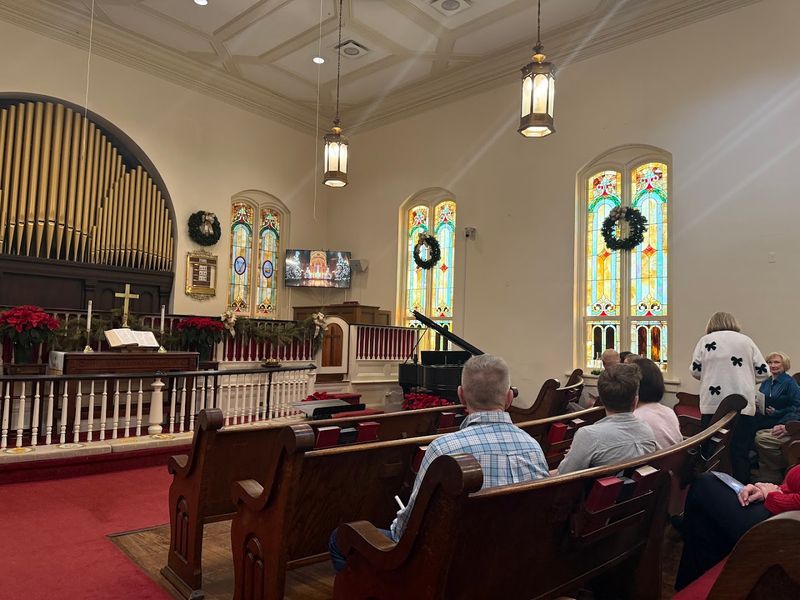
Small town calm can make this church seem modest at first, but Camden has a habit of hiding major history in plain sight.
Lyttleton Street United Methodist Church connects visitors to one of the oldest Methodist traditions in South Carolina, in a region shaped by Revolution, revival, and rebuilding.
Its story is less about a single spectacular event and more about how faith followed settlement inland.
Camden was one of the state’s earliest and most important backcountry communities, so churches here reflect a different South Carolina from the coastal parishes.
Methodism spread through itinerant preaching, camp meetings, and practical local networks rather than established colonial privilege.
That background helps Bethel stand out because it represents the democratic energy of early American religion.
The congregation’s roots reach deep into the nineteenth century, and its historic presence mirrors Camden’s growth as a commercial and social center.
Worship in places like this often doubled as community organization, moral instruction, and emotional refuge during unstable periods.
You can imagine families measuring life’s milestones not by headlines, but by who sat in which pew on Sunday.
What makes Bethel memorable is the way it broadens the state’s church story beyond Charleston and the Lowcountry.
10. Trinity Episcopal Church – Columbia, Richland County
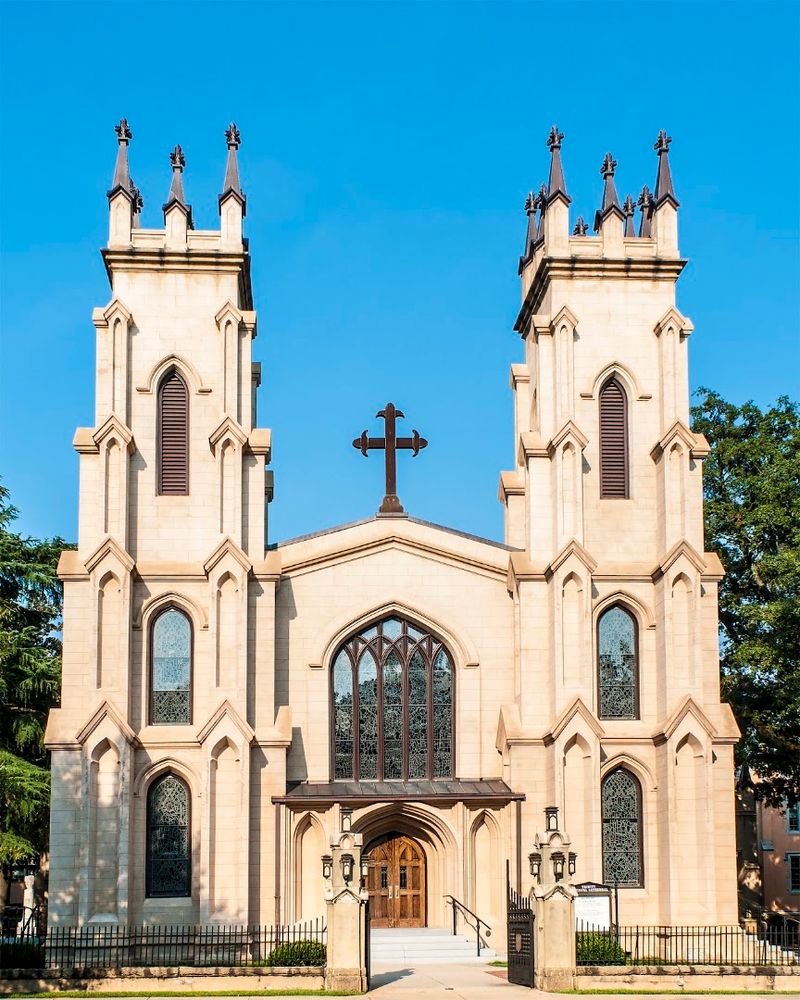
In a capital city better known for government buildings and university energy, this church offers a slower and older rhythm.
Trinity Episcopal Church in Columbia, organized in the early nineteenth century, became one of the city’s foundational congregations as the state capital matured.
Its history shows how young American cities used churches to create stability, status, and civic identity.
The parish formed in 1812, not long after Columbia itself was still finding its shape as a planned inland capital.
That timing matters because Trinity grew alongside the city rather than inheriting a deep colonial framework like Charleston parishes did.
You can read the church as part of Columbia’s effort to become not merely administrative, but culturally rooted.
Through the nineteenth century, the congregation navigated growth, sectional conflict, and the aftershocks of war that changed the capital permanently.
Churches in cities like Columbia often functioned as anchors for newcomers, lawmakers, merchants, and families trying to define respectability.
That social role gave Trinity influence beyond worship services and Sunday ritual.
Architecturally and historically, it reflects aspiration tempered by upheaval.
The building tells you that inland South Carolina developed its own sacred landscape, one tied to governance, mobility, and reinvention rather than only plantation memory.
11. Old Brick Church – Edgefield, Edgefield County
Red clay country and a plain old sanctuary can tell you as much about South Carolina as any grand coastal steeple.Old Brick Church near Edgefield is valued not for ornament, but for its rare survival as an early upcountry house of worship.
The simplicity pulls your attention toward settlement patterns, community labor, and the practical side of frontier religion.
Built in the late eighteenth century for a Presbyterian congregation, the church reflects how migrants carried institutional faith into the developing backcountry.Materials, scale, and plan all suggest a world where resources were limited but commitment was not.
That makes the building an unusually honest document of everyday regional history.
In places like Edgefield, churches served scattered populations who relied on them for social connection as much as doctrine.A structure such as this could host worship, funerals, meetings, and the small rituals that turned rough settlement into community.
You do not need ornate glass to feel how important that would have been.
Old Brick Church also widens the map of what counts as historically significant in South Carolina.Its endurance pushes back against the idea that the state’s oldest sacred stories belong only to wealthy coastal congregations.
If you care about the quieter textures of early American life, this church stands as one of the most persuasive and underrated witnesses in the state.