Florida’s palm trees and theme parks might steal the spotlight, but scattered across the state are historic parks that tell far more gripping tales than any guidebook mention.
These places preserve battlefields where soldiers fought, plantations that shaped the economy, and settlements that witnessed centuries of struggle and change.
Most tourists breeze right past them, missing stories of war, immigration, and survival that reveal Florida’s true character.
If you’re ready to step off the beaten path, these ten historic parks will show you a Florida most visitors never see.
Fort Clinch State Park
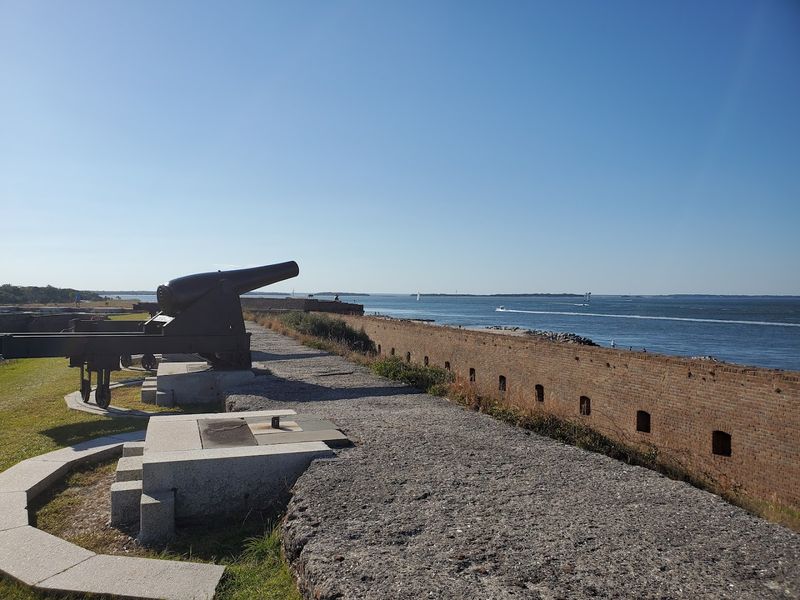
Massive brick walls rise from Amelia Island’s northern tip, holding secrets from a time when this coastline guarded vital shipping lanes. Fort Clinch stands as one of America’s best-preserved 19th-century military installations, yet most beachgoers never venture beyond the sand to explore it.
The pentagonal fortress tells stories that textbooks barely touch.
Construction began in 1847 when the United States needed stronger coastal defenses. Confederate troops briefly occupied the fort during the Civil War before Union forces reclaimed it without a single shot fired.
Soldiers would return again during the Spanish-American War, giving the structure a surprisingly long military career.
Today, costumed interpreters bring the 1864 Union garrison to life on the first full weekend of each month. You can explore candlelit rooms, watch blacksmiths work, and hear firsthand accounts of soldier life.
The fort’s strategic location protected Florida’s role in Atlantic trade routes that shaped the entire Southeast.
Walking the ramparts offers sweeping ocean views that explain why this spot mattered so much. History students and curious travelers alike discover that Florida played a bigger military role than most people realize.
Bulow Plantation Ruins Historic State Park
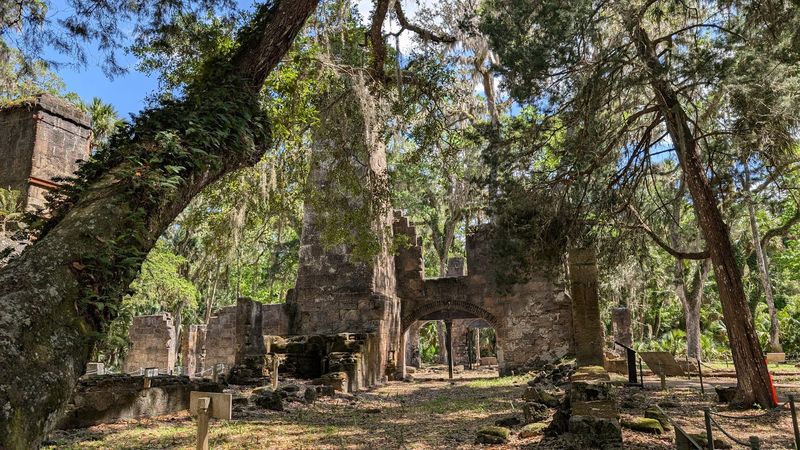
Beneath a cathedral of moss-draped oaks, crumbling coquina walls whisper of wealth, labor, and sudden destruction. John Bulow built one of East Florida’s most prosperous sugar plantations here, employing hundreds of enslaved people who processed cane into sweet profits.
Then everything changed in one violent day.
During the Second Seminole War in 1836, Seminole warriors burned the plantation to the ground. The attack wasn’t random—it targeted the wealth and infrastructure that supported territorial expansion into their homelands.
What remains now tells both sides of that story more honestly than many historic sites dare to.
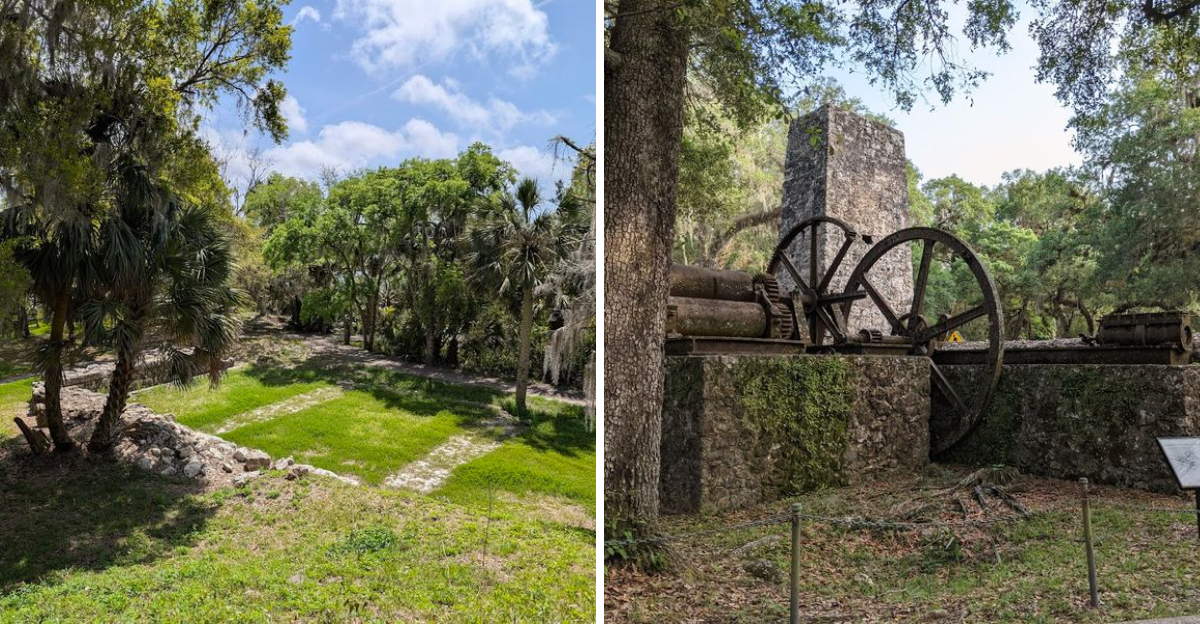
The sugar mill’s massive stone ruins still stand, their arches framing empty sky where roofs once covered grinding machinery. Interpretive trails wind through forest that has reclaimed cultivated fields, creating an eerie beauty from tragedy.
You can still trace the foundations of the main house and imagine the compound’s former scale.
This park doesn’t shy away from uncomfortable truths about plantation economics and Indigenous resistance. Walking these grounds connects visitors to Florida’s complicated past in ways that feel immediate and real, not sanitized or distant.
Olustee Battlefield Historic State Park
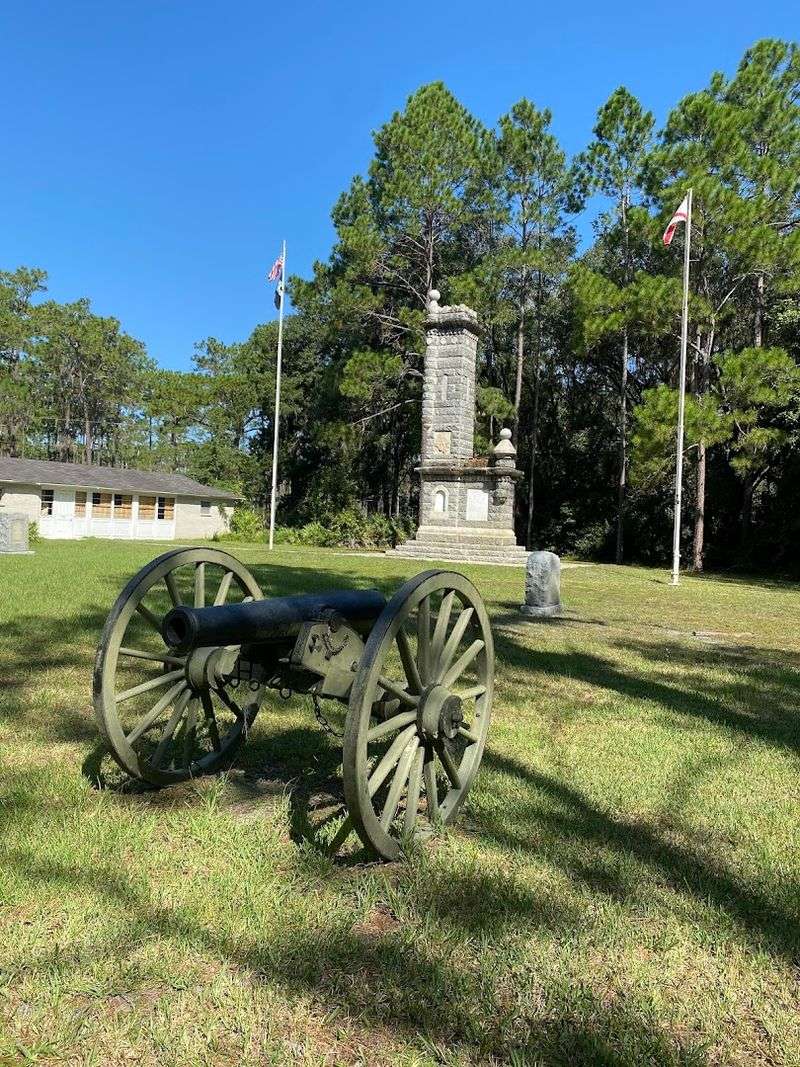
More than 10,000 soldiers clashed in these pine woods on February 20, 1864, creating Florida’s bloodiest Civil War engagement. The ground still seems to hold their story—a brutal fight that most history classes skip over entirely.
Union forces pushed inland hoping to disrupt Confederate food supplies and recruit freed slaves, but they met fierce resistance.
Three regiments of United States Colored Troops fought here with extraordinary courage despite facing both Confederate soldiers and the period’s racist prejudices. Their participation marked a turning point in how Black soldiers were viewed by the Union Army.
The battle ended in Confederate victory, but the bravery displayed by these troops couldn’t be denied.
A museum on-site helps visitors understand troop movements, battlefield strategy, and individual stories of courage. Each February, the park hosts one of the Southeast’s largest Civil War reenactments, bringing history alive with authentic uniforms, tactics, and camp life demonstrations.
Walking the preserved battlefield reveals how terrain shaped the conflict’s outcome. The flat, open ground favored Confederate defenders who knew the landscape.
This park proves Florida wasn’t some backwater during the Civil War—it was contested territory where thousands fought and died.
Dade Battlefield Historic State Park
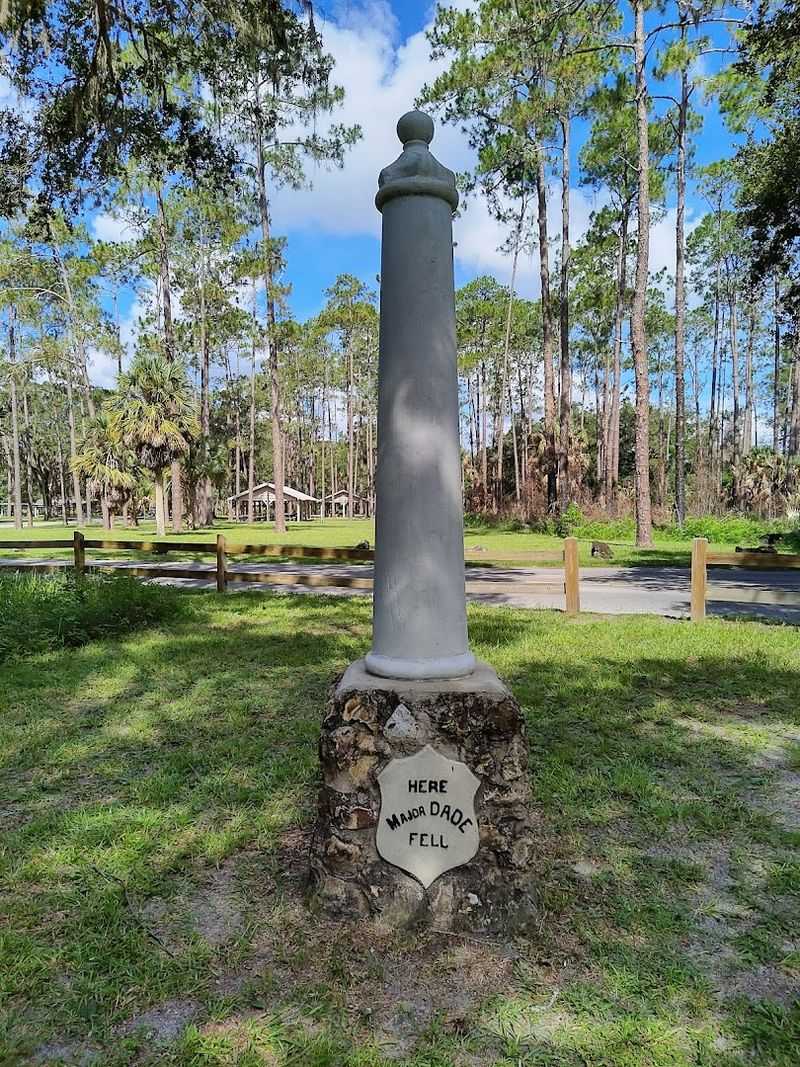
On December 28, 1835, Major Francis Dade led 110 soldiers through Florida wilderness, unaware that Seminole warriors tracked their every step. The ambush that followed would spark seven years of brutal conflict and reshape Florida’s entire future.
Only three soldiers survived to tell what happened.
The Second Seminole War became one of America’s longest and costliest wars against Native peoples, yet many Americans have never heard of it. This battlefield marks where it all began—a calculated strike by Seminole leaders determined to resist forced removal from their homeland.
The attack succeeded beyond anyone’s expectations, wiping out nearly an entire military command.
Today’s park preserves the pine flatwoods where the ambush unfolded. A log breastwork reconstruction shows where desperate soldiers made their final stand.
Interpretive signs explain Seminole perspectives alongside military accounts, offering balanced views rarely found at historic battlefields.
An annual reenactment each December brings the conflict’s complexity to life without glorifying violence. Visitors leave understanding that Florida’s history involves far more than Spanish explorers and beach resorts.
The Seminole people’s resistance to displacement deserves recognition, and this quiet park ensures their story survives.
Natural Bridge Battlefield Historic State Park
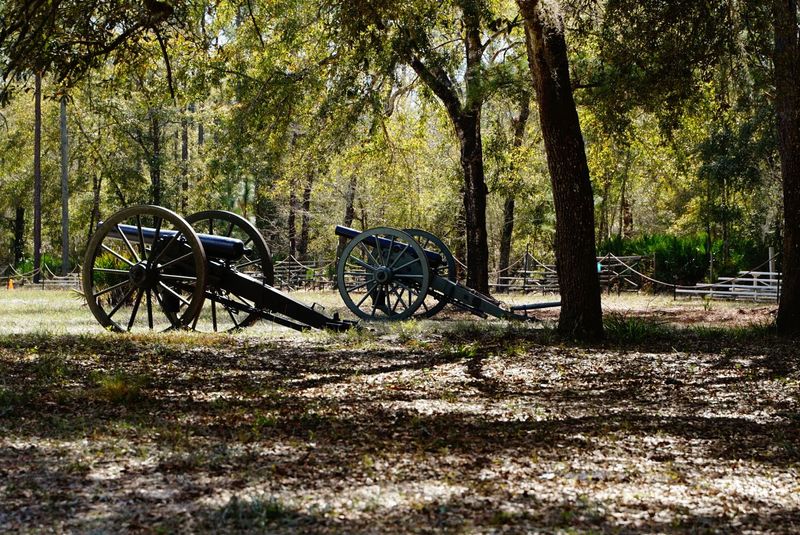
Geography sometimes decides battles more than strategy or courage. Near Tallahassee, the St. Marks River disappears underground, creating a rare natural bridge that became Florida’s last major Civil War battlefield.
Confederate forces used this geological quirk to stop Union troops from capturing the state capital in March 1865.
Union sailors and marines pushed up the St. Marks River hoping to take Tallahassee, making it the only Confederate state capital east of the Mississippi never captured. But defenders—including young cadets from nearby academies and elderly home guard volunteers—positioned themselves at the natural bridge where invaders had to cross.
The resulting fight lasted hours and ended in Union retreat.
This small but significant victory came just weeks before the war’s end, though nobody knew that at the time. The cadets who fought here were barely teenagers, yet they’re honored with monuments throughout the park.
Their youth makes the battle feel even more desperate and tragic.
Hiking trails now wind through the battlefield and down to the natural bridge itself. The limestone formation remains impressive, making it easy to understand why controlling this crossing point mattered so much.
This park highlights Florida’s Civil War role while showcasing unique geology found nowhere else in the state.
Ybor City Museum State Park
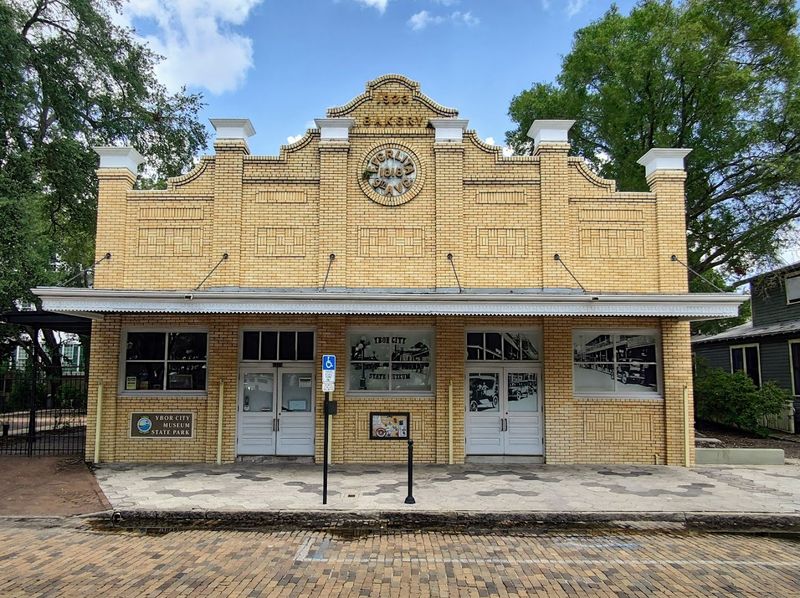
Smoke from thousands of hand-rolled cigars once filled these streets, mixing languages from Cuba, Spain, Italy, and beyond into something entirely new. Ybor City became Florida’s great melting pot, where immigrant workers transformed Tampa into the “Cigar Capital of the World.” The story preserved here goes far deeper than tobacco and nightlife.
Cuban revolutionaries plotted against Spanish rule from these very buildings. Italian bakers created recipes still served at family restaurants.
Spanish and Cuban cigar workers organized some of Florida’s first labor movements, fighting for better wages and conditions. This neighborhood witnessed struggles for worker rights, independence movements, and cultural survival that shaped modern Tampa.
The museum occupies a former bakery where Ferlita’s Bakery once fed factory workers. Original cigar-worker casitas (small shotgun houses) still stand behind the building, showing how immigrant families lived.
You can peek inside restored homes and imagine the crowded, vibrant community that thrived here.
Interactive exhibits explore how different cultures mixed, sometimes clashed, and ultimately created unique traditions found nowhere else. The “lectores” who read newspapers and novels to cigar rollers get special attention—these readers kept workers educated and connected to world events.
Ybor City’s story proves Florida’s history extends far beyond conquistadors and Confederate battles.
The Barnacle Historic State Park
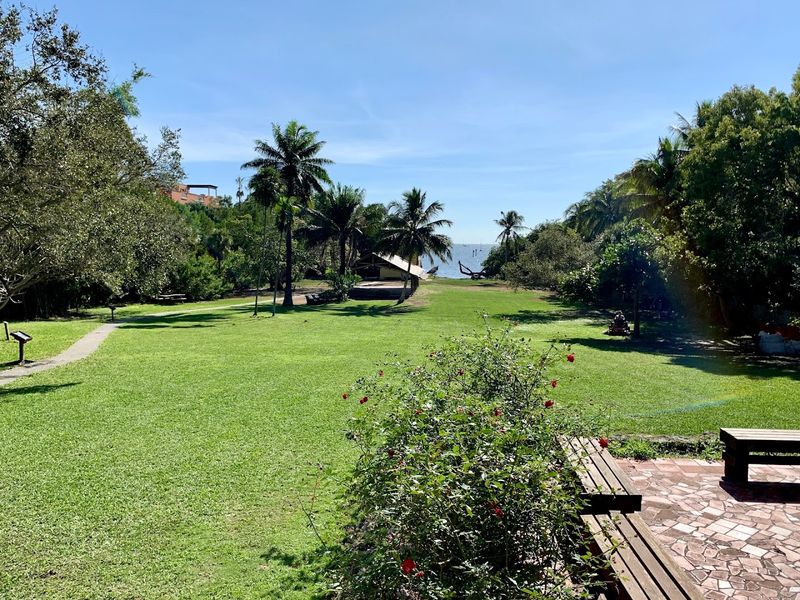
Step into Miami before everything you recognize about the city existed. Ralph Middleton Munroe built this bayfront estate in 1891 when Miami was barely a settlement, and his home remains exactly where he placed it—one of the oldest houses in Miami-Dade County still on its original foundation.
The contrast between this peaceful property and modern Miami’s skyline feels almost surreal.
Munroe arrived as a yacht designer and photographer who fell in love with Biscayne Bay’s wild beauty. He designed his home to capture breezes and withstand hurricanes, using construction techniques incredibly advanced for the 1890s.
The raised structure, wide verandas, and cross-ventilation made Florida summers bearable decades before air conditioning.
His photography documented Native American life, early settlers, and the bay’s transformation. Those images now serve as priceless historical records of vanished Florida.
Munroe also co-founded the Miami Yacht Club and helped establish early conservation efforts to protect the bay.
Guided tours reveal original furnishings, family photos, and Munroe’s sailing trophies. The five-acre grounds feature a tropical hardwood hammock that’s rare in developed Miami.
Sitting on his veranda overlooking the bay, you can almost imagine Florida before concrete and cruise ships dominated every waterfront view.
San Marcos de Apalache Historic State Park
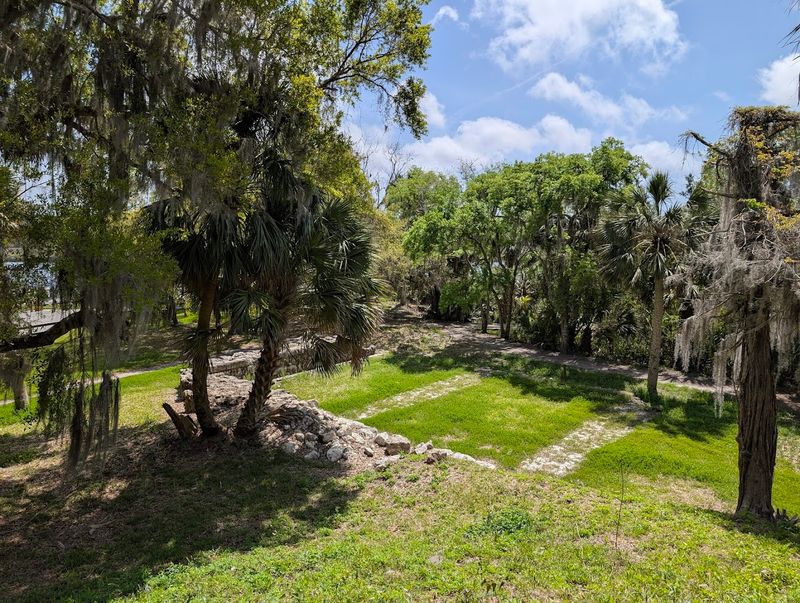
Four different flags flew over this strategic river junction, each representing empires that recognized the site’s value. Spanish, British, Confederate, and American forces all built fortifications here where the Wakulla and St. Marks rivers meet the Gulf.
The layers of conflict packed into this small piece of ground tell Florida’s entire colonial and military story.
Spain established the first fort here in 1679, making it one of Florida’s oldest European military sites. British forces captured it during their brief Florida occupation, then Spain reclaimed it, only to eventually cede everything to the United States.
Even during the Civil War, Confederate troops recognized the location’s importance and built earthworks that partially survive today.
A museum on-site unpacks these complicated centuries with artifacts from each period. You can examine Spanish pottery shards, British military buttons, and Civil War bullets all found on the same grounds.
The overlapping histories create a timeline you can literally walk through.
Standing at the river confluence, it’s easy to see why so many powers fought for control. The location offered perfect access to Gulf shipping lanes and interior river routes.
This park captures how Florida’s geography made it a prize worth centuries of bloodshed and political maneuvering.
Okeechobee Battlefield Historic State Park
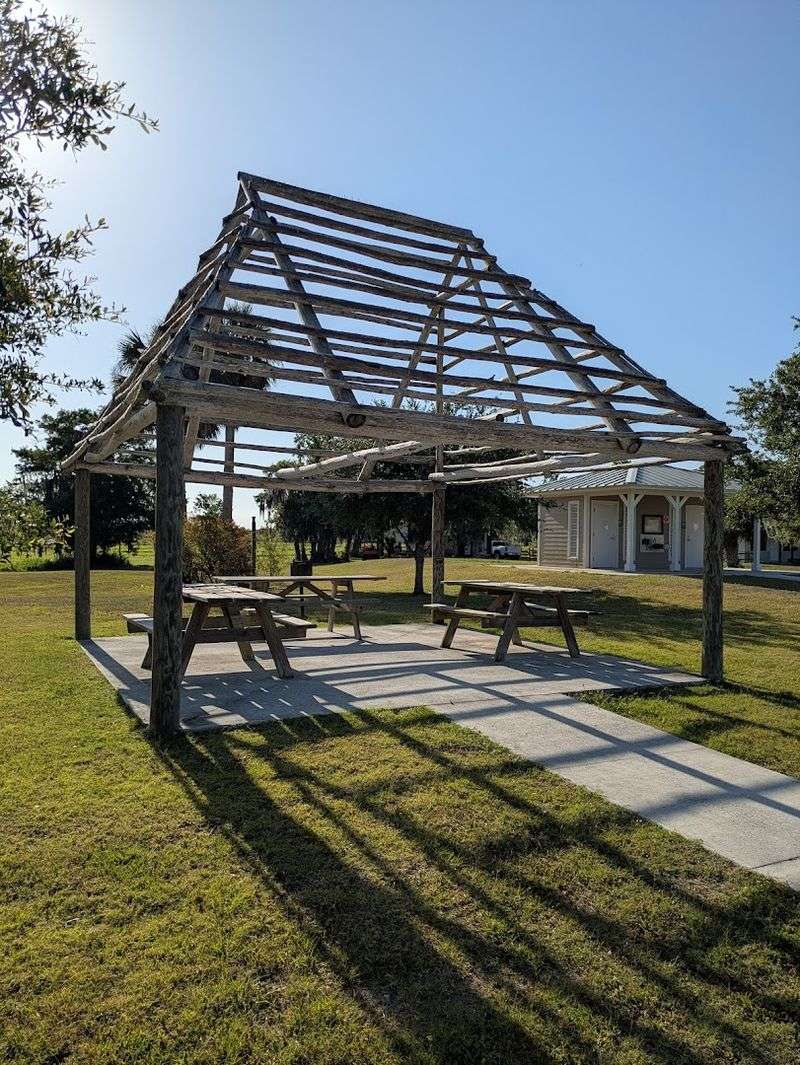
Christmas Day 1837 brought one of the Second Seminole War’s fiercest engagements to Florida’s interior wilderness. Seminole warriors under leaders like Alligator and Sam Jones faced U.S. troops in brutal fighting across palmetto scrub and swamp.
The battle proved that Seminole resistance wouldn’t be easily crushed, no matter how many soldiers the government sent.
Unlike other battlefields featuring open fields and clear lines, this fight sprawled through dense vegetation where visibility barely extended twenty feet. Soldiers on both sides fought blind, relying on sound and instinct.
The challenging terrain favored Seminole warriors who knew every hammock and waterway, but American numbers eventually forced a tactical withdrawal.
The battlefield today preserves that wild character, helping visitors understand why the Seminole Wars lasted so long. You can’t conquer people who know the landscape better than any map.
Walking trails cross the same tough terrain that exhausted troops and frustrated military leaders throughout the conflict.
Interpretive signs honor both sides’ courage and losses. The Seminole perspective gets equal treatment, explaining why they fought rather than accept forced relocation to Oklahoma.
This balanced approach makes the park valuable for understanding Florida’s Indigenous history beyond stereotypes and oversimplifications.
Yulee Sugar Mill Ruins Historic State Park
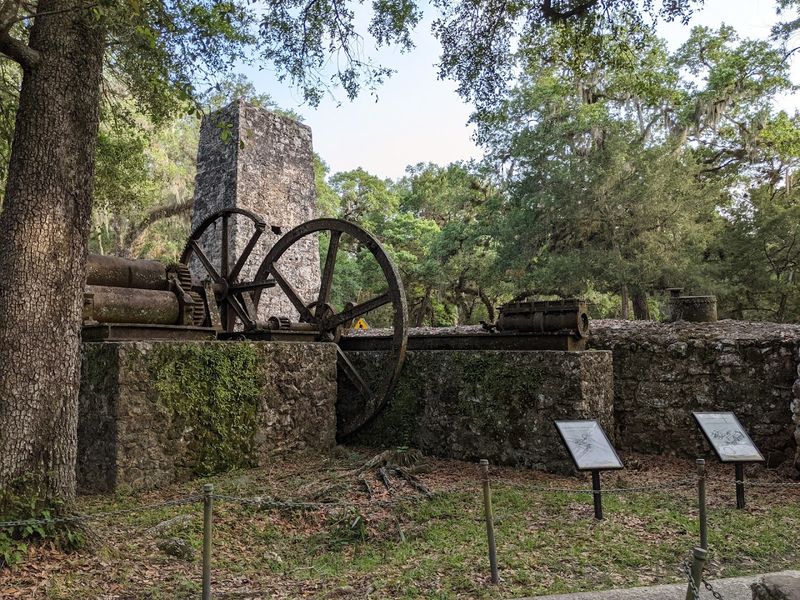
Massive iron gears tower above limestone walls, frozen mid-turn since the Civil War ended sugar production here. David Levy Yulee built this mill as part of his plantation empire, using enslaved labor to turn sugarcane into profit while simultaneously serving as a Confederate senator.
The ruins stand as stark reminders of Florida’s plantation economy and the people who suffered to sustain it.
Yulee was Florida’s first U.S. senator and a railroad baron who shaped the state’s development. Yet his wealth came from sugar production dependent on slavery’s brutal mathematics.
When Union forces threatened during the war, Yulee abandoned the plantation. The mill fell silent, and freed workers scattered to build new lives.
What remains today is surprisingly intact for a structure abandoned in the 1860s. The limestone walls, iron machinery, and chimney create an almost sculptural scene against Florida wilderness.
You can still see how raw cane entered one end and processed sugar emerged from the other.
Interpretive panels explain both the industrial process and the human cost behind every pound of sugar produced. The park doesn’t romanticize plantation life or focus solely on the owner’s achievements.
Instead, it asks visitors to confront uncomfortable truths about wealth built on exploitation and how that history still shapes Florida.