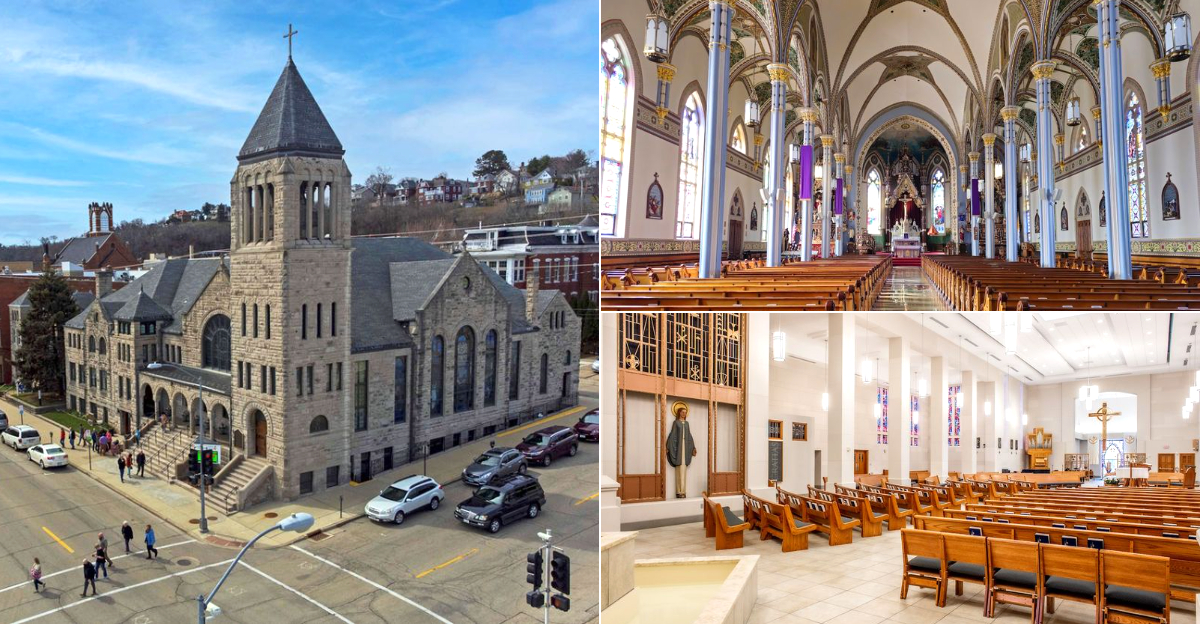
Iowa’s oldest churches carry more than stained glass and stone, they hold the recorded memory of communities that built entire lives around their faith and each other.
From the soaring cathedral of Dyersville to the quiet prairie chapels of smaller towns, these twelve buildings span denominations, architectural styles, and centuries of Iowa history.
Visiting them feels less like a religious experience and more like stepping inside a layered archive of the people who settled this state.
Whether you’re drawn to Gothic Revival stonework, modest clapboard simplicity, or the basilica that draws pilgrims from across the country, there’s something on this list worth the detour.
These twelve Iowa churches are worth visiting not just for what they look like, but for the stories they’ve been quietly keeping for generations.
1. Cathedral of St. Raphael, Dubuque, Dubuque County
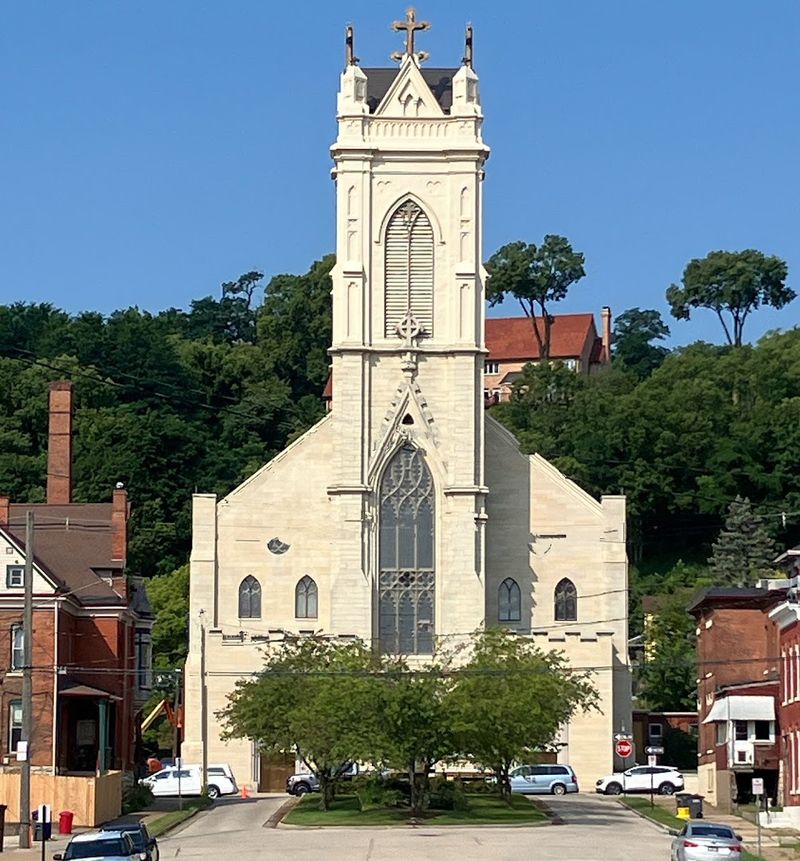
High above the Mississippi, the mood here feels both watchful and welcoming.
You arrive expecting a handsome cathedral, yet what lingers is the sense of endurance shaped by fire, faith, and civic memory.
That story comes into focus at Cathedral of St. Raphael in Dubuque, first established in the 1830s and central to early Catholic life in Iowa.
The present building reflects Gothic Revival ideals, but its meaning deepened after the devastating 1986 fire that destroyed much of the structure.
Reconstruction preserved surviving elements and renewed the cathedral as a symbol of resilience for the entire archdiocese.
When you look at the restored interior, you are really seeing a community’s refusal to let loss define the place.
This is also where regional history becomes tangible.
Bishops, immigrants, schoolchildren, and grieving families have all passed through, tying the building to everyday life rather than distant ceremony alone.
Music, liturgy, and memorials give the space an emotional register that goes beyond stone, wood, and glass.
Visit slowly, and you notice how the cathedral connects Dubuque’s river city identity with its spiritual past.
Its viewpoint, history, and careful restoration reward more than a quick architectural glance.
2. Trinity Episcopal Cathedral, Davenport, Scott County
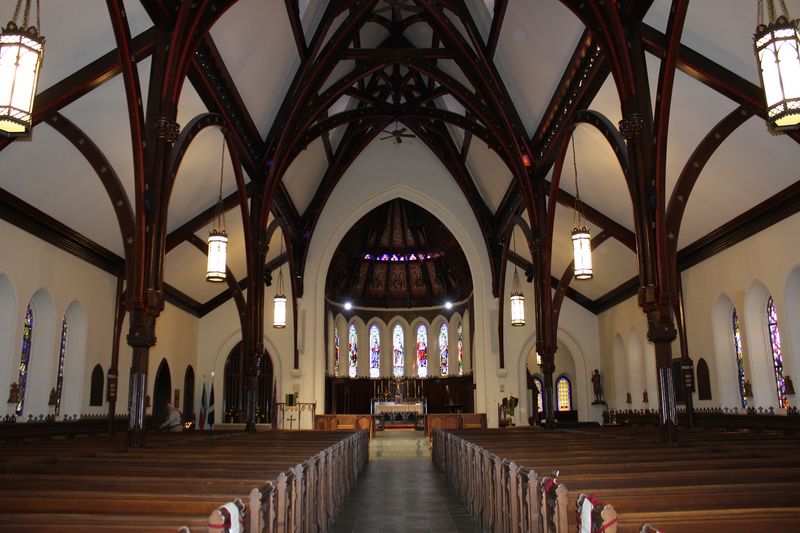
There is something unexpectedly serene about finding an English-style cathedral presence in the middle of downtown Davenport.
The setting invites you to slow down, and the church’s quiet confidence feels different from louder landmarks nearby.
That atmosphere makes Trinity Episcopal Cathedral memorable long before you start noticing its Gothic Revival details.
Founded in the nineteenth century, Trinity became an important Episcopal center in the region and helped shape religious life along the Mississippi.
Its architecture, inspired by medieval English precedents, carries a disciplined beauty, but the building matters just as much for the intellectual and musical traditions it sustained.
Cathedral worship here connected local life to a wider Anglican heritage while remaining deeply rooted in Iowa.
The church also reflects Davenport’s growth as a cultured river city.
Clergy and parishioners supported education, outreach, and civic engagement, giving the cathedral a role beyond ceremonial observance.
If you stand inside during a quiet hour, the layered effect of worship, memory, and craftsmanship becomes more powerful than any single design element.
Visitors often come for stained glass, stonework, and ecclesiastical atmosphere, and those are all rewarding.
Still, the stronger reason to visit is the way Trinity Episcopal Cathedral preserves a living record of urban faith, art, and community aspiration.
3. Sacred Heart Cathedral, Davenport, Scott County
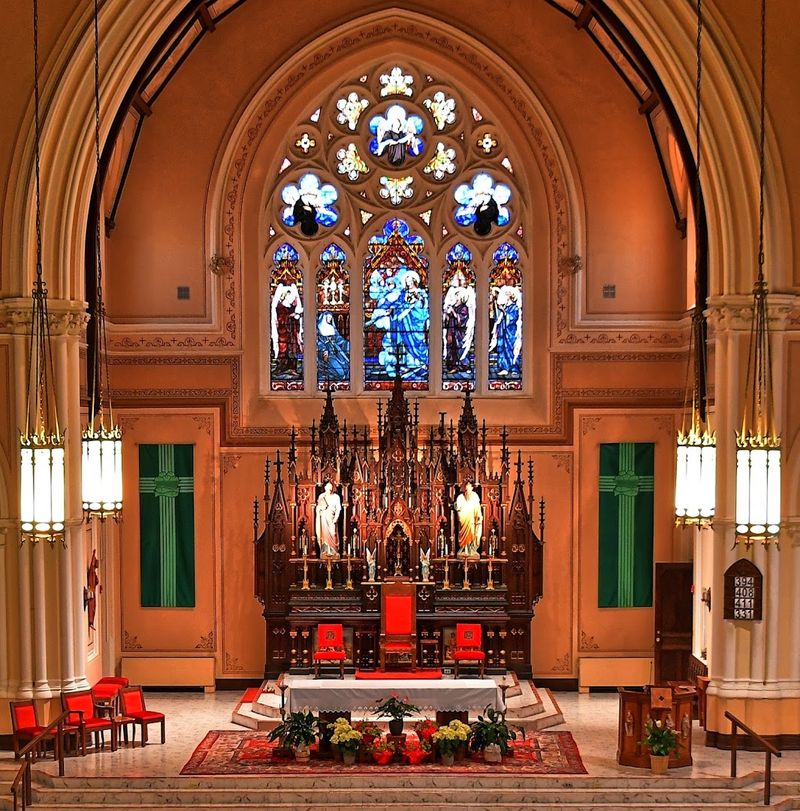
Seen rising above the city, this church gives off the feeling of a destination before you even reach the doors.
Its commanding site hints at ambition, but what makes the visit worthwhile is the way it tells the story of Catholic Davenport through growth, devotion, and public presence.
That larger narrative is written into Sacred Heart Cathedral, seat of the Diocese of Davenport since the late nineteenth century.
The cathedral emerged during a period when immigrant communities were expanding and asserting their place in Iowa’s cities.
Its design conveys institutional confidence, yet the building’s significance lies in how many ordinary lives have been gathered within it for baptisms, funerals, feast days, and moments of crisis.
Those accumulated experiences give the church a gravity that architecture alone cannot supply.
Historically, cathedrals functioned as both spiritual centers and visible statements of belonging.
Sacred Heart played that role for generations of Catholics who were building schools, neighborhoods, and social networks across the Quad Cities.
When you visit, you sense not just an impressive interior, but a place where faith and local identity matured together.
You begin to understand how this cathedral linked private belief with public community in a changing Midwestern city.
Sacred Heart endures because it is more than beautiful; it is one of Davenport’s clearest historical anchors.
4. First Methodist Church, Iowa City, Johnson County
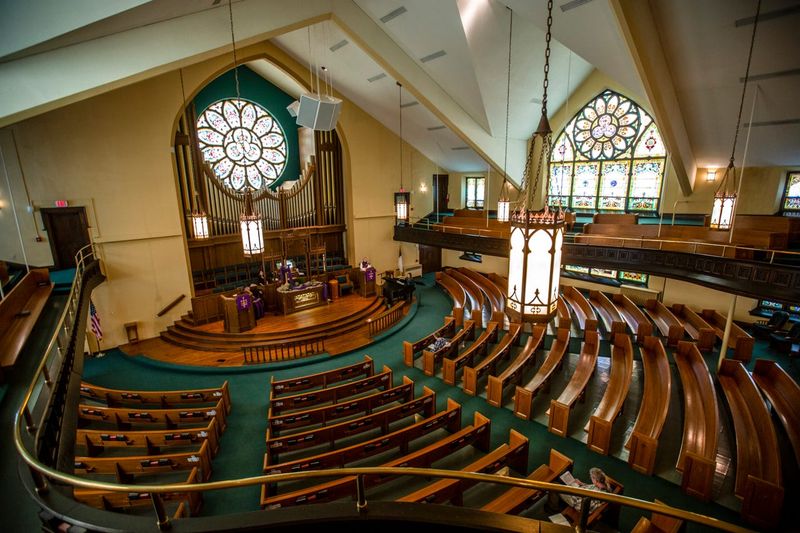
In a university town known for ideas and constant movement, this church offers a sense of continuity that feels especially striking.
The building stands as a reminder that Iowa City’s story has never belonged only to campus life or government, but also to congregations that shaped everyday community rhythms.
That perspective makes First Methodist Church more interesting than its exterior alone might suggest.
Methodism arrived early in Iowa and often traveled with settlement, education, and reform-minded civic culture.
In Iowa City, the congregation became part of a developing town where public life, moral debate, and local service were closely intertwined.
The church’s historic importance rests in that social role as much as in any stylistic feature you may notice on arrival.
Over time, First Methodist served families, students, and long-term residents whose needs changed with each generation.
It hosted worship, music, meetings, and charitable work, making it a place where spiritual practice overlapped with the practical business of building community.
When you visit, pay attention to the setting as well as the structure.
The church helps interpret Iowa City as a place where faith communities helped steady an intellectually active and fast-evolving environment.
First Methodist is worth your time because it reveals the human infrastructure beneath the town’s more visible institutions.
5. St. Patrick’s Catholic Church, Iowa City, Johnson County
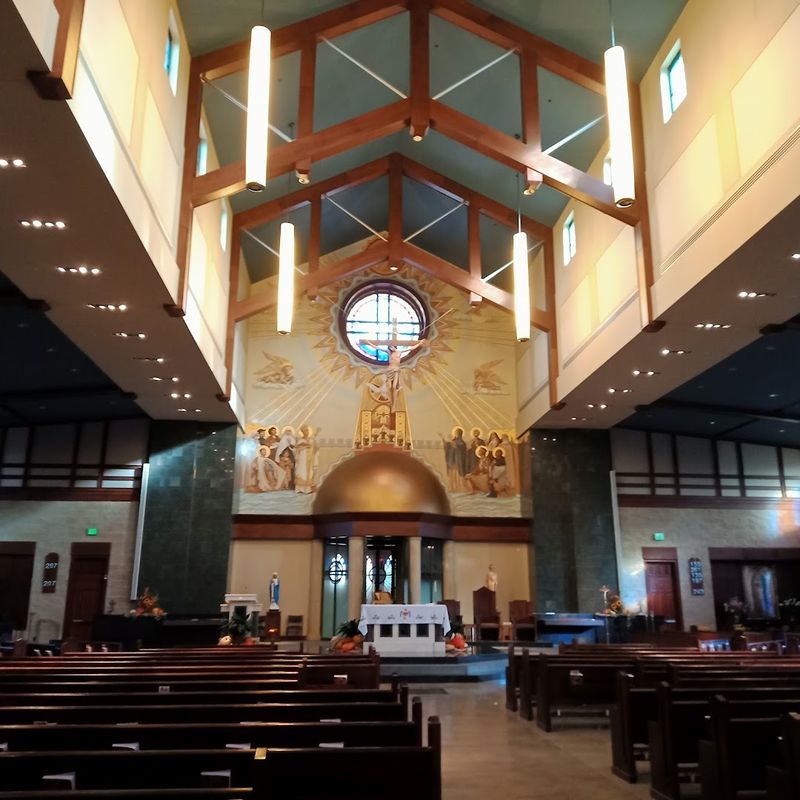
What stands out first is not grandeur, but the grounded feeling of a parish woven into ordinary city life.
That intimacy is exactly why this church matters, because its history reflects the daily persistence of a Catholic community growing alongside Iowa City itself.
You understand that best at St. Patrick’s Catholic Church, a parish with deep roots in local immigrant and family history.
As Iowa City expanded, St. Patrick’s became one of the places where newcomers could find continuity, language, ritual, and social support.
Its architecture offers beauty, but the stronger draw is the evidence of how parish churches helped people create belonging in a changing town.
Weddings, school connections, feast days, and shared hardship all accumulate here into a more human kind of heritage.
The church also illustrates how religious institutions quietly shaped urban development.
Parishes often influenced neighborhood patterns, education, and mutual aid, and St. Patrick’s participated in that wider Catholic framework.
When you visit, you are not only seeing a historic building, but also the social map of generations who organized life around it.
St. Patrick’s is worth visiting because it makes Iowa City’s history feel personal, local, and deeply lived rather than merely commemorated.
6. Cathedral of the Epiphany, Sioux City, Woodbury County
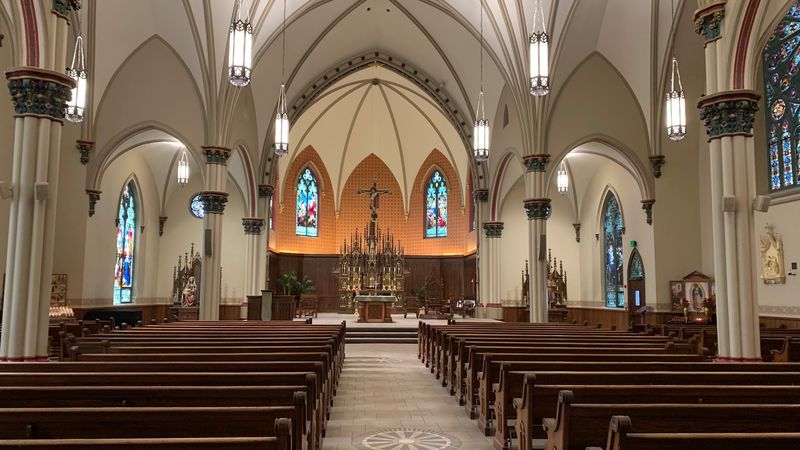
Approaching this cathedral, you feel the scale of a church built to serve a growing city with confidence and ceremonial weight.
Its presence is impressive, but the deeper reason to visit is how clearly it captures Sioux City’s rise, diversity, and Catholic institutional history.
That connection becomes vivid at Cathedral of the Epiphany, one of western Iowa’s most significant ecclesiastical landmarks.
As the seat of the Diocese of Sioux City, the cathedral has long functioned as more than a parish church.
It has hosted major liturgies, diocesan milestones, and moments that connected distant rural communities to a shared spiritual center.
That broader reach gives the building historical meaning far beyond its walls and decorative features.
The architecture helps communicate dignity, yet the emotional power comes from the generations who invested their labor, faith, and memory here.
Immigrant families, clergy, students, and visitors all contributed to a living tradition that shaped regional identity in northwest Iowa.
Standing inside, you sense a network of stories stretching outward across the plains as much as upward into the sanctuary.
It reveals how religious institutions helped organize belonging, ritual, and public life in a fast-changing frontier-turned-urban setting.
Cathedral of the Epiphany endures as a place where architecture supports a much larger civic and spiritual narrative.
7. St. Luke’s Methodist Church, Dubuque, Dubuque County
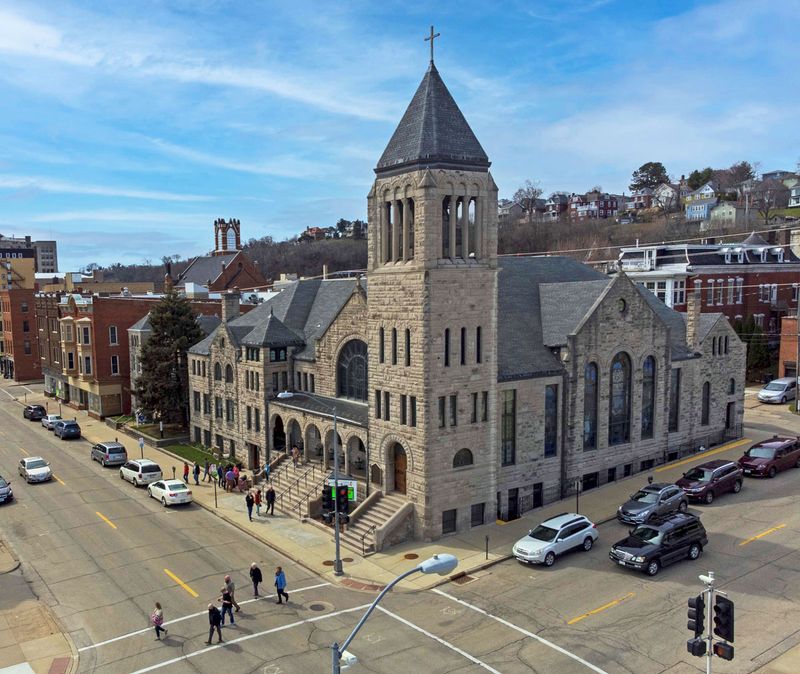
From the sidewalk, the heavy stone and rounded arches suggest permanence, but the real appeal is how grounded this church feels in neighborhood life.
There is a warmth here that softens the monumental exterior and makes the building seem less like a museum piece and more like a lived-in chapter of Dubuque.
That balance defines St. Luke’s Methodist Church, one of the city’s notable historic Protestant congregations.
Built during an era when Dubuque was growing through industry and immigration, the church reflects the civic confidence of the late nineteenth century.
Its Romanesque character, with robust masonry and commanding mass, speaks to a congregation that wanted visibility and stability.
Yet the deeper story is the church’s role in worship, charity, music, and social life across changing generations.
Methodist congregations in Iowa often anchored education and reform efforts, and St. Luke’s carried that practical spirit into urban ministry.
Inside, the spaces were designed not only for sermons, but also for gatherings that stitched together community relationships.
That human scale makes a visit meaningful even if you are not especially interested in denominational history.
Look beyond the facade, and you begin to read Dubuque’s civic story through this sanctuary.
St. Luke’s is worth visiting because it preserves that broader social history with unusual clarity and dignity.
8. First Presbyterian Church, Muscatine, Muscatine County
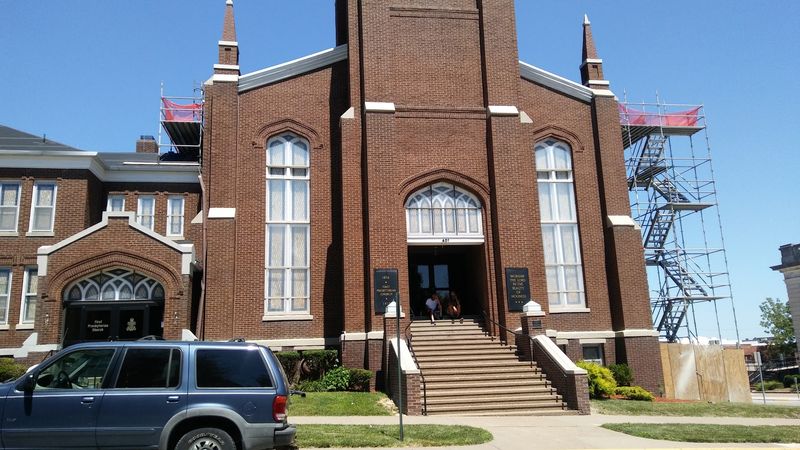
In a river town shaped by trade, industry, and changing fortunes, this church introduces a quieter thread of continuity.
Its historic value comes not only from design, but from the way it reflects Muscatine’s civic culture and the role Protestant congregations played in stabilizing community life.
That is the lens worth bringing to First Presbyterian Church when you visit.
Presbyterian churches often emphasized education, disciplined worship, and public responsibility, and those qualities left a mark on many Midwestern towns.
In Muscatine, the congregation became part of a local network of institutions that encouraged literacy, charity, and social connection.
The church building, then, is best understood as an expression of that wider moral and communal infrastructure.
Architectural details may draw your attention first, especially if you enjoy historic craftsmanship.
Still, the more compelling story lies in the generations who used this place as a center for mourning, celebration, teaching, and civic engagement.
Those repeated acts gave the sanctuary significance that no blueprint could create on its own.
The church mirrors Muscatine’s blend of ambition and rootedness, preserving a record of how faith communities helped towns endure change.
First Presbyterian is worth visiting because it quietly interprets local history through devotion, service, and memory.
9. St. Ambrose University Chapel, Davenport, Scott County
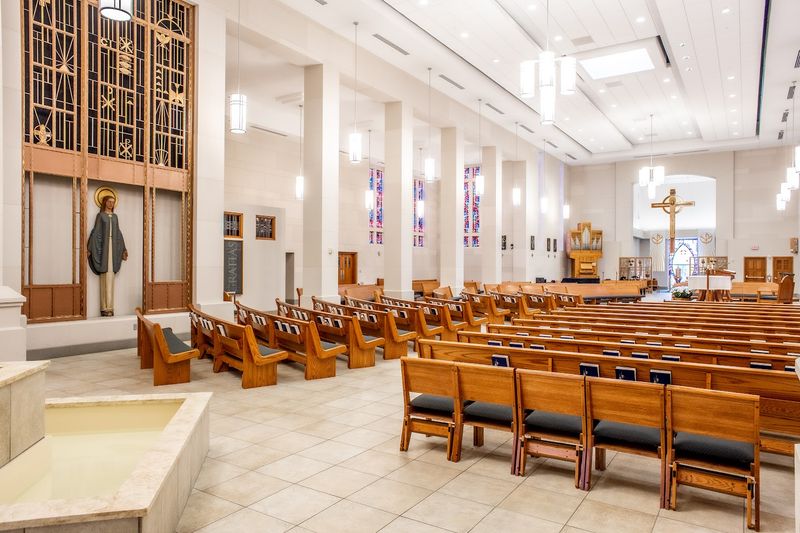
College chapels often hold a different kind of history, one measured not only in decades but in life transitions.
This one matters because it sits at the meeting point of education, worship, and the formative years that shape how people remember a place.
On the campus of St. Ambrose University in Davenport, the chapel embodies that layered experience especially well.
Founded by the Diocese of Davenport, St. Ambrose developed as a Catholic educational institution with strong ties to regional service and leadership.
The chapel became a spiritual heart for students, faculty, and visiting families, hosting the rituals that mark beginnings, endings, and personal turning points.
That role gives the building emotional depth beyond whatever architectural style first catches your eye.
University sacred spaces are often more porous than parish churches, welcoming people who arrive with curiosity, doubt, grief, or celebration.
This chapel reflects that openness while also preserving the university’s Catholic identity and institutional memory.
In that sense, it tells a story about how faith has been integrated into intellectual life in eastern Iowa.
Here, beauty is tied to vocation, study, and the search for meaning as much as to formal design.
St. Ambrose University Chapel is worth seeing because it reveals how historic churches can shape minds and communities, not only skylines.
10. St. John’s Catholic Church, Bancroft, Kossuth County
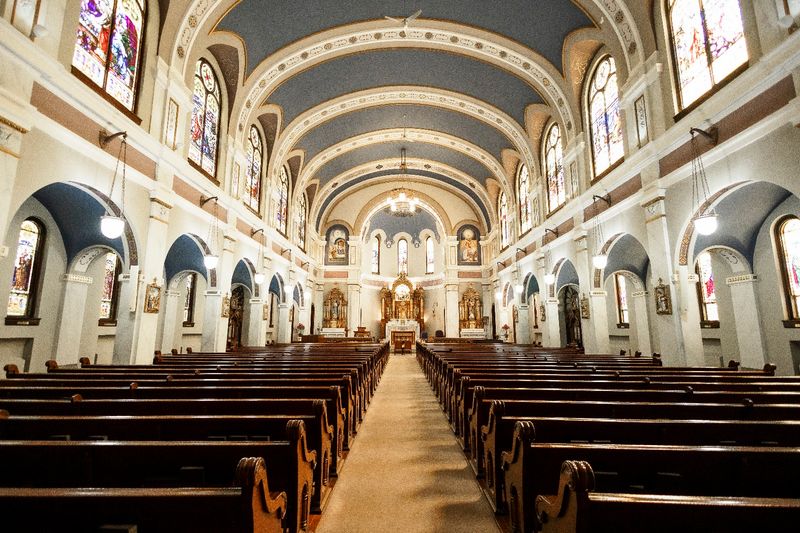
In a small north Iowa town, the scale of this church can feel almost startling at first glance.
That surprise is part of the appeal, because it immediately raises a question about the faith, sacrifice, and local pride required to create something so ambitious in a rural setting.
The answer unfolds at St. John’s Catholic Church in Bancroft, often recognized as one of Iowa’s most remarkable country churches.
Built by a predominantly German Catholic community, the church reflects the determination of immigrants and their descendants to establish permanence on the prairie.
Its impressive size and rich detailing were not simply aesthetic choices, but declarations of belonging, continuity, and shared devotion.
When you stand before it, you are seeing a cultural statement made by people who invested heavily in both worship and place.
Rural churches like this also served as social anchors.
They organized calendars, reinforced language and customs, and offered stability during the uncertainties of farm life and economic change.
That deeper function makes St. John’s far more than a visual anomaly in a small town landscape.
The contrast between its monumental character and Bancroft’s modest scale is exactly what makes a visit memorable.
St. John’s is worth visiting because it transforms local history into something you can feel immediately, not just read about later.
11. Zion Lutheran Church, Ackley, Hardin County
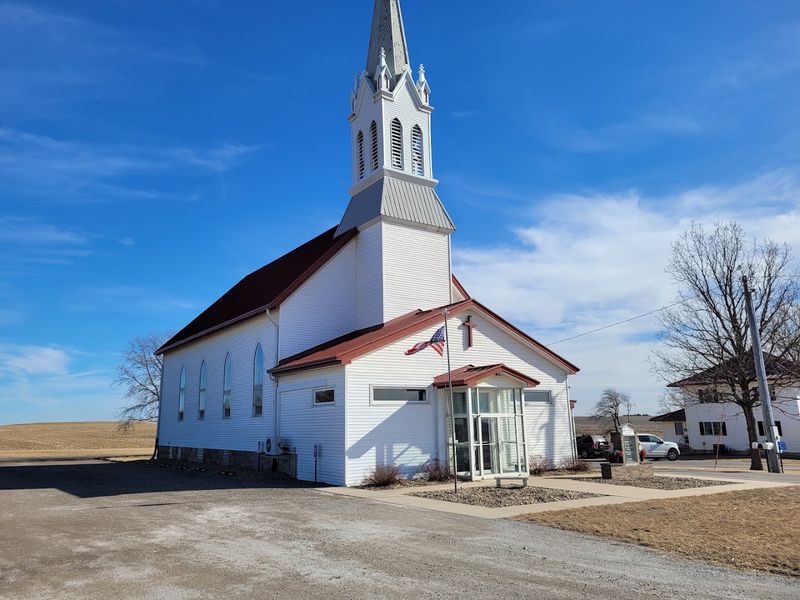
Across many Iowa towns, Lutheran churches carry the imprint of immigrant settlement, but this one feels especially tied to that legacy.
Its importance lies not only in age or appearance, but in how clearly it reflects the religious and cultural patterns that helped shape small-town life.
That is what makes Zion Lutheran Church in Ackley a rewarding stop for history-minded travelers.
Ackley developed with strong German influences, and congregations like Zion offered continuity for families adapting to a new landscape.
Worship, language, schooling, and community obligations often revolved around the church, turning it into a center of both spiritual life and cultural preservation.
The building therefore represents a whole way of organizing identity, not merely a place for Sunday attendance.
Lutheran architecture in the Midwest can appear restrained compared with some urban cathedrals, yet that simplicity can be deeply expressive.
It speaks to values of order, reverence, stewardship, and collective effort, especially in agricultural communities where institutions had to be built and maintained cooperatively.
When you visit Zion, those themes feel present even in quiet moments.
The church also helps explain how Iowa’s rural towns became durable communities rather than temporary settlements.
Faith institutions gave structure to time, relationships, and local responsibility, and Zion stands as evidence of that work.
12. St. Francis Xavier Basilica, Dyersville, Dubuque County
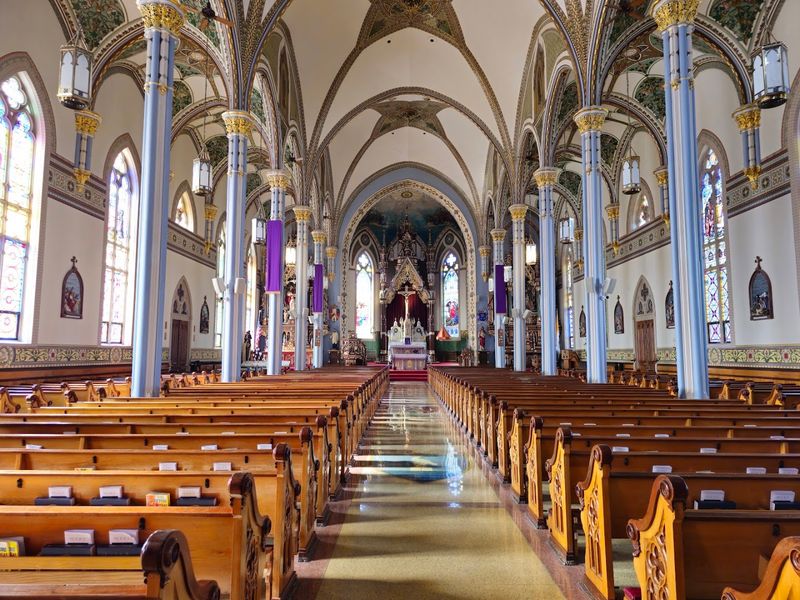
Few places in Iowa create a sense of astonishment quite like this one.
The sheer scale and refinement seem almost improbable in a small town, which is exactly why the visit becomes about more than architecture within minutes.
At St. Francis Xavier Basilica in Dyersville, beauty is inseparable from the determination of a community that built something extraordinary together.
Known affectionately as the Basilica of St. Francis Xavier, the church reflects the strength of German Catholic settlement in northeastern Iowa.
Its construction expressed not just religious devotion, but confidence in the future of the town and the enduring identity of its people.
That ambition still reads clearly today, especially when you consider the resources such a project demanded from a modest local population.
The basilica designation adds another layer of significance, linking the church to a wider Catholic world while preserving its local character.
Inside and out, the building tells a story of craftsmanship, fundraising, sacrifice, and communal pride repeated across generations.
You are not simply observing a masterpiece; you are encountering the historical memory of collective effort made visible.
Dyersville is often associated with another famous attraction, but this church deserves equal attention.
St. Francis Xavier Basilica is worth visiting because it turns local faith history into something grand, intimate, and unforgettable at once.