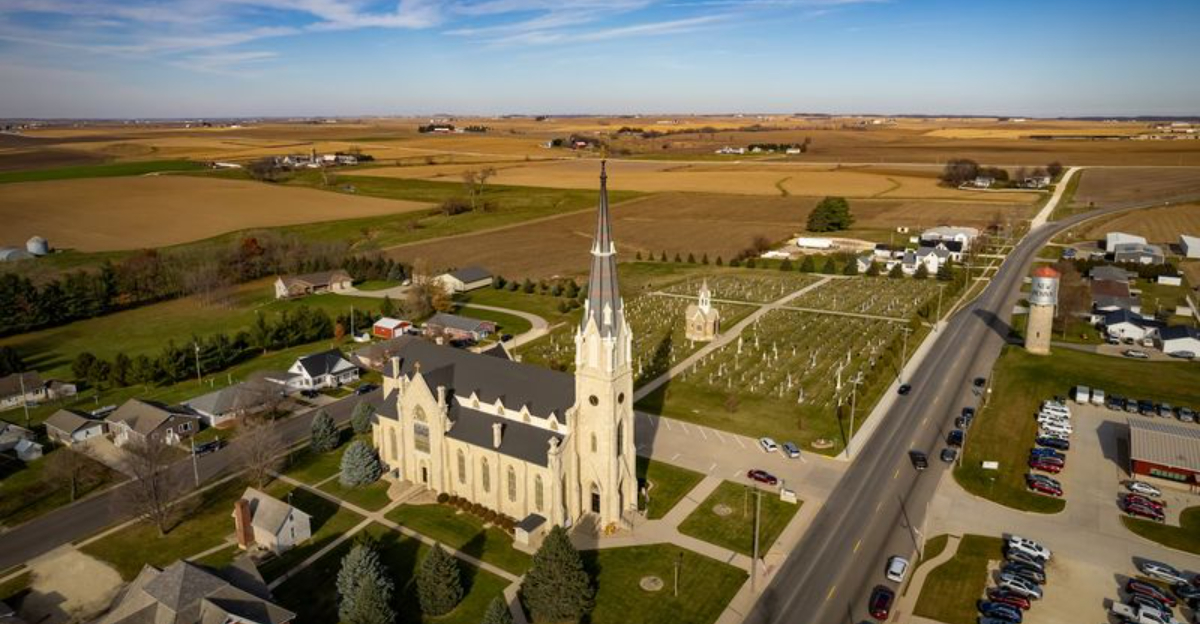
Some of Iowa’s most unforgettable journeys begin with a turn down a quiet road and the sight of an old church steeple rising above the landscape. Behind those doors are stories carved into stone, preserved in stained glass, and carried through generations of communities.
Across Iowa, historic churches reveal the state’s rich past, from river towns shaped by early settlers to rural parishes surrounded by farmland. These remarkable landmarks are more than beautiful buildings; they offer a glimpse into the traditions, craftsmanship, and personal stories that helped shape the places around them.
For travelers who appreciate history, architecture, and peaceful stops along the way, these churches transform a simple drive into a meaningful experience. Discover 12 historic Iowa churches where every visit reveals another chapter of the state’s fascinating story.
Cathedral of St. Raphael
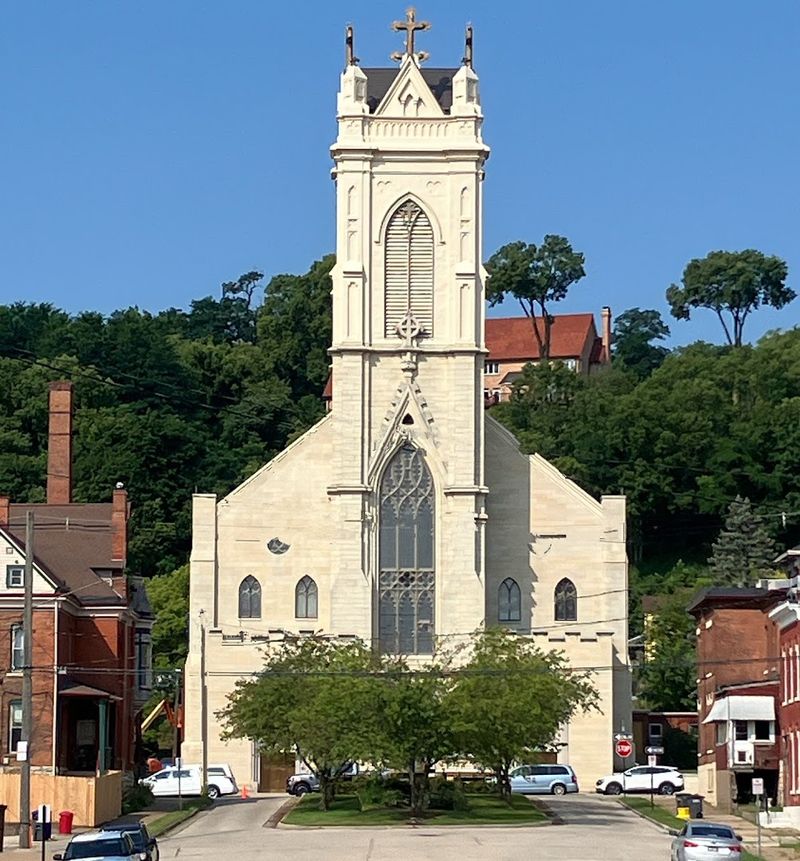
Morning light on the bluff gives the whole street a hush, as if the city is waiting for someone to tell an old story. Brick homes, rising roads, and church bells set the mood before you even reach the doors.
It feels like the kind of place where time slows down on purpose.
Later, the Cathedral of St. Raphael in Dubuque comes into view, holding its ground above the city at 231 Bluff Street. Inside, stained glass and polished wood create a warm glow, and the view from nearby streets hints at the Mississippi River below.
A stop here pairs nicely with a walk through downtown or a coffee from a local cafe.
Bring a few quiet minutes, not just a camera. The building carries the weight of Iowa history without feeling stiff, and that balance is what stays with many visitors after the drive continues east or south.
Basilica of St. John
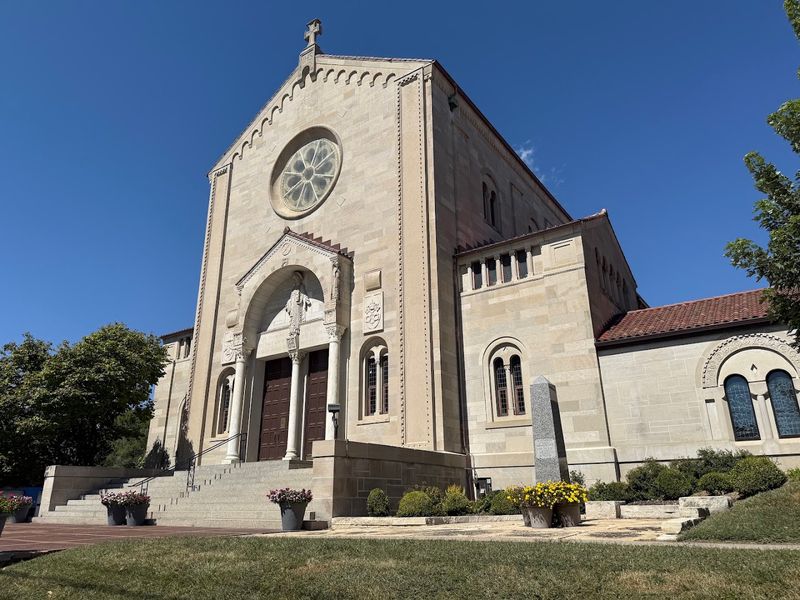
City traffic fades a little when a church this grand appears between everyday buildings. For a moment, busy Des Moines feels older, calmer, and more thoughtful, like a page from another century dropped into the middle of the present.
That contrast gives the visit its charm right away.
Farther along University Avenue, the Basilica of St. John stands with a noble look that rewards a slow approach. At 1915 University Avenue in Des Moines, it offers beautiful architectural details, a reverent interior, and a sense of continuity in a fast-moving city.
Afterward, you can explore nearby neighborhoods or stop for lunch downtown.
Try visiting when the sun angles across the facade, because the light brings out the texture in the stone. Even if you know little about church history, the place invites attention in a simple, welcoming way that makes a short stop feel meaningful.
Basilica of St. Francis Xavier
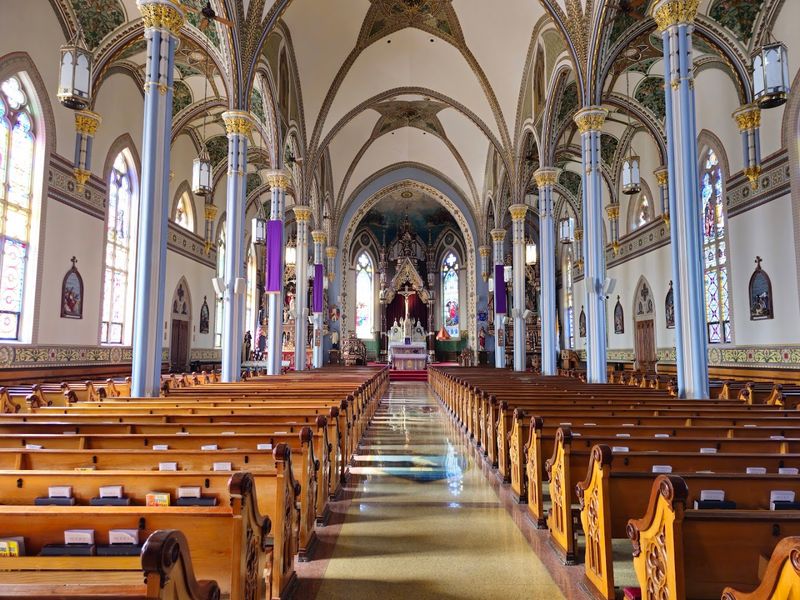
Something about a towering church in a small town always catches people off guard. The streets may be quiet, the shops modest, and then suddenly a building of great scale rises ahead, making the whole town feel anchored by faith, work, and memory.
That first impression is hard to forget.
In Dyersville, the Basilica of St. Francis Xavier does exactly that from its spot at 104 3rd Street SW. Its size, careful design, and calm interior reflect the pride of generations who built lasting things here.
Many travelers pair the stop with local restaurants, antique browsing, or a visit to nearby attractions the town is known for.
Walk around slowly and notice how the church shapes the rhythm of the town around it. It is not only a historic landmark, but also a reminder that even a simple drive through rural Iowa can open into something much deeper.
St. Ambrose Cathedral
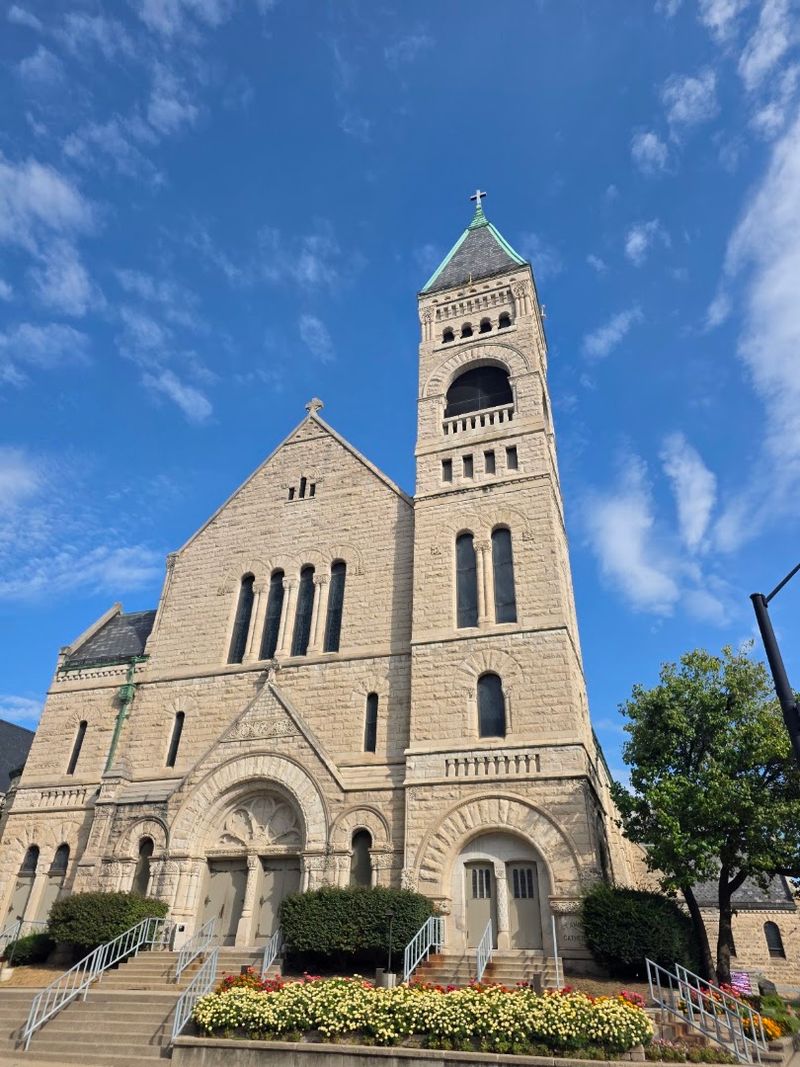
Downtown streets often feel built for speed, but a church like this changes the pace. Between offices, traffic lights, and tall buildings, there is suddenly a place that asks you to look up, breathe slower, and pay attention to details most people rush past.
That pause becomes part of the experience.
Set at 607 High Street, St. Ambrose Cathedral brings a strong sense of history to central Des Moines. The church stands close to government buildings and city landmarks, making it easy to include on a walking loop with lunch, a museum stop, or a quick look at nearby public spaces.
Its interior rewards anyone who steps in quietly.
Architecture lovers will enjoy the stonework and scale, while casual visitors may simply appreciate the calm. Some places impress by being loud.
This one does the opposite, offering steadiness in the middle of downtown and making your road trip feel more thoughtful.
Trinity Episcopal Cathedral
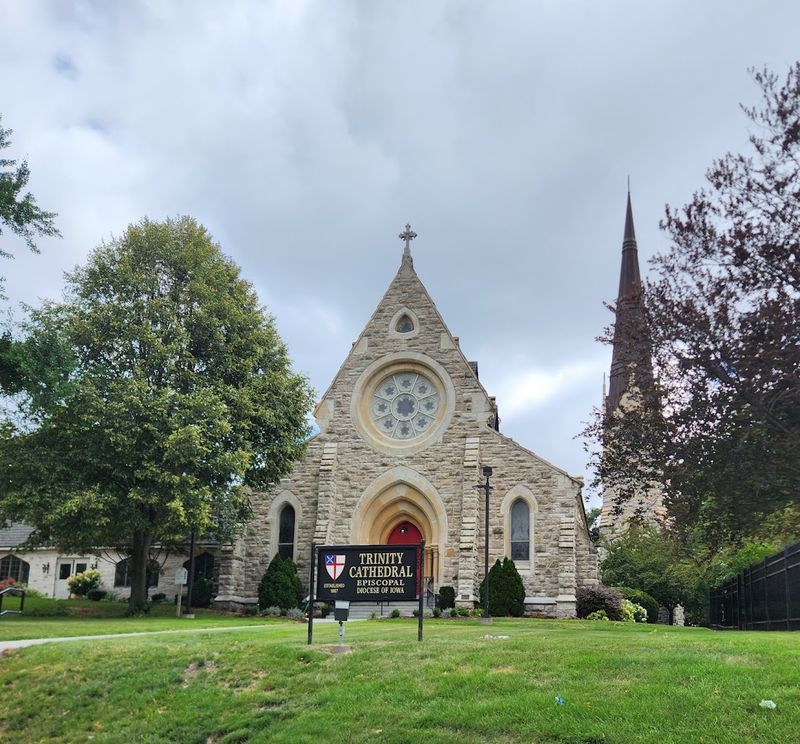
A cathedral surrounded by trees and old neighborhood streets can feel almost storybook-like, especially when the light is soft and the air is still. Before you step inside, there is already a sense that generations have passed through the same gate, hearing the same bells and carrying different worries.
That feeling settles in quickly at Trinity Episcopal Cathedral in Davenport, located at 121 West 12th Street. The grounds, historic architecture, and peaceful setting create a lovely contrast with the movement of the Quad Cities nearby.
You can add a riverfront walk later, or grab a bite in downtown Davenport after your stop.
What makes the visit memorable is not only the age of the church, but the way it sits comfortably in its surroundings. It feels woven into daily life rather than set apart from it.
For travelers, that gives the place warmth as well as historical weight.
St. Anthony’s Catholic Church
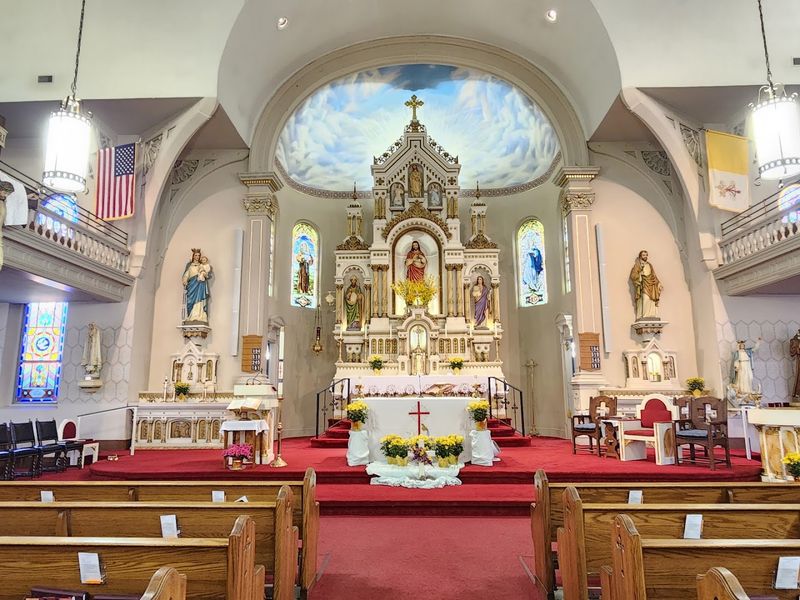
Not every memorable church appears in a wide-open landscape. Some stand right in the city, shoulder to shoulder with ordinary streets, and that closeness makes them feel more personal.
You notice worn steps, neighborhood sounds, and the quiet way history survives in places people still pass every day.
St. Anthony’s Catholic Church in Davenport, at 417 North Main Street, has that grounded kind of presence. Its historic character fits beautifully with the city’s older sections, and the stop works well if you are exploring riverfront sights, local eateries, or the nearby downtown arts scene.
The church feels steady rather than flashy.
Spend a little time looking at the exterior before going in. Buildings like this often reveal their story in small details, from masonry patterns to window shapes.
By the time you leave, the surrounding block may seem different too, as if the past has quietly sharpened the present.
St. Mary’s Catholic Church
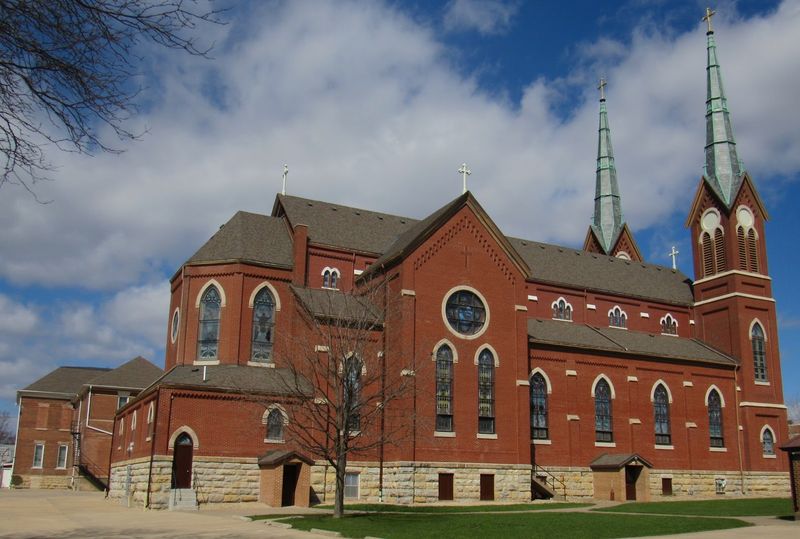
River towns know how to make old buildings feel even older in the best way. The hills, the water, and the slower pace give every corner a little extra depth, as if the landscape has been holding onto stories for centuries.
That mood fits perfectly with a church stop in Guttenberg.
St. Mary’s Catholic Church, located at 520 South 2nd Street, stands as part of that river-town character. After visiting, many travelers walk along the Mississippi, browse local shops, or sit down for pie and coffee nearby.
The church itself offers a peaceful interior and a strong sense of place that matches the town around it.
If you are planning a scenic drive, this stop earns its place because it combines architecture with atmosphere. The views, the nearby riverfront, and the town’s historic charm all work together.
You leave remembering not only the church, but the whole setting wrapped around it.
Church of All Saints
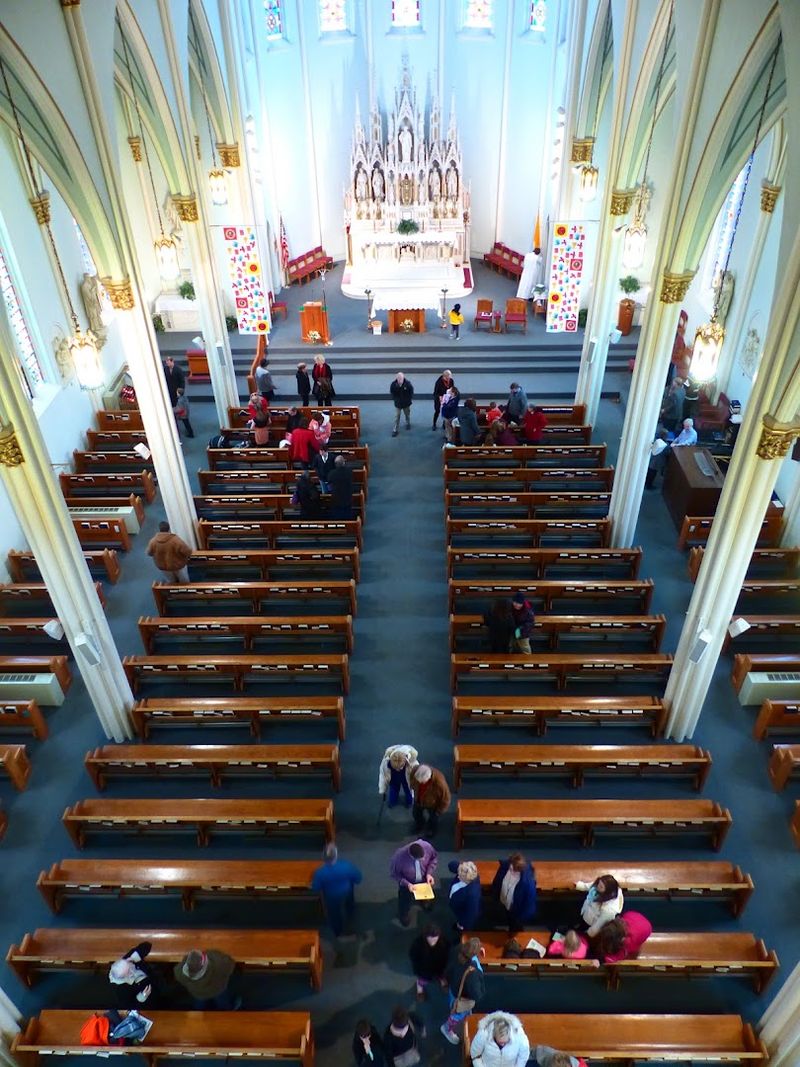
Some towns greet you with wide streets and faded brick, then surprise you with a church that feels almost monumental. Keokuk has that kind of arrival, where river history and sturdy old architecture set the tone before you know much about the place.
A stop here feels serious, but never heavy.
The Church of All Saints at 1106 Main Street adds richness to that impression. Its historic look fits naturally with Keokuk’s older downtown, and the area invites a longer visit with nearby river views, local diners, and streets lined with buildings from another era.
The church becomes part of a larger picture rather than a single attraction.
Take your time walking the block before leaving. In places like this, the value is often in how everything connects, from the church facade to the shape of the town itself.
It is a rewarding stop for anyone who likes history that still feels close to everyday life.
St. Boniface Catholic Church
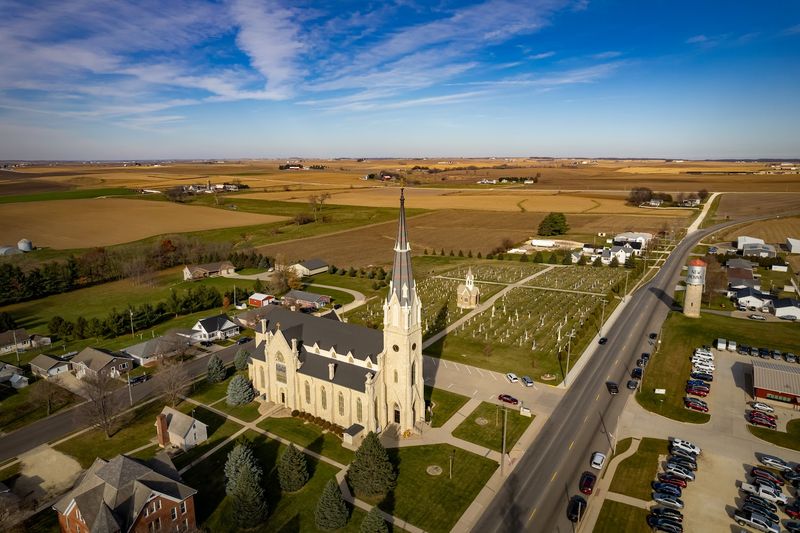
Driving through the countryside, you may expect silos, fields, and long quiet roads. Then a church appears with remarkable scale, rising above a small community and changing the whole horizon.
That surprise is part of what makes rural Iowa church stops so memorable, especially when the setting feels almost cinematic.
In New Vienna, St. Boniface Catholic Church stands at 7401 Columbus Street with a presence that feels larger than the town itself. The church reflects deep local roots, and the surrounding area invites a relaxed pace, with simple drives through farmland and small-town streets that still feel closely tied to their past.
Pack patience for this kind of visit, because it rewards slowing down. There may not be city bustle or a long list of nearby attractions, yet that is exactly the point.
The church and landscape work together, creating a stop that feels quiet, grounded, and unexpectedly grand.
St. Donatus Catholic Church
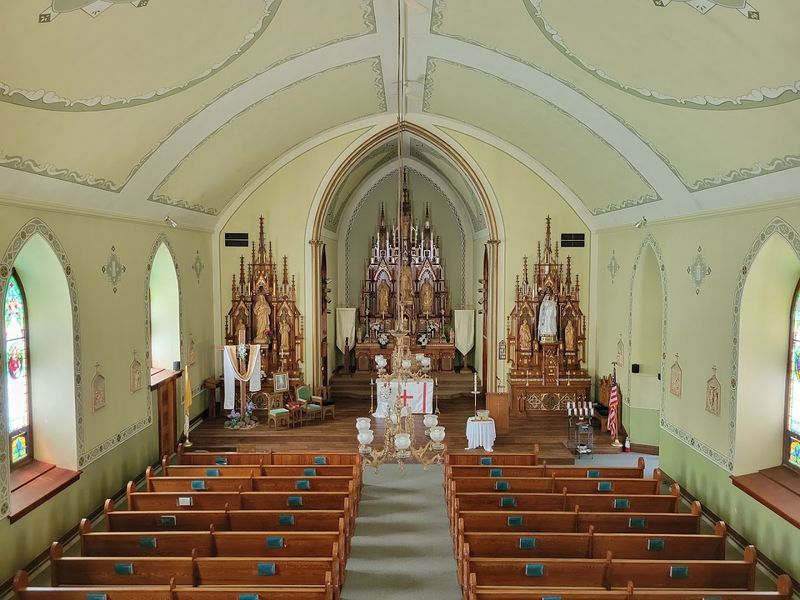
Few places in Iowa feel quite like this little hillside village. The streets, stonework, and old-world mood can make you wonder if you somehow crossed into another country without noticing.
That unusual setting gives the church here an atmosphere unlike almost anywhere else in the state.
St. Donatus Catholic Church, at 97 Pleasant Street in St. Donatus, fits beautifully into the village’s distinct character. The surrounding community is known for its historic look and strong local identity, and a visit often pairs well with a slow drive through the area or a stop at a neighborhood tavern or cafe.
What stays with many travelers is the sense of scale. Nothing feels oversized or rushed.
Instead, the church and village seem to belong to one another in a very natural way. It is an ideal stop for anyone who enjoys hidden places that feel personal, textured, and deeply rooted.
Little Brown Church
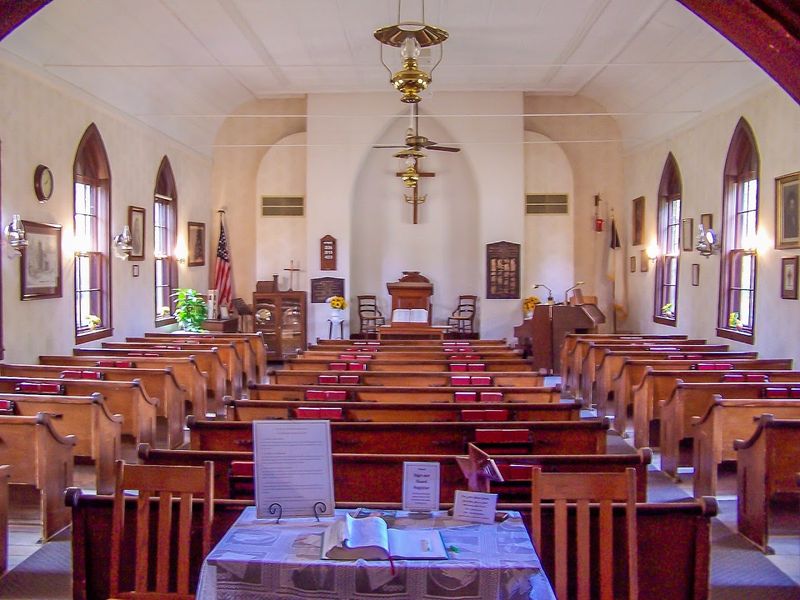
Not every time-travel moment comes from towering stone or grand city streets. Sometimes it arrives in a smaller, humbler shape, with white trim, weathered wood, and a gentle country setting that feels tied to family stories.
That kind of simplicity can be every bit as moving as a cathedral.
The Little Brown Church near Nashua, at 2730 Cheyenne Avenue, has long held that special place in Iowa memory. Many people know it through weddings and music history, but even first-time visitors feel its nostalgic pull.
The surrounding grounds are calm, making it easy to linger and take in the scene.
Plan a little extra time to enjoy the drive getting there. Rural roads, open sky, and changing light all add to the mood before you arrive.
By the end of the stop, the church often feels less like a landmark and more like a familiar piece of Americana.
Saint Paul’s Episcopal Cathedral
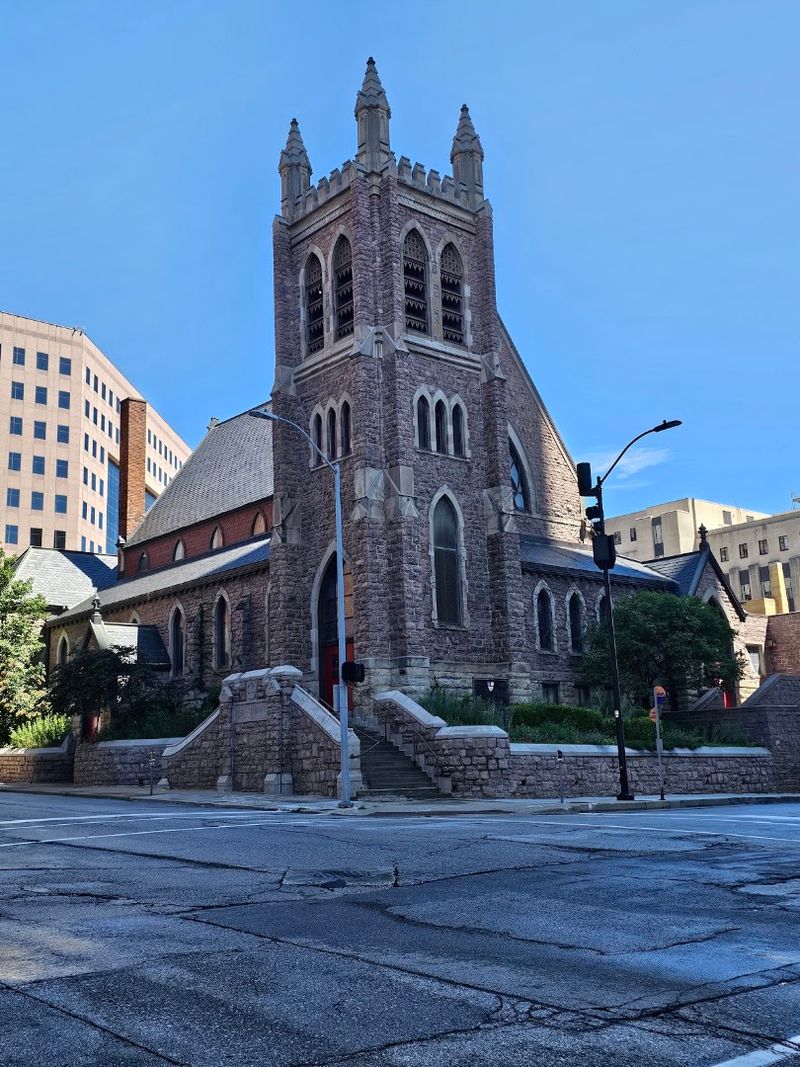
Sometimes beauty appears where you least expect it, tucked into a familiar city block with little warning. One minute you are navigating downtown, and the next you are standing before a church that feels graceful, measured, and quietly confident.
That shift in mood is one reason this stop works so well.
Saint Paul’s Episcopal Cathedral at 815 High Street adds another layer to Des Moines history. Close to other civic landmarks, it can be part of a full day that includes architecture, local coffee, and a walk through the center of the city.
Its design and atmosphere offer a different flavor from nearby churches.
Instead of trying to impress through sheer size alone, the cathedral leaves a subtler mark. Many visitors remember the balance of urban energy outside and calm inside.
On a road trip, those contrasts matter. They help a destination feel textured, and they make the city itself more interesting to experience.