
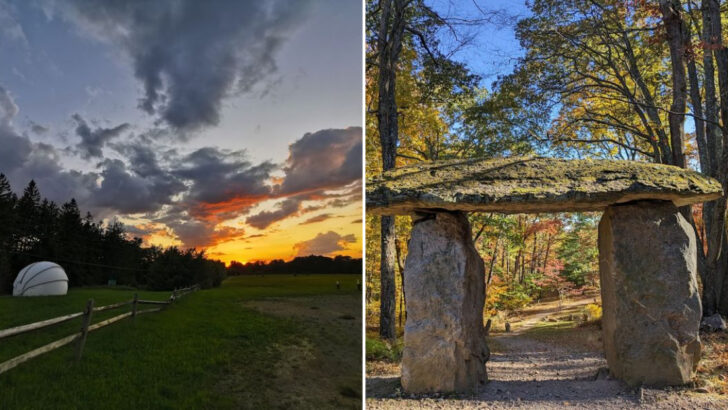
Pennsylvania is full of secrets hiding just off the beaten path.
You’ve seen the big attractions, the covered bridges, the Hershey chocolate tours—but there’s a side of the state that few locals ever stumble upon.
From hidden waterfalls tucked behind forest trails to quirky roadside oddities and underground caves that feel like another world, these 14 spots will make you see Pennsylvania differently.
Some are perfect for a spontaneous weekend, others demand curiosity and a sense of adventure.
One thing is certain: once you explore them, the ordinary stops feeling ordinary. Pennsylvania suddenly feels bigger, stranger, and far more magical than you ever imagined.
Ringing Rocks County Park
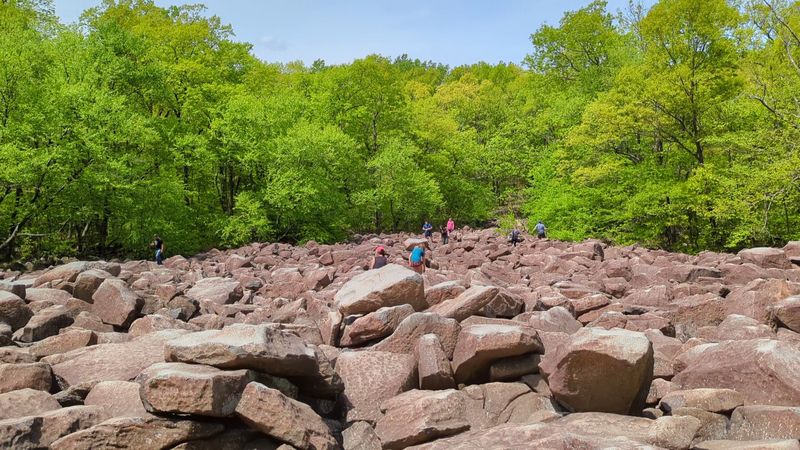
Ringing Rocks County Park feels like one of those places you would expect to hear about in folklore, not Bucks County. The main attraction is a massive boulder field where certain rocks make bell-like tones when struck with a hammer.
If you visit, bring sturdy shoes and a sense of curiosity, because the landscape is uneven, wild, and genuinely memorable.
What makes this stop so satisfying is that it mixes mystery with a hands-on experience you can actually test yourself. Scientists have studied the unusual sounds, yet the place still feels magical when you hear metal-like notes echo across the stones.
Nearby trails also lead to a small waterfall, so your outing does not end with the rock field.
I would plan for a relaxed morning here, especially in cooler months when hiking feels easier and the woods are quieter. It is not a polished tourist attraction, which is exactly why it stands out.
You get something tactile, surprising, and a little weird in the best possible way.
For anyone who thinks they have already seen Pennsylvania’s strangest natural wonder, this park makes a strong case otherwise. It is simple, affordable, and unlike almost anywhere else in the state.
Crystal Cave
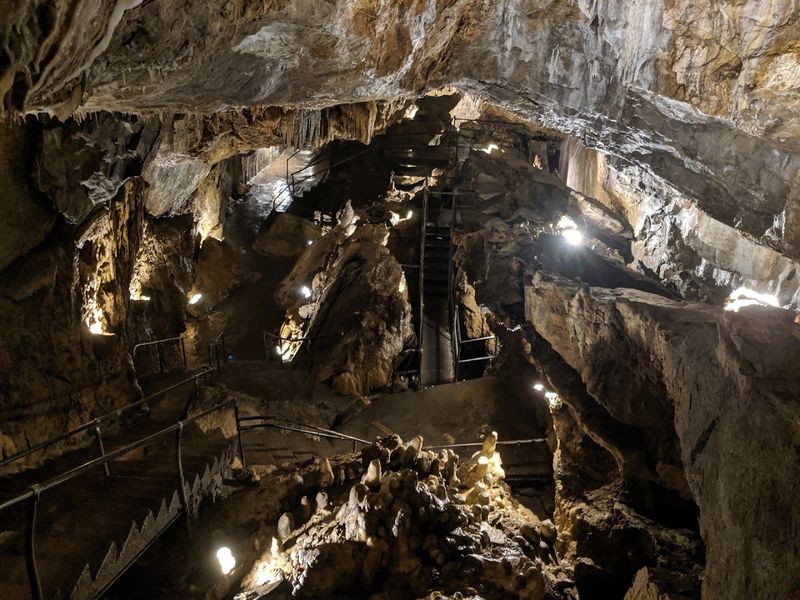
Crystal Cave is the kind of roadside discovery that instantly turns an ordinary Pennsylvania drive into something far more memorable. Opened to visitors in the nineteenth century, it holds the distinction of being the state’s first commercial show cave.
Once you step inside, the temperature drops, the light softens, and the underground world starts to feel wonderfully separate from everything above ground.
The guided tour is the best part because it gives you just enough geology and history without draining the sense of wonder. You will see delicate formations, towering chambers, and surfaces that look sculpted by patience rather than time.
The cave remains comfortably cool year round, making it especially appealing on hot summer afternoons.
What I like most is that Crystal Cave still feels charmingly old school in a way many attractions no longer do. It is educational, but never stiff, and family friendly without becoming overly commercial.
If you enjoy places with a bit of nostalgia, this one lands especially well.
Pair it with a day around Kutztown and Berks County, and you have a trip that feels refreshingly different from Pennsylvania’s bigger-name destinations. For locals who have somehow skipped it, this is an easy hidden classic worth correcting.
Bayernhof Music Museum
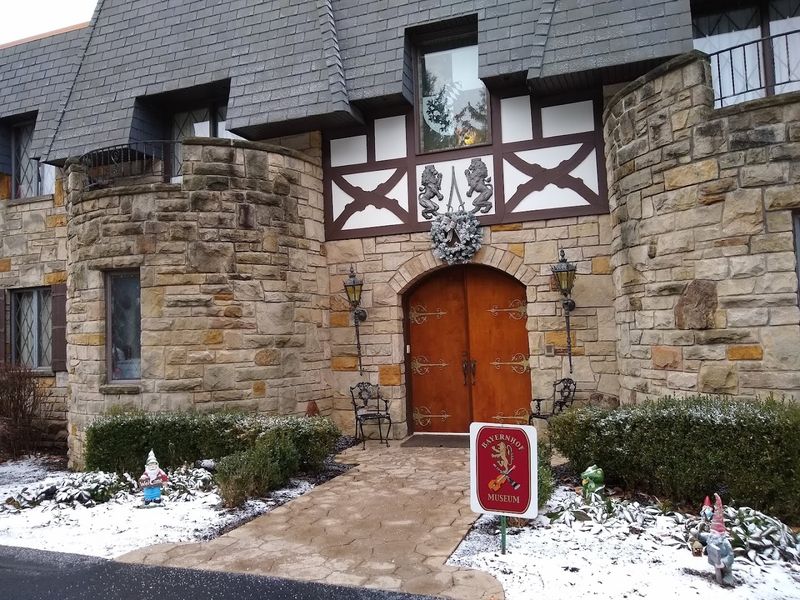
The Bayernhof Music Museum is one of those places that sounds niche until you walk in and realize it is completely unforgettable. Housed inside an eccentric mansion near Pittsburgh, the museum showcases automated musical instruments from the nineteenth and twentieth centuries.
Think orchestrions, music boxes, player pianos, and mechanical marvels that feel part engineering, part performance, part dream.
What makes the visit special is that the building itself is nearly as fascinating as the collection. You move through unusual spaces that include hidden passageways, themed rooms, and quirky architectural details that keep the tour feeling lively.
Instead of staring at silent objects behind glass, you actually hear many instruments play, which changes everything.
I would recommend this to anyone who likes unusual house museums, inventive design, or the kind of stories you cannot easily summarize. There is a theatrical quality to the whole experience that makes it feel personal rather than institutional.
You come away impressed not only by craftsmanship, but by the passion behind the collection.
Even if automatic instruments are not normally your thing, this museum has a strong way of converting skeptics. It is intimate, surprising, and deeply specific, which is often exactly what makes a hidden attraction worth seeking out.
Columcille Megalith Park
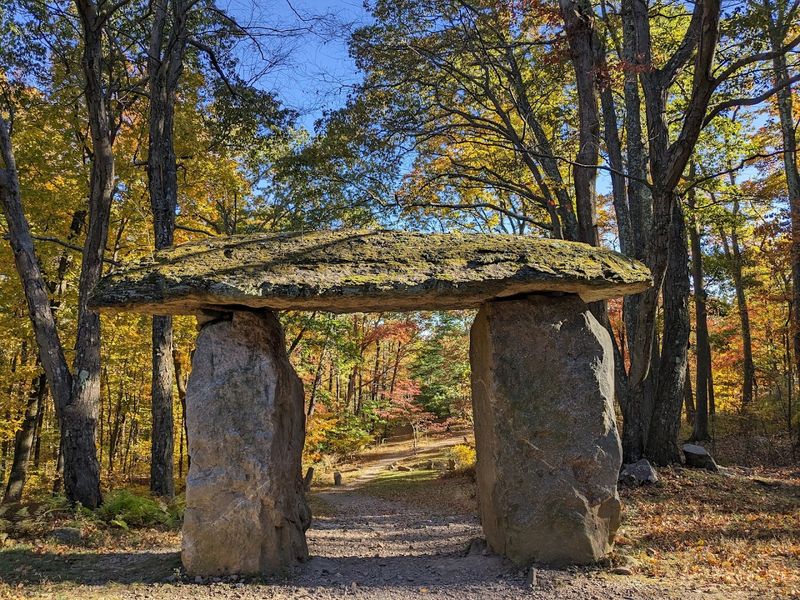
Columcille Megalith Park feels less like a typical park and more like stepping into a reflective landscape shaped by myth. Hidden in the hills near Bangor, it features standing stones, sculptures, quiet trails, and a setting inspired by Celtic spirituality.
The atmosphere is calm, a little mysterious, and ideal when you want somewhere that encourages lingering instead of rushing.
Unlike a crowded attraction built around constant activity, this place works best when you slow down and notice details. Moss, trees, carved symbols, and carefully placed stones give the grounds a ceremonial quality without feeling artificial.
You do not need to follow any particular belief system to appreciate the mood it creates.
I would go here when you want a peaceful afternoon that still feels memorable enough to tell people about later. It is especially beautiful in fog, early morning light, or autumn, when the landscape leans fully into its old-world character.
Photographers, walkers, and anyone needing a mental reset will likely love it.
Pennsylvania has plenty of scenic places, but not many feel this contemplative and distinct. Columcille offers something rare: a destination where the main activity is simply being present.
That alone makes it one of the state’s most overlooked experiences.
Haines Shoe House
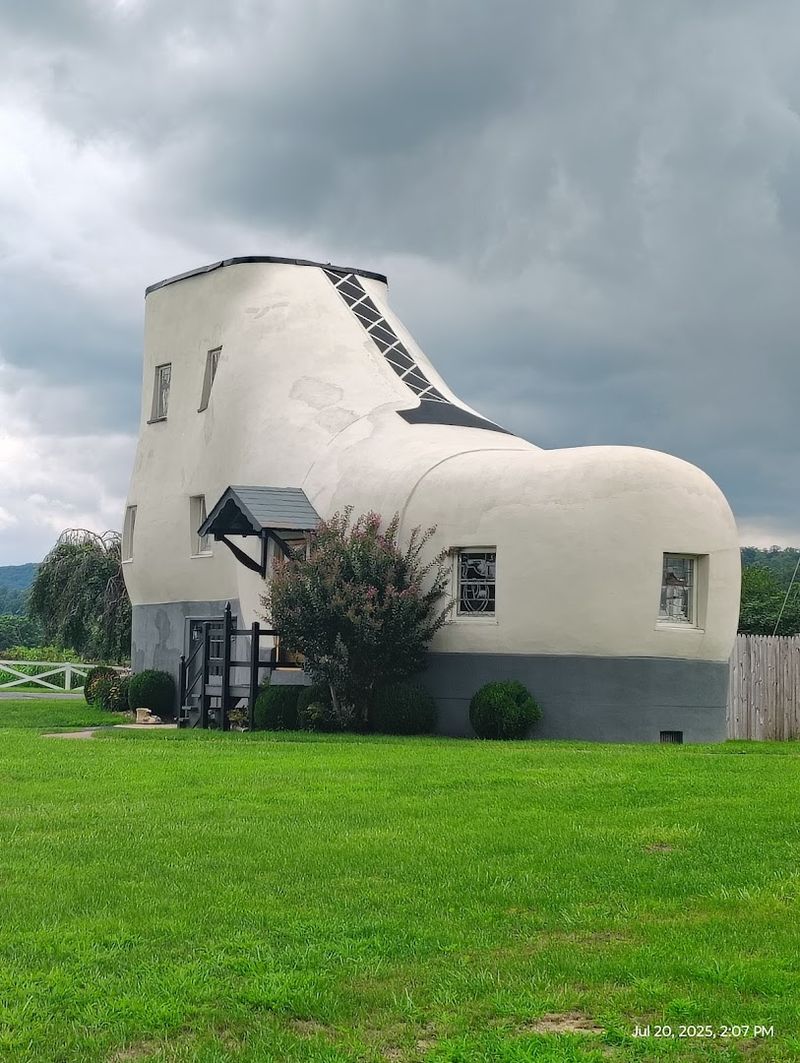
The Haines Shoe House proves that Pennsylvania roadside attractions can still deliver real charm instead of just quick novelty. Built in 1948 by a shoe businessman, this giant shoe-shaped house was originally a clever advertisement for his stores.
Today, it stands as a wonderfully odd landmark that instantly sparks the kind of grin only big, unnecessary architecture can inspire.
Part of the fun is simply seeing something so absurd executed with total commitment. The structure includes spaces arranged within the shoe shape, making it more than a sculpture and less ordinary than a house tour.
Depending on current operations, you may find tours, events, or even overnight lodging opportunities tied to the site.
I like attractions like this because they preserve a playful slice of American marketing history that feels increasingly rare. It is easy to dismiss the Shoe House as kitsch, but that misses the point completely.
Places like this give travel personality, and they break up a trip with something memorable and shareable.
If you are exploring York County, it is an easy addition that does not require a huge time commitment. Yet somehow it sticks with you longer than many larger attractions.
For locals who have driven past and never stopped, this is your sign.
Trundle Manor
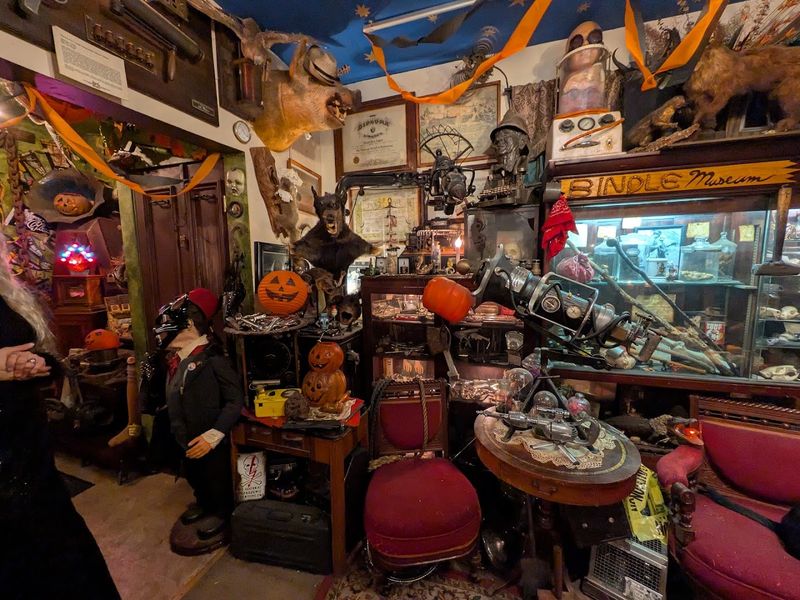
Trundle Manor is not for everyone, which is exactly why the right visitor will absolutely love it. Tucked away near Pittsburgh, this private collection turned guided attraction dives into taxidermy, oddities, medical curiosities, cryptid-inspired pieces, and darkly creative artifacts.
It feels like stepping into a cabinet of curiosities built by people who genuinely enjoy the bizarre.
The tours are usually intimate, and that smaller scale adds to the experience rather than limiting it. You are not rushing through generic displays with standard labels and overhead lighting.
Instead, the storytelling and personality of the creators shape the entire visit, giving it a more immersive, handcrafted character.
I would recommend this stop if you like unconventional museums, alternative art, or destinations with a distinctly offbeat sense of humor. There is a fine line between creepy and fascinating here, and Trundle Manor walks it very well.
You leave with a mix of amusement, discomfort, admiration, and excellent material for later conversations.
Pennsylvania has no shortage of history museums, but very few places celebrate weirdness this confidently or thoughtfully. That makes Trundle Manor feel genuinely hidden, even among locals.
If your ideal day includes a little curiosity and a little chaos, put this on your list.
Stover Mill Gallery
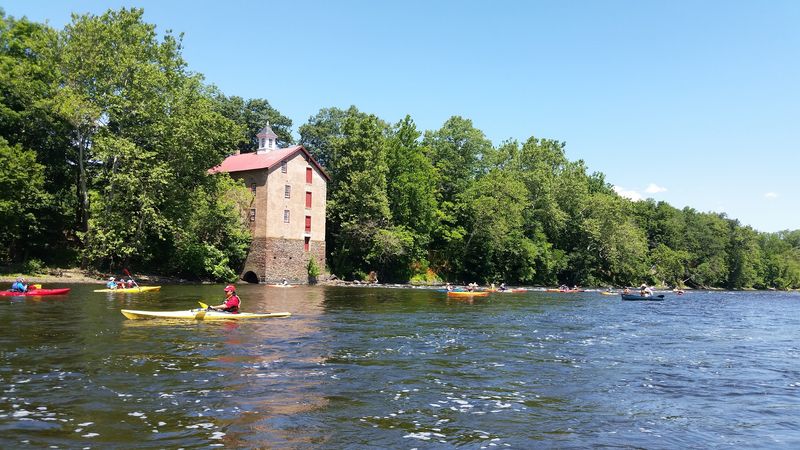
Stover Mill Gallery offers a quieter kind of discovery, the sort that rewards anyone who loves history without crowds. This preserved stone grist mill dates to 1832 and sits near the Delaware River in a setting that already feels picturesque before you even step inside.
Add rotating art exhibitions, and the place becomes both a historic landmark and a living creative space.
What makes it stand out is the contrast between its sturdy industrial past and its present identity as a gallery. Old stone walls, wood beams, and river scenery create an atmosphere that feels grounded and unforced.
You are not just viewing art in a white room, but in a building with its own story and texture.
I find places like this especially appealing on slower travel days when you want something meaningful without too much planning. It pairs beautifully with a scenic drive through Bucks County, and it never feels overproduced.
That simplicity gives it a lot of charm.
If you are the type of traveler who loves finding historic structures repurposed with care, Stover Mill is an excellent stop. It may not dominate postcards or bucket lists, but it delivers a deeply local experience.
Sometimes the most memorable places are the ones that whisper instead of shout.
Little Buffalo State Park
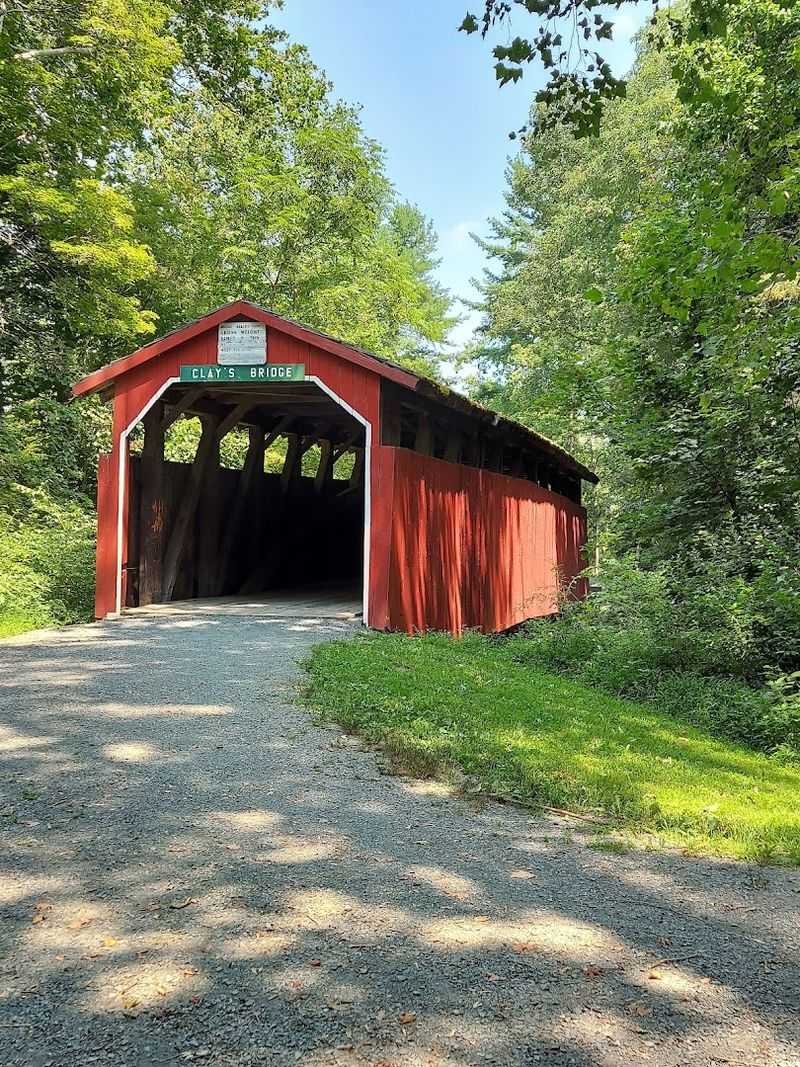
Little Buffalo State Park is one of those easygoing places that proves hidden gems do not always need spectacle. Near Newport, the park combines Holman Lake, wooded trails, a covered bridge, and the beautifully restored Shoaff’s Mill into one relaxed destination.
It is scenic without being intimidating, making it ideal for a day trip that feels restorative rather than exhausting.
The appeal comes from variety packed into a manageable space. You can walk along the water, photograph the bridge, watch for birds, or spend time learning about the mill and the region’s agricultural history.
Families, casual hikers, and anyone craving peaceful scenery will all find something that fits.
I would especially suggest this park in late spring or early fall, when the light is soft and the landscape looks its best. It is the kind of place where you can bring a picnic and let the day unfold naturally.
Nothing here feels forced, and that is a big part of its charm.
Many Pennsylvanians know the state’s major parks, but this one often slips under the radar. That is a mistake worth fixing.
Little Buffalo delivers history, water, and classic pastoral scenery in a way that feels inviting, balanced, and surprisingly memorable.
The Thousand Steps Trail
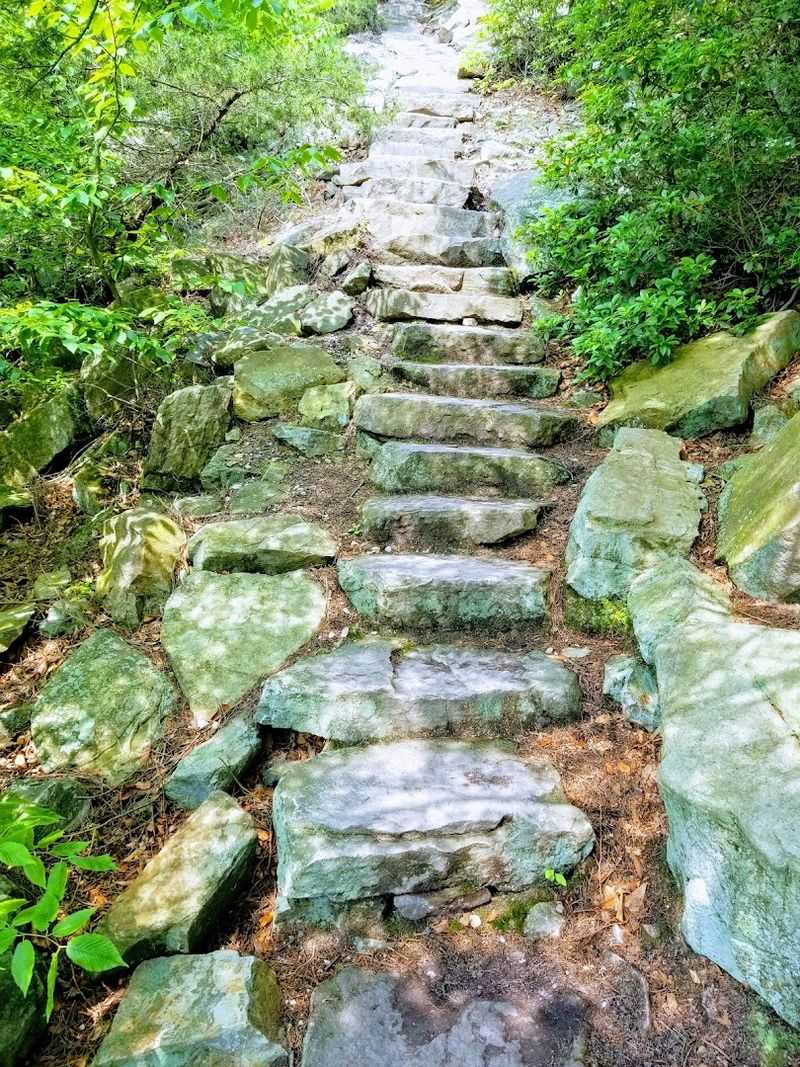
The Thousand Steps Trail is a challenge, but it is also one of the most satisfying hikes in Pennsylvania. Built by quarry workers in the 1930s, the stone staircase climbs sharply up Jacks Mountain and quickly tests your stamina.
It is the sort of trail that makes you earn the view, which only makes the payoff feel better.
Despite the name, you are dealing with more than a casual scenic walk. The route is steep, rocky, and best tackled with water, good shoes, and realistic expectations about your fitness level.
Along the way, historical markers and remnants from the quarry era add context that turns the ascent into more than just exercise.
I like this hike because it combines story, effort, and scenery in a very direct way. You can almost imagine the daily grind of workers who once climbed these steps for labor rather than recreation.
That perspective gives the trail a weight many modern hikes do not have.
Once you reach the top and catch the ridge views, the whole experience clicks into place. It is demanding, memorable, and deeply rooted in local history.
For adventurous travelers who want something beyond a standard woodland path, this trail deserves serious attention.
Penn’s Cave
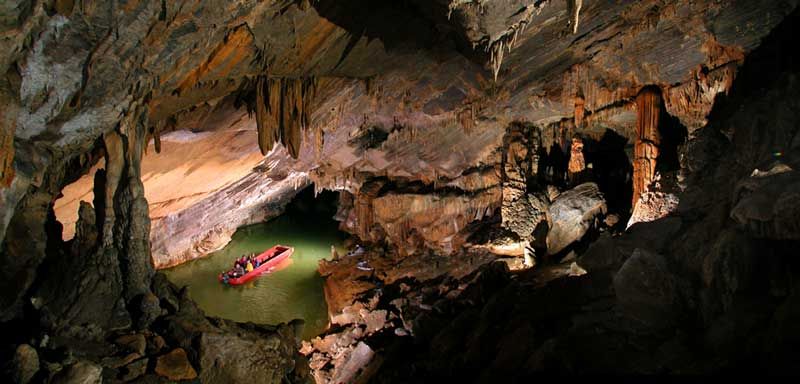
Penn’s Cave is one of those attractions that sounds unusual on paper and feels even better in person. Located near Centre Hall, it is famous for being America’s only all-water cavern tour, which means you explore it entirely by boat.
The slow glide through underground chambers creates a calm, cinematic experience that feels very different from a standard walking cave tour.
The boat ride lets you focus on reflections, rock shapes, and the cave’s natural acoustics in a way that feels immersive without being overwhelming. Guides usually share stories about geology, local lore, and the history of the property, giving the scenery useful context.
Because you stay seated, it is also accessible to many travelers who might skip rougher cave adventures.
I think Penn’s Cave works especially well for multigenerational trips because it offers novelty without requiring strenuous effort. You still get the sense of entering another world, just with a gentler pace.
That combination makes it easy to recommend.
If you are building a central Pennsylvania itinerary, this stop adds something distinctive and genuinely memorable. There are many scenic places in the region, but very few where your path underground is a boat wake.
That detail alone makes Penn’s Cave hard to forget.
The Stars of Cherry Springs State Park
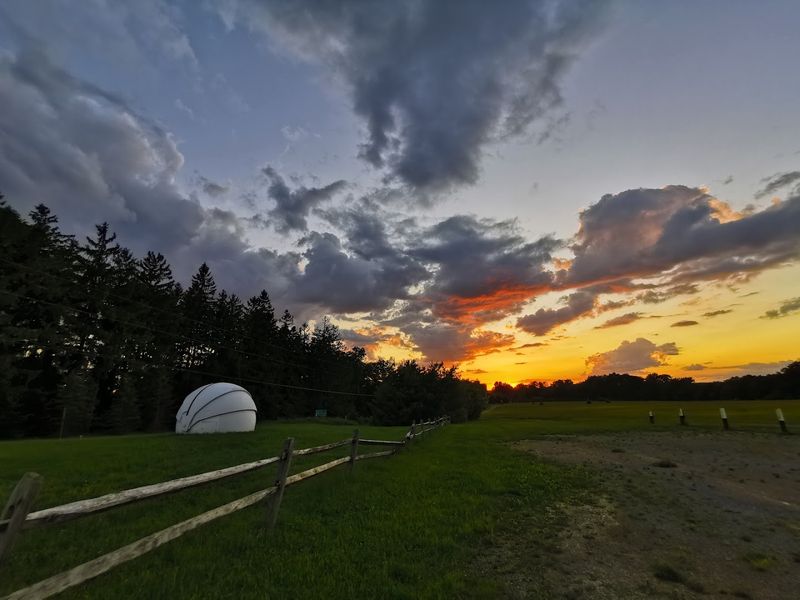
Cherry Springs State Park is the kind of place that resets your sense of scale the moment night falls. Located in north central Pennsylvania, it is renowned for having some of the darkest skies in the eastern United States.
On a clear evening, the stars look startlingly dense, and the Milky Way can appear bright enough to stop conversation.
What makes this experience so powerful is how rare true darkness has become. Away from city glow, you begin to notice details in the sky that many people have never seen with their own eyes.
Whether you bring binoculars, a telescope, or just a blanket and patience, the reward can feel almost surreal.
I would strongly recommend checking moon phases, weather forecasts, and park guidelines before visiting, especially if you want prime viewing conditions. Serious stargazers share the space with casual visitors, so respectful etiquette matters here.
Red lights, warm layers, and realistic expectations about late-night temperatures will make the trip far better.
For locals who think they know Pennsylvania well, Cherry Springs can still feel revelatory. It turns a simple night outside into something emotional, quiet, and unforgettable.
If you crave wonder without manufactured spectacle, this is one of the state’s finest hidden experiences.
The National Watch & Clock Museum
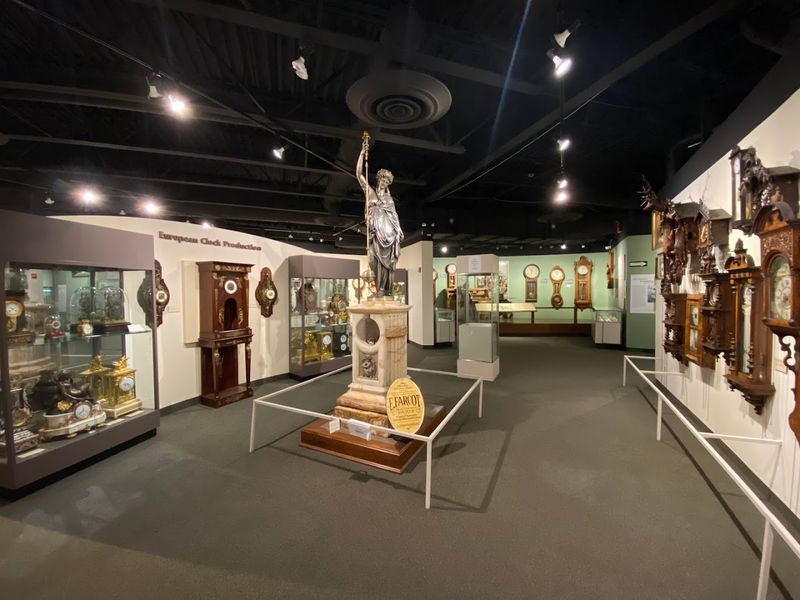
The National Watch & Clock Museum in Columbia is far more captivating than its name may first suggest. Inside, you will find one of North America’s largest collections of watches, clocks, and timekeeping devices, ranging from practical tools to astonishing works of craftsmanship.
Even if you do not consider yourself a clock person, the artistry on display pulls you in quickly.
What makes the museum work is the way it combines design, engineering, and social history in one place. You start noticing how people in different eras measured time, displayed status, and expressed taste through these objects.
From towering case clocks to intricate pocket watches, the collection has a remarkable range.
I would recommend giving yourself enough time to slow down and really look, because many pieces reward close attention. The mechanisms, decorative details, and historical context make the visit feel richer than a casual walkthrough.
It is a quietly absorbing museum that does not need gimmicks.
Columbia itself is an easy town to fold into a Susquehanna River day trip, which makes this stop even better. For locals who usually head to larger museums in major cities, this one can be a pleasant surprise.
It is precise, beautiful, and unexpectedly engaging.
Kinzua Bridge Skywalk
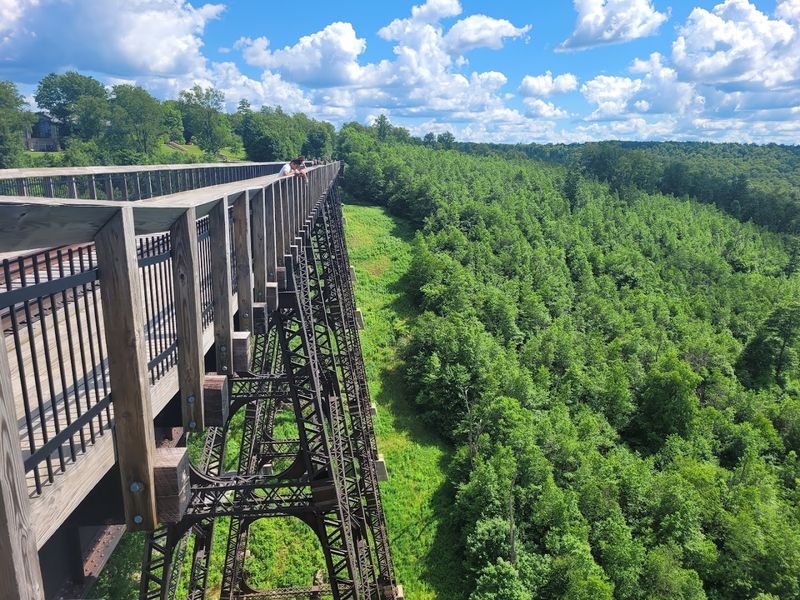
The Kinzua Bridge Skywalk delivers one of Pennsylvania’s most dramatic views, and it does so with real industrial history behind it. Once a towering railroad viaduct, the structure was partially destroyed by a tornado and later reinvented as a public skywalk.
Today, you can walk out along the remaining section and look through a glass viewing platform into the valley below.
The combination of beauty and ruin is what makes this place so compelling. You are not just admiring scenery, but standing at the edge of a story about ambition, weather, engineering, and reinvention.
Interpretive displays help explain the bridge’s past, which adds useful depth to the visual spectacle.
I would visit on a clear day if possible, especially during fall foliage season when the surrounding forest becomes extraordinary. Even if heights are not usually your thing, the short walk and strong design make the experience manageable for many visitors.
The overlook feels thrilling without requiring a major hike.
This is one of those sites that photographs well but still feels more powerful in person. It captures Pennsylvania’s industrial heritage and natural landscape in a single frame.
For anyone who likes memorable viewpoints with substance, Kinzua is an easy recommendation.
The Pennsylvania Lumber Museum
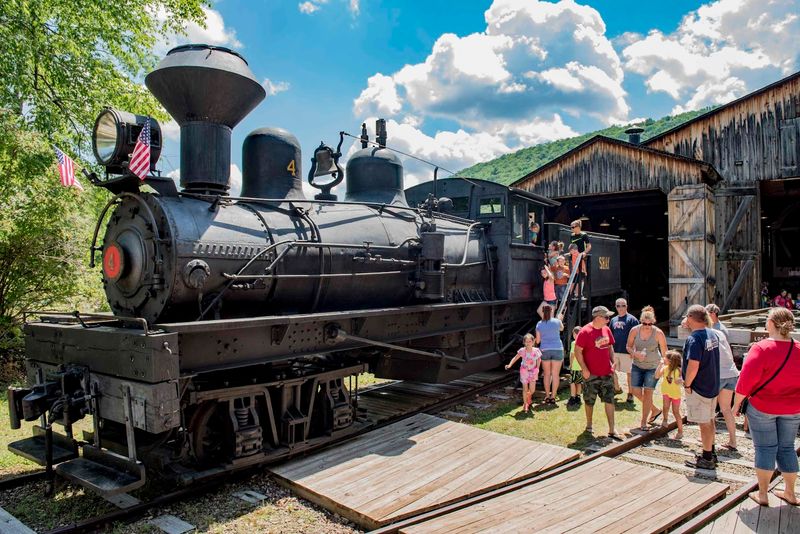
The Pennsylvania Lumber Museum tells a story that shaped the state far more than many people realize. Near Galeton, the museum explores the rise of the logging industry through recreated camps, historic machinery, photographs, and exhibits that show how forests fueled communities and economies.
It is immersive enough to feel vivid without losing the seriousness of the history.
What makes the museum stand out is its ability to connect industry, labor, and landscape in a very human way. You are not just looking at tools, but seeing how difficult the work was and how completely it transformed Pennsylvania’s environment.
The outdoor displays and reconstructed spaces make that history easier to picture.
I would especially recommend this stop if you are already exploring the Pennsylvania Wilds, because it deepens your understanding of the region around you. Forest views mean more when you know what was once lost and later managed differently.
That context gives the visit real emotional value.
This is a museum that rewards curiosity, especially for travelers who like stories about everyday workers rather than only famous figures. It is educational, grounded, and far more interesting than the subject might initially sound.
For a lesser-known destination with genuine substance, it delivers beautifully.