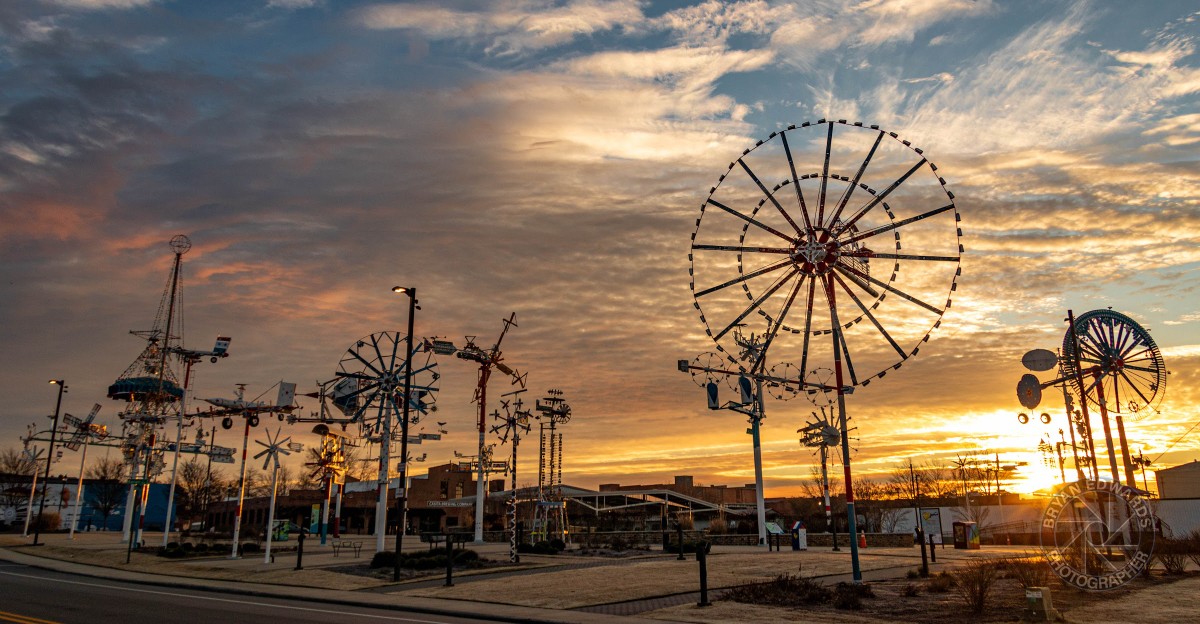
A downtown block can feel surprisingly alive when giant sculptures start turning overhead. At Vollis Simpson Whirligig Park in Wilson, North Carolina, 30 towering whirligigs rise above the park, their colorful blades spinning, flashing, and catching the light as the wind moves through them.
Located at 301 Goldsboro St S, the park celebrates the inventive work of local artist Vollis Simpson while preserving a collection that has become part of Wilson’s identity. Each sculpture has its own shapes, colors, and moving parts, making the experience change from one moment to the next.
Stand beneath them and you may hear the soft clatter of metal while shadows shift across the ground. The park is easy to visit for a quick look, but the motion makes it tempting to stay a little longer.
From the story behind these remarkable sculptures to the details you can spot as they turn, there is plenty to discover.
The First Glimpse Above the Street
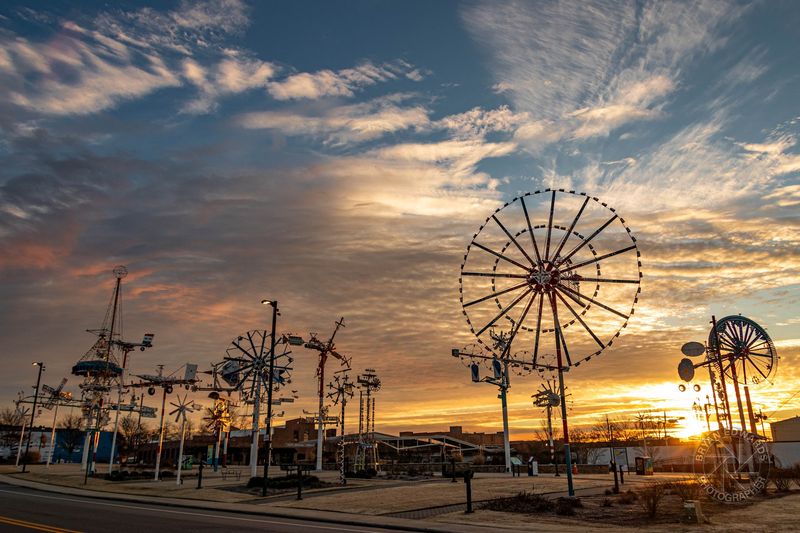
Bright shapes appear above the rooftops before you can make sense of them. A wheel turns, a painted arm swings, and suddenly a downtown block feels more like an outdoor art show than a place you happened to pass.
At Vollis Simpson Whirligig Park in Wilson, North Carolina, the sculptures reward that first curious look with more details than you can catch at once.
Start by standing back and taking in the whole scene. The park holds about thirty large whirligigs, and their different heights make the view change as you walk.
Some parts may spin while others stay still, depending on the wind. That unpredictability is part of the fun, so there is no need to rush from one sculpture to the next.
Give yourself a few minutes to settle into the scene before reaching for a camera. Look up, then look across the lawn to see how the pieces frame one another.
Even a short stop can feel memorable because the artwork never performs in quite the same way twice.
A Maker Who Followed the Wind
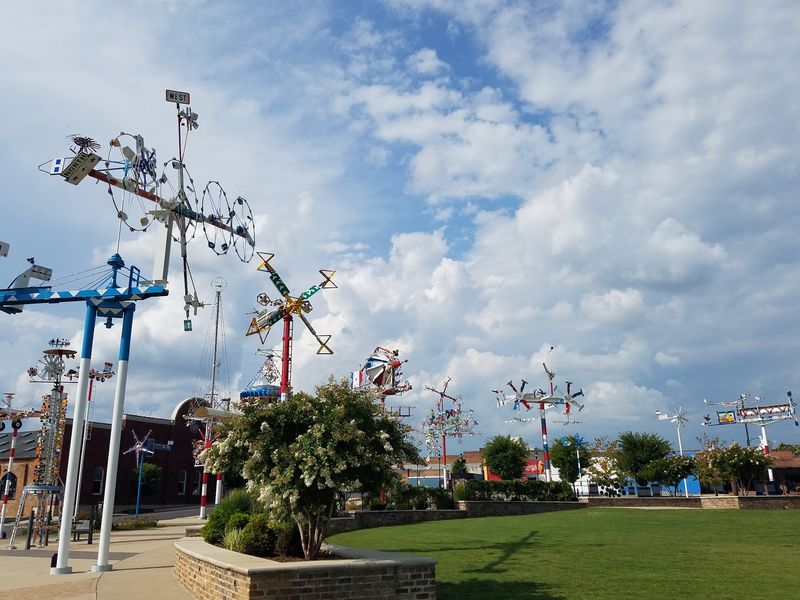
Behind all that playful motion was someone who knew how to make heavy things work. Vollis Simpson spent much of his life using practical skills as a machinist, rigger, and house mover.
After retiring, he began building the enormous wind-powered creations that now fill this downtown Wilson park. Knowing that story can change the way you see every turning wheel.
Simpson worked with machinery long before he became known as a folk artist. During World War II, he even made a wind-powered washing machine from salvaged bomber parts.
Later, on his farm near Lucama, North Carolina, useful know-how became room for invention. A shaft or gear was no longer just a machine part; it could help make something joyful.
As you walk through Vollis Simpson Whirligig Park, imagine him testing what each new shape might do in a breeze. You do not need an art background to appreciate that kind of curiosity.
His story makes this visit especially inviting for anyone who has ever enjoyed building, fixing, or wondering how something works.
Old Parts With New Jobs
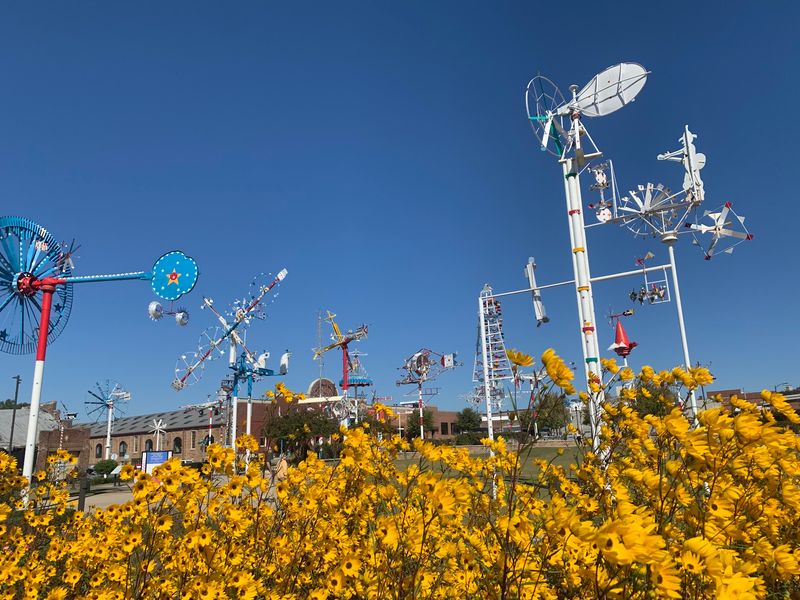
A closer look can turn a strange shape into a guessing game. Is that a bicycle wheel near the top?
Could those glittering little squares have come from an old road sign? At Vollis Simpson Whirligig Park, many parts began life as ordinary scrap before becoming pieces of a towering sculpture.
Simpson gathered metal wheels, propellers, plumbing supplies, and other castoffs, then fitted them together so the wind could bring them to life. Bright paint helps you follow the different shapes, while reflective pieces catch the light.
Some whirligigs reach many stories high, yet their small details can be just as interesting as their size. Walk around a piece rather than judging it from one side; a new angle may reveal how its parts connect.
For families, try spotting three reused objects without touching the artwork or crossing any barriers. Children often notice shapes that adults miss, and everyone can offer a different guess.
The activity makes the park more than a photo stop. It shows how an item that seems used up can become the start of a fresh idea.
When a Breeze Starts the Show
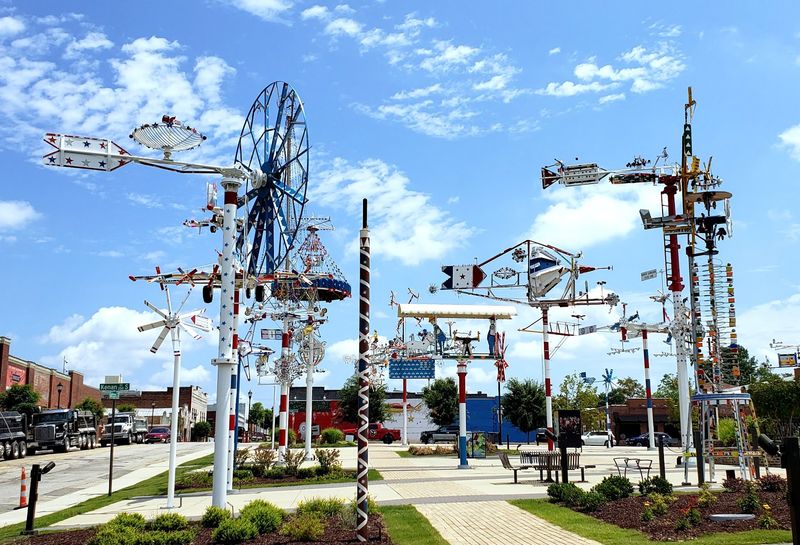
One small gust can set off a chain of surprises. A painted blade turns first, then a wheel high overhead begins to circle, and another sculpture joins in farther across the lawn.
The wind directs the show at Vollis Simpson Whirligig Park, which means a second visit may look nothing like your first.
If seeing the sculptures move is your main goal, check the local forecast and choose a day with a light, steady breeze. There is still plenty to study when the air is calm, but motion makes their clever design easier to understand.
Listen as you walk, too. You may hear a faint whir or a bit of metal sound before you spot the part that is moving.
Find a comfortable place to pause and follow one whirligig for a minute. Notice which pieces turn together and which seem to have a rhythm of their own.
Keep a safe distance and let the wind do the work. Waiting for that first unexpected spin can be more satisfying than trying to see everything at once.
A Different Spark After Dark
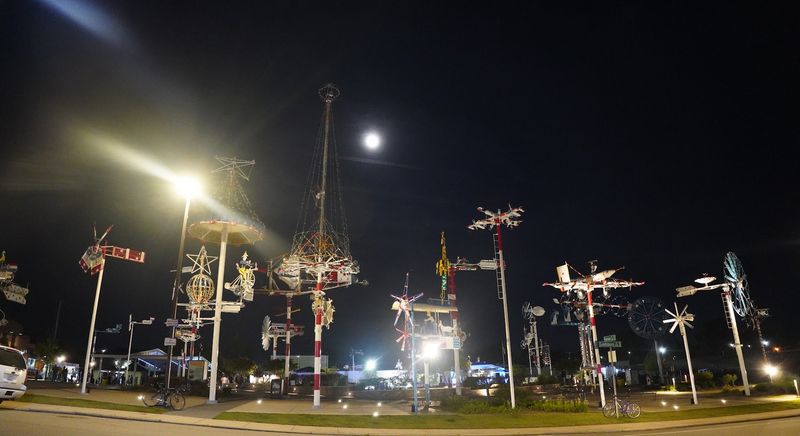
The colors change character when daylight slips away. Reflective pieces on the whirligigs pick up nearby light, making small points flash across shapes that looked solid in the afternoon.
An evening walk through Vollis Simpson Whirligig Park can reveal a quieter side of the same giant sculptures.
Simpson used reflective material, including pieces of old road signs, to give his work an extra life after sunset. Try viewing the park first while the sky still holds some color, then pause as it grows darker.
You can compare the painted surfaces you saw by day with the bright spots you notice at night. A breeze adds motion, but even still sculptures can offer striking patterns of light.
Plan your visit with ordinary nighttime care: check current park hours, watch your step, and stay in public walking areas. If you want photographs, steady your camera and avoid using a harsh flash on nearby visitors.
The reward is not a staged light show. It is the pleasure of discovering that Simpson thought about how his artwork could surprise people at different hours.
Folk Art With a Statewide Story
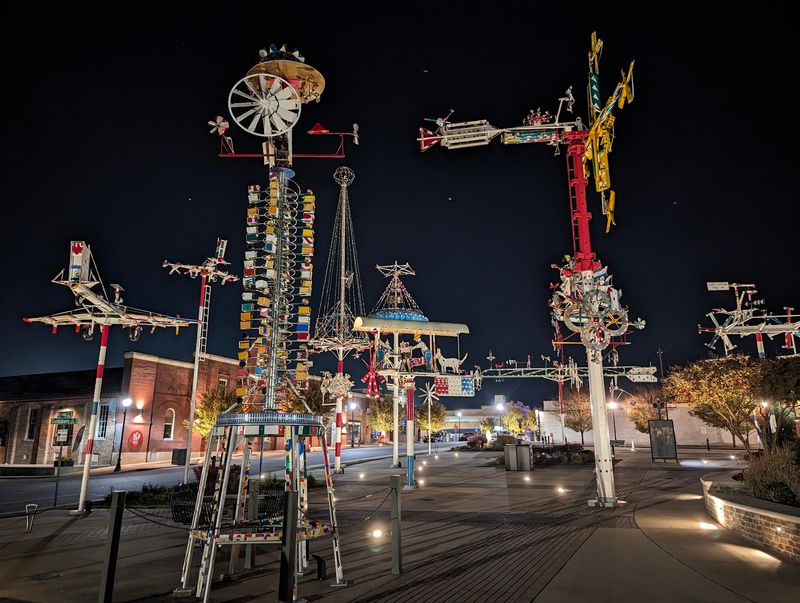
What began as one man’s backyard experiments now belongs to a much bigger story. North Carolina named Vollis Simpson’s whirligigs its official state folk art in 2013.
Standing among them in Wilson gives that honor a human scale: you can see the marks of a maker who learned by doing.
Folk art often grows outside formal art schools and museum studios. Simpson brought years of mechanical experience to his work, then followed his own ideas about shape, color, and movement.
Look at two nearby sculptures and compare them. Their sizes, moving parts, and decorations may differ, but both show his habit of making something lively from materials others might pass by.
You do not have to memorize dates to enjoy this part of the visit. Share the simple story with a friend or child, then ask which whirligig seems most inventive to them.
That conversation can make the official title feel less distant. At Vollis Simpson Whirligig Park, the state’s folk art is not locked behind glass; it is outdoors, where people can see it respond to the wind.
A New Home in Downtown Wilson
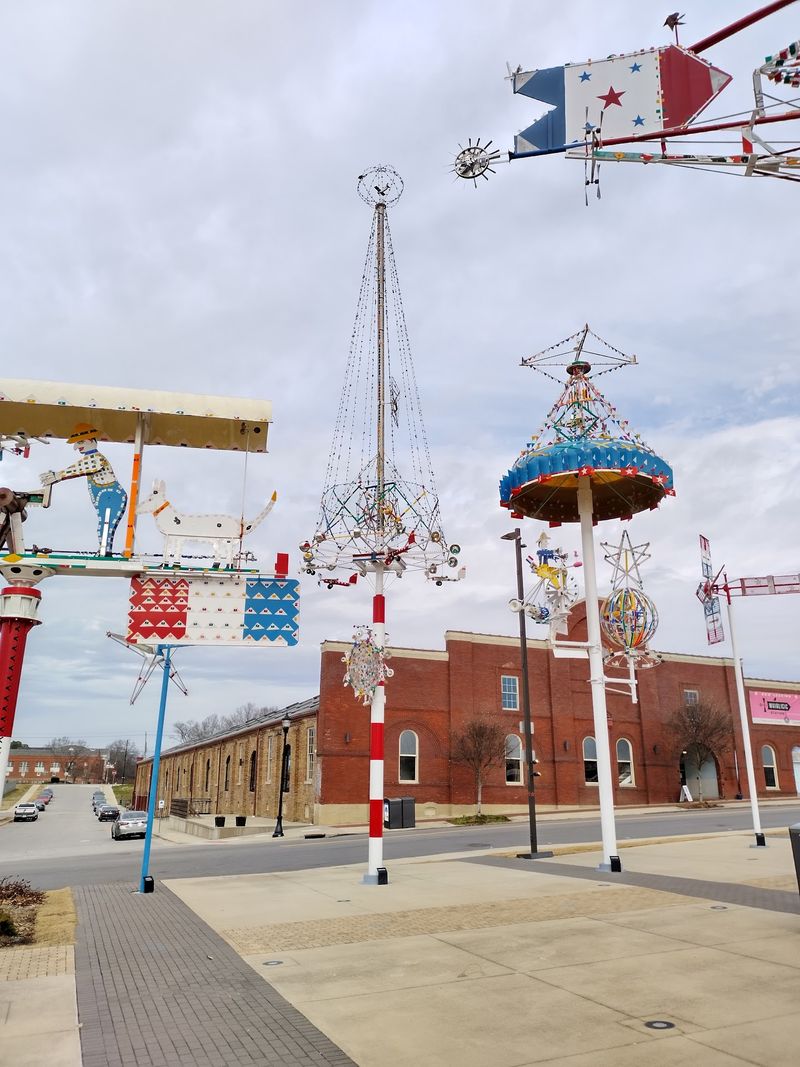
It is hard to picture these towering creations tucked away on a farm. Yet Simpson first built many of his whirligigs near Lucama, before a community effort brought a large collection to downtown Wilson.
The park opened in 2017, giving the sculptures room to stand together and giving visitors a public place to enjoy them.
Spend a moment looking beyond the moving pieces. Brick buildings around the park remind you that this is part of a working downtown, not a sculpture garden set apart from town life.
The contrast makes the art more surprising. A few steps can shift your view from an old building to a bright wheel turning against the sky, then back again.
For a relaxed visit, circle the park before choosing a favorite spot to linger. You will see how the layout lets the whirligigs speak to one another across the open space.
Their move to Wilson was about more than finding room for big objects. It helped create a welcoming place where local history, public art, and everyday walks can meet.
A Lawn That Brings People Together
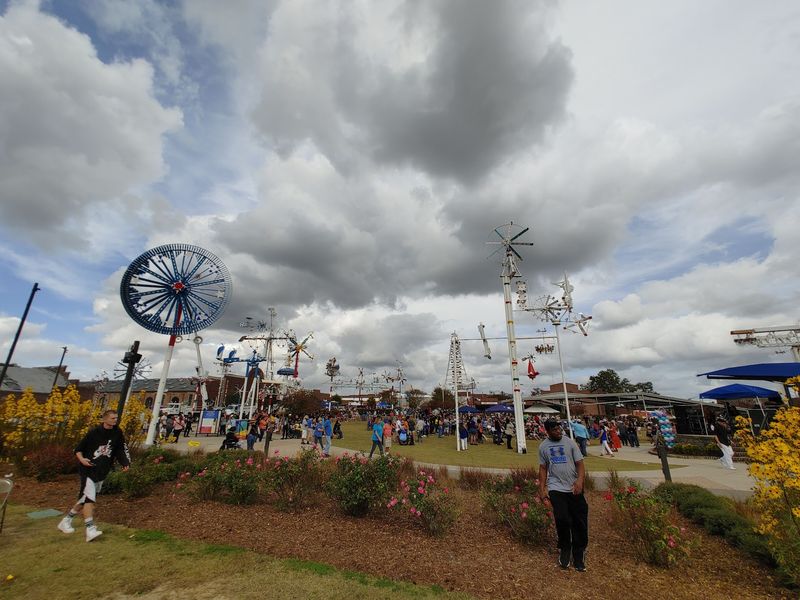
Some afternoons feel like a quiet art visit; others have the easy buzz of a community gathering. The central lawn at Vollis Simpson Whirligig Park is known as The Green, and it gives people space to sit, watch the sculptures, and enjoy events.
Nearby, the open-air pavilion adds a sheltered place to gather.
Concerts, film events, markets, and family activities can give the park a different mood throughout the year. If you enjoy a lively scene, look at the park’s current event calendar before going.
If you would rather study the whirligigs without a crowd, choose a time when no program is scheduled. Either way, leave room in your plans to simply watch the wind move through the artwork.
Events can change the feel of the space, but the sculptures remain the center of attention. You might see neighbors chatting under the pavilion while bright metal shapes turn above them.
That mix of ordinary town life and unusual art explains why the park feels welcoming, whether you arrive for a planned program or an unplanned afternoon walk.
The Story Continues Across the Street
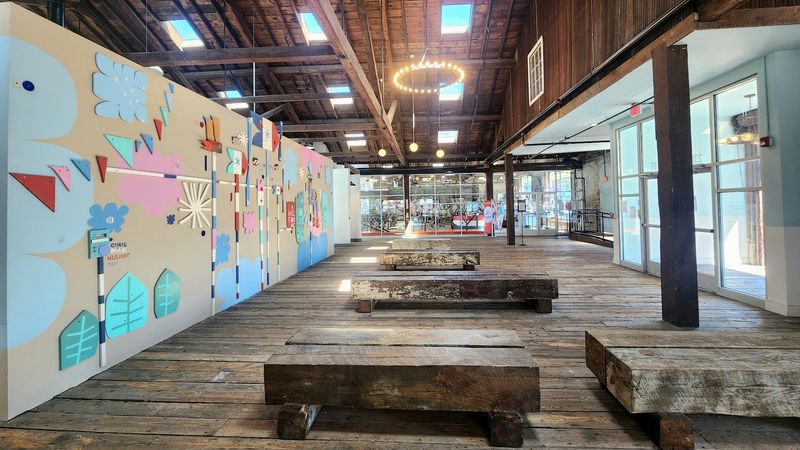
A spinning sculpture can make you wonder about the hands that built it. When that happens, the Vollis Simpson Whirligig Park Museum and Gift Shop across the street offers a chance to learn more.
Its displays tell parts of Simpson’s story and explain how the collection came to its downtown home.
Start outside, where the size and movement of the whirligigs make the strongest first impression. Then step into the museum, if it is open, to look for smaller original works, a video, and a timeline of the park project.
Learning about the effort to care for these complicated metal pieces can make you notice details you missed outdoors. Check current museum hours before planning your day, since they may differ from the park’s.
Afterward, return to the sculptures for one more slow walk. A wheel that seemed merely funny might now show the skill needed to keep it turning.
The museum works best as a companion to the open-air visit, not a replacement for it. Together, they make a stronger story about imagination and care.
A Moving Lesson in Art and Engineering
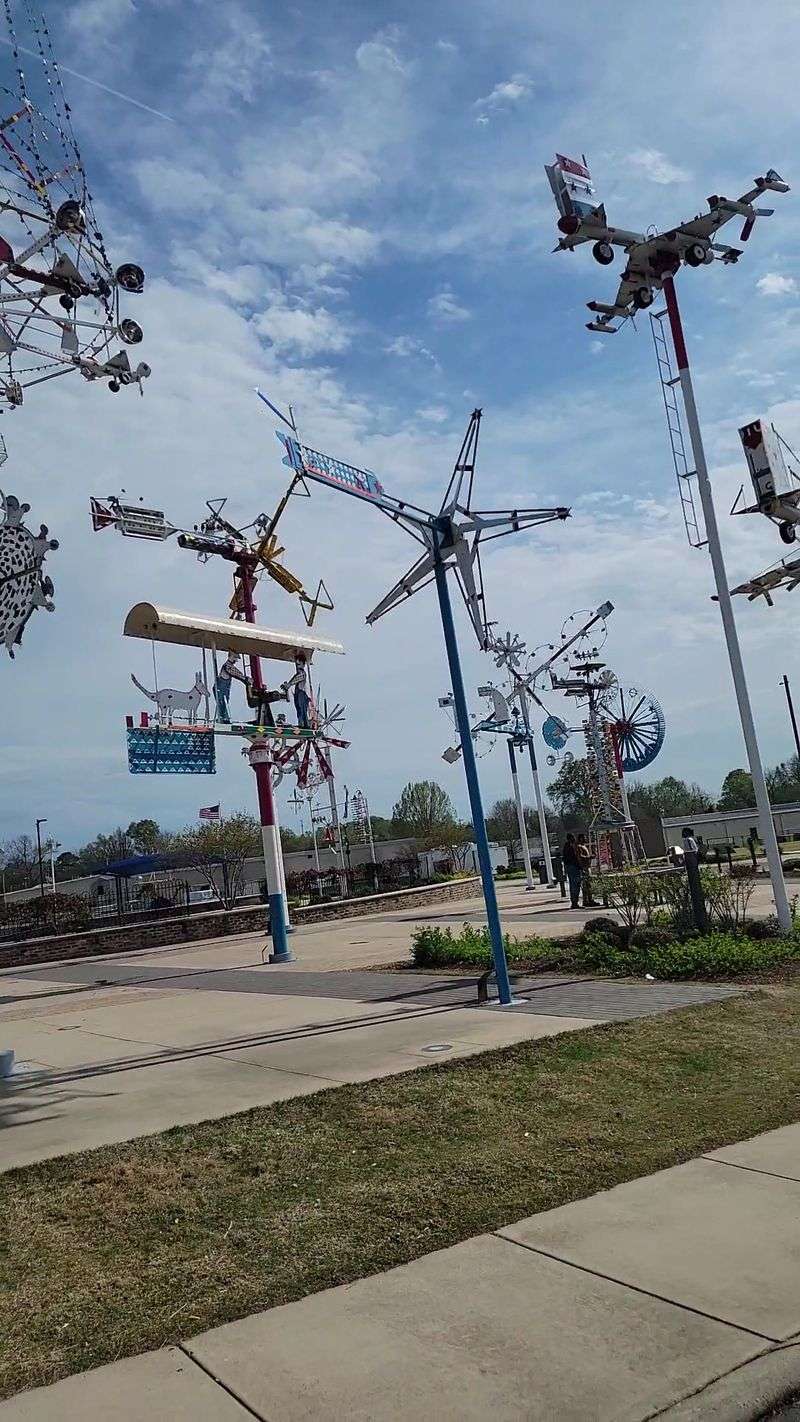
Watch a single blade catch the wind, and a simple question follows: what makes everything else move? The whirligigs at Vollis Simpson Whirligig Park invite that kind of curiosity.
Their turning wheels, balanced parts, and strong supports make art and engineering easy to see in the same place.
Try a small observation game as you walk. Pick one sculpture and guess which part will move first when a breeze arrives.
Then watch what happens, paying attention to the direction and speed of each turning piece. Children can sketch the shapes they notice, while adults may enjoy tracing how a moving part connects to the frame.
There is no need to touch anything to learn from it.
The park also uses the sculptures to support learning about science, technology, engineering, art, and math. Even without joining a program, you can leave with fresh questions about wind power and design.
That is a lovely reason to linger: a work that first makes you smile may also send you home eager to build, draw, or look more closely at the world.