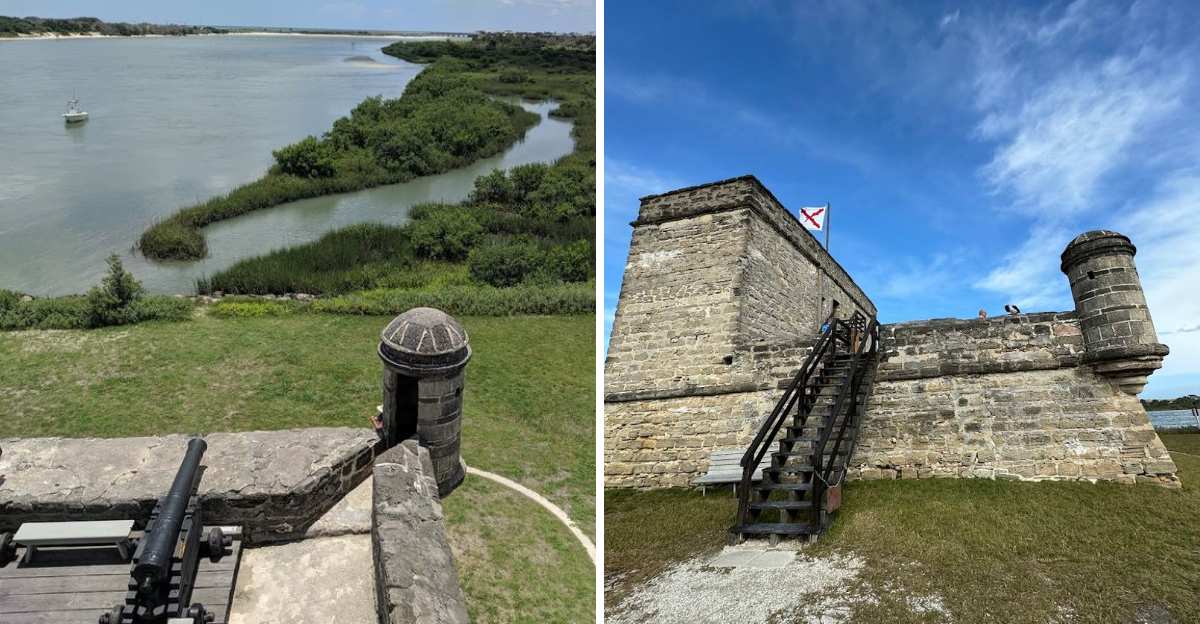
A 1600s Spanish fort still guards Florida’s coast like it never got the memo about time moving on.
Fort Matanzas sits alone on a sleepy island south of St. Augustine, where salt wind and marsh grass whisper over old battleground waters. Spanish soldiers once scanned these channels for enemy sails, ready to fire before danger reached the city.
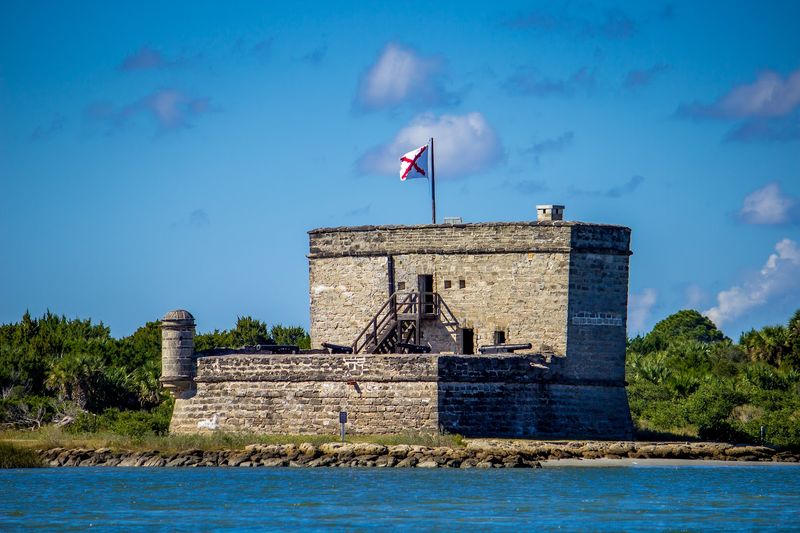
Built in the 1740s from coquina stone—literally packed seashells—the fort feels small, but its purpose was never modest. It watched, waited, and warned, holding a narrow waterway that could decide the fate of a colony.
Today, the cannons are silent, the fights are gone, and the only way in is a short ferry ride across calm water.
Yet the moment you step off, history still feels close enough to hear.
The Strategic Back Door of St. Augustine
Imagine defending a city where enemies could sneak around your strongest walls. That’s exactly the problem Spanish St. Augustine faced with Matanzas Inlet, a narrow water passage cutting through barrier islands just south of town.
While the massive Castillo de San Marcos protected the city’s main harbor, this inlet created a dangerous back entrance that hostile ships could exploit.
Military planners recognized the threat immediately. Any naval force controlling this passage could bypass St. Augustine’s primary defenses and launch surprise attacks from the vulnerable southern side.
The inlet became what strategists call a choke point—a small area whose control determined the safety of everything beyond it.
Spanish authorities watched this waterway nervously for decades. Enemy vessels entering through Matanzas could land troops, cut supply lines, or coordinate attacks with forces approaching from the north.
The inlet’s strategic importance eventually forced Spain to commit resources to permanent fortifications, transforming a natural weakness into a defended position that would protect St. Augustine for generations.
A Name Born From Violence: Matanzas
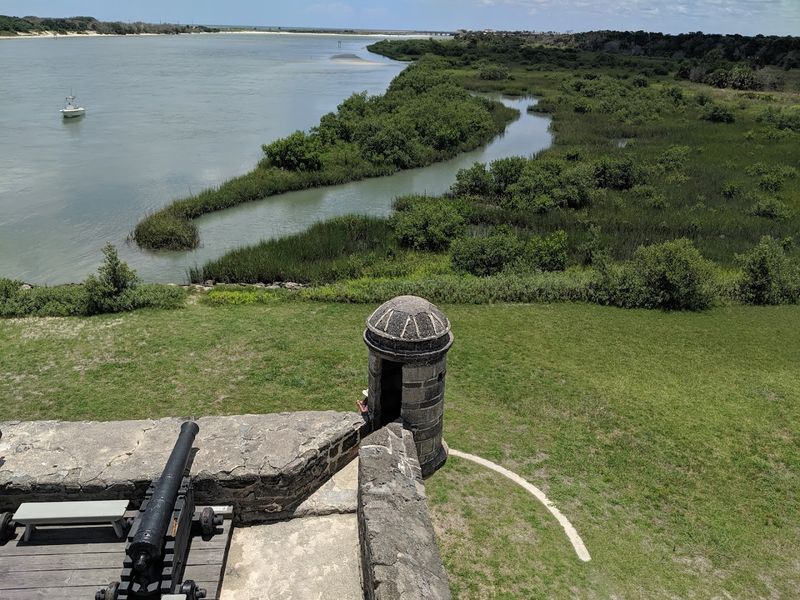
The Spanish word “matanzas” translates directly to “slaughters,” and the story behind this name is as brutal as it sounds. In September 1565, Spanish forces under Pedro Menéndez de Avilés encountered hundreds of shipwrecked French Huguenots near this inlet.
The Protestants had been attempting to establish their own colony in Florida, challenging Spain’s territorial claims and religious authority in the New World.
Menéndez offered the starving, defenseless survivors a choice: convert to Catholicism or face execution. Most refused, and Spanish soldiers carried out mass killings on the beach.
The massacre wasn’t a heat-of-battle tragedy but a calculated demonstration of Spanish power and religious intolerance during Europe’s devastating wars of faith.
This violent episode permanently marked the landscape. The river, inlet, and eventually the fort all carried the name Matanzas as a geographic memorial to that dark September day.
Today’s peaceful national monument sits on ground where colonial empires clashed with deadly consequences, reminding visitors that Florida’s European history began with conflict, conquest, and competing visions of the New World.
Early Spanish Presence Before the Fort
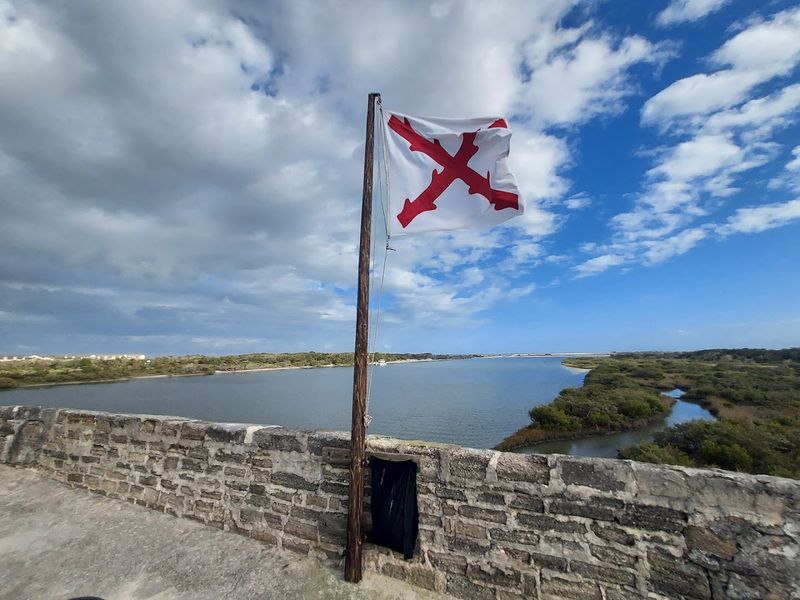
Decades before anyone laid the first coquina stone, Spanish soldiers kept watch at Matanzas Inlet from much simpler structures. Historical records mention wooden watchtowers dating back to the late 1500s, erected shortly after St. Augustine’s founding in 1565.
These early outposts were little more than elevated platforms with thatched roofs, offering minimal shelter from Florida’s punishing sun and hurricane-force winds.
Life at these temporary stations was miserable. Soldiers rotated through short assignments, enduring mosquito swarms, limited supplies, and constant exposure to the elements.
The wooden towers deteriorated quickly in the humid subtropical climate, requiring frequent repairs or complete rebuilding. Despite their fragility, these posts served a crucial function: providing early warning of approaching ships.
Spanish commanders understood that spotting enemy vessels hours before they reached St. Augustine could mean the difference between successful defense and catastrophic surprise attack. Lookouts used flags, smoke signals, or fast boats to relay information back to the city.
These humble wooden predecessors proved the inlet’s strategic value long before engineers designed the permanent stone fortress that tourists visit today, establishing a military tradition that would span nearly two centuries.
Why the British Threat Changed Everything
By the early 1700s, Britain had emerged as Spain’s most aggressive rival in North America. British colonies stretched down the Atlantic coast, and their naval power grew stronger each decade.
Spanish Florida became an isolated outpost, surrounded by British territory to the north and increasingly vulnerable to coordinated military campaigns that tested St. Augustine’s defenses repeatedly.
The 1702 siege of St. Augustine proved especially alarming. British colonial forces from Carolina attacked the city, burning much of the town though failing to capture the Castillo.
That assault exposed how easily enemies could move through waterways like Matanzas Inlet, landing troops south of the city’s main fortifications. Spanish officials realized their defensive strategy had a critical gap.
Another major British attack in 1740 reinforced these fears. General James Oglethorpe led a massive siege that ultimately failed, but the prolonged campaign demonstrated Britain’s determination to seize Florida.
Spanish Governor Manuel de Montiano, fresh from surviving this attack, immediately ordered construction of a permanent fort at Matanzas. The British threat had transformed from occasional raids into an existential danger requiring comprehensive coastal defenses, not just a single fortress in town.
Construction During the First Spanish Period
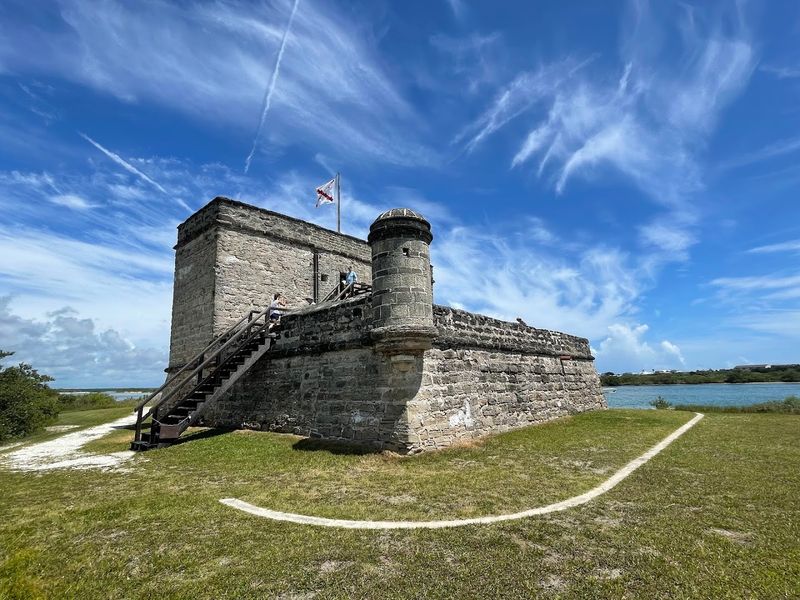
Fort Matanzas rose from Rattlesnake Island between 1740 and 1742, a two-year construction project supervised by Spanish military engineers. Governor Manuel de Montiano directed the work, having just repelled Oglethorpe’s siege and recognizing that St. Augustine needed stronger outlying defenses.
The governor commissioned a compact but sophisticated watchtower designed specifically for the inlet’s defensive needs rather than a full-scale fortress.
Building materials arrived by boat from quarries and supply points around St. Augustine. Workers harvested coquina blocks, mixed mortar, and ferried everything across challenging tidal waters to the remote construction site.
The labor force likely included Spanish soldiers, hired craftsmen, and possibly enslaved workers or Native Americans—though historical records about the specific workforce remain incomplete.
The resulting structure measured just 50 feet tall and 30 feet square, but its design reflected centuries of Spanish military architecture experience. Engineers incorporated gun ports for cannon, a second-floor barracks, powder magazine storage, and a rooftop gun deck.
The compact fortress cost far less than larger installations while perfectly serving its focused mission: watching the inlet and warning St. Augustine of approaching danger. Construction finished just as tensions with Britain continued escalating throughout the 1740s.
Built With Coquina Stone Strength
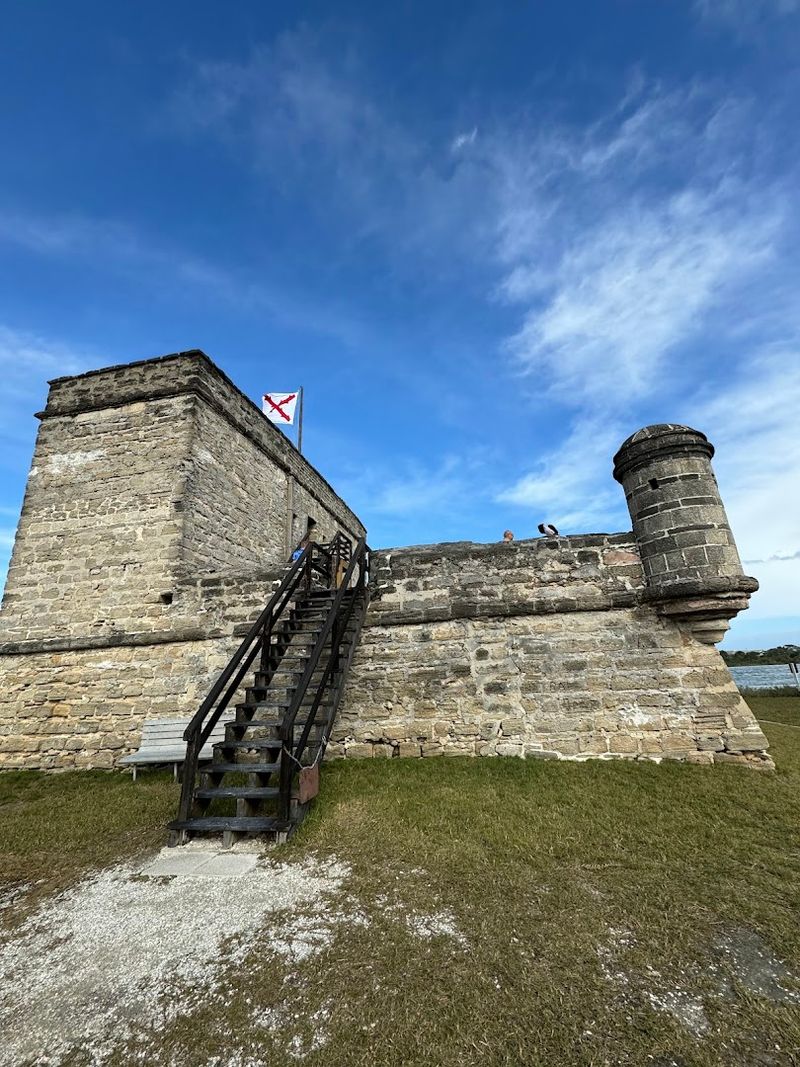
Coquina looks nothing like traditional fortress stone. Instead of hard granite or limestone, this sedimentary rock consists of compressed seashells cemented together by centuries of mineral deposits.
Found in deposits along Florida’s northeast coast, coquina appears soft and crumbly, seemingly unsuitable for military construction. Yet Spanish engineers recognized its remarkable defensive properties that made it ideal for coastal fortifications.
Here’s coquina’s secret advantage: the material absorbs impacts rather than shattering. When iron cannonballs struck harder stones like granite, the walls would crack and explode into deadly shrapnel.
Coquina’s porous structure allowed cannonballs to embed themselves in the walls without causing catastrophic damage. After battles, workers could simply patch holes and repair minor damage rather than rebuilding collapsed sections.
The stone also proved surprisingly durable against Florida’s harsh climate. Unlike wood, coquina resisted rot, termites, and hurricane winds that regularly destroyed other structures.
Its availability near construction sites reduced transportation costs significantly. Both Fort Matanzas and the larger Castillo de San Marcos demonstrate coquina’s effectiveness—both fortresses survive intact nearly 300 years later, their walls still standing despite centuries of weather, occasional combat, and the salt air’s corrosive effects.
A Tiny But Strategic Garrison
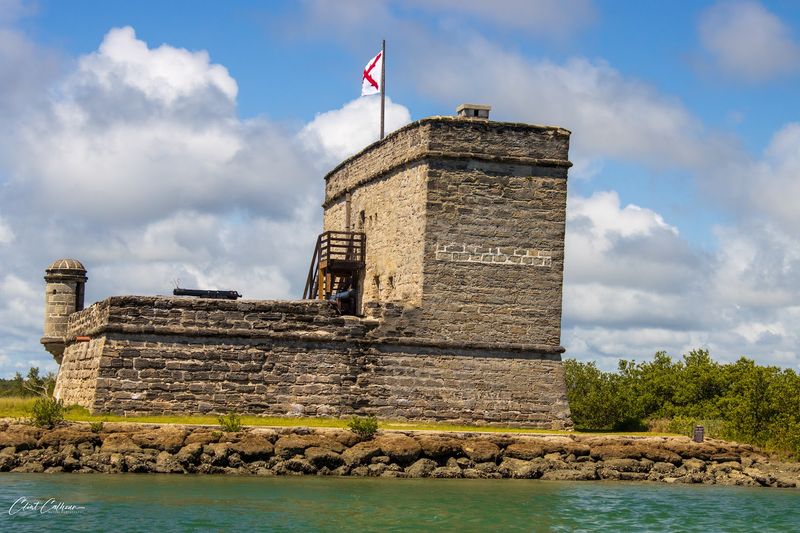
Fort Matanzas never hosted armies or large military companies. Typically, only five or six soldiers occupied the tiny fortress at any given time, rotating through month-long assignments from the larger garrison in St. Augustine.
These small detachments handled all responsibilities: maintaining weapons, cooking meals, keeping watch, and ensuring the fort remained combat-ready despite its isolation.
Daily routines revolved around cannon maintenance and observation duties. Soldiers cleaned and inspected the artillery pieces, kept gunpowder dry in the magazine, and took turns scanning the inlet for approaching vessels.
The second floor provided cramped sleeping quarters, while the rooftop gun deck offered the best vantage point for spotting ships miles offshore. Living conditions were basic but probably better than the wooden watchtowers that preceded the stone fort.
Supply boats arrived regularly from St. Augustine, bringing food, fresh water, ammunition, and messages. Soldiers couldn’t simply walk back to town for supplies or entertainment—the fort’s island location meant complete isolation between boat arrivals.
This arrangement reflected Spanish military strategy perfectly: station just enough men to operate the warning system and defend against small raiding parties, while keeping the main forces concentrated in St. Augustine where they could respond to any alert from Matanzas.
The Role It Never Had to Fully Play
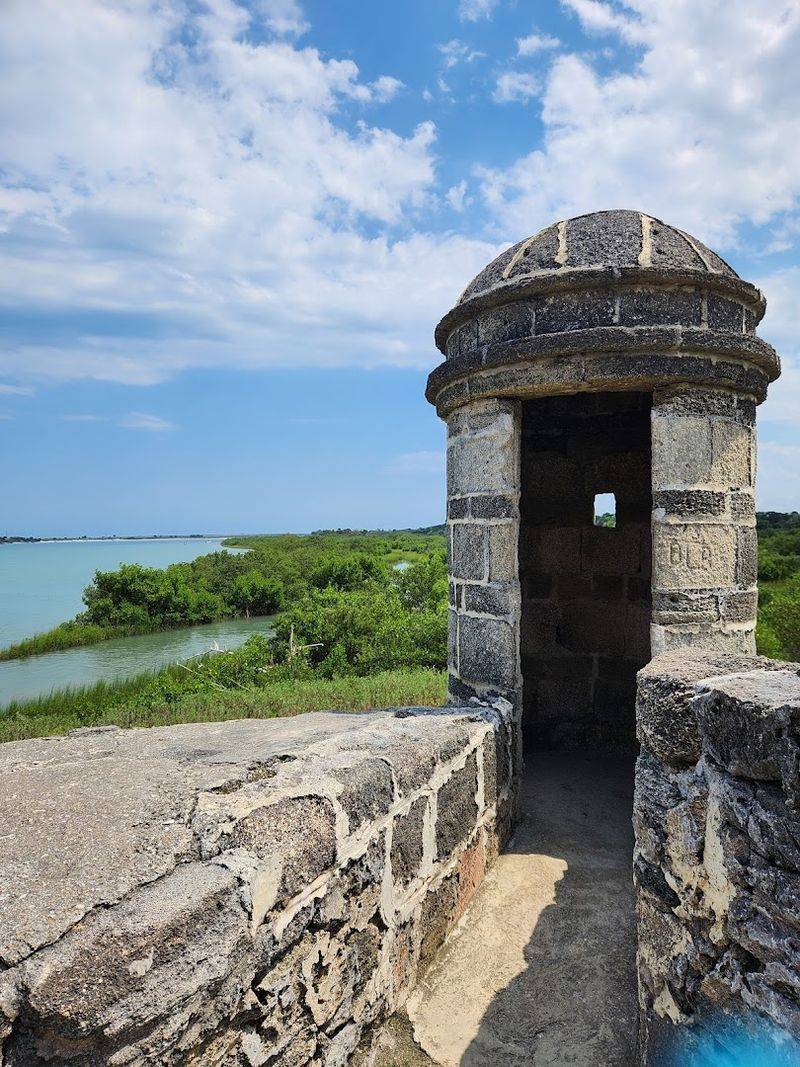
Ironically, Fort Matanzas succeeded precisely because it never fought. Engineers designed the fortress to prevent attacks through Matanzas Inlet, and its mere presence accomplished that mission without firing shots in anger.
British naval commanders, spotting the watchtower and its cannon commanding the narrow passage, chose to avoid the inlet rather than risk their ships in the confined waterway under Spanish guns.
The fort served as what military strategists call a deterrent—a defensive position strong enough to make attacking it more trouble than it’s worth. British forces attacking St. Augustine in subsequent years approached from the north instead, knowing the southern route through Matanzas now featured a fortified choke point.
Spanish lookouts continued their watch duties, reporting ship movements and maintaining readiness, but the expected major assault never materialized.
This “boring” military career actually represents perfect success. The fort protected St. Augustine for decades by making enemy commanders reconsider their approach routes.
Spanish authorities got exactly what they paid for: a small, economical installation that closed a strategic vulnerability without requiring massive garrisons or constant reinforcement. Fort Matanzas proved that sometimes the best military action is the battle you prevent rather than the one you fight and win.
Isolation That Shaped Its Legacy
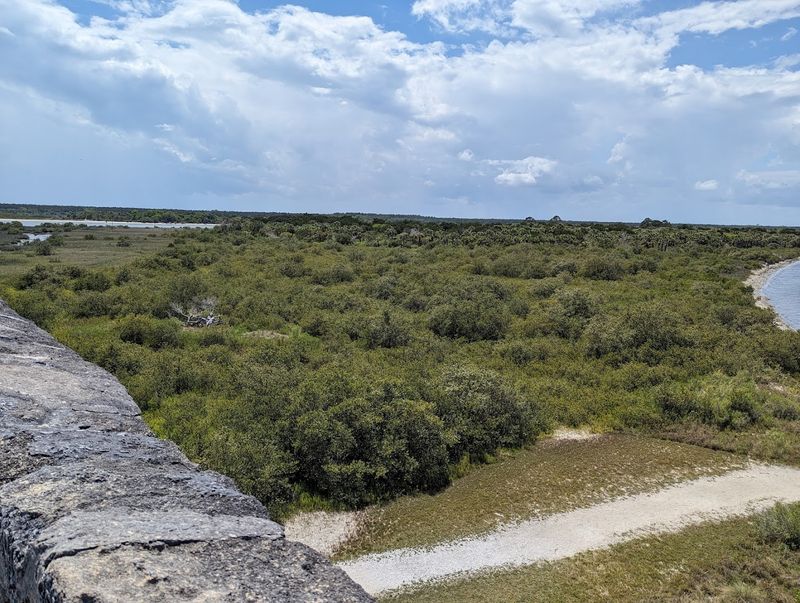
Stand on Rattlesnake Island today and you’ll immediately understand the fort’s most defining characteristic: complete isolation. Surrounded by tidal marshes, narrow channels, and the open Atlantic, the tiny barrier island sits separated from mainland Florida by water that made every supply delivery and personnel change a boat journey.
Spanish engineers chose this location deliberately, accepting the logistical challenges because the island’s position perfectly commanded the inlet.
This isolation shaped everything about the fort’s history. Soldiers couldn’t casually interact with St. Augustine’s community or retreat to town when off-duty.
Every nail, food barrel, and cannonball required boat transportation across unpredictable waters. The small garrison learned to be self-sufficient, managing their limited space efficiently while maintaining combat readiness despite being separated from reinforcements and support services.
The same isolation that challenged Spanish soldiers now preserves the fort’s historical integrity. Modern development has sprawled along Florida’s coast, but Fort Matanzas remains on its island, accessible only by ferry.
This geographic separation saved the fortress from the commercial pressures that altered many historical sites. The isolation that once defined a soldier’s hardship assignment now provides visitors with an authentic experience, reached by the same water journey Spanish troops made centuries ago.
Visitor Information Today
Fort Matanzas National Monument welcomes visitors at 8635 A1A South, about 15-20 minutes south of downtown St. Augustine along the scenic coastal highway. The U.S.
National Park Service manages the site, providing free admission to both the mainland visitor center and the fort itself. Rangers offer interpretive programs explaining the fort’s history, colonial warfare, and the unique coastal ecosystem surrounding the monument.
Reaching the fort requires a short ferry ride across the Matanzas River, operated by the Park Service at no charge when conditions permit. The small passenger ferry accommodates limited numbers, so busy days may involve short waits.
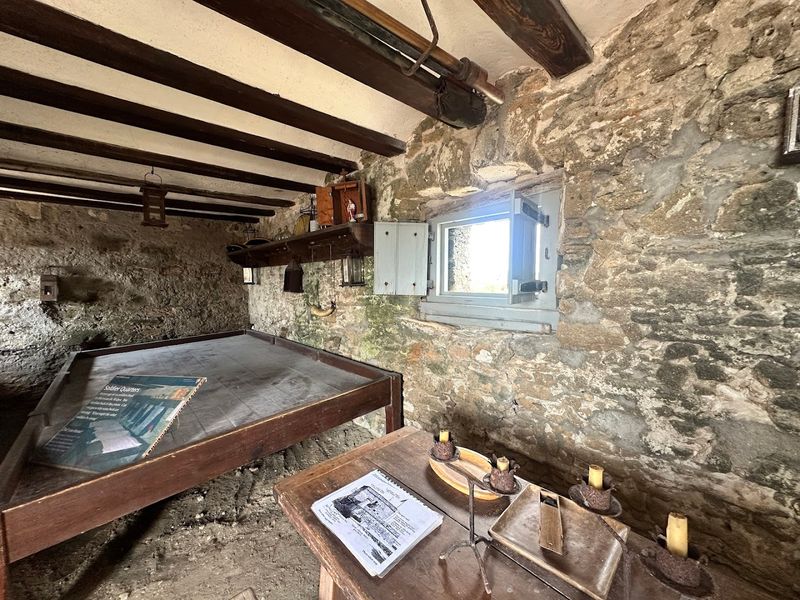
Once on Rattlesnake Island, visitors can climb the narrow stone stairs to explore the fort’s interior, gun deck, and restored rooms that recreate the Spanish garrison’s living conditions.
The mainland area features nature trails through coastal hammock and dune habitats, wildlife viewing opportunities, and outdoor exhibits about local history and ecology. Ferry service operates on seasonal schedules and may close due to weather, staffing limitations, or high tides.
Smart visitors check the National Park Service website or call ahead before driving down, especially during summer storm season or holiday weekends when crowds peak. The combination of history, nature, and boat access makes Fort Matanzas a distinctive destination along Florida’s heritage coast.