
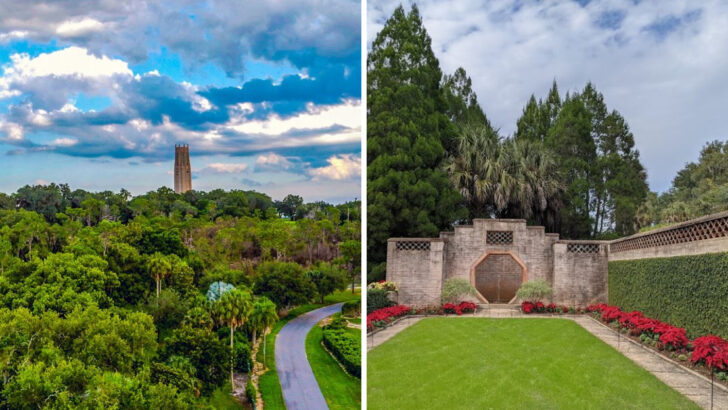
Tucked away in the rolling hills of central Florida, Bok Tower Gardens is one of the most magical and unexpected places in the entire state.
At its heart stands a 205-foot marble tower that looks like it was lifted straight out of a fairy tale.
Built in 1929 and surrounded by lush, carefully designed gardens, this National Historic Landmark draws visitors from across the country who come to experience its beauty, music, and peaceful atmosphere.
Whether you love history, nature, or simply stunning scenery, Bok Tower Gardens has something that will genuinely take your breath away.
The 205-Foot Singing Tower That Defines the Landscape
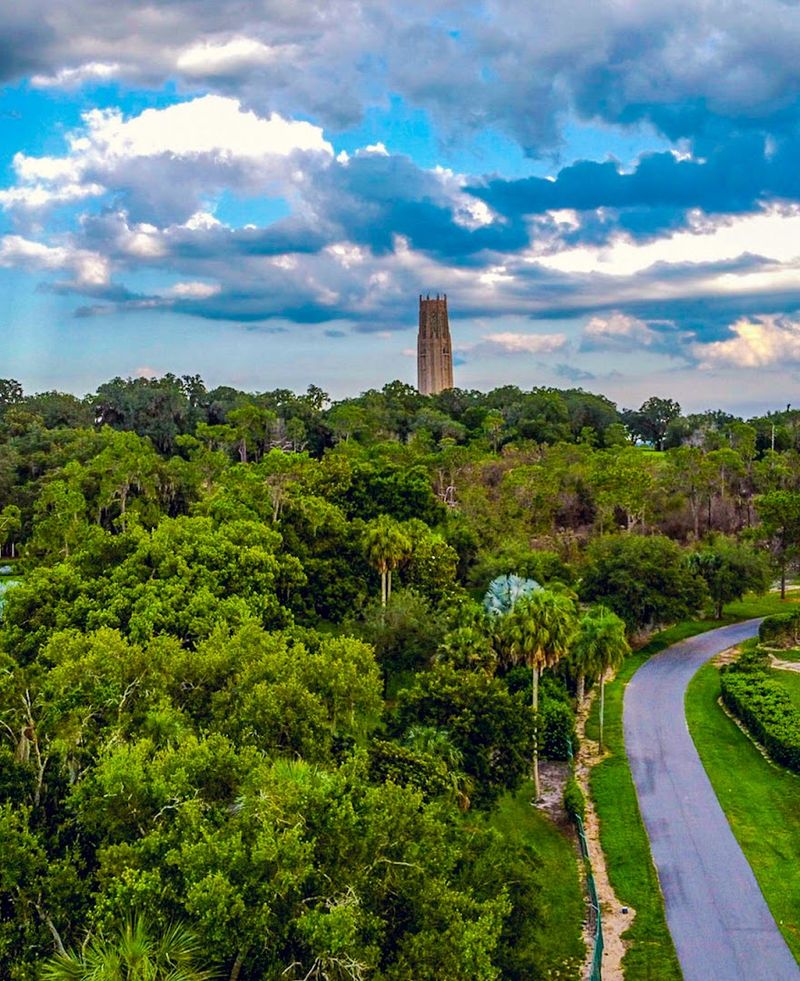
Standing at the highest point on Florida’s peninsula, the Singing Tower at Bok Tower Gardens is the kind of structure that makes you stop walking and just stare. Built from pink and gray marble combined with rough coquina stone, the 205-foot tower blends neo-Gothic and Art Deco styles in a way that feels completely one-of-a-kind.
Completed in 1929, it was a bold architectural statement for its time — and it still is today.
The tower’s sheer height means you can spot it from a distance as you approach the gardens, and that first glimpse never gets old. Rising above a canopy of ancient live oaks and subtropical plants, it genuinely looks like something from a fantasy film set.
The warm tones of the marble catch the Florida sunlight beautifully at different times of day.
What makes the tower even more impressive is that it was built without modern construction equipment. Workers used horse-drawn carts and manual labor to haul heavy materials up Iron Mountain.
That dedication to craftsmanship shows in every detail of the finished structure, making it one of the most remarkable landmarks in the American South.
A Carillon That Turns the Garden Into a Living Concert Hall

Imagine walking through a peaceful garden when suddenly rich, resonant music begins drifting through the trees. That is exactly what happens at Bok Tower Gardens, where a professional carillonneur plays a set of 60 bronze bells every single day.
The instrument, called a carillon, is played using a keyboard of wooden batons and foot pedals — a skill that takes years to master.
The bells range in size from tiny chiming bells to a massive bourdon bell weighing nearly 12 tons. Together, they produce a sound that carries across the entire property, filling the air with music that feels both ancient and alive.
Scheduled concerts happen daily, and hearing that sound echo through the palms and pines is genuinely unforgettable.
Bok Tower’s carillon is considered one of the finest in the world, and it attracts carillonneurs from across the globe who come to perform here. The music program has been running continuously since the tower opened, making it one of America’s longest-running outdoor concert series.
Visitors who time their walk to coincide with a performance get an experience that goes well beyond a typical garden visit — it becomes something closer to a memory.
Edward W. Bok’s Vision for a Place of Peace

Not many people build a national landmark as a retirement project, but Edward W. Bok was not most people.
A Dutch-born immigrant who rose to become one of America’s most influential magazine editors, Bok won the Pulitzer Prize in 1921 for his autobiography. After stepping back from his career, he turned his attention to something he believed mattered even more: creating a sanctuary where ordinary people could find beauty and quiet.
Bok chose Iron Mountain in Lake Wales, Florida, as the location for his dream garden. The site sits at roughly 295 feet above sea level — modest by most standards, but the highest point on Florida’s long peninsula.
He wanted the garden to feel like a gift to the American public, a place where anyone could come and simply breathe.
His philosophy was rooted in the idea that beauty has real power to heal and restore the human spirit. He opened the gardens to the public in 1929, just months before his death, dedicating them with words that still appear on a plaque near the tower: “Make you the world a bit better or more beautiful because you have lived in it.” That mission still guides everything at Bok Tower Gardens today.
Designed by the Legendary Landscape Architect Frederick Law Olmsted Jr.

When Edward Bok decided to build his dream garden, he hired the best landscape architect available — Frederick Law Olmsted Jr., son of the man who designed New York’s Central Park. That choice made all the difference.
Olmsted Jr. approached the project with the same philosophy his father championed: nature and design should work together, not compete.
Rather than imposing a rigid formal layout, Olmsted created a garden that feels organic and exploratory. Winding paths curve through native Florida ecosystems, opening suddenly onto carefully framed views of the tower.
Every bend in the trail seems intentional, as if the landscape itself is guiding you toward the next beautiful moment.
Olmsted also worked hard to preserve the natural character of Iron Mountain, incorporating existing plants and topography into his design rather than starting from scratch. The result is a garden that feels both cultivated and wild at the same time.
Tall pines, ancient oaks, ferns, and flowering shrubs create a layered, textured environment that changes with every step. Walking through it, you get the sense that a thoughtful mind carefully considered every sight line and every shadow — and that kind of intentional design is rare enough to be truly worth appreciating.
Intricate Marble Details That Reward a Closer Look

Most people step back to admire the full height of the Singing Tower, but the real magic happens when you step closer. The tower’s exterior is covered in hundreds of intricate carvings depicting birds, native plants, and geometric patterns that stretch from the base all the way up toward the belfry.
Each carving was hand-crafted with a level of detail that seems almost impossible at this scale.
Much of this decorative work was created by sculptor Lee Lawrie, a celebrated American artist who also contributed to the design of Rockefeller Center in New York City. Lawrie brought a storytelling quality to the carvings, weaving Florida’s natural world into the tower’s stone skin.
Eagles, herons, and pelicans appear alongside flowers and vines, creating a living tapestry in marble.
The Art Deco elements blend surprisingly well with the neo-Gothic structure, giving the tower a layered visual identity that rewards multiple visits. Depending on the time of day, different carvings catch the light in different ways, so the tower genuinely looks different in the morning than it does at sunset.
Bring a pair of binoculars if you want to see the upper carvings properly — they are absolutely worth the effort to study up close.
A Reflection Pool That Mirrors the Tower Like a Movie Scene

There is a specific spot in Bok Tower Gardens where photographers tend to stop and plant themselves for a while — the reflection pool. Positioned directly in front of the Singing Tower, this long, still pool captures a near-perfect mirror image of the marble structure above it.
On a calm day, the reflection is so clear it looks like a second tower reaching down into the earth.
The visual effect is genuinely cinematic. With the tower rising into the blue Florida sky and its twin shimmering in the water below, the scene has the quality of a fantasy movie still or a painting from a storybook.
It is one of the most photographed spots in all of Florida, and it is easy to understand why once you see it in person.
The pool also serves a practical purpose, providing a quiet focal point that draws the eye and anchors the garden’s central design. Surrounding plantings of ferns, palms, and flowering shrubs frame the water’s edge, adding softness and color to the composition.
Visiting early in the morning gives you the best chance of finding the water completely still, which produces the sharpest and most dramatic reflection of the tower.
Seasonal Blooms That Transform the Gardens Year-Round

One of the best-kept secrets about Bok Tower Gardens is that it never looks exactly the same twice. The gardens were designed to offer something beautiful in every season, and the plant selection reflects that intention with impressive variety.
Spring is arguably the showstopper, when azaleas and camellias burst into color and paint the landscape in shades of pink, red, and white.
Summer shifts the mood toward lush, tropical abundance. The subtropical plants that thrive in Florida’s heat fill out beautifully during the warmer months, creating deep green canopies and dense ground cover that give the garden a jungle-like richness.
It is a completely different atmosphere from spring, but equally captivating in its own way.
Fall and winter bring their own quiet charm, with cooler temperatures making walking the trails genuinely comfortable. Some flowering plants continue blooming well into December, and the lower sun angle creates beautiful warm light that photographers especially love.
Because the garden changes so noticeably with the seasons, many visitors make it a habit to return at different times of year just to see what is new. That kind of living, evolving beauty is part of what makes Bok Tower Gardens so enduringly popular with locals and tourists alike.
Wildlife That Thrives in the Garden Sanctuary

Bok Tower Gardens was not designed just for human visitors. From the beginning, the landscape was shaped to support native Florida wildlife, and the results are obvious the moment you start walking the trails.
Sandhill cranes wander the grounds with a relaxed confidence that suggests they know exactly who owns the place — and it might not be the tourists.
Songbirds fill the trees with sound that competes cheerfully with the carillon bells. Gopher tortoises move slowly through the undergrowth, indifferent to onlookers.
Butterflies drift between flowering plants, and in the quieter corners of the garden, you might catch a glimpse of a box turtle making its unhurried way across a path.
Because the gardens protect a significant patch of Florida scrub habitat — one of the most endangered ecosystems in the state — they serve as a genuine wildlife refuge within a carefully maintained landscape. Birders especially love the property, since the mix of scrub, wetland edges, and open garden areas attracts a wide variety of species throughout the year.
Carrying a field guide or downloading a bird identification app before your visit can turn a pleasant stroll into a surprisingly rewarding wildlife-watching adventure that adds a whole new layer to the experience.
Hidden Corners and Scenic Trails Beyond the Tower
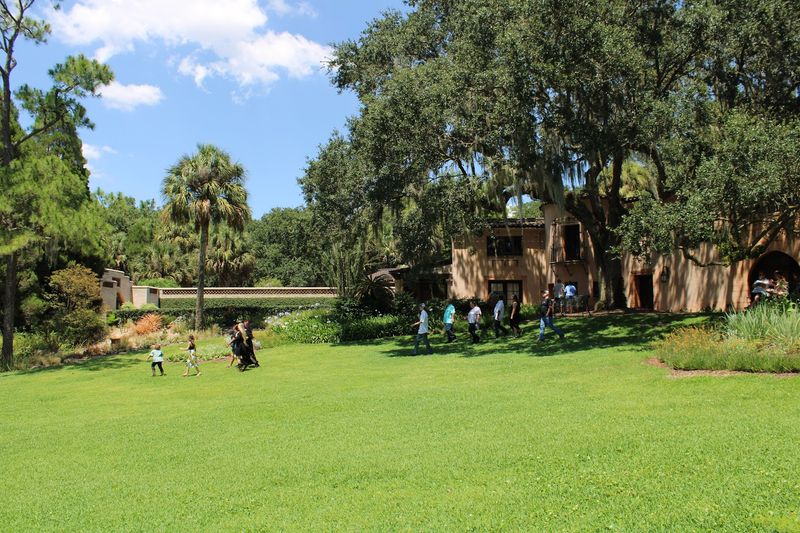
The Singing Tower gets most of the attention, and fairly so — but Bok Tower Gardens holds far more than its famous centerpiece. Miles of walking trails branch out from the main garden area, leading visitors through pine forests, wetland edges, and tucked-away garden rooms that feel worlds away from the busy paths near the tower.
These quieter sections of the property are where Edward Bok’s original vision really comes alive.
The Pine Ridge Trail is a favorite among those who want a more immersive natural experience. Winding through a restored Florida scrub ecosystem, the trail offers a completely different landscape from the formal garden areas near the tower.
The scrub is spare and sun-drenched, with low-growing plants, sandy soil, and a distinctive open-sky feeling that contrasts beautifully with the shaded garden paths.
Scattered throughout the property are small benches, hidden viewpoints, and quiet clearings that invite visitors to slow down and sit for a while. Finding one of these spots during a weekday visit, when crowds are lighter, can feel like discovering a private retreat.
Bok himself would likely approve — these are exactly the kinds of moments he had in mind when he imagined a garden dedicated entirely to peace and reflection.
Essential Visitor Information for Planning Your Trip

Planning a visit to Bok Tower Gardens is straightforward, and the experience is well worth the short drive from Orlando. The gardens are located at 1151 Tower Blvd, Lake Wales, FL 33853 — about 60 miles south of downtown Orlando, making it an easy day trip from most central Florida locations.
The property is open most days of the year, and daily carillon concerts are included with general admission.
Beyond the main garden and tower, visitors can explore the Pine Ridge Trail, the well-stocked visitor center, and El Retiro — a beautifully preserved 1930s Mediterranean-style estate on the property that offers guided tours on select days. The estate gives a fascinating glimpse into how wealthy Floridians lived during the early 20th century and adds a historical dimension to the visit that many guests find unexpectedly enjoyable.
Spring is the most popular time to visit because of the blooming flowers, but the gardens remain attractive and walkable year-round. Comfortable, supportive walking shoes are strongly recommended since the trails cover a large area with uneven terrain in some sections.
Arriving early in the morning helps you beat the midday heat and gives you the best light for photography. Checking the gardens’ official website before your visit for current concert schedules and any seasonal events is always a smart move.