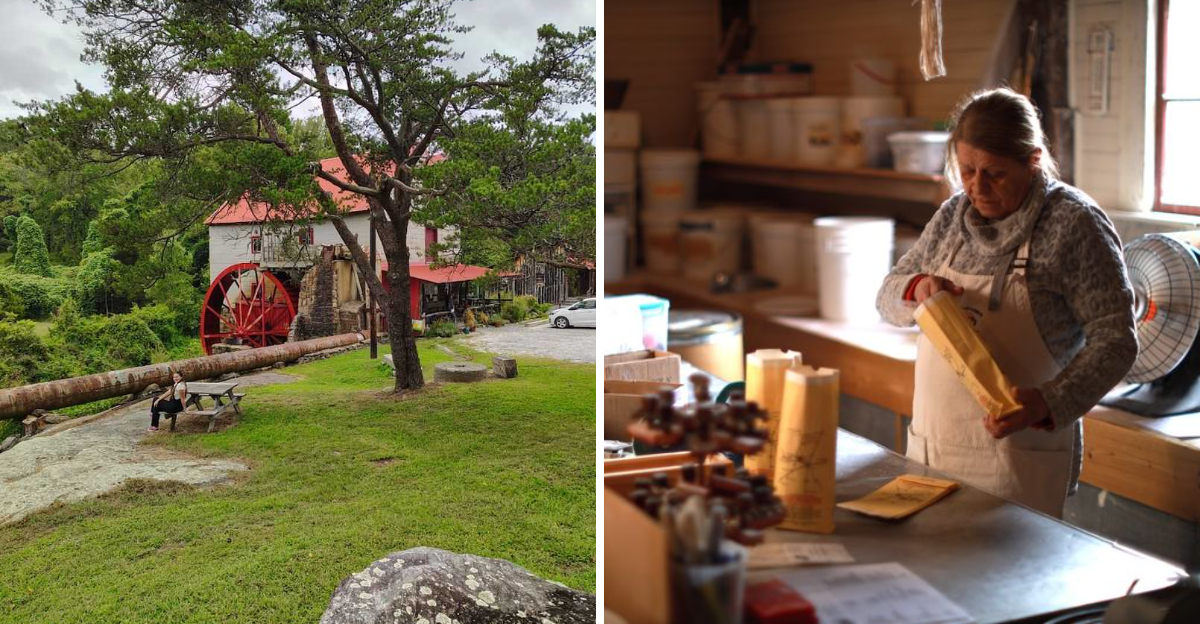
Tucked along the banks of Beaver Creek in Oak Ridge, North Carolina, the Old Mill of Guilford has been quietly grinding grain since 1767 — before the United States even existed.
For over 250 years, this remarkable landmark has fed families, witnessed history, and kept traditional milling alive in a world that rarely slows down.
Visitors today can watch the massive water wheel turn, browse shelves of stone-ground grains, and take home a bag of the mill’s famous sweet potato muffin mix.
Whether you love history, local food, or just a good story, this place has something that will stick with you long after you leave.
A 250-Year-Old Piece of Living History
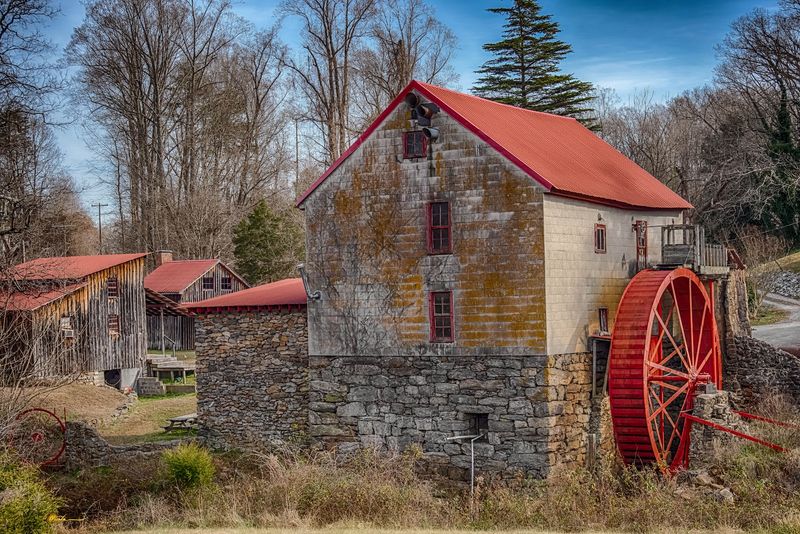
Most buildings from the 1700s exist only in photographs or behind museum glass. The Old Mill of Guilford, built in 1767, is a rare exception — it still works every single day.
That means this mill was already a decade old when the Declaration of Independence was signed in 1776.
Standing on the property, you can almost feel the weight of all those years. Generations of farmers, millers, and families have passed through these same doors, relying on this very spot to turn raw grain into something useful.
That kind of unbroken connection to the past is genuinely hard to find anywhere in the country.
What makes it even more impressive is that the mill isn’t frozen in time like a museum exhibit. It’s a living, breathing operation where grain is still ground using methods that would feel familiar to the original builders.
Visiting here isn’t just a history lesson — it’s proof that some things built with care and craftsmanship can truly stand the test of time. If you appreciate places with real roots, this one runs incredibly deep.
Built for Early Settlers on Beaver Creek
Back in the 1760s, frontier life in North Carolina was tough. Families needed reliable ways to process the grain they grew, and traveling long distances to find a mill was exhausting and dangerous.
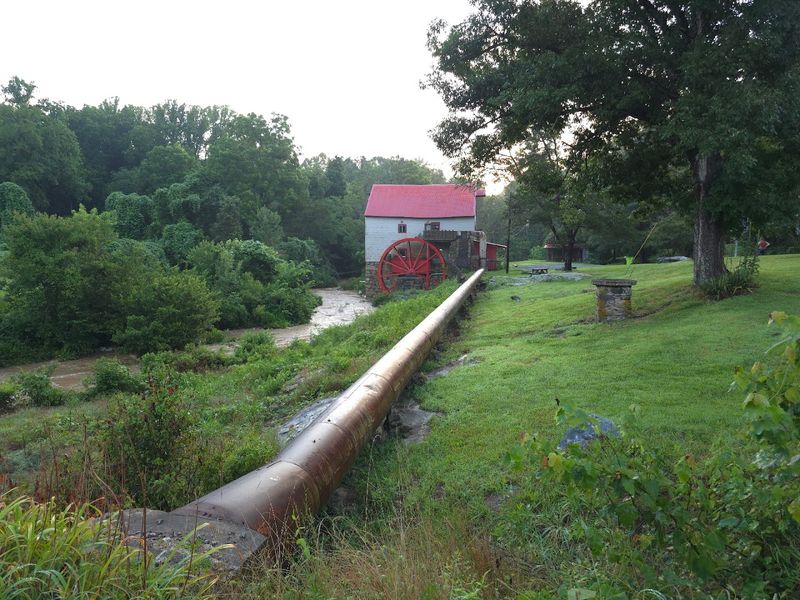
That’s exactly why Daniel Dillon built this mill on Beaver Creek — to serve the hardworking settlers putting down roots in the region.
Corn and wheat were survival crops. Without a local mill to grind them into flour and meal, families couldn’t make bread or porridge, the staples that kept everyone fed through long winters.
Dillon’s mill became a community anchor, drawing settlers from miles around and helping establish a stable local economy in what was then a very wild part of colonial America.
Beaver Creek itself was the perfect location — its steady water flow provided the energy needed to keep the millstones turning. Early mills like this one weren’t just convenient; they were absolutely essential.
Choosing the right creek could mean the difference between a thriving community and one that struggled to survive. Daniel Dillon clearly made the right call, and the community that grew around his mill would eventually become part of modern-day Guilford County.
A Surprising Link to the Revolutionary War
Not every old building can claim a connection to one of history’s most famous conflicts, but the Old Mill of Guilford absolutely can. During the American Revolutionary War, British forces led by General Cornwallis reportedly passed by — and made use of — this very mill on their way to the Battle of Guilford Courthouse in March 1781.
That battle, fought just a few miles away, was one of the costliest engagements of the entire Southern Campaign. Although the British technically won the field, they suffered such heavy casualties that Cornwallis was forced to abandon his push through the Carolinas.
It was a turning point that helped set the stage for the eventual American victory at Yorktown later that year.
Knowing that soldiers on both sides of that conflict may have stood where you’re standing today adds a whole new layer to a visit. The mill wasn’t just a bystander to history — it was woven into the everyday fabric of a war that shaped a nation.
Few places in North Carolina carry that kind of weight so quietly and without fanfare. Sometimes the most powerful history hides in plain sight.
Rebuilt and Reinvented Over Centuries
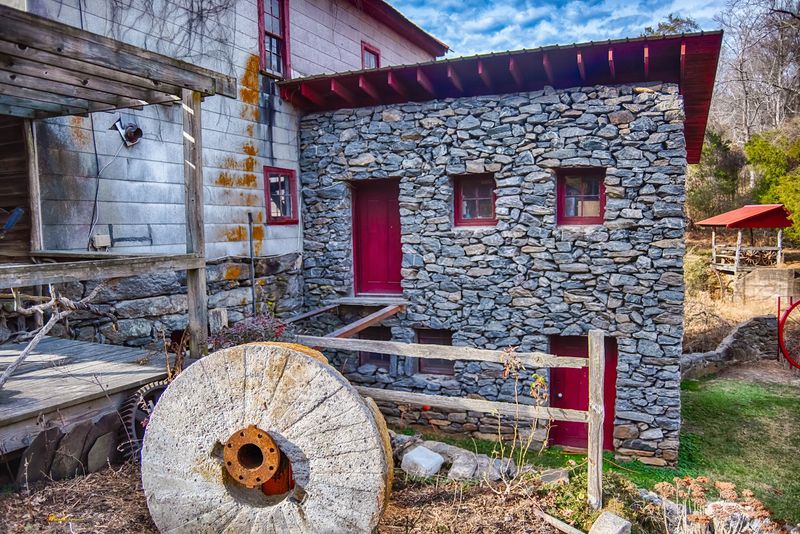
Change is often the price of survival, and the Old Mill of Guilford has changed quite a bit over its long life. The original structure built by Daniel Dillon was a simple tub mill — functional, but limited in what it could produce.
By 1819, the mill had been relocated and completely redesigned to meet the growing demands of the region.
The upgrade was significant. A larger dam was constructed to increase water flow, and an overshot water wheel replaced the older tub design.
This allowed the mill to operate more efficiently and handle larger quantities of grain, transforming it from a basic community service into a proper merchant milling operation that could sell and trade flour more broadly.
That kind of reinvention is actually a big reason why the mill is still standing today. Buildings and businesses that refuse to adapt tend to disappear.
Each time the mill faced a new era, it found a way to stay relevant without losing its core identity. The 1819 redesign essentially gave the mill a second life, setting it up for the next two centuries of continuous operation.
It’s a great reminder that honoring tradition doesn’t mean resisting every change — sometimes growth is what keeps history alive.
Powered by a Working Water Wheel
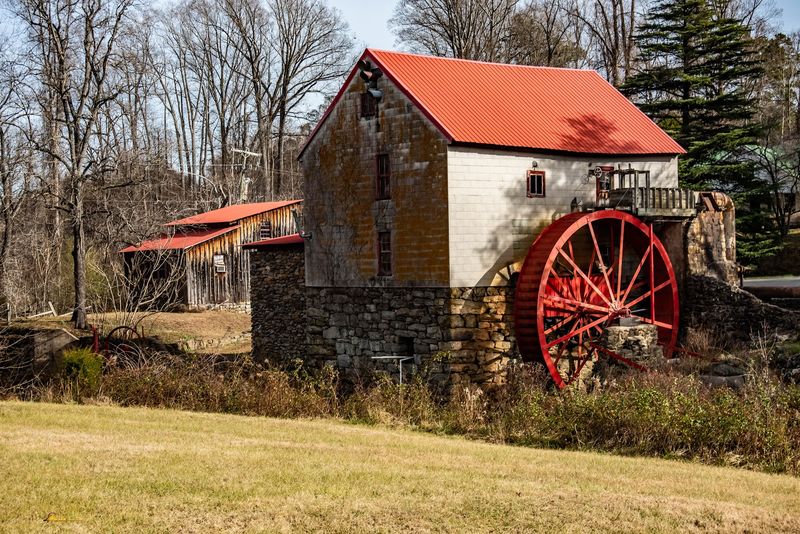
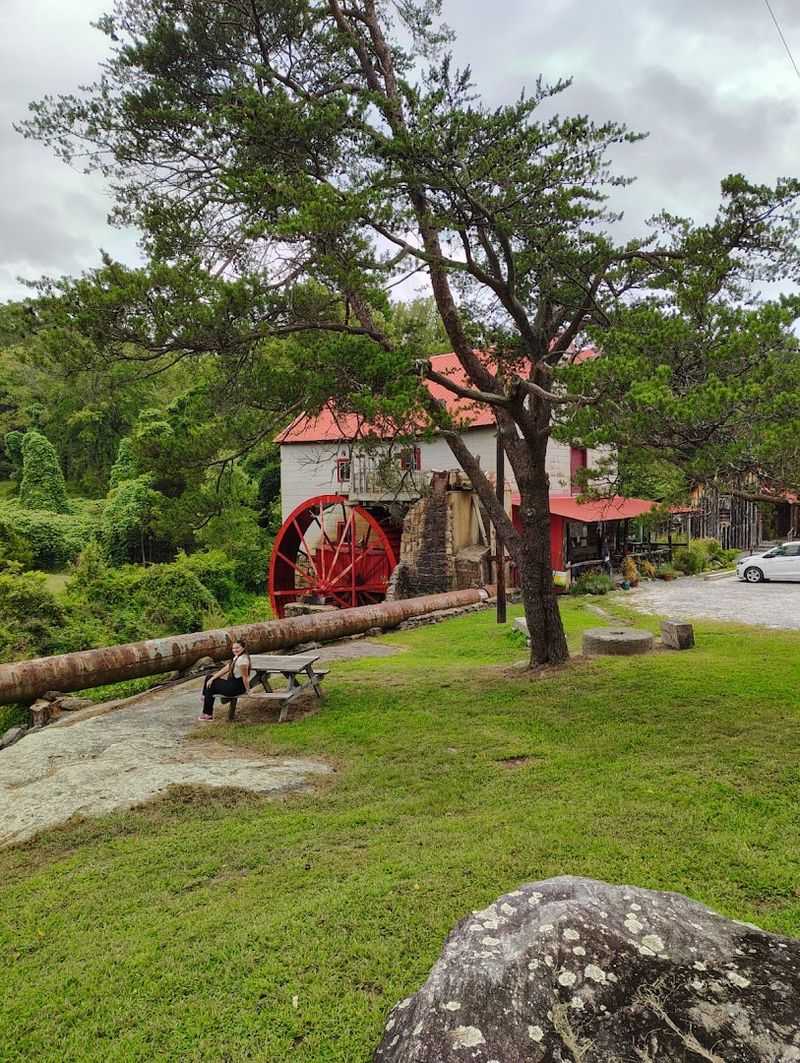
There’s something almost magical about watching a water wheel turn. At the Old Mill of Guilford, that magic is completely real and fully functional.
The overshot water wheel you see today isn’t a decoration or a replica — it’s the actual power source that drives the millstones inside the building.
An overshot wheel works by directing water over the top of the wheel rather than underneath it. The weight of the falling water pushes the paddles down, creating rotation that transfers energy through a series of wooden gears and shafts directly to the grinding stones.
It’s a beautifully simple system that relies entirely on gravity and moving water, with no electricity required.
Watching it in action gives you an immediate appreciation for the ingenuity of early engineers and millwrights. They figured out how to harness natural forces with precision, and their designs were so effective that many are still working centuries later.
When you visit, take a few minutes to just stand and watch the wheel move. The sound of the water, the slow and steady rotation, and the hum of the machinery inside create an experience that no video or photograph can fully capture.
It’s one of those things you simply have to see for yourself.
Stone-Ground Grains Made the Old-Fashioned Way
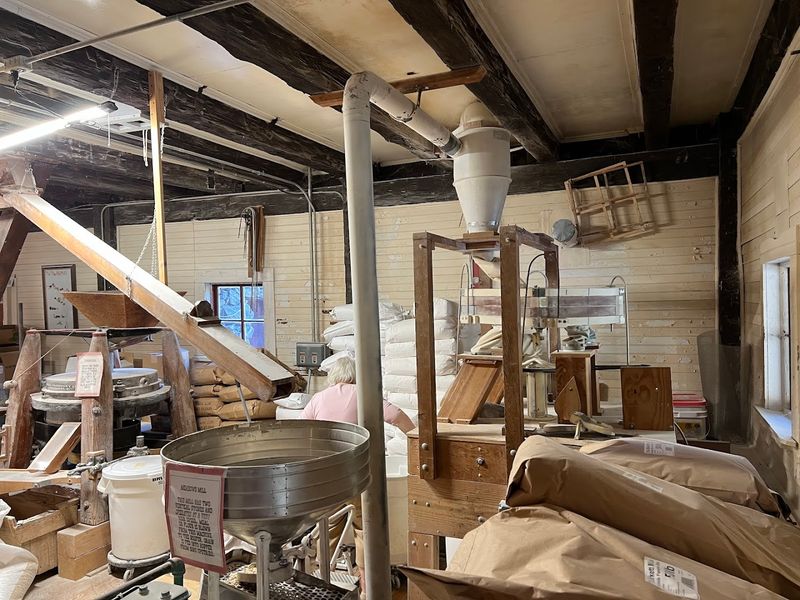
Walk inside the Old Mill of Guilford and you’ll quickly notice the low rumble of stone against stone. That sound is the heart of the operation — heavy granite millstones slowly grinding corn and wheat into fresh flour and meal, exactly as they’ve done for over two centuries.
Modern industrial milling uses high-speed steel rollers that generate heat, which can strip away some of the natural oils and nutrients found in whole grains. Stone grinding is different.
The slower, cooler process preserves more of the grain’s natural flavor and nutritional content, which is why stone-ground grains tend to taste richer and more complex than their supermarket counterparts.
The mill grinds in small batches, which also means fresher products on the shelves. You’re not buying something that sat in a warehouse for months — you’re getting grain ground recently, with all the character that comes from traditional methods.
Corn grits from this mill, for example, have a depth of flavor that’s hard to describe until you’ve tasted them. Chefs and home cooks throughout the region have long known about this place, and many make regular trips just to restock their pantry.
Once you taste the difference, it’s genuinely hard to go back to the grocery store version.
A Store Filled with Fresh, Local Goods
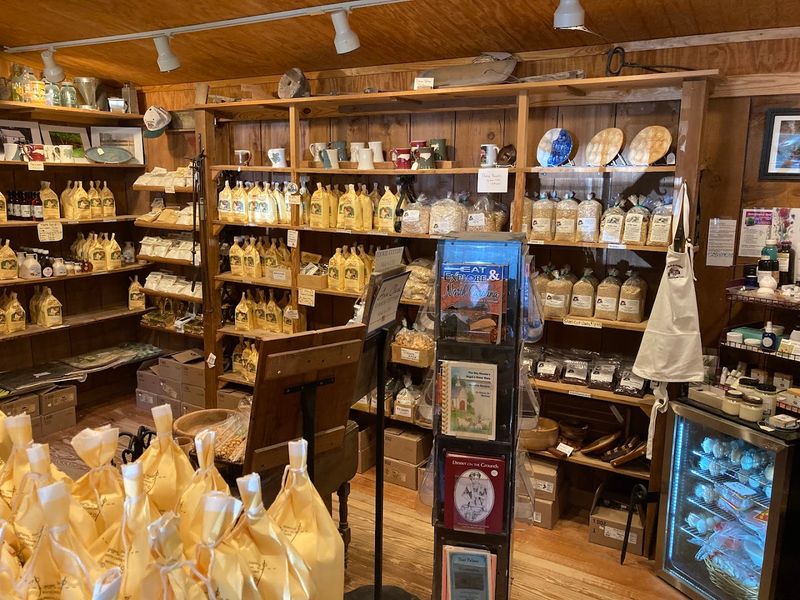
Stepping into the mill’s store feels a little like stepping back in time — but with some very modern appeal. Wooden shelves are stacked with bags of stone-ground grits, whole wheat flour, cornmeal, and more than 30 different baking mixes, all made right on the property.
The packaging is simple and honest, just like the products inside.
Beyond the mill’s own goods, the store also carries a carefully chosen selection of North Carolina-made products. Local honey, preserves, sorghum syrup, and other regional specialties share shelf space with the mill’s signature items, turning a quick stop into a genuine exploration of what this part of the state produces best.
It feels more like a community market than a tourist shop.
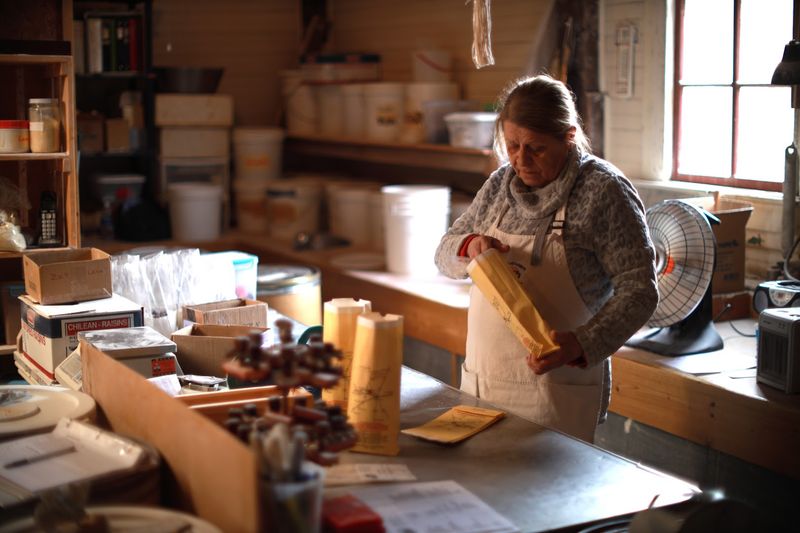
Everything is hand-packaged in small quantities, which adds a personal touch you won’t find at any chain store. Staff members are knowledgeable and happy to explain the difference between products or suggest recipes.
If you’re looking for a meaningful gift or a unique souvenir that actually gets used, this store delivers in a big way. Many visitors end up buying far more than they planned — and leaving with a genuine smile on their face and a bag full of things they can’t wait to cook with at home.
The Famous Sweet Potato Muffins
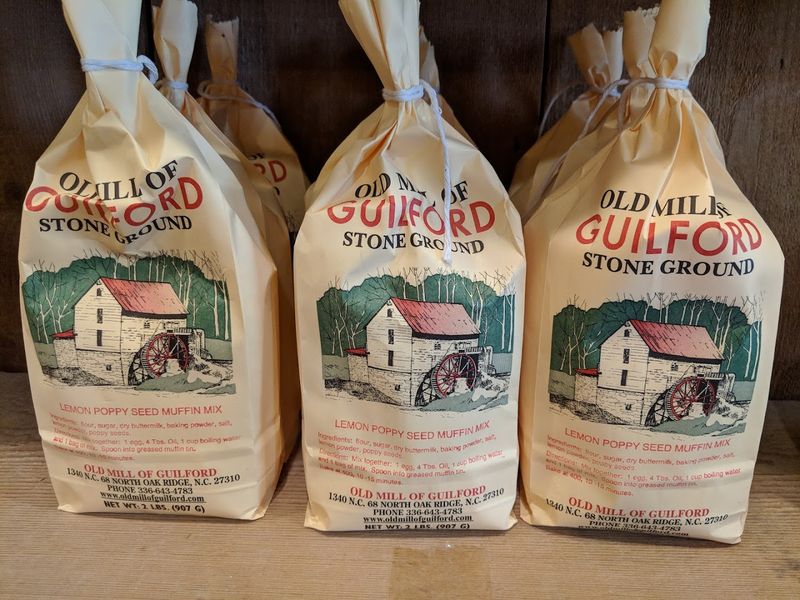
Ask any regular visitor what they always take home from the Old Mill of Guilford, and there’s a good chance the answer is sweet potato muffin mix. These muffins have developed a loyal following over the years, and for good reason — they’re warm, slightly sweet, and carry that earthy depth that only real sweet potato can provide.
The mix comes together quickly and doesn’t require any special baking skills. Even beginner bakers report pulling out a beautiful, fragrant batch on their first try.
That approachability is part of the charm. You don’t need to be a professional to enjoy a little piece of North Carolina tradition right in your own kitchen, no matter where in the country you happen to live.
Word of mouth has turned these muffin mixes into something of a regional legend. People order them online, bring them as gifts, and stock up whenever they’re passing through Oak Ridge.
The sweet potato muffin has become more than just a baked good — it’s a symbol of the mill’s ability to blend history with everyday joy. If you visit and leave without a bag, there’s a strong chance you’ll regret it by the time you get home.
Consider yourself warned in the most delicious way possible.
Restored and Preserved by Passionate Owners
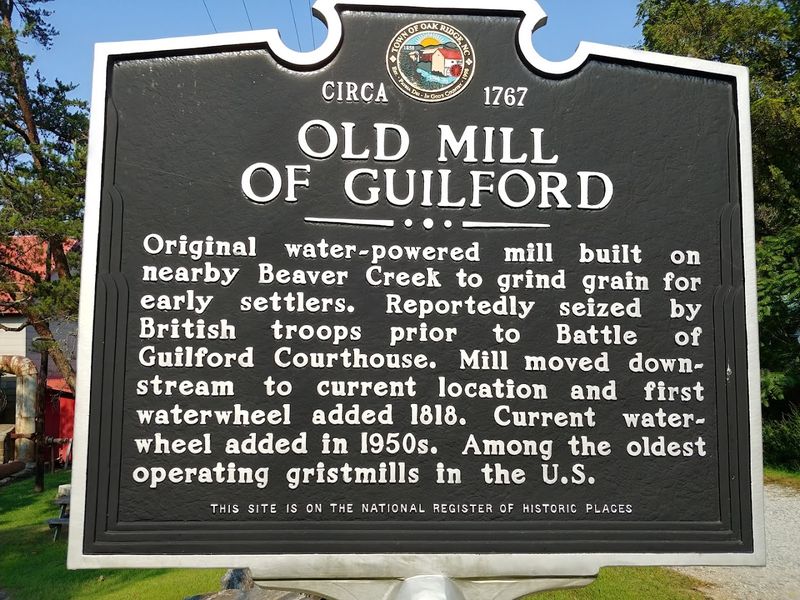
History doesn’t preserve itself. Behind every restored landmark is a group of people who cared enough to roll up their sleeves and do the hard work.
The Old Mill of Guilford owes its current vitality to owners who refused to let it fall into permanent disrepair after years of neglect and decline in the mid-20th century.
Restoring a working mill is no small undertaking. The machinery, the dam, the millrace, the wheel, and the building itself all require specialized knowledge and ongoing maintenance.
Finding craftspeople who still understand 18th and 19th-century milling mechanics is a challenge in itself. The owners who took on this project weren’t just buying a property — they were accepting a responsibility to an entire community’s heritage.
That commitment shows in every corner of the place. The building is well-maintained without feeling over-polished or sanitized.
It still has the rough edges and authentic character that make it genuinely historic rather than merely themed. Visitors often comment on how real it feels compared to other heritage sites.
That authenticity doesn’t happen by accident — it’s the result of deliberate, thoughtful stewardship by people who understood what they had and treated it accordingly. Their work ensures future generations will get to experience this place just as visitors do today.
A Unique Experience That Blends History and Flavor
Some destinations offer history. Others offer good food.
The Old Mill of Guilford at 1340 NC-68, Oak Ridge, NC 27310 offers both at the same time, and that combination is genuinely rare. You can watch grain being milled using the same basic techniques used 250 years ago, then walk into the store and buy a bag of that very grain to take home.
There’s a satisfying completeness to the experience that goes beyond typical tourist attractions. Kids get to see real machinery in action and understand where flour actually comes from.
Adults get to browse a store full of quality products with real stories behind them. Everyone leaves with something — whether that’s knowledge, groceries, or simply a sense of having spent time somewhere that actually matters.
Plan to spend at least an hour, maybe more if you like chatting with the staff or watching the wheel. The surrounding area is peaceful and easy to explore on foot.
Whether you’re a history enthusiast, a food lover, a curious traveler, or someone just looking for a meaningful afternoon outing in the Piedmont region of North Carolina, this mill checks every box. It’s the kind of place that earns a spot on your list of favorites the moment you arrive — and keeps you coming back season after season.