

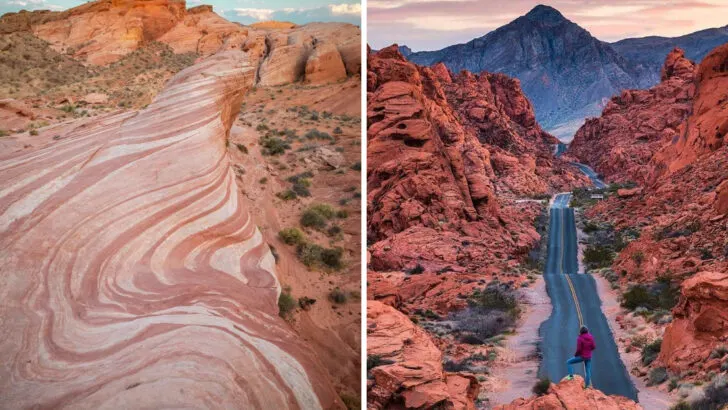
This place looks like the desert is literally on fire.
One moment you’re driving through Nevada… the next you’re surrounded by blazing red stone that glows under the sun like burning embers frozen in time. It feels unreal. Almost cinematic.
Here, wind carved waves into rock. Cliffs blaze orange at sunset. Ancient petroglyphs whisper from stone walls older than memory. Every turn reveals shapes that seem sculpted by imagination rather than nature.
And the scale is staggering — 46,000 acres of glowing formations, twisting trails, and silent desert drama just outside Las Vegas.
Step inside, and the world shifts color.
Step deeper, and it feels like walking across another planet.
The Ancient Aztec Sandstone That Glows Like Fire
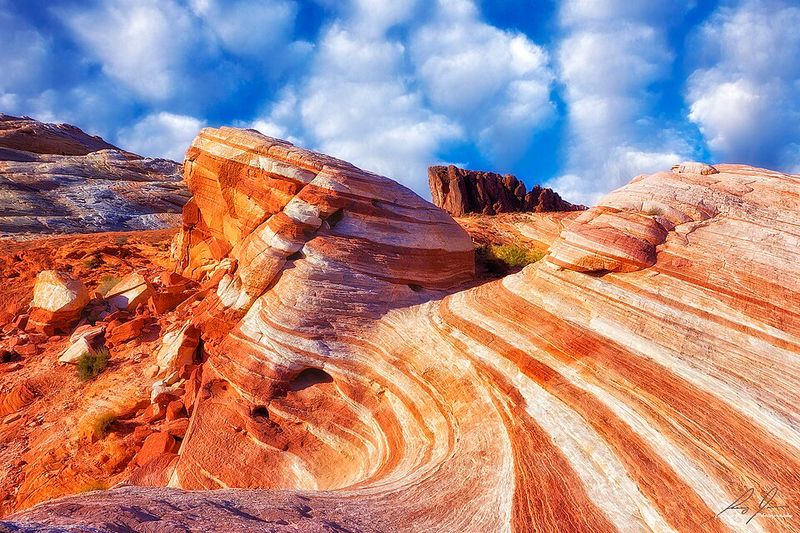
Stand before the Aztec sandstone and you will swear it holds embers from a vanished fire. These rocks began as vast desert dunes about 150 million years ago, their rippled layers frozen in time.
Iron-rich minerals later oxidized, painting the stone in searing reds, oranges, and blush pinks that ignite under low sun.
Walk close and you can trace delicate cross-bedding where ancient winds sculpted ridges grain by grain. In morning or late afternoon, sunlight rakes across the surfaces, sharpening shadows and turning the color dial to vivid.
Clouds, when they appear, work like a softbox, muting tones into velvety maroons.
You do not need to hike far to feel the glow, but exploring side canyons reveals even richer patterns. Notice how moisture darkens pockets, deepening hues like fresh watercolor.
Bring water, move slowly, and let the rock tell its patient story.
The Fire Wave — Nevada’s Most Photographed Rock Formation
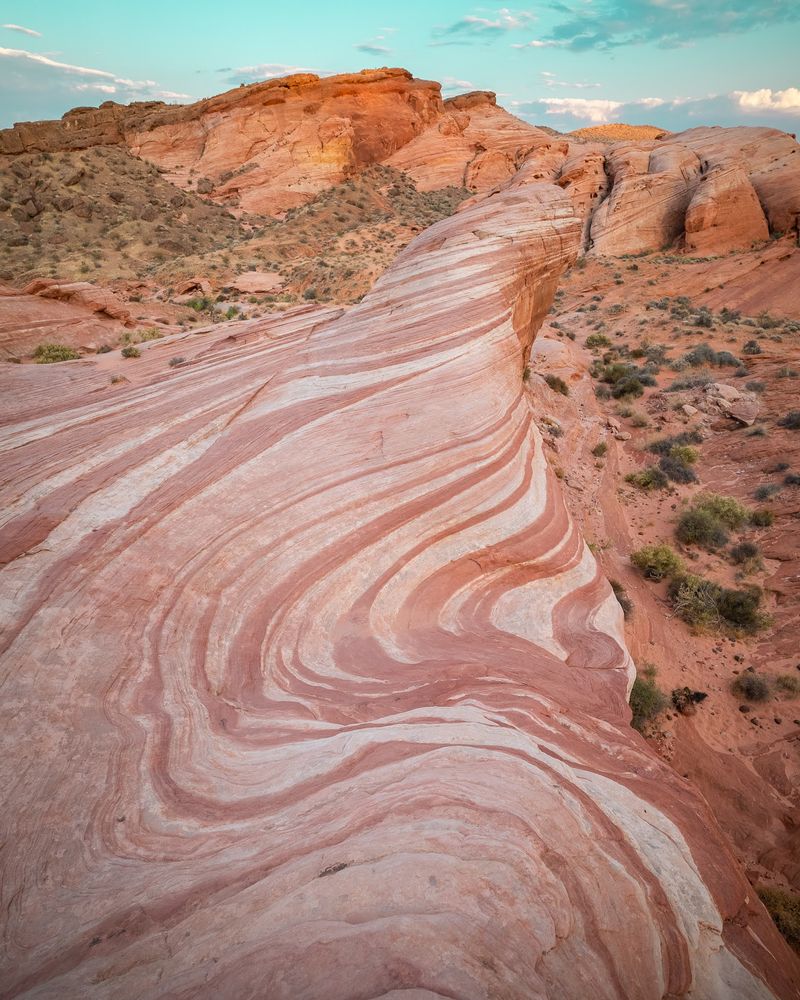
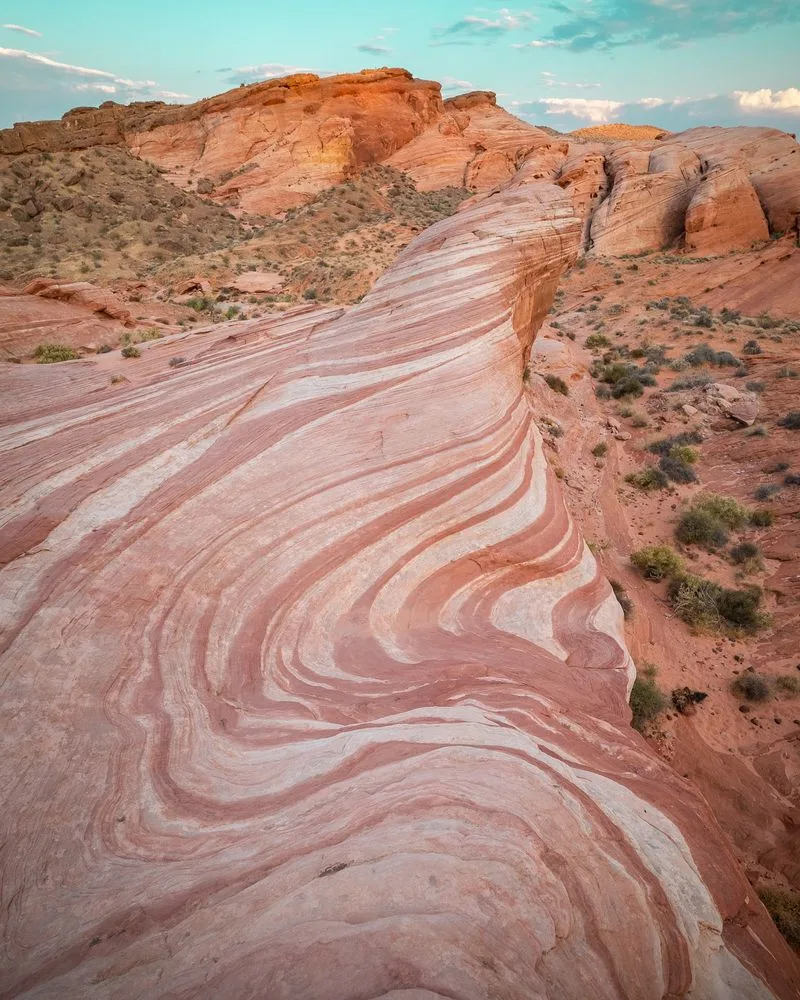
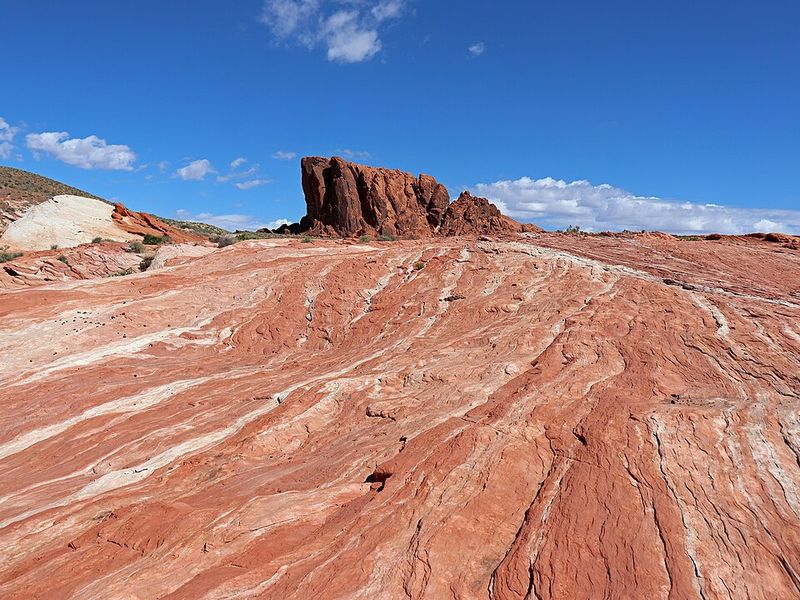
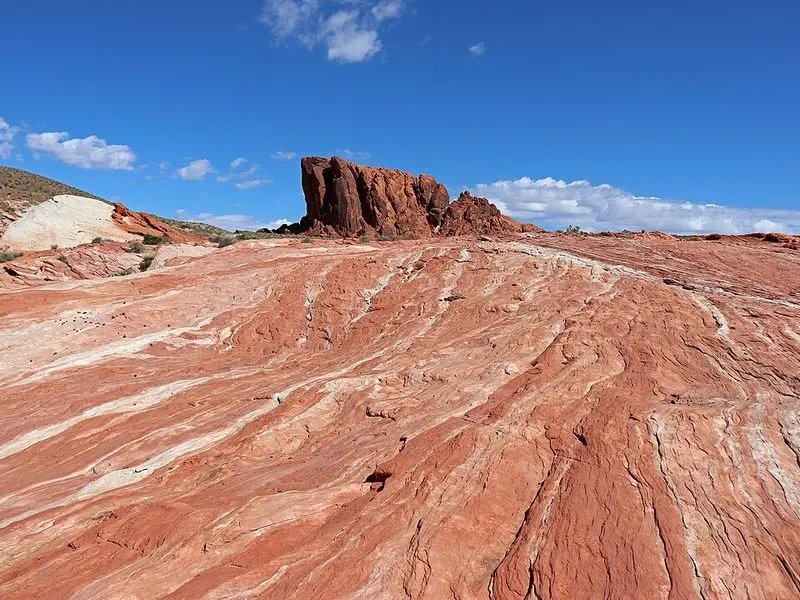
The Fire Wave looks like a painter dragged a brush of molten color across stone and left it to cool. Bands of red, pink, and white swirl in rhythmic arcs, guiding your eyes toward a soft crest.
It is a short, straightforward hike, but plan for cooler hours so the heat does not steal your energy.
Arrive for golden hour and the stripes pop, while long shadows carve gentle relief across the wave. Step carefully and respect fragile surfaces, staying on durable rock.
You will find countless angles for photos, from low, leading lines to elevated perspectives that stack color like ribbon candy.
Give yourself time to sit and watch the light shift, because the scene changes minute by minute. Even on popular days, patience opens small pockets of quiet.
Bring water, a wide-angle lens, and curiosity, then let the stone show you how wind, sand, and iron compose desert music.
Elephant Rock — Nature’s Desert Sculpture
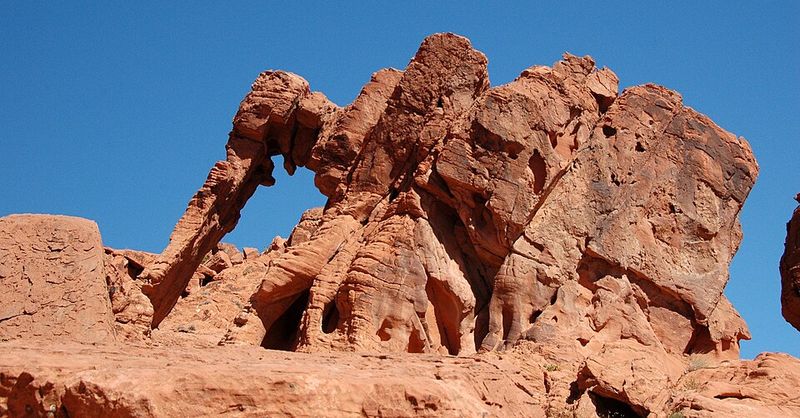
Elephant Rock is one of those delightful desert surprises that makes you grin the moment it appears. Wind and water patiently carved an arch that reads unmistakably like an elephant, trunk dipping toward the ground.
It sits near the east entrance, so you can reach it quickly for sunrise or a swift roadside stop.
Walk a short loop to find the cleanest silhouette and avoid crowding the delicate arch. Early light outlines the shape crisply, while midday washes detail but still charms.
Keep a respectful distance, since sandstone is soft under shoes and fingers.
For photos, position the trunk against open sky and use a small aperture to hold focus through the frame. If clouds join you, consider a longer exposure to streak the background and spotlight the arch.
You will leave with a playful memory and proof that time sculpts with patience and whimsy.
Ancient Petroglyphs at Atlatl Rock
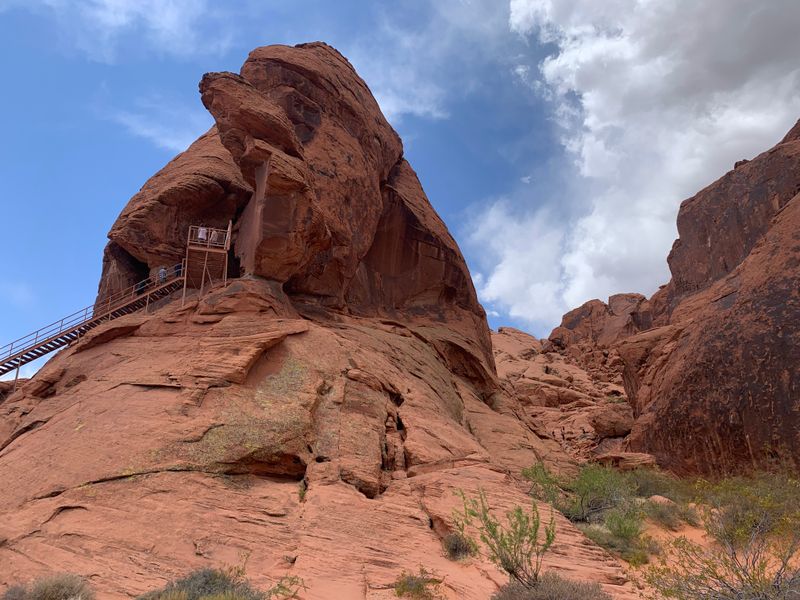
Atlatl Rock holds a sandstone canvas marked by hands that lived here thousands of years ago. Figures, symbols, and hunting scenes are pecked into the varnished surface, their meanings layered with time and tradition.
A sturdy staircase lets you climb safely to a viewing platform and study the panel up close.
Stand quietly and you can feel the desert narrow into this moment, the rock absorbing heat and memory. Please keep your hands off the carvings, since oils accelerate wear and fading.
Photography works best with raking light, which pulls the pecked lines into crisp relief.
Read interpretive signs to ground your visit in cultural respect, then linger to notice details you missed at first glance. You will leave with gratitude for resilience and continuity.
Bring patience, water, and humility, because these stories belong to living communities whose roots still reach across this land.
Rainbow Vista — A Desert Painted in Layers
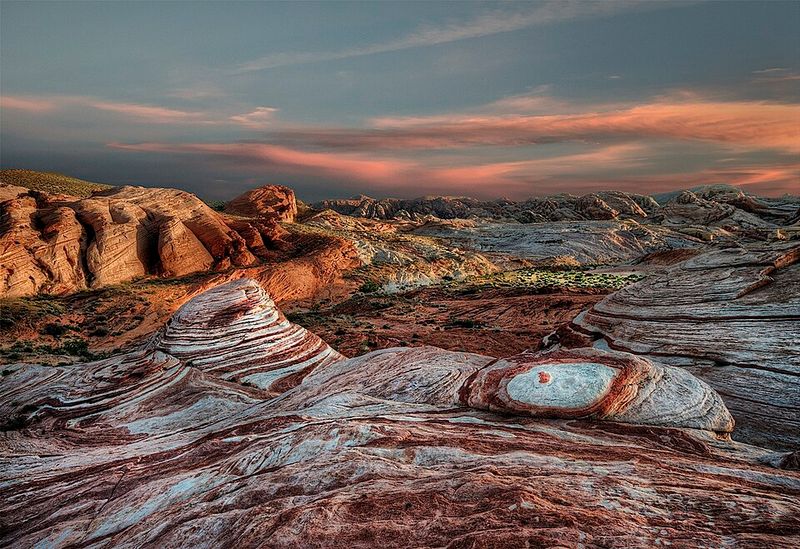
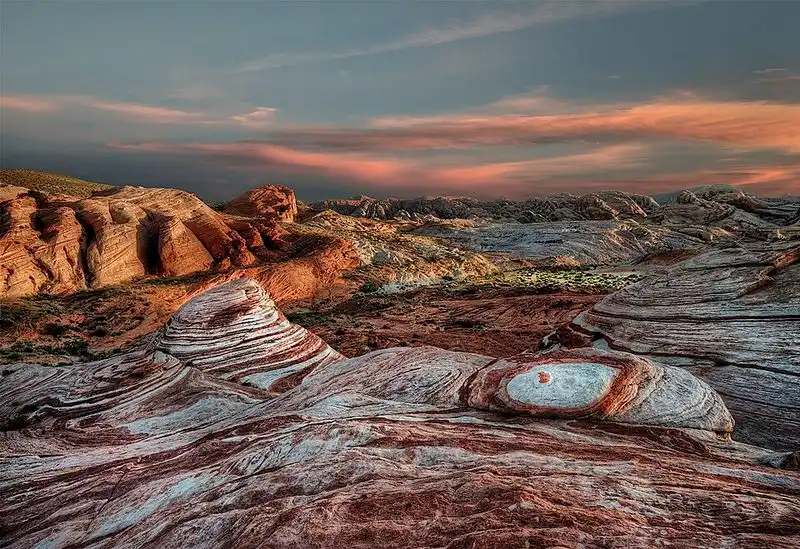
Rainbow Vista spreads a painter’s palette across rolling sandstone, each hill brushed with a different mood. Reds fade into sherbet oranges, then taper to soft creams, while thin pink bands weave through like threads.
From the overlook, you can scout trails that dip into small canyons and rise toward sweeping views.
Morning light tends to be gentler, revealing texture without overpowering glare. Late afternoon warms the palette and extends shadows across the folds.
Step carefully across cryptobiotic soil and fragile slopes, keeping to rock and established paths.
For photos, frame a foreground stripe to pull the eye and stack color into the distance. Polarizers can mute glare, but remove them if the sky feels too dark.
You will walk away convinced the desert does not lack color at all, it simply saves it for the patient and the curious.
Scenic Drives Through a Martian-Like Landscape
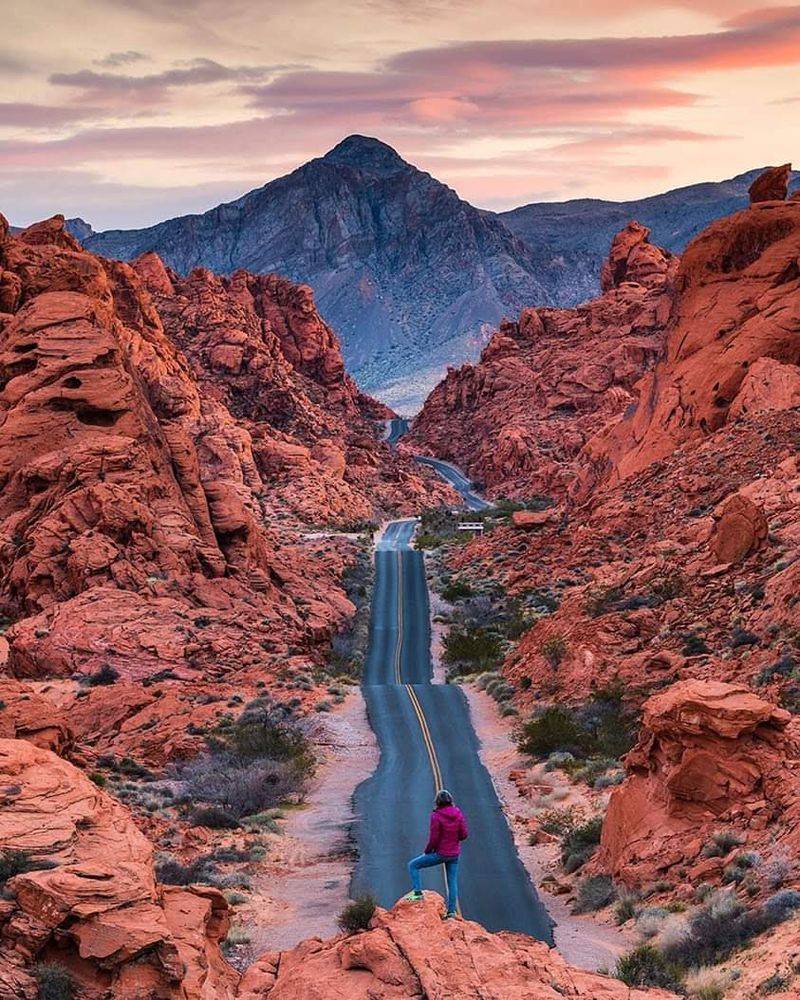
Sometimes the best way to feel Valley of Fire is to roll the windows down and let the road guide you. The main drive threads between flame-colored walls, past pullouts where views explode without a long hike.
With each turn, the landscape shifts from open valleys to tight corridors that feel almost otherworldly.
Stop often, but park safely and watch for wildlife. Many viewpoints sit just steps from your door, inviting short walks to arches, domes, and striped outcrops.
Golden hour turns the pavement into a ribbon of reflected color, and headlights glow softly against the rock at blue hour.
Keep water handy, fuel topped, and your camera within reach. A simple loop can fill a morning, or you can spend an entire day chasing shadow and light.
You will arrive curious and leave transported, like you borrowed a road on Mars and brought it back with red dust on your shoes.
A True Desert Wilderness in the Mojave Desert
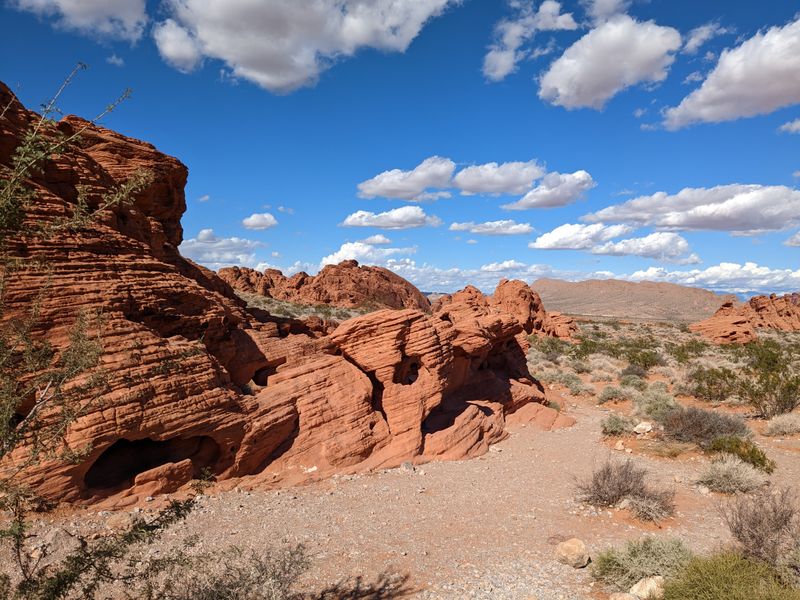
The Mojave does not coddle, yet life here thrives with quiet genius. Desert bighorn sheep slip across cliffs like dancers, lizards sprint between shadows, and ravens ride thermals above sun-baked stone.
Creosote, yucca, and beavertail cactus endure long dry spells, then burst with life when rain finally visits.
Walk softly and you will notice tracks, scat, and delicate crusts that hold the soil together. Summer heat can be dangerous, so plan dawn adventures and rest midday.
Winter brings cool clarity, crisp stars, and a calm that settles into your bones.
Carry more water than you think you need, wear sun protection, and respect closures designed to protect habitat. You are a guest in a hard-working neighborhood of survivors.
Listen for the faint buzz of insects and the sudden clack of stones under hooves, and you will feel the wilderness notice you back.
A Favorite Backdrop for Hollywood Productions
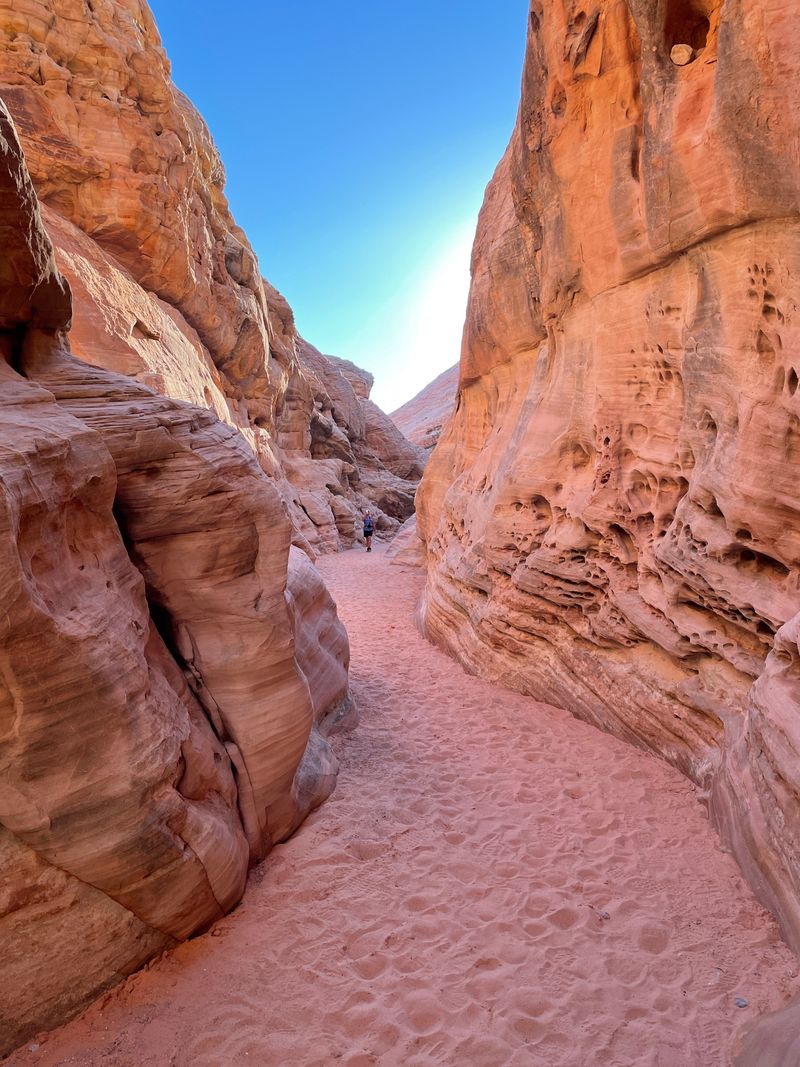
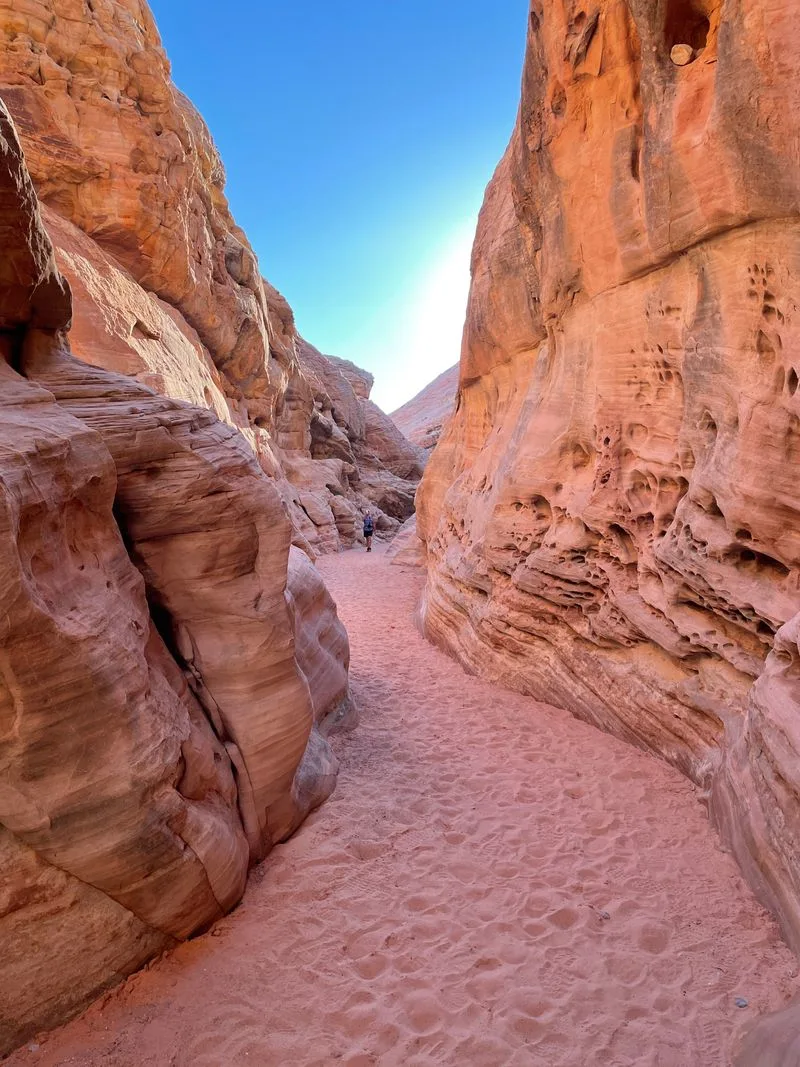
When a script calls for another planet, Valley of Fire often gets the role. Those blazing cliffs and wind-sculpted domes translate beautifully on camera, shifting character with every cloud.
Commercials, TV episodes, and films return again and again because the terrain reads epic without elaborate sets.
You might recognize corners from science fiction stand-ins or rugged frontier scenes. Crews love the easy access to dramatic backdrops near paved roads.
Visit on a weekday morning for quieter conditions, and you may catch distant signs of production without intruding.
If you scout your own shots, think like a location manager. Hide modern elements, use tight frames, and let color do the heavy lifting.
The park proves that storytelling lives in texture and light, and you can direct a scene of your own with nothing but patience and a steady horizon.
An Easy Day Trip From Las Vegas
From the Las Vegas Strip to fiery cliffs in roughly an hour, this is the day trip that overdelivers. You can leave after breakfast, explore trailheads and overlooks, and be back in time for dinner.
The drive is simple, signage is clear, and the reward begins the moment red rock appears on the horizon.
Pack water, snacks, sun protection, and a flexible plan. Start with must-sees like the Fire Wave, Atlatl Rock, and Elephant Rock, then add a scenic drive to fill the gaps.
If heat rises, pivot to view-heavy stops and short walks on durable surfaces.
Cell service can be spotty, so download maps before leaving town. Fuel up in advance and check park hours and fees.
You will return with sand in your shoes, color in your camera roll, and a grin that says the desert gave you more than you expected.
Nevada’s Oldest and Largest State Park
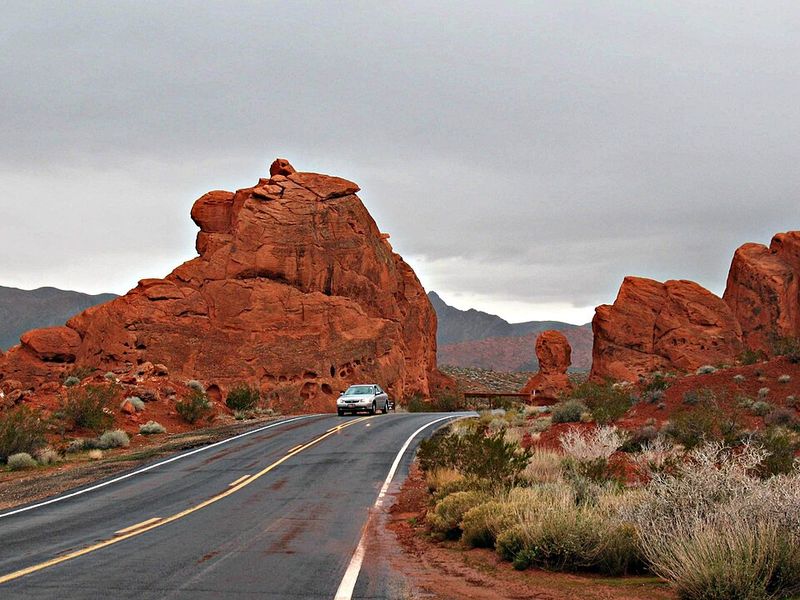
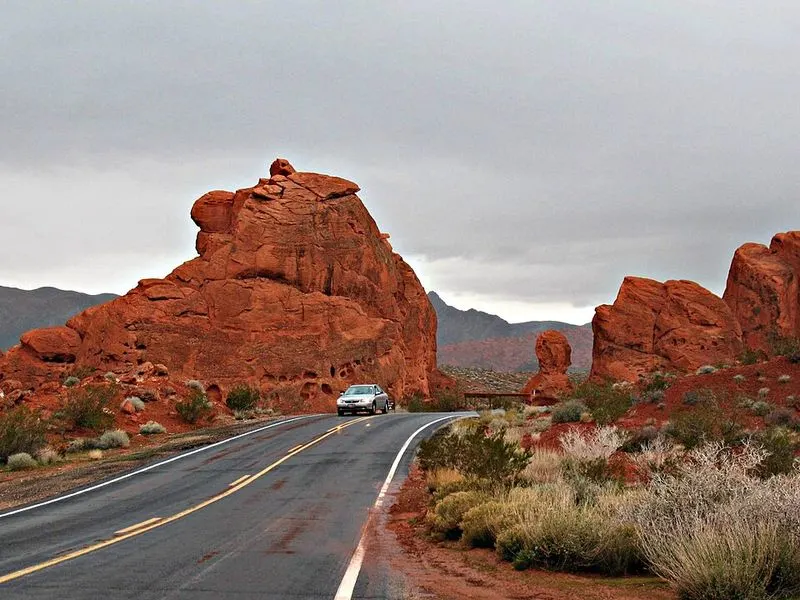
Established in 1935, Valley of Fire holds the title of Nevada’s first state park and remains its largest. Forty-six thousand acres protect a glowing corridor of Aztec sandstone, limestone outcrops, and desert wash.
The mission is simple and profound: safeguard beauty, history, and habitat for future wanderers.
As you explore, you join a long line of travelers drawn by color and silence. CCC crews once built roads and picnic areas that still welcome families today.
Interpretive signs connect geology, ecology, and culture so the landscape feels both wild and thoughtfully cared for.
Whether you drive, hike, or linger at a viewpoint, you are participating in a living conservation story. Respect closures, pack out trash, and stay on durable surfaces to keep the park resilient.
Decades from now, someone will stand where you stood and feel the same spark when the rocks catch fire at dusk.