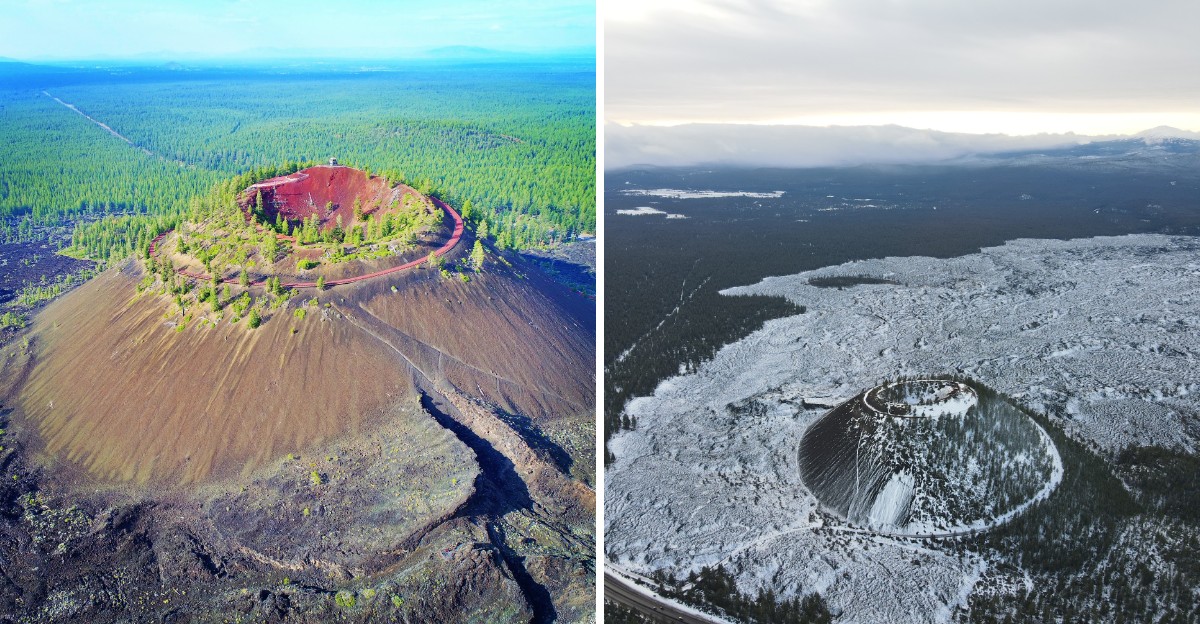
A park ranger may be sitting on top of a volcano at this moment, scanning the forest for wildfire smoke. That lookout tower is real, it still works, and your kids can walk past it on a trail circling a crater.
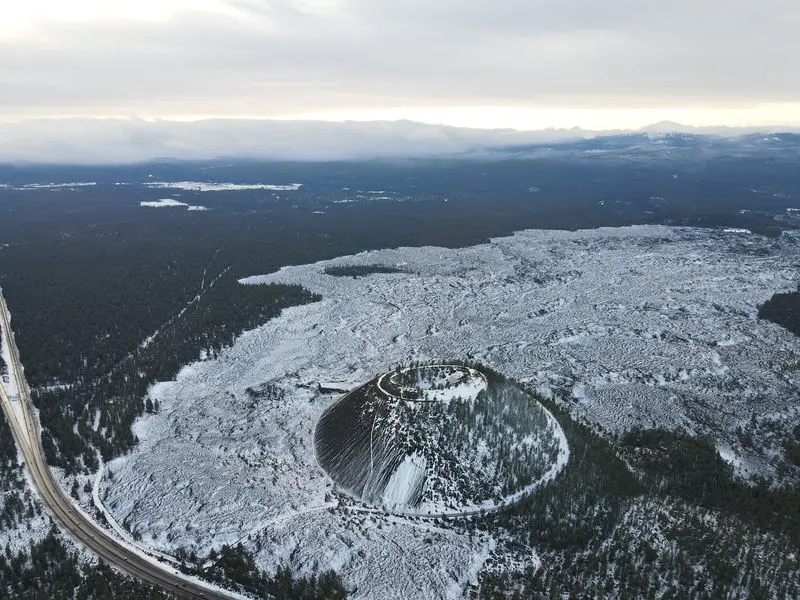
The cone itself rises about 500 feet above a sea of black lava. It formed roughly 7,000 years ago, which makes it a youngster by volcano standards.
Families can ride a shuttle bus to the summit or tackle the steep road on foot.
I like how this one feels like a science lesson that forgot to be boring. The red cinders, the sharp rock, and the snowy Cascade peaks all show up in one sweeping view.
Central Oregon has plenty of big scenery. How many spots let a seven-year-old stroll around the rim of an actual volcano?
A Perfectly Shaped Volcano Sitting Right Off Highway 97
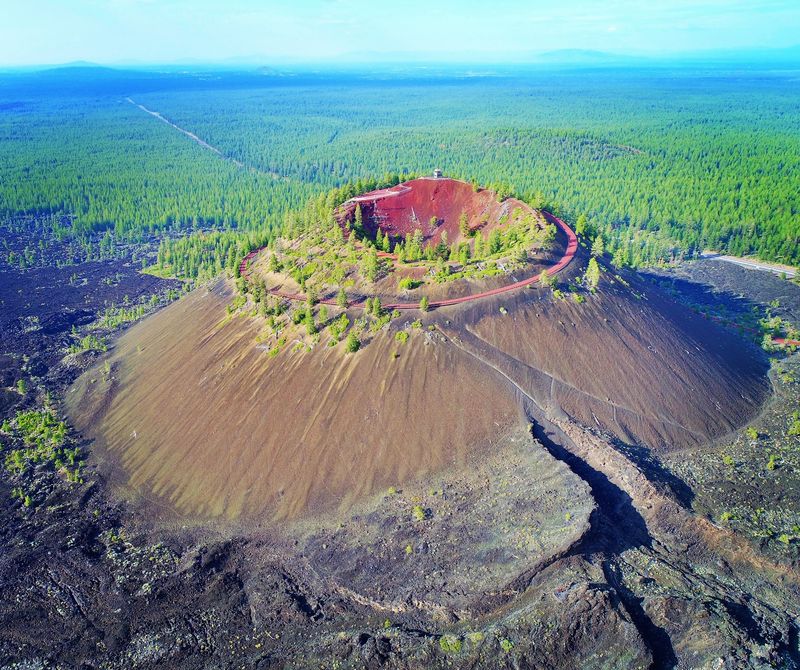
Lava Butte is the kind of landmark that makes drivers hit the brakes. It’s a symmetrical volcanic cinder cone rising from a dark lava field just off Highway 97 in Central Oregon.
The butte sits south of Bend, roughly a half-hour drive from town. That makes it an easy add-on for families already heading through the high desert.
Officially, it’s classified as a mountain peak. In practice, it looks like the volcano a kid would draw with crayons, cone shape and all.
The cone stands about 500 feet tall. That’s tall enough to feel like a real summit, yet small enough that little legs can reach the top.
Better yet, you have choices for getting up there. A seasonal shuttle runs from a nearby visitor center, and the paved road can also be walked when conditions allow.
The mailing address simply reads Oregon 97702, United States. Don’t let that sparse line fool you, because the place is anything but empty once you arrive.
Families can learn, hike, gawk, and snap photos all in one stop. It also carries a strong 4.7-star rating from nearly a hundred reviews, which is pretty impressive for a pile of cinders.
Seven Thousand Years Is Young For A Volcano
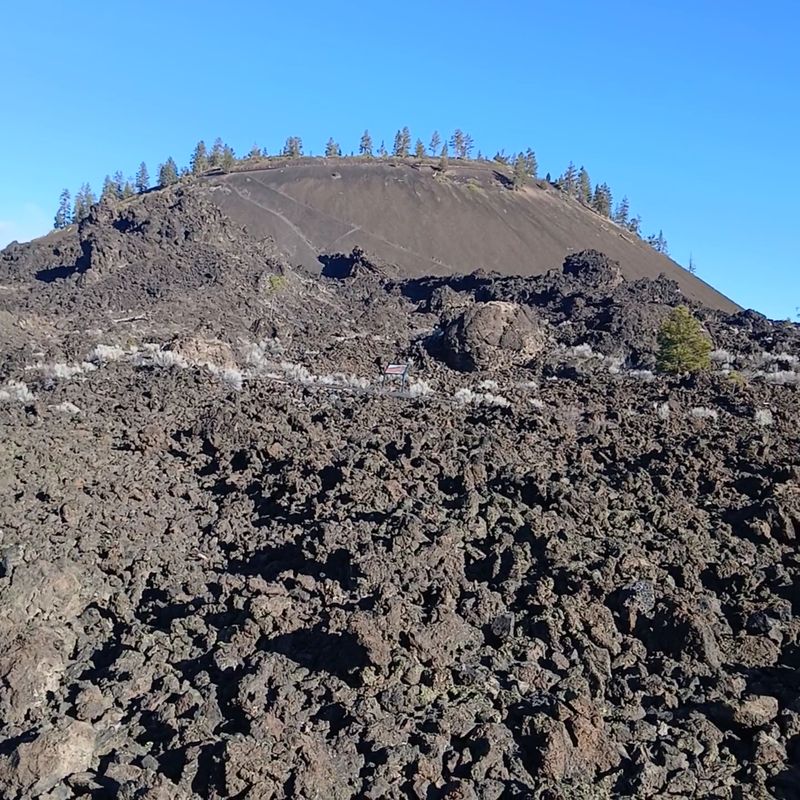
Seven thousand years sounds ancient until you compare it with the rest of the planet. In geologic terms, Lava Butte is practically a toddler.
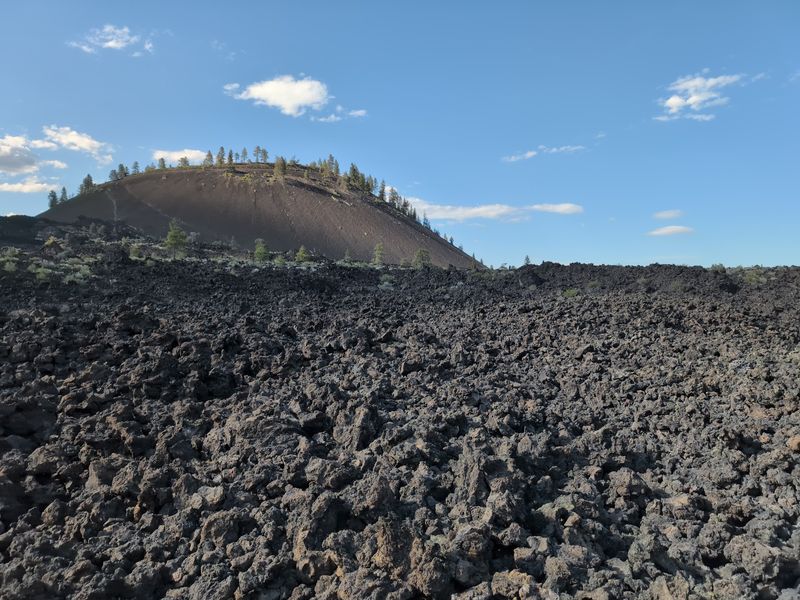
The cone formed when lava and cinders erupted from a vent here. All that molten rock spread across the land and hardened into the rugged black field you see today.
Lava Butte is tied to the story of Newberry Volcano, a much larger volcanic system in this part of Oregon. Visitors often call the site a great spot to learn about that history.
Kids usually love one simple fact. The ground under their sneakers was once flowing, glowing rock.
The red-orange color on the cone comes from cinders, which are bits of lava blasted into the air. They cooled quickly and piled up around the vent, building the cone layer by layer.
Standing on top lets you see how far the flow traveled. The lava field stretches out in every direction, and the view helps the whole story click.
One visitor summed it up nicely, saying you learn why the view looks the way it does. Honestly, that’s a pretty great description of a field trip that doesn’t feel like homework.
Your Ticket Up Comes With A Bus Ride
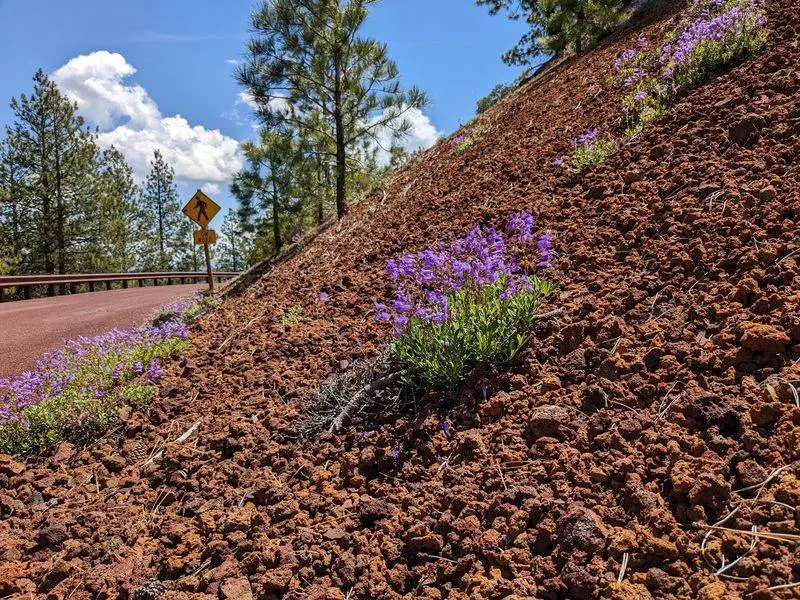
During peak season, private cars aren’t allowed up the summit road. Instead, a shuttle bus does the climbing for you.
The ride starts at the visitor center and parking area below. It runs about every 15 minutes, so families don’t usually face a long stall at the base.
Little ones seem to enjoy this part as much as the views. One parent shared that their toddler had a blast on the short trip up.
Tickets cost a small fee, and prices have shifted over the years. Check before you go so nobody is surprised at the counter.
Some families mix it up. They ride the bus to the top and then walk down the road to soak in the scenery slowly.
That plan works nicely with kids who have energy for downhill but not uphill. Gravity does most of the work, and everyone gets a second round of views.
The shuttle is seasonal, so it doesn’t run year-round. Planning ahead matters if your heart is set on riding rather than hiking.
Consider it a mini adventure before the main adventure. And yes, the paved road spiraling up a volcano is a fun sight all by itself.
Feeling Brave? The Road Doubles As A Steep Family Hike
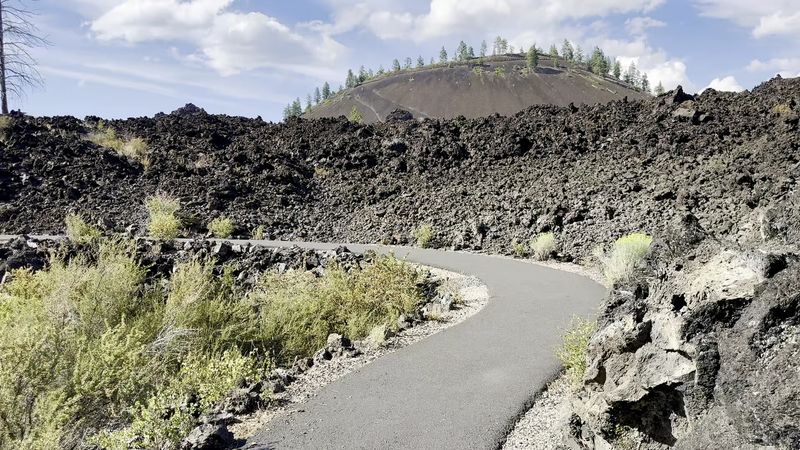
Legs, meet volcano. When the road is closed to vehicles, hikers can walk the pavement all the way to the summit.
The route runs about a mile and a half if you start at the bottom. It’s short, but the grade is no joke.
One hiker cheerfully called it a butt burner, especially while carrying a kiddo. Another said it wasn’t necessarily easy but was worth the trek uphill both ways.
Families strolling with kids may need more than an hour. That’s fine, because every switchback opens up a slightly different view.
Bikers make the trip too. An e-bike can turn the climb into a breeze, while regular pedalers will want some serious stamina.
Timing matters for this option. Vehicles stay off the road in certain seasons, which can make it perfect for walking.
Bring water, and bring more than you think. Several visitors stress it, and summer days on dark rock can get hot fast.
There’s a real sense of accomplishment at the top. Kids who hike it themselves get major bragging rights at the next family dinner.
Walk All The Way Around A Volcano Crater
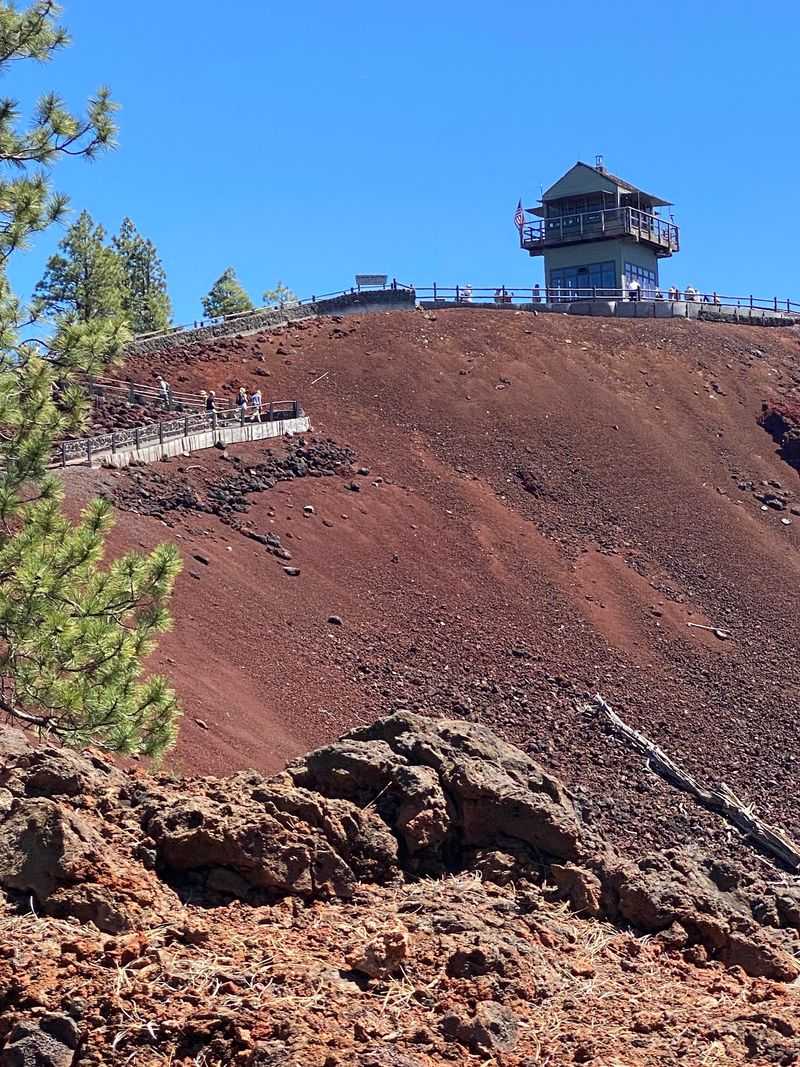
How often do kids get to say they walked around the top of a volcano? At Lava Butte, a trail circles the rim of the crater.
The loop runs about a quarter mile. That’s short enough for small hikers and long enough to feel like a true summit experience.
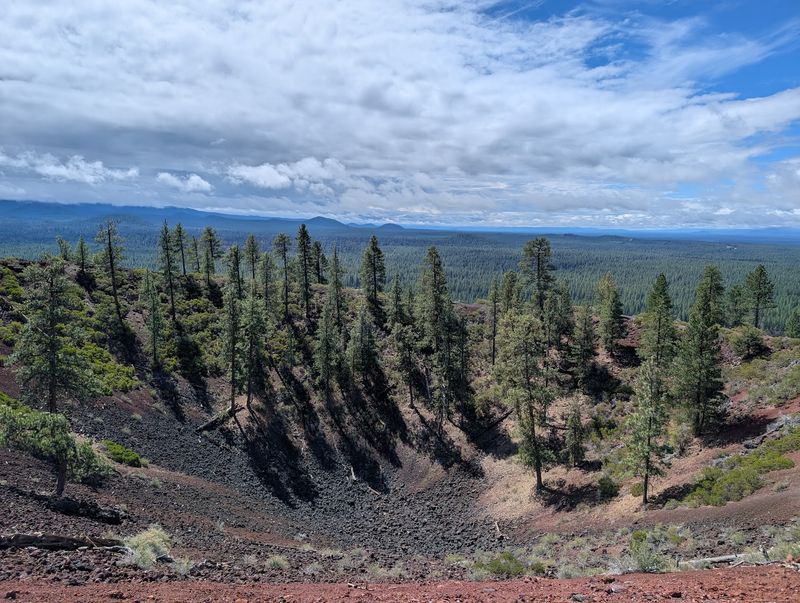
The crater bowl drops away on one side, colored in reds and oranges. On the other side, the land spreads out for miles.
Visitors love walking the ridge. It gives a real sense of standing on something that once erupted.
Plan for roughly 45 minutes to see everything up top. That includes the rim walk, the lookout area, and plenty of photo stops.
Keep a hand on younger kids along the way. The cinders are loose, and the volcanic rock in the area can be sharp.
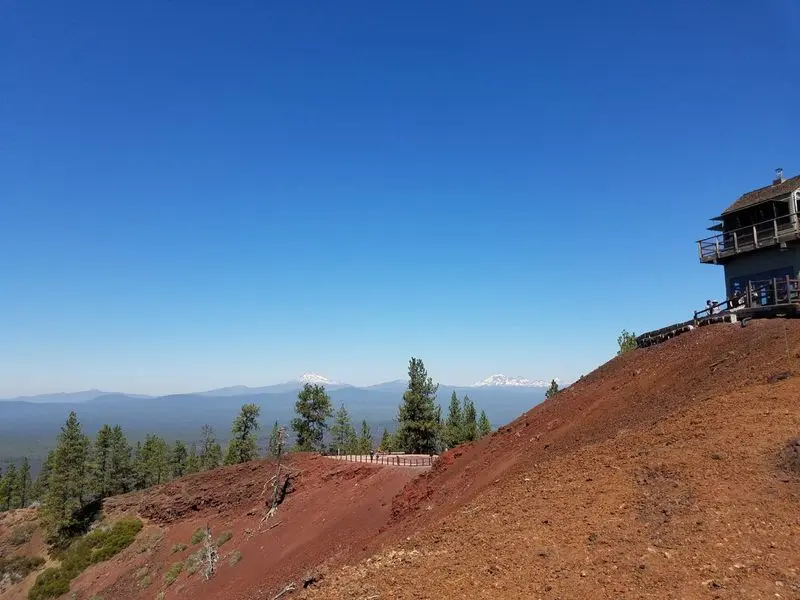
The red cinder foreground makes for striking pictures. Pair it with the snowy peaks behind it, and your phone will fill up quickly.
It’s a small loop with a big payoff. Few quarter-mile walks in Oregon come with this much wow per step.
Someone Is Still Watching For Fires Up Here
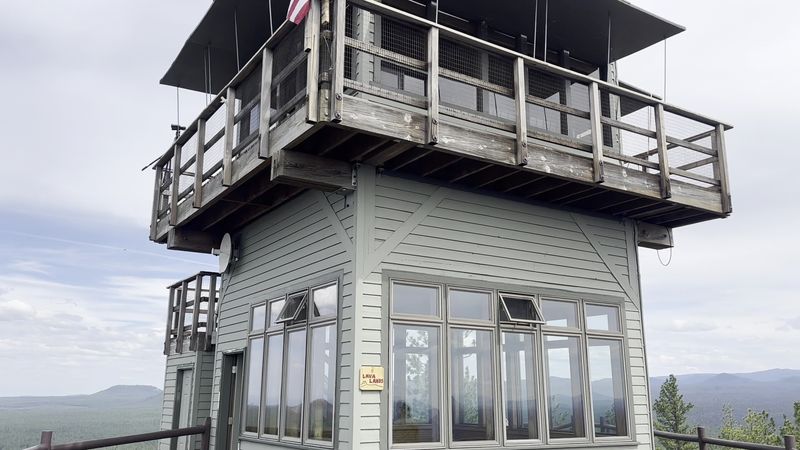
Perched on the summit is a fire lookout that still does its job. Visitors describe an active fire watch post, with someone scanning the forest for smoke.
That detail tends to amaze kids. A real person keeps watch over the land from the top of a volcano.
The upper part of the tower is for staff only. Still, you can enjoy wonderful panoramic views from its base.
Seeing the lookout up close is a highlight for many visitors. It gives the summit a working, lived-in feel instead of feeling like a postcard.
It also opens up great conversations on the ride home. Why would someone watch for fires here, and what can they see from up there?
The answer is simple once you stand beside it. The views cover forests, lava fields, and mountains in nearly every direction.
For families who love old-school Oregon traditions, this feels special. Fire lookouts are a classic part of the state’s forest story.
Snap a photo with the tower behind you. It’s the kind of picture that grandparents will ask about.
Mountain Views That Make Everyone Go Quiet
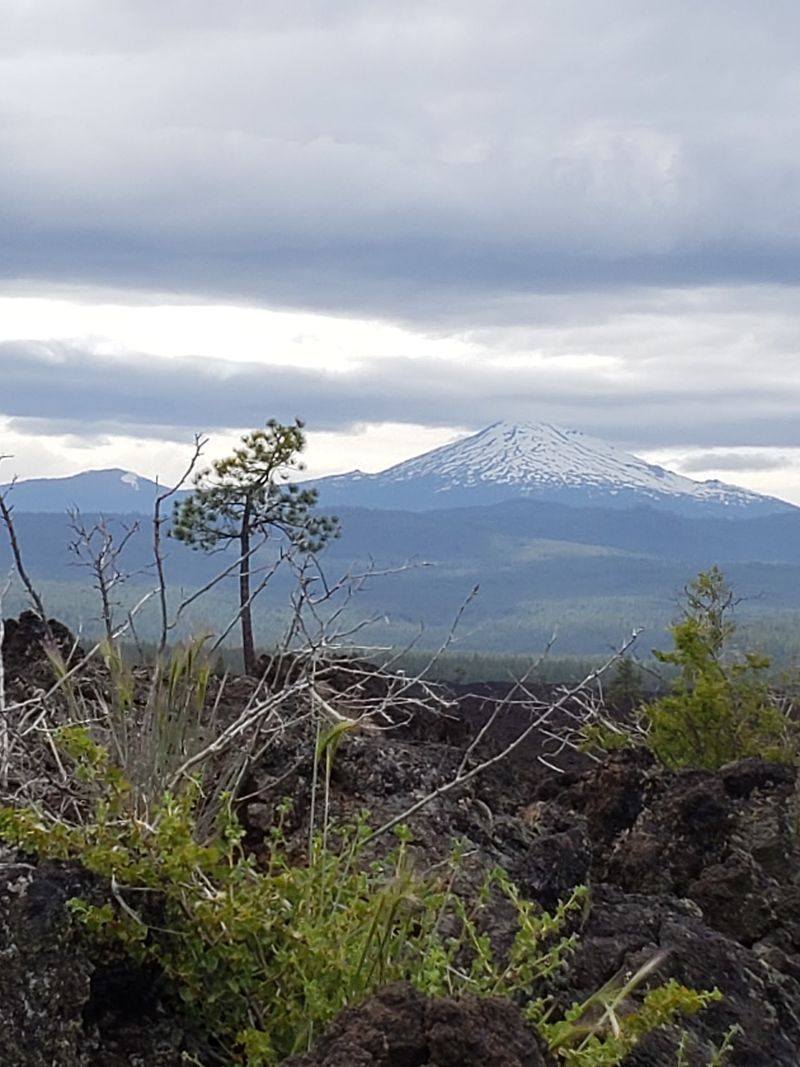
Mount Bachelor, the Three Sisters, Broken Top, and Mount Jefferson all line up for this view. That’s a lot of famous peaks for one stop.
Visitors call the summit views stunning, phenomenal, and breathtaking. One even said you could see for days.
The snowcapped Cascades rise beyond the forest. In the foreground sit the lava beds and smaller volcanic hills.
Weather plays a role, of course. Clear days bring out the best scenery, so check the forecast before heading up.
The contrast is what makes it memorable. Rusty red cinders, black rock, green pines, and white peaks all share the same frame.
Kids can play a quick game of naming the mountains. Bring a simple map or point them out using the signs and ranger tips.
The views don’t stop at the summit, either. Hikers on the road pick up great sights all the way up.
It’s a full 360-degree show. Few places in Central Oregon give families this much scenery for so little effort.
Rangers Who Actually Love Answering Questions
Got a kid who asks a hundred questions? Good news, because knowledgeable rangers staff both the visitor center and the summit.
They explain what you’re seeing, from the lava flows to the distant peaks. Visitors describe them as kind, helpful, and full of good information.
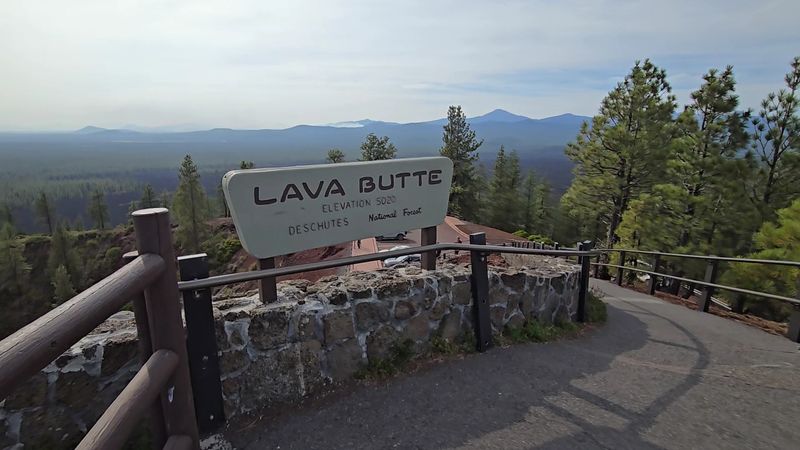
The site is part of the Deschutes National Forest. Staff keep the area clean and well organized, which families notice right away.
Rangers turn a pretty view into a story. Suddenly the black rock below becomes a lava flow with a beginning and an end.
That makes the summit feel like an outdoor classroom. Just don’t tell the kids that part.
Encourage children to ask their own questions. Rangers seem happy to share, and kids remember answers better when they asked for them.
It’s a big part of why this stop rates so highly. People leave feeling like they learned something real.
For homeschool families or curious grandparents, this is a gift. Free expert knowledge on top of a volcano is hard to beat.
The Museum And Lava Trails Waiting Below
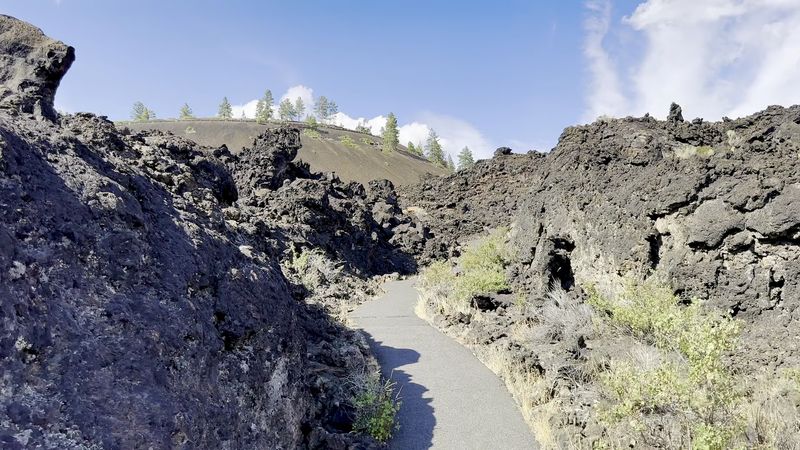
Before or after the summit, there’s plenty to explore at the base. A visitor center with a museum sits near the parking area.
Visitors call the museum fantastic. It’s a smart first stop for understanding what you’ll see from the top.
Paved trails wind right through the lava rock. The Trail of the Molten Land is one of the favorites.
Walking among the black rock feels a bit like visiting another planet. One family even compared it to a distant galaxy.
Paths below the lava fields offer flatter walking too. One tip from a visitor is to head right at the visitor center to find them.
These trails are handy when the summit road is closed. Families can still enjoy the strange landscape without climbing.
Young kids often find the red dirt and rocks most exciting. Expect plenty of stops to examine interesting chunks.
Just remind everyone to look, not grab. The lava is sharp, and little hands can get scraped quickly.
A Bike Trail To The River For Extra Credit
Pedal power gets a bonus round here. A bike trail runs from the lower parking area toward the Deschutes River.
Riders describe it as a long, gradual slope. It’s well marked and mostly paved until the bridge, then turns to wide dirt.
The route leads to a bridge and nearby waterfalls. You can even bike all the way to the restrooms and parking near the falls.
That turns a volcano visit into a full day outing. Families get cinders in the morning and rushing water by afternoon.
Remember that the slope runs both ways. A gentle downhill ride means a steady climb on the return.
The trail was clean and free of litter, according to visitors. That’s a nice sign of how well the area is cared for.
Bring helmets, snacks, and plenty of water. The high desert sun can be stronger than it looks.
For active families, this might be the sleeper hit of the trip. Kids who love bikes will talk about it for weeks.
Leave The Dog Home And Pack The Water
Here’s a tip that one visitor shouted in capital letters. Do not bring your dog to the butte.
The cinder contains sharp, glassy material that can hurt paws badly. Leave your pup at home or with a friend for the day.
Kids need care too. The lava rock is sharp and can cut, so supervise little explorers closely.
Water is the next big must. Several visitors mention how hot it can get, especially on summer days.
Restrooms are available at the base. There are none at the summit, so plan a stop before you head up.
Sturdy shoes make a big difference on cinders and steep pavement. Sandals and loose rock are not a winning combo.
Sun protection is smart as well. Hats and sunscreen help on open ground with little shade.
A little prep keeps the whole trip fun. Pack smart, and the volcano becomes the only thing anyone remembers.
Timing Your Trip Around Seasons And Snow
Seasons change everything at Lava Butte. The summit road works differently depending on the time of year.
During peak tourist season, cars stay off the road and the shuttle takes over. After the busy season ends, private vehicles may be allowed to drive up.
Some stretches bring a full road closure to vehicles. Hikers can sometimes still walk up during those times.
Winter is trickier. One traveler had to turn back in early February because snow covered the road.
A few visitors arrived to find the road closed entirely. They still enjoyed the lava landscape below, but missed the summit.
Exits can be easy to miss on Highway 97. Watch the signs carefully as you get close.
Parking requires a small day fee, and prices can change. Expect plenty of space and restrooms near the lot.
Check current conditions before leaving home. A quick look can save your family from a disappointing turnaround.
Why This Volcano Belongs On Your Family Calendar
Cheap, quick, and genuinely unforgettable is a rare combo. Lava Butte checks all three boxes.
Most families can see it all in one to two hours. That fits easily into a Bend weekend or a longer Oregon road trip.
The costs stay small, with a modest parking fee and shuttle ticket. Hikers can even skip the bus and earn the summit with their own feet.
Kids get a volcano, a crater rim, and a working fire lookout. Adults get mountain views that rival any postcard.
It works for toddlers on the shuttle and teens on the steep road. Grandparents can ride up and enjoy the rangers’ stories.
Visitors call it a must-visit and a bucket list adventure. One put it well, calling it an out-of-the-way stop that’s so worth it.
The ancient cone isn’t going anywhere soon. Still, your kids won’t stay small forever.
So pack the water, check the road, and point the car south of Bend. A 7,000-year-old volcano is waiting for its next young climbers.