
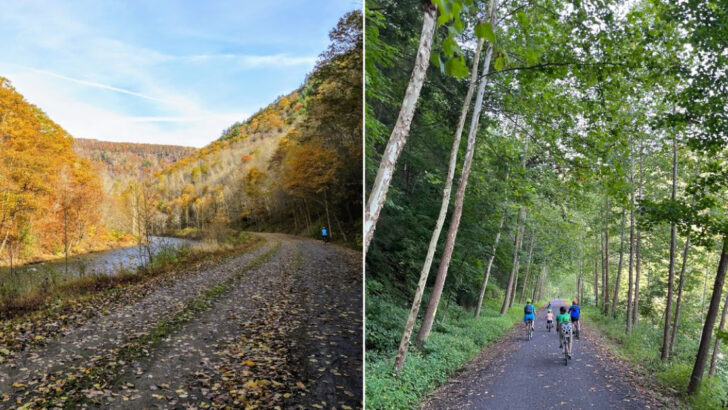
Tucked deep inside the Pennsylvania wilds, the Pine Creek Rail Trail stretches an incredible 62 miles along the floor of a stunning gorge known as the “Grand Canyon of Pennsylvania.” Built on old railroad tracks, this trail welcomes bikers, hikers, and nature lovers of all ages and skill levels. Riders from around the world have ranked it among the best cycling experiences anywhere on the planet.
Whether you are planning your first visit or your tenth, there is always something new to discover along this legendary path.
The Grand Canyon of Pennsylvania: Riding Through a Natural Wonder
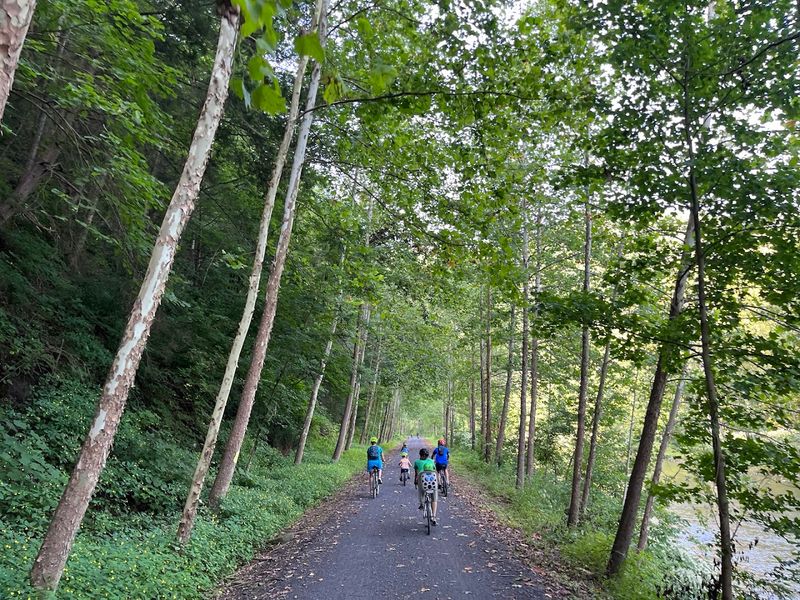
Most people think you need to travel to Arizona to see a grand canyon, but Pennsylvania has been quietly hiding one of its own. Pine Creek Gorge, nicknamed the “Grand Canyon of Pennsylvania,” drops nearly 1,500 feet from its rim to the canyon floor, creating a jaw-dropping backdrop for every mile you pedal.
The sheer scale of the cliffs and the endless canopy of trees make this place feel wild and remote in the best possible way.
Riding along the canyon floor means the dramatic rock walls rise up on both sides, giving cyclists a perspective that most people never get to experience. The trail follows Pine Creek closely, so the sound of rushing water is your constant companion.
Sunlight filters through the tree canopy in golden streaks, especially during the early morning hours.
Visitors consistently say the scenery reminds them of destinations far more famous and expensive to reach. One reviewer noted it felt like Colorado, right in their own backyard.
Coming here even once is enough to understand why trail enthusiasts across the globe put Pine Creek Rail Trail on their bucket lists.
62 Miles of Crushed Gravel Glory: What Makes This Trail So Rideable
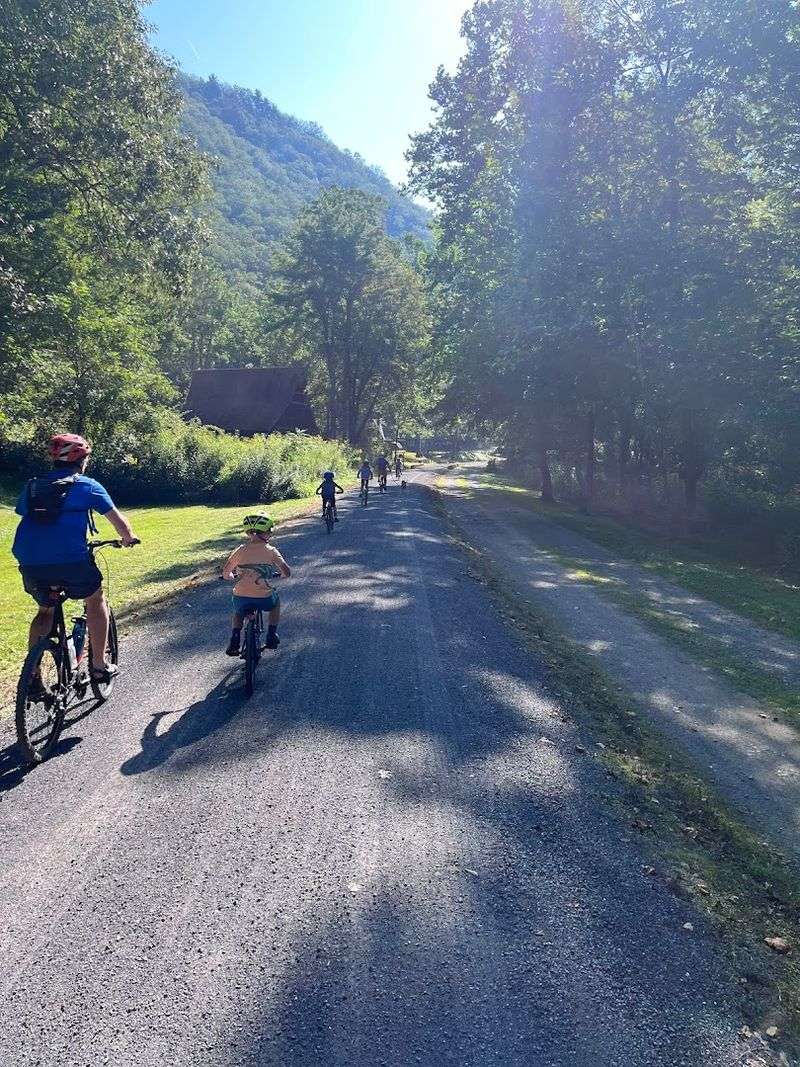
Not every long trail earns a reputation for being enjoyable from start to finish, but the Pine Creek Rail Trail manages to do exactly that. Stretching 62 miles from Wellsboro Junction in the north down to Waterville in the south, the trail is surfaced with crushed gravel that packs down firmly underfoot.
It rolls smoothly under bike tires and is easy enough for strollers and wagons too, which families especially appreciate.
Because the trail follows old railroad grades, the elevation changes are incredibly gradual. Trains could not handle steep hills, so the original builders engineered a nearly flat route through the canyon.
That engineering legacy now benefits cyclists who want a long, satisfying ride without grinding climbs that punish your legs.
Reviewers regularly praise how well-maintained the trail is, with no potholes or unexpected obstacles to dodge. The wide surface gives plenty of room for cyclists, walkers, and the occasional equestrian to share space comfortably.
Whether you tackle the full 62 miles over multiple days or choose a shorter out-and-back section, the quality of the trail surface makes every inch of the journey genuinely pleasant.
Wildlife Encounters That Will Stop You in Your Tracks
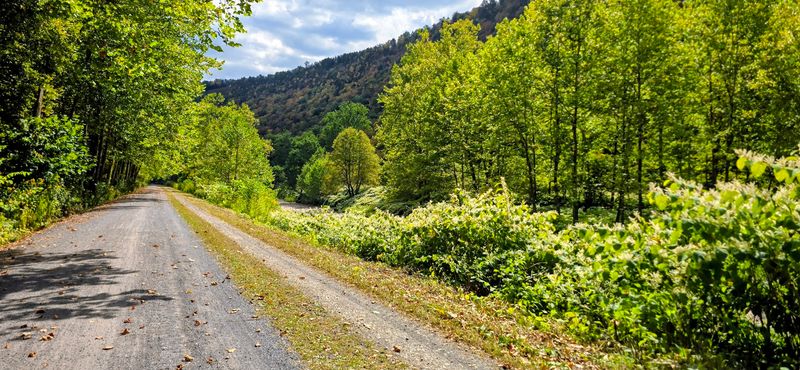
Pull up quietly on this trail and nature will reward your patience in ways that feel almost unbelievable. Bald eagles soar overhead with wingspans wide enough to cast a shadow across the trail.
One longtime visitor described hearing the rush of wind over a bald eagle’s wings as it flew out from a tree-lined tunnel near Blackwell, a moment he still talks about years later.
The wildlife list does not stop there. Deer regularly cross the path in small groups, seemingly unbothered by passing cyclists.
Patient observers have spotted porcupines climbing trees, bobcats slipping through the underbrush, bears moving along the creek bank, and coyotes trotting across the trail at dawn. The canyon environment creates a protected corridor that wildlife depend on year-round.
Birding enthusiasts find this trail especially rewarding because the mix of forest, creek, and open sky attracts dozens of species throughout the seasons. Bring binoculars if you have them, and keep your camera ready at all times.
The Pine Creek Rail Trail is the kind of place where the next remarkable sighting is always just around the next bend, making every ride feel like a new adventure.
Old Railroad Bridges That Turn Every Crossing Into a Memory
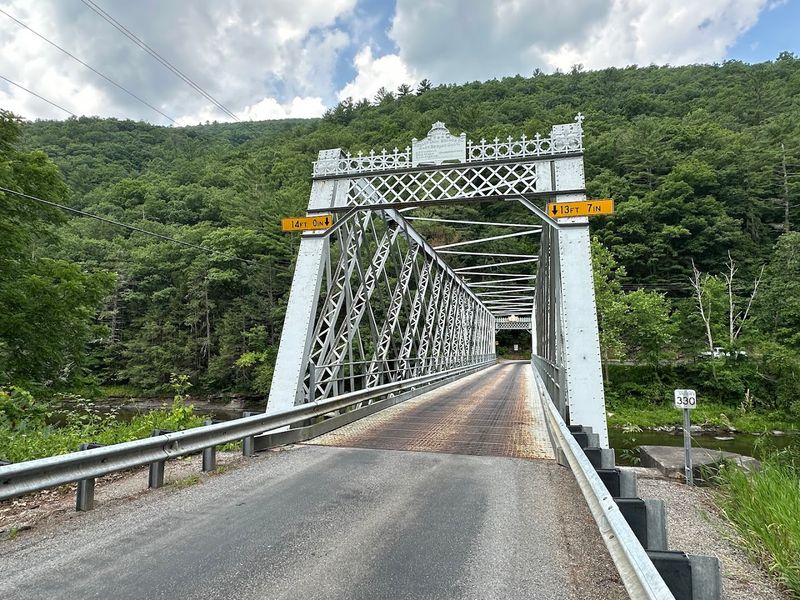
Some of the most exciting moments on the Pine Creek Rail Trail happen not on land but in the air, suspended above the creek on repurposed railroad bridges. These old iron and timber structures were originally built to carry heavy freight trains, and they have been lovingly preserved as part of the trail experience.
Crossing them gives riders a bird’s-eye view of Pine Creek flowing crystal clear below.
The bridges vary in length and height, but all of them deliver that same rush of excitement when you roll out onto the open span and the canyon opens up around you. Looking downstream from a bridge on a clear morning is one of those views that gets permanently etched into your memory.
The engineering of these old structures is impressive, and standing on one gives you a real sense of the industrial history that shaped this valley.
Photographers especially love the bridges because they offer unique framing opportunities you simply cannot find anywhere else on the trail. Catch the morning light bouncing off the water below and you have a shot worth framing.
Plan extra time at each bridge crossing because rushing past them would mean missing some of the best scenery the entire trail has to offer.
Pit Stops Worth Planning For: Stores, Ice Cream, and Cold Refreshments
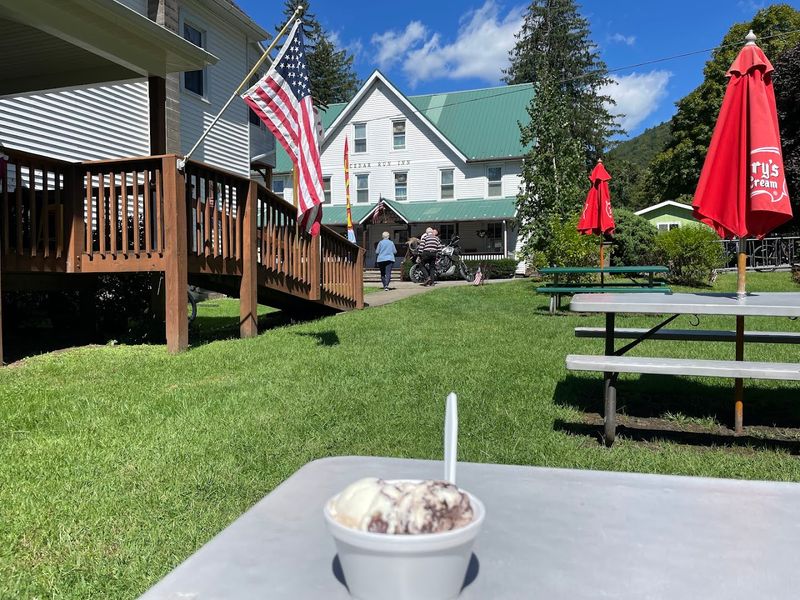
Long trail rides demand good fuel, and the Pine Creek Rail Trail corridor delivers some genuinely charming places to refuel. Wolfe’s General Store at Slate Run is a popular starting point for many riders heading north, stocking everything from snacks to cycling supplies.
Blackwell Station has Miller’s General Store waiting at the end of a northbound ride, offering ice cream that tastes twice as good after hours in the saddle.
Midway through the trail, Cedar Run serves up sandwiches and ice cream at a little shop that feels like it belongs in a different era entirely. Stopping here for lunch while listening to the creek babble past is one of those simple pleasures that reminds you why you chose this trail.
There are also campgrounds, a bar accessible directly from the trail, and even a gas station along the route for longer multi-day riders.
Planning your pit stops in advance makes the experience significantly more enjoyable. Distances between services can be long, and the trail has no cell service, so knowing where your next cold drink is waiting gives real peace of mind.
Grab a Purple Lizard map before you set out so you can mark every stop along the way.
Pine Creek Itself: Swimming Holes, Kayaking, and Fishing Along the Way
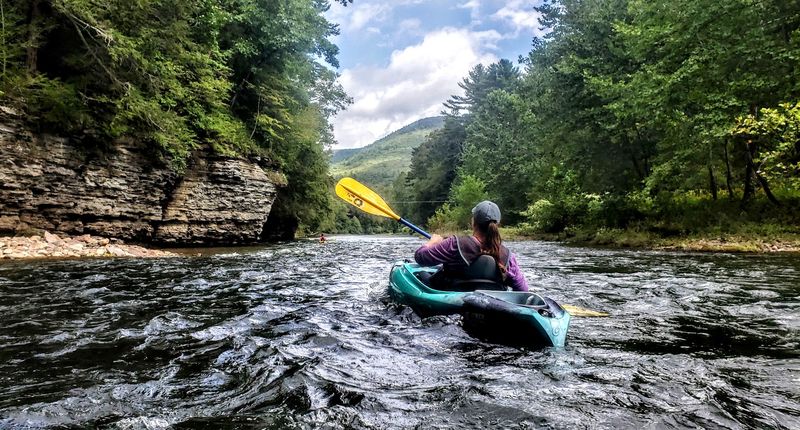
The trail runs right alongside Pine Creek for much of its length, and the water is clean, cold, and incredibly inviting on a hot summer day. Many visitors plan deliberate breaks to wade in, splash around, or simply pull up a camp chair and sit with their feet dangling in the current.
After a long morning of riding, few things feel better than the shock of cold mountain water on tired legs.
Kayakers and canoeists also use the creek, creating a lively scene especially on summer weekends when paddlers float past cyclists on the trail above the bank. Fishing is another major draw, with the creek supporting healthy populations of trout that attract anglers from across the region.
The combination of trail and water activities makes Pine Creek a destination that works for groups with different interests.
One reviewer described placing lawn chairs right in the river after a ride and cooling off for an hour, calling it the perfect ending to a perfect day. The creek levels vary with the seasons, so spring visits offer faster water ideal for kayaking while summer brings calmer stretches perfect for wading.
Either way, the creek adds a whole extra dimension to the Pine Creek Rail Trail experience.
A Trail for Every Season: Year-Round Adventures in the Canyon
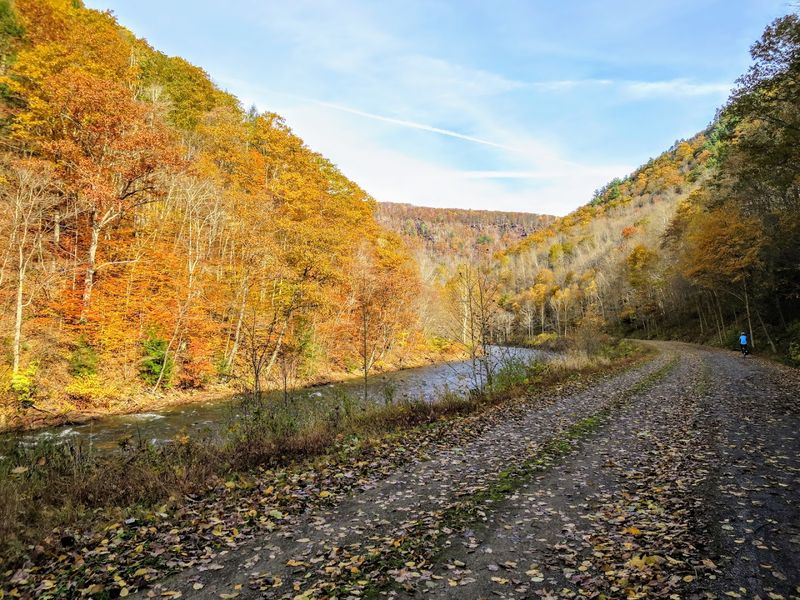
Most people picture the Pine Creek Rail Trail as a warm-weather destination, but the canyon transforms beautifully with every season and rewards visitors who come back throughout the year. Spring brings rushing water, wildflowers poking through the trail edges, and migratory birds filling the trees with sound.
The waterfalls that trickle down the canyon walls become roaring cascades after winter snowmelt.
Summer is peak season for obvious reasons, with long daylight hours, warm temperatures, and the creek beckoning at every turn. Fall is arguably the most spectacular time of all, when the canyon walls erupt in orange, red, and gold foliage that reflects off the surface of the creek below.
Photographers make special trips just for the autumn color, and the cooler temperatures make riding feel effortless.
Winter brings a completely different kind of magic. Cross-country skiing and snowshoeing are both permitted on the trail, and the canyon takes on an eerie, beautiful quiet when snow blankets everything.
Ice formations appear along the creek banks, and the bare trees open up views of the canyon walls that summer foliage normally hides. Returning in different seasons means the Pine Creek Rail Trail never feels exactly the same twice.
No Cell Service, No Problem: How to Prepare for the Trail Like a Pro
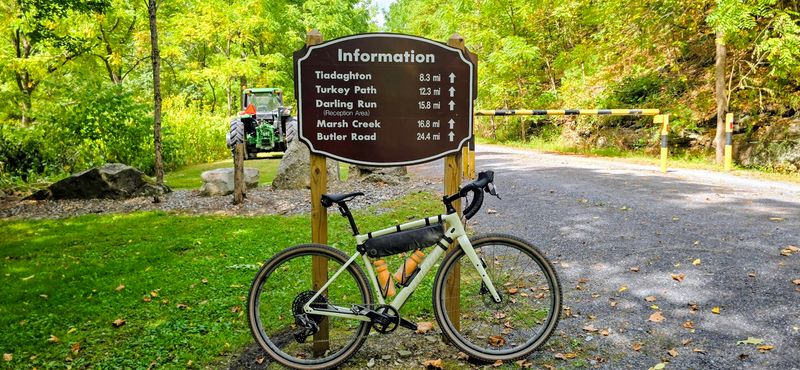
Here is something that surprises first-time visitors to the Pine Creek Rail Trail: your phone is essentially a camera out here, because cell service disappears entirely once you drop into the canyon. That is actually part of the charm for many people, offering a genuine digital detox in a world that rarely lets you unplug.
However, it does mean that preparation before you leave the trailhead is absolutely essential.
The Purple Lizard map is the trail resource most often recommended by experienced visitors. This detailed waterproof map covers the entire corridor and marks trailheads, parking areas, water sources, and nearby services.
Picking one up before your trip is one of the smartest moves you can make. Downloading offline maps to your phone as a backup is also a wise idea, though do not count on GPS accuracy inside the deep canyon.
Carry more water than you think you need, because the trail can get surprisingly warm in summer and dehydration sneaks up fast on longer rides. One group of 70 riders reported drinking what felt like gallons on a single outing.
Pack snacks, a basic repair kit, a first aid kit, and let someone know your planned route and expected return time before heading out.
From Railroad History to Recreation Trail: The Fascinating Origin Story
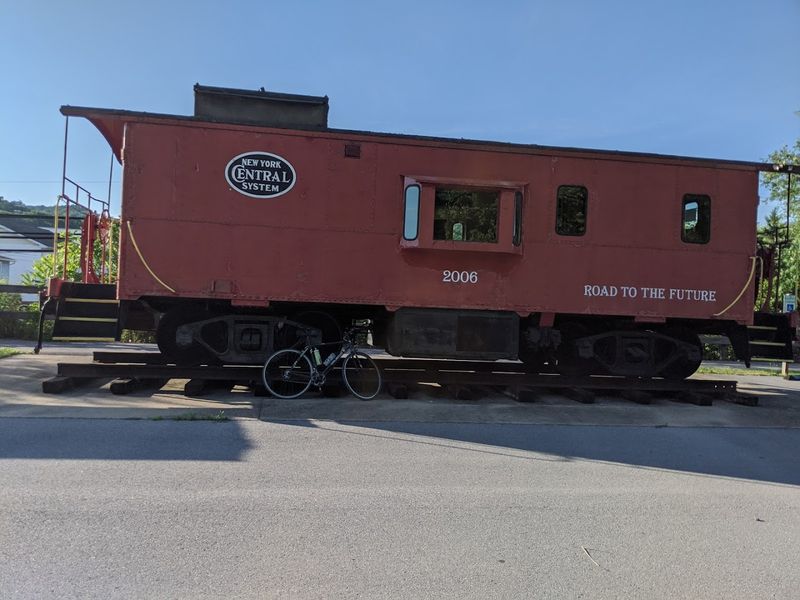
Long before cyclists rolled along its surface, this corridor carried the rumble and smoke of freight trains hauling timber and goods through the heart of Pennsylvania. The railroad that once ran through Pine Creek Gorge was a working line well into the twentieth century, and one long-time visitor recalls first discovering the gorge around 1970 when trains were still passing through.
The transformation from industrial railroad to beloved recreation trail is a story worth knowing.
When rail service ended, the tracks were removed and the corridor was gradually converted into what we know today as the Pine Creek Rail Trail. The process preserved the gentle grades that made the railroad so efficient, which is exactly why the trail feels so wonderfully rideable today.
Old railroad infrastructure like bridges, culverts, and even some original stone mile markers still dot the route for history buffs to spot.
The surrounding area holds layers of history beyond the railroad itself, including connections to the Algerine settlement and U.S. Geological Survey benchmarks that historians and explorers still seek out.
Researchers and curious riders have spent years cataloging the historical details hidden along the corridor. Riding the trail is not just a physical journey but also a trip through more than a century of Pennsylvania history.
Planning Your Perfect Pine Creek Trip: Tips for First-Timers and Return Visitors

Planning ahead makes a huge difference between a good Pine Creek experience and a truly unforgettable one. The trail is 62 miles long, so most visitors choose a specific section rather than attempting the entire length in one day.
Popular options include the stretch from Slate Run to Blackwell, which offers stunning scenery and convenient services at both ends. Shuttle services are available in the area, making point-to-point rides easy to arrange.
Parking areas are located at multiple trailheads including Rattlesnake Rock, Tiadaghton, Cedar Run, and Blackwell. Arriving early on summer weekends secures a spot before the lots fill up.
Camping options near the trail allow multi-day riders to spread the experience over several days, which many veterans say is the only way to truly appreciate everything the corridor has to offer.
Bring a bike that handles gravel comfortably, since hybrid or gravel bikes perform better here than skinny-tired road bikes. Helmets are strongly recommended, and bright clothing helps with visibility near the road crossings that intersect the trail at a few points.
First-time visitors often say they wish they had planned to stay longer, so build extra days into your schedule from the very beginning.