One Pennsylvania forest hides a view that feels like a secret worth climbing for.
Cook Forest State Park stretches across 8,500 acres of towering trees, winding trails, and quiet corners where the modern world seems to disappear.
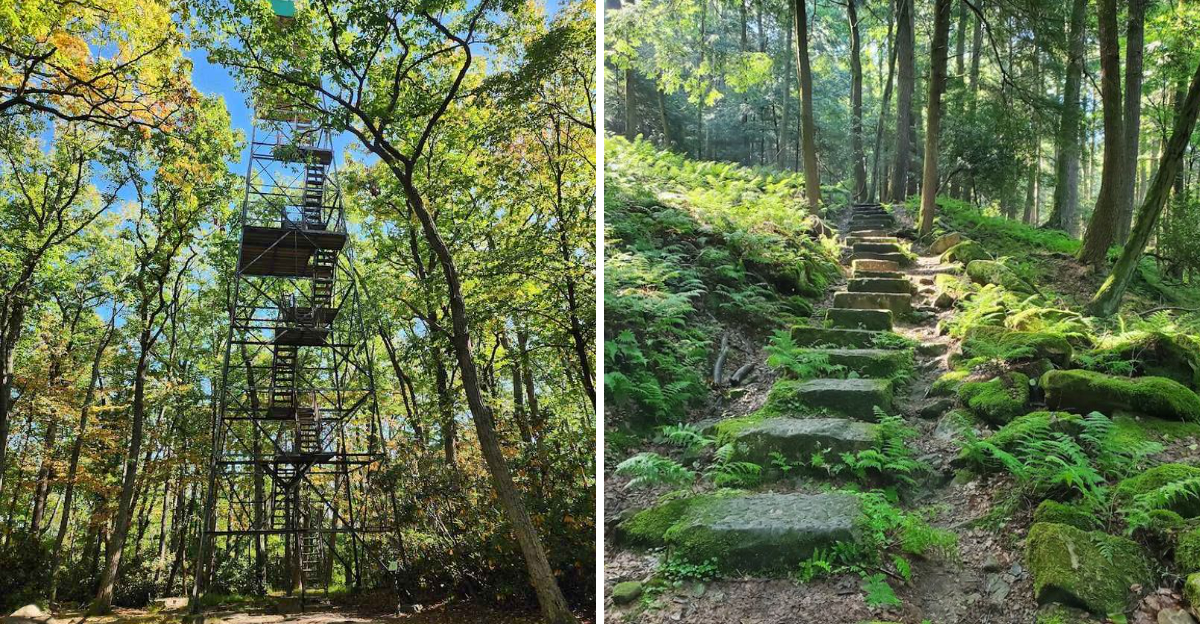
Deep in this massive forest, an 87.5-foot fire tower rises above the treetops, offering a rare chance to see the park from a whole new angle.
Built in 1929 to watch for forest fires, the historic tower now gives adventurous visitors sweeping views across miles of wooded hills and valleys. On a clear day, the scenery seems to go on forever.
Below, ancient white pines and hemlocks create one of Pennsylvania’s most unforgettable forests.
Up above, the fire tower delivers the kind of view few travelers ever realize is waiting here.
Cook Forest Is Far Bigger Than Many Visitors Realize
Most Pennsylvania state parks feel manageable, the kind of place where you can see the highlights in an afternoon. Cook Forest shatters that expectation completely.
Spreading across 8,500 acres of rolling terrain, this massive forest creates a wilderness experience that feels genuinely remote despite its accessibility.
Walk five minutes from the parking area and you’ll find yourself surrounded by towering trees in every direction, the forest seeming to stretch endlessly. Many visitors spend entire days here and still only scratch the surface of what the park offers.
Hidden trails wind through sections that see very few footsteps.
The sheer scale explains why so many people miss the fire tower entirely—it’s tucked into a corner of the park that requires intention to reach. This isn’t a compact nature preserve where everything sits neatly together.
Cook Forest rewards those who take time to explore beyond the obvious stops, revealing layers of discovery across thousands of wooded acres that keep calling you back.
The Forest Is Famous for Its Ancient Trees
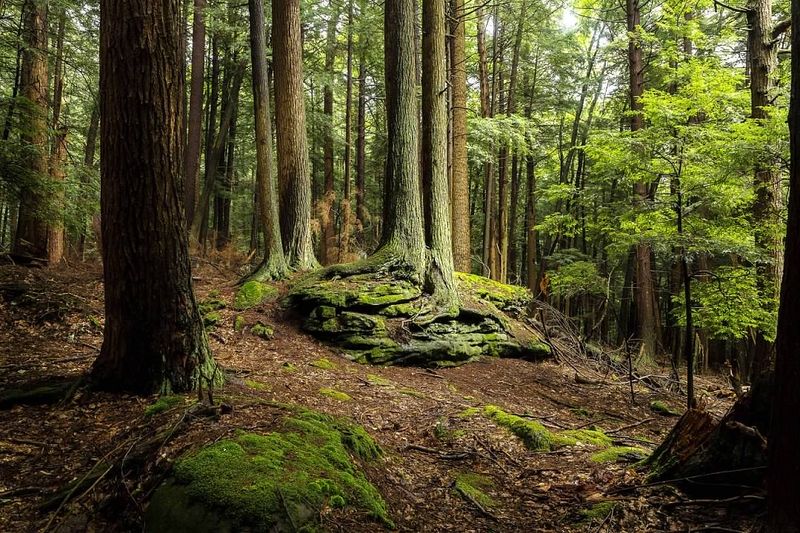
Stand beneath a 200-year-old white pine and you’ll understand immediately why Cook Forest earned its protected status. These ancient giants rise well over 100 feet, their lowest branches so high overhead they create natural cathedrals filled with filtered green light.
The forest feels less like a park and more like a living museum of trees that survived when most of Pennsylvania’s old growth fell to logging.
The hemlocks add their own drama, their dark evergreen foliage contrasting beautifully with the pines’ lighter bark. Some specimens here measure five feet across at the base.
Walking through these groves transports you to an earlier America, when forests like this covered vast stretches of the eastern landscape.
From ground level, these trees feel impossibly tall. But climb the fire tower and you’ll gain an entirely new perspective—looking down on the canopy reveals just how densely these ancient survivors stand together, creating an unbroken sea of green that modern second-growth forests simply can’t match.
The Historic Fire Tower Still Offers a Remarkable Lookout
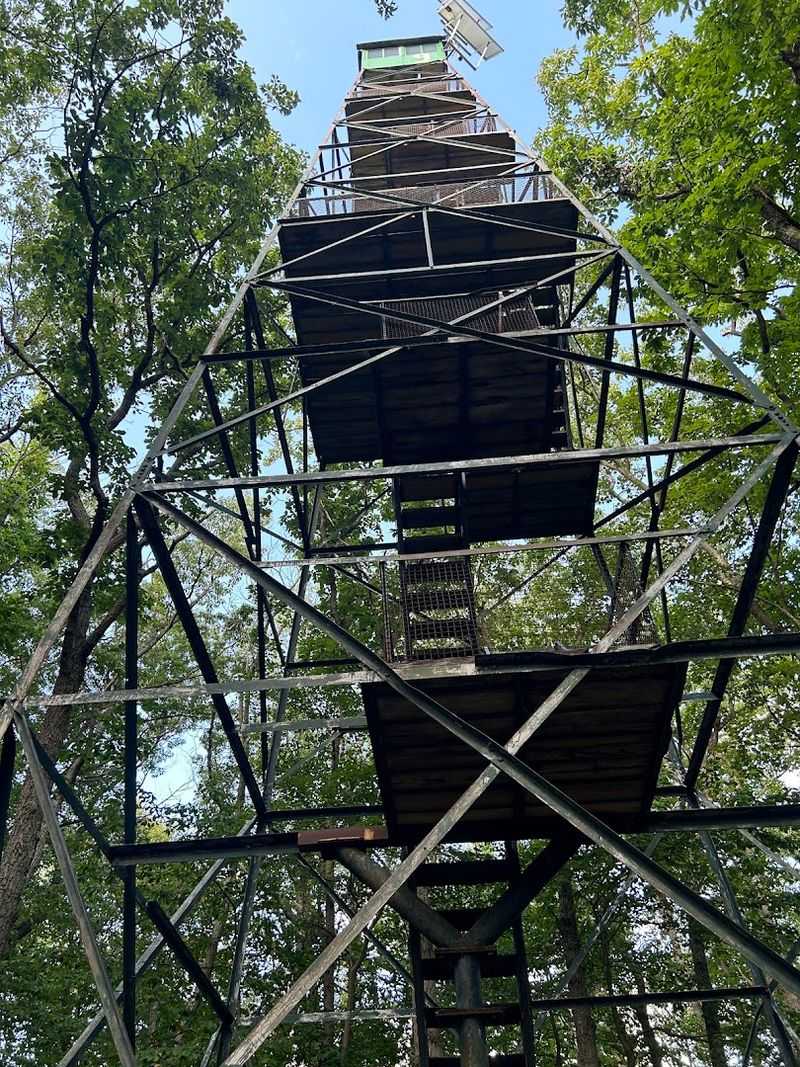
Fire Tower No. 9 rises like a steel sentinel above Cook Forest, its 87.5-foot frame built in 1929 when forest fires posed serious threats to Pennsylvania’s woodlands. Climbing the metal stairs feels like stepping back through decades, each footfall ringing against the framework as you spiral upward through the canopy.
The ascent itself becomes part of the adventure, your perspective shifting with every turn.
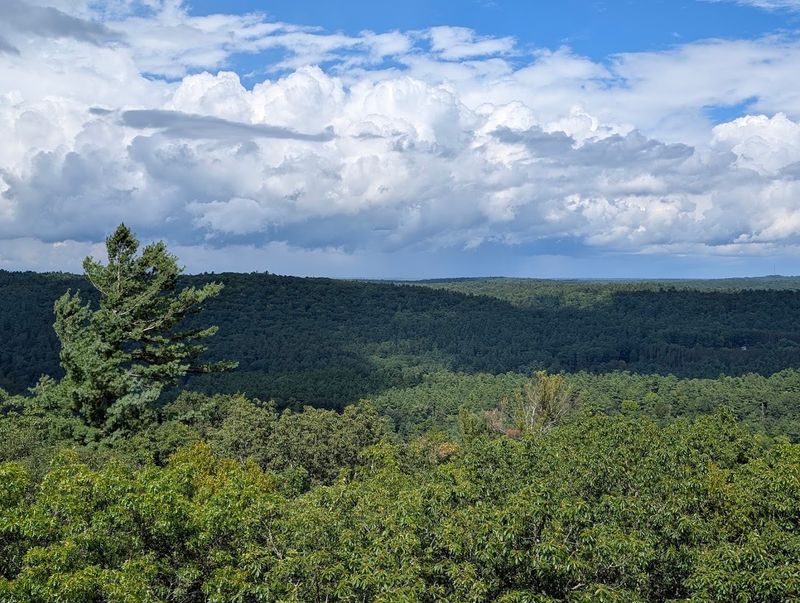
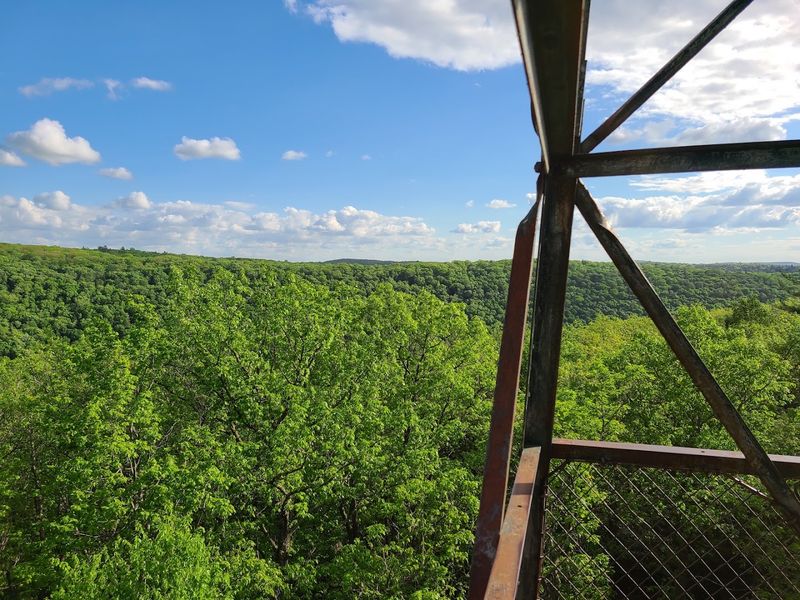
Reaching the observation platform delivers a payoff few Pennsylvania overlooks can match. On clear days, views stretch 15 to 20 miles across forested ridges, valleys, and the winding Clarion River below.
You’re genuinely above everything, surveying landscape that appears almost untouched by modern development.
Most visitors never make it here because the tower requires deliberate planning—it’s not visible from main roads or obvious parking areas. That obscurity preserves something special.
Standing on that platform with wind rushing past, you’ll likely share the view with just a handful of others, experiencing Cook Forest the way fire watchers once did, scanning endless green for any sign of trouble.
Seneca Point Adds Another Dramatic View Nearby
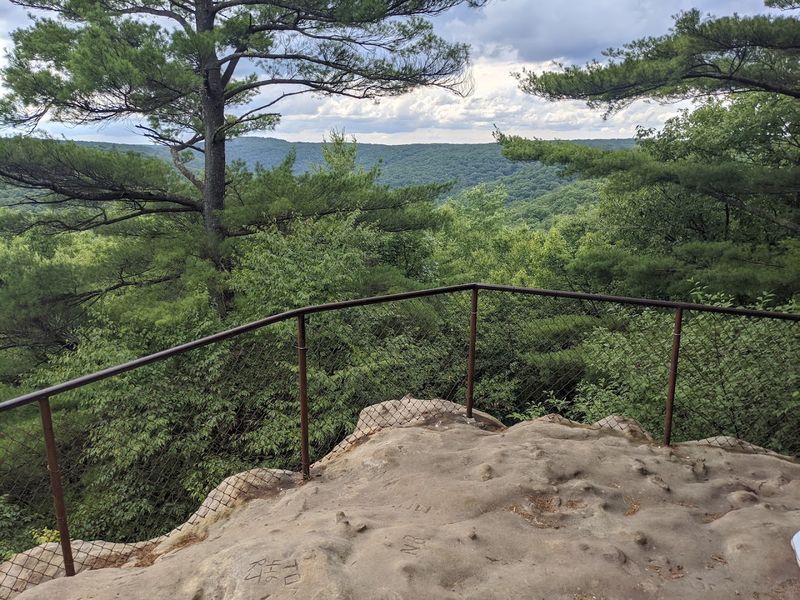
Not everyone feels comfortable climbing 87 feet into the sky, and that’s where Seneca Point becomes essential. This natural rock overlook sits just a short distance from the fire tower area, offering spectacular views from solid ground.
The exposed bedrock creates a dramatic platform that juts outward, giving you unobstructed sightlines across the Clarion River Valley.
What makes this spot particularly valuable is how it complements the tower experience rather than competing with it. From Seneca Point, you’re looking across the valley at eye level with the surrounding ridges, appreciating how the river has carved through layers of ancient rock.
The perspective feels intimate and immediate, connecting you directly with the landscape’s geology and shape.
Combining both viewpoints turns a simple sightseeing stop into a complete visual exploration of Cook Forest’s terrain. Start at Seneca Point to understand the lay of the land, then climb the tower to see that same landscape from above.
Together, they reveal dimensions of this forest that hiking alone could never show you, creating memories that last long after you’ve returned home.
The Clarion River Helps Shape the Landscape Below
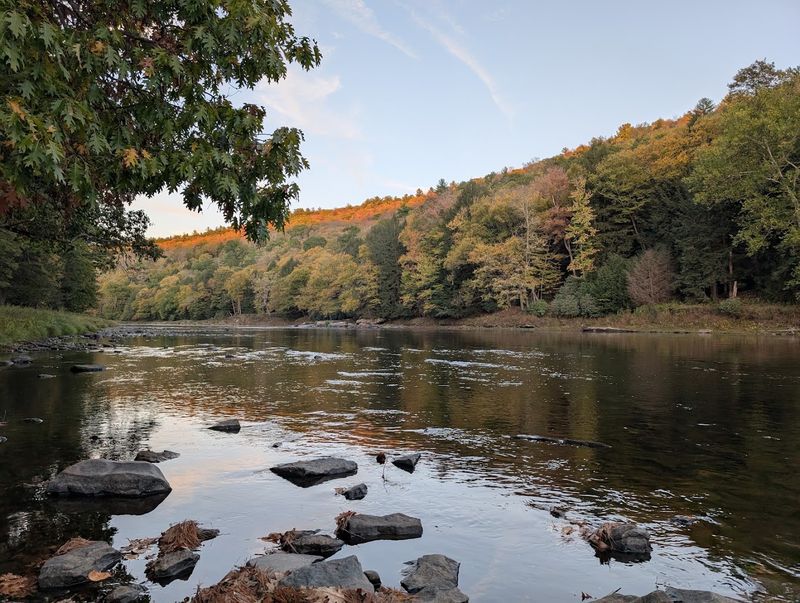
Rivers tell stories, and the Clarion writes a particularly compelling narrative across this corner of Pennsylvania. From the fire tower and Seneca Point, you can trace its sinuous path as it cuts through the surrounding plateau, creating the valleys and ridges that give Cook Forest its distinctive topography.
The river doesn’t just flow through this landscape—it actively sculpts it, carving deeper channels and shaping the hills that rise on either side.
Understanding this relationship transforms what you see from the elevated viewpoints. Those aren’t random hills rolling toward the horizon; they’re the result of millions of years of water working on stone.
The Clarion remains a living force, its seasonal floods and gradual erosion continuing to reshape the valley floor even today.
For visitors standing above, the river adds movement and life to what might otherwise be simply a forest view. You can watch sunlight dance on its surface, imagine its journey from headwaters to confluence, and appreciate how water and time conspired to create this particular arrangement of land and trees that makes Cook Forest so visually striking from above.
This Viewpoint Has a Fascinating Fire-Watching History
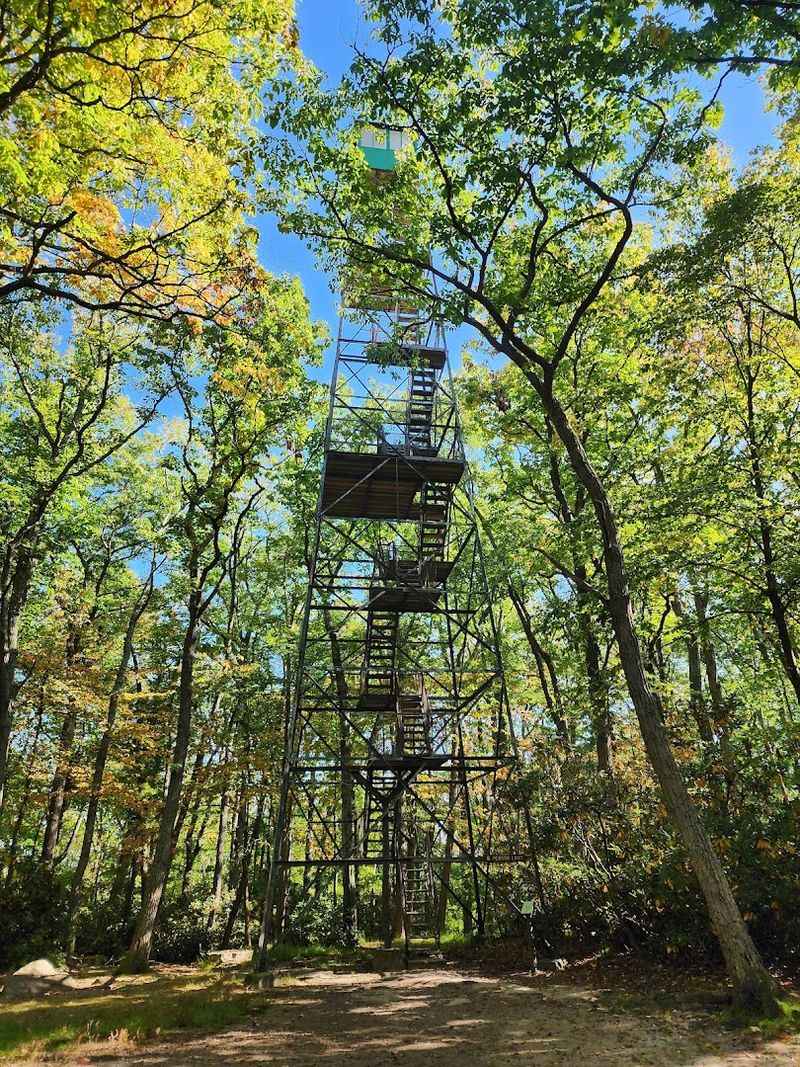
Before satellites and aircraft, fire towers represented cutting-edge forest protection technology. Fire Tower No. 9 wasn’t built for Instagram photos or weekend tourism—it served as a critical early warning system when a single overlooked spark could destroy thousands of acres.
Trained watchers would climb those stairs daily during fire season, scanning the horizon for the telltale wisps of smoke that signaled danger.
The job required patience, sharp eyes, and the willingness to spend hours in a small cabin perched above the treetops. Watchers would plot smoke locations using specialized equipment, then radio coordinates to firefighting crews on the ground.
Their vigilance protected not just trees, but entire communities that depended on the forest for their livelihoods.
Though eventually retired as modern detection methods took over, the tower remains as testament to that era of hands-on conservation. When you climb today, you’re walking in the footsteps of those dedicated watchers, experiencing their workplace firsthand.
That historical layer adds depth to the scenic rewards, turning a simple view into a connection with Pennsylvania’s conservation heritage and the people who protected these forests.
Trails Turn the Fire Tower Into More Than a Quick Stop
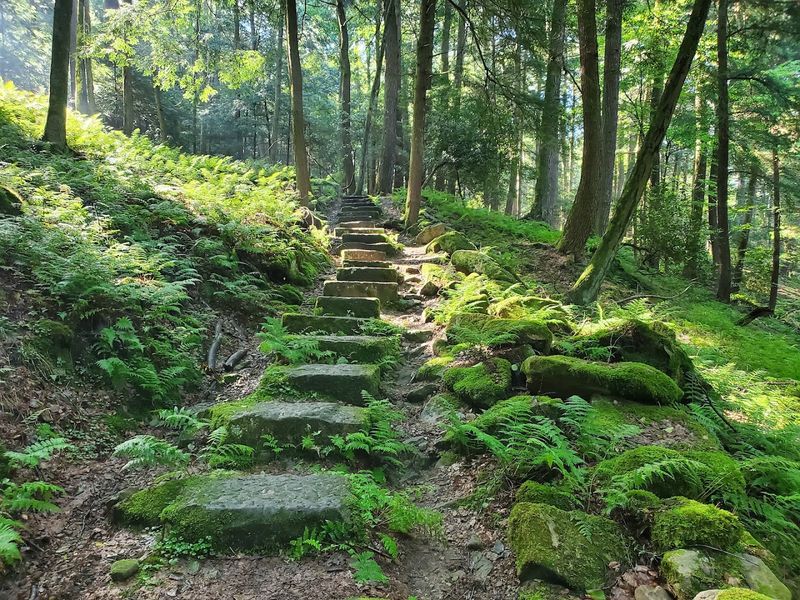
Driving to the tower area, snapping photos, and leaving again misses half the experience. The surrounding trail network transforms this destination into something richer, allowing you to combine elevated views with ground-level exploration through varied terrain.
Paths wind through different forest types, cross rocky outcrops, and connect the tower and Seneca Point in ways that reveal how the landscape fits together.
Some routes stay relatively level, making them accessible for families wanting to extend their visit without serious exertion. Others challenge you with steeper sections and rougher footing, rewarding the effort with quieter stretches where fewer people venture.
The contrast between walking beneath those ancient trees and then climbing above them creates a complete experience of Cook Forest’s vertical dimension.
Trail options mean you can customize your visit based on time, energy, and interest. Spend twenty minutes or three hours—the flexibility ensures nobody has to rush through.
Many visitors find that combining the viewpoints with a moderate hike creates the perfect balance, turning a scenic stop into genuine forest immersion that engages all your senses beyond just the visual impact.
Cook Forest Offers Plenty to Do After the View
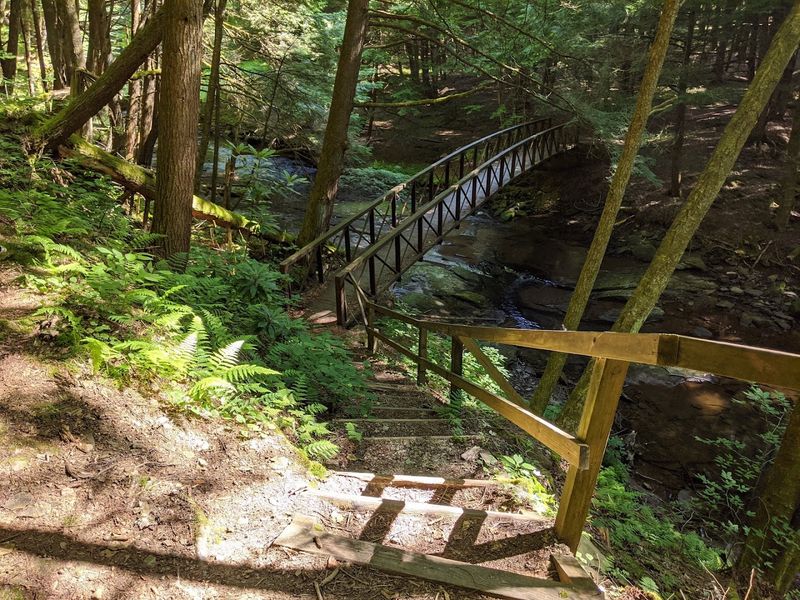
The fire tower may bring you here, but Cook Forest contains enough attractions to fill multiple visits. The park’s extensive trail system includes everything from easy riverside walks to challenging ridge hikes, with routes that showcase different aspects of the forest’s character.
Wildlife watching opportunities abound—white-tailed deer, wild turkey, and dozens of bird species call these woods home.
Water activities center on the Clarion River, where canoeing, kayaking, and fishing let you experience the landscape from an entirely different angle. The park maintains camping facilities ranging from rustic sites to modern amenities, plus historic log cabins that let you overnight among the ancient trees.
These accommodations transform a day trip into an extended forest retreat.
History enthusiasts can track down remnants of the logging era, including old sawmill sites and transportation routes that once moved massive logs to market. Scenic drives wind through the park, offering easier access for those who prefer not to hike.
Whether you’re drawn to outdoor recreation, historical exploration, or simply relaxing in a beautiful natural setting, Cook Forest delivers options that complement the signature fire tower experience perfectly.
What to Know Before You Go
Planning makes the difference between a great visit and a frustrating one. Cook Forest sits near Cooksburg in Clarion County, roughly three hours north of Pittsburgh.
The fire tower is accessed from Fire Tower Road in the Seneca Point area—not from the main park entrance that most GPS systems will suggest. Getting detailed directions before you leave home prevents wrong turns and wasted time.
Important note: the observation cabin at the top of the tower may only open during special programs or supervised events. Regular visits typically mean climbing to the elevated platform but not entering the enclosed cabin.
Check current conditions before making the trip, as weather, maintenance, or safety concerns occasionally close the tower entirely.
Practical gear matters here. Sturdy footwear handles both tower stairs and potentially rocky trails around Seneca Point.
The exposed rock outcrops can be hazardous, especially when wet—stay within designated viewing areas and watch children carefully. Bring water, sun protection for open areas, and perhaps binoculars to enhance those long-distance views.
Finally, consider visiting during weekdays or off-peak seasons when crowds thin out, giving you more solitude to fully appreciate this remarkable Pennsylvania treasure.