
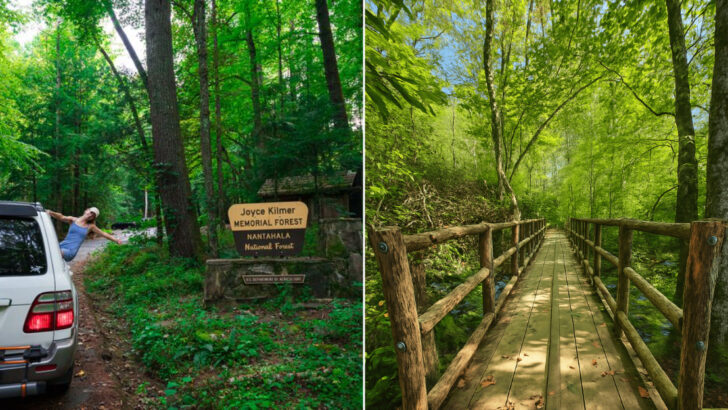
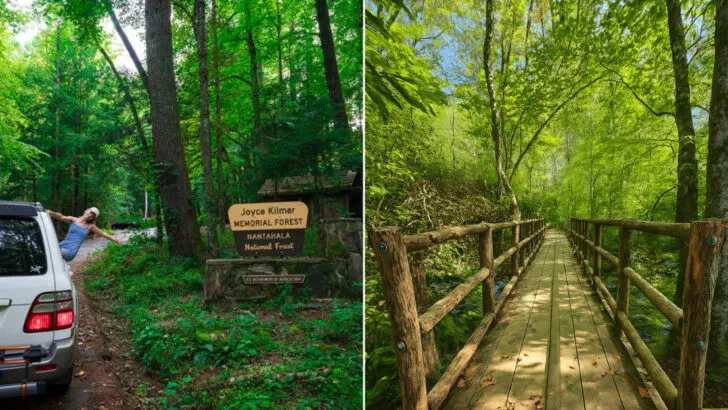
Some places don’t feel real until you step inside them.
Joyce Kilmer Memorial Forest in North Carolina feels like one of those rare spaces where time softens and the world grows quiet. Towering trees rise overhead, their trunks thick and mossy, their branches weaving a canopy that filters light into a soft green glow.
Every step pulls you deeper into a setting that feels untouched and quietly powerful.
The trail winds gently through massive poplars and hardwoods that have stood for centuries. Leaves crunch underfoot, the air stays cool, and the forest seems to breathe around you.
It’s peaceful without feeling empty, wild without feeling harsh.
Walking here feels almost spellbound. The forest invites slow steps, deep breaths, and long pauses just to look up.
Joyce Kilmer Memorial Forest isn’t about distance or speed—it’s about wonder, stillness, and the feeling that you’ve wandered into a story that began long before you arrived.
Overview: Why Joyce Kilmer feels magical
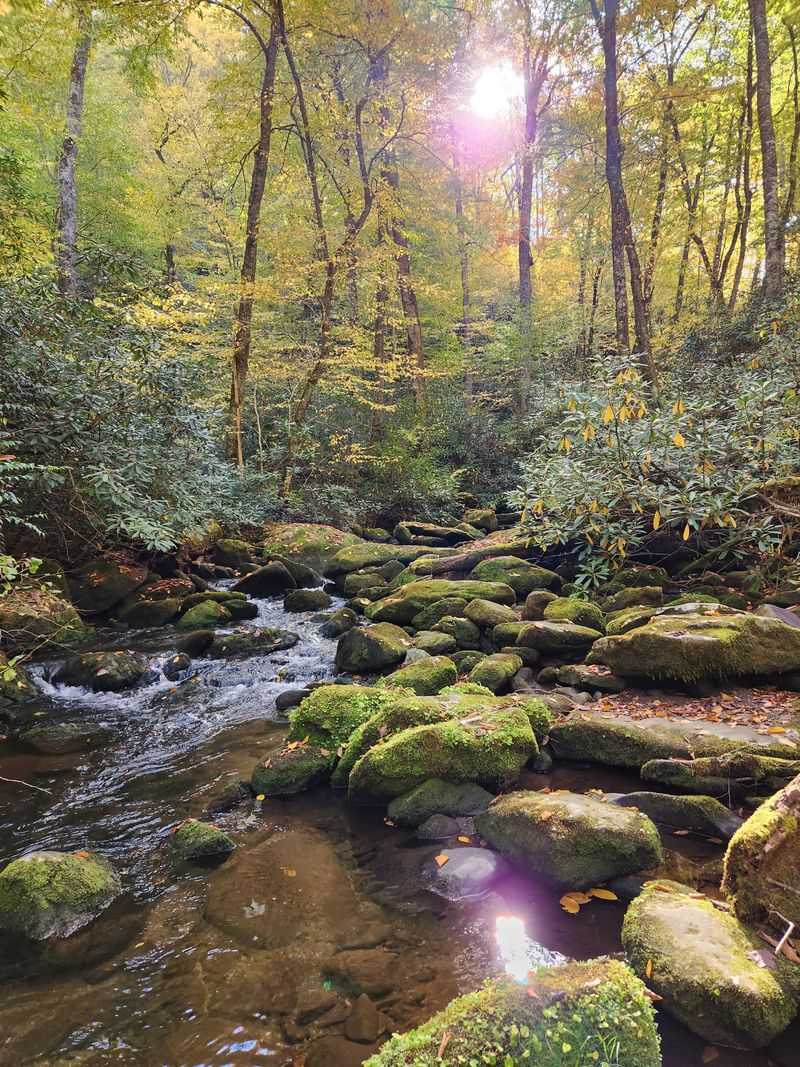
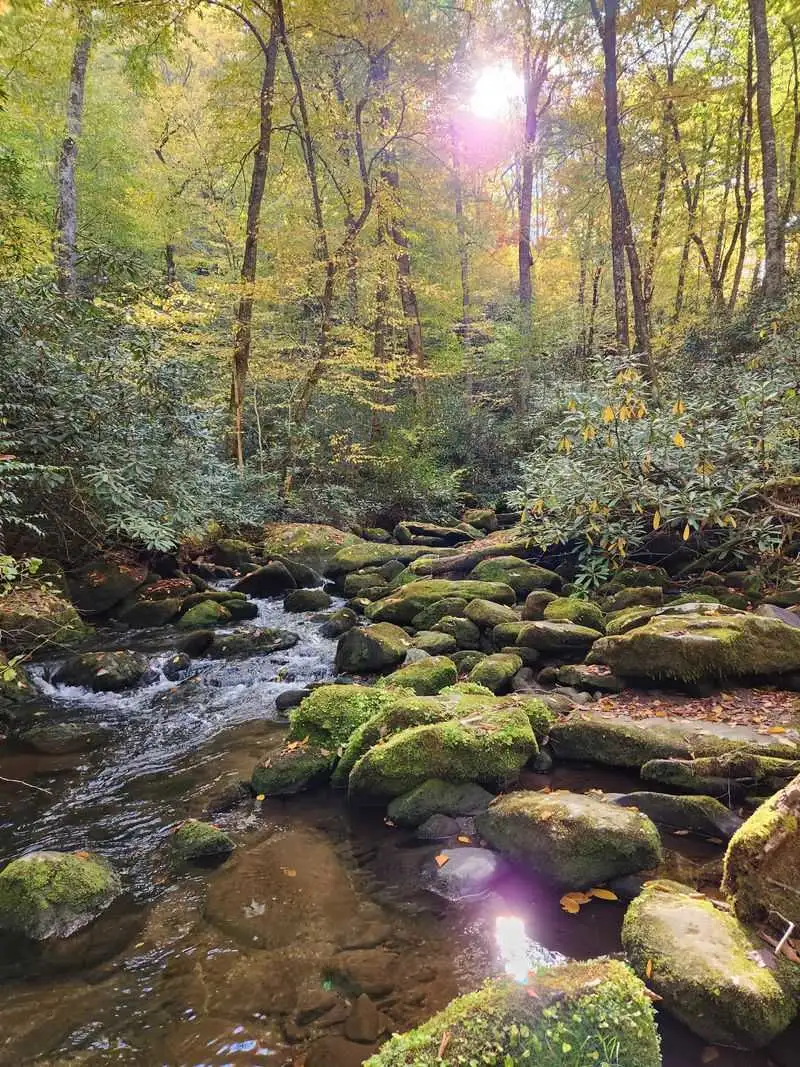
Old growth forests change how you walk. At Joyce Kilmer Memorial Forest, the tulip poplars rise like cathedral columns, and you naturally lower your voice as if entering a sacred place.
Sunlight slips through layered leaves, and the air tastes like rain even on clear days, carrying the scent of moss and leaf litter.
You follow a figure eight loop, gentle yet immersive, with roots that ask you to lift your feet thoughtfully. Birdsong and the hush of a creek trail you like a soundtrack.
Every few steps there is another trunk so wide it forces perspective, reminding you how young our daily worries really are.
This is one of the rare pockets of true old growth in the East, spared by saws that took so much else. The forest is a living museum, but it never feels fenced or fragile.
It simply breathes, and you sync your pace to it.
Come early for parking and quiet, lingering where the trail forks toward the upper loop. If rain is forecast, expect slick roots, rich colors, and that deep woodland glow.
You will leave slower, lighter, and a little wonderstruck.
Getting there and essential details
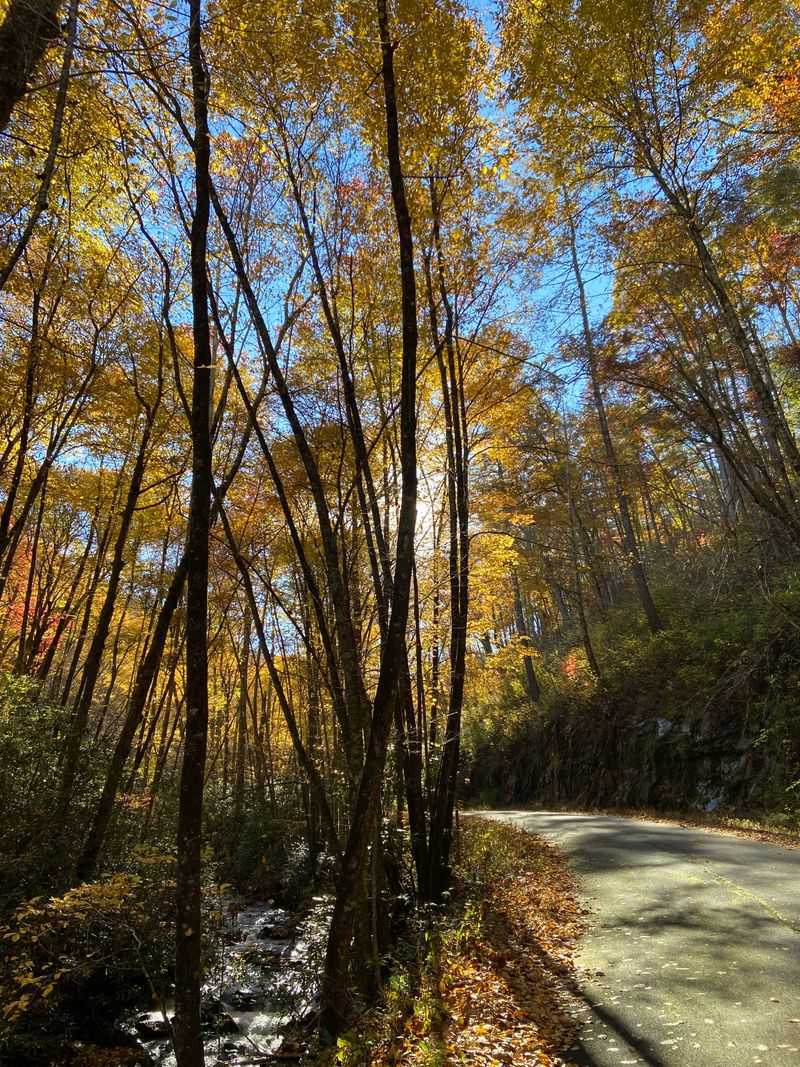
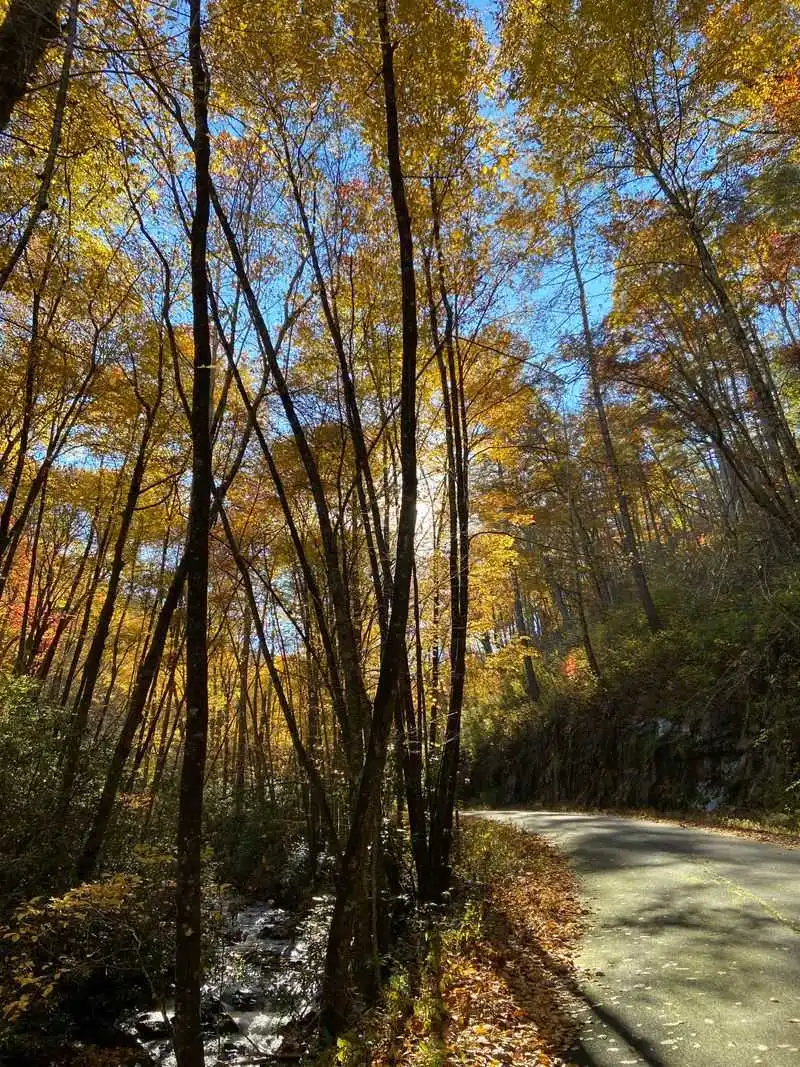
Reaching the forest feels like a gentle unspooling from the rush of daily life. The drive along curving mountain roads builds anticipation as peaks rise and radio signals fade.
Set your pin to 5410 Joyce Kilmer Rd, Robbinsville, NC 28771, and aim to arrive early for easier parking and quiet trail moments.
This site sits in the Cheoah Ranger District of the Nantahala National Forest. The main loop is roughly two miles, shaped like a figure eight, with the most massive trees on the upper loop.
Facilities are simple but appreciated, including restrooms near the parking area and picnic tables where you can sit with a thermos.
Check hours for the ranger district office, but the forest access typically aligns with daylight adventure. The trail is well marked and well maintained, though slick roots and occasional mud require sturdy footwear.
Expect intermittent cell service, so download maps before you go and bring a backup battery.
There is no fee to walk under these giants. Dogs should be leashed, and leave-no-trace habits matter here more than ever.
If rain rolls in, the path becomes magical and tricky at once, so keep balance and move at a mindful pace.
Trail layout: the figure eight loop
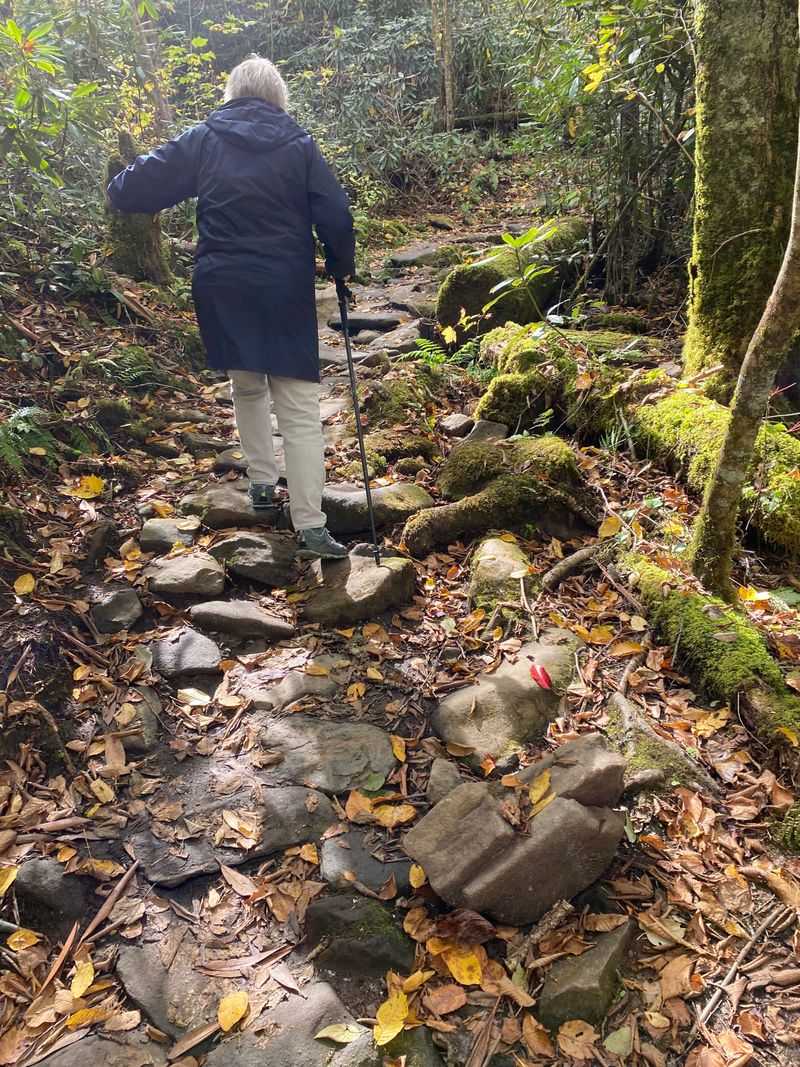
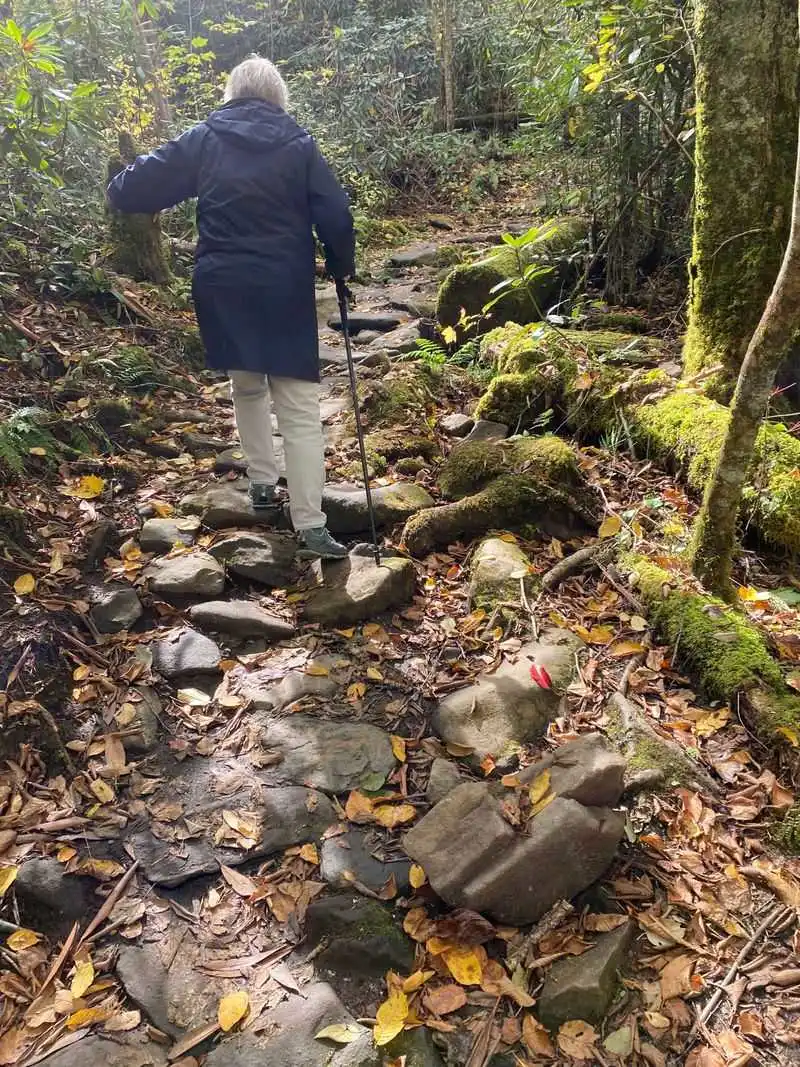
The trail forms a simple figure eight, inviting you to slow down and savor each segment. Start on the lower loop, a gentle introduction along a lively creek and stands of mixed hardwoods.
The path is mostly easy, with small footbridges and well-placed steps guiding you into deeper green.
At the junction, the upper loop climbs modestly where the true giants stand. Here, you meet those famously wide tulip poplars, beech, and sycamore, their bark grooved like ancient script.
Roots crisscross the tread like knotted ropes, so you watch your footing while your gaze keeps drifting skyward.
Plan a clockwise ascent if you prefer steps early and a steady descent later. Benches and boulders serve as natural pause points, ideal for water breaks and photos.
The loop can be completed in about an hour, but most visitors linger far longer.
Wayfinding is straightforward, with blazes and signs minimizing guesswork. After rainfall, expect slickness and magical reflections in puddles.
The loop never feels repetitive because the mood shifts with light, weather, and the angle you notice a trunk as wide as a small car.
The giants: tulip poplars and companions
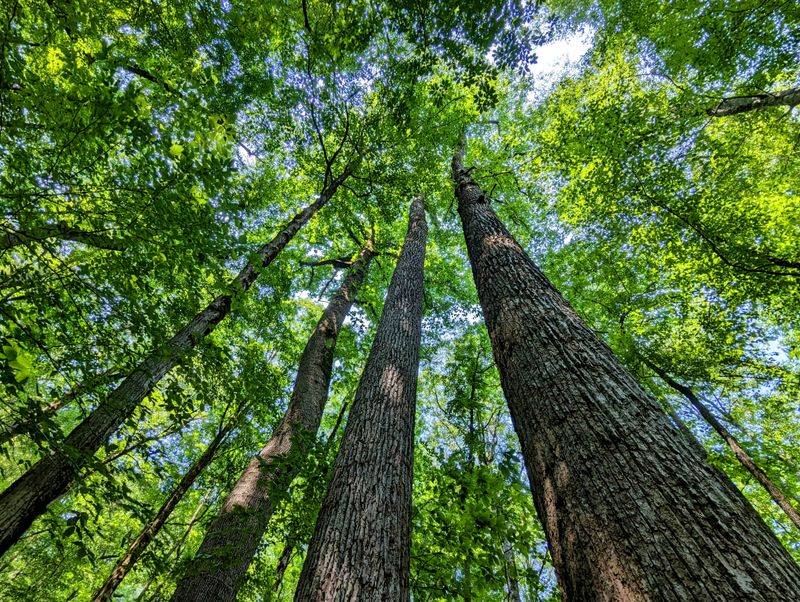
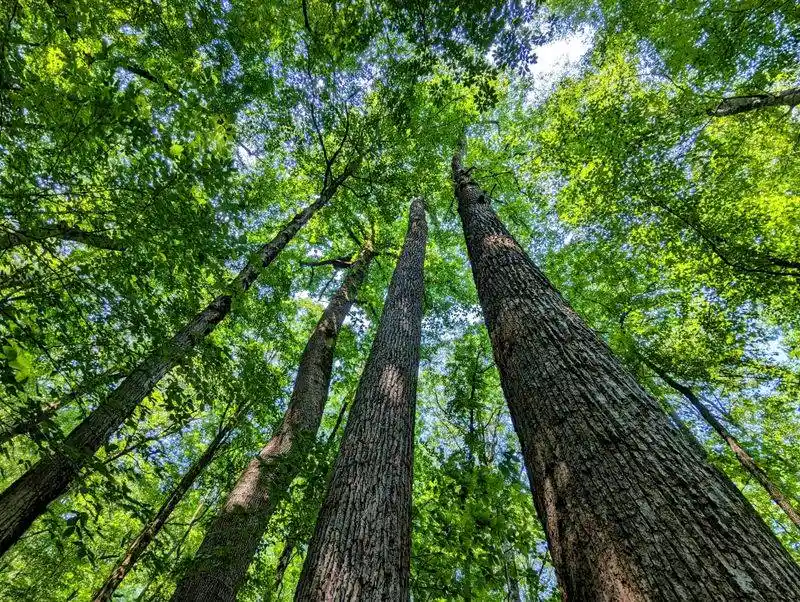
Stand at the base of a tulip poplar and your neck tilts until the sky is a thin coin. Some trunks here measure impressive diameters, reminders of centuries that slipped by without an axe.
The bark is ridged and cool, and the roots splay like outstretched fingers steadying the slope.
Companion species add texture and seasonality. Beech holds smooth gray trunks and copper leaves through winter, while sycamore flashes camouflage bark in peeling patterns.
Hemlocks whisper on breezes, a softer voice alongside hardwood bravado.
In spring, the canopy unfurls like a slow parade, and in summer, it becomes a green amphitheater. Autumn gilds the understory with honeyed light, while winter lays everything bare and serene.
No season cheats the experience, though an overcast day deepens the mood.
You do not need to be a botanist to feel awe, but learning a few bark patterns adds layers to your walk. Notice the buttressed bases and lightning scars, the nurse logs feeding saplings.
Every giant is a story, and the trail reads like a collected anthology of resilience.
Creeks, bridges, and the soundscape


Follow the lower loop and the creek becomes your companion, speaking in bright syllables over stones. Wooden bridges cross at graceful angles, framing reflections that change with the sky.
The sound is constant but never loud, a softness that fills the gaps between footsteps.
Birdsong stitches above the water, from warblers to thrushes hidden in midstory branches. After rain, rivulets appear where you least expect them, braiding across the path before disappearing into moss.
Each crossing feels like a transition, a little doorway into a new pocket of green.
Pause on a bridge and watch bubbles catch light as they travel. The clarity of the water surprises you, revealing sand ripples and darting insects.
Even in winter, the creek carries warmth for the ears, a reminder that the forest is always moving.
Photographers should bring a small tripod for long exposures. If you prefer to travel light, rest your camera on a railing and slow the shutter.
Either way, the creek writes silky lines that your photos will remember when your mind starts to forget.
Wildflowers, fungi, and seasonal color


Spring here arrives like a careful painter, adding trillium, violets, and foamflower in soft strokes. Look down and you will see a world within a world: lichens mapping bark, fungi stippling fallen logs.
Summer leans lush, with ferns unfurling and mushrooms shouldering through leaf litter after storms.
Autumn turns the understory into a glowing collage. Gold and amber filter down from the canopy, and beech leaves hold a stubborn copper that warms the air.
Winter pares it all back, spotlighting structure, bark, and the emerald persistence of moss.
Bring a macro lens if you have one. Even without it, you can kneel beside a mossy log and find kingdoms in inches, from tiny cup fungi to beetles wearing armor like jewels.
Staying on trail protects delicate communities that thrive close to the path.
Give yourself permission to look slowly. The giants teach scale, but the smallest inhabitants tell time by moisture and light.
When you notice both, the forest stops being a backdrop and becomes a conversation with seasons.
Accessibility, difficulty, and who will love it
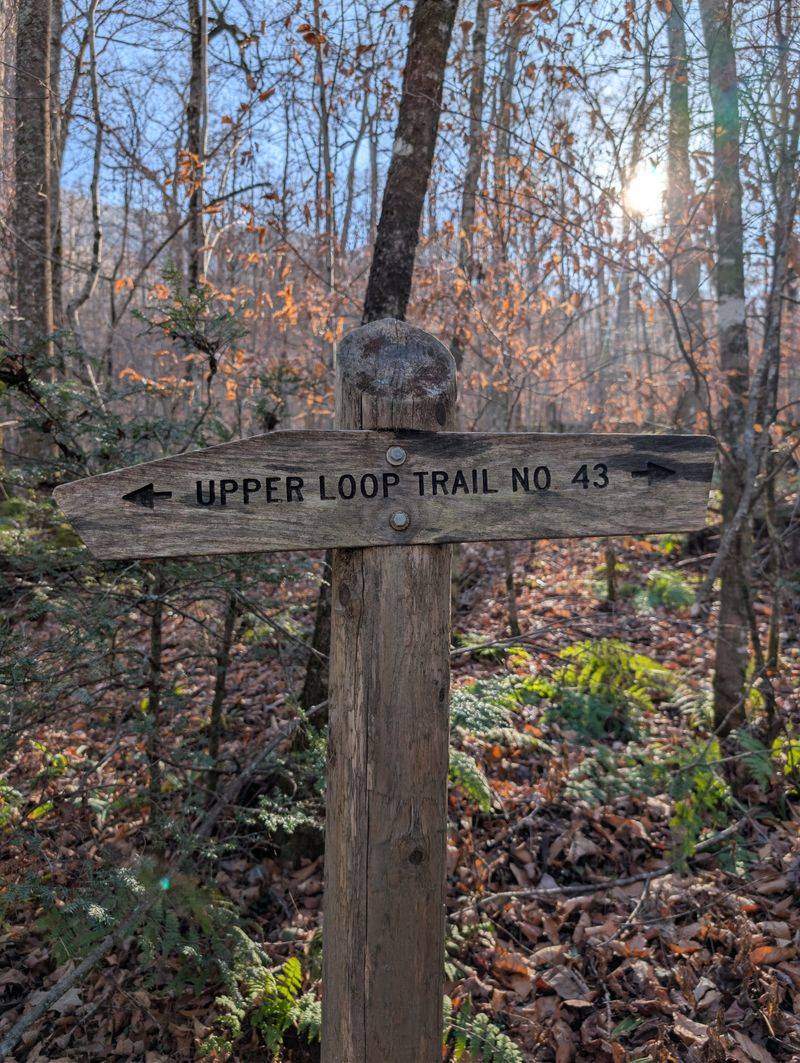
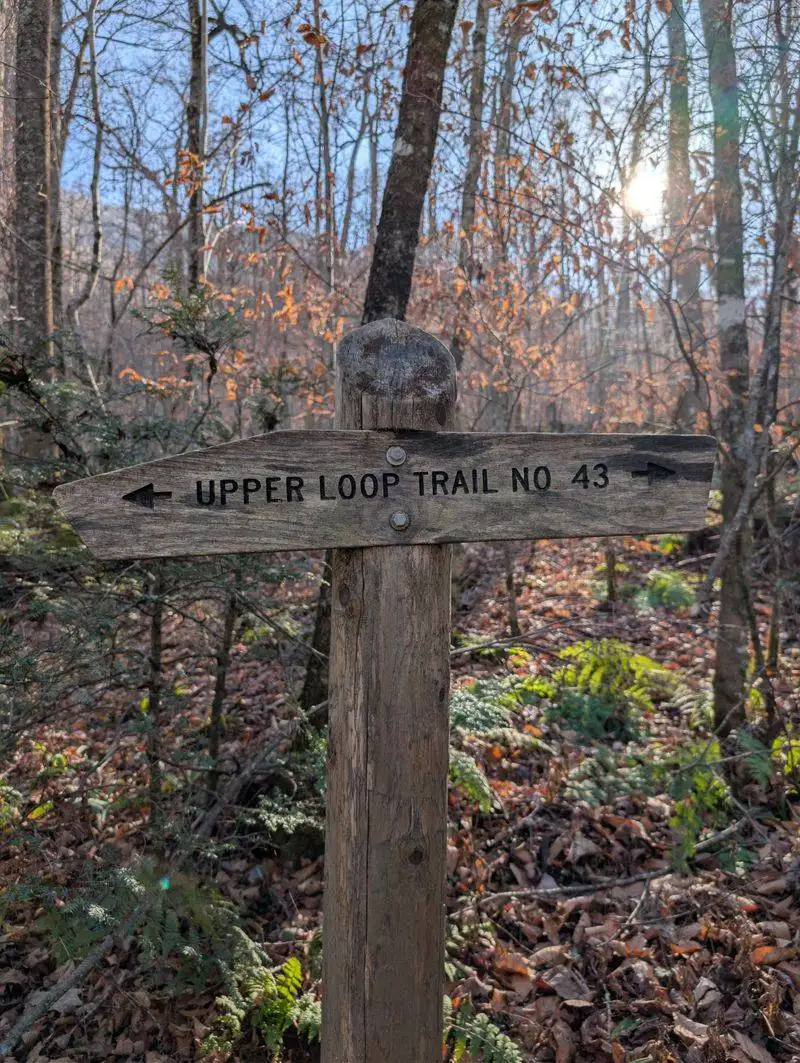
This trail is short and mostly gentle, but roots and steps make it moderate for some. Families, casual hikers, and anyone curious about old growth will feel welcome, especially along the lower loop.
The upper loop includes stair sections that can be challenging, particularly on wet days.
If mobility is a concern, take your time and consider turning around before the steeper portion. Trekking poles help with balance, and grippy shoes are your best friends after rain.
Benches and boulders appear often enough to encourage unrushed rests.
Solitude seekers will love early mornings, winter weekdays, and drizzly forecasts that deter crowds. Photographers find texture in any weather, while birders appreciate the layered canopy and riparian edges.
Kids often light up at the first sight of a trunk wider than their wingspan reach.
While not fully accessible, the maintained tread and clear signage reduce guesswork. If stairs feel like a hard stop, the lower loop still offers a satisfying experience with bridges, creeks, and towering views.
You will leave feeling accomplished without chasing mileage.
Safety notes and weather smarts
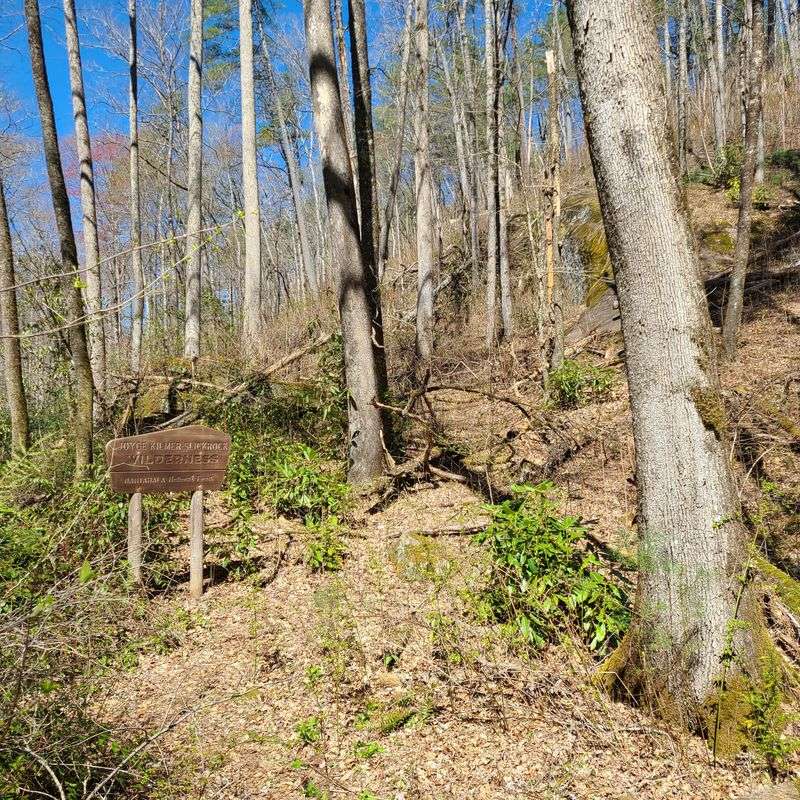
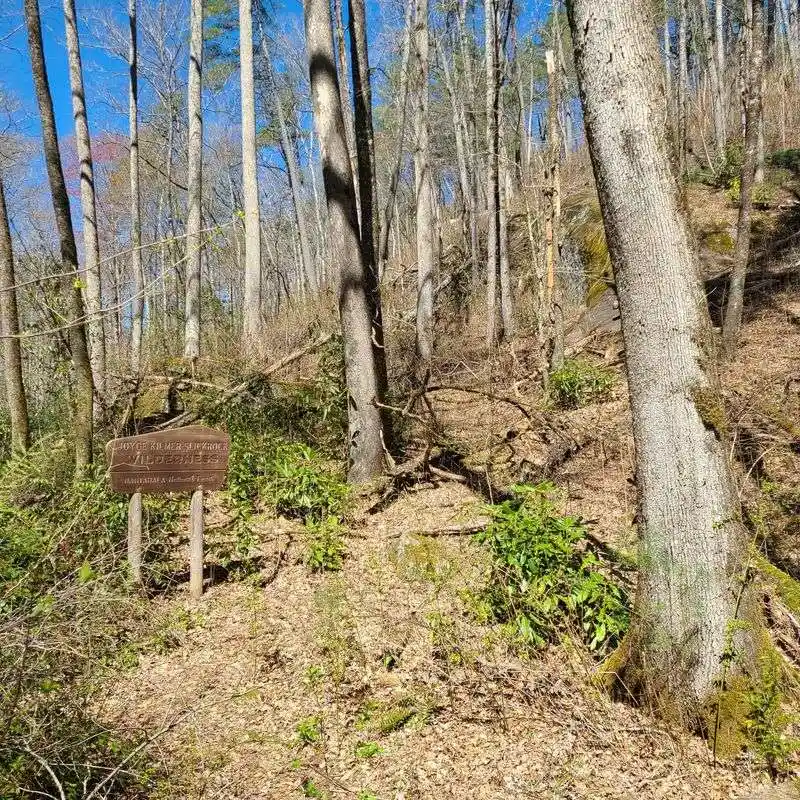
Weather in these mountains changes quickly, so pack layers and a rain shell even on sunny starts. The path can grow slick with wet leaves and exposed roots, which ask for deliberate steps.
After heavy rain, small crossings may run higher, and mud adds to the workout.
Leave no trace is not a slogan here, it is stewardship. Stay on trail to protect fragile soils and plant communities.
Pack out all trash and resist the urge to step off for shortcuts around puddles.
Black bears live in the region, but sightings are uncommon on this popular loop. Make noise as you go, give wildlife room, and store food securely in your vehicle.
Ticks are possible in warm seasons, so use repellent and do quick checks afterward.
Cell service is patchy, so treat your phone as a camera first, a safety tool second. Bring water, a simple first aid kit, and a headlamp even for a short hike.
Good preparation turns a fairytale stroll into a confident, calm adventure.
Photography and best light
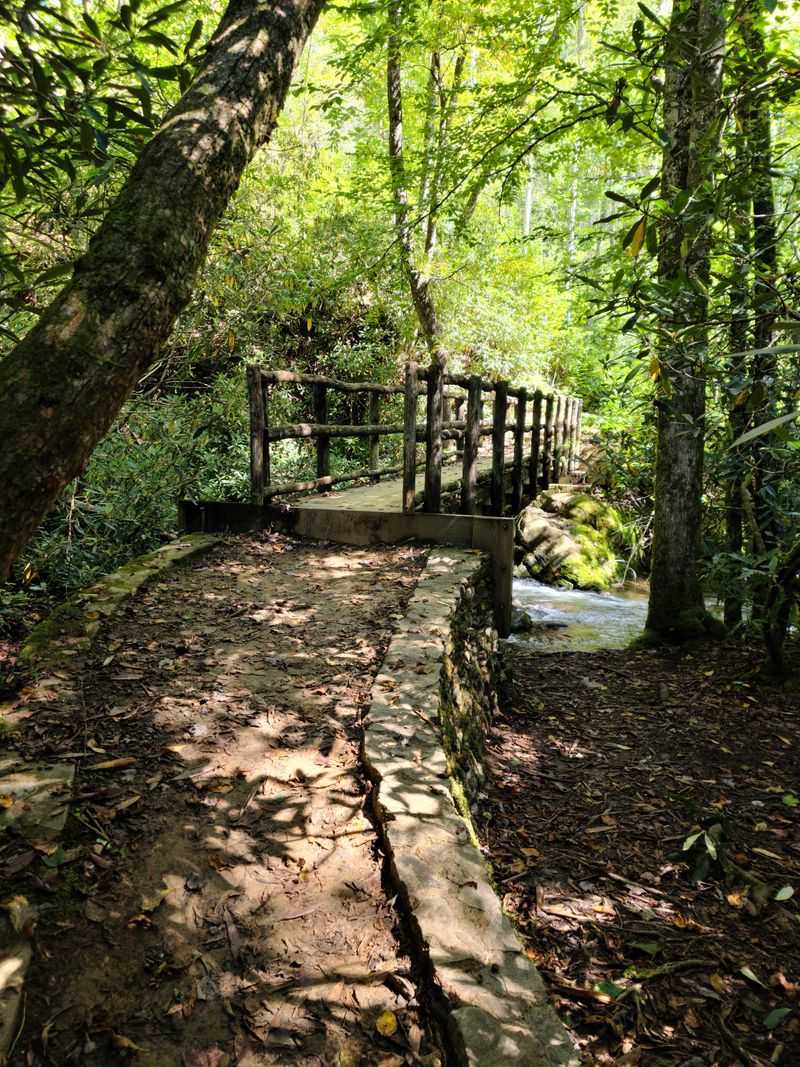
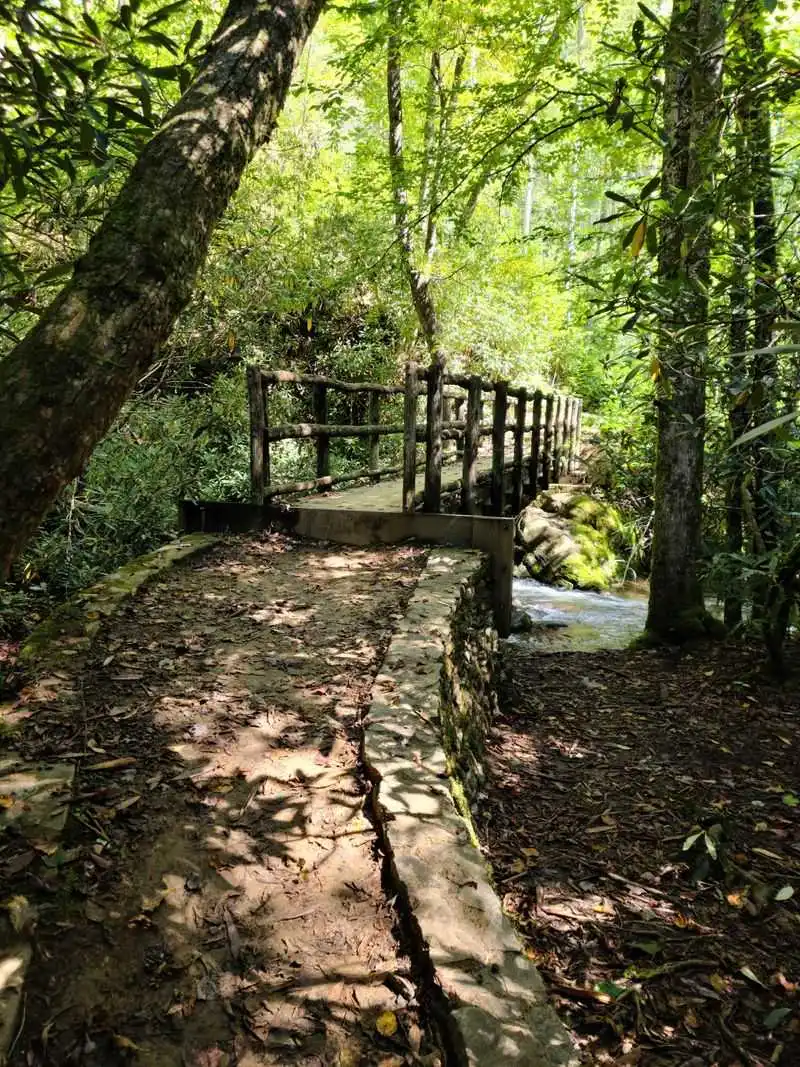
Morning and late afternoon light carve the forest into layers, giving trunks dimensionality and leaves a glassy glow. Overcast days are secretly perfect, flattening harsh highlights and saturating greens.
If mist rolls through, everything turns cinematic and your photos earn that fairytale mood without filters.
Pack a wide lens for scale and a short telephoto for bark textures and canopy compressions. A lightweight tripod unlocks silky creek shots and sharp images under the dim ceiling.
If you travel light, brace against a tree, exhale, and shoot slower shutter speeds.
Exposed roots create leading lines, while footbridges frame motion. Try low angles to emphasize tree girth and include a person for scale.
Shoot verticals to honor height, then switch to horizontals for context and creek narratives.
Respect others by stepping aside during long setups. Keep to the trail and avoid trampling moss to chase an angle.
Most of all, do not rush; the forest offers gifts to those who wait for light to move.
Family friendly tips and picnic spots
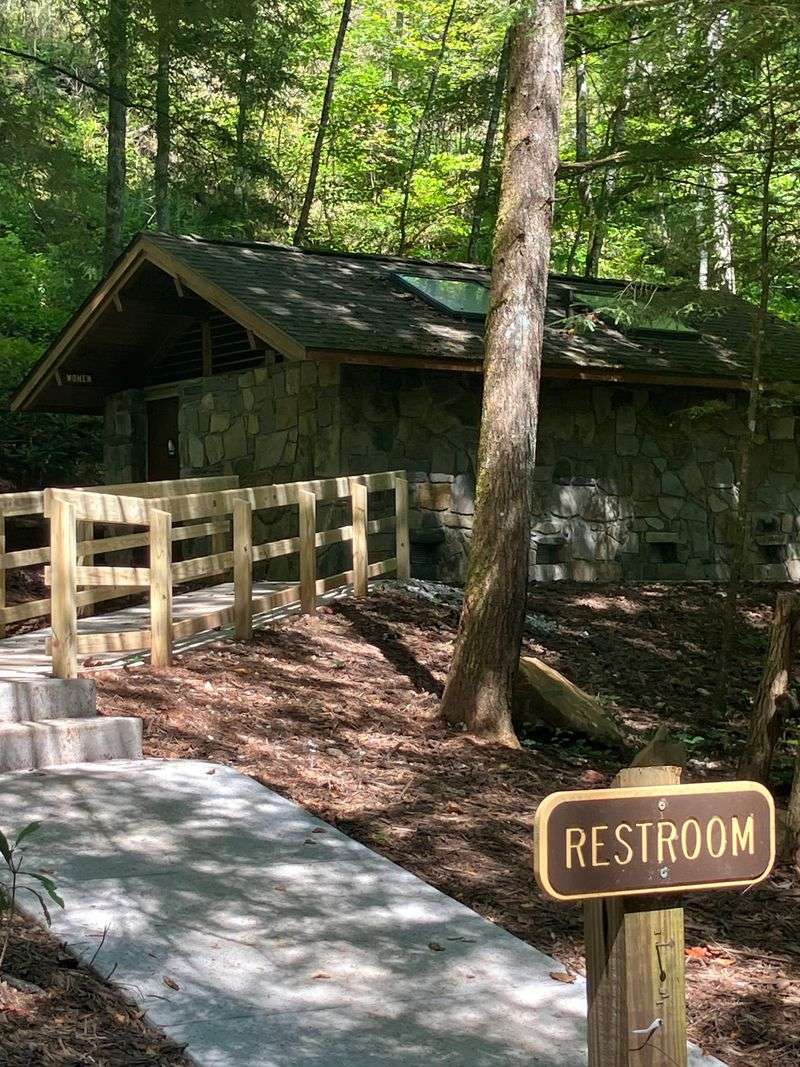
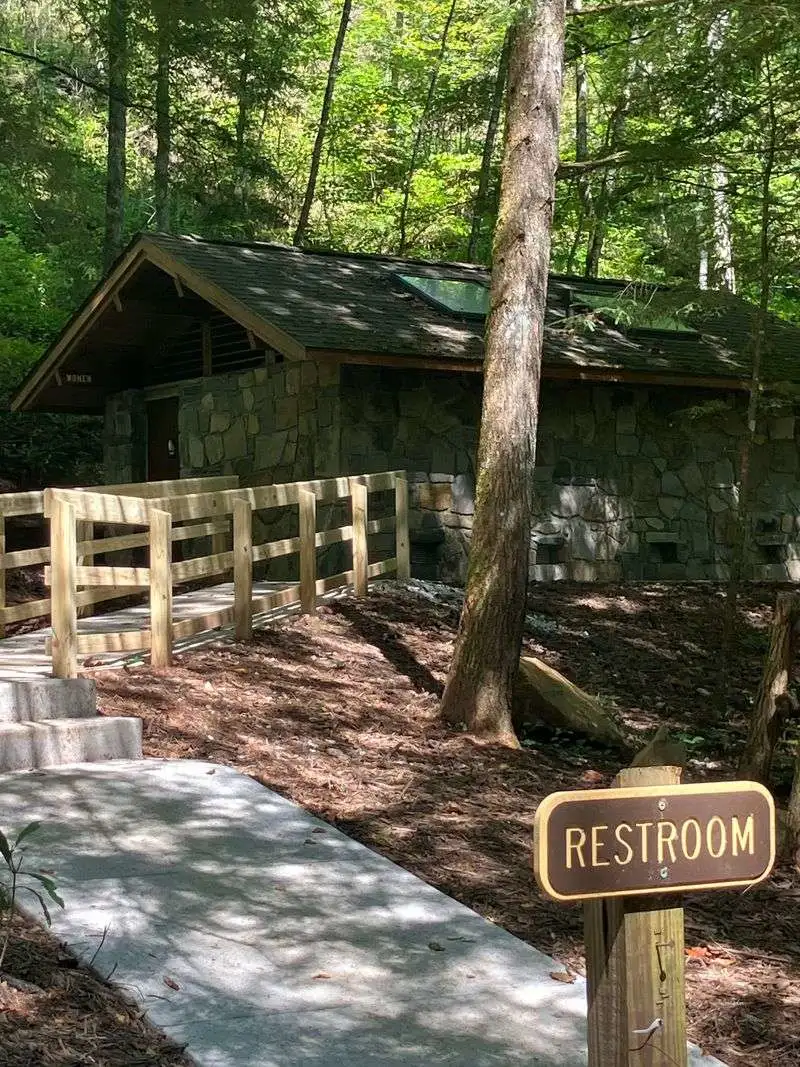
Families thrive here with a simple plan and flexible pace. Start with snacks at the picnic tables near the parking area, then warm up on the lower loop where bridges and creeks keep kids engaged.
Point out bark textures and leaf shapes to make the walk a scavenger hunt.
Sturdy shoes matter for small feet because roots are playful but grabby. Pack water, wipes, and a light layer because shade keeps temperatures cooler than expected.
Bathrooms at the trailhead are a gift, so make a quick stop before you head out.
Set a turnaround time rather than a distance goal. If the upper loop steps look like too much today, you will still have a complete experience on the lower section.
Celebrate tiny milestones like the first giant or the tallest fern.
Picnic after the hike to extend the calm. Keep food sealed to avoid attracting wildlife, and pick up every crumb.
On the drive out, ask everyone to share one thing they noticed; it turns the forest into a story your family wrote together.
Nearby logistics: ranger district and resources
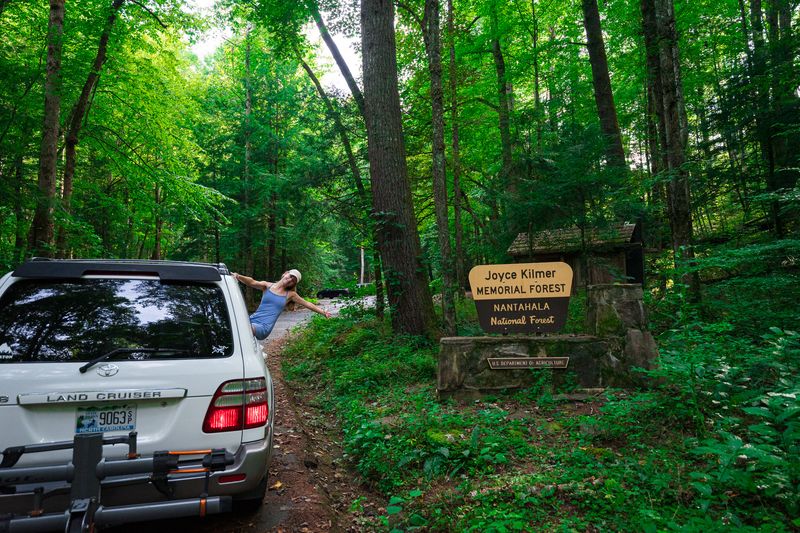
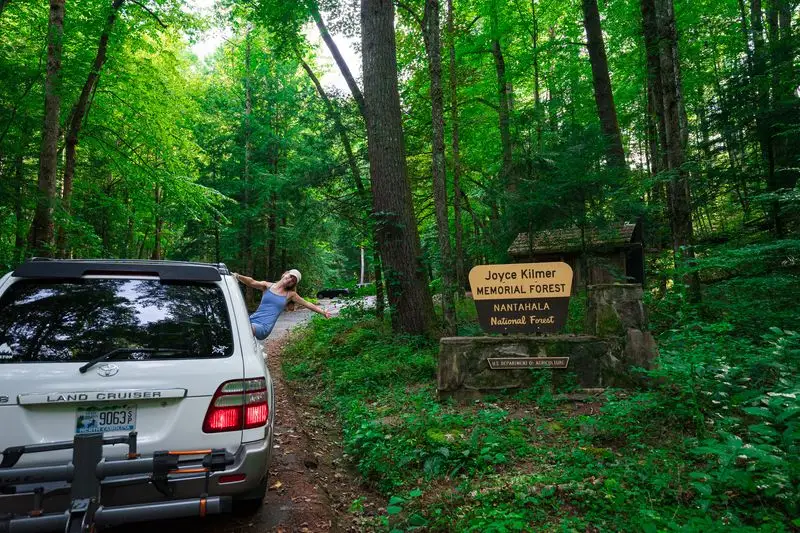
The forest sits within the Cheoah Ranger District of Nantahala National Forest, and the district office keeps practical details current. Hours often run 8 AM to 4:30 PM on weekdays, so call ahead if you need permits, trail updates, or road information.
The phone number listed for the district connects you with staff who know these hills well.
Before you go, download offline maps and save the official webpage for Joyce Kilmer. Printed maps at kiosks help with big-picture orientation, while trail signs make navigation easy in the moment.
Parking fills quickly on peak days, so backup plans reduce stress.
Facilities at the trailhead include restrooms and picnic tables, simple but welcome. There is no camping on the loop itself, but nearby national forest sites offer options if you want to linger in the region.
Robbinsville provides basic supplies, food, and fuel for last-minute needs.
If conditions shift, ranger updates can save a trip or redirect you to safer alternatives. Respect closures and advisories to protect both visitors and habitats.
With a little preparation, logistics fade into the background and the forest takes center stage.