Some rocks tell stories.
Judaculla Rock keeps secrets.
Hidden deep in North Carolina’s mountain country, this giant boulder is scratched, carved, and marked with more than 1,500 strange symbols that nobody has fully cracked. Not historians.
Not archaeologists. Not the countless curious travelers who stop to stare.
That’s what makes it so irresistible.
For centuries, people have wondered what happened here. Cherokee legends speak of a giant named Judaculla, a powerful being said to have left his mark on the land itself.
Others believe the carvings may have been messages, maps, or sacred symbols left behind long ago.
Stand in front of this ancient stone, and one thing becomes clear fast:
Whatever happened here mattered.
A Hidden Ancient Wonder in the Mountains
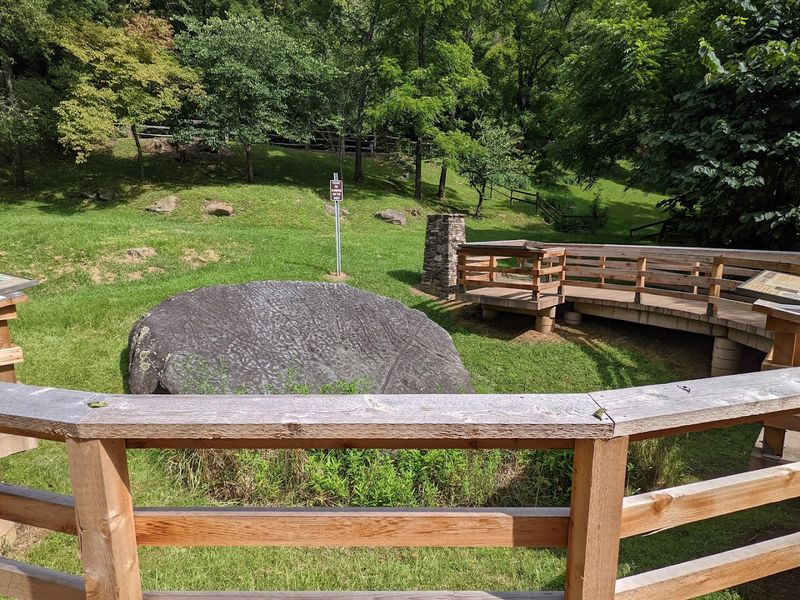
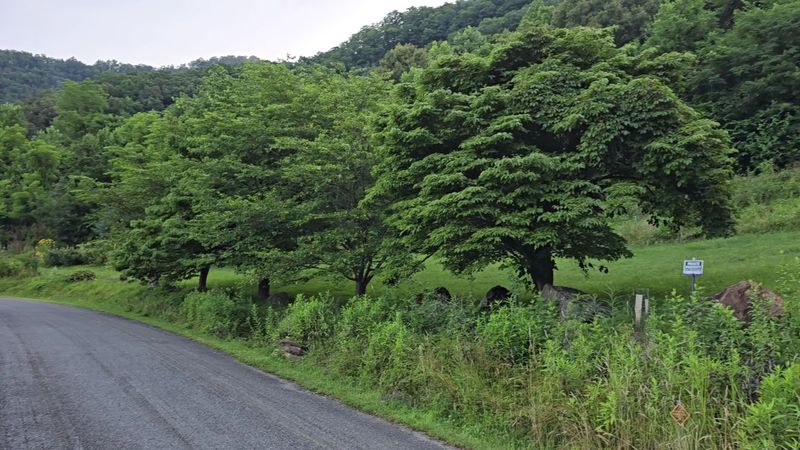
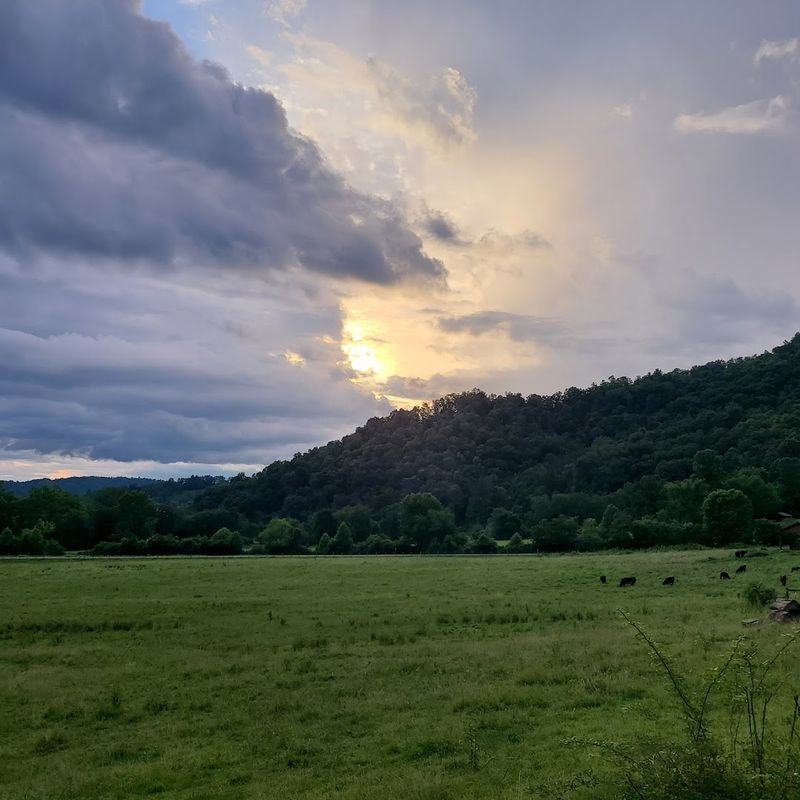
Most people drive right past this archaeological treasure without ever knowing it exists. Judaculla Rock sits quietly off Caney Fork Road, hidden among the rolling hills and farmland of Jackson County.
When you finally find it, the first thing that strikes you is just how ordinary the setting feels—until you see the carvings.
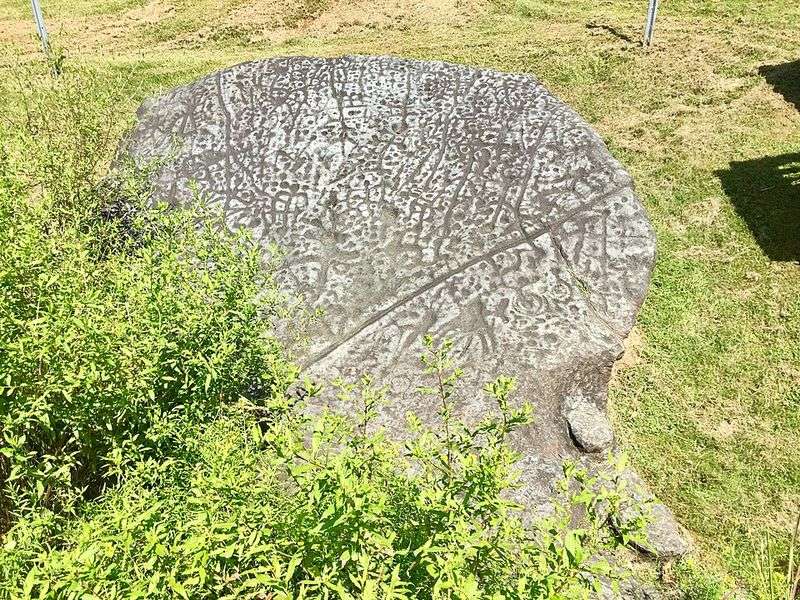
This massive soapstone boulder represents the largest known petroglyph site in all of North Carolina. Over 1,500 mysterious markings cover nearly every visible surface, creating a dense tapestry of symbols that have fascinated researchers for decades.
The rock measures roughly 14 feet long and sits partially buried in the earth, suggesting even more carvings might lie hidden beneath the ground.
Unlike some famous archaeological sites with crowds and gift shops, Judaculla Rock maintains an intimate, almost eerie atmosphere. You’re often alone with your thoughts, standing before centuries of human creativity and spiritual expression.
That combination of accessibility and genuine mystery makes it one of the state’s most intriguing historical landmarks.
What Exactly Is Judaculla Rock?
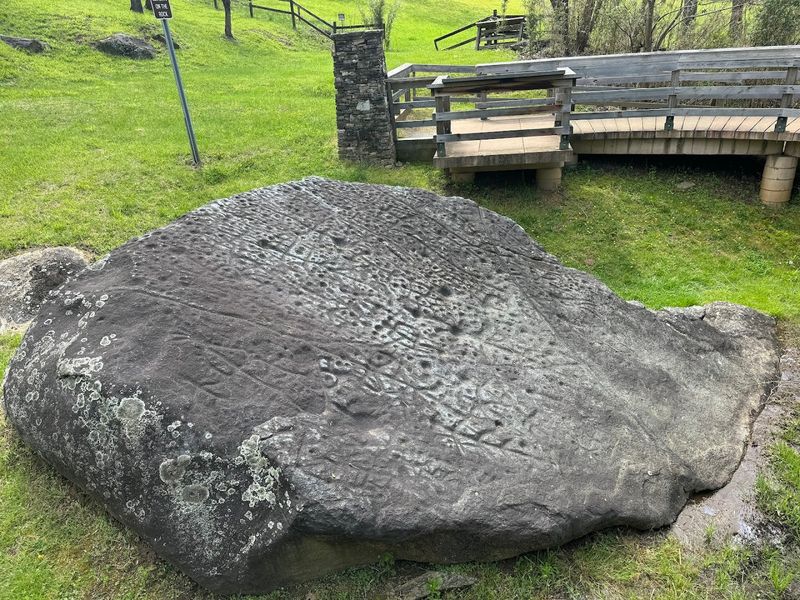
Picture a massive chunk of soapstone, roughly the size of a small car, lying in a peaceful meadow. Now imagine every inch of its surface carved with symbols—circles, lines, geometric patterns, cup marks, and shapes that defy easy description.
That’s Judaculla Rock in its mysterious glory.
Soapstone proved ideal for ancient carvers because of its relatively soft composition. Using harder rocks or antler tools, people could peck and scratch designs into the surface with patience and skill.
The sheer number of markings—over 1,500 documented symbols—suggests generations of visitors added their contributions over many centuries.
What makes the rock particularly fascinating is the variety of carving styles present. Some symbols appear deeply carved and weathered, while others show lighter, more recent work.
Archaeologists have identified cupules (small cup-shaped depressions), linear grooves, abstract designs, and patterns that might represent maps, calendars, or spiritual concepts. The dense layering of symbols creates a visual complexity that photographs can barely capture—you really need to see it in person.
The Cherokee Legend Behind the Name
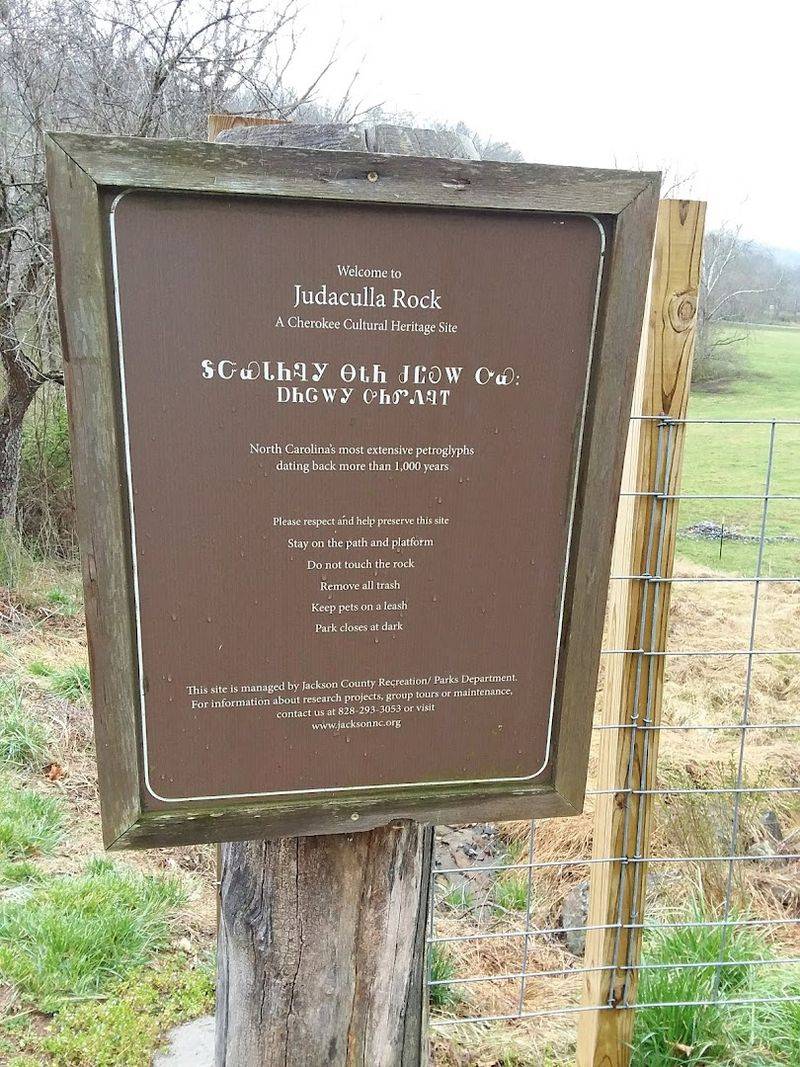
According to Cherokee oral tradition, the rock gets its name from a powerful supernatural being called Tsul ‘Kalu, anglicized as Judaculla. Described as a giant with seven fingers, this legendary protector watched over the mountains and the game animals that lived there.
Stories passed down through generations paint him as both fearsome and necessary—someone you didn’t want to anger but who kept the natural world in balance.
One legend claims Judaculla leaped from his mountain home and landed on this very rock, leaving his handprint and other marks in the soft stone. Other stories suggest the rock marked the boundary of his hunting territory or served as a warning to humans about entering sacred spaces.
These aren’t just quaint folktales—they represent genuine Cherokee spiritual geography and cultural memory.
For the Eastern Band of Cherokee Indians, this connection transforms the rock from a simple archaeological curiosity into something much deeper. It’s a physical link to their ancestors, their stories, and their understanding of the land they’ve inhabited for thousands of years.
Nobody Knows Exactly What the Carvings Mean
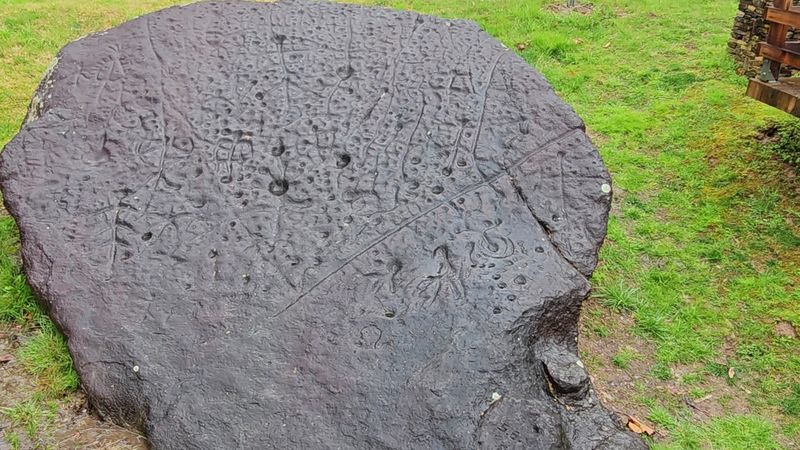
Here’s the frustrating truth that keeps archaeologists coming back: nobody can definitively decode what these symbols mean. Were they territorial markers warning other groups away?
Did they function as a spiritual calendar tracking seasons and ceremonies? Could they represent a map of the surrounding landscape or nearby water sources?
All these theories have supporters, yet none can be proven conclusively.
Some researchers see astronomical connections in the circular patterns and alignments. Others interpret certain symbols as representing animals, plants, or landscape features.
A few scholars suggest the rock served as a communal record-keeping site where different groups added their own contributions over time, creating a layered historical document.
The abstract nature of many carvings makes interpretation especially challenging. Unlike Egyptian hieroglyphs or Mayan glyphs that eventually yielded to code-breakers, these symbols don’t seem to follow an obvious pictographic system.
Perhaps they were never meant to communicate specific information to outsiders. They might represent personal spiritual experiences, vision quest records, or ceremonial markings whose meanings were shared only among initiated community members.
Dating the Rock’s Ancient History
Pinpointing exactly when people created these carvings presents another puzzle. Archaeologists generally estimate the markings span from roughly 500 A.D. to 1700 A.D., though some could be even older.
That represents over a thousand years of human interaction with this single stone—imagine how many generations came here with something important enough to carve permanently into the rock.
Dating petroglyphs proves incredibly difficult because you can’t use radiocarbon methods on stone itself. Instead, researchers examine weathering patterns, compare carving styles to other dated sites, and consider the broader archaeological context of the region.
The variety of carving depths and weathering suggests people returned to this rock repeatedly across many centuries.
Think about what that means historically. When the earliest carvings were made, Mayan cities still thrived in Central America and Europe was entering the Middle Ages.
People continued adding symbols right up until European colonization disrupted Native American societies throughout the Southeast. This rock witnessed the entire later prehistoric period and contact era in this region—it’s literally a carved timeline of human presence in these mountains.
More Than Just One Rock
While Judaculla Rock rightfully captures most attention, it’s actually part of a much larger archaeological landscape. Evidence of soapstone quarrying exists nearby, revealing that ancient people didn’t just carve this one boulder—they actively worked the surrounding deposits for practical purposes.
Soapstone’s softness and heat resistance made it ideal for bowls, cooking vessels, and tools.
Archaeological surveys have identified several other carved rocks in the general vicinity, though none match Judaculla’s impressive concentration of symbols. This suggests the area functioned as an important gathering place, perhaps where people combined practical quarrying activities with spiritual or ceremonial practices.
Imagine ancient workers taking breaks from shaping bowls to add their marks to the sacred rock.
The combination of practical quarrying and sacred carving tells us something important about how indigenous people understood their environment. They didn’t separate the spiritual from the everyday—a place could be both a resource site and holy ground simultaneously.
Understanding Judaculla Rock within this broader landscape helps us appreciate its role in the complex social and spiritual lives of the people who created it.
Why Historians and Archaeologists Keep Studying It
Academic interest in Judaculla Rock hasn’t faded since researchers first documented it in the 1800s. If anything, modern archaeology brings new questions and methods to this ancient puzzle.
The sheer density of carvings—packed across nearly every available surface—makes it statistically significant for studying regional petroglyph traditions and cultural practices.
Many experts consider this one of the most important petroglyph collections east of the Mississippi River. While western states boast numerous rock art sites, the humid Southeast hasn’t preserved as many examples.
Judaculla Rock offers a rare window into how eastern Native American groups used stone as a medium for expression and communication.
Modern technology adds new dimensions to the research. High-resolution photography, 3D scanning, and digital analysis can now reveal details invisible to the naked eye.
Some faded or weathered carvings only become visible under specific lighting conditions or through computer enhancement. Each new study potentially uncovers symbols previous researchers missed, keeping the academic conversation alive.
The rock hasn’t given up all its secrets yet, which ensures future generations of scholars will continue visiting and analyzing this remarkable site.
The Spiritual Importance That Still Remains Today
This isn’t just ancient history gathering dust in a textbook. For the Eastern Band of Cherokee Indians and other indigenous communities, Judaculla Rock retains genuine spiritual significance today.
It represents a direct connection to ancestors and traditional beliefs that continue shaping modern Cherokee identity and cultural practices.
Many Cherokee people visit the rock as part of maintaining their connection to traditional lands and stories. While specific ceremonial uses remain appropriately private, the rock’s cultural importance extends far beyond archaeological curiosity.
It stands as a physical reminder that Cherokee people have lived in these mountains since time immemorial, long before state boundaries or European settlement.
This living cultural dimension should shape how all visitors approach the site. Touching the carvings, taking rubbings, or treating the rock casually disrespects both its archaeological value and its ongoing spiritual significance.
Preservation isn’t just about protecting old carvings—it’s about honoring a sacred site that still matters deeply to indigenous communities. When you visit, remember you’re standing on ground that remains spiritually active and culturally significant to people whose ancestors created these mysterious symbols centuries ago.
Why Visiting Feels Like Stepping Into a Mystery
Standing before Judaculla Rock triggers an unusual emotional response. You’re looking at something undeniably human—someone stood exactly where you’re standing and carefully pecked these symbols into stone—yet their intentions remain completely mysterious.
That combination of connection and incomprehension creates a genuinely eerie feeling you won’t find at more “explained” historical sites.
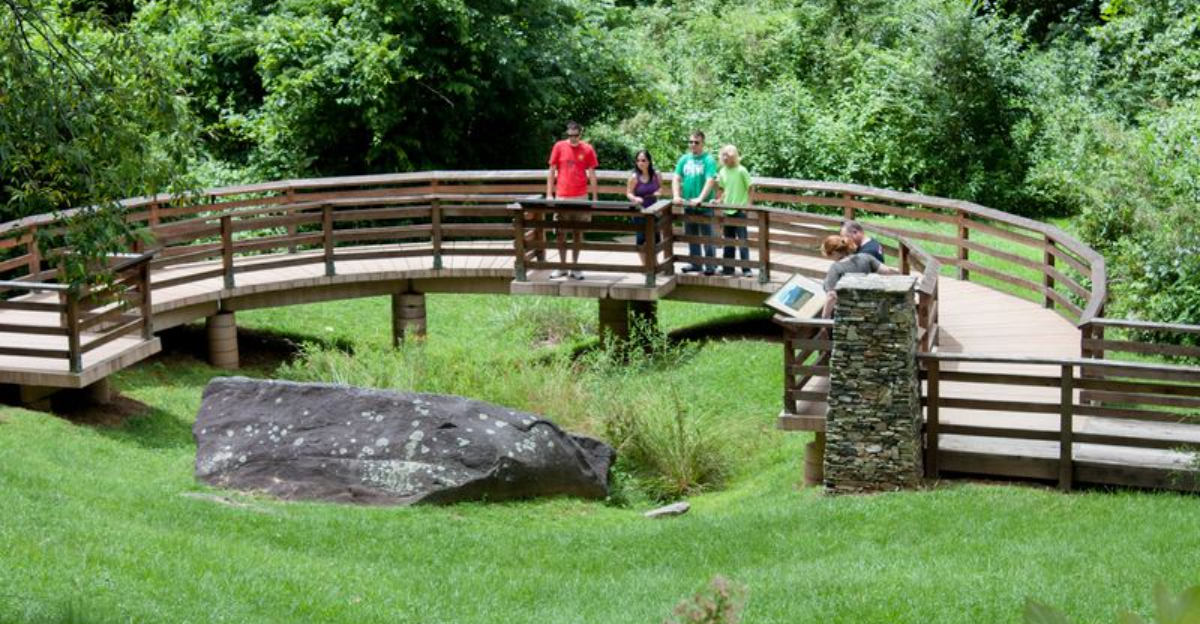
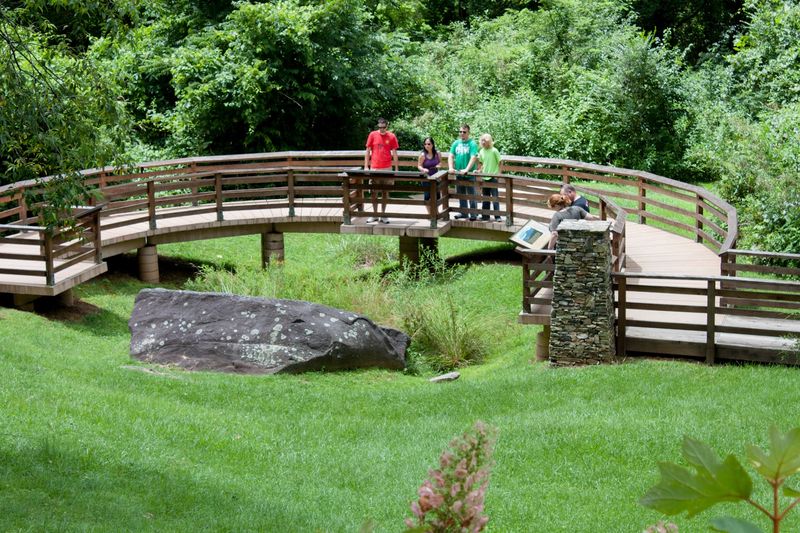
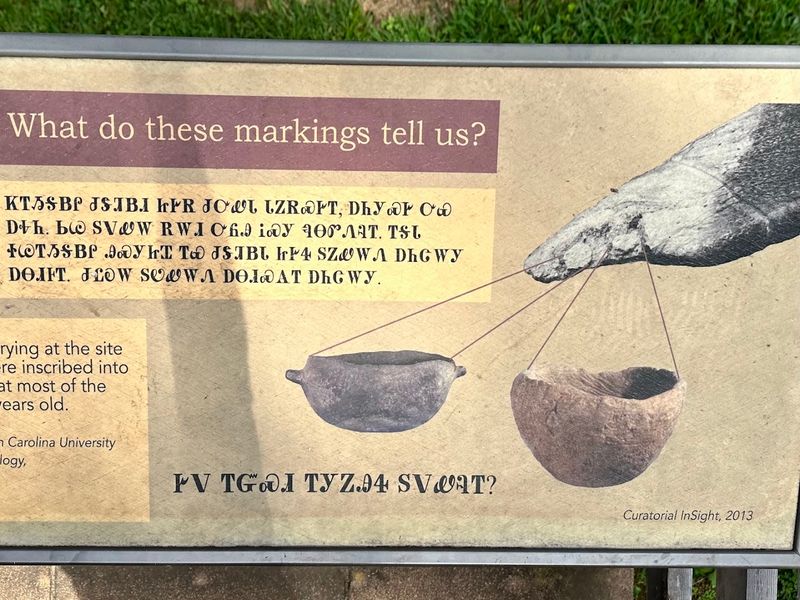
A wooden viewing platform keeps visitors at a respectful distance while allowing clear views of the carvings. Interpretive signs provide historical context and explain the Cherokee legends, but they can’t tell you what the symbols actually mean.
That incomplete understanding actually enhances the experience—you’re encountering a genuine mystery, not a neatly wrapped-up story.
The rural setting amplifies this feeling. Without crowds or commercialization, you can actually contemplate what you’re seeing.
Try visiting during quiet times when you might have the site to yourself. The silence, the weathered stone, the knowledge that countless people considered this rock important enough to carve—it all adds up to something powerful.
You leave with more questions than answers, which is exactly as it should be.
Visitor Info and Tips
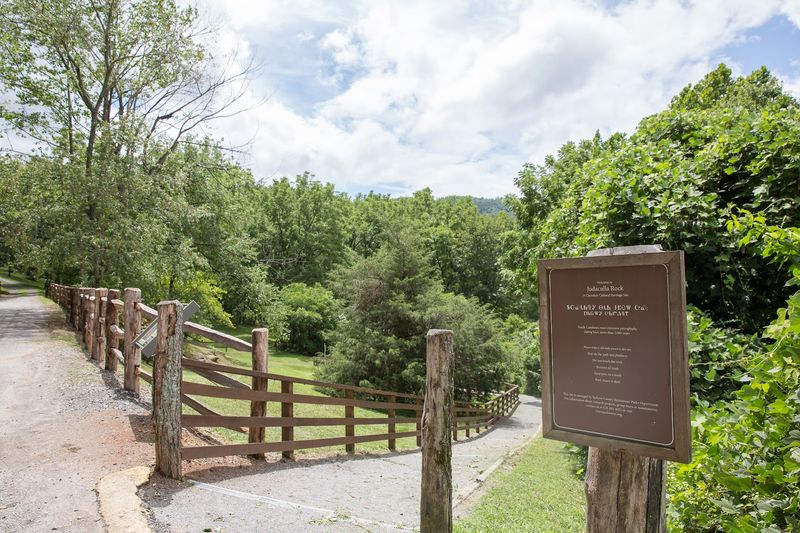
Planning your visit requires just a bit of preparation since Judaculla Rock isn’t a typical tourist attraction. The site sits at 552 Judaculla Rock Road in Cullowhee, North Carolina 28723, about 10 minutes from Sylva.
Follow Caney Fork Road and watch for signs—GPS should get you there, though cell service can be spotty in these mountains.
Admission is completely free, and the site remains open during daylight hours. Early morning or late afternoon provides the best lighting for seeing the carvings clearly, as low-angle sunlight creates shadows that make the symbols more visible.
Bring a camera if you want photos, but remember that rubbings are absolutely not allowed and damage the rock.
Respect the site by staying on designated paths and never touching the carvings. Natural oils from human hands accelerate weathering and damage these irreplaceable symbols.
The protective fence exists for good reason—archaeologists fight a constant battle against erosion and vandalism. Pack out any trash, keep voices low, and treat this as the sacred and historically significant place it is.
Your consideration helps preserve Judaculla Rock for future generations who deserve to experience this mystery themselves.