

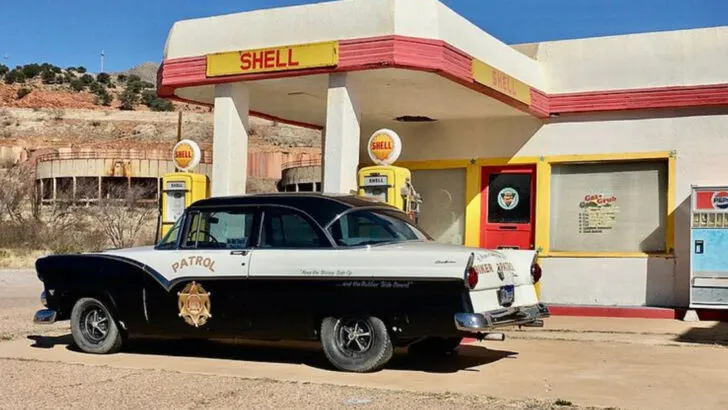
Step onto a sun baked stretch of old Route 66 where the desert holds its breath and time refuses to move.
In Lowell, Arizona, hundreds of vintage cars sit exactly where their drivers left them, gleaming softly under a relentless sky.
You can almost hear the gravel crunch, smell the hot oil, and feel the rumble of cross country travel that once defined this place.
Keep reading and you will see why this forgotten town still speaks loudly to anyone who loves the open road.
A Frozen Moment on Route 66
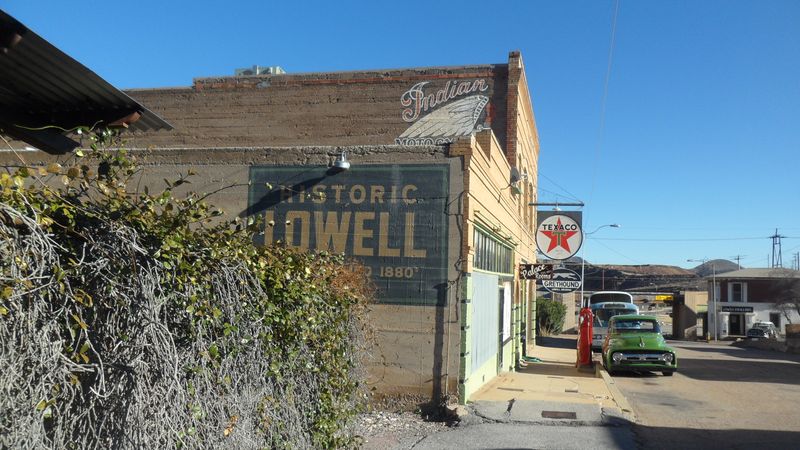
Imagine rolling into a sunburned block where the gas pumps are silent and neon tubes hang slack, yet the road still points west with stubborn confidence. That is Lowell today, a fragment of Route 66 that looks paused in mid sentence. Every car feels like a sentence left unfinished, chrome punctuation catching the light.
As you walk, you notice how tires slump into the dust and wind slips through open windows like a whisper. You do not need a museum placard to feel what this place means. The stories are parked in plain sight, each hood ornament a little banner of a past journey.
Even if you arrive skeptical, the stillness gets under your skin. The sun paints long lines over fenders while ravens draw circles in high blue air. Somewhere a door creaks and then everything returns to a quiet that makes you listen harder.
You start piecing together the old rhythm of cross country travel from the clues left behind. A cracked diner menu in a window, a stack of chipped hubcaps, a faded motel arrow that still points nowhere. The road did not leave, it just got quiet enough to hear.
Stand still and you can feel a caravan of yesterday drifting past. Truckers shifting gears, families counting miles, teenagers chasing midnight. Lowell holds that noise like a record that stopped spinning mid song.
No one curates the chaos and that is part of the magic. Dust softens the sharp edges and the cars look both abandoned and attentive. You walk between them like a respectful guest at a reunion.
There is no velvet rope here, only time and heat doing the slow work of memory. You look down the street and see decades collapsing into one glowing afternoon. Route 66 is still here, just quieter, and it is listening to you too.
Where Is Lowell, Arizona?
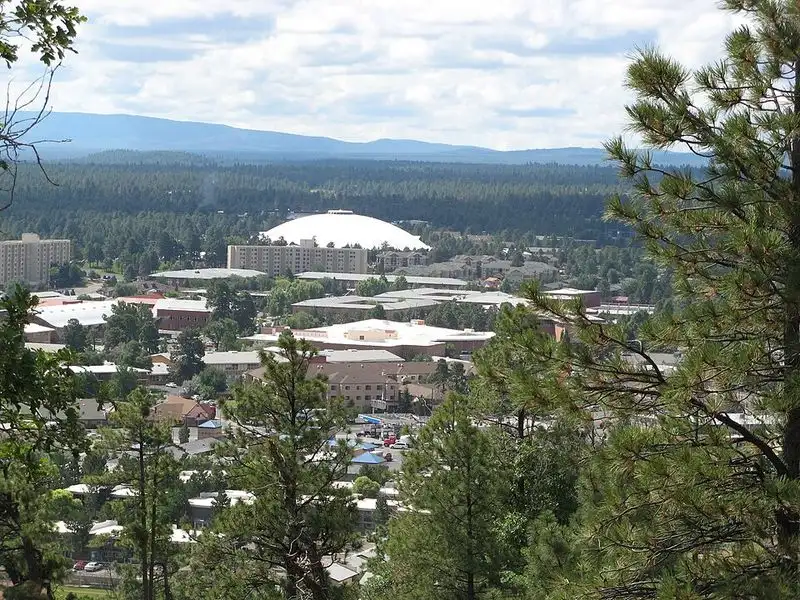
Head east out of Kingman and the landscape stretches in long, sunlit lines until a modest grid of storefronts and garages appears. That is Lowell, tucked in Mohave County where the desert keeps its secrets. You will not find loud attractions, just a quiet main street flanked by history on four bald tires.
Before the interstate, this corridor funneled travelers between California dreams and the interior heartland. Gas was cheap, the sky was wide, and a chrome bumper looked like hope. Lowell served as a patient pit stop, timing its heartbeat to the rhythm of passing engines.
Then I-40 shouldered past and took the traffic with it. You can still feel the draft of that change if you stand by the old curb. The town did not argue, it simply sagged into the shade and waited.
Today, the drive out is simple if you let the old road guide you. Follow the remnants of Route 66 as it loops away from the interstate’s clean efficiency. The pavement grows rougher and the signs get friendlier.
Kingman sits close enough for fuel, food, and a bed if you need it. But Lowell rewards those who linger and watch the light move. There is a calm here that modern highways forgot how to keep.
Look west and you will see ranges stacked like folded maps. Look down and there are oil stains that have not budged in decades. You are standing where countless journeys paused for breath.
If you are new to desert towns, bring water, patience, and soft footsteps. The streets feel like a porch where neighbors once waved. Even now, with fewer voices, the welcome remains.
The Rise and Fall of a Route 66 Town
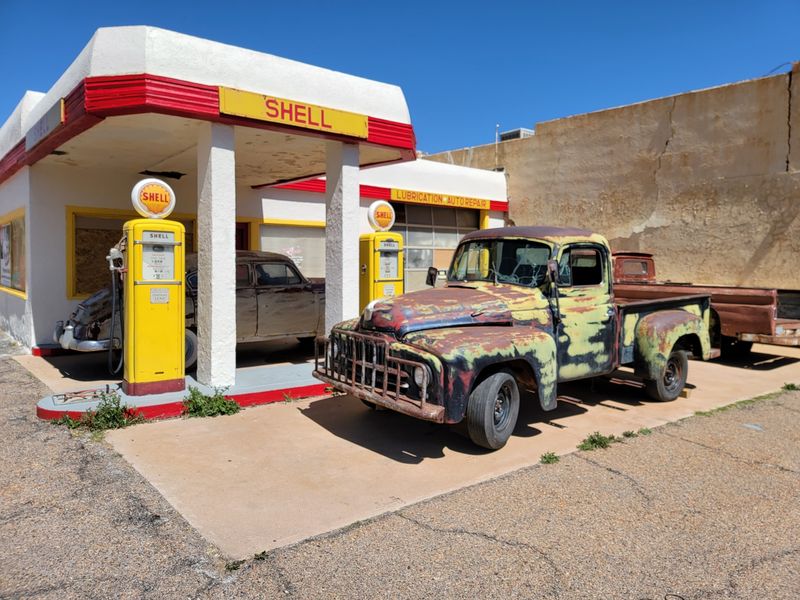
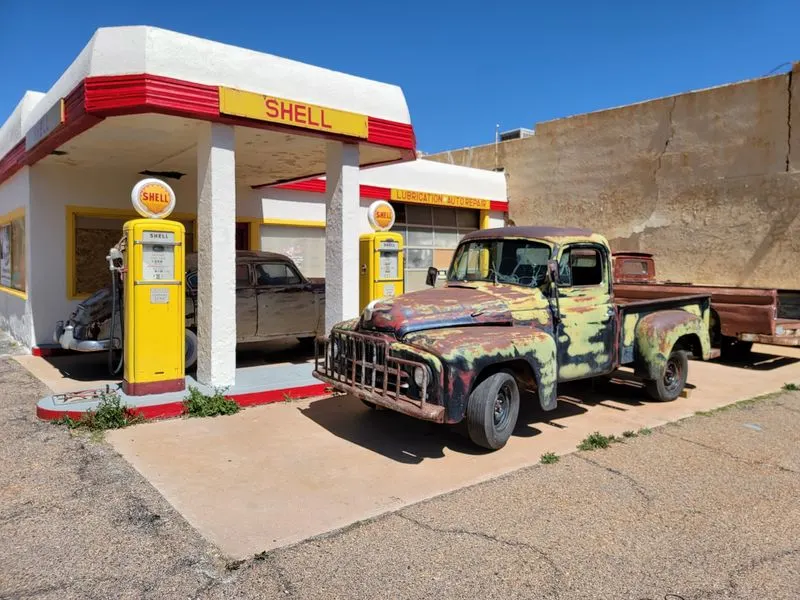
Lowell grew up with Route 66 when the road was young and open to promise. In the 1930s through the 1950s, the town pulsed with tires and tips, postcards and pancakes. Mechanics worked with sleeves rolled while motel bells chimed like tiny victories.
Every summer added another layer of rubber to the street and another story to the diner counter. Families mapped vacations around roadside neon and postcard sunsets. A small town could survive nicely on gasoline, pie, and friendly directions.
Then came the 1970s and the mathematics of speed. Interstate 40 promised straighter lines, faster miles, and fewer stoplights. When the ramp opened, the river of cars simply changed channels.
In Lowell, the shift felt instant even if it took months to count. Empty booths showed through windows and wrenches slept longer between jobs. The hum that once warmed the town became a thin thread of quiet.
Shops tried to hold on with discounts, brighter signs, and hopeful smiles. But empty rooms are hard to rent when the road vanishes over the horizon. By the time locals looked up, the parade had moved and the music went with it.
What remained were the faithful and the practical. A few houses, a stubborn garage, a jukebox that refused to die. The desert is patient with small lights, but business needs a crowd.
So the cars parked, the doors locked, and the wind rehearsed its lines. That is how a bustling stop became a memory you can still walk through. The road did not betray Lowell, it just forgot to slow down.
Why Hundreds of Vintage Cars Were Left Behind
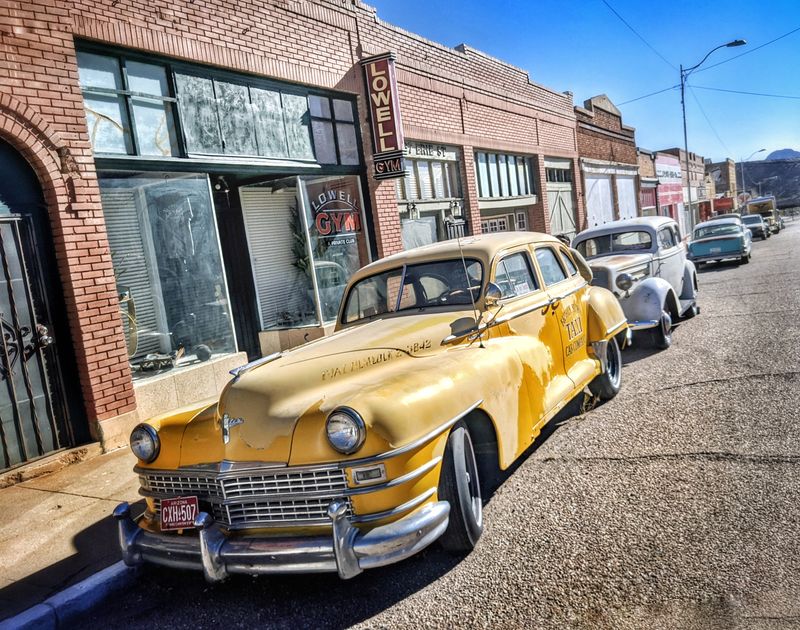
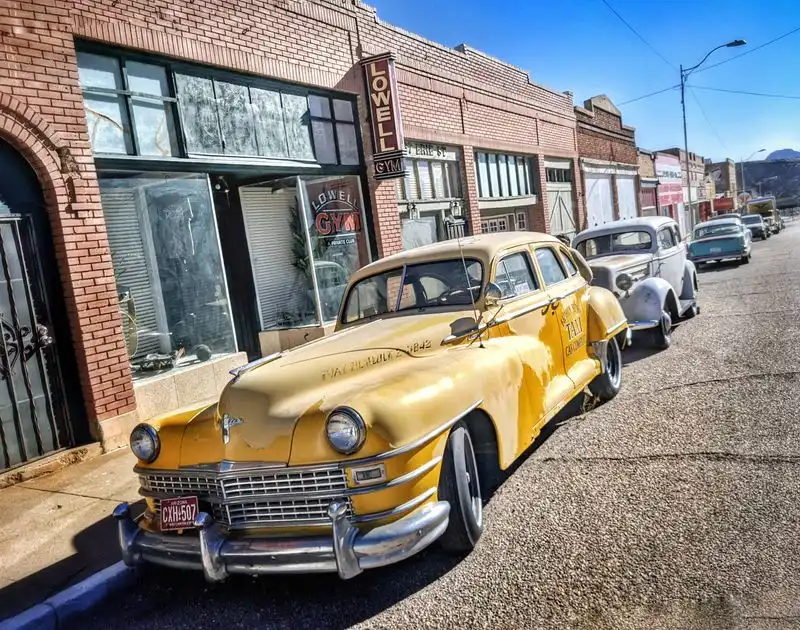
When the traffic thinned, the math stopped working for small garages and towing companies. Bills stacked higher than the value of stalled projects. Cars that were once temporary guests became permanent residents.
Some owners moved on and never returned for repairs they could no longer afford. Others left vehicles on consignment, hoping for buyers who never arrived. Paperwork went missing, titles got tangled, and the desert kept calm.
Private lots turned into improvised storage while shop doors closed for good. Mechanics walked away with heavy hearts and grease still under their nails. The metal was cheaper to abandon than to relocate.
Over time a pattern emerged across Lowell. A Buick behind a shuttered bay, a Ford truck sleeping by the chain link, a row of Chevys sunning beside a fallen sign. The effect is accidental art and unintended archive.
The desert did not judge, it just preserved what was left in place. Owners aged, families moved, and records blurred into stories. Vehicles stayed because staying was easier than solving the past.
Today the town looks like a tow yard paused mid shift. Each car carries the weight of a decision postponed. What you see is not curated, just the residue of commerce that stopped breathing.
It is strange and beautiful in a way that sneaks up on you. The randomness creates its own order, like a deck of cards frozen mid shuffle. You read the scene and hear a quiet yes to leaving things be.
Types of Cars You Will Find in Lowell
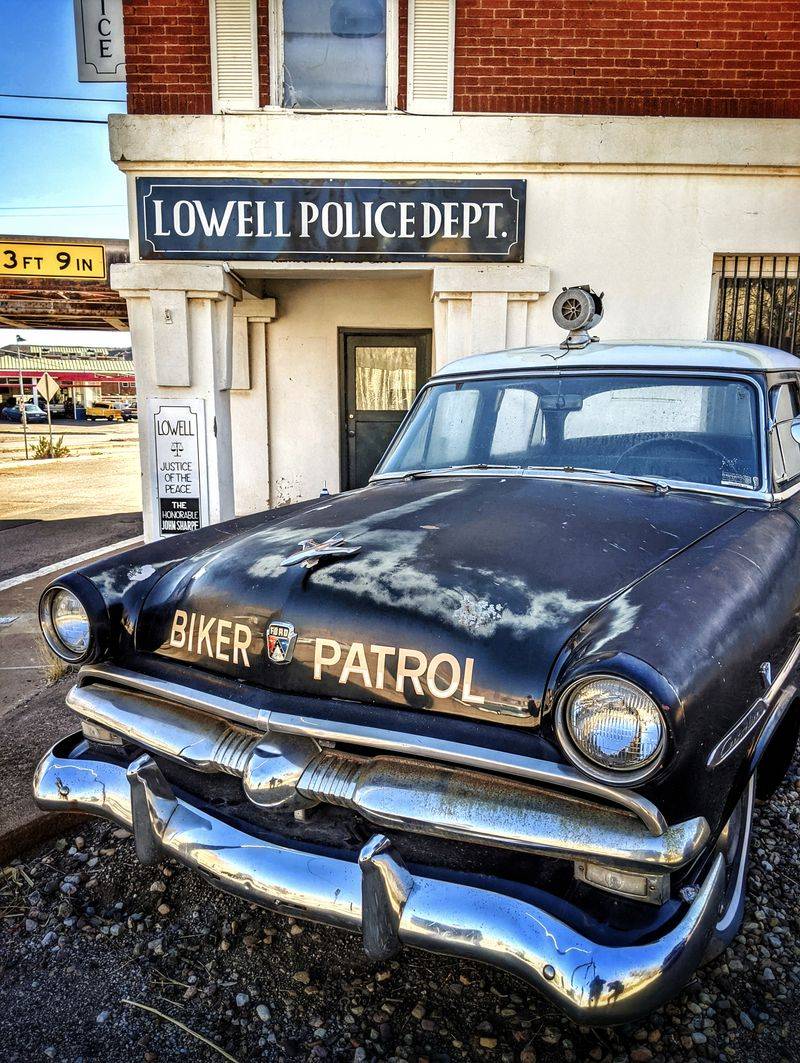

Walk the blocks and the variety jumps out like a showroom rearranged by time. There are 1930s sedans with tall roofs and elegant grilles standing at attention. Their headlights look like thoughtful eyes under sun bleached brows.
Next come the 1940s trucks with honest faces and straight shoulders. You can picture them hauling lumber, hay, or refrigerators for new homes. They wear dents like merit badges and do not apologize.
The 1950s arrive with fins and confidence, two tone paint peeking through dust. Chrome letters still spell out names that once felt futuristic. You can almost hear jukebox bass thrumming through whitewall tires.
Then the 1960s roll up with cleaner lines and muscular patience. A fastback here, a convertible there, the promise of weekend speed. Even sitting still, these cars lean forward like sprinters at the mark.
Look closer and you notice little details that survived the years. Hood ornaments reach like swans, badges glint with proud fonts, and door handles feel sculpted for a handshake. Original paint peels in maps that tell their own geography.
Some interiors are threadbare but complete, radios still tuned to old stations in imagination. Steering wheels hold the ghost of every mile gripped and released. The smell is a blend of dust, vinyl, and sun cured rubber.
It is not a single brand parade but a cross section of American roads. Chevy beside Ford beside Dodge, plus the occasional imported curiosity. Each one represents a chapter of daily life rather than a museum crown jewel.
Remarkable Preservation in the Arizona Desert
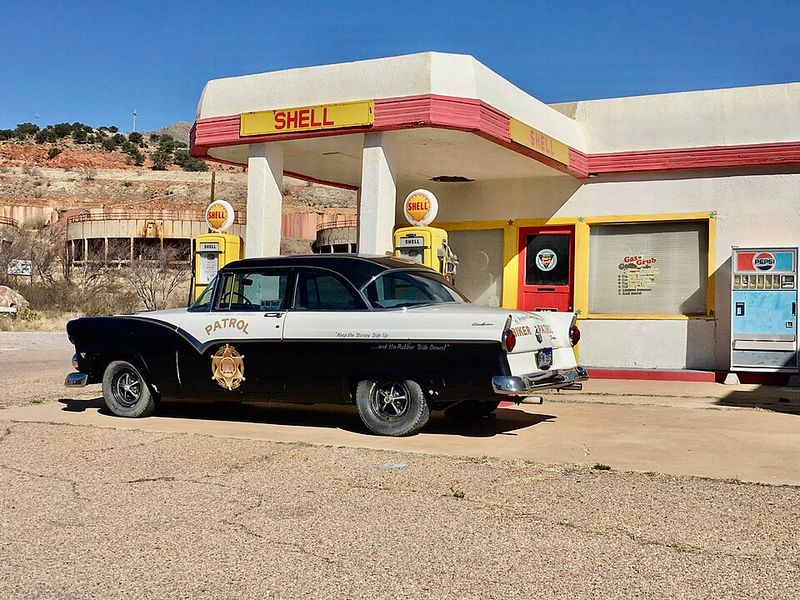

The desert can be harsh, but it is kind to metal in quiet ways. Low humidity slows rust to a patient crawl, letting paint and chrome outlast expectation. Glass survives like a stubborn memory, still clear enough to frame the sky.
In Lowell, that climate turned neglect into preservation. Where rain would rot a roof elsewhere, here it only fades the color. Bolts still thread, doors still clunk, and trim still grips the fenders.
Even rubber holds on longer than it should. Tires deflate with dignity instead of crumbling outright. The sun bakes everything evenly, leaving a soft matte that photographers chase.
Cracks spider along dashboards but stop shy of destruction. Upholstery splits into honest seams rather than disintegrating. Underneath, frames often remain solid enough to surprise a careful tap.
That is why so many lines and shapes remain legible. You can read the curve of a fender like a sentence and the crease of a hood like a paragraph. Time edits, but it does not erase.
Elsewhere, weeds would climb through floorboards and swallow the evidence. Here, sparse scrub stands back and lets the silhouettes speak. Dust is the only curator, laying a gentle filter over steel and glass.
Preservation by climate is not a strategy, just a fortunate accident. Still, the effect is profound when you see an emblem shine after decades. You realize the desert has been guarding these cars like quiet treasure.
The Cars as Time Capsules of American Life
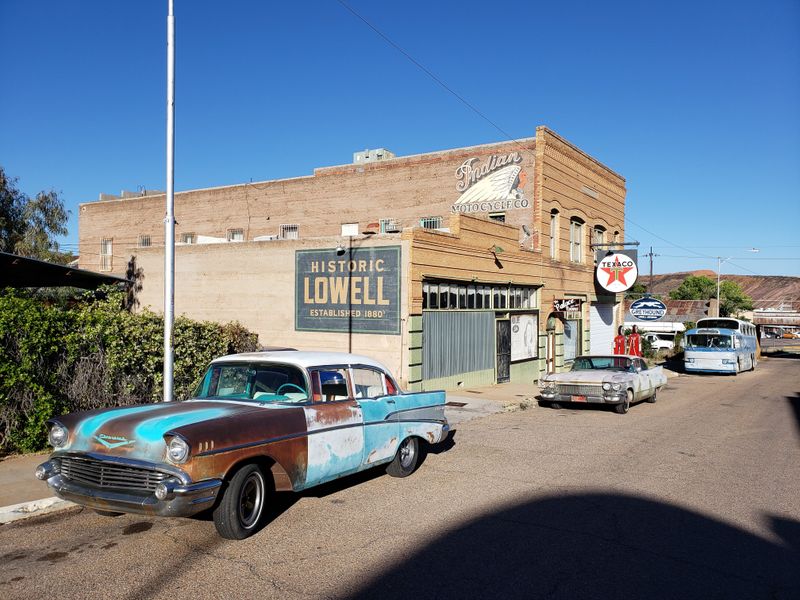
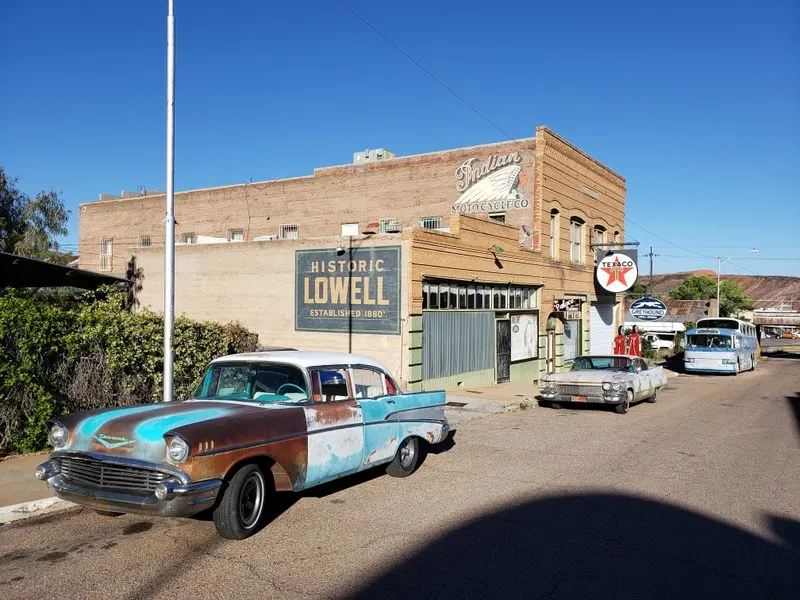
These cars were not collector dreams when they pulled into Lowell. They were daily tools, family haulers, and weekend hopes on four wheels. The dignity they carry now comes from work, not polish.
A sedan with a worn bench seat still feels like road trip songs and spilled milkshakes. A delivery van whispers about early mornings and coffee in paper cups. A service truck remembers the heft of tools and the relief of a fixed radiator.
Look at the dashboards and you will see the design of everyday decisions. Simple gauges, practical knobs, and radios meant to keep you company. Nothing performs for a museum, everything serves a purpose.
The paint colors echo kitchen appliances and diner counters from the same years. Seafoam, buttercream, cherry, and charcoal tell their domestic stories. Even the patina reads like a scrapbook of weather and routine.
Stand beside one long enough and your own memories start answering back. Maybe you recall the smell of warm vinyl or the click of a turn signal. Maybe you picture a parent’s hands steady on the wheel.
These are time capsules without glass covers. You are allowed to feel their weight without touching a thing. The distance is respectful but intimate, like hearing a favorite song from the sidewalk.
Lowell gathers these fragments into a chorus of ordinary heroism. Not show cars, but life cars. That is why the rows feel so human and so moving.
Lowell vs. Other Automotive Ghost Sites

Car museums curate perfection with bright lights and soft ropes. Every vehicle gleams like a final draft under careful climate control. It is a wonderful way to study design without distraction.
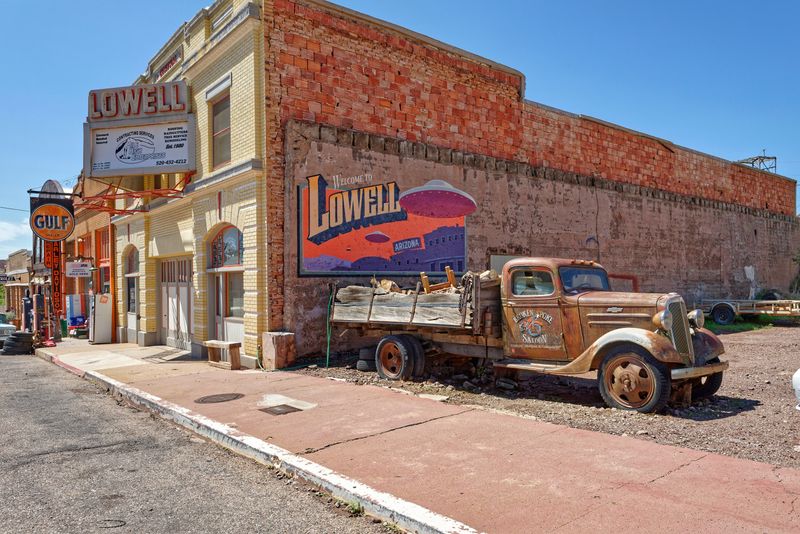
Lowell offers the opposite and that is its rare gift. Nothing is labeled, staged, or polished into silence. The cars live where they stopped, with dust as their only guard.
Other Route 66 spots lean into restoration, neon rebirth, and souvenir smiles. Lowell leans into truth, the awkward kind that refuses quick fixes. What you see is the cost of progress written in steel.
Because it is not curated, surprises wait around every corner. A badge half hidden by weeds, a mirror still reflecting a cracked sign, a glovebox ajar with brittle maps. You become your own docent without realizing it.
Film crews and photographers love both worlds for different reasons. Museums deliver control, while Lowell delivers atmosphere. Here, the background does not behave, it participates.
Comparisons are not about better or worse, just intention. One preserves ideal forms, the other preserves context. Lowell’s context happens to be the most honest part.
If you want to understand why people fall for old cars, come see both. Study the lines in a museum, then walk these dusty blocks. The lesson completes itself when the desert steps in.
Photography and Visual Storytelling Appeal
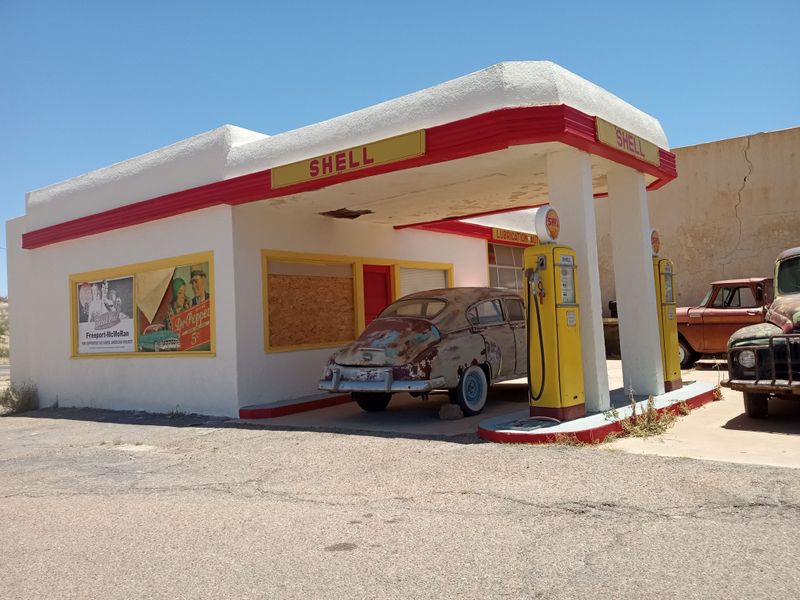
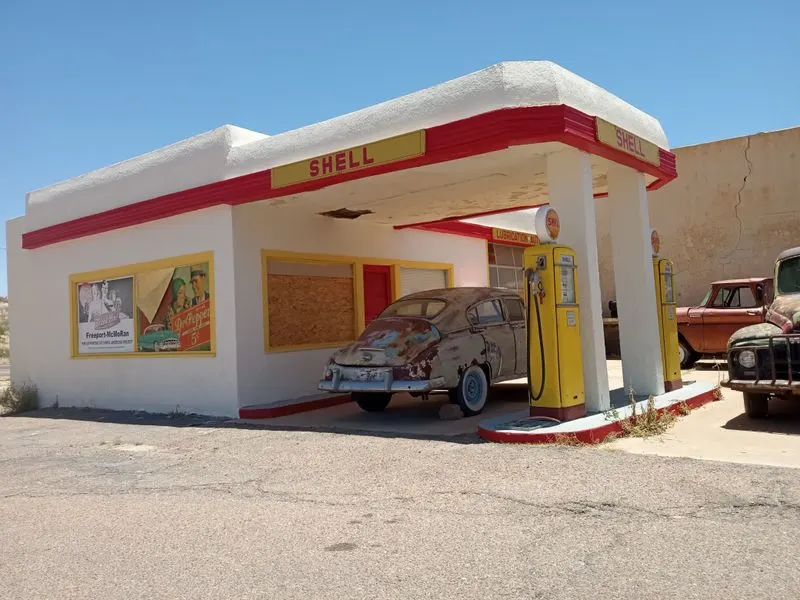
If you carry a camera, Lowell feels like generous ground. Every angle offers a conversation between light and metal. Morning brings soft edges, while late afternoon carves drama into every crease.
Long rows of cars create perfect leading lines for compositions. Collapsing roofs frame backgrounds with texture and grit. Dust hangs in the air like a filter you did not have to buy.
Color palettes swing from oxidized reds to teal and cream, with chrome sparking like punctuation. Patterns appear in hubcaps, louvers, and tailfin echoes. Even the blank spaces read like intentional negative space.
Filmmakers chase that authenticity for establishing shots and quiet scenes. A single dolly move down the street tells an entire history. The set dressing is already done by time and weather.
For you, the simplest move is to slow down. Watch reflections slide across a windshield as clouds drift. Wait for a gust to lift the dust and reveal crisp edges.
Respect matters here more than perfect exposure. Stay on public vantage points and let long lenses do the rest. The story is powerful without crossing fences.
Leave with images that feel earned instead of staged. Lowell teaches patience, and patience teaches seeing. That lesson follows you long after the shutter clicks.
Is Lowell Abandoned or Still Owned?
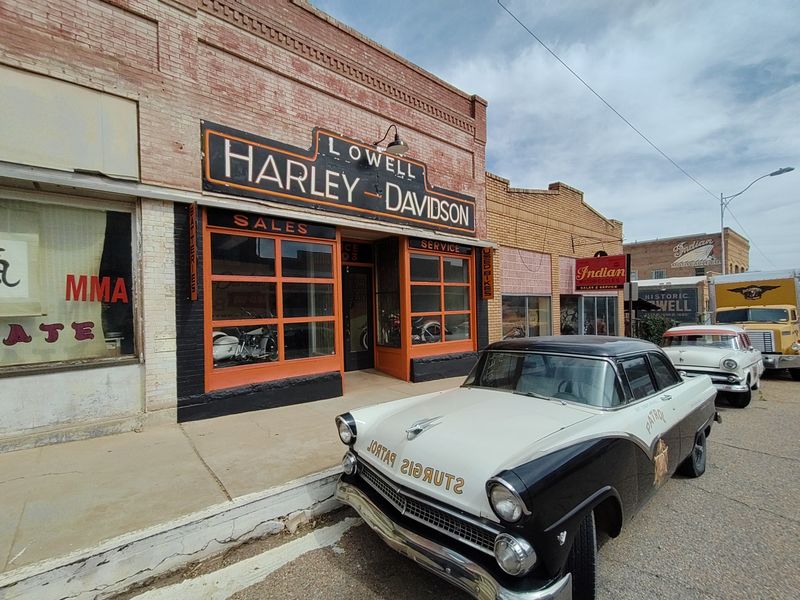
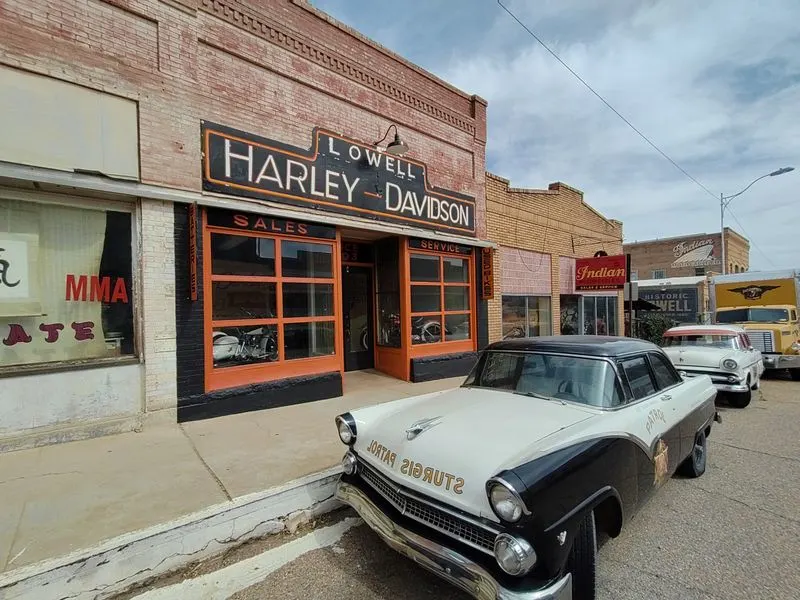
From a distance, Lowell can look like a place left entirely to the wind. Up close, you notice small signs that say otherwise. No Trespassing posts, fresh locks, and the occasional working yard reveal ownership.
This is a living ghost town rather than an open air museum. Land parcels and vehicles still belong to people, families, or businesses. The quiet does not equal free access.
Some owners check on lots when time allows, others keep their distance. Paper trails are complicated, but ties remain. The cars exist in a limbo of memory and responsibility.
For visitors, the rule is simple and respectful. Enjoy the view from public roads and obvious easements. Do not climb fences or open doors that are not yours.
Photography from public space is usually fine, and a wave to a nearby neighbor goes a long way. If you are lucky, someone might share a story from the old days. But invitations should come from them, not from your curiosity.
The sense of abandonment is part of the atmosphere, but it is not an excuse. Think of Lowell as a front porch where the owner stepped inside for a moment. Your job is to wait outside politely.
Ownership keeps the place real, even with the dust. The cars are not props, they are belongings. Treat them as such and the town will keep welcoming careful eyes.
Visiting Lowell: What Travelers Should Know
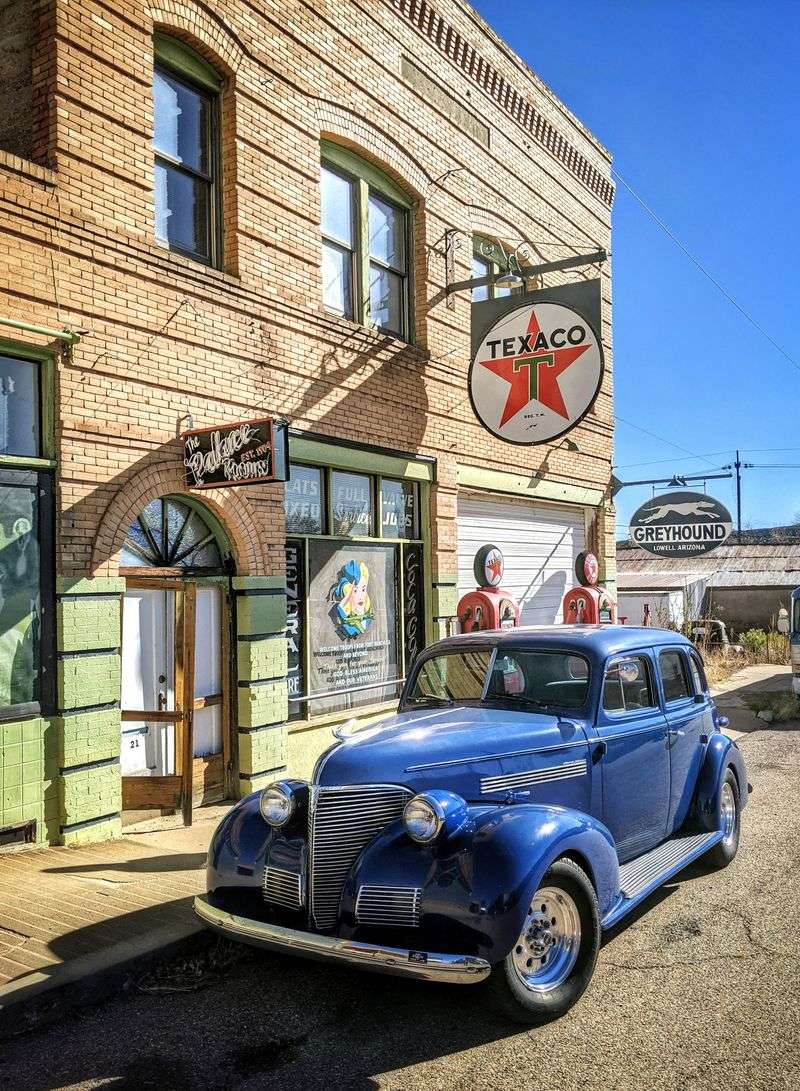
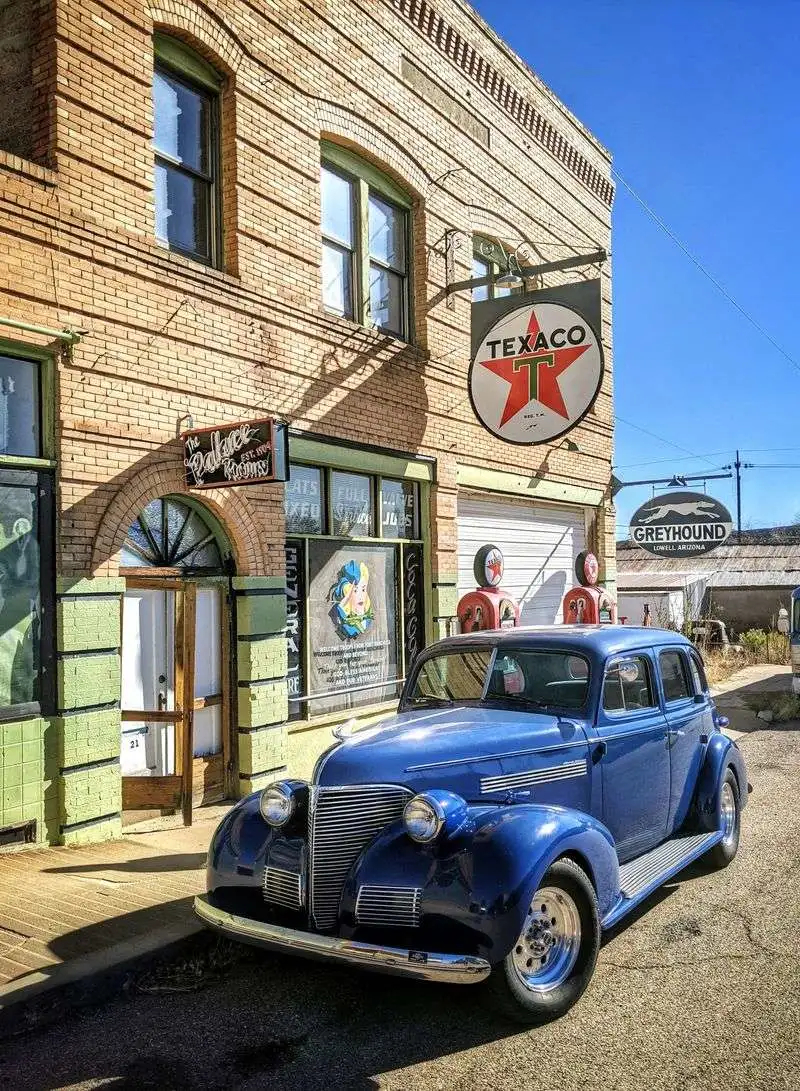
Plan your visit like you would any desert stop. Bring water, a hat, and patience for heat that builds by noon. Mornings and late afternoons are kinder for both light and comfort.
Stick to public roads and obvious pull offs. Fences and chained gates mean do not enter. A telephoto lens will do more for you than a brave step over a barrier.
Shoes matter on cracked asphalt and gravel. Watch for nails, glass, and hearty desert plants with opinions. Move slowly so your eyes have time to catch small details.
There are no ticket booths or brochures waiting. Cell service can be patchy, and restrooms are not guaranteed. Kingman is your closest reliable base for supplies.
Leave everything as you found it. Do not lean on cars or try door handles for the thrill. The preservation you admire depends on restraint.
If you meet a property owner, be kind and curious without assuming access. A friendly chat might open a gate, but it should never be expected. Respect keeps the welcome mat from blowing away.
Finally, give yourself time to listen. The wind, the creak of old metal, and your own footsteps tell the story. Lowell repays patience with moments you will not forget.
Lowell vs. Route 66 Lore and Legend
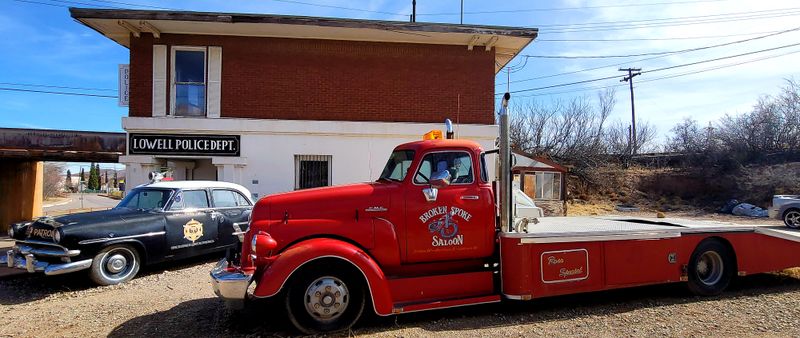
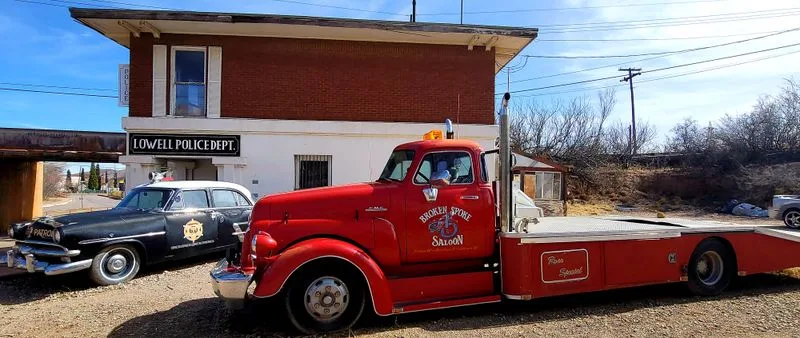
Route 66 carries a suitcase full of legend. Neon motels glow in memory, diners clatter cheerfully, and convertibles cruise at sunset. That version is true, but it is only half the road.
Lowell shows the cost of speed and the quiet after applause. It does not rehearse nostalgia, it tests it. When you stand here, the myths fall away and the facts feel stronger.
The town is not restored, it is revealed. Rough edges, missing pieces, and honest fatigue replace the postcard shine. You see the road’s shadow as clearly as its light.
That tension makes Lowell compelling. You can love the romance and still accept the consequences. The highway dream grew up and left marks behind.
Think of it as the back room of the American road story. The boxes are open, the labels crooked, but everything is real. You do not need a narrator to understand.
When you drive away, the legends will return to their glow. Yet your memory will hold the dust and silence like a counterweight. That balance is a gift, not a contradiction.
Lowell belongs with the lore, not apart from it. The truth and the tale ride the same highway. Here, they finally share the wheel.
Why Lowell Matters Today
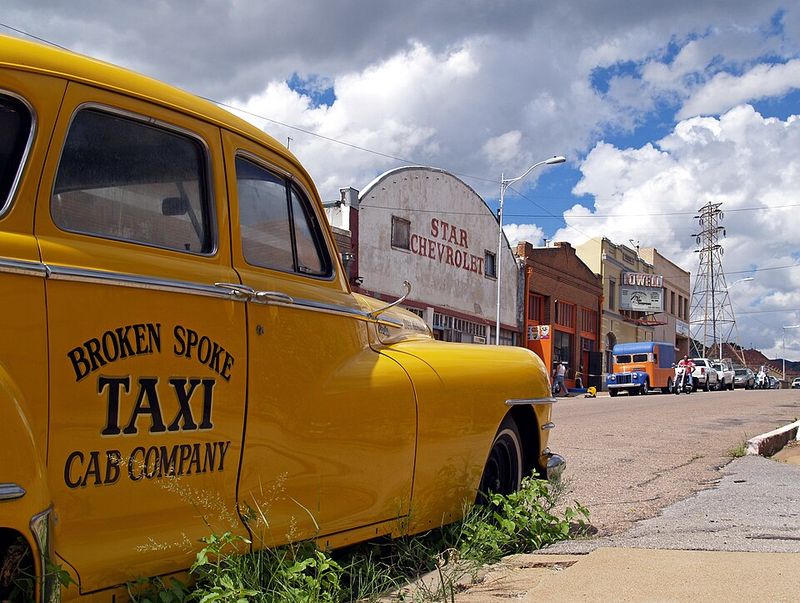
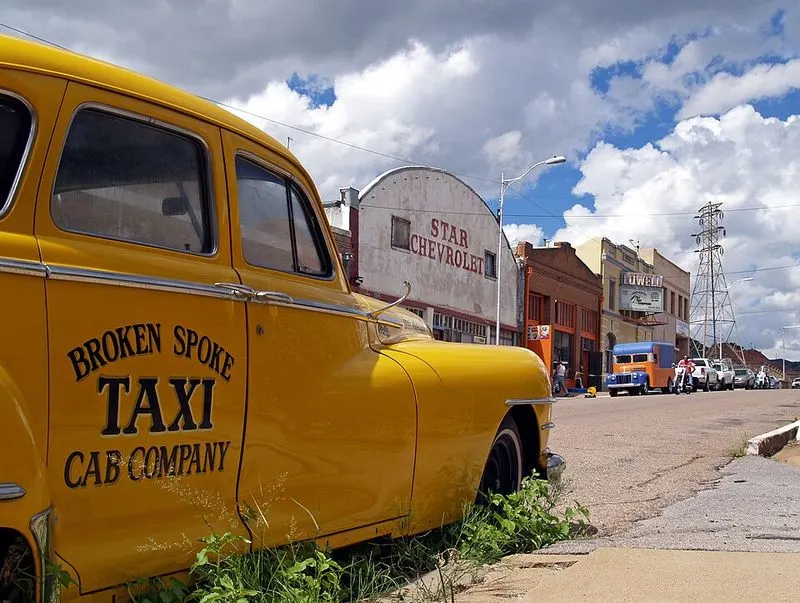
Lowell matters because it shows how quickly a map can rewrite a town. One new highway and the conversation shifts, leaving good people and serviceable machines in the quiet. That is a lesson worth standing in.
It also matters because American car culture is bigger than chrome trophies. Most lives run on dependable sedans and battered pickups. Here, those everyday heroes get the spotlight they earned.
Urban planners can read this landscape like a case study. Artists can read it like a poem. Travelers can read it like a letter from the past addressed to the present.
Preservation does not always mean restoration. Sometimes it means stepping back and letting weather have a say. Lowell proves that restraint can feel like respect.
When you visit, you participate in a fragile exchange. Your care helps keep the scene authentic for the next pair of eyes. The town asks little and offers much.
In a world that moves too fast, this place calibrates your pace. You notice more, hurry less, and leave lighter. That sounds simple, but it sticks.
Lowell is not a relic, it is a reminder. The road is powerful, choices ripple, and stories endure. That is reason enough to keep looking west.