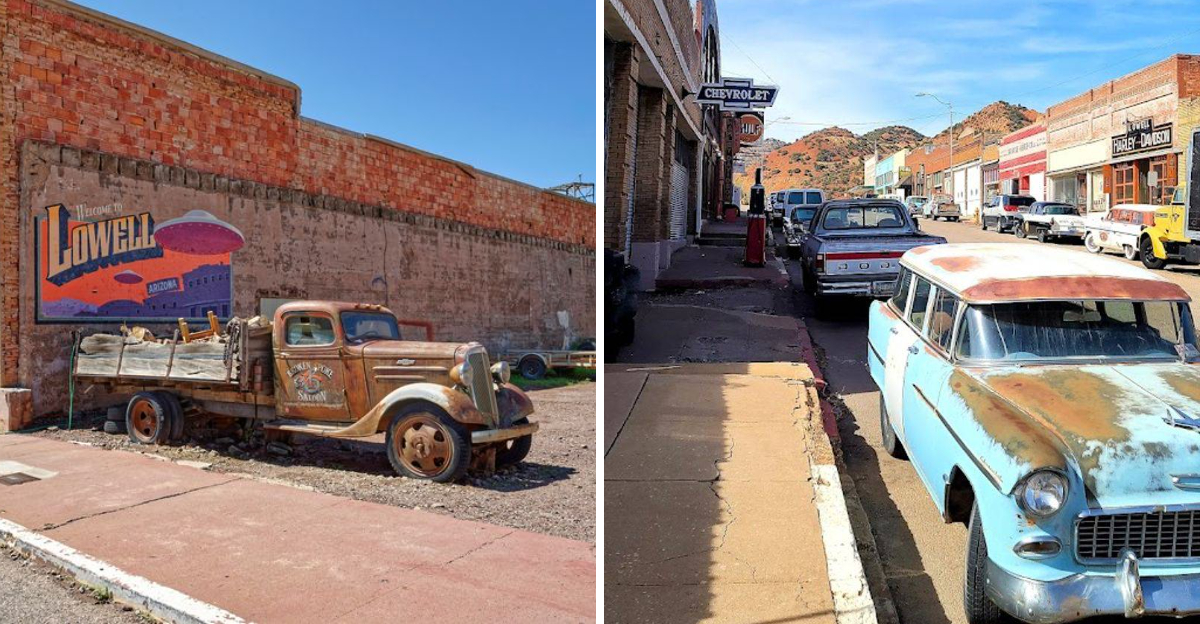
Tucked away in southern Arizona, the ghost town of Lowell offers visitors an extraordinary glimpse into America’s automotive past.
This former mining community has been transformed into an outdoor museum where hundreds of vintage cars from the 1940s through 1970s line the streets like a perfectly preserved time capsule.
Walking through Lowell feels like wandering onto a movie set, complete with restored storefronts, classic gas stations, and nostalgic details that transport you back to mid-century America.
Whether you’re a car enthusiast, history buff, or photographer seeking unique backdrops, this hidden gem near Bisbee delivers an unforgettable experience.
Welcome to Lowell: Arizona’s Hidden Time Capsule
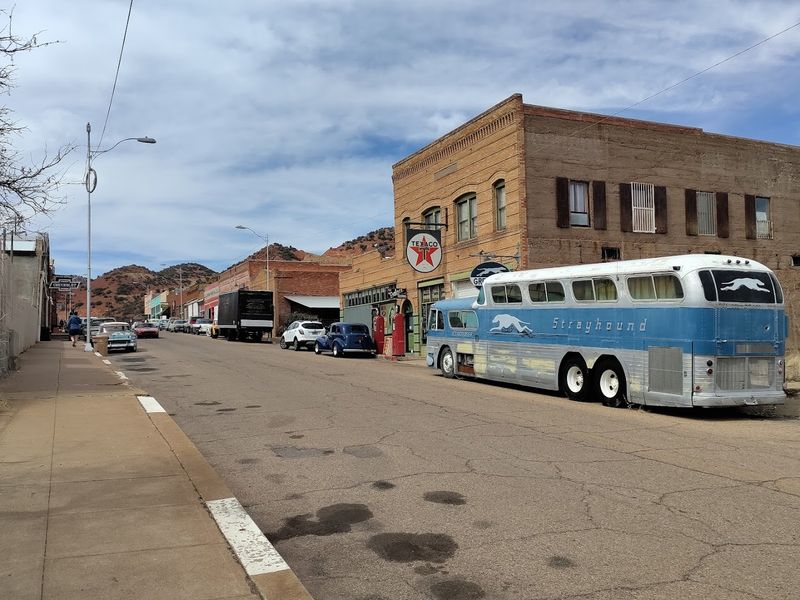
Step off the main highway and suddenly you’re transported decades backward. Lowell sits as a historic neighborhood within Bisbee, Arizona, but calling it just a neighborhood doesn’t capture its magic.
Preservation enthusiasts have carefully recreated an entire mid-20th-century streetscape that feels more authentic than many living history museums.
What started as abandoned mining infrastructure has evolved into something remarkable. Local visionaries recognized the area’s potential and began collecting period-appropriate vehicles, signage, and architectural elements.
Today’s visitors encounter a curated outdoor exhibit where every detail matters, from the font on storefront signs to the model year of parked automobiles.
Unlike typical ghost towns left to decay, Lowell represents intentional preservation. Buildings have been restored rather than simply abandoned, creating an immersive experience that honors both mining heritage and automotive history.
The desert climate helps maintain the vintage vehicles surprisingly well, adding to the authentic atmosphere. Walking these streets provides education without feeling stuffy, entertainment without commercialization, and photo opportunities around every corner that capture genuine Americana rather than manufactured nostalgia.
A Mining Town Turned Ghost Town
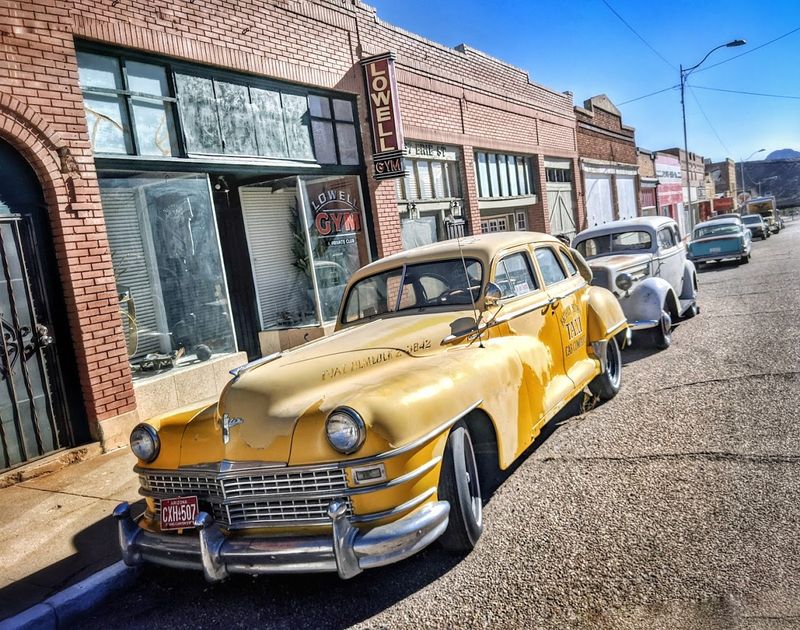
Copper brought Lowell to life during the early 1900s when mining companies needed workers. Families flooded into the area seeking opportunities in the booming extraction industry.
Homes, shops, schools, and churches sprouted quickly to support thousands of residents who called this dusty patch of Arizona home.
But boom inevitably turned to bust. As copper deposits dwindled and mining operations became less profitable, the population gradually drained away.
By the late 20th century, much of Lowell stood empty, with only memories echoing through hollow buildings and quiet streets.
Rather than letting history crumble completely, preservationists saw opportunity in abandonment. They understood that mining heritage alone could attract visitors, but adding the automotive collection created something truly unique.
The town’s skeleton remained structurally sound enough for restoration, making it perfect for transformation into this unusual attraction. Today’s ghost town status feels more like suspended animation than death, with vintage vehicles breathing new life into old bones.
The mining legacy provides historical context while classic cars provide visual wow factor that keeps visitors coming back.
Erie Street: The Heart of the Experience
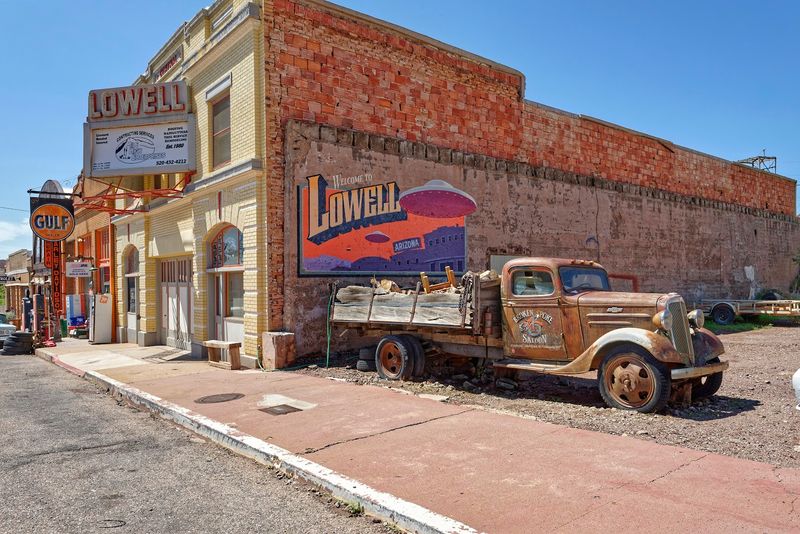
Everything centers on Erie Street, a compact stretch that packs maximum nostalgia into minimal distance. Both sides feature carefully restored building facades displaying authentic mid-century commercial architecture.
Weathered brick walls, large glass storefronts, and hand-painted signage recreate the visual language of small-town America from fifty years ago.
You can walk the entire main district in fifteen minutes, yet most visitors linger for hours. Each storefront tells its own story through period-appropriate details like vintage Coca-Cola machines, retro advertising posters, and antique business signs.
Some buildings function as actual shops today while others remain purely decorative, but all contribute to the cohesive atmosphere.
The street layout itself enhances the experience. Wide enough for angle parking but narrow enough to feel intimate, Erie Street creates perfect proportions for viewing the vehicle collection.
Visitors can easily cross from side to side, examining different cars and architectural details without fighting traffic or walking excessive distances. Morning light hits the eastern facades beautifully, while late afternoon sun creates dramatic shadows that make every photograph look professionally composed.
The street functions as both museum gallery and immersive environment simultaneously.
Hundreds of Vintage Cars on Display
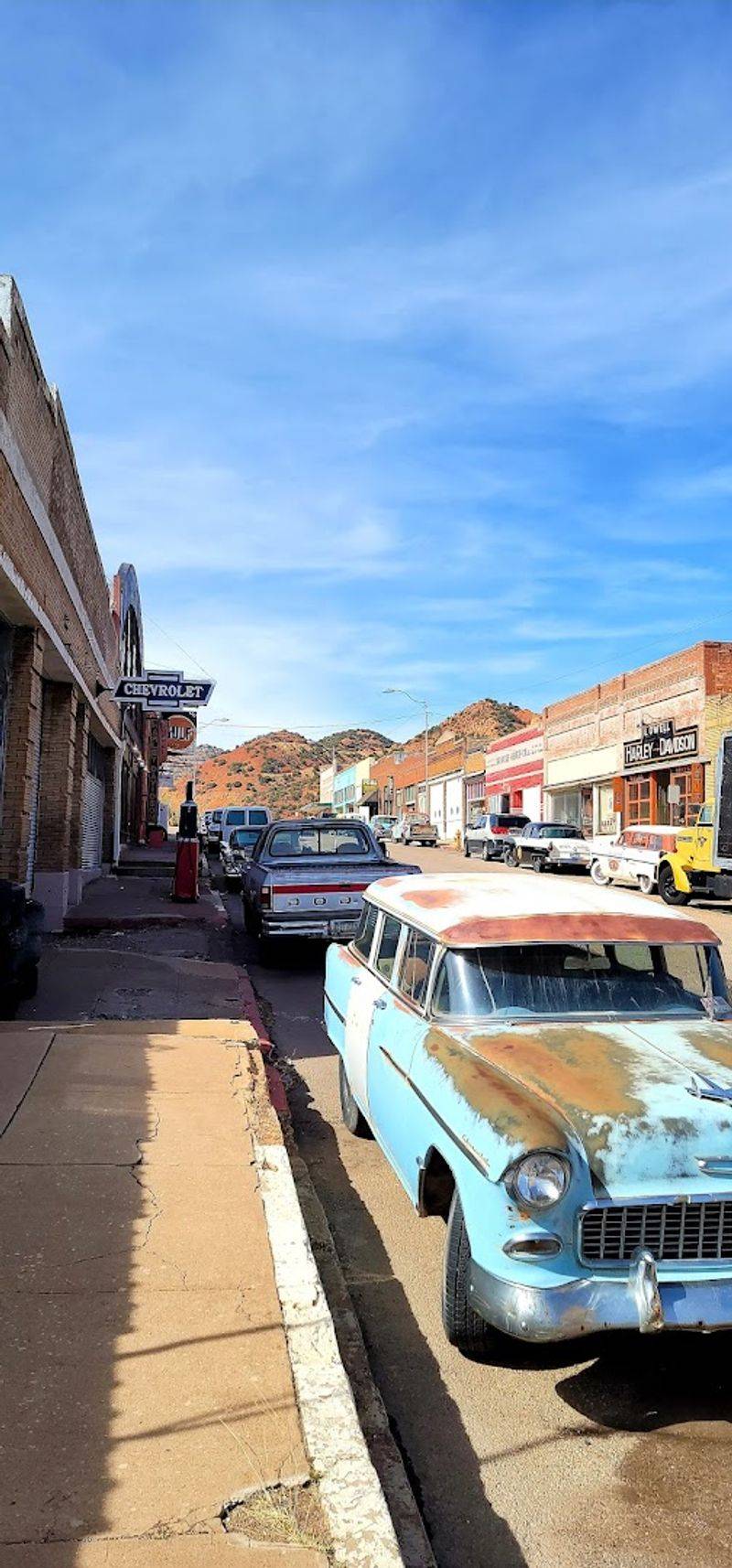
Car enthusiasts experience sensory overload here. Chrome bumpers gleam in the Arizona sunshine while faded paint tells stories of decades past.
The collection spans roughly thirty years of automotive design, showcasing how American car culture evolved through postwar prosperity into the muscle car era and beyond.
Each vehicle has been carefully selected and positioned. You’ll spot rounded 1940s sedans with their distinctive bulbous shapes sitting near sleek 1950s models with dramatic tail fins.
Boxy 1960s station wagons park alongside sporty coupes from the early 1970s. The variety demonstrates changing tastes, technological advances, and shifting cultural priorities across three transformative decades.
Some cars remain in remarkable condition considering their age and desert environment. Others show intentional weathering that adds character rather than detracting from visual appeal.
Protective measures keep the collection from deteriorating while maintaining authentic appearances. Visitors can walk freely among the vehicles, though touching is discouraged.
The sheer quantity creates an almost overwhelming effect where every direction offers another automotive gem worth examining. Many models have become rare finds today, making this collection valuable both historically and monetarily while remaining accessible to regular folks.
A Living Museum of Mid-Century America
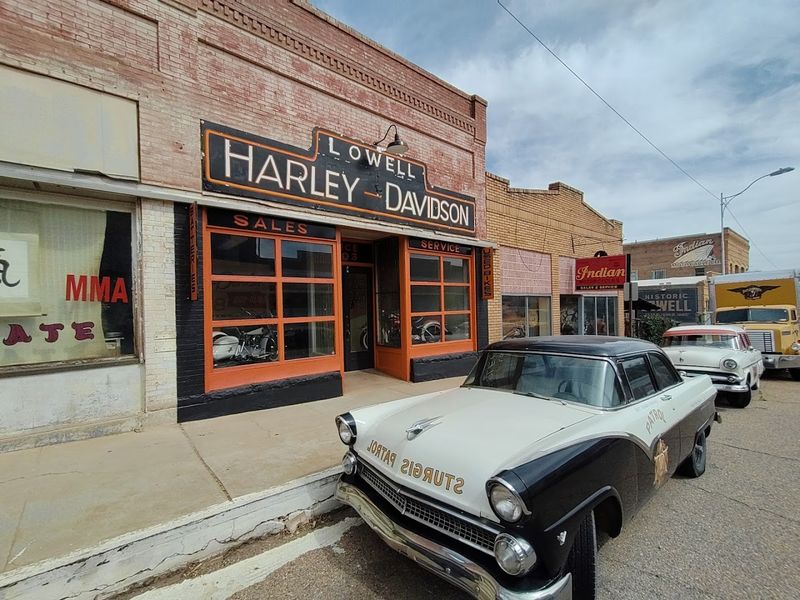
Beyond automobiles, Lowell recreates an entire lifestyle. Period-appropriate businesses include diners with checkered floors, gas stations sporting vintage pump designs, and shops displaying products from bygone eras.
Every element works together creating an immersive environment that transcends simple car display.
Attention to detail separates this place from typical roadside attractions. Antique Coca-Cola coolers sit outside storefronts just as they would have decades ago.
Old cigarette machines lean against walls while vintage candy displays fill shop windows. Even trash cans and street furniture match the period aesthetic, ensuring nothing breaks the historical illusion.
The term living museum fits perfectly because the experience feels active rather than static. Unlike traditional museums with roped-off exhibits and don’t-touch policies, Lowell invites exploration.
You can peer through storefront windows, read old advertisements up close, and imagine yourself as a 1950s customer stopping for gas during a cross-country road trip. The outdoor setting adds another dimension since natural desert surroundings provide authentic western backdrop.
Weather, light, and seasons change the atmosphere constantly, meaning no two visits feel identical. Educational value comes through experiencing history rather than simply reading about it.
The Iconic Shell Gas Station
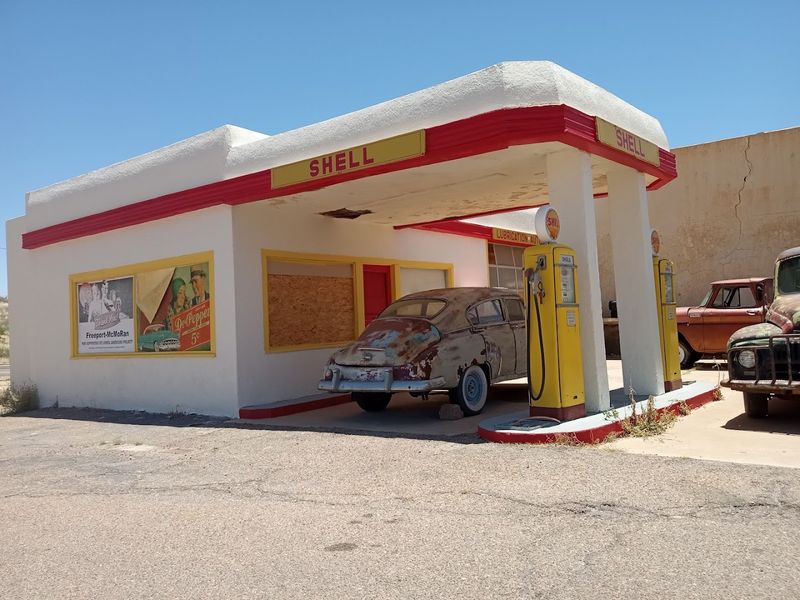
Photographers circle this building like moths around a flame. The restored Shell station represents automotive history’s golden age when gas stations offered full service and friendly attendants cleaned your windshield without being asked.
Its distinctive yellow scallop shell logo gleams against azure Arizona sky, creating picture-perfect contrast that makes every snapshot look professional.
Vintage pumps stand ready as though customers might arrive any moment. Glass globes top each pump displaying the Shell brand with retro typography that younger generations recognize only from old movies.
Prices frozen on the pump displays remind visitors how dramatically fuel costs have changed, with numbers showing cents per gallon that seem fantastical today.
The building itself showcases classic service station architecture with clean lines, large windows, and practical design focused on functionality. Original signage advertises oil changes and tire services using graphics and language from another era.
Many visitors report this single structure as their favorite photo subject because it encapsulates so much cultural history in one compact space. The station represents not just transportation but American freedom, road trips, and westward expansion mythology.
Standing beside those vintage pumps, you can almost hear engines rumbling and smell gasoline mixing with desert air.
Unexpected Art Installations and Nostalgic Vehicles
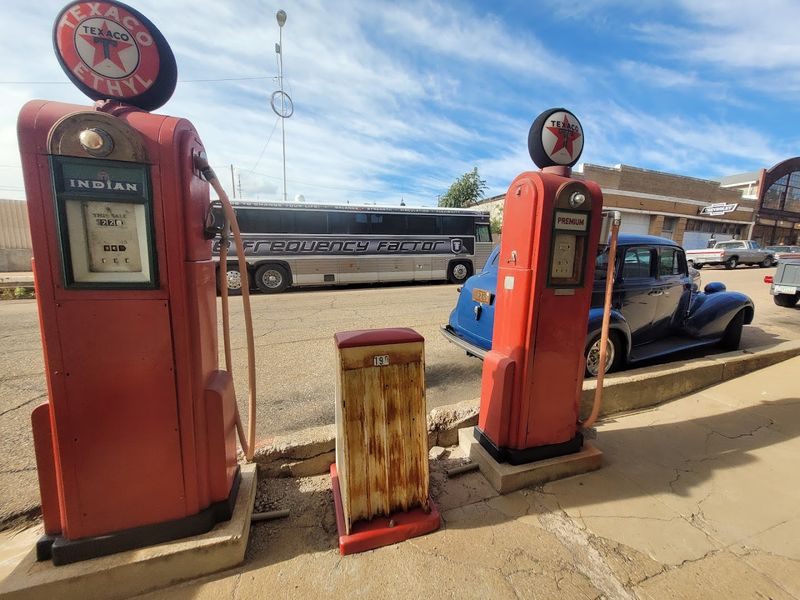
Wander past the main attractions and delightful surprises await. Beyond typical automobiles, the collection includes vintage buses that once transported schoolchildren or tourists.
These oversized vehicles add vertical interest and nostalgic charm while showcasing transportation diversity from the period. Their faded paint and weathered exteriors tell stories of countless miles traveled and generations served.
Creative installations transform ordinary objects into conversation pieces. An old pickup truck might be artfully positioned to create perfect framing for photographs.
Vintage motorcycles lean casually against brick walls. Antique bicycles rest near shop entrances as though their owners just stepped inside moments ago.
Each placement feels intentional yet natural, avoiding the contrived atmosphere that plagues some tourist attractions.
Some displays border on quirky art rather than strict historical preservation. A collection of old signs creates a colorful wall installation.
Vintage appliances arranged outside a storefront suggest domestic life from decades past. These touches prevent the experience from becoming too serious or academic, injecting playfulness that broadens appeal.
Families with children find these unexpected elements especially engaging since they provide variety beyond endless car viewing. The installations also give social media enthusiasts fresh content, encouraging visitors to explore thoroughly rather than snapping a few quick photos before leaving.
A Photographer’s Dream Destination
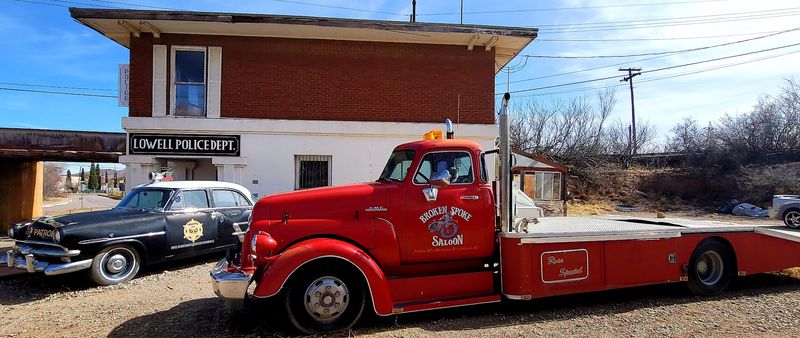
Professional shutterbugs and Instagram enthusiasts alike consider Lowell paradise. Authentic vintage settings prove increasingly rare as modernization erases mid-century architecture, making this preserved environment precious for visual storytelling.
Natural lighting cooperates beautifully with the southwestern location providing dramatic sun angles and clear skies most days.
Every corner offers new compositional possibilities. Weathered textures contrast with smooth chrome.
Faded pastels pop against deep blue sky. Leading lines created by parked cars draw eyes through frame after frame.
Photographers can shoot for hours without exhausting fresh perspectives or interesting subjects.
The location has attracted commercial productions too. Film crews seeking authentic period settings discover Lowell provides ready-made backdrops without expensive set construction.
Music videos, car commercials, and independent films have all been shot here, taking advantage of the cohesive aesthetic and manageable location logistics. For amateur photographers, the setting offers professional results regardless of skill level since the subjects themselves carry such strong visual appeal.
Sunrise and sunset provide magical light that makes even smartphone snapshots look spectacular. Wedding photographers have discovered Lowell too, using the vintage vehicles and storefronts as unique engagement photo backdrops.
The combination of authentic details, excellent light, and concentrated subject matter creates conditions where bad photographs become nearly impossible to take.
Nearby Attractions Worth Exploring
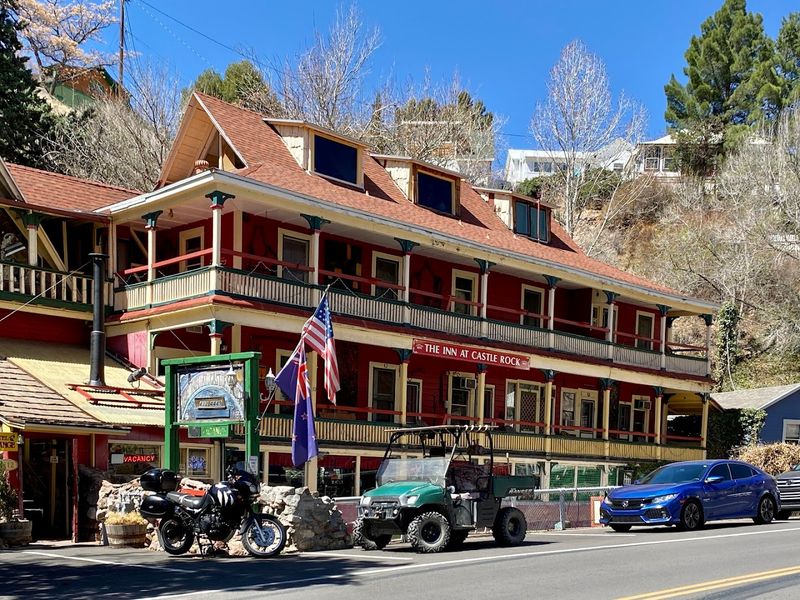
Smart visitors combine Lowell with broader Bisbee area exploration for a full day adventure. Historic downtown Bisbee sits just minutes away, offering quirky shops, galleries, restaurants, and Victorian architecture clinging to steep hillsides.
The town maintains its historic character while supporting a thriving arts community that adds contemporary flavor to the old mining heritage.
Mining history buffs should definitely tour the Copper Queen Mine, where guides lead underground excursions through actual tunnels where miners once worked. The experience provides context for understanding why towns like Lowell existed and what daily life entailed for families dependent on extraction industries.
Above ground, the massive Lavender Pit overlook reveals the scale of open-pit mining with a crater so large it dominates the landscape.
Brewery Gulch supplies evening entertainment with saloons and music venues occupying historic buildings along a narrow canyon street. The area maintains authentic western atmosphere without feeling theme-park fake.
Nature lovers can explore surrounding desert landscapes offering hiking trails, unusual geology, and abundant wildlife. The region’s elevation provides milder temperatures than lower desert areas, making outdoor activities pleasant even during summer months.
Together, these attractions create a compelling destination where Lowell serves as the unique centerpiece within a larger tapestry of southwestern history, culture, and natural beauty.
What to Know Before You Go
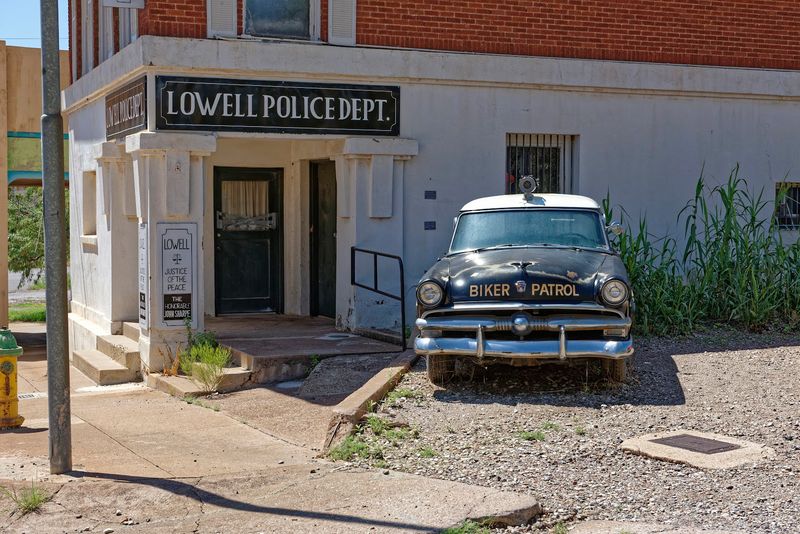
Timing matters significantly for enjoying Lowell. Summer temperatures regularly exceed 90 degrees, making midday visits uncomfortable despite the dry climate.
Spring and fall offer ideal conditions with pleasant temperatures and excellent lighting. Winter months work well too, though occasional cold snaps might require layering.
Early morning visits provide the best light for photography while avoiding crowds and heat.
Practical considerations enhance your experience. Comfortable walking shoes prove essential since streets feature uneven pavement and you’ll likely walk more than anticipated.
Bring water because desert environments dehydrate visitors quickly even when temperatures feel moderate. Sunscreen and hats provide necessary protection since shade remains scarce along Erie Street.
The site operates as self-guided outdoor attraction without admission fees or formal operating hours. You can explore freely, though respecting private property and businesses remains important.
Most buildings aren’t open for interior tours, but exterior viewing provides the primary attraction anyway. Nearby Bisbee offers restrooms, restaurants, and services since Lowell itself lacks tourist facilities.
Plan at least an hour for basic exploration, though photography enthusiasts and car lovers easily spend half a day examining details. Cell service generally works fine for sharing photos immediately, and the compact area makes getting lost virtually impossible.