
If you get even a little excited by polished propellers, wartime legends, and hangars full of mechanical history, this place is going to grab you fast.
The Mid-Atlantic Air Museum in Reading feels less like a quiet gallery and more like a working gateway into aviation’s boldest eras.
You are not just looking at old aircraft here – you are stepping into the stories, craftsmanship, and restoration work that keep them alive.
From rare warbirds to one of the country’s biggest WWII events, there is a lot waiting beyond the hangar doors.
A museum set inside a real working airport

What makes the Mid-Atlantic Air Museum instantly memorable is its setting at Reading Regional Airport, also known as Carl A. Spaatz Field.
You are not driving to an isolated building filled with quiet displays, but to a place where aviation history sits beside the living rhythm of an active airfield. That blend gives the museum an energy you can feel before you even step inside.
I love museums that help you understand context, and this one does it naturally. Looking at historic aircraft while modern planes still move through the airport creates a vivid connection between past and present.
It reminds you that aviation history did not end in a textbook, and it certainly did not stop at the hangar door.
The location also adds to the atmosphere in simple ways. You may hear engines in the distance, see open tarmac, and notice how the museum feels rooted in the practical world pilots know well.
That authenticity makes every exhibit land a little harder because the surroundings match the story.
If you want a museum visit that feels alive instead of staged, this is a strong start. Reading’s airport setting turns the entire experience into something immersive, grounded, and deeply satisfying for anyone who loves airplanes.
Built from a passion for WWII aviation
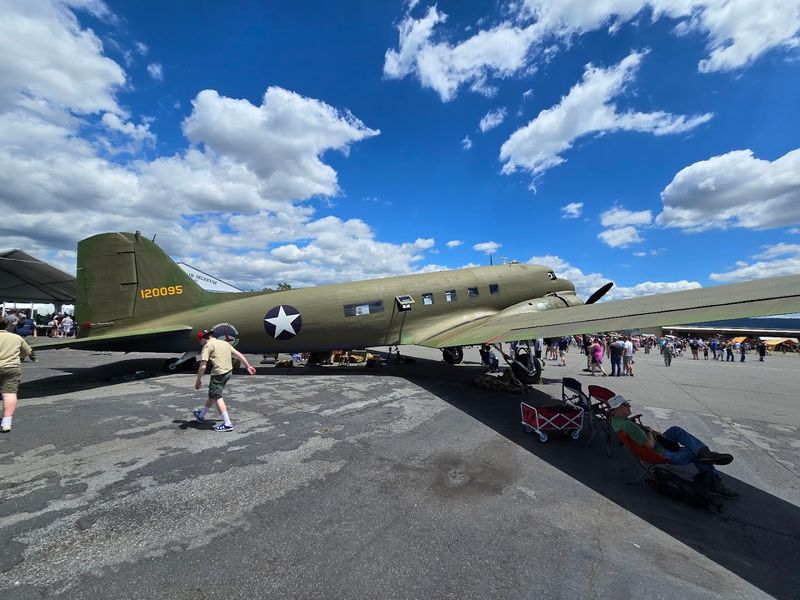
The Mid-Atlantic Air Museum did not begin as a corporate project or a polished attraction built from a business plan. It grew from the passion of Gene and Russ Strine, aviators who cared deeply about preserving World War II history.
That origin story matters because you can still feel that personal dedication in every corner of the museum.
The collection began after they acquired a rare Northrop P-61 Black Widow night fighter, an aircraft that would become the emotional and historical heart of the museum. Instead of treating it as a trophy, they used it as a starting point for something bigger.
What followed was the creation of a place where forgotten aircraft could be saved, studied, and shared with the public.
I think visitors respond to that sincerity. You are not walking through a museum built around vague nostalgia, but through one shaped by people who truly understood the importance of these machines.
Their enthusiasm created a space where restoration, storytelling, and respect for aviation history all work together.
That founding spirit still defines the museum today. It feels personal, determined, and rooted in a genuine love for the aircraft and the people who flew, repaired, and relied on them.
One of America’s great volunteer aviation efforts
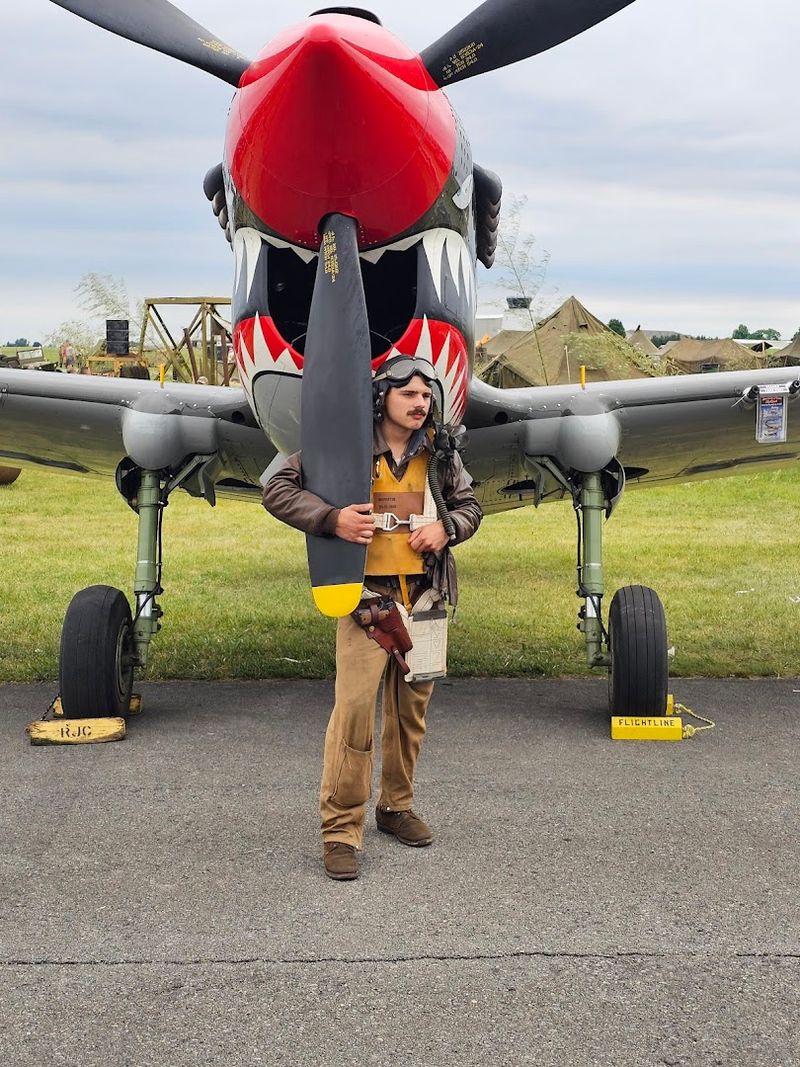
One of the most impressive things about the Mid-Atlantic Air Museum is how much of its work is powered by volunteers. This is not just a museum with staff standing near signs and ropes.
It is a place where dedicated people spend real time maintaining aircraft, rebuilding components, and helping visitors understand why these machines still matter.
That volunteer spirit changes the feeling of the entire museum. Instead of a polished distance between the exhibits and the people who care for them, you sense a direct connection between preservation and community.
You are seeing the result of thousands of careful hours given by people who truly want this history to survive.
I find that especially moving because aviation restoration is not simple work. It takes technical skill, patience, historical research, and a willingness to get dirty in the process.
When you walk through the museum, you are also seeing a living example of what happens when knowledge and passion come together in practical ways.
It helps explain why the place feels more like an active hangar than a conventional museum. The volunteers give it personality, momentum, and a level of authenticity that you really cannot manufacture.
That human element is a major reason this museum stays with you.
A collection that spans roughly 125 aircraft

The scale of the collection at the Mid-Atlantic Air Museum is one of the first things that surprises people. The museum houses roughly 125 aircraft, which means you are not getting a small handful of highlights and a gift shop.
You are stepping into a broad aviation timeline that stretches from early experimental designs to wartime workhorses and postwar military aircraft.
That variety keeps the visit interesting because every section shifts the mood a little. One moment you may be studying a simple trainer or an early design that shows how aviation was still finding its footing.
A few steps later, you are face to face with aircraft built for conflict, speed, and technological leaps.
I like that the collection does not flatten history into one heroic era. It gives you a fuller picture of how aviation developed through trial, necessity, innovation, and changing military priorities.
The result is a museum experience that feels layered rather than repetitive, even if you already know a fair amount about airplanes.
For casual visitors, the range makes the museum accessible. For enthusiasts, it offers depth and surprises.
Either way, the size and breadth of the collection make this far more than a quick stop for a few photos.
Rare warbirds that make aviation fans stop cold
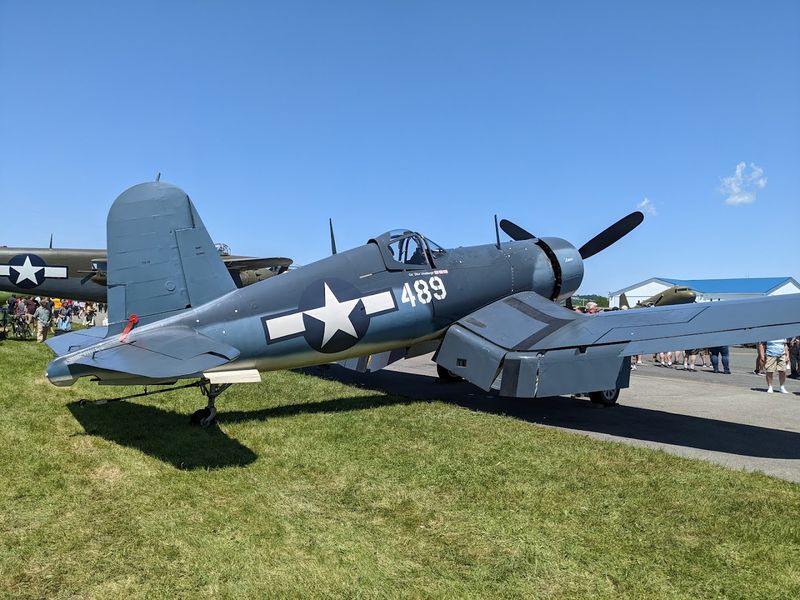
If you love rare aircraft, this museum absolutely delivers. Its standout warbirds include the Northrop P-61 Black Widow, the B-25 Mitchell, the PT-17 Stearman, and the F-86 Sabre, along with other memorable military aircraft.
These are not random additions, but aircraft that represent major chapters in the story of flight, training, combat, and technological change.
The P-61 Black Widow is especially important because it is both rare and central to the museum’s identity. Seeing it connects you not only to wartime aviation but also to the museum’s beginnings.
It carries a kind of gravity that makes you pause, read more closely, and appreciate just how much effort goes into preserving something so uncommon.
The rest of the lineup broadens the experience in satisfying ways. A B-25 brings the muscular presence of a famous medium bomber, while the Stearman reflects the world of pilot training and open-cockpit flying.
Then the Sabre shifts the mood entirely, pulling you into the jet age and the Cold War.
That mix is what makes the collection memorable. You are not just seeing old planes.
You are seeing milestones from different eras standing together under one roof.
A living restoration facility, not a static display
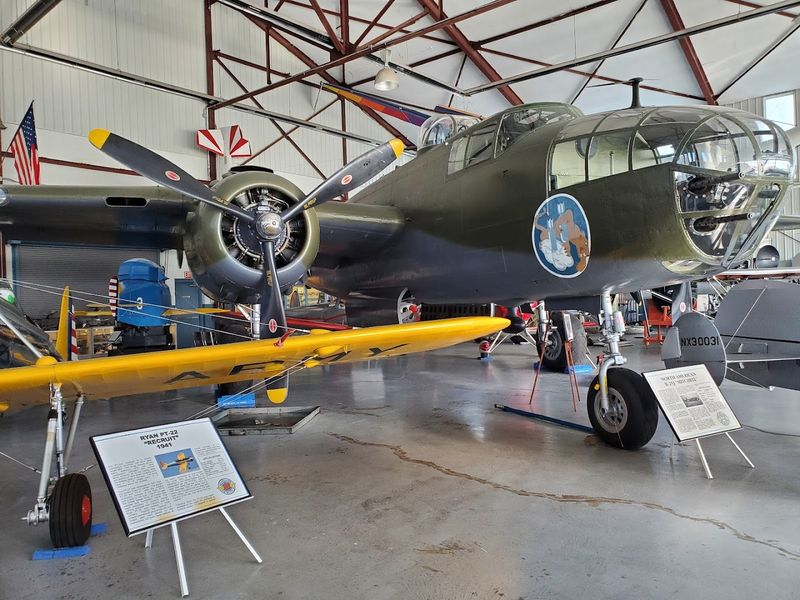
One of the best reasons to visit the Mid-Atlantic Air Museum is that it does not feel frozen in time. Many museums present aviation as a finished story, with aircraft parked in neat rows and history sealed behind barriers.
Here, restoration is part of the attraction, and that makes the whole place feel active, honest, and wonderfully real.
You can often see projects in progress, from engine overhauls to wing reconstruction and fabric-covered aircraft work. That kind of access changes how you understand old planes.
Instead of seeing them as polished relics, you begin to notice the craftsmanship, engineering, and labor required to keep them from disappearing altogether.
I think this is where the museum becomes especially compelling for people who enjoy process as much as results. Watching an aircraft being carefully rebuilt gives you a stronger sense of its complexity and the respect it deserves.
It also highlights the patience involved, because restoration rarely happens quickly and never happens casually.
This living museum approach is one of the institution’s defining strengths. You are not just looking backward at aviation history.
You are watching preservation happen in real time, which turns the visit into something far more intimate, educational, and memorable than a standard exhibit hall.
WWII Weekend is one of the biggest in America
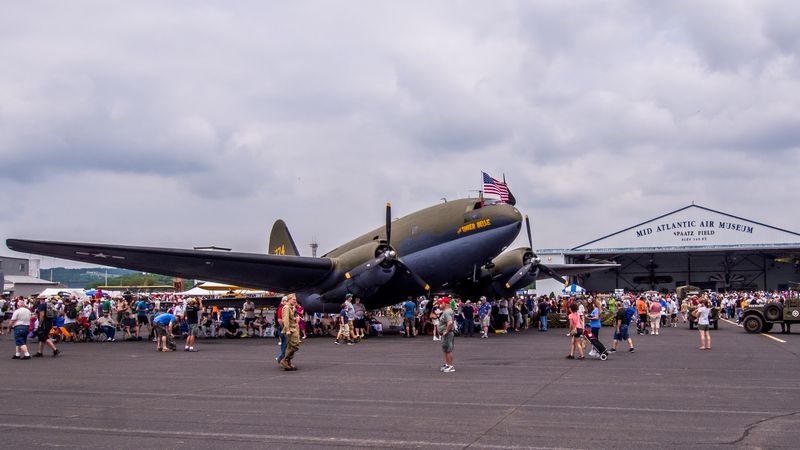
If you can time your visit for early June, WWII Weekend is the event that turns this museum into something extraordinary. It is widely regarded as one of the largest World War II reenactment and aviation events in North America, and once you see the scale, that reputation makes perfect sense.
Flying warbirds, living history displays, and veteran tributes come together in a way that feels both exciting and deeply respectful.
What stands out most is how many different experiences overlap at once. You can watch historic aircraft in motion, explore period encampments, listen to educational demonstrations, and feel the crowd’s energy rising around every major moment.
It is immersive without feeling gimmicky, which is not easy to pull off at this size.
I would tell anyone interested in military history to expect a full sensory experience. The sounds, uniforms, vehicles, and aircraft work together to create an atmosphere that is hard to shake.
Even if you arrive mainly for the planes, the event’s broader historical scope gives you much more to absorb.
It does get crowded, but for many visitors that is part of the excitement. WWII Weekend is not just the museum’s signature event.
It is one of the strongest reasons to put Reading on your travel list.
Immersive reenactments put you inside the era

The ground displays at WWII Weekend are a huge part of what makes the event unforgettable. This is not a small side exhibit with a few props and uniforms.
You are walking through carefully staged military camps, homefront scenes, and historically detailed setups that recreate the texture of wartime life in surprisingly vivid ways.
Allied and Axis reenactment groups help build an environment that feels educational rather than superficial. Their camps, equipment, clothing, and interactions give visitors a better sense of how daily life looked and felt during the war.
That attention to detail makes the history easier to connect with because it moves beyond dates and names into something more immediate.
I think that is why the event resonates with so many people. The museum does not simply ask you to imagine the past from a distance.
It invites you to move through it, observe it closely, and understand how aviation fit into a much larger wartime world.
Even if you usually focus on aircraft first, these immersive displays add crucial context. They remind you that every warbird overhead was tied to people on the ground, to families at home, and to an entire global moment.
That broader perspective makes the planes feel even more meaningful.
The museum makes aviation innovation easy to understand
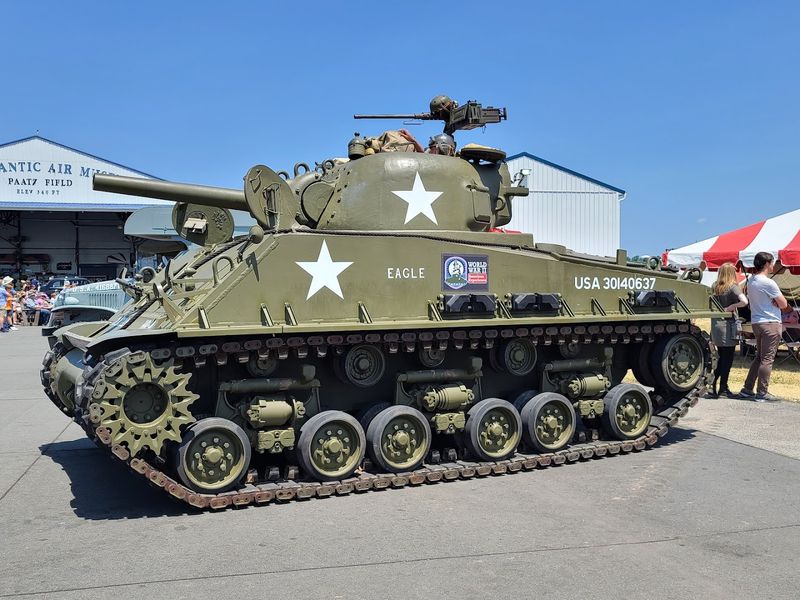
The Mid-Atlantic Air Museum is not only about admiring old aircraft from a distance. It also does a strong job explaining how aviation evolved through engineering breakthroughs, military demands, and civilian innovation.
That educational focus gives the collection real depth, especially if you enjoy understanding why certain designs mattered as much as what they looked like.
As you move through the museum, you can trace how aircraft changed across different eras. You start noticing shifts in materials, engine technology, training methods, and mission design.
Those details help connect early experimentation to wartime necessity and then to the postwar developments that shaped modern aviation.
I also appreciate the attention given to regional contributions from Mid-Atlantic industry. That local angle grounds the museum in Pennsylvania and the surrounding area instead of presenting aviation history as something that only happened somewhere else.
It reminds you that innovation is often regional, collaborative, and tied to communities that supported manufacturing, repair, and flight operations.
For families, students, and lifelong aviation fans, that educational layer adds a lot. You leave with more than photos and impressions.
You come away with a clearer sense of how aircraft design changed the world and how the region helped push that story forward.
What to know before you go

If you are planning a visit, a little preparation will help you enjoy the Mid-Atlantic Air Museum even more. The museum is located at 11 Museum Drive in Reading, Pennsylvania, on the grounds of Reading Regional Airport.
Hours are typically during the day, but they can vary by season, holidays, and special events, so checking ahead is a smart move.
Most visitors will want at least one to three hours for a full walkthrough, and you may want longer if you enjoy reading exhibits or spending time in restoration areas. It is also worth calling ahead at 610-372-7333 if you are hoping to access specific hangars or see restoration activity.
Availability can change depending on projects, staffing, and event schedules.
Comfort matters here more than you might expect. Wear good walking shoes because you may cover large hangars and outdoor areas, and definitely bring a camera because photography is encouraged.
If you can handle bigger crowds, early June is the ideal time for WWII Weekend, which is busy but truly unforgettable.
This is the kind of museum that rewards curiosity and a flexible schedule. Give yourself time, look closely, and let the setting do its work.
You will likely leave with far more than you expected.