
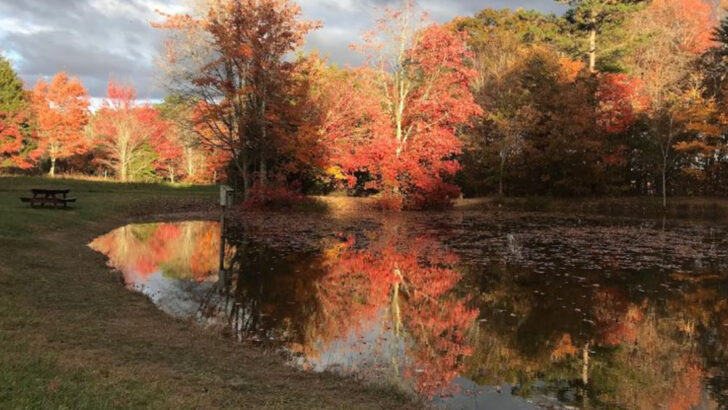
Tucked away in the northwest corner of Georgia, Cloudland Canyon State Park is one of those places that stops you in your tracks the moment you arrive.
A massive gorge slices nearly 1,000 feet into the earth, revealing towering sandstone cliffs, rushing waterfalls, and forests that seem to go on forever.
Whether you are a seasoned hiker or someone just looking for a memorable outdoor adventure, this park delivers scenery that is hard to beat.
Pack your boots, bring some water, and get ready to explore one of Georgia’s most breathtaking natural wonders.
A Canyon Carved Into the Edge of Lookout Mountain
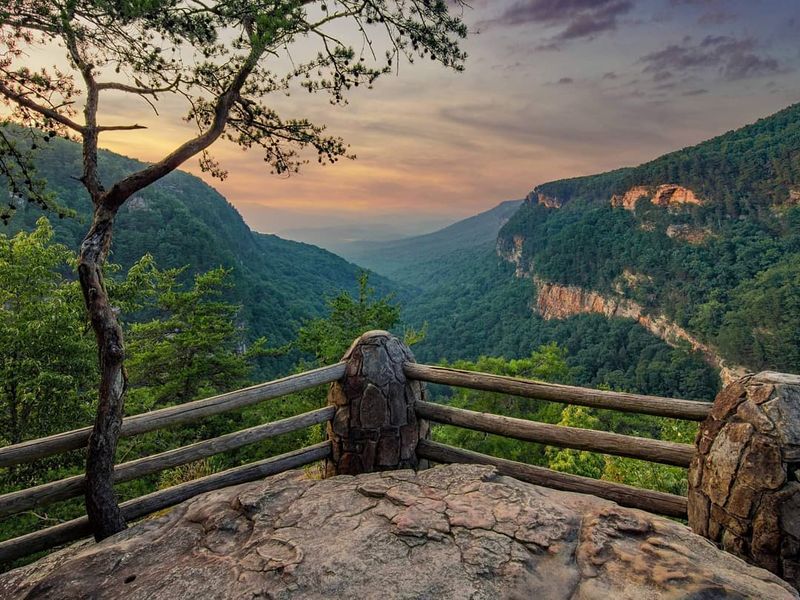
Standing at the rim of Cloudland Canyon for the first time feels like the earth simply dropped away beneath your feet. The gorge plunges nearly 1,000 feet below, carved over thousands of years by the steady, determined flow of Daniel Creek.
It is one of those geological wonders that reminds you just how powerful nature can be.
Located on the western edge of Lookout Mountain in northwest Georgia, the park sits within a landscape shaped by sandstone cliffs, layered rock formations, and deeply wooded ravines. The canyon’s dramatic depth creates microclimates along its walls, supporting plants and animals that you would not expect to find this far south.
Ferns cling to mossy ledges, and wildflowers peek out from crevices in the rock.
Geologists believe the canyon formed as water slowly eroded the softer rock beneath the harder sandstone cap, causing sections to collapse and deepen over millennia. That slow, relentless process created the rugged, jaw-dropping scenery visitors enjoy today.
Whether you are a geology enthusiast or simply someone who appreciates stunning landscapes, the canyon’s raw, ancient character makes it genuinely unforgettable from the very first glance.
The Waterfalls Trail: The Park’s Signature Hike
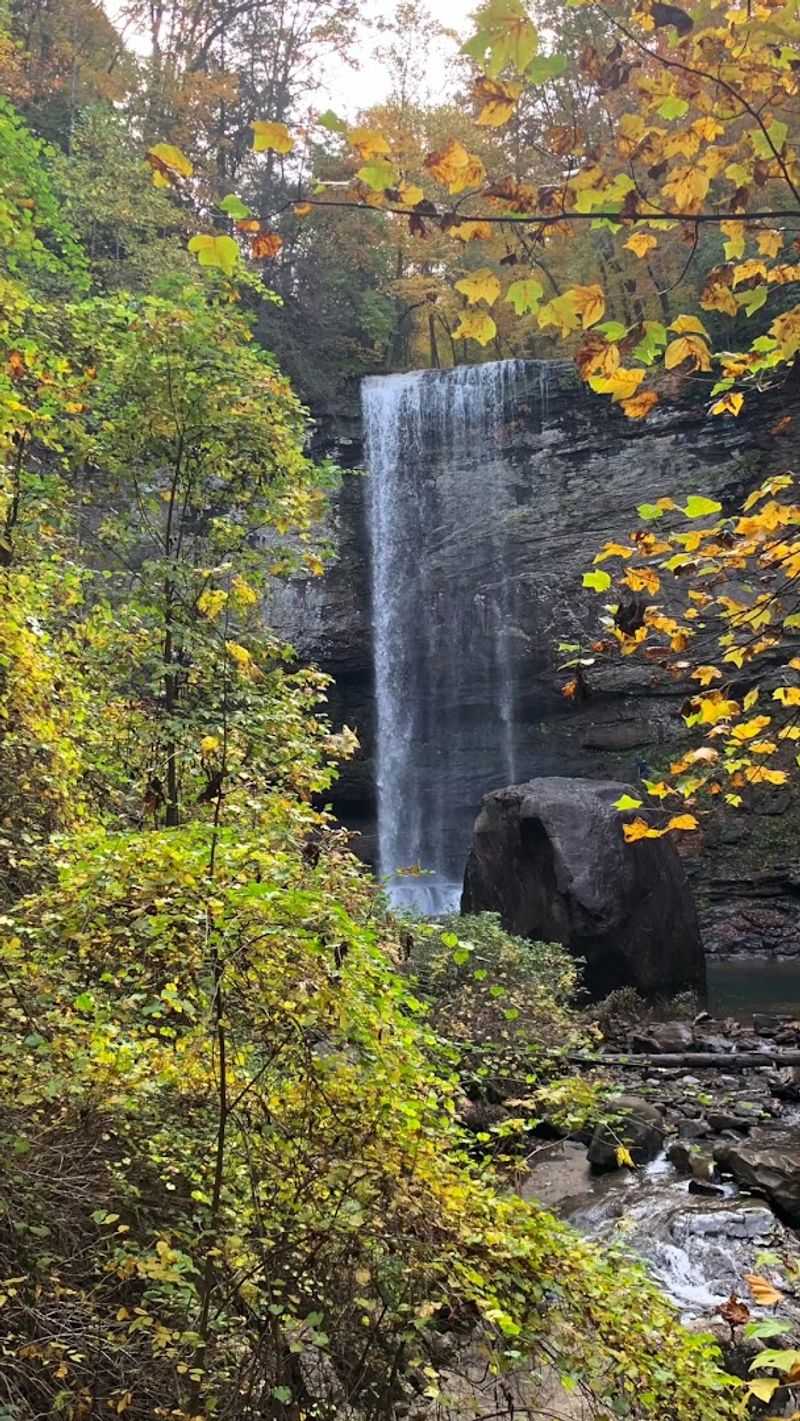
Ask any regular visitor what trail to do first at Cloudland Canyon, and they will almost always say the same thing: the Waterfalls Trail. Covering just 2 miles round-trip, it is compact by hiking standards, but do not let that short distance fool you.
This trail packs in more drama, beauty, and raw canyon atmosphere than routes three times its length.
The experience begins at the canyon rim, where the trail quickly transitions into a steep descent via hundreds of stairs. As you drop deeper into the gorge, the sounds of the outside world fade away, replaced by birdsong, trickling water, and the echoing rush of the creek below.
The forest thickens around you, and the air grows noticeably cooler and more humid.
Rated moderate due to its stair-heavy descent and the elevation change involved, the trail suits most hikers who are reasonably active and comfortable on uneven terrain. Families with older children often complete it without difficulty.
The payoff at the bottom — two stunning waterfalls tucked inside a mossy, ancient-feeling gorge — makes every step of the descent feel completely worthwhile. Few short hikes in Georgia deliver this level of reward.
Cherokee Falls: The First Showstopper
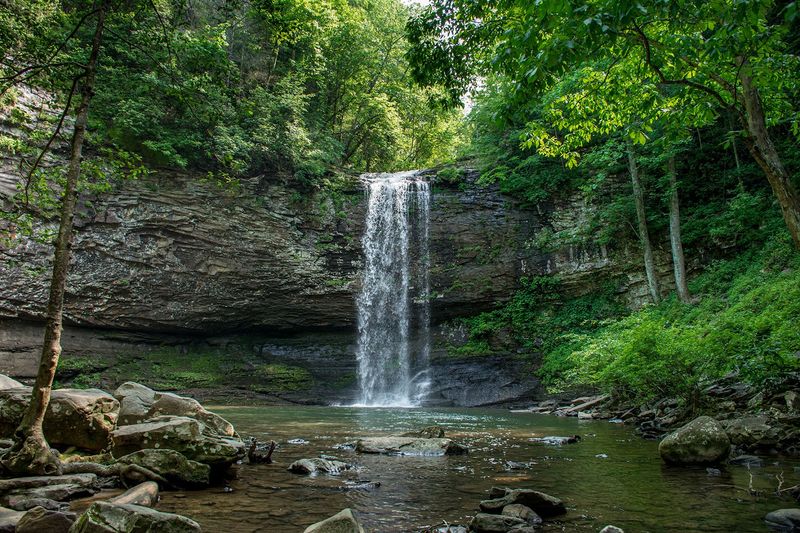
Before you even reach the canyon floor, Cherokee Falls announces itself with sound. You hear the rush of water long before you round the final bend in the trail, and then suddenly there it is — a curtain of white water dropping roughly 60 feet over beautifully layered sandstone rock.
It is the kind of sight that makes hikers stop mid-step just to take it in.
What makes Cherokee Falls especially interesting is how dramatically it changes depending on the season and recent rainfall. After a heavy rainstorm, it surges into a powerful, roaring cascade that sends mist drifting into the air.
During drier stretches of summer, it softens into a delicate, almost lacy veil that clings to the rock face in thin ribbons. No two visits look exactly the same.
The viewing area near the base offers a close-up perspective that photographs beautifully and feels genuinely immersive. The surrounding rock walls are streaked with mineral deposits and draped in ferns, creating a natural frame for the falls.
Fun fact: Cherokee Falls is named in honor of the Cherokee people who once inhabited this region of Georgia. Spending a few quiet minutes here before continuing deeper into the gorge is absolutely worth it.
Hemlock Falls: A Hidden Gem Deeper in the Gorge
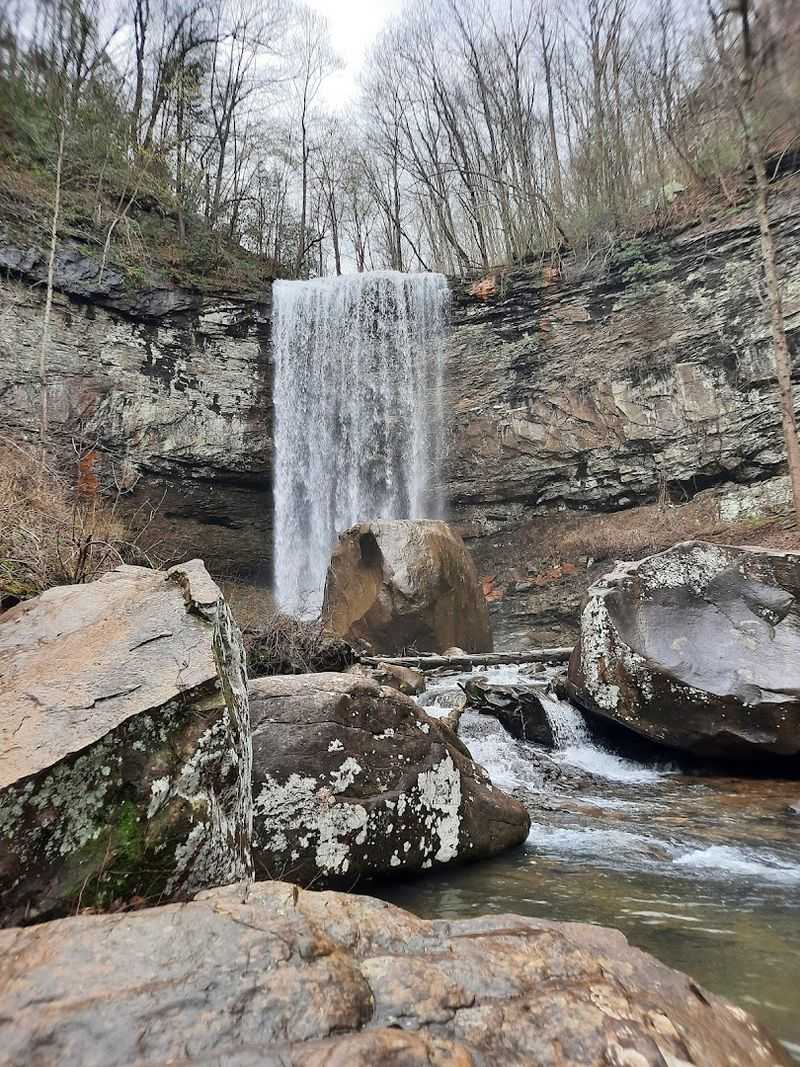
There is something almost secretive about Hemlock Falls. Tucked roughly half a mile beyond Cherokee Falls, it requires a bit more effort to reach — and that extra distance seems to keep it quieter and more peaceful than its more famous neighbor.
Hikers who push on past Cherokee Falls are rewarded with a waterfall that many consider even more beautiful.
Dropping approximately 90 feet into a cool, shaded pool, Hemlock Falls has a personality all its own. The surrounding hemlock trees create a dense canopy that filters light into soft, dappled patterns across the mossy rock walls.
The air near the base feels noticeably cooler, and the sound of the falling water creates a meditative stillness that is rare in a popular state park.
The mossy boulders and fern-carpeted ledges surrounding the pool give the area a prehistoric, almost fairy-tale quality. It is easy to imagine explorers stumbling upon this spot centuries ago and feeling the same sense of wonder.
Wildlife sightings near Hemlock Falls are also more common, since the reduced foot traffic keeps animals less skittish. Spending time here before the return climb back up the stairs makes the whole hike feel like a complete, deeply satisfying outdoor experience.
Staircase Descent: A Workout With a View
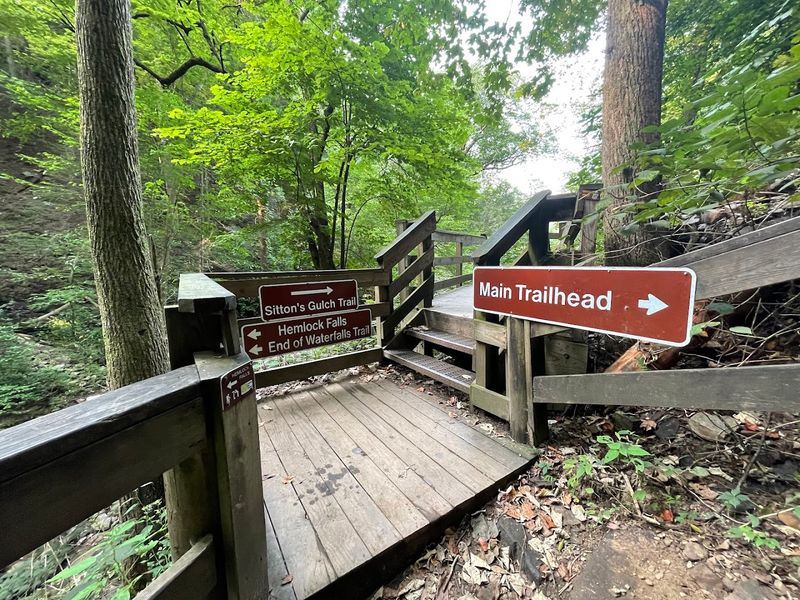
More than 600 steps stand between the canyon rim and the waterfalls below — and every single one of them is worth it. The staircase system at Cloudland Canyon is a feat of park engineering, threading metal and wooden steps down through narrow rock passages and along canyon walls in ways that feel almost adventurous in themselves.
Going down is exhilarating; coming back up is the real test.
Most reasonably fit hikers handle the descent without much trouble, though taking your time and watching your footing on wet or mossy steps is always smart. The stairs can become slippery after rain, so wearing trail shoes or boots with good traction makes a noticeable difference.
Trekking poles are helpful for the return climb, especially for hikers with sensitive knees.
Along the way down, the stairs offer unexpected viewpoints through the trees — glimpses of canyon walls, mossy overhangs, and the creek far below. Rather than thinking of the stairs as a chore, many visitors find them part of the adventure.
The steady burn in your legs on the way back up is actually a sign that you pushed yourself for something genuinely spectacular. Bring plenty of water, take breaks when needed, and enjoy the climb.
Sweeping Overlooks Along the West Rim Loop
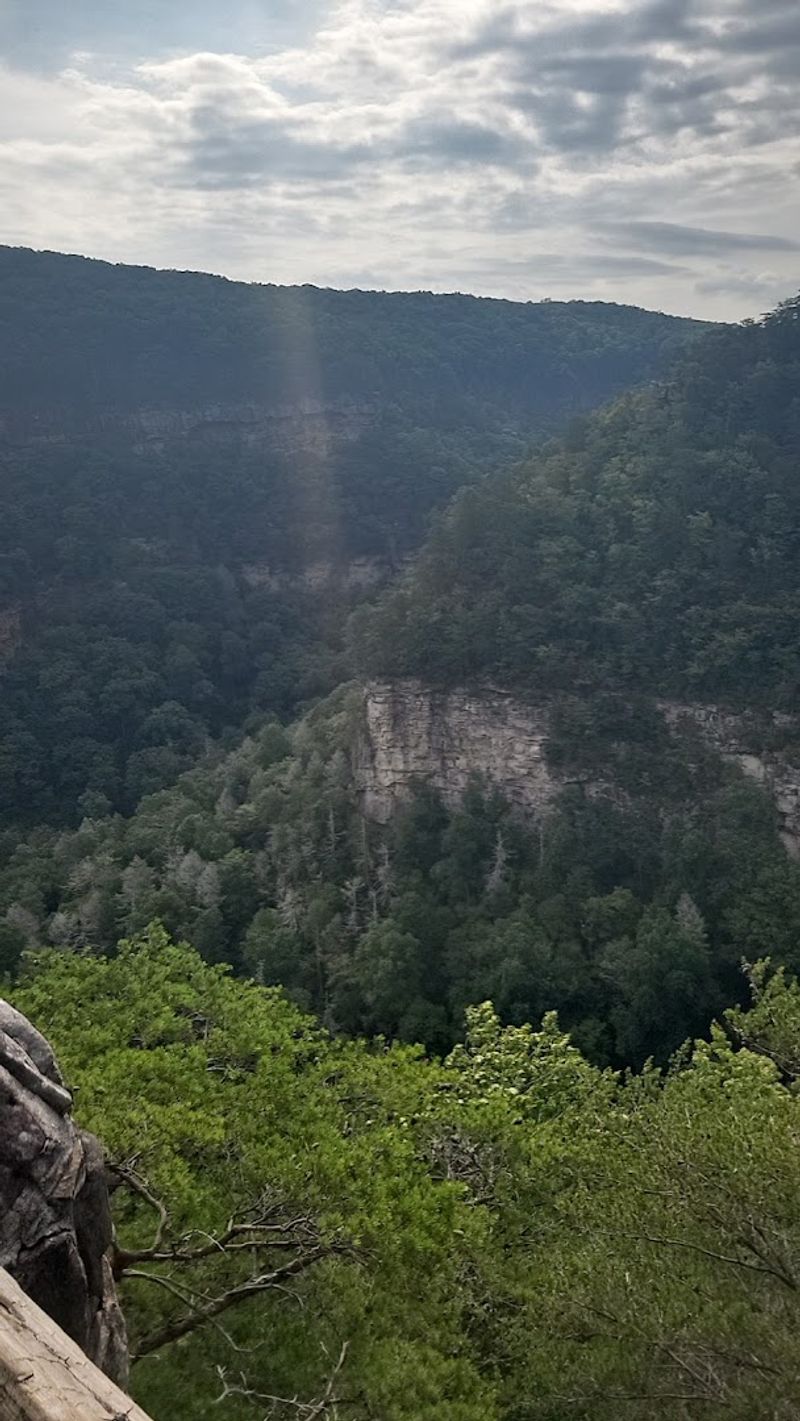
Not everyone wants to tackle hundreds of stairs, and that is perfectly fine — because the West Rim Loop offers some of the most spectacular canyon views in the park without requiring a steep descent. Stretching 4.8 miles around the canyon’s western edge, this trail is a favorite for hikers who want wide-open scenery, fresh air, and a solid workout all in one route.
Several overlook points along the loop provide unobstructed views of the gorge below and the rolling valley beyond. On clear days, the visibility stretches for miles, giving hikers a sense of just how vast and wild this corner of Georgia really is.
Each overlook feels slightly different, offering new angles on the canyon walls and the forested slopes dropping away below.
Fall is arguably the best time to walk the West Rim Loop. When the hardwoods change color in October and early November, the canyon transforms into a breathtaking mosaic of reds, oranges, and golds that stretches as far as the eye can see.
Photographers absolutely love this trail during peak foliage season. Even in spring and summer, the lush green canopy and the sound of wind moving through the treetops make the West Rim Loop a consistently rewarding hike worth every step.
Seasonal Beauty Year-Round
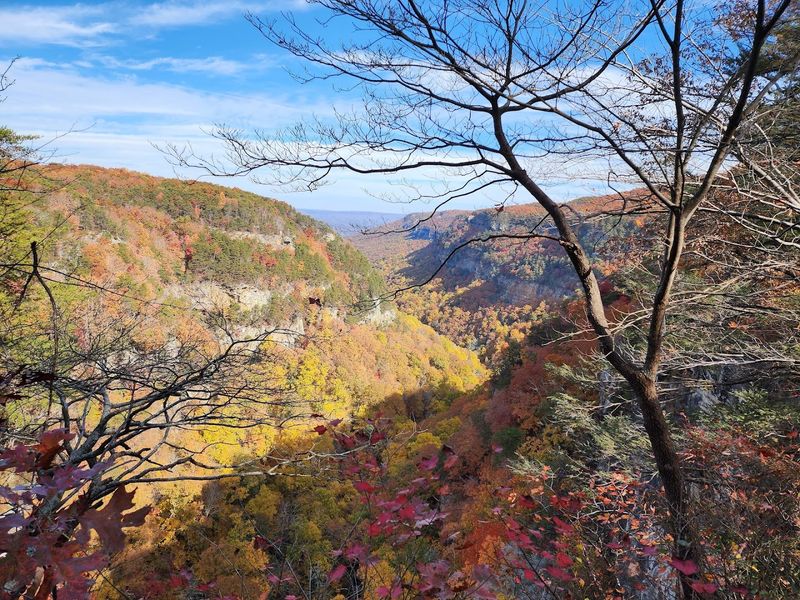
One of the best things about Cloudland Canyon is that there is truly no bad time to visit. Each season brings its own personality to the park, and experienced visitors often return multiple times a year just to see how the landscape has changed.
The canyon never looks exactly the same twice, which keeps every trip feeling fresh and worthwhile.
Spring is arguably the most dynamic season, when wildflowers carpet the forest floor and melting snow and spring rains push the waterfalls to their most powerful flow. Summer wraps the canyon in thick, lush greenery that makes the gorge feel almost tropical in its density.
The shade from the tree canopy also keeps temperatures along the trail noticeably cooler than the surrounding area, which is a welcome bonus during Georgia’s hot summers.
Autumn steals the spotlight with a foliage display that rivals anything in the southern Appalachians. The hardwood forest ignites in shades of crimson, amber, and gold, turning even a casual walk along the rim into a visual feast.
Winter, often overlooked by casual visitors, has its own quiet charm — bare trees open up long-distance views, and cold snaps occasionally coat the waterfalls in ice, creating a magical, otherworldly scene that few people get to witness.
Wildlife and Natural Diversity
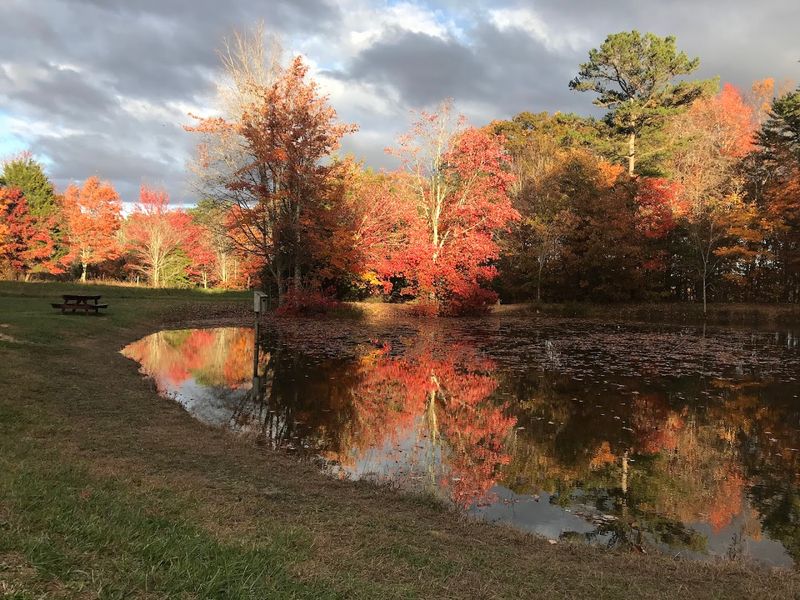
Beyond the waterfalls and canyon views, Cloudland Canyon is quietly teeming with wildlife. The park’s dramatic range of elevations — from the canyon floor to the mountain rim — creates a variety of habitats that support an impressive diversity of animals and plants.
Visitors who slow down and pay attention often find the natural world here just as rewarding as the scenery.
White-tailed deer are commonly spotted near the forest edges, especially in the early morning and late afternoon. Wild turkeys occasionally strut through the picnic areas without much concern for human company.
The park’s hardwood forest is also excellent songbird habitat, and birdwatchers often tally impressive species lists during spring migration when warblers, vireos, and thrushes pass through in waves.
Plant life at Cloudland Canyon deserves equal attention. Mountain laurel and rhododendron bloom along the canyon walls and forest understory in late spring, creating some of the most photogenic scenes in the entire park.
The moist, shaded environment along the canyon floor supports mosses, ferns, and lichens that give the gorge its lush, ancient character. Spending time quietly observing these details transforms a simple hike into something closer to a genuine wilderness experience that stays with you long after you leave.
Expanding the Adventure: Backcountry and Beyond
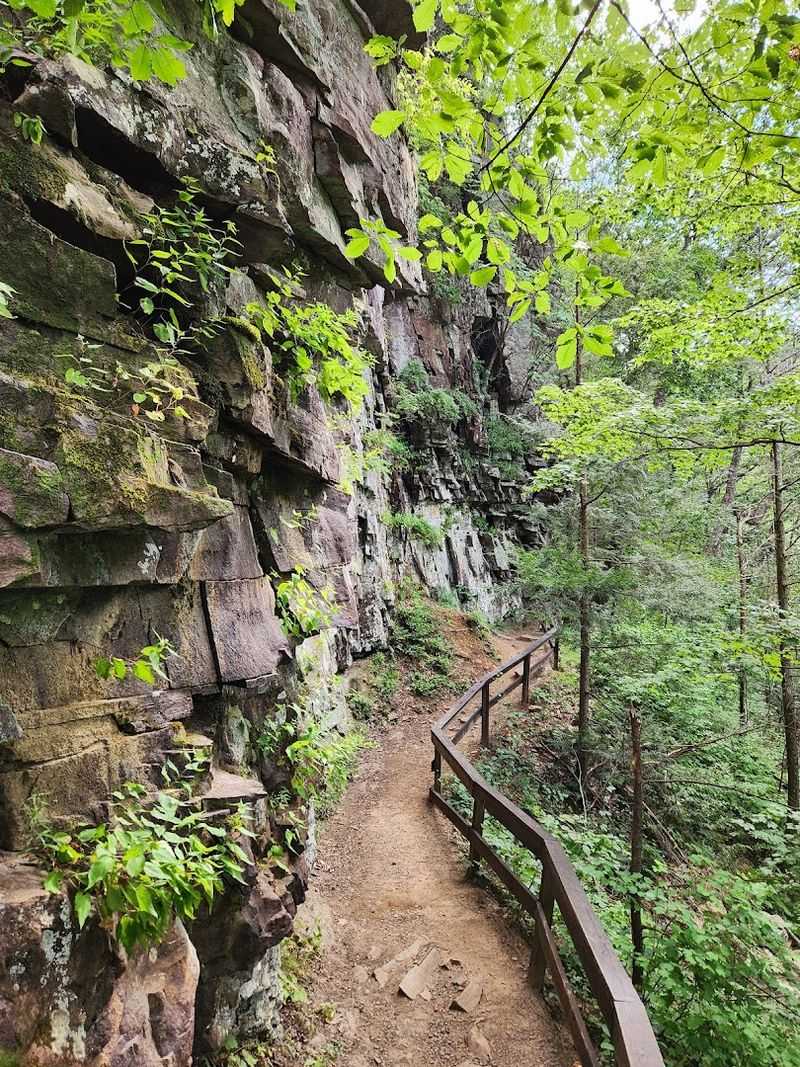
Most visitors experience Cloudland Canyon through the Waterfalls Trail or the West Rim Loop, but the park’s full trail network is far larger than many people realize. With over 60 miles of trails winding through the park and surrounding lands, there is plenty of room for hikers who want to go deeper, stay longer, and explore well beyond the well-worn paths near the trailhead.
The Sitton’s Gulch Trail is a standout option for those seeking a longer, more rugged adventure. Descending into the canyon and eventually working toward Trenton in the valley below, it offers a wilderness feel that the shorter trails simply cannot match.
Backcountry campsites allow overnight hikers to spend the night deep in the forest, waking up to birdsong and canyon silence rather than alarm clocks.
Mountain biking enthusiasts also have dedicated routes to explore, adding another dimension to the park’s recreational offerings. For those who prefer a comfortable overnight stay without pitching a tent, the park offers yurts and fully equipped cottages that provide a cozy base for multi-day adventures.
Cloudland Canyon rewards visitors who linger — the more time you invest in exploring its trails, the more the park reveals its many layers of beauty and wildness.
Essential Visitor Information
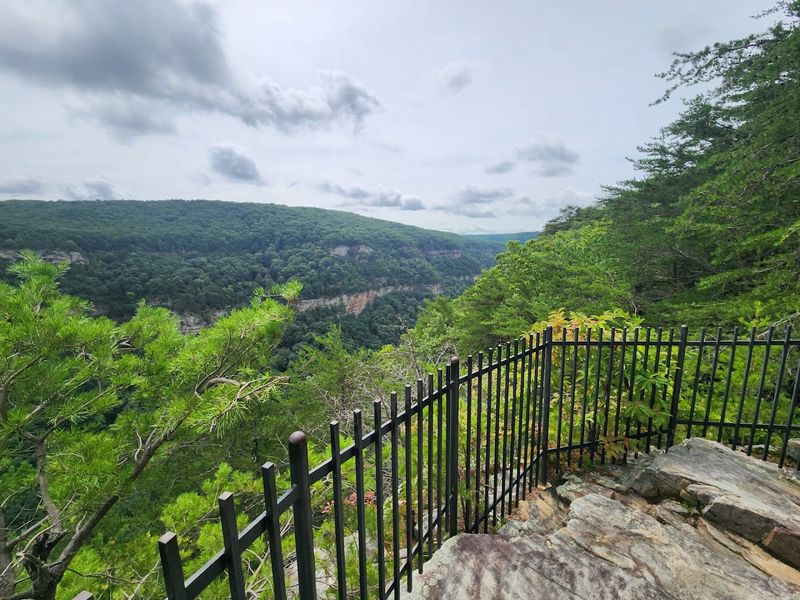
Planning ahead makes a big difference at Cloudland Canyon, especially on busy weekends during fall foliage season. The park is located near the small community of Rising Fawn in northwest Georgia, roughly 30 minutes from Chattanooga, Tennessee — making it an easy day trip from several major cities in the region.
The drive itself, winding through the Lookout Mountain plateau, is scenic and enjoyable.
A small parking fee is collected per vehicle upon entry, which goes toward maintaining the park’s facilities and trails. Restrooms, picnic shelters, a campground, and a visitor center are all available on-site, making it easy to spend a full day without needing to leave for supplies.
The visitor center staff are knowledgeable and happy to answer questions about trail conditions and wildlife activity.
Arrive early on weekends, particularly between mid-October and early November, when the parking areas near the Waterfalls trailhead fill up surprisingly fast. Weekday visits tend to be much quieter and allow for a more peaceful experience on the trail.
Wear sturdy footwear, carry more water than you think you will need, and bring a light jacket since the canyon floor stays cooler than the rim. A little preparation goes a long way toward making your visit genuinely enjoyable.