
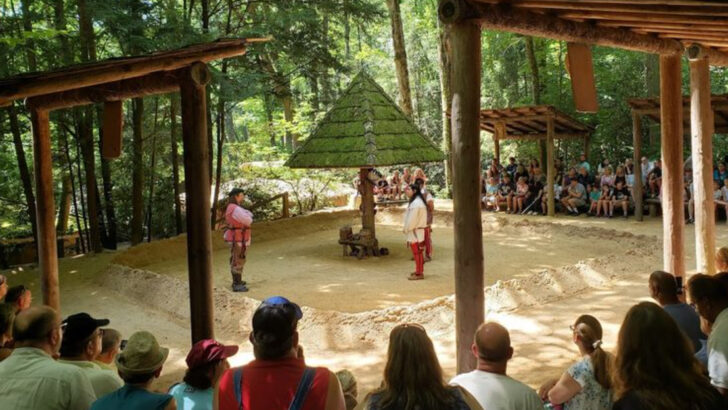
Tucked into the misty mountains of western North Carolina, the Oconaluftee Indian Village in Cherokee, NC is one of the most unique historical destinations in the American Southeast.
This living history site recreates an 18th-century Cherokee settlement, giving visitors a rare chance to walk through the past rather than just read about it.
From skilled artisans demonstrating ancient crafts to guided tours led by real Cherokee community members, every corner of the village pulses with authentic culture.
Whether you are a history lover, a curious traveler, or a family looking for a meaningful adventure, this place delivers an experience you will not forget.
A Living Window Into 18th-Century Cherokee Life
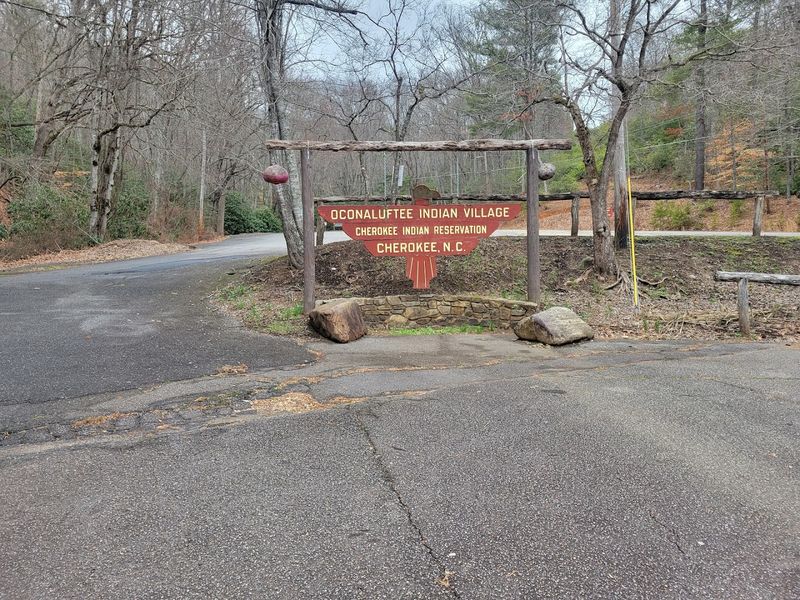
Forget everything you know about dusty museum displays and glass cases. The Oconaluftee Indian Village is the kind of place where history actually breathes.
Nestled in the Smoky Mountain foothills of Cherokee, North Carolina, this remarkable site recreates what a Cherokee settlement looked like around the 1700s, long before the modern world reshaped the region.
Walking through the village feels genuinely different from a typical tourist stop. The air smells of wood smoke, the paths are packed earth, and the sounds of traditional work echo through the trees.
Every structure, every tool, and every activity on display reflects real Cherokee life rather than a Hollywood version of it.
What makes this place so powerful is that it is not frozen in time like a snapshot. Artisans work, guides speak, fires burn, and the village hums with purposeful activity throughout each visit.
Families, students, and solo travelers all come away with something meaningful. You are not just observing history here.
You are standing inside it, which makes all the difference in the world for truly understanding Cherokee heritage.
Founded as a Living History Museum in 1952
Back in 1952, the Cherokee Historical Association made a bold decision that would shape how future generations understood one of America’s oldest cultures. They established the Oconaluftee Indian Village with a clear mission: preserve Cherokee traditions not through locked archives or static exhibits, but through living, breathing education that anyone could experience firsthand.
That founding vision was remarkably ahead of its time. Most history museums in the 1950s relied on objects behind glass and printed labels.
The Cherokee Historical Association believed that culture was best taught through doing, seeing, and listening rather than simply reading. They were right, and the village has proven that philosophy every season since it opened.
More than seven decades later, the village still operates on those same core values. It continues to serve as both a cultural preservation effort and a community-centered educational resource for the Eastern Band of Cherokee Indians.
The longevity of this institution speaks to how deeply it resonates with visitors and Cherokee community members alike. Starting something meaningful in 1952 and keeping it alive and relevant today is no small achievement, and the village wears that legacy with quiet pride.
Authentic Village Layout Based on Historic Cherokee Settlements
One of the first things visitors notice about Oconaluftee Indian Village is how intentional the layout feels. Nothing seems random or decorative.
Every structure, pathway, and open area was designed to mirror the real organization of Cherokee communities that thrived across the Appalachian region centuries ago.
Traditional Cherokee villages were not just clusters of buildings. They were carefully arranged social environments with distinct zones for cooking, crafting, governance, and gathering.
The reconstructed village honors that structure, giving visitors a spatial understanding of how community life was organized. When you walk from one area to the next, you are tracing the same kinds of routes that Cherokee families once walked daily.
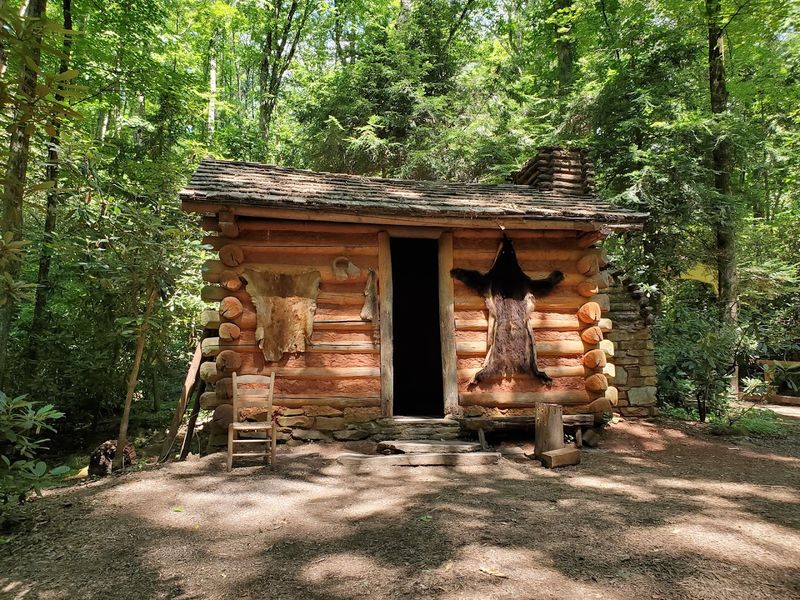
The dwellings themselves reflect both the summer and winter housing styles that Cherokee people used, adapting their homes to seasonal needs with practical ingenuity. Seeing these structures side by side makes it easy to appreciate how resourceful and thoughtful Cherokee builders truly were.
For students especially, the physical layout of the village communicates something that no textbook map could ever fully capture. History becomes a place you can stand in, move through, and genuinely feel rather than just memorize for a test.
Guided Tours Led by Cherokee Cultural Experts
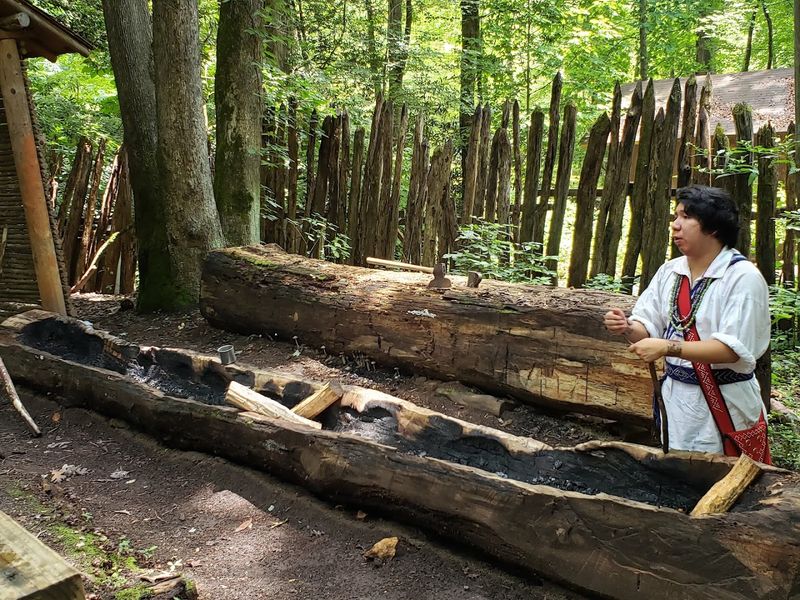
There is a meaningful difference between reading about a culture and hearing about it directly from someone who belongs to it. At Oconaluftee Indian Village, guided tours are led by members of the Eastern Band of Cherokee Indians, which transforms a standard sightseeing experience into something far more personal and powerful.
These guides do not just recite facts. They share stories, answer questions with genuine depth, and offer perspectives that connect ancient traditions to living culture today.
When a Cherokee guide explains the significance of a council house or describes how families organized their daily routines, the information carries a weight that outside narrators simply cannot replicate.
Visitors frequently describe these tours as the highlight of their entire Cherokee trip. The guides bring warmth, humor, and real knowledge to every stop along the path, making even complex historical topics feel approachable for kids and adults alike.
If you have questions about Cherokee governance, family roles, spiritual practices, or how the community has evolved over centuries, this is absolutely the place to ask them. The guides welcome curiosity and treat every question as an opportunity to share something important about their ancestors and their living community.
Traditional Craft Demonstrations in Real Time
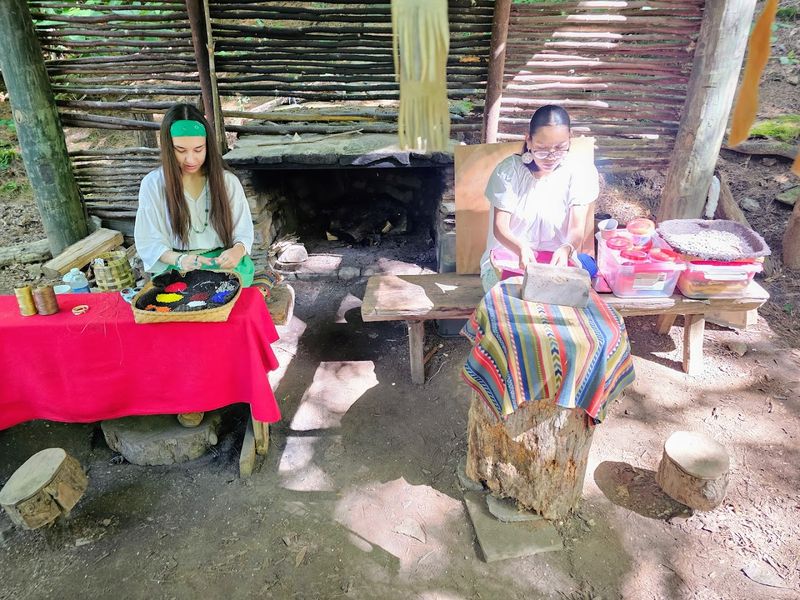
Watching someone weave a basket from river cane with practiced, fluid hands is genuinely mesmerizing. At Oconaluftee Indian Village, craft demonstrations are not performances put on for tourists.
They are real artisans doing real work, using the same techniques passed down through generations of Cherokee families.
Throughout the village, you might encounter potters shaping clay vessels, beadwork artists threading intricate patterns, or craftspeople fashioning tools from stone and bone. Each demonstration comes with explanation, so visitors understand not just how something is made but why it mattered in everyday Cherokee life.
A clay pot was not just a container. It was a survival tool, a trade item, and a form of artistic expression all at once.
Cherokee basket weaving in particular is recognized as one of the most sophisticated Native American art forms in existence. The patterns carry cultural meaning, and the skill required takes years to develop properly.
Watching a master weaver at work gives visitors a new appreciation for how much knowledge and patience goes into each finished piece. Many guests leave wanting to learn more about Cherokee art, and some even purchase handmade items from local artisans to bring a piece of that craftsmanship home.
The Iconic Seven-Sided Council House
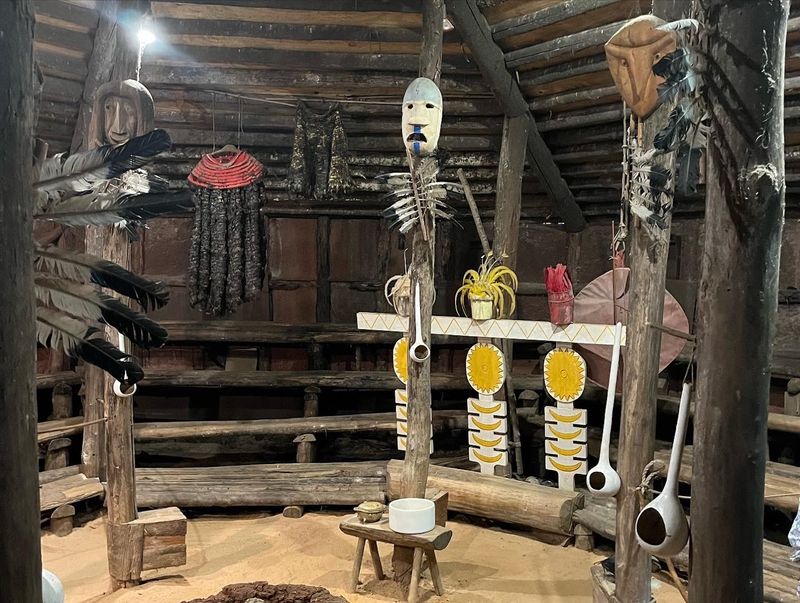
Right at the heart of the village stands one of the most architecturally fascinating structures in the entire site: the seven-sided council house. Round, sturdy, and built with careful attention to traditional design, this building is not just a showpiece.
It represents the very foundation of how Cherokee communities made decisions together.
In pre-colonial Cherokee society, the council house was where leaders, elders, and community members gathered to discuss important matters, resolve conflicts, and plan for the future. The seven sides of the structure were not arbitrary.
They symbolized the seven clans of the Cherokee Nation, a reminder that governance was built on unity and shared responsibility rather than individual authority.
Standing inside the council house during a tour is a genuinely moving experience. The space feels both ancient and surprisingly modern in its democratic spirit.
Cherokee governance prioritized community voice and collective wisdom long before those ideas became celebrated political ideals elsewhere in the world. For visitors who appreciate civics, history, or architecture, this structure alone is worth the trip.
It challenges assumptions about what sophisticated political organization looks like and reminds us that complex, thoughtful governance existed here in the Appalachian Mountains centuries before the founding of the United States.
Live Cultural Performances and Dances
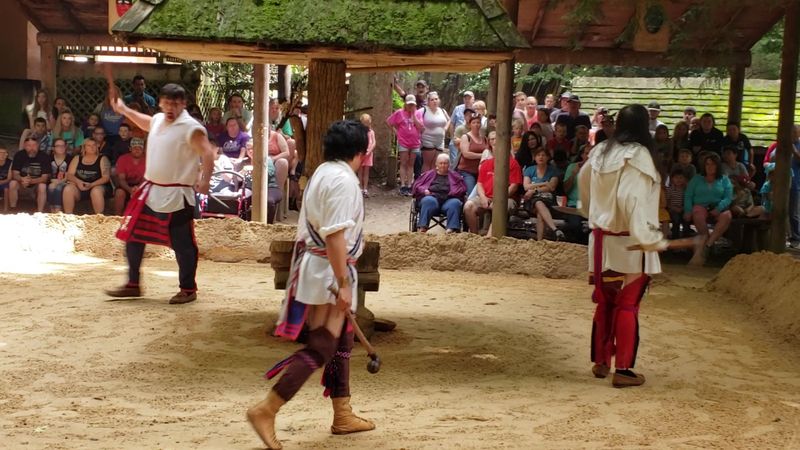
Some things cannot be fully communicated through words or photographs. Cherokee dance is one of them.
Throughout the day at Oconaluftee Indian Village, visitors have the opportunity to witness live performances that bring traditional ceremonies, social dances, and storytelling traditions to life in a way that is both educational and genuinely beautiful.
Each dance carries specific meaning. Some celebrate harvests or seasonal transitions, while others honor warriors, express gratitude, or retell important stories from Cherokee oral tradition.
Watching performers move in rhythm with hand drums and song creates an atmosphere that feels sacred and celebratory at the same time. Children often find themselves completely captivated, and many adults describe these moments as unexpectedly emotional.
The performers are members of the Cherokee community who take their roles seriously, not as entertainment workers but as cultural ambassadors sharing something precious with an outside audience. That intention comes through clearly in every movement and every song.
Visitors are encouraged to watch respectfully and ask questions afterward, turning the performance into a genuine cultural exchange. If you happen to be visiting during a special event or festival weekend, the performances may be even more elaborate, making timing your trip thoughtfully a very worthwhile consideration.
Weapons, Survival Skills, and Hunting Demonstrations
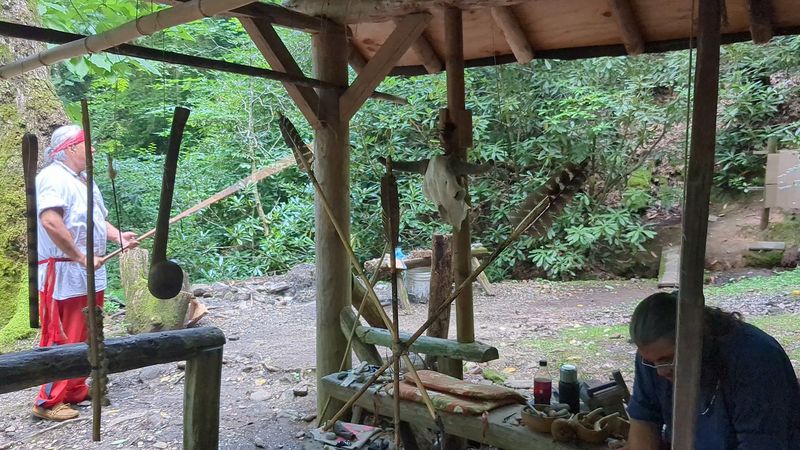
Long before grocery stores and manufactured tools, Cherokee people mastered the art of living from the land with remarkable skill and ingenuity. At Oconaluftee Indian Village, demonstrations of traditional weapons and survival techniques offer one of the most hands-on and eye-opening segments of the entire visit.
The blowgun demonstration is a crowd favorite. Watching a skilled demonstrator send a dart flying with quiet precision through a hollowed river cane tube makes visitors instantly rethink what ancient technology was capable of.
Arrow making, canoe carving, and fire-starting techniques are also shown throughout the village, each explained in the context of how Cherokee hunters and families relied on these skills for daily survival in the Appalachian wilderness.
What stands out most is the combination of practicality and elegance in Cherokee tool-making. Nothing was wasteful.
Materials were sourced from the surrounding forest with deep ecological knowledge, and each tool was designed to serve multiple purposes efficiently. For young visitors especially, these demonstrations spark genuine excitement about history in a way that classroom lessons rarely achieve.
Seeing someone carve a functional arrow from raw wood using only traditional methods makes the past feel suddenly, thrillingly real rather than distant and abstract.
Interactive Hands-On Learning Experiences
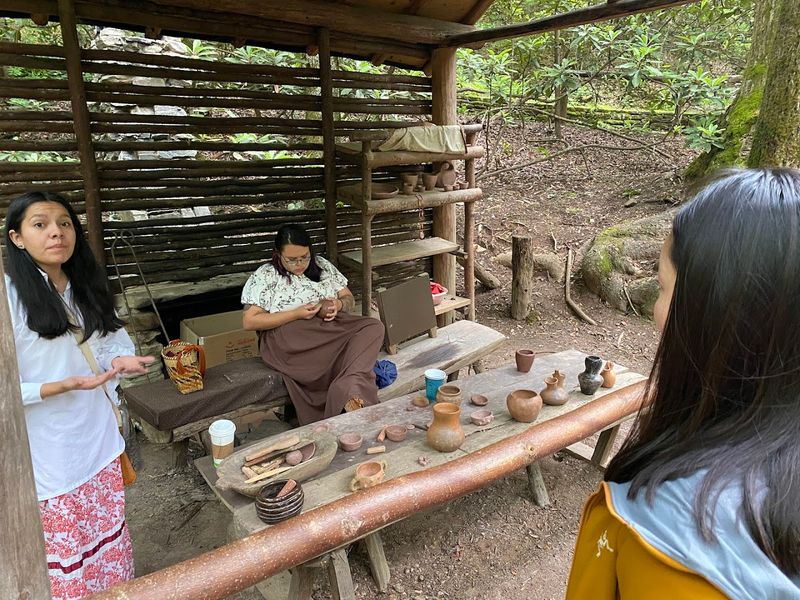
There is something uniquely powerful about learning by doing. Oconaluftee Indian Village understands this deeply, which is why select portions of the visit invite guests to put down their cameras and actually participate in traditional Cherokee activities under the guidance of skilled educators and artisans.
Depending on the day and the available programming, visitors might get to try their hand at beadwork, shape a small piece of clay, or attempt a basic weaving pattern. These activities are not watered-down tourist gimmicks.
They are genuinely instructive moments that give participants a visceral appreciation for how much skill, patience, and knowledge went into everyday Cherokee crafts. Even attempting something simple for five minutes changes how you look at a finished piece.
For families traveling with children, these interactive moments tend to become the most memorable part of the whole trip. Kids who might drift during a standard tour light up when they get to touch, try, and create something themselves.
Teachers who bring school groups frequently note that the hands-on components deepen student engagement and retention far beyond what traditional classroom instruction achieves. Booking ahead or asking about scheduled activity times when you arrive is a smart move to make sure you do not miss these opportunities during your visit.
Visitor Experience in the Heart of Cherokee, NC
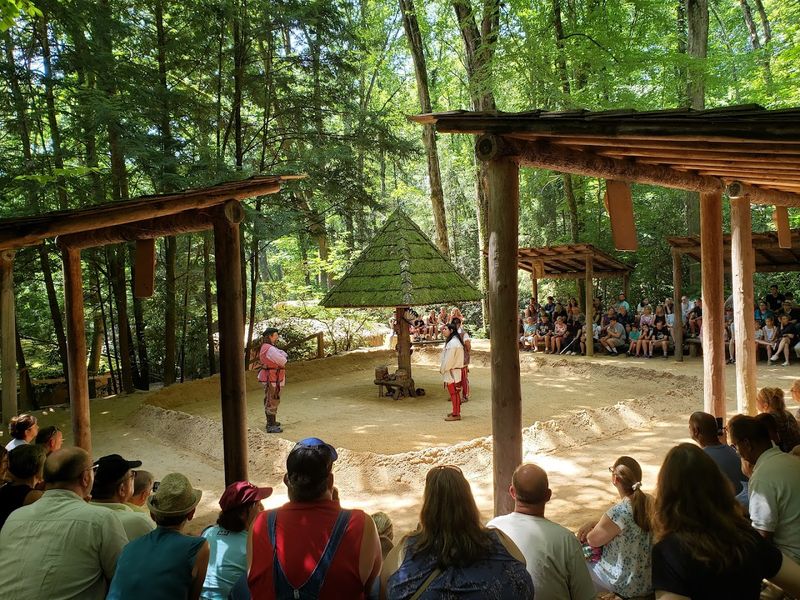
Cherokee, North Carolina is one of those places that rewards visitors who take the time to explore beyond the main road. Oconaluftee Indian Village sits right in the heart of this mountain community, making it an easy centerpiece for a full day or even a long weekend of culturally rich exploration.
The village operates seasonally, typically from mid-May through late October, so planning your visit around those months is essential. Pairing a trip to the village with a stop at the nearby Museum of the Cherokee People gives visitors a fuller picture of Cherokee history, from ancient origins through the devastating Trail of Tears period and into the thriving modern community that exists today.
The outdoor drama Unto These Hills, performed in summer evenings nearby, adds yet another layer of storytelling to the experience.
Admission is reasonably priced, parking is available on site, and the Cherokee community welcomes visitors warmly throughout the season. Gift shops in the area offer authentic Cherokee-made crafts, jewelry, and artwork, so supporting local artisans is easy and meaningful.
Whether you are making a day trip from Asheville, Knoxville, or Atlanta, a visit to Oconaluftee Indian Village is genuinely one of the most culturally rewarding stops the Southern Appalachian region has to offer.