
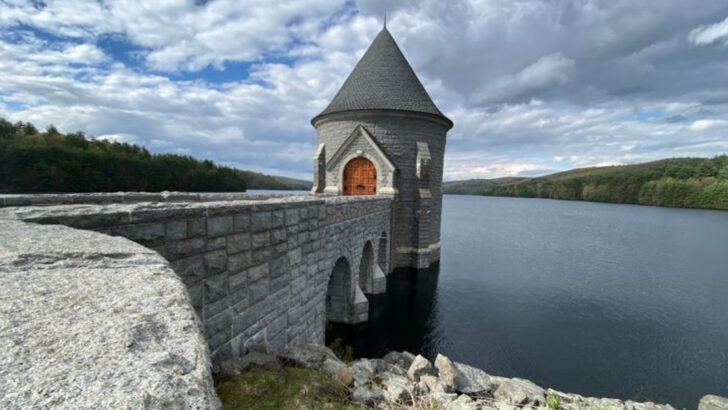
Tucked into the hills of Litchfield County, Barkhamsted, Connecticut is a town where the trees outnumber the people by a landslide.
Most of its land is protected forest, state parkland, or watershed territory, leaving very little room for strip malls or subdivisions.
For those who crave wide open spaces, clean air, and the sound of a river instead of traffic, Barkhamsted feels like a secret the rest of the state has been keeping.
Here are ten reasons why this deeply wooded corner of New England has earned a devoted following.
A Town Defined by Forest, Not Development
Most Connecticut towns have at least a strip of chain restaurants or a busy commercial corridor. Barkhamsted has almost none of that, and residents wouldn’t have it any other way.
More than 70 percent of the town’s land is forested or protected open space, making it one of the least developed municipalities in the entire state.
Strict zoning laws have kept large-scale development at bay for decades. Conservation easements, land trusts, and state ownership all work together to ensure that what’s wild stays wild.
Builders face significant restrictions, and that’s by design. The community has consistently voted to protect its rural identity over economic expansion.
What results is a landscape that genuinely feels untamed. Driving through Barkhamsted, you’re more likely to spot a white-tailed deer than a convenience store.
The forest isn’t just a backdrop here — it is the town. For people exhausted by overdeveloped suburbs, that distinction is everything.
Barkhamsted proves that a Connecticut community can choose trees over traffic lights, and thrive because of it.
The Vast Wilderness of Peoples State Forest
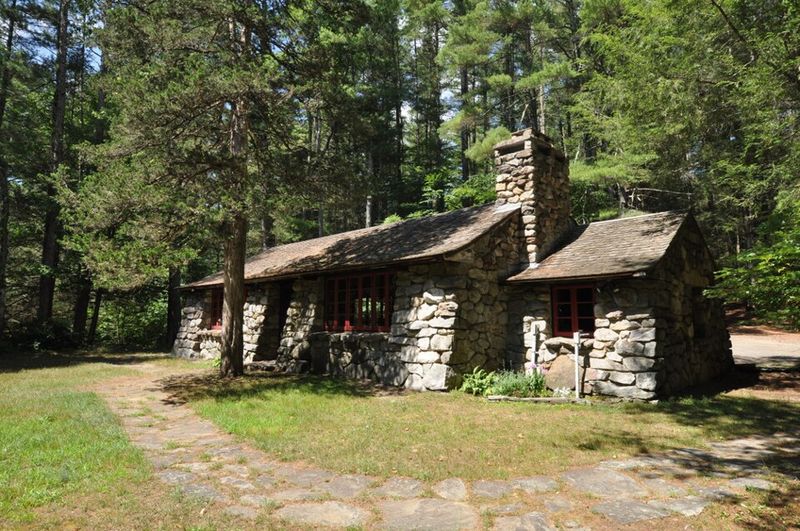
Peoples State Forest is the crown jewel of Barkhamsted’s outdoor offerings. Stretching across thousands of acres along the Farmington River valley, this state forest features a well-maintained network of hiking trails, shaded picnic areas, and elevated overlooks with sweeping views of the surrounding hills.
It’s the kind of place that rewards repeat visits because every season transforms it completely.
Spring brings wildflowers and rushing streams. Summer turns the canopy into a thick green ceiling that keeps trails cool even on hot days.
Fall is arguably the most spectacular time, when the hillsides explode in orange, red, and gold. Winter offers a hushed, snow-dusted calm that makes you feel like the only person left on earth.
The forest is well-loved by hikers, birdwatchers, and families looking for a genuinely immersive outdoor experience without the crowds of more famous parks. Trails range from easy riverside walks to more challenging ridge climbs.
There’s also a nature museum on-site that adds an educational layer, making it a fantastic destination for school-age kids. Peoples State Forest is not just a park — it’s the soul of Barkhamsted.
American Legion State Forest’s Quiet Escape
Just across the Farmington River from Peoples State Forest sits American Legion State Forest, a quieter and arguably more intimate companion forest. Where Peoples draws more day hikers and families, American Legion tends to attract those who want something slower — a campsite by the river, a morning of fly fishing, or an afternoon paddling downstream without another soul in sight.
The campground here is one of Connecticut’s more peaceful public options. Sites are spread out enough to feel private, and the sound of the river acts as a natural white noise machine all night long.
Kayakers and canoeists love launching from this forest because the Farmington River offers a mix of calm stretches and gentle rapids that suit a range of skill levels.
Fishing is serious business here too. The Farmington River is one of the finest trout streams in the Northeast, and American Legion State Forest gives anglers direct access to some of its best stretches.
Whether you’re casting a line at dawn or roasting marshmallows at dusk, this forest delivers the kind of unhurried outdoor experience that feels increasingly hard to find in southern New England.
The Farmington River Runs Through It
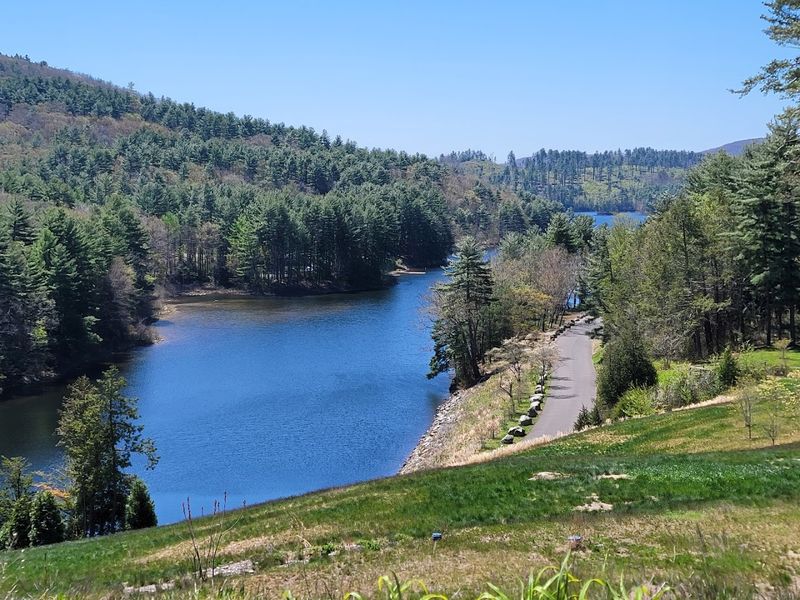
Not many rivers in Connecticut carry the designation of Wild and Scenic, but the Farmington River does — and it earned that title honestly. As it winds through Barkhamsted, the river cuts through rocky gorges, slides past sandy banks, and rolls over ancient boulders in a display that feels far more dramatic than you’d expect from a New England waterway.
Fly fishing on the Farmington is practically legendary among anglers in the Northeast. The river is stocked with brown and rainbow trout, but it also supports a healthy wild population.
Catch-and-release culture is strong here, and on any given morning you might count a dozen waders spread across a half-mile stretch, each one locked in quiet concentration.
Paddlers also adore this river. Sections running through Barkhamsted offer enough current to keep things exciting without being dangerous for intermediate kayakers.
The water quality is exceptional, partly because so much of the surrounding land is protected from development. Swimming holes pop up along the banks in summer, drawing locals who treat the river like a backyard pool.
The Farmington isn’t just a geographic feature of Barkhamsted — it’s the heartbeat of the whole community.
Barkhamsted Reservoir’s Protected Beauty
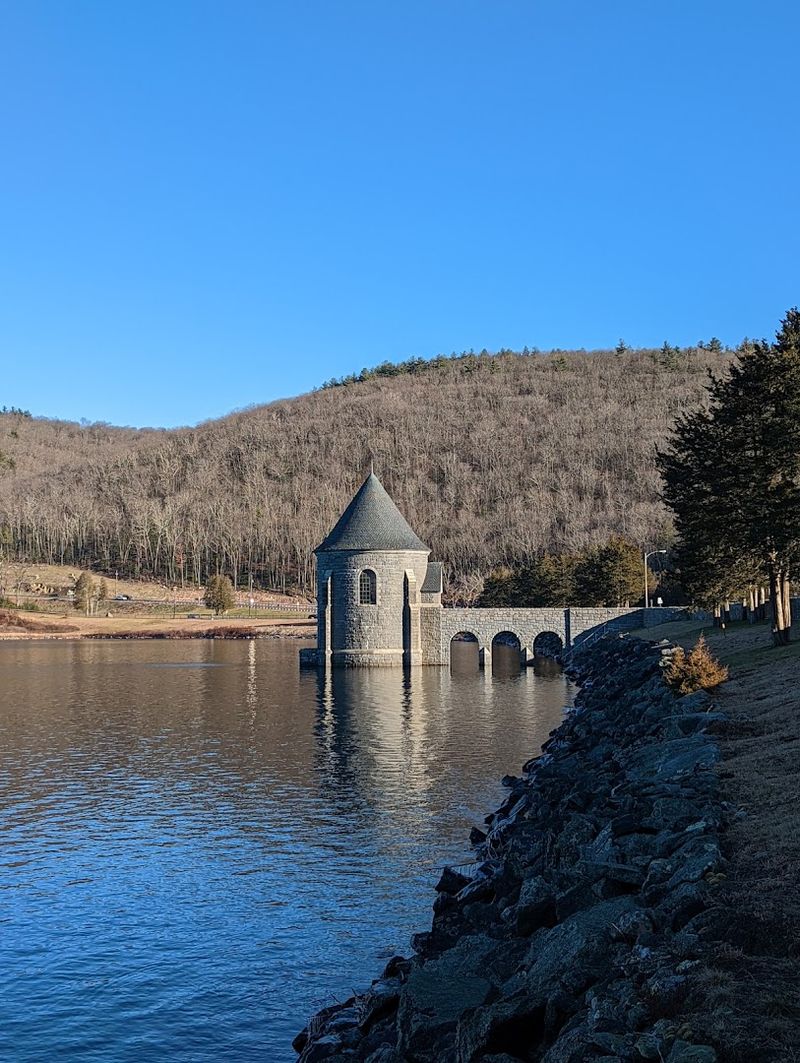
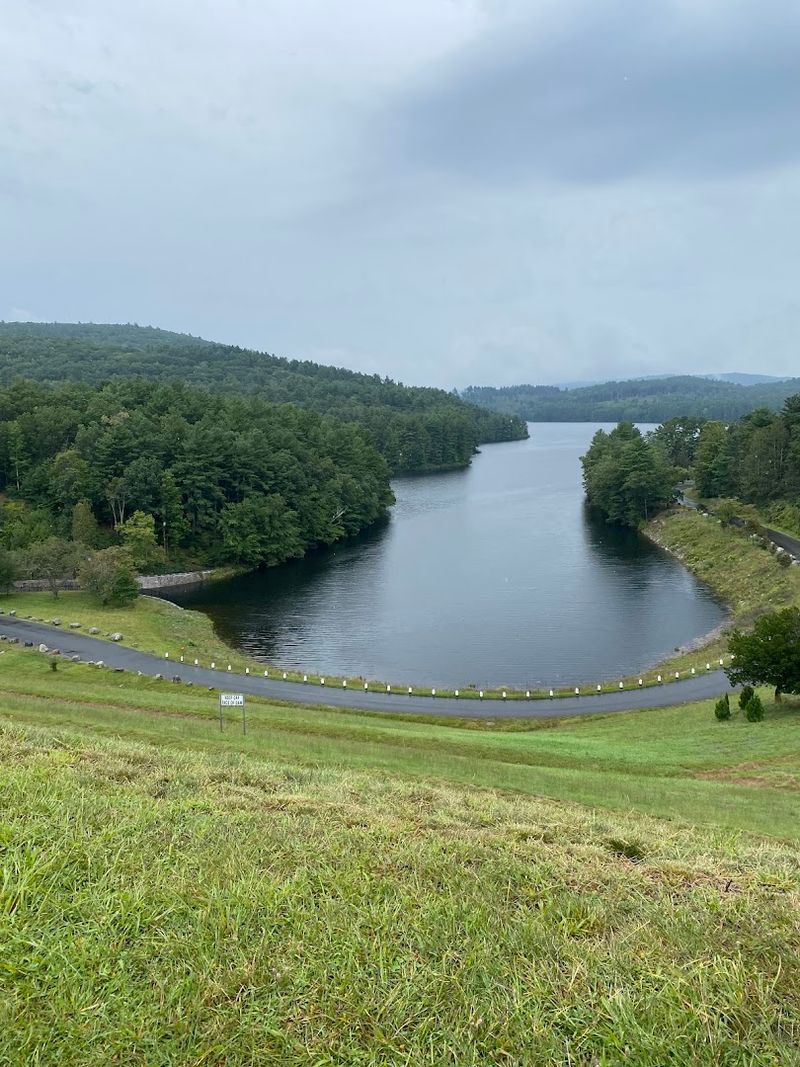
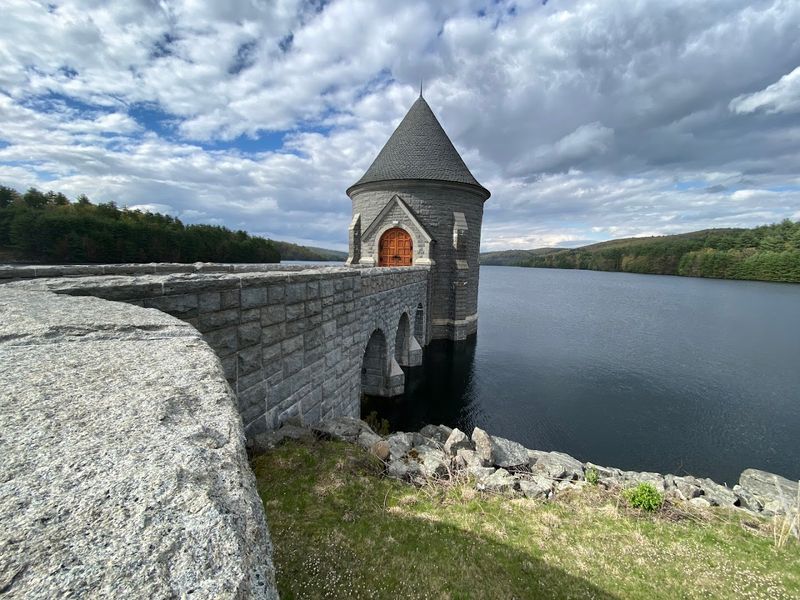
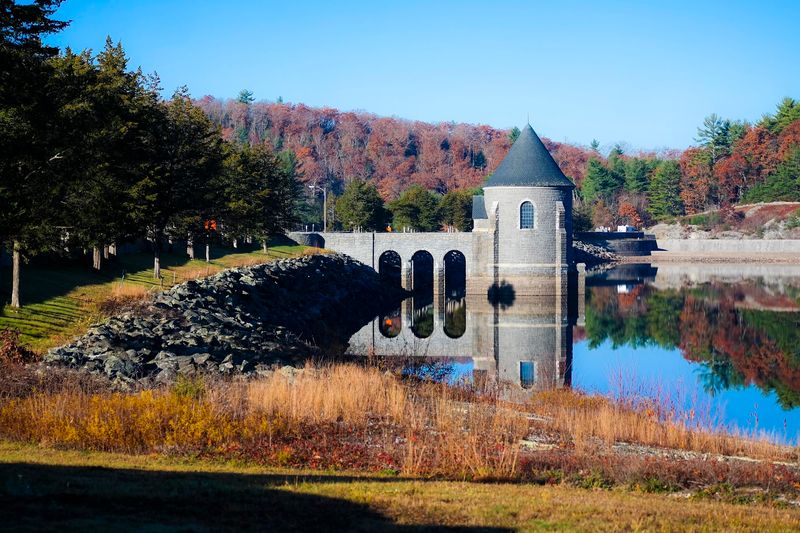
Few bodies of water in Connecticut are as pristine as Barkhamsted Reservoir. Built in the early 20th century to supply drinking water to Hartford and surrounding communities, the reservoir is ringed by miles of undeveloped shoreline that look almost exactly as they did a century ago.
Because it serves as a public water supply, strict regulations prevent construction, motorized boats, and most recreational activities right at the water’s edge.
Those restrictions, frustrating as they might seem to some, are exactly what make the reservoir so visually stunning. There are no docks, no cabins, no boat launches cluttering the view.
Just water, sky, and an unbroken wall of trees stretching as far as the eye can see. Driving along the roads that skirt its edges feels like passing through a landscape painting.
Wildlife thrives along the reservoir’s protected shores. Osprey, bald eagles, great blue herons, and river otters all call this area home.
The silence around the water is the kind that settles into your chest and stays there for hours after you leave. For visitors who just want to stop, breathe, and stare at something genuinely beautiful, the Barkhamsted Reservoir delivers without asking anything in return.
A Population That Values Privacy and Space
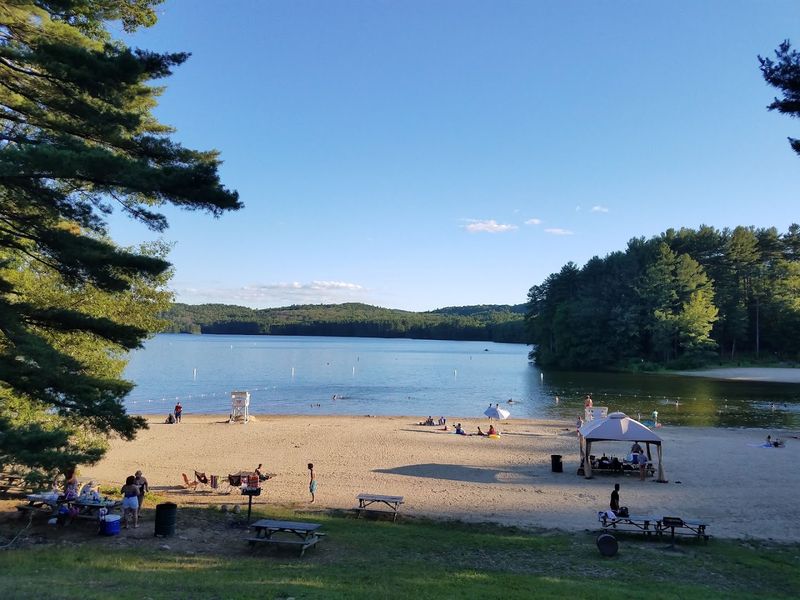
With fewer than 4,000 residents spread across nearly 40 square miles, Barkhamsted is about as sparsely populated as a Connecticut town can get. Homes here aren’t packed into subdivisions or lined up neatly along sidewalks.
Instead, they’re scattered across forested hillsides, tucked behind long driveways, and sometimes hidden so completely that you wouldn’t know a house existed until you were practically at the front door.
That’s the appeal for the people who choose to live here. Privacy isn’t a luxury in Barkhamsted — it’s the default setting.
Neighbors exist, but they’re not in your business or your sightline. You can sit on your porch for an entire afternoon and hear nothing but wind through the leaves and maybe a woodpecker in the distance.
For people fleeing the constant stimulation of suburban or city life, that kind of quiet is genuinely therapeutic.
The community that has formed here is small but tight-knit in a low-key way. People wave on the road, look out for one another during storms, and share a collective pride in keeping the town the way it is.
Growth isn’t the goal. Preservation is.
And that shared value creates a community culture unlike anything you’ll find in more populated Connecticut towns.
Historic Roots Hidden in the Woods
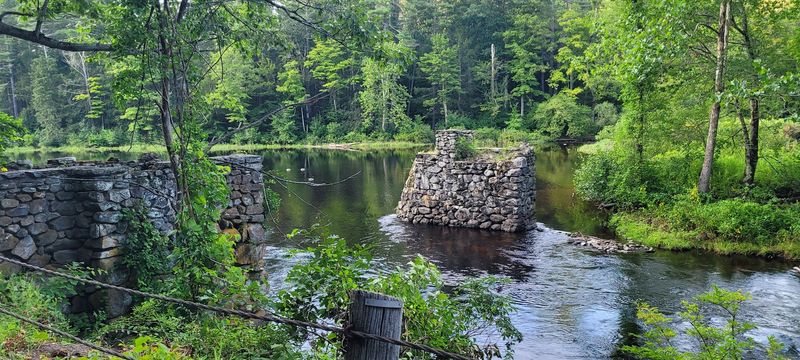
Wander off the main trails in Barkhamsted’s forests and you might stumble across something unexpected: stone walls snaking through the trees, cellar holes filled with decades of fallen leaves, or the ghost of an old road now swallowed by undergrowth. These remnants are the fingerprints of colonial settlers who cleared this land, farmed it, and eventually left as Connecticut’s agricultural economy shifted in the 19th century.
Barkhamsted was officially incorporated in 1779, and its history includes everything from early sawmills to a fascinating community known as the Lighthouse, a mixed-race settlement that existed in the hills here for generations before fading into legend. Local historians have worked to document and preserve these stories, and walking through the woods with that knowledge turns a simple hike into something closer to time travel.
The stone walls alone tell a remarkable story. Building them required enormous labor, yet they now stand quietly beneath a forest canopy, forgotten by most passersby.
Connecticut has more historic stone walls per square mile than almost any place on earth, and Barkhamsted’s forests are full of them. Finding one while hiking and pausing to imagine the hands that built it is one of the most quietly moving experiences this town has to offer.
Outdoor Recreation in Every Season
One of the things that separates Barkhamsted from single-season destinations is how consistently rewarding it is throughout the year. Each season brings its own distinct reason to show up with hiking boots, a paddle, or a pair of skis.
The town’s natural infrastructure — its forests, river, and reservoirs — means there’s always something worth doing outdoors, regardless of the month on the calendar.
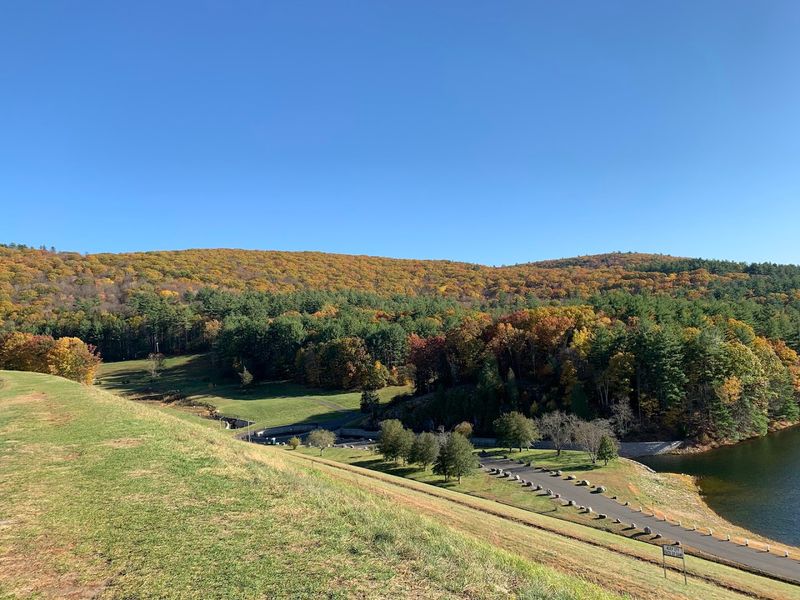
Fall draws the biggest crowds, and rightfully so. The ridge trails in Peoples State Forest offer some of the finest leaf-peeping views in all of Connecticut, especially in mid-October when the hillsides hit peak color.
Winter turns the forest into a hushed, white-blanketed playground ideal for cross-country skiing and snowshoeing. Trails that are muddy in spring become firm and fast under a good snowpack.
Spring and summer have their own rhythms. Wildflowers carpet the forest floor in April and May, making even a short trail walk feel like a nature documentary.
Summer is river season — swimming, kayaking, and fishing dominate the weekends. Because the terrain is largely undeveloped, there are no entrance fees for most activities, no reservations required, and no lines.
You just show up, step into the woods, and let the day unfold at whatever pace suits you.
Why It Appeals to Nature Lovers and Minimalists
There’s a certain type of person who hears about Barkhamsted and immediately understands the appeal. They’re not looking for a town with great restaurants or a packed event calendar.
They want space. They want to hear themselves think.
They want a life where the most complicated decision on a Saturday morning is which trail to take. Barkhamsted was built for exactly that kind of person.
The minimalist lifestyle fits naturally here. With few commercial distractions, residents tend to fill their time with the land itself — gardening, foraging, hiking, splitting firewood, watching the seasons change from a kitchen window.
It sounds simple because it is simple, and that simplicity is the whole point. People who move here often describe it as the first place they’ve lived where the noise of modern life genuinely fades.
Nature lovers find that Barkhamsted rewards patience and attention. This isn’t a place where wildlife is fenced in or curated for viewing.
Animals appear on their own schedule — a black bear crossing a logging road, a barred owl calling at midnight, a family of wood ducks on a quiet pond. Those moments don’t come with a ticket price or a tour guide.
They come to those who slow down enough to notice.
Essential Visitor Information for Planning Your Trip
Planning a trip to Barkhamsted requires a little more preparation than visiting a town with a downtown area full of shops and cafes. Commercial amenities are minimal here — there’s no grocery store inside town limits, and gas stations are sparse.
Smart visitors stock up on supplies in nearby Winsted, Torrington, or Simsbury before heading into the hills. Bringing your own food, water, and any gear you need is not optional — it’s essential.
Seasonal access to parks and trails can vary. Some campground areas in American Legion and Peoples State Forests open in late April and close by late October.
Winter trails may be unplowed or icy after storms, so checking Connecticut DEEP’s website before visiting is a smart habit. Cell service in parts of Barkhamsted is unreliable, so downloading offline maps before you arrive is genuinely useful advice.
Respect for conservation rules is taken seriously here. No off-road vehicles, no littering, no fires outside designated areas.
The reason this place looks the way it does is because people have protected it carefully for generations. Visitors who come with that understanding tend to leave feeling grateful rather than inconvenienced.
Barkhamsted rewards those who come prepared and leave nothing behind except footprints.