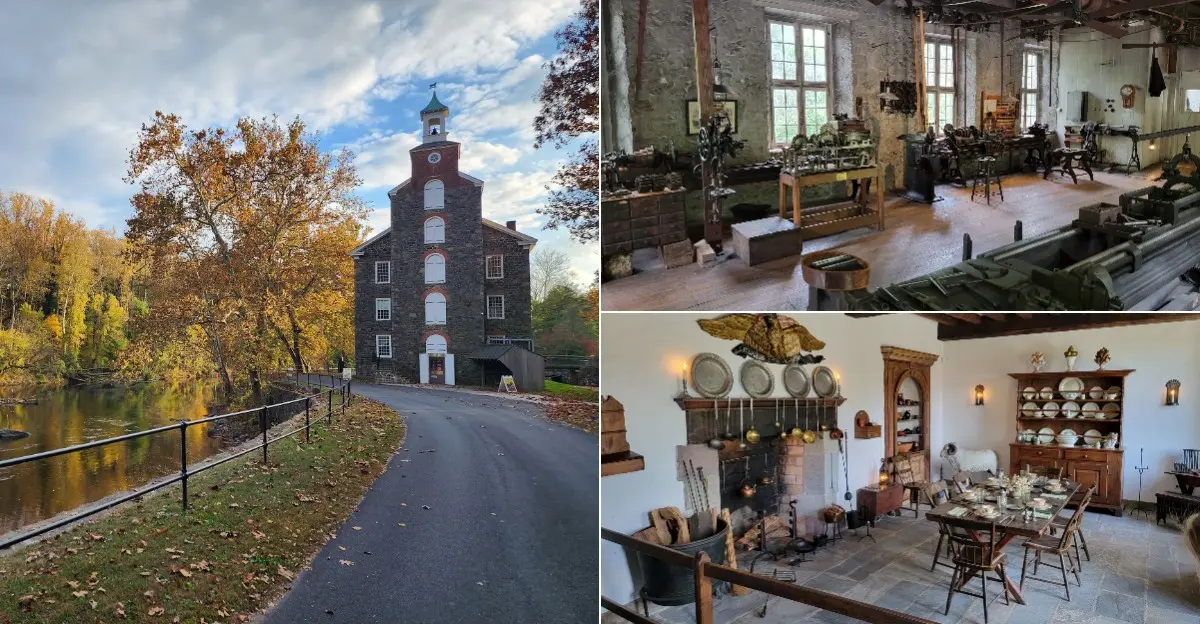
Eight-ton stone wheels still roll here every day, crushing the ingredients of black powder. Then a staff member sets off a small powder blast, just so you can hear what all the fuss was about.
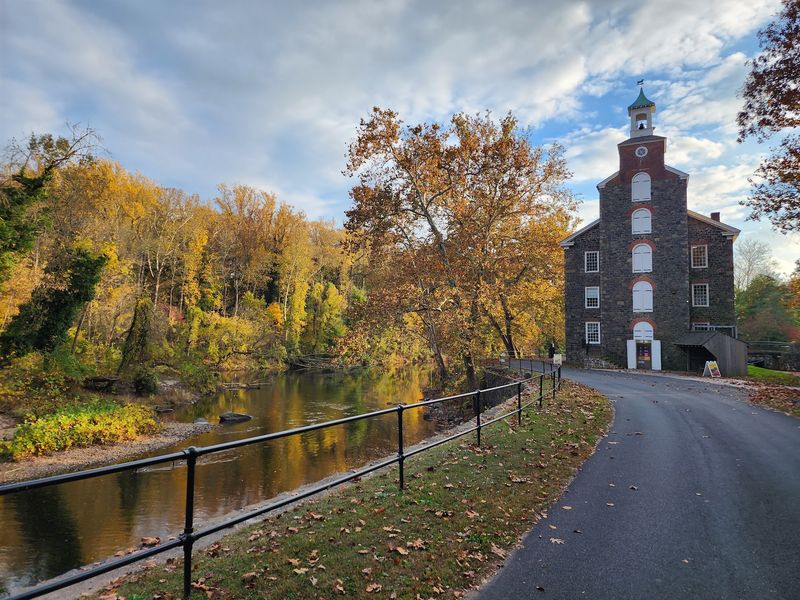
The mills along this riverbank made gunpowder from 1802 until 1921. A famous family built its first American home right on the hill above them.
I can’t imagine sipping morning coffee that close to a powder yard, but they did.
This spot in Delaware covers 235 acres of trails, workshops, gardens, and old stone buildings. You can ride a shuttle between stops or wander at your own pace beside the water.
I like how the story here feels hands-on instead of dusty. Machines hum, wheels turn, and history makes noise.
So how loud was the Industrial Revolution, really?
Start Indoors With 120 Tiny Inventions That Changed Everything
Every trip to Hagley Museum and Library begins in the Visitor Center. That’s where you grab tickets, pick up a visitor guide, and meet the Nation of Inventors exhibition.
More than 120 patent models fill this space. Inventors once had to build small working versions of their ideas to win a patent.
Hagley holds a huge collection of them, covering American ideas from the 1790s through the late 1800s.
Some models look like dollhouse furniture. Others look like puzzles your grandpa would refuse to put down.
Each one shows how ordinary people tried to make daily life a little easier.
A self-guided walk through the exhibit takes about 30 to 40 minutes. That’s a solid warm-up before you head outside.
It also gives you a fresh way to think about everything else on the grounds.
Here’s a smart move for planning. Free guest Wi-Fi is available in the Visitor Center, so you can check maps or notes before leaving.
The Museum Store sits right next door if you want a souvenir later.
Honestly, it’s hard to look at a mousetrap the same way after this. Who knew clever gadgets could be so addictive?
Eight-Ton Wheels Still Roll In The Old Powder Yard
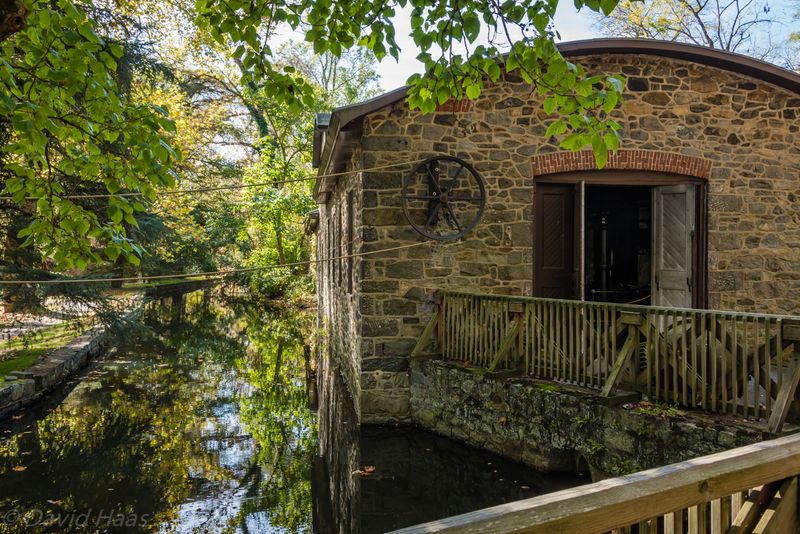
Massive iron wheels, each weighing eight tons, rumble inside a stone roll mill by the river. Workers once used mills like this to grind and blend black powder ingredients.
The Hagley Powder Yard was the original black powder works of the DuPont Company. It ran from the early 1800s until the mills closed in 1921.
Today, the old buildings line the Brandywine with original machinery still inside.
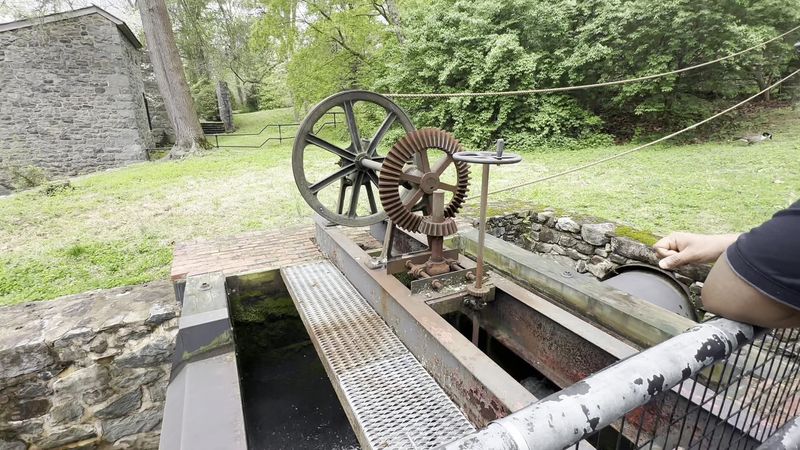
Daily demonstrations bring the equipment back to life. You’ll see how the river’s flowing water powered the work long before electricity showed up.
That idea sounds simple until you watch tons of metal start turning.
Most guests spend about 40 to 60 minutes exploring this area. Signs along the path explain each building, so you never feel lost.
Comfortable shoes are a wise call since the yard is spread out.
The setting adds a lot too. Stone walls, trees, and moving water make the factory feel oddly peaceful now.
Workers back then surely didn’t describe it that way.
Hang around for a full demonstration if you can. Watching the machines move tells the story better than any sign ever could.
Cover Your Ears For The Gunpowder Testing Blast
Boom. That’s the short version of one of Hagley’s most memorable demos.
Gunpowder testing was a serious job at the mills. Workers had to make sure each batch performed the way it should.
Today, a daily gunpowder testing demonstration shows how that process worked.
The blast is small and carefully controlled, so don’t expect fireworks over the river. Still, it gives you a real sense of the power those workers handled every single day.
The smoke and sound make the history feel much less abstract.
Kids usually love this part, and adults rarely play it cool either. It’s a great moment to talk about why safety rules mattered so much.
The mill workers took huge risks, and this demo helps you respect that.
Check the daily schedule at the Visitor Center when you arrive. Demonstration times can shape the rest of your plan.
Missing it because you lingered too long at the patent models would sting a little.
Bring your phone for photos, since handheld devices are welcome. Just leave the selfie stick and tripod at home.
Hagley doesn’t allow them, along with drones.
Steam, Gears, And A 19th-Century Machine Shop Worth Hearing
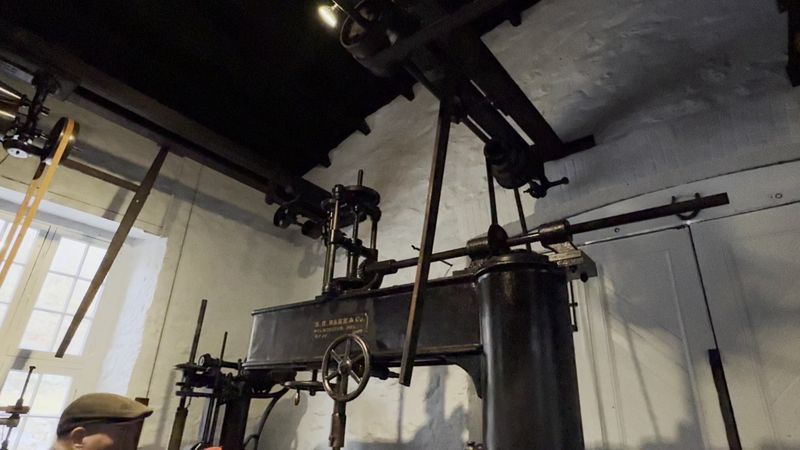
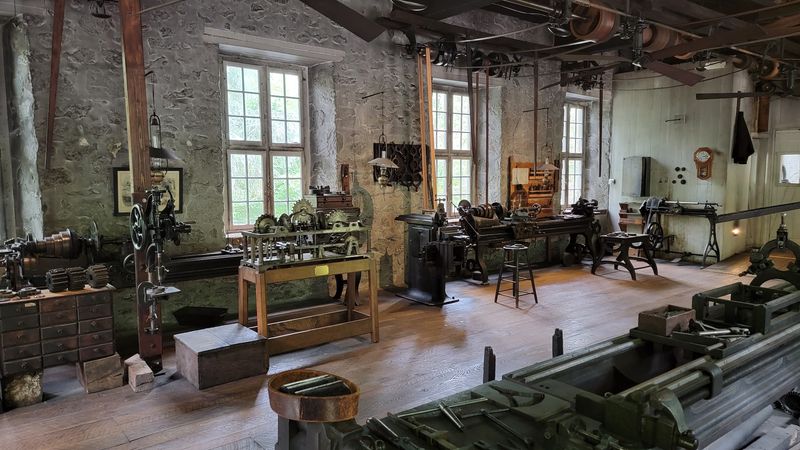
Leather belts snap overhead while old lathes spin below. Welcome to the machine shop, where 1800s technology still gets a workout.
Hagley runs daily demonstrations in a 19th-century machine shop. Machinists here built and repaired parts that kept the powder mills running.
Without this shop, the whole operation would grind to a halt.
Nearby, a coal-fired steam engine shows the next big leap in power. Water had driven the mills for years.
Steam gave factories more control, and you can see that shift happen right in front of you.
I believe this is where the phrase Industrial Revolution finally clicks. You stop picturing it as a textbook chapter.
It becomes noise, motion, and skilled hands solving problems.
Curious kids will have plenty of questions about how one engine moves so many tools. Grown-ups might quietly have the same questions.
The demonstrators are there to explain, so ask away.
Plan to pair this stop with the roll mill demo. Together, they show water power and steam power side by side.
That’s a pretty big history lesson packed into one riverside stroll in Delaware.
Tour The Georgian Home Where The Family Story Began
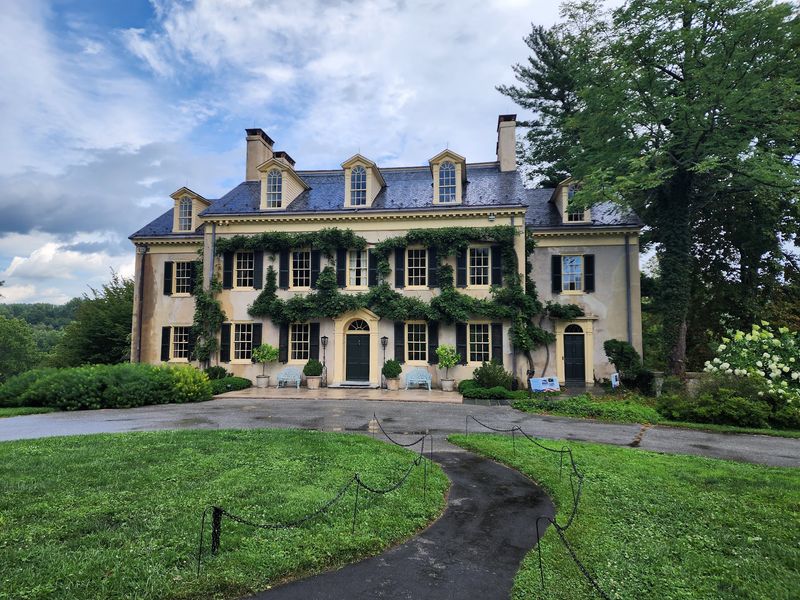
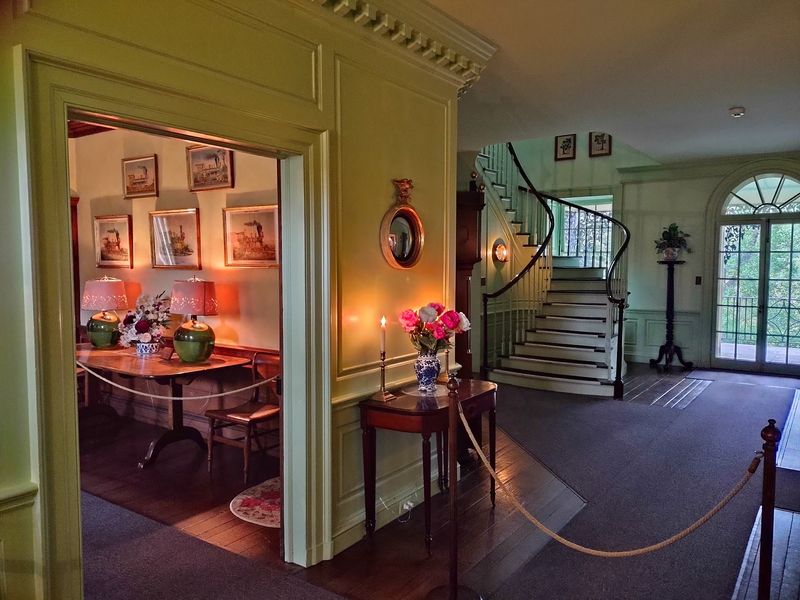
Éleuthère Irénée du Pont founded his powder mills here in 1802. A year later, he built Eleutherian Mills, a Georgian-style house on the hill above them.
It was the first du Pont family home in America. Guided tours now share 150 years of family history inside its rooms.
Family artifacts and decorative arts help tell how the household changed over time.
Tours typically last 45 minutes to an hour. A shuttle carries you from the powder yard up to the house and garden area.
The wheelchair-accessible shuttle makes the climb easy for everyone.
The location says a lot. The family lived within sight of a dangerous workplace instead of far away from it.
That choice adds a personal layer to the business story.
Hagley sits at 200 Hagley Creek Road, Wilmington, DE 19807, but this house feels like the true starting point. Everything else on the property grew from the decisions made here.
Go in curious about the people, not just the furniture. Their ambitions shaped a company and a whole chapter of American industry.
Slow Down In A Garden With French Roots
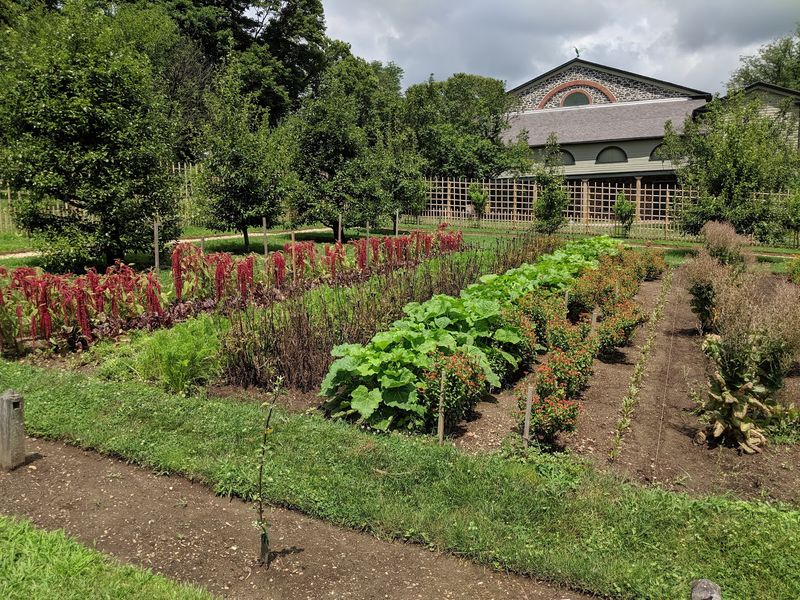
After all those gears and blasts, the E. I. du Pont Garden feels like a deep breath.
It sits near the family home and invites a slower pace.
Visitors can explore this historic garden on their own. It’s a nice change of rhythm after the busy powder yard.
Wander the paths, enjoy the plantings, and let your feet recover a bit.
Gardens like this mattered to early American households. They supplied food and offered a little beauty in a hardworking world.
Seeing one beside a famous industrial site shows the daily life side of history.
Photographers will appreciate this stop, especially in warmer months. Handheld cameras and phones are welcome throughout the grounds.
Just remember that tripods stay home.
Timing helps too. Many people visit the garden right after their house tour, since the two sit close together.
That way, you skip extra shuttle rides and keep your day flowing smoothly.
Is it the flashiest part of Hagley Museum and Library? Probably not.
Still, quiet corners often stick with you longest, and this one earns its place in your plans.
Workers’ Hill Shows Who Really Kept The Mills Running
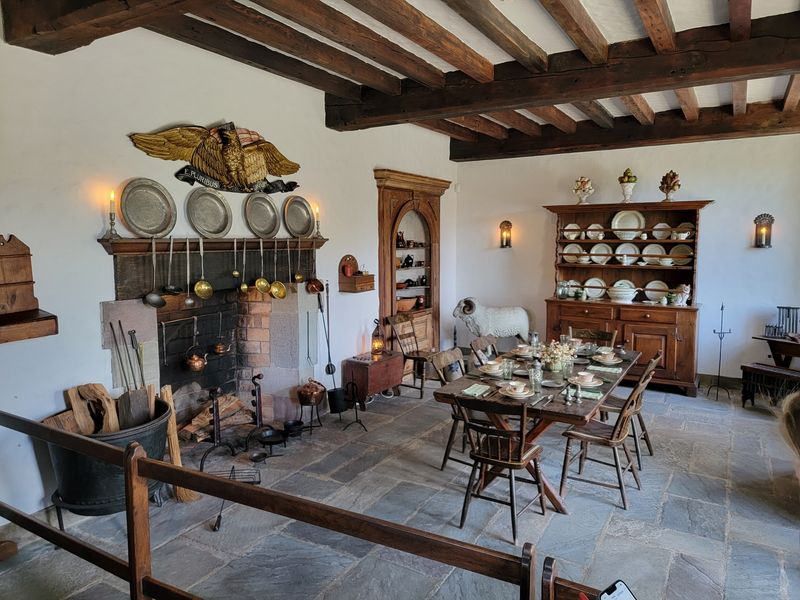
Owners get the headlines, but workers did the heavy lifting. Workers’ Hill makes sure their side of the story gets told.
This community includes restored homes once used by employees and their families. You’ll also find a one-room schoolhouse.
Together, they show what everyday life looked like for people tied to the powder mills in the 1800s.
I like how this area balances the grand family home down the road. It reminds you that the Industrial Revolution was built by regular folks.
They raised kids, cooked meals, and walked to work beside a risky job.
The schoolhouse is a great spot for younger visitors. Ask them to compare it with their own classroom.
One room for everybody sounds wild until you realize it was normal back then.
Picnic tables are also available on Workers’ Hill. Pack a lunch and take a break here between stops.
There’s no full cafe on site, though vending machines are available.
Give this stop real time instead of rushing past. The stories here might be the most relatable ones on the whole property.
Pack A Picnic And Plan For More Hours Than You Think
Two to three hours is the usual visit here. A full day is completely possible, and many people wish they had planned for one.
Hagley spreads across 235 acres along the Brandywine River. A shuttle connects the Visitor Center, the powder yard, and the home and garden.
It’s wheelchair accessible, and most buildings are too.
Food takes a little planning. Picnics are welcome, with tables in the powder yard, on Workers’ Hill, and near the Visitor Center parking area.
Vending machines can cover quick snack needs.
Hours matter as well. Hagley is open six days a week and closed Wednesdays to general visitors.
From mid-March through early November, hours run 10 a.m. to 5 p.m.
Winter hours end at 4 p.m. Last admission is one hour before closing, but arriving earlier gives you a far better shot at seeing everything.
Wednesdays aren’t totally quiet, though. They’re reserved for group tours, school programs, member walking, and Summer Nights at Hagley.
Check before you go so your Delaware road trip doesn’t hit a locked gate.
Holiday Lights, Races, And A Smithsonian Badge Of Honor
Hagley isn’t stuck in the 1800s when it comes to fun. The calendar stays busy year-round.
Holidays at Hagley runs from November 27, 2026, through January 3, 2027. It’s a cheerful time to see the historic property dressed for the season.
Remember that Hagley closes on Thanksgiving and Christmas Day, with early 2 p.m. closings on Christmas Eve and New Year’s Eve.
Spring brings Hagley’s 5k Along The Brandywine in April 2027. Running past old powder mills sure beats another lap around the neighborhood.
Families can also look for Science Sparks!, a recurring drop-in program.
The museum’s reputation backs up all this activity. Hagley Museum and Library opened in 1957 and has been accredited by the American Alliance of Museums since 1972.
In 2014, it became the first Smithsonian Affiliate in Delaware.
Its library focuses on American business and technology, which fits the whole place perfectly. Researchers and casual visitors both find something here.
So pick a season and go. Between spinning wheels, puffs of smoke, and riverside trails, this estate turns early American industry into an adventure worth the drive.