

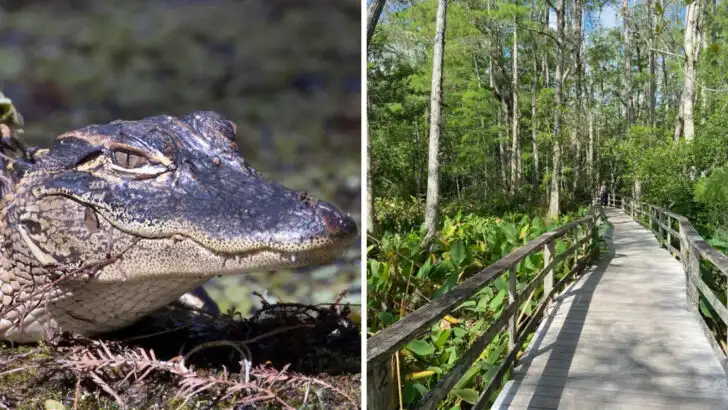
If you are craving a gentle adventure with big Florida payoffs, the 2.25-mile boardwalk at Corkscrew Swamp Sanctuary delivers.
You glide over wetlands, pine flatwoods, and the largest old-growth bald cypress forest in North America without getting your shoes muddy.
Wildlife appears around quiet bends like a secret reveal, and every turn feels curated for awe.
Plan well, arrive early, and this serene walk becomes the highlight of your Naples escape.
Boardwalk Overview and Route Essentials
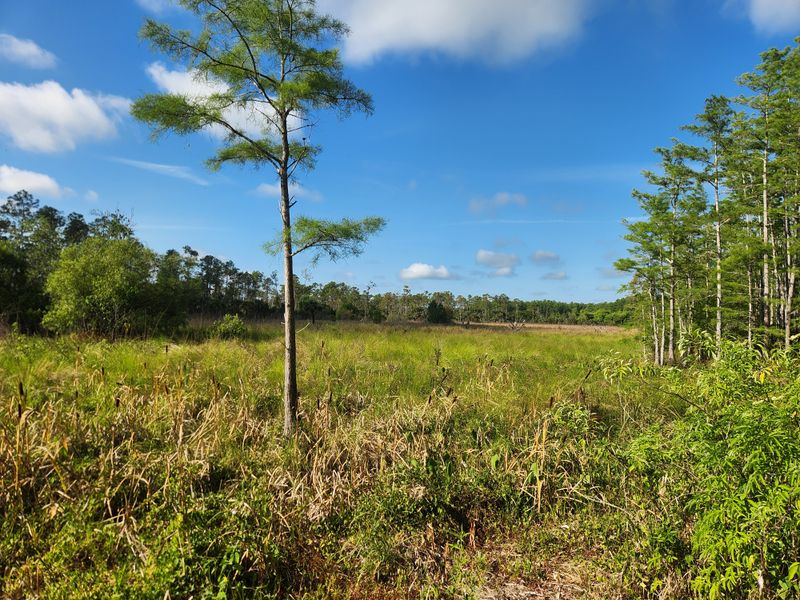
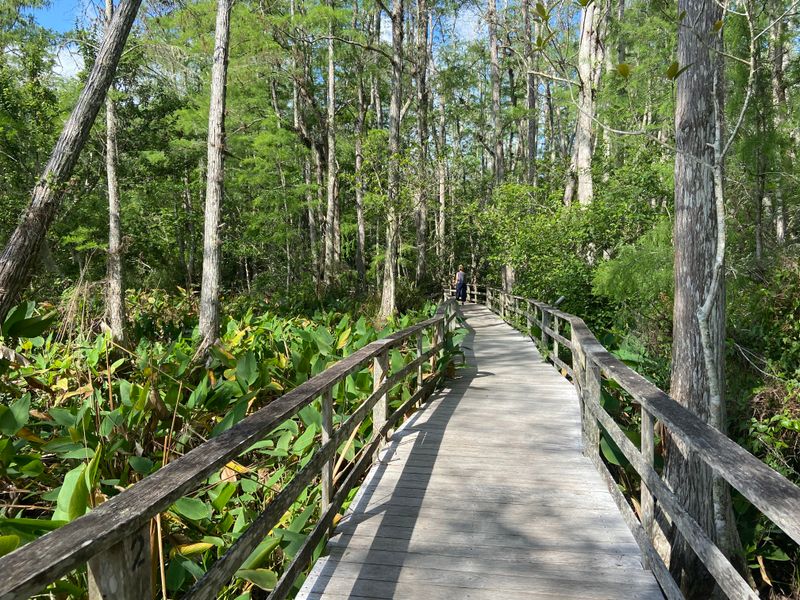
The beauty of Corkscrew’s 2.25-mile boardwalk is how it floats you across habitats without any guesswork. You step onto smooth planks, follow clear signage, and relax knowing the loop guides you back.
It is easy on knees and strollers, shaded by cathedral-like cypress, and punctuated by benches where you can pause and listen.
You will pass pine flatwoods, open wet prairie, and strands of old-growth bald cypress that feel ancient and dignified. Wayfinding markers keep your bearings as the trail curves into different ecotones, each with a distinct soundtrack of frogs, woodpeckers, or breeze.
Even on a warm day, shade and occasional airflow make the pace comfortable.
Plan for last admission by midafternoon so you have time to linger. Staff and volunteers at the welcome center outline the route and highlight recent wildlife sightings on a chalkboard.
If you prefer a shorter outing, there are signed cutoffs, yet the full loop rewards patience with more variety and unexpectedly quiet pockets.
Go early for the best wildlife activity, especially in cooler months. Crowds thin deeper along the boardwalk, and you will appreciate how the elevated path protects delicate wetlands underfoot.
Keep your stride steady, take your time at overlooks, and let the boardwalk do the navigating.
Bring water, sun protection, and binoculars if you enjoy birding. The surface is even and accessible, making it a great choice for multi-generational outings and travelers recovering from tougher hikes.
You will end feeling refreshed rather than spent, with enough energy left to explore exhibits, the gift shop, and interpretive displays.
Every turn of the route shows a different mood: reflective blackwater, bright prairie, or shaded green tunnels. You will notice how sound changes with habitat, a clue that you are moving through a living mosaic.
By the time you step off the boards, you will understand why such a simple path feels so rewarding.
Pine Flatwoods: The Sunny Beginning
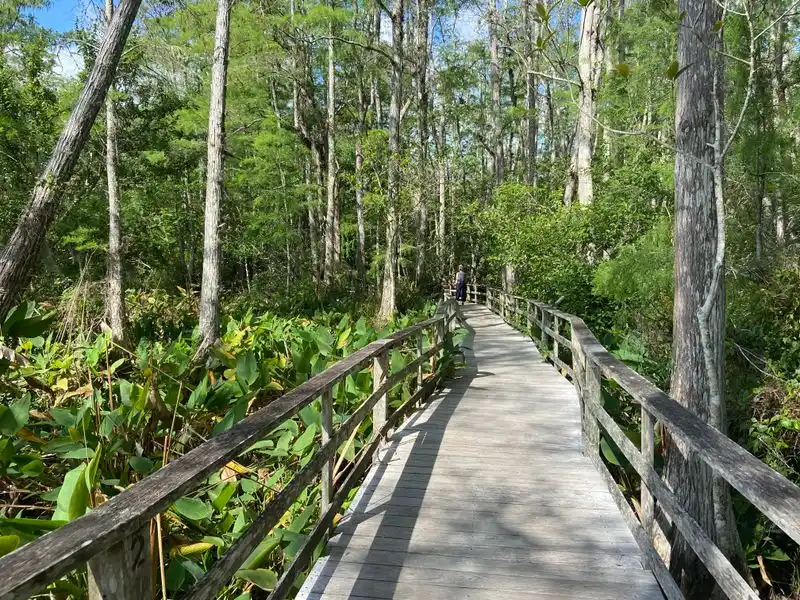
The boardwalk often greets you with bright, open pine flatwoods. Longleaf and slash pines lift the canopy high, letting sunlight warm the understory of saw palmetto and wiregrass.
It is a cheerful start, with crisp scents of resin and a breeze that whispers through needles like a soft rattle.
Look and listen for red-shouldered hawks calling from a distant snag. Mockingbirds might perform on a fencepost tone, and woodpeckers drum against bark with a syncopated rhythm.
In winter, small flocks forage through, and you may spot warblers bouncing branch to branch near the boardwalk.
Interpretive signs explain the role of fire in keeping these flatwoods healthy. You will learn that periodic burns open space for native grasses and flowers, which later nourish pollinators and seed-eaters.
The boardwalk keeps you above sensitive soil, preserving the root systems that knit this ecosystem together.
Because the flatwoods are drier than the swamp interior, they are great for warming up your pace. You can stop at pull-outs to watch butterflies hopping among palmetto blooms.
The light is beautiful early and late, throwing long shadows across the rails.
Birders should scan sky and treetops, where kestrels may hover and swallow-tailed kites ride thermals in the right season. If you are quiet, you might hear pine warblers and the delicate crush of lizards hustling through leaf litter.
Even on slow-wildlife days, the textures here are a joy to study.
As you transition onward, the habitat shifts almost imperceptibly toward wetter terrain. You will feel the world soften as ferns and sedges appear in greater numbers.
That change signals the boardwalk’s promise: more shade, more water, and more surprises waiting deeper in the sanctuary.
Wet Prairie Windows
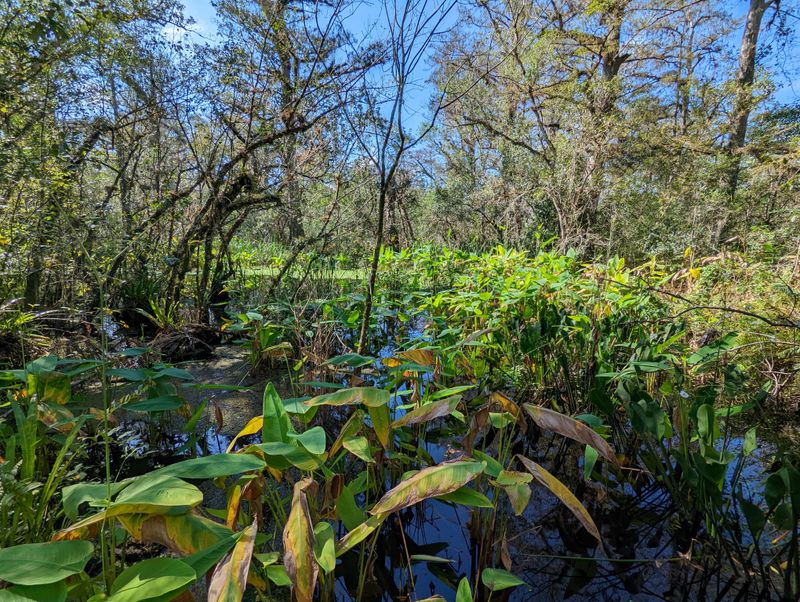
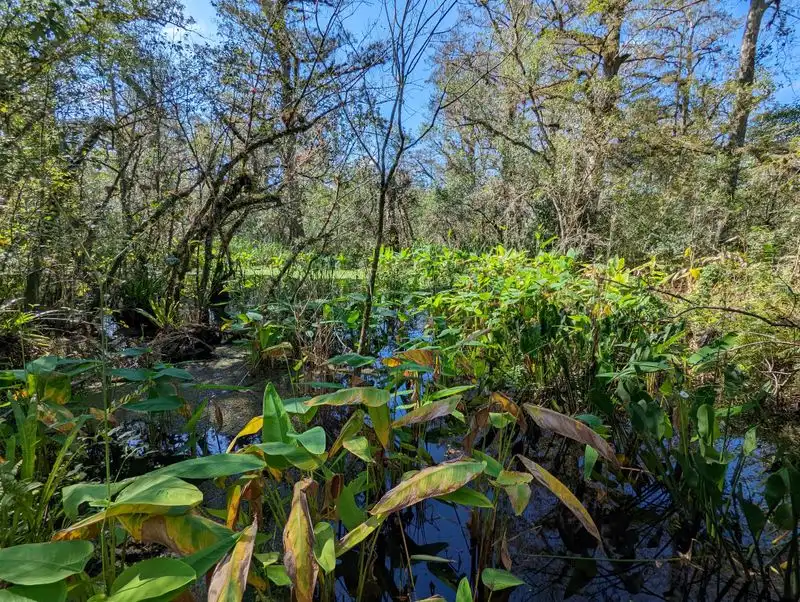
Wet prairies open like windows, inviting you to breathe deeper and scan the horizon. Low grasses, sedges, and shallow pools create a painterly landscape where light plays off mirrored water.
Egrets and ibises often dot the scene, their white plumage flashing against the greens and blues.
These prairies respond to seasonal rainfall, swelling in summer and receding in drier months. You will notice how water sets the tempo for life here: fish and insects appear, birds follow, and predators shadow the edges.
It is a living pulse that changes your walk every visit.
From the boardwalk, you can linger at overlooks and watch the sky reflect in a hundred little panes. Dragonflies patrol like tiny sentinels, and anhingas may spread wings on a snag to dry.
Sometimes the wind carries a chorus of frogs that hints at night’s hidden bustle.
Because these openings feel spacious, they make great spots for photography. You can capture long sightlines, cloud drama, and the delicate geometry of grass clumps.
Bring patience and you will be rewarded when a heron stalks silently across your frame.
Keep an ear tuned for distant thunder in summer, as storms can build quickly over the prairie. Volunteers often update sighting boards, so check for notes about spoonbills, kites, or seasonal visitors.
If you come in cooler months, the light can be crisp and the air pleasantly still.
After a few minutes, you will sense movement in the periphery: ripples, wingbeats, or the sudden flash of a fish. This is the prairie’s secret, revealed only to those who pause.
Then the boardwalk pulls you forward again, toward the sheltering shade of the bald cypress forest.
Old-Growth Bald Cypress Cathedral
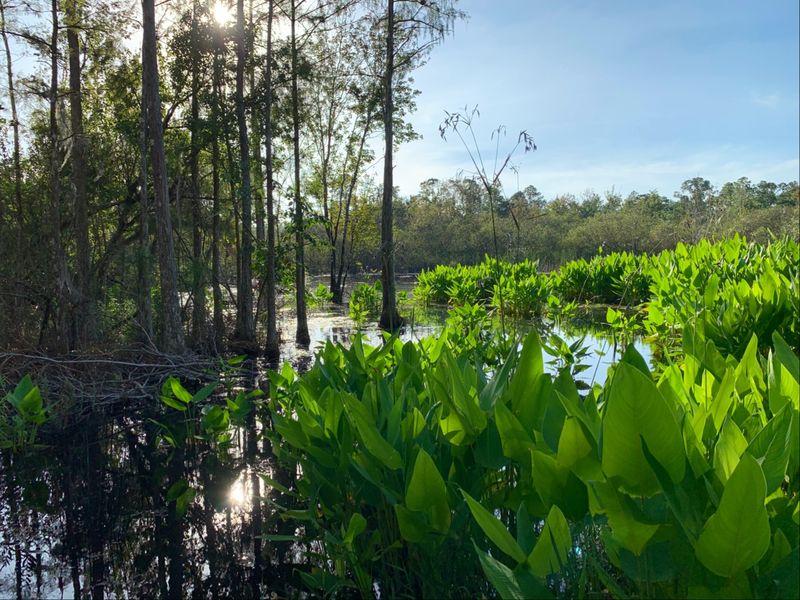
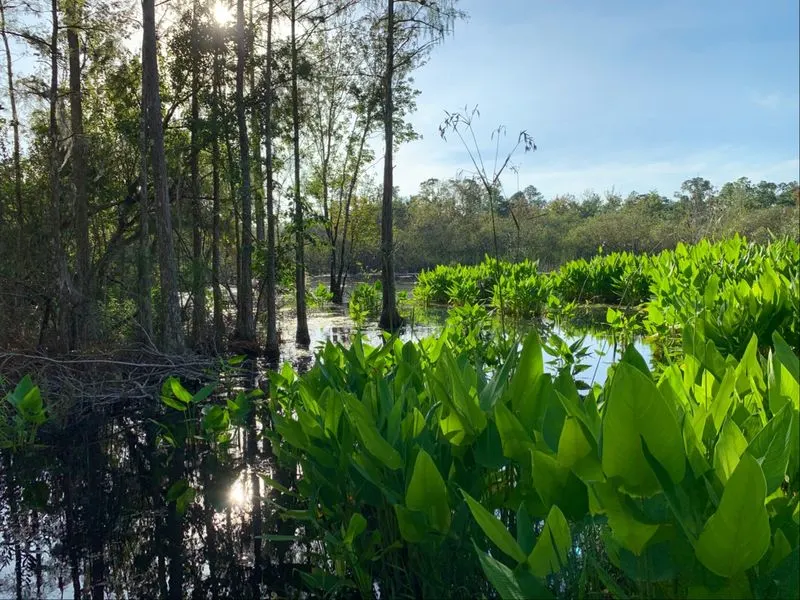
Stepping into the bald cypress stand feels like entering a sanctuary within the sanctuary. Trunks rise like pillars, flared at the base, their knees poking from dark water like a congregation.
Light filters down in emerald tones, and the air cools, hushed as if the forest is holding a secret.
These trees are centuries old, survivors of logging eras that missed this refuge. You can see history written in bark, in buttresses shaped by floods and seasons.
The boardwalk gives you a front-row seat without disturbing the roots that anchor this ancient community.
Look for epiphytes clinging to branches, ferns spilling from crooks, and orchids tucked high where only patient eyes find them. Wood ducks may glide across the blackwater like painted toys.
If you stand still, the forest begins to breathe, and small circles ripple where fish kiss the surface.
Every overlook invites you to linger and trace patterns in reflections. Your voice naturally drops to a whisper because the place asks for reverence.
Even in midday heat, the shade here wraps you like a cool shawl.
The cypress knees create a sculpture garden that photographers adore. Contrast the warm wood with dark mirror water for moody images.
Bring a lens cloth, because humidity can fog glass, and be ready when a turtle surfaces near your frame.
When you leave this grove, you carry a sense of scale that is rare in Florida. You will understand why so many visitors call this section the heart of Corkscrew.
It is both museum and living organism, and it makes a gentle walk feel like a pilgrimage.
Wildlife Spotting: Alligators and More
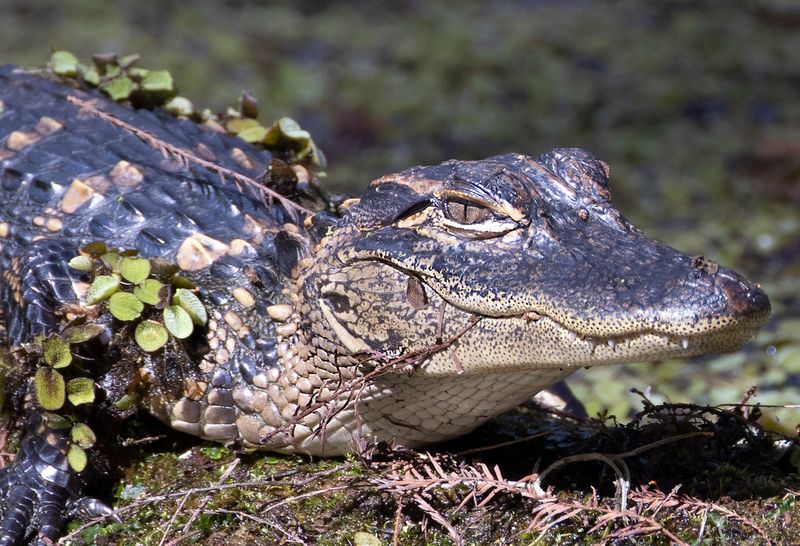
Wildlife here reveals itself when you slow down. Alligators bask on logs or hover like submarines beneath blackwater, only eyes and nostrils breaking the surface.
You might catch a raccoon rinsing paws at the edge, or a deer stepping carefully through ferns.
Bird life adds constant surprise: anhingas drying wings, ibises probing mud, and herons stalking with aristocratic patience. If luck joins you, a barred owl may hoot from the shadows or a red-shouldered hawk cry overhead.
Even on quieter days, turtles, frogs, and darting fish animate the scene.
Take cues from volunteers who know today’s hotspots. Their chalkboard reports often pinpoint fresh sightings, from snakes sunning to a secretive bittern.
Binoculars help you keep distance while elevating small details like plumage or eyeshine.
Respect wildlife by staying on the boardwalk and giving space. Alligators are part of the landscape, not photo props, so observe calmly and move on if they are close.
Keep voices low, and you will be rewarded with more natural behavior.
Photography is best at the edges of light: morning calm or late-afternoon glow. Watch for reflections that frame an alligator’s silhouette or an egret’s mirror image.
Patience turns a casual stroll into an intimate field study.
If a moment feels empty, wait. Often the swamp simply needs a beat to reveal its cast.
You will leave with a running list of sightings and the feeling that Florida shared a few of its best-kept secrets.
Birding Highlights and Seasonal Surprises
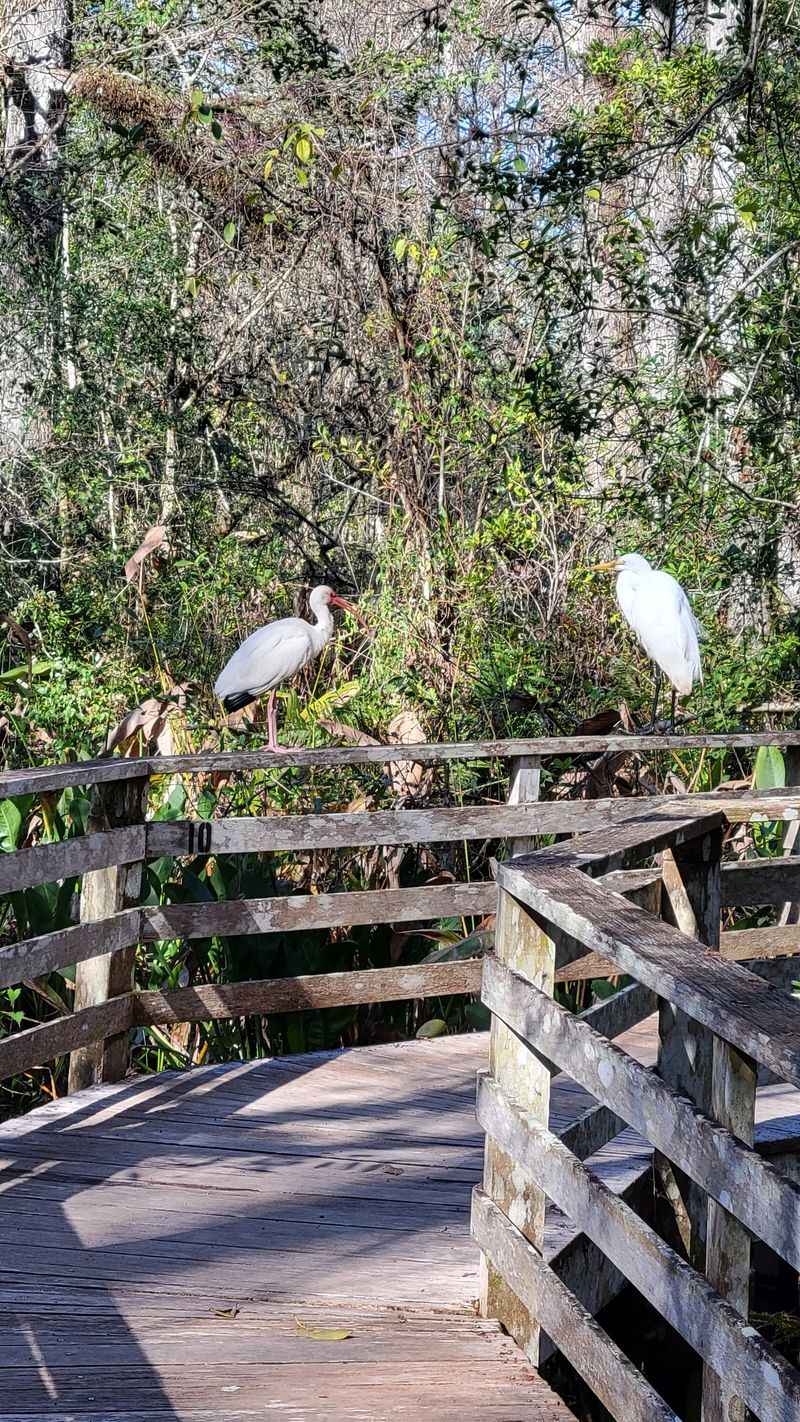
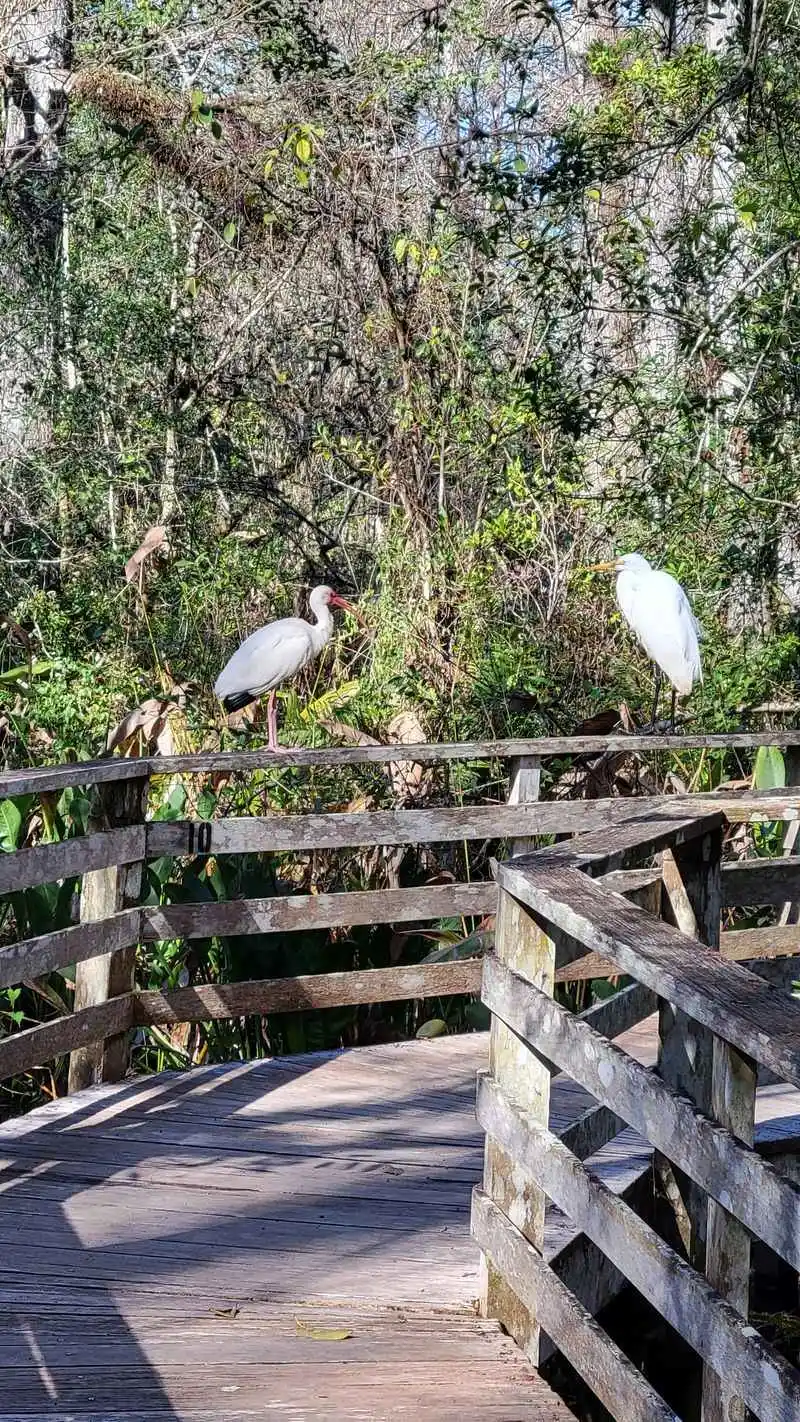
Bring binoculars because Corkscrew rewards curiosity. Painted buntings sometimes flash neon colors along edges, while anhingas pose like wet capes on open perches.
Red-shouldered hawks patrol the canopy, and egrets stitch white commas across the water.
Seasonality shapes the cast: winter can deliver mixed flocks and crisp air, while summer pulses with thunderstorms, dragonflies, and frog choirs. Migration windows add excitement as new voices join the chorus.
Check the welcome center’s sighting board to target hotspots that morning.
Birding here is relaxed because the boardwalk provides consistent footing and eye-level views. You can plant yourself at a bend, listen for contact calls, and let the show come to you.
Even beginners feel successful when a volunteer helps find a hidden heron or owl.
Photography benefits from the boardwalk’s stability and clear sightlines. Look for backlit wings at sunrise, or reflections that double a spoonbill’s rosy sweep.
Keep shutter speeds high for darting warblers and low for serene water portraits.
Patience is your best field guide: wait, scan, and scan again. Birds often cycle through territories, so what is quiet now may burst alive later.
A small shift down the rail can open a completely different angle on the same subject.
Whether you notch lifers or simply admire common species in gorgeous light, the experience feels generous. You will leave with a refreshed ear for calls and a new appreciation for how habitats knit together.
That memory lingers long after the boardwalk ends.
Ghost Orchid Lore and Rare Finds
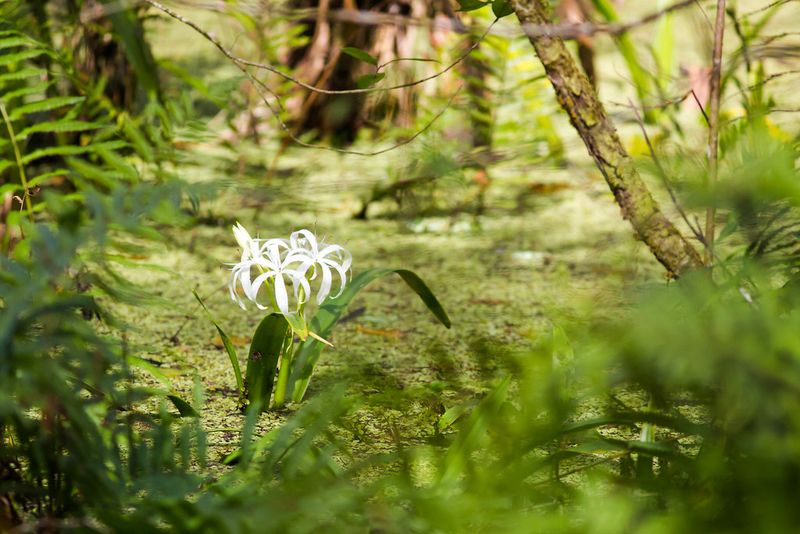
Part of Corkscrew’s allure is the possibility of rare encounters. The ghost orchid, famously elusive, sometimes blooms high in cypress where only keen eyes or scopes reveal it.
Even without a sighting, you feel its presence in the hush that hangs over ancient trunks.
Staff and volunteers track notable blooms and can share recent updates. Bring patience and manage expectations, because orchids follow their own calendar.
Along the way, watch for other epiphytes, bromeliads, and ferns that turn branches into miniature gardens.
The thrill here is not guaranteed outcome but attentive practice. You learn to read textures, to scan bark for patterns that become petals, to notice subtle shifts of light.
That attentiveness transforms the rest of your walk.
Rare bird moments happen too: a shy bittern stepping from reeds, or an owl compressing into mottled bark. When the swamp is quiet, breathe and look again, because rarity often masquerades as stillness.
A small ripple or shadow can be the only announcement you get.
Conservation stories deepen the meaning of these treasures. The sanctuary protects habitat mosaics that make rarity possible, from water management to invasive control.
Your admission supports that work, turning a simple stroll into a vote for biodiversity.
Even if you do not find the ghost orchid, you leave with sharpened senses. You will notice epiphytes everywhere afterward, as if the forest taught a new language.
That lesson alone is worth the price of admission.
Family-Friendly and Accessible
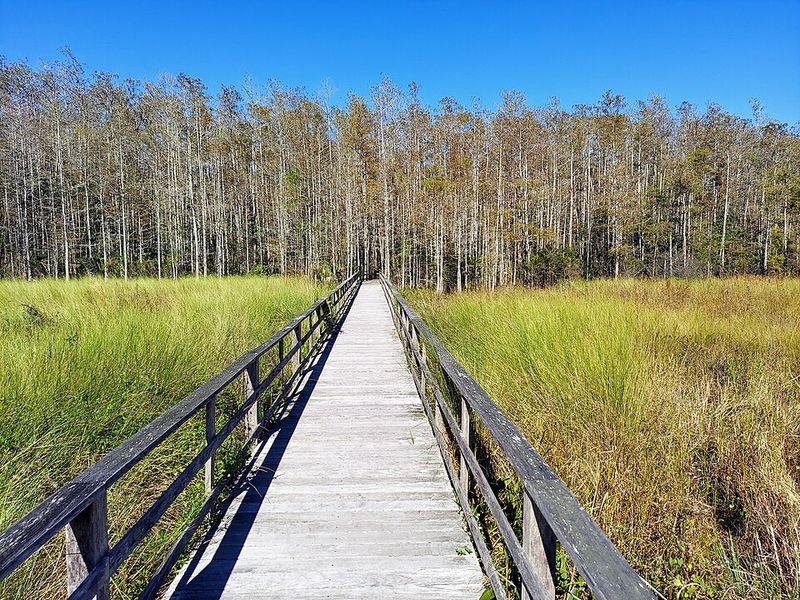
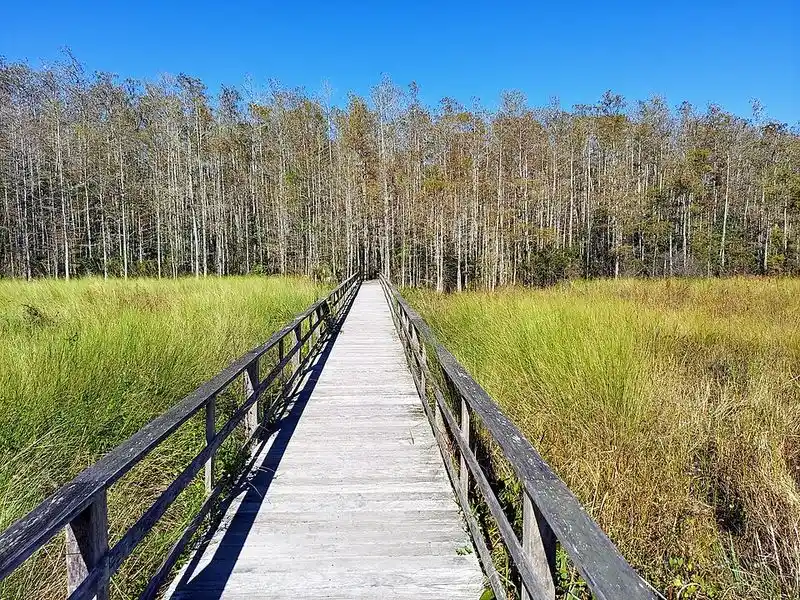
This is a rare Florida outing that pleases every age without compromise. The boardwalk is wide, stable, and wheelchair friendly, with passing bays and railings that feel secure.
Strollers roll easily, benches appear when you need them, and bathrooms at the start make logistics simple.
Kids enjoy wildlife scavenger moments: spotting turtles, watching anhingas, counting dragonflies. The raised walkway adds a sense of adventure without risk, keeping little feet dry and away from sensitive habitat.
Parents can relax into the rhythm rather than constantly steering around roots or mud.
For grandparents, shade and seating make the 2.25 miles entirely approachable. You can choose shorter cutoffs if energy dips, then rejoin the group later.
Clear signage and a straightforward route remove the stress of getting turned around.
Accessibility extends to information too. Staff share timely tips, from where an alligator was last seen to the quietest corners for birds.
If you are new to nature walks, that guidance builds confidence fast.
Pack water, light snacks, and basic sun protection. Move at the pace of curiosity, not mileage, letting the sanctuary decide your schedule.
Remember last admission times so you never feel rushed near the finish.
By the end, families tend to linger at the visitor center and porches, swapping sightings with others. It is the kind of place where a simple hello turns into shared binoculars and a whispered owl alert.
You will leave with happy legs, full hearts, and a plan to return.
Timing, Weather, and What to Bring
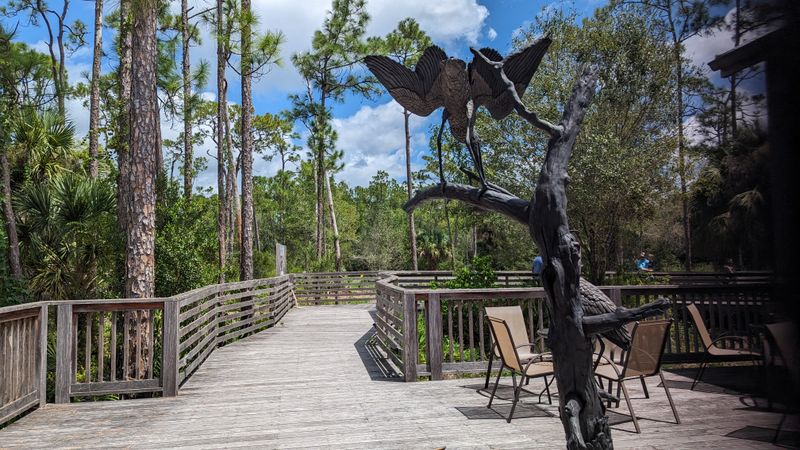
Timing shapes your experience as much as wildlife does. Arrive early for cooler air, easier parking, and birds at peak activity.
Last admission is midafternoon, so give yourself enough time to savor the full loop without rushing.
Florida weather can flip quickly, especially in summer. Carry water, a breathable sun layer, and a compact rain shell for pop-up showers.
Sunscreen and a hat help even in shade, because reflected light bounces from water.
Binoculars elevate everything, letting you appreciate subtle details at safe distances. A lightweight camera with a telephoto zoom handles birds, while your phone captures landscapes and signs.
Keep a small microfiber cloth to clear lens fog in humid stretches.
Bug pressure varies by season and breeze. Bring repellent, then apply lightly and recheck at shady stops.
Closed-toe shoes keep feet comfortable on the boards and make your steps quieter for viewing.
Check the visitor center’s chalkboard for fresh sightings and any temporary route notes. Volunteers often share rich context, like water levels that concentrate wildlife or blooms to watch for.
That real-time info makes each outing feel tailored.
Pack snacks for a slow, mindful walk, and remember leave-no-trace habits. Keep wrappers secure, respect quiet zones, and let wildlife dictate the distance.
With the right kit, 2.25 miles feels like a relaxed half-day of wonder rather than a quick lap.
Etiquette and Safety on the Boards
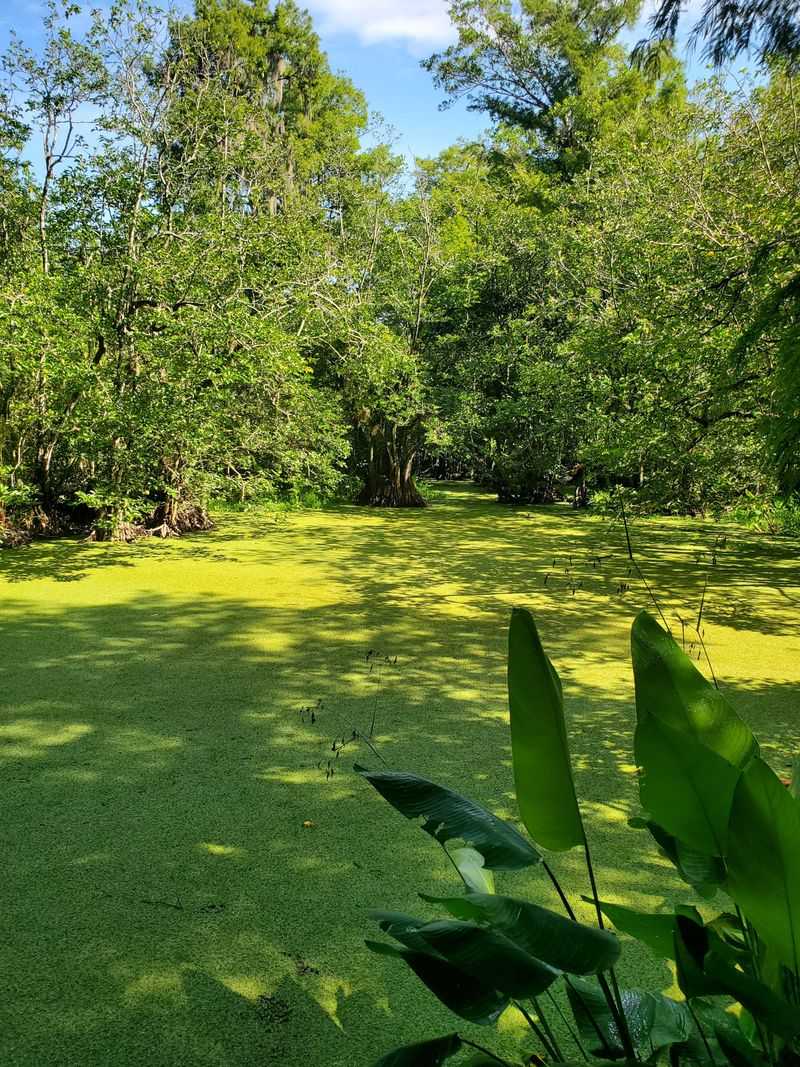
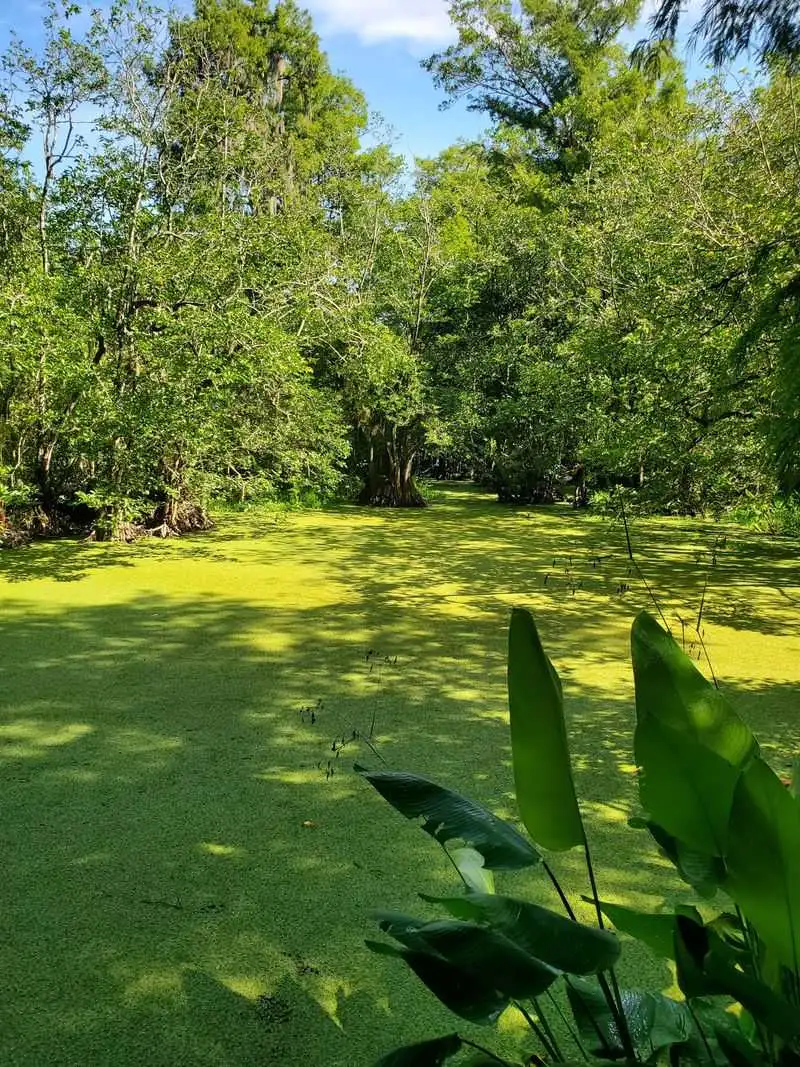
The boardwalk keeps you safe and protects the swamp, so your choices matter. Stay on the boards, give wildlife space, and keep voices low to let others enjoy quiet.
You will find that silence draws animals closer and makes the experience richer.
Do not feed animals or try to attract them. Alligators are powerful, and habituation endangers both people and wildlife.
If an animal blocks the path, wait or slowly backtrack until staff can advise.
Railing manners help everyone see. Step to the side at overlooks if you are scanning for a while, and let others rotate through.
A simple whisper and smile go a long way in a place that values calm.
Weather awareness is part of safety here. If thunder approaches, head back toward the visitor center and shelter.
Wet boards can be slick, so walk, do not run, especially when excitement spikes after a sighting.
Parents can set expectations with kids about quiet observation. Turning wildlife watching into a game keeps focus gentle and fun.
Remind them that every leaf and pool is home to something fragile.
You will leave feeling proud of the care you showed this landscape. Etiquette is not about rules so much as gratitude in action.
Treat the boardwalk like a shared front porch and the swamp will reward you in kind.
Visitor Center, Hours, and How to Plan
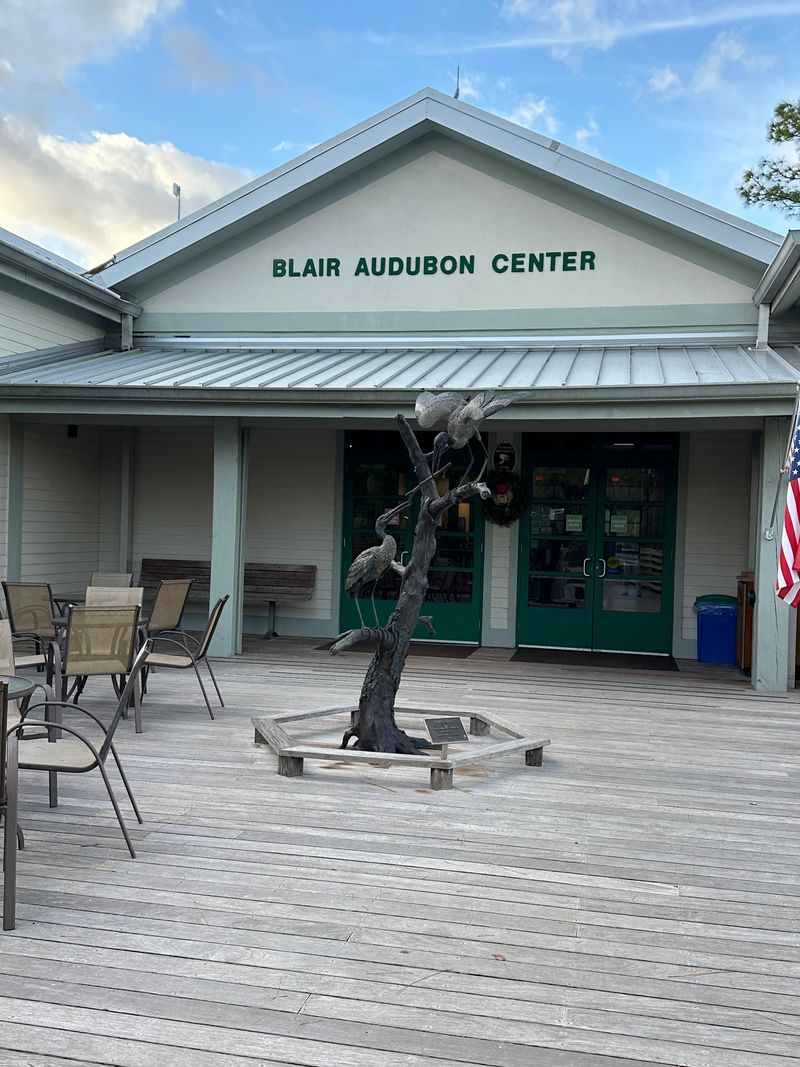
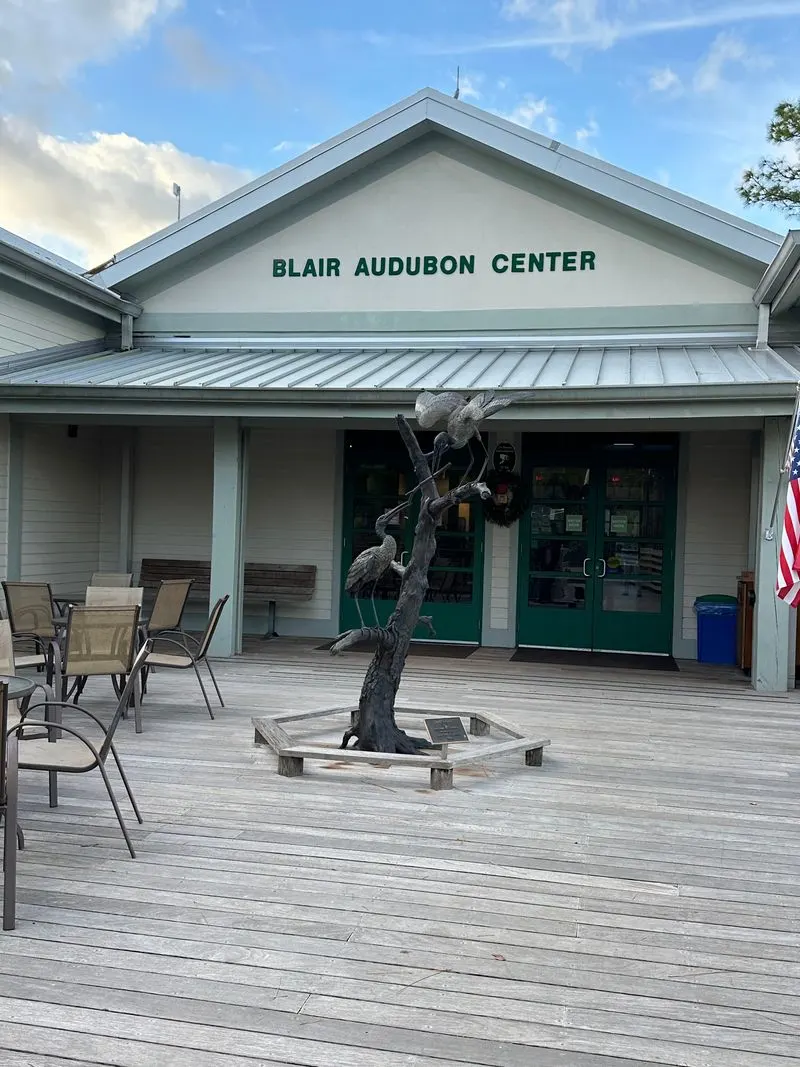
Your outing begins at the visitor center, where friendly staff share maps, sightings, and timing tips. Operating hours shift by season and last admission is early afternoon, so plan ahead.
Buying tickets on arrival is easy, and membership supports ongoing conservation.
Inside, exhibits introduce the sanctuary’s history, water story, and signature species. You can rent binoculars, browse the shop for field guides, and grab water or snacks.
Clean restrooms and shaded porches make a comfortable launch before you step onto the boards.
Parking is straightforward and plentiful. If you are visiting in warm months, aim for the cooler morning window.
In winter, expect more visitors on weekends, but the route disperses people well.
Check the website before driving out for any special programs or night walks. Guided experiences deepen your connection, especially if you are new to birding or native plants.
Volunteers love sharing the sanctuary’s daily rhythms and surprises.
Plan two to three hours for the full boardwalk, with extra time for photos and wildlife pauses. The experience feels meditative when you slow down.
Keep an eye on the clock so you are not hustling near closing.
On your way out, linger with a cold drink on the porch and trade notes with fellow visitors. That sense of community turns a solo walk into a shared story.
You will leave with directions for your next visit already forming in your mind.