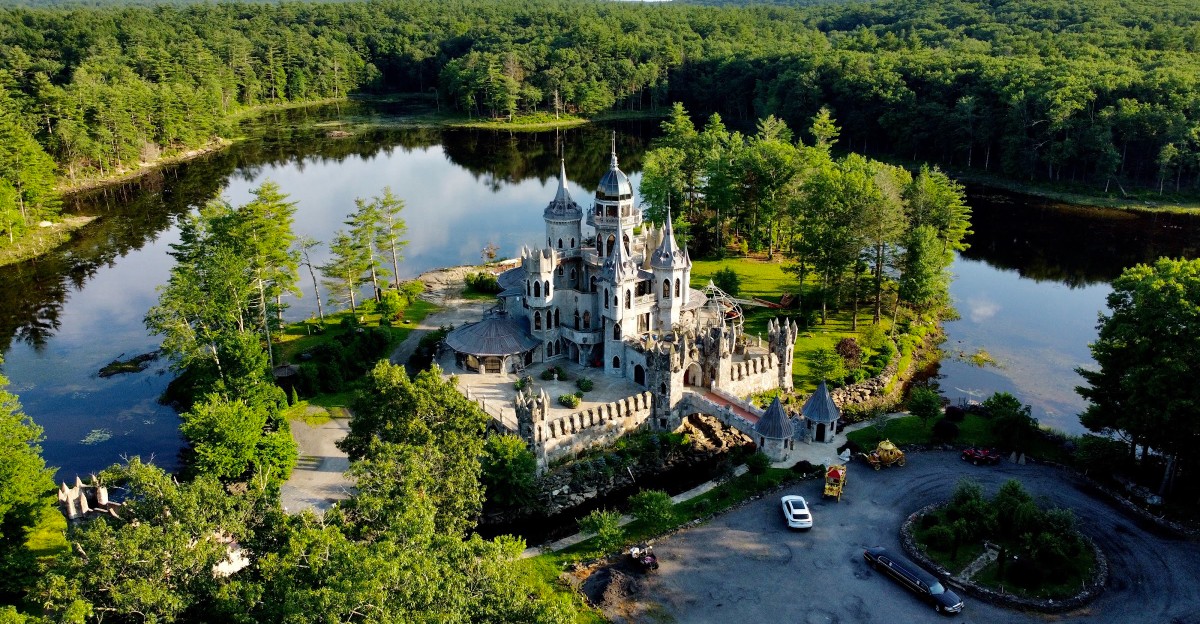
You don’t expect to find a real castle hiding in the Connecticut woods.
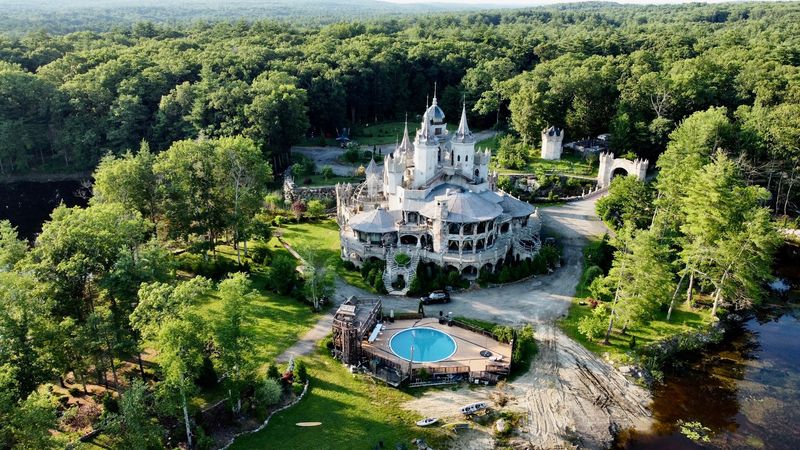
Yet in Woodstock, stone towers rise above the trees, turrets reach toward the sky, and a moat surrounds a home that looks like it was built for royalty.
Chris Mark Castle feels pulled from a fantasy novel, complete with the kind of dramatic details you might expect to see surrounding a medieval fortress.
From the outside, it looks ancient enough to have centuries of stories behind its walls.
There’s a twist, though: this castle is surprisingly modern.
Built as a private home in the 21st century, it was created from a family’s dream of living in a genuine storybook castle.
Today, its unusual design makes it one of Connecticut’s most fascinating hidden architectural curiosities—and one that can make an ordinary drive through Woodstock feel like a trip into a fairytale.
Chris Mark Castle – Woodstock, Connecticut
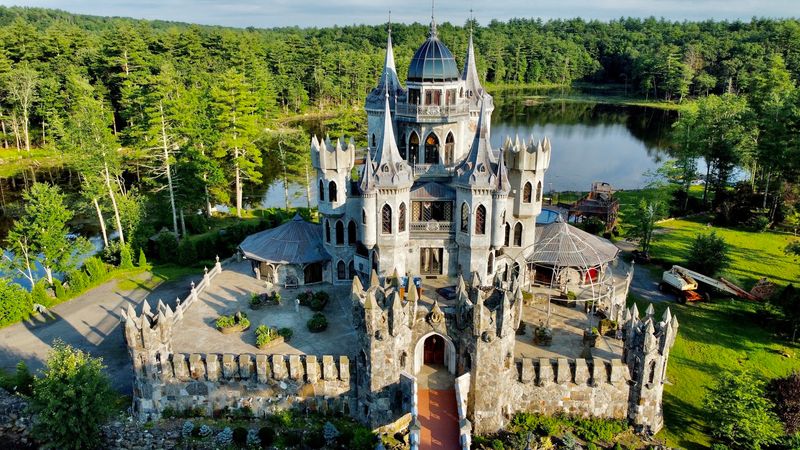
Rising from the dense forest landscape of Woodstock, this astonishing structure looks like it belongs in medieval Europe rather than modern New England. The castle’s stone exterior gleams against the backdrop of Connecticut’s wooded hills, creating a scene that seems impossible yet somehow real.
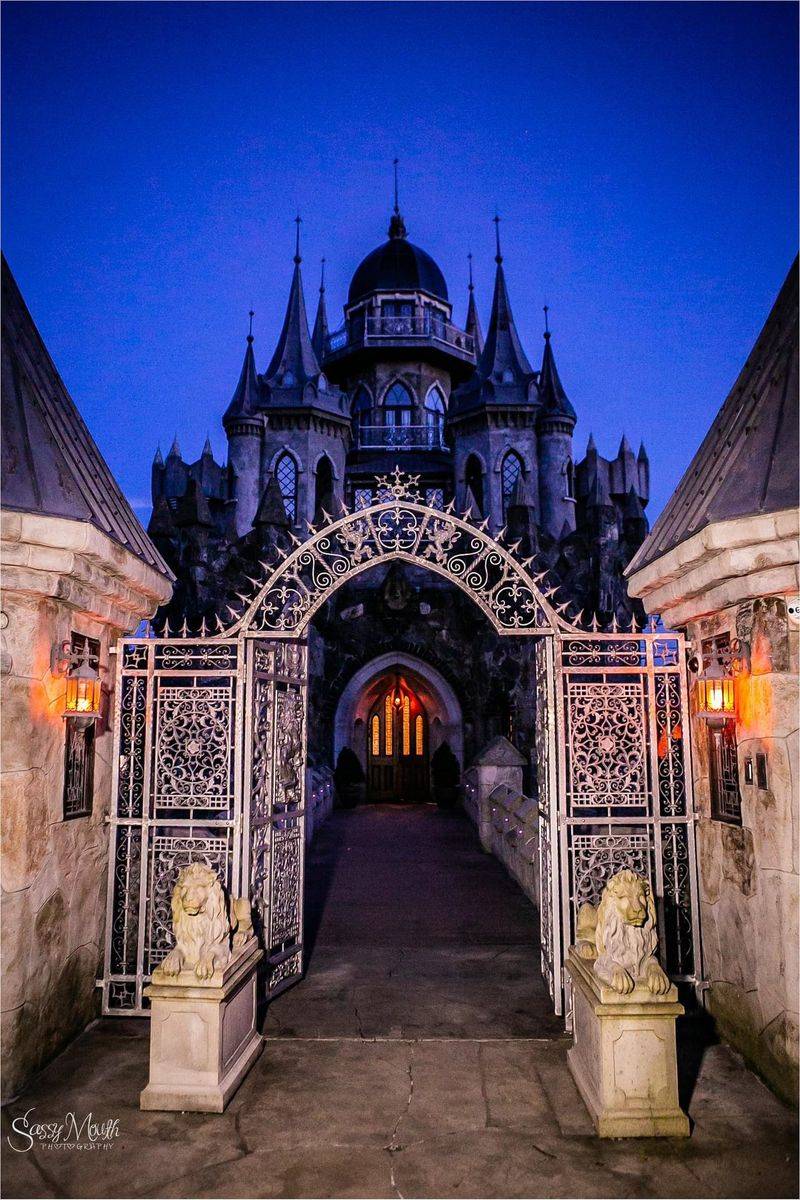
Every architectural detail contributes to the illusion of ancient grandeur. Multiple towers reach toward the sky while turrets crown the roofline in classic Gothic fashion.
The stone walls appear weathered by centuries, though they’ve stood for barely two decades.
A genuine moat surrounds portions of the property, adding authenticity that most replica castles lack. This isn’t just a house with castle-inspired touches but a fully realized fortress complete with defensive features.
The scale and ambition of the project become clear when you see how the building dominates its woodland setting.
What makes this sight truly remarkable is knowing it exists not in the Scottish Highlands or French countryside but in quiet northeastern Connecticut. Few expect to encounter such dramatic Gothic architecture while driving through rural New England.
A Modern Castle With a Medieval Appearance
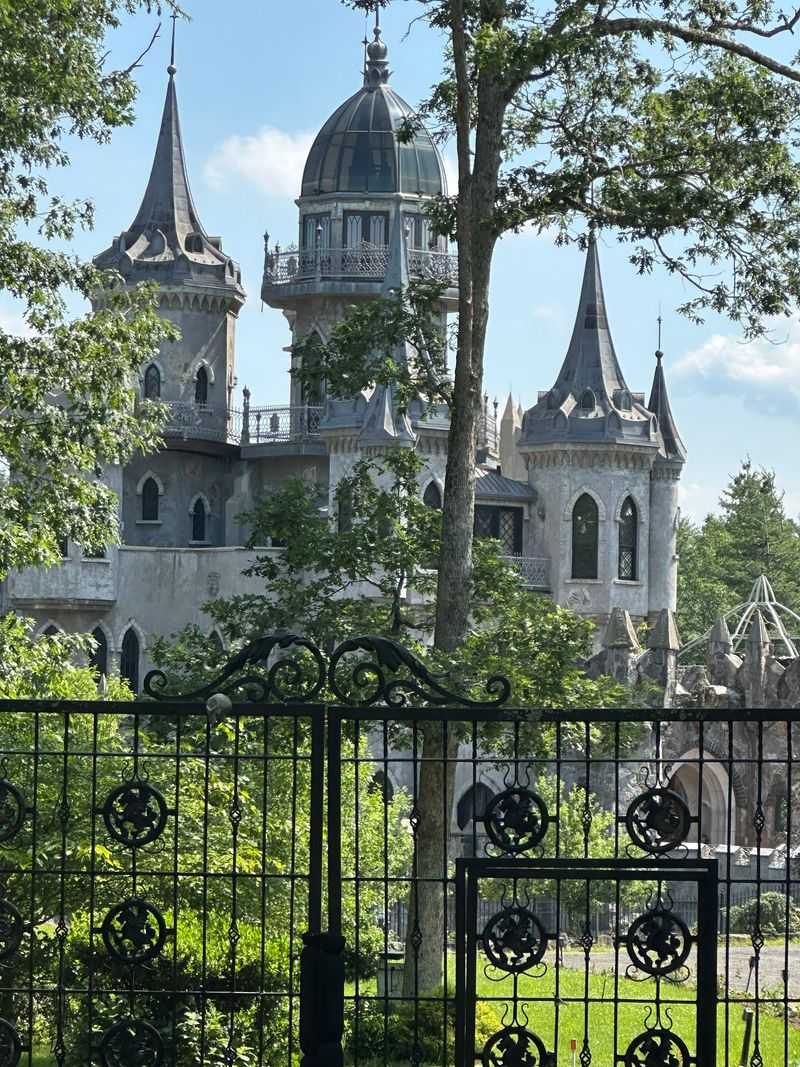
Construction crews broke ground on this extraordinary project in 2003, completing the castle around 2010. That timeline surprises most visitors who assume they’re viewing a structure with centuries of history.
The deliberately aged appearance represents masterful craftsmanship rather than actual antiquity.
Christopher Mark chose to recreate the atmosphere of a European Gothic fortress rather than simply incorporate castle elements into a conventional home. This decision meant sourcing authentic materials and employing traditional building techniques.
The result fools even experienced architecture enthusiasts at first glance.
Creating believable medieval aesthetics required extensive research and planning. Builders studied historical European castles to understand proportions, materials, and construction methods.
They then adapted these centuries-old approaches to meet modern building codes and safety standards.
The finished castle proves that contemporary construction can successfully capture historical architectural styles. Walking the grounds or viewing from nearby roads, you’d never guess the structure celebrated its first decade only recently.
The achievement demonstrates both artistic vision and exceptional execution by everyone involved in bringing this fantasy to life.
The Moat, Bridges, Towers, and Turrets
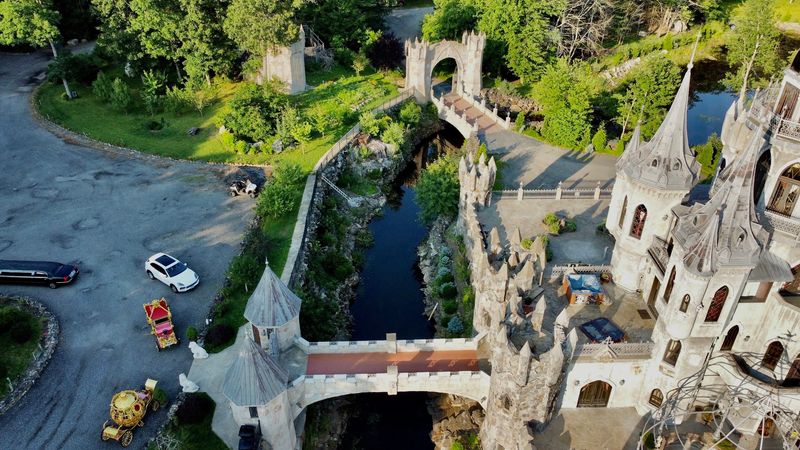
A functional moat encircles the property, crossed by sturdy stone bridges that complete the medieval fortress aesthetic. Water reflects the castle’s imposing silhouette, doubling the visual impact.
These aren’t decorative touches but fully realized architectural features.
Multiple turrets punctuate the roofline at strategic points around the structure. Each tower serves both aesthetic and practical purposes, housing rooms while contributing to the building’s unmistakable castle profile.
The varying heights create dynamic visual interest from every angle.
Elaborate gates control access to the property, featuring ironwork and stone construction that match the overall Gothic theme. Dramatic rooflines incorporate steep pitches and complex angles typical of medieval European architecture.
These elements combine to sell the fantasy completely.
From the approach road, the castle presents an almost overwhelming display of traditional fortress features. Visitors find themselves checking twice, struggling to believe such authentic-looking medieval architecture exists in Connecticut.
The commitment to period-appropriate details makes suspension of disbelief easy, transforming a private residence into a genuine fairytale setting that exceeds most people’s wildest architectural dreams.
A Castle Built Around a Family’s Fairytale Dream
Every little girl dreams of being a princess at some point. Christopher Mark’s daughters shared this fantasy, imagining life in a grand castle.
Most parents might buy a plastic playhouse or fairy costume, but Mark took a radically different approach.
He decided to build an actual castle where his daughters could live out their princess dreams every single day. This wasn’t about constructing a themed playroom or decorating bedrooms with castle motifs.
The entire family home would become a functioning fortress.
The project represents parenting taken to extraordinary levels, transforming childhood imagination into architectural reality. Years of planning, construction, and astronomical expense went into making this fantasy tangible.
The result stands as both a private residence and a monument to one father’s commitment to his children’s happiness.
Most kids eventually outgrow princess phases, but the castle remains a permanent testament to those magical childhood years. The structure proves that some dreams really can come true with enough determination, resources, and willingness to pursue something wonderfully impractical and magnificent.
European Architectural Details Inside
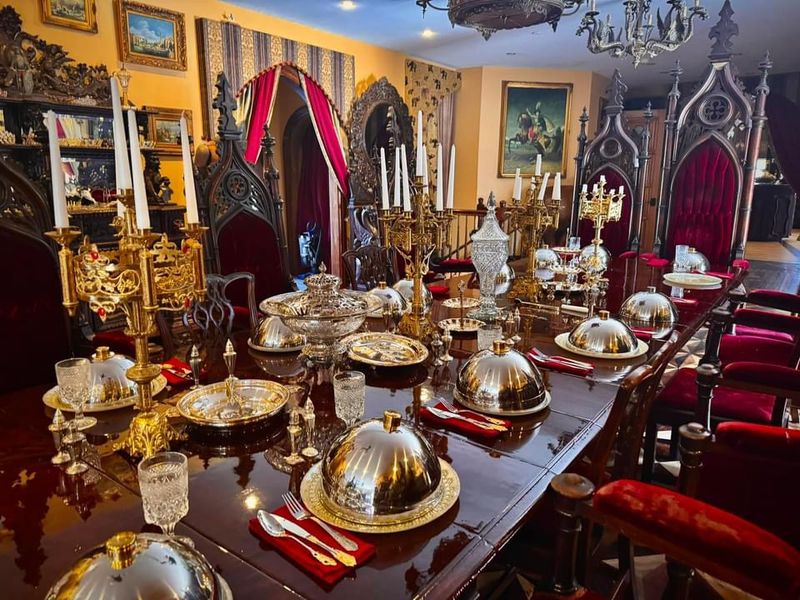
Stepping through the castle’s threshold transports visitors into another world entirely. The fantasy doesn’t end at the exterior walls but continues throughout every interior space.
Antique doors sourced from Europe swing on historic hinges, their wood worn smooth by generations of hands.
Fireplace mantels display intricate carving and stonework that would fit perfectly in a Renaissance palazzo. Stained glass windows filter colored light across rooms, creating atmospheric effects impossible with standard windows.
These aren’t reproduction pieces but genuine architectural salvage from European buildings.
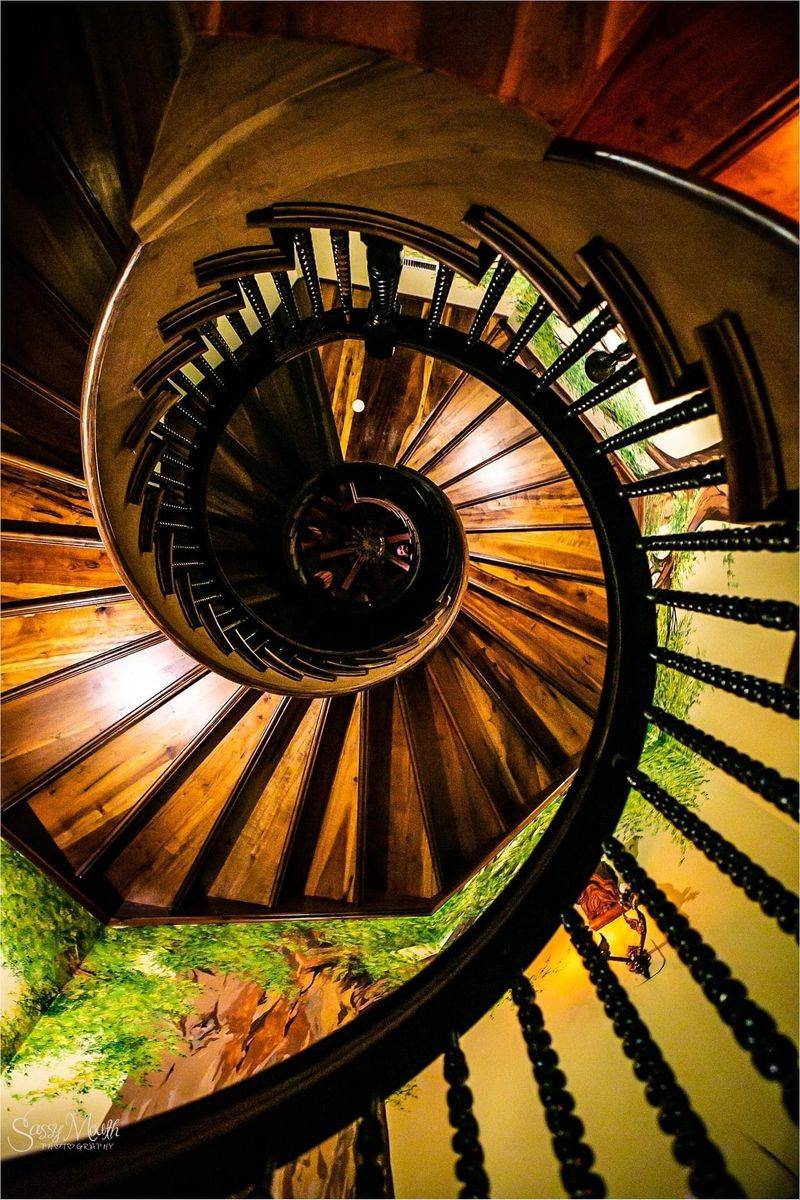
The woodwork throughout the castle deserves special mention. Reports indicate more than 25 different hardwood species appear in various rooms, floors, and architectural elements.
This variety creates rich visual texture while demonstrating the builder’s commitment to authenticity and quality.
Every furnishing and fixture reinforces the medieval atmosphere. Walking from room to room feels like touring a European castle that happens to include modern amenities.
The seamless blend of historical aesthetics with contemporary comfort proves that fantasy architecture can function as practical living space without sacrificing its magical qualities.
A Home That’s Much Larger Than It Looks
Published real estate listings reveal staggering statistics that surprise even those who’ve seen the castle in person. The property encompasses roughly 18,777 square feet of living space.
That’s larger than many small apartment buildings packed into a single family home.
The castle contains approximately 20 rooms spread across its multiple levels and towers. Nine bedrooms provide sleeping quarters for family, guests, and staff.
Seven full bathrooms serve the residence, along with additional entertainment and living spaces.
Multiple fireplaces throughout the structure add warmth and authentic medieval atmosphere. Each room serves specific purposes while maintaining the overall Gothic theme.
The castle functions as a practical modern home despite its fairytale appearance.
Scale becomes truly apparent only when walking through the interior spaces. Rooms that appear modest from outside perspectives reveal cathedral ceilings and expansive floor plans.
Tower spaces add vertical dimension that traditional homes lack. The property represents not just architectural fantasy but serious square footage rivaling commercial buildings, all dedicated to residential use by one remarkably ambitious family who refused to settle for ordinary housing.
The Castle and Potter Pond
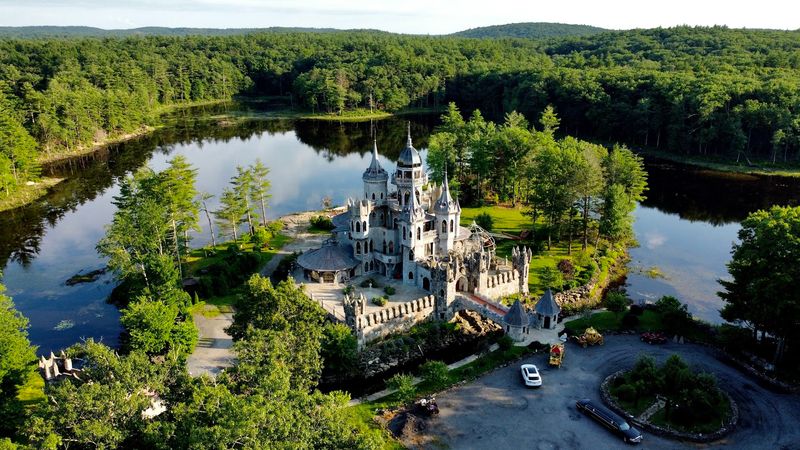
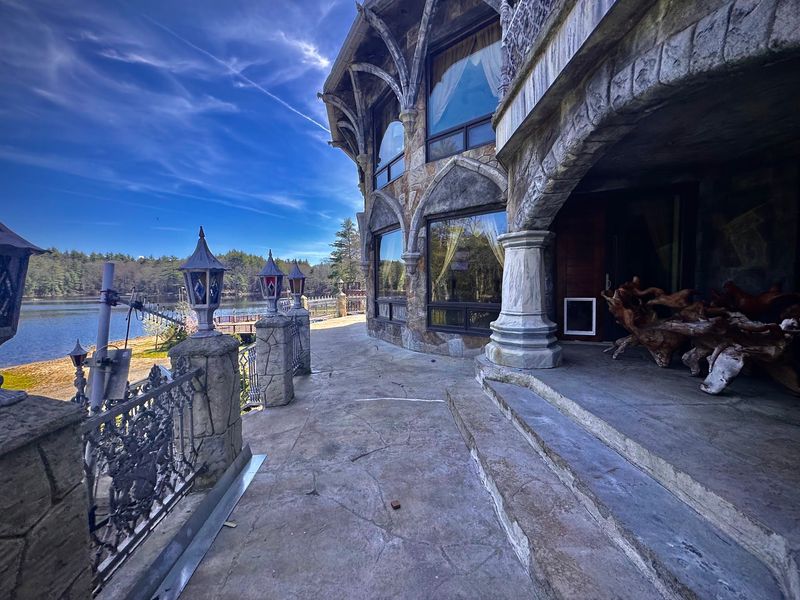
Potter Pond provides the perfect natural setting for this architectural fantasy. The castle overlooks the water from its elevated position, creating postcard views that enhance the storybook atmosphere.
Surrounding woods provide privacy while adding to the secluded fortress feeling.
Water and forest combine to isolate the property from modern Connecticut. Standing on the grounds, you might convince yourself you’ve traveled back centuries.
The pond’s surface reflects the castle’s towers and turrets, doubling their visual impact on clear days.
Views work both ways across this relationship. From the castle, residents enjoy peaceful water vistas framed by dense woodland.
From the pond and surrounding property, observers see the castle rising above the treeline like something from medieval legends.
This natural setting proves essential to the overall effect. A Gothic castle surrounded by suburban development or commercial property would lose much of its magic.
Potter Pond and the wooded Woodstock landscape provide the isolation and scenic beauty necessary to maintain the illusion. Nature and architecture collaborate here, creating an environment where fantasy feels entirely possible and believable.
From Private Residence to Pop-Culture Curiosity
Word spreads fast about a genuine castle hiding in Connecticut’s Quiet Corner. Social media, news coverage, and local curiosity transformed the private residence into a minor celebrity.
The unusual property attracted attention far beyond Woodstock’s small population.
Hallmark Channel recognized the castle’s potential as a filming location. The building starred as the castle in One Royal Holiday, a romantic movie that introduced the property to millions of viewers nationwide.
Its distinctive exterior proved perfect for the fairytale romance the film required.
The movie appearance elevated the castle’s profile dramatically. Fans began recognizing the building and seeking it out during Connecticut travels.
What started as one family’s private dream became a pop-culture landmark, at least among architecture enthusiasts and Hallmark movie devotees.
This attention represents both blessing and curse for the property owners. While fame validates the castle’s impressive achievement, it also brings unwanted traffic and curious visitors.
The building’s recognition extends well beyond northeastern Connecticut now, making it one of the state’s most photographed and discussed private residences despite its relatively recent construction and remote location.
Why You Can’t Simply Walk In for a Castle Tour
The castle stands at 580 Brickyard Road in Woodstock, Connecticut 06281. This address places it in the state’s northeastern corner, an area known as the Quiet Corner for its rural character.
The location remains somewhat remote, requiring specific navigation rather than casual discovery.
Many visitors mistakenly assume Chris Mark Castle operates as a museum or tourist attraction. The reality requires clear understanding before planning any visit.
This remains a private family residence, not a commercial venue with regular public hours.
Past reports document occasional events and filming uses that allowed limited access. These represented special circumstances rather than ongoing public programs.
Current information indicates access is highly restricted and must be arranged through proper channels rather than assumed.
Showing up unannounced and uninvited creates problems for the property owners. Trespassing laws apply here just as they would at any private home.
Photographers can capture views from public roads, but entering the property without permission violates both law and basic courtesy.
The disappointment of not touring inside is understandable. The castle’s exterior alone justifies appreciation from respectful distances.
Anyone hoping for interior access should research current authorized opportunities, which may include officially announced events or commercial filming arrangements. Respecting private property boundaries ensures the castle remains a beloved landmark rather than becoming a source of conflict between curious visitors and residents.