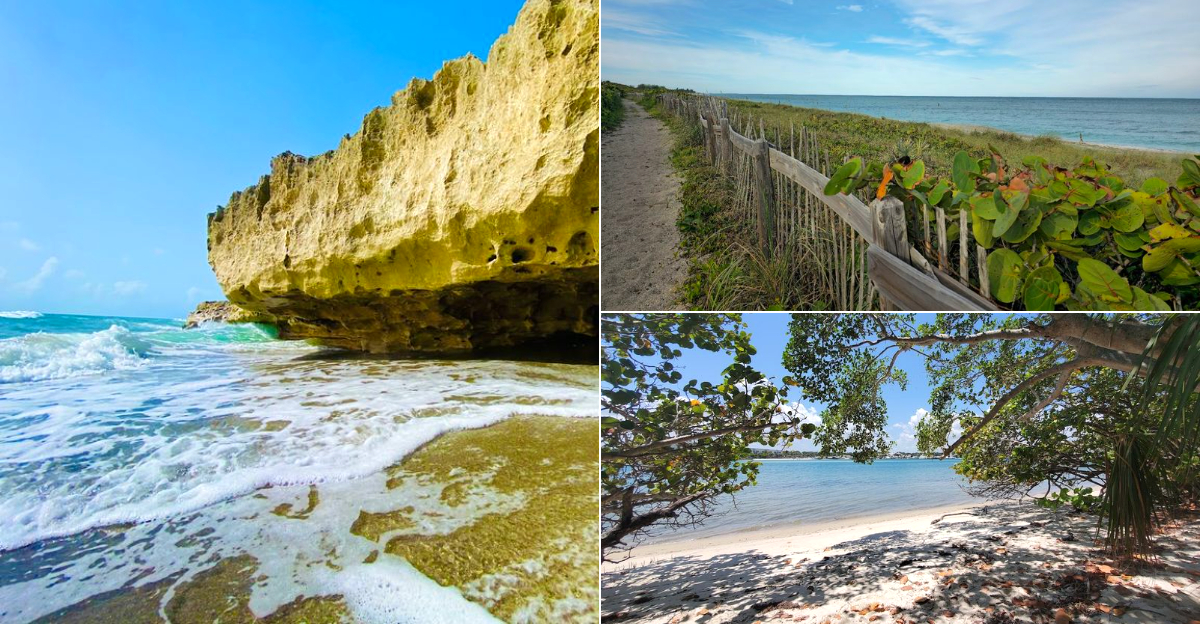
When people think of a classic Florida beach day, they picture endless stretches of flat, powdery white sand and calm, turquoise ripples.
Nonetheless, there is a rugged stretch of coastline that completely shatters that postcard stereotype.
Blowing Rocks Preserve doesn’t look like the rest of the Sunshine State; it looks like a wild, storm-swept piece of the Hawaiian or Pacific Northwest coast dropped right into South Florida.
The undeniable magic of visiting this preserve is watching the Atlantic Ocean collide with the largest outcropping of Anastasia limestone on the United States coast.
If you are ready to trade your beach chair for a bit of rugged exploration and discover a completely unexpected side of the Florida coast, this craggy paradise is waiting to blow you away.
The Blowing Rocks Effect
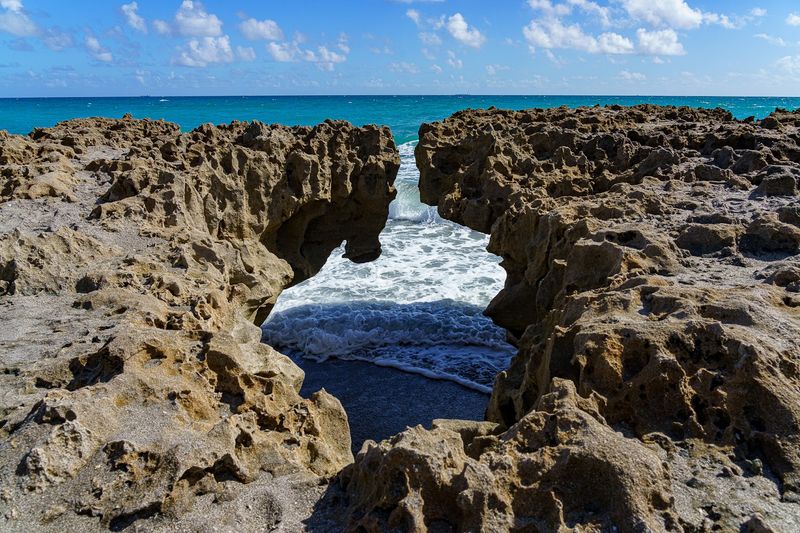
Some beaches whisper, but this shoreline hisses, sprays, and occasionally soaks anyone standing a little too confidently near the edge.
At Blowing Rocks Preserve in Hobe Sound, the Atlantic surges into holes and crevices in ancient Anastasia limestone, then shoots skyward in sudden plumes that give the preserve its name.
The effect is strongest when wind, swell, and tide decide to cooperate, so every visit carries a bit of suspense.
Timing matters more here than almost anywhere else I have visited on Florida’s coast.
High tide and rougher surf usually create the best blowhole-style bursts, while calmer days reveal the rock ledges without the dramatic spray.
If you want the show, check tide charts before you go and give yourself time to watch the ocean build rhythm.
That anticipation is part of the fun, but the setting stays interesting even when the water behaves.
I like standing back, listening first, then watching where the next burst might appear.
It feels less like a beach stop and more like catching nature right in the middle of a clever trick.
Anastasia Limestone Shoreline
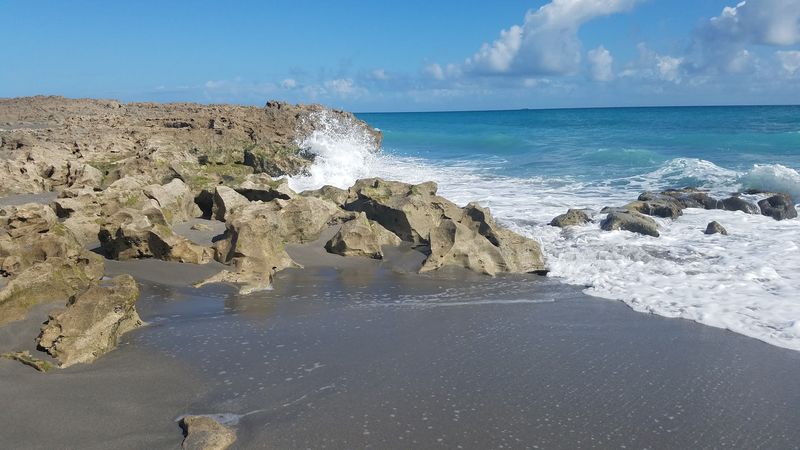
Before the spray steals the spotlight, the stone underfoot deserves a long look.
Blowing Rocks Preserve is known for one of the largest exposed stretches of Anastasia limestone on Florida’s Atlantic coast, a rugged formation made from cemented shell fragments and coastal sediment.
It gives the beach an unexpectedly rough edge, which feels striking in a state better known for soft sand and flat shorelines.
Up close, the rock surface tells a slow story.
You can spot pockets, grooves, and shell-rich textures shaped by waves, weather, and time, and some sections look almost carved by hand.
I always find myself slowing down here, partly out of interest and partly because careful footing is not optional.
This geology also explains why the preserve behaves so differently from a typical beach.
Water funnels through openings, tide pools form in lower conditions, and the whole coast feels more structured than smooth.
Wear sturdy water shoes if you plan to explore near the rocks, and keep your eyes down as often as you look out, because beauty and trip hazards share the same address here.
The Walk From Entrance To Ocean
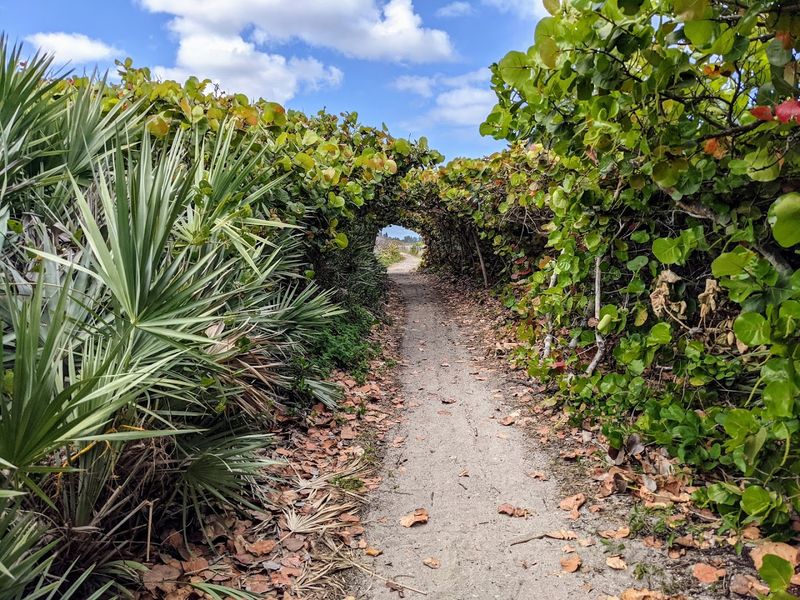
The first surprise arrives before the ocean even appears.
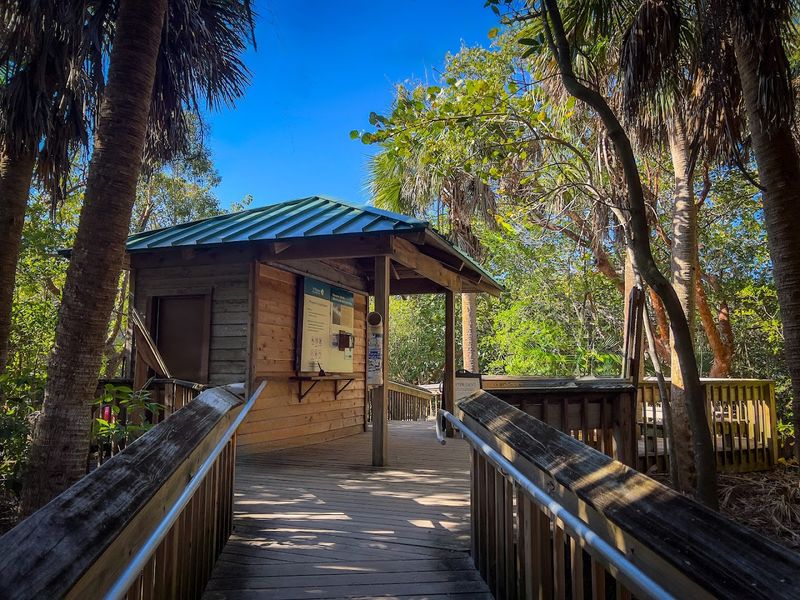
Blowing Rocks Preserve eases you in with a shaded approach through native coastal vegetation, where sandy paths, boardwalk sections, and filtered light make the beach feel tucked away rather than announced.
That transition sets the mood nicely, and I like how the preserve lets the landscape introduce itself in layers.
Instead of stepping straight from parking lot to shoreline, you move through sea grape, mangrove, and dune habitat that feels intentionally protected.
It is a short walk, but it slows your pace in the best way, and on a warm day the shade feels like a favor. Some visitors call parts of it a tunnel of trees, which is accurate and also a little cinematic.
By the time the beach opens up, the limestone and blue water land with more impact because the path built anticipation.
I always think this approach makes the preserve feel more intimate than larger public beaches.
Bring sandals you can slip off easily or shoes that handle sand well, because once the shaded stroll ends, the soft beach and rougher rock textures ask for a quick footwear decision.
When To Visit For The Best Show
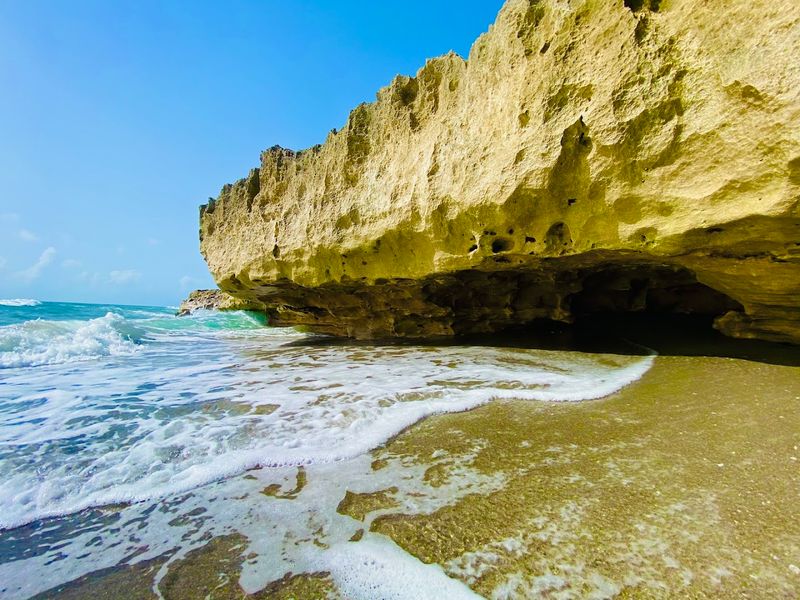
Good timing can turn a pleasant walk into a front-row seat.
Blowing Rocks Preserve changes character with the tide, and that shift is the biggest key to planning a satisfying visit.
High tide usually brings the strongest wave action and the famous upward bursts, while low tide reveals more of the limestone ledges, pockets, and tide-washed details.
I would not arrive blindly and hope for theater on demand.
A quick check of the local tide chart before leaving makes a real difference, especially if seeing the blowing effect is your main goal.
Several visitors mention that a calm day can still be beautiful, but a rougher ocean gives the preserve its most memorable moments.
There is also a practical side to choosing your hour.
Early arrival helps with limited parking, softer temperatures, and quieter trails before the sun gets assertive. Should your schedule allow, going near high tide but before the lot fills is a smart move.
However, I would still leave time to linger, because the waves tend to build small surprises rather than one single grand finale.
Wildlife, Shells, And Small Discoveries
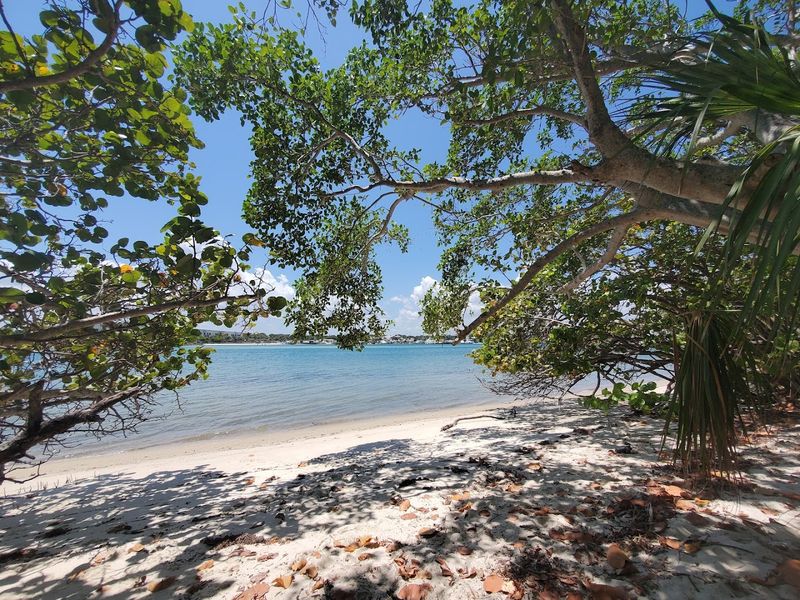
The loudest part of this preserve is not always the most interesting one.
Blowing Rocks Preserve rewards anyone who pauses for the smaller details, from tiny crabs skittering near the trails to shells scattered across the shore after active surf.
I have found that the beach here encourages looking down just as much as looking out.
Shelling can be especially good after waves have churned things up, and the rocky setting adds variety to what washes ashore.
Birdlife also makes appearances along the boardwalks and coastal habitat, so a casual stroll can turn into a low-key wildlife watch without much effort.
You do not need binoculars to enjoy it, but bringing them would not be a bad move.
What I like most is that the preserve feels alive in quiet ways between the splashier moments.
A crab darting under leaves, a shell wedged in limestone, or a sudden flash of movement in the mangroves can steal attention fast.
Just remember to observe lightly, avoid collecting anything protected, and let curiosity do the work, because this is one of those places where the small stuff earns its own applause.
Education Center And Conservation Story
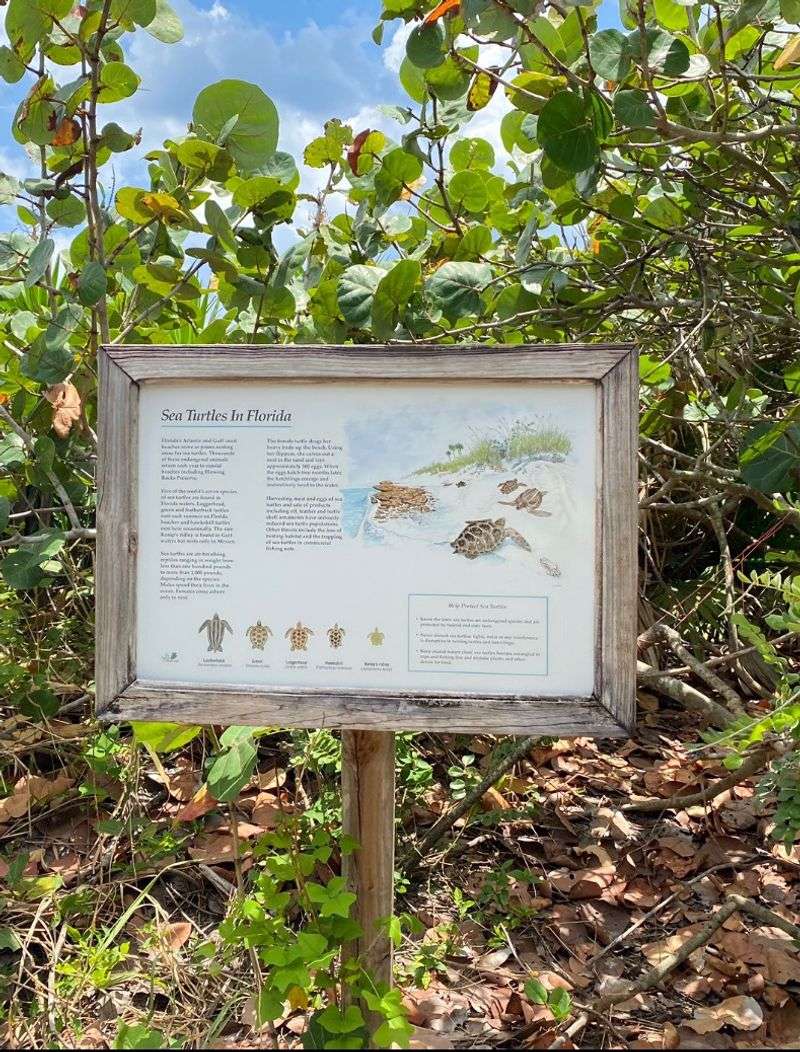
Not every memorable beach lesson comes from the waterline.
Blowing Rocks Preserve also includes an education component that adds context to what you are seeing, with exhibits and interpretive information focused on local habitats, sea turtles, reefs, and coastal protection.
I appreciate places that explain themselves without feeling preachy, and this one keeps it grounded.
Spending a few minutes here makes the preserve feel more complete.
You start to understand that the dramatic rocks are only one piece of a broader living system that includes dune plants, shorebirds, mangroves, and marine life just offshore.
For families, it is a useful reset point between walking, exploring, and asking the kind of questions kids specialize in.
The practical perks help too.
Restrooms are available near the visitor area, and that alone can improve a beach outing more than any poetic description ever could.
If you usually skip exhibits and head straight for the sand, I would still suggest pausing here first or on the way out, because the preserve becomes more interesting once the scenery comes with a backstory and a few conservation stakes.
Trails, Mangroves, And A Quieter Side
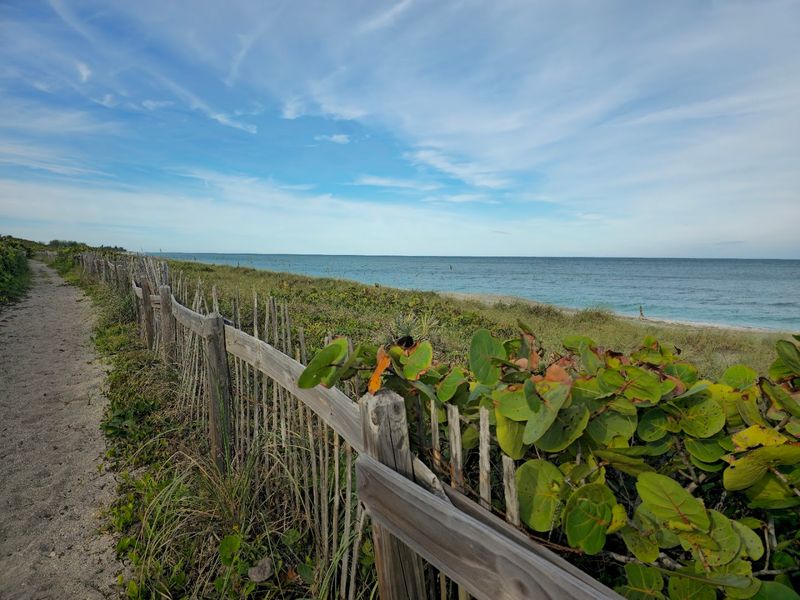
Step away from the crashing surf and the mood changes almost instantly.
Blowing Rocks Preserve has trails and boardwalk areas that reveal a quieter side of the property, where mangroves, shaded paths, and native plants create a gentler rhythm than the exposed beach.
I like this contrast because it keeps the visit from becoming one-note.
These interior stretches are useful when the sun is sharp or the surf feels a bit too dramatic for lingering. They offer birding opportunities, calmer scenery, and a chance to notice how much habitat diversity fits into one preserve.
On one visit, I spent longer than expected in the shaded sections simply because the change in pace was so welcome.
The trail network is not overwhelming, which makes it easy to add without turning the outing into a major hike.
Still, bug spray can be helpful depending on conditions, and closed-toe shoes are smart if you prefer not to think about roots, uneven sand, or surprise spiders.
If the beach is the headline act, these trails are the well-written side story that quietly improves the whole experience.
Parking, Safety, And Smart Visitor Tips
A little planning goes a long way here, and this is not the place to improvise every detail.
Blowing Rocks Preserve is free to visit, but parking is limited, which means arriving early can spare you a frustrating loop past full spaces.
I have learned that beach serenity starts in the parking lot, or at least the attempt to keep it calm.
Once you are on the shore, caution matters.
The preserve is not lifeguard protected, waves can surprise you near the limestone, and slick or uneven rock surfaces make distracted walking a bad idea.
Water shoes help, sunscreen is essential, and I would never turn my back on the ocean when standing close to the outcrops.
Bring water, expect hot sand, and use the rinse area or showers on your way out if available, because this beach likes to leave a souvenir in every shoe.
If you can visit on a weekday, even better, since crowds are usually lighter.
The whole place works best when approached with equal parts curiosity and respect, which is fitting for a shoreline that can charm you and humble you in the same minute.