

If you have only driven past High Springs on your way to the springs, you might have missed a wild, quieter side of Florida hiding in plain sight.
O’Leno State Park makes you slow down, look closer, and notice the textures of riverbank sand, longleaf pine, and old-time craftsmanship.
This place is less about crowds and more about the hush that follows when the Santa Fe slips underground.
Come curious, and you will leave with stories you did not expect to find.
Crossing the Historic Suspension Bridge
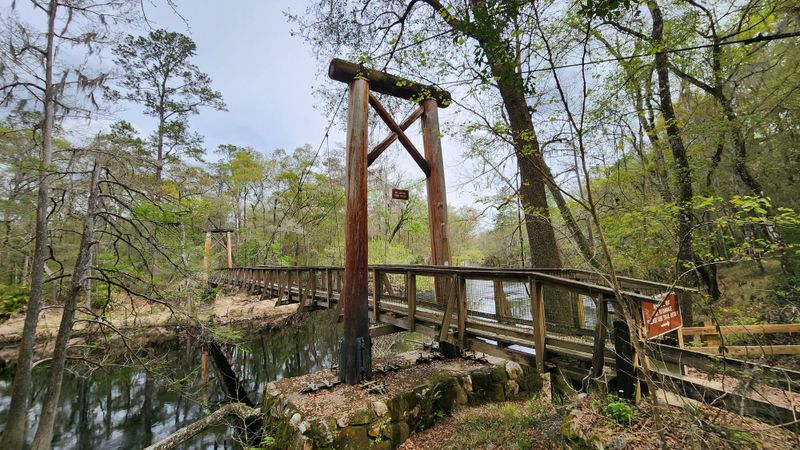
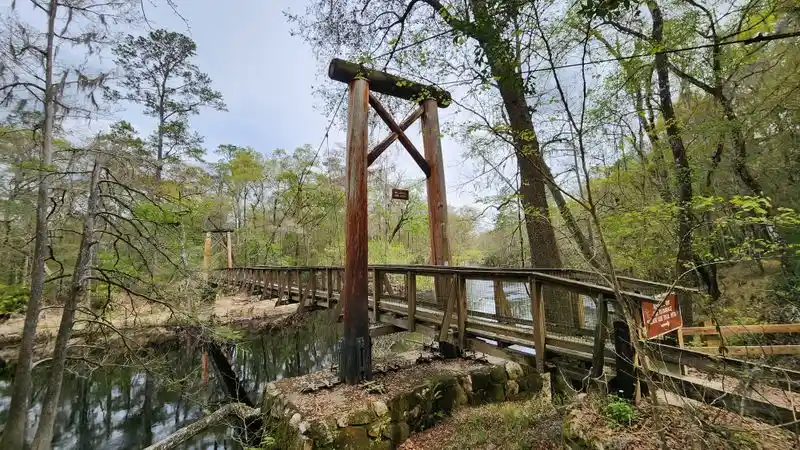
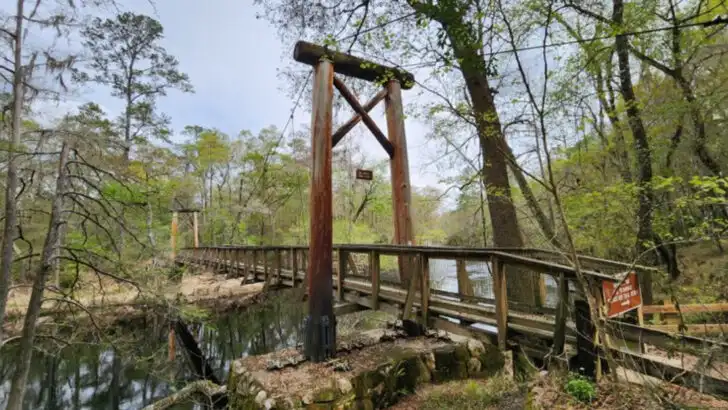
Step onto the suspension bridge at O’Leno State Park and you feel the planks answer with a gentle bounce under your boots. The Santa Fe River slides beneath, tea colored from tannins, carrying reflections of cypress and sky in slow ripples. Pause in the center and you can hear wood creak, water murmur, and birds stitch sound across the canopy.
The bridge is a portal to the park’s CCC era past, built with care that still shows in every bolt and board. Look upriver and downriver to spot turtles surfacing like coins, or anhinga drying wings on a snag. If you arrive near opening, the light comes low and warm, and your shadow stretches from railing to rail like a welcome sign.
Bring a camera, but do not forget to breathe. The deck sways a hair when others cross, and that subtle movement reminds you that nature never sits perfectly still here. Take a few steps, stop, then take a few more, letting the rhythm slow your own pace.
Kids love testing the bounce, and you can turn it into a I-spy game for fish, leaves, and the braided roots that clutch the riverbank. On breezy afternoons, oak leaves spiral onto the water like tiny boats on a calm voyage. In winter, the angle of sun carves patterns through the cables that look almost like harp strings.
When you reach the far end, turn around and see the whole bridge framed by forest like a memory you just made. Read the nearby signage to learn how the Civilian Conservation Corps shaped this place with hand tools and grit. You will step off feeling anchored, like you have crossed not only a river but a line between rush and rest.
Hiking the River Sink Loop
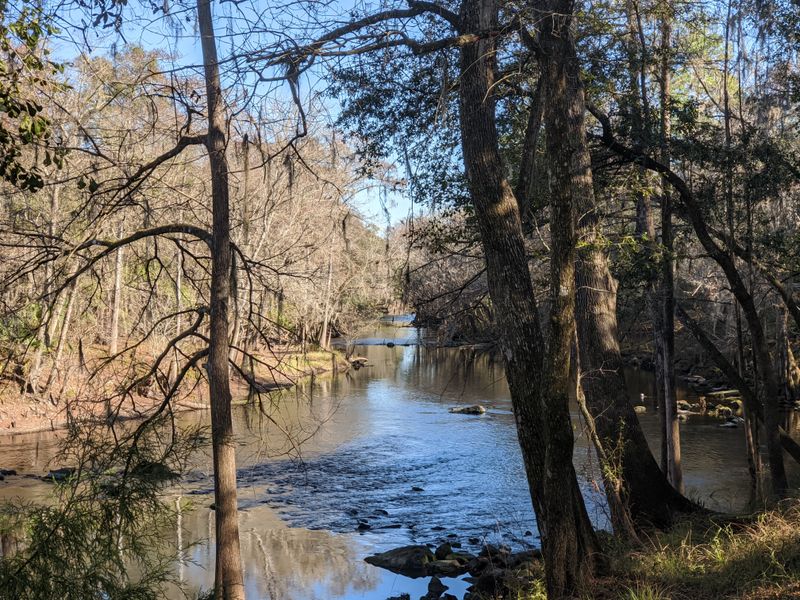
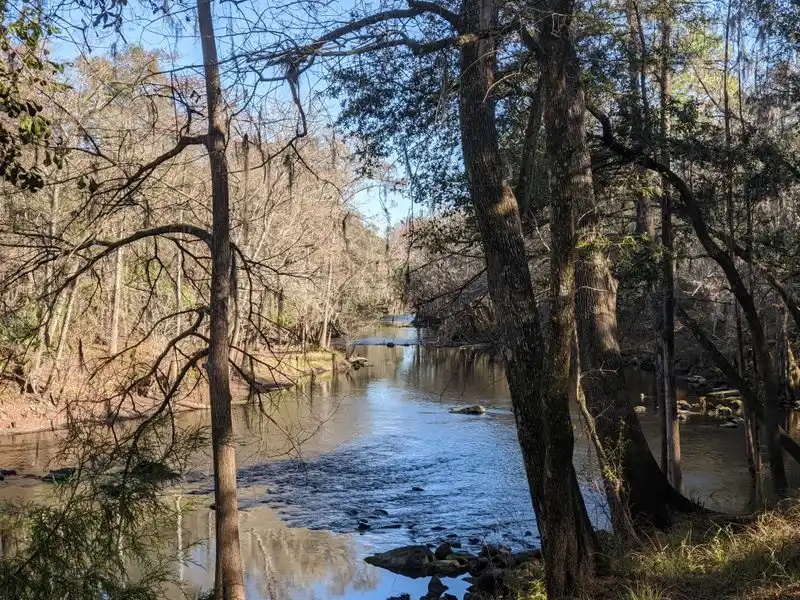
The River Sink Loop is where the Santa Fe does a magic trick that geologists can explain but your eyes still celebrate. The river flows strong, then simply disappears underground into karst limestone, only to reemerge miles away at River Rise. Walk the loop and you trace the edges of that vanishing act, listening for the hush that replaces running water.
The path is friendly to most walkers, sandy in places, rooty in others, with interpretive signs that turn the landscape into an open textbook. You will pass through hardwood hammock and pine flatwoods, shifting from shade to sun like page turns. Keep an eye out for gopher tortoise burrows and the tidy tracks of raccoon and deer etched in pale sand.
At the sink overlook, the water forms a dark mirror piled with leaf litter and mystery. You can lean on the railing, read about the underground river, and imagine the caverns below like a secret hallway. Do not drop anything here because what goes in may travel farther than you expect.
Mornings are best for birds, from red bellied woodpeckers to warblers that flit like sparks. If you are quiet, you may hear the soft plop of a fish or the wind rubbing pine needles together like a whisper. Bring water, comfortable shoes, and patience, because moving slowly makes the small wonders reveal themselves.
Loop back along the forest side to notice lichens painting bark in mint and slate. You will cross boardwalks, skirt puddles after rain, and feel the ecosystem change with every few yards. By the time you return to the trailhead, the mystery of where the river went will sit with you like a riddle you are happy not to solve.
Paddling the Santa Fe Above the Sink
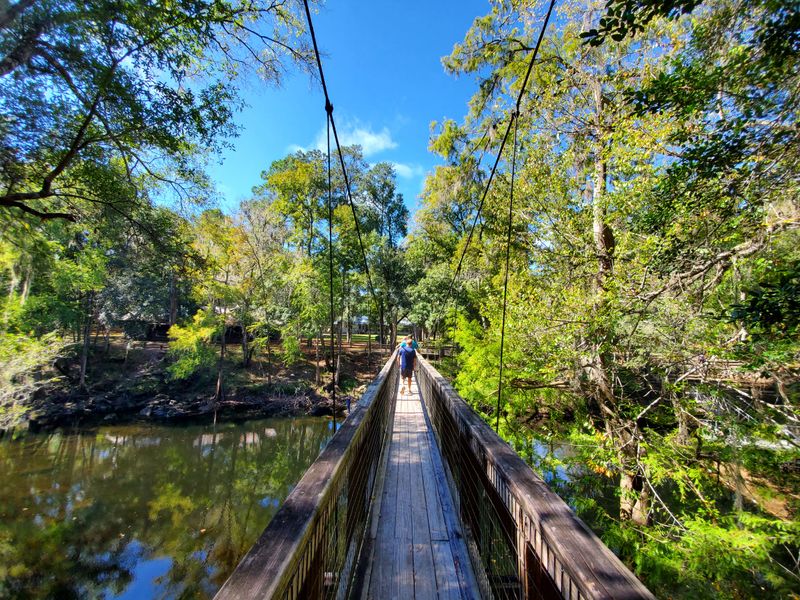
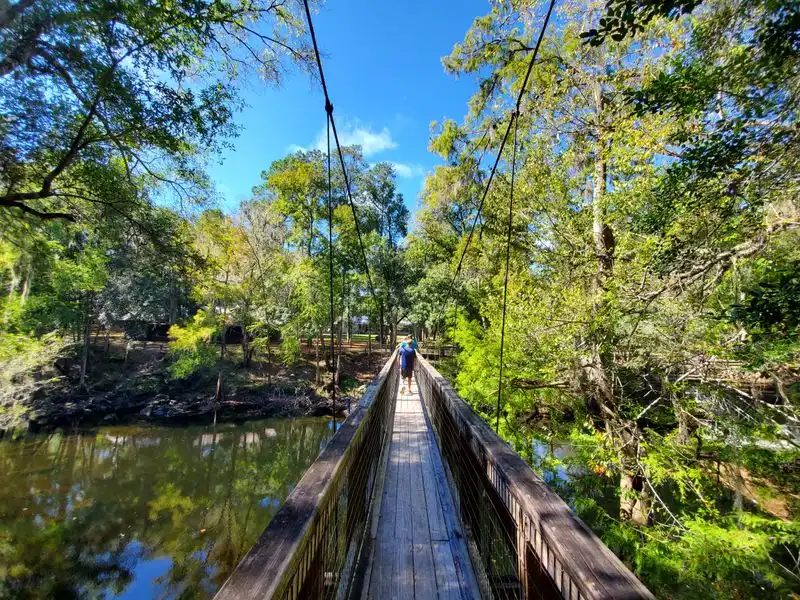
Slip a kayak into the Santa Fe at O’Leno and it feels like easing into a story that is still being written. The current is gentle above the sink, giving you a glide that lets your paddle become punctuation rather than urgency. You can trace the river’s curve, watching dragonflies stitch blue threads through sunlight.
The water is rusty tea colored from tannins, and it carries reflections so crisp they look more real than the trees. Paddle close to the banks to see cypress knees rise like a choir, each with its own voice if you listen. Turtles line up on logs, slipping in one by one when you drift a bit too near.
There is a quiet thrill in knowing the river disappears ahead, though paddling access respects safety zones and signage. You follow the rules because this place feels like someone else’s living room and you are a careful guest. Keep your eyes peeled for swallow tailed kites wheeling high, and the casual V wake of an otter if luck is kind.
Bring a dry bag, water, and a small trash pouch to leave the river better than you found it. On cool days, the mist hangs low and your breath mixes with it like you both belong. In summer, shade under overhanging limbs becomes a moving canopy that rides with you.
When the paddle ends, beach your boat softly and sit for a moment before lifting. The stillness that follows paddling feels like a fresh page, your muscles warm and your mind rinsed clear. You will walk back up the bank thinking about how rivers teach patience without saying a word.
Camping Beneath Longleaf Pines
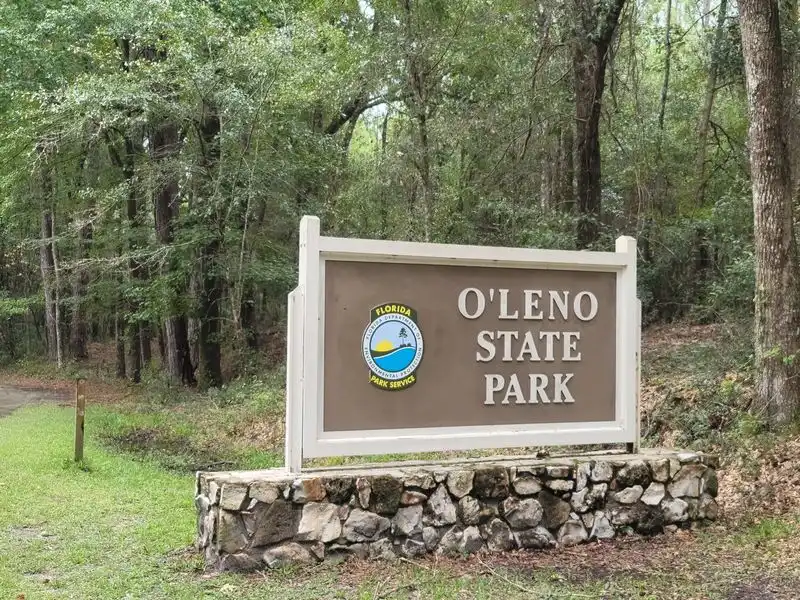
Camp at O’Leno and the pines become your ceiling, tall and steady with a breeze that plays them like instruments. Sites are well spaced, with fire rings, tables, and enough room to spread out without stepping on your own toes. You settle in, stake the corners, and watch shadows lengthen across sand and needle duff.
Dinner tastes better outside, even if it is just a skillet grilled cheese and a handful of trail mix. The park quiets early, and night pulls stars into view like someone dimming lights on a stage. You can walk to the bathhouse by headlamp, hearing barred owls question the darkness with who cooks for you calls.
In cooler months, the sleeping bag becomes an invitation instead of a necessity. Summer camping brings cicadas, a fan’s soft hum, and the promise of a dawn chorus to wake you gently. Either way, the tent zips closed with a finality that marks the start of slow time.
Morning coffee steam swirls in the same air where the Santa Fe breathed last night before sinking underground. You can stroll to the suspension bridge before breakfast and have it almost to yourself. Kids collect pinecones and name them like pets, which is a better souvenir than anything plastic.
Reserve early on peak weekends, and respect quiet hours so everyone can hear the forest work. Pack out every scrap, tamp out the last ember, and leave the site looking like you were never there. When you roll away, you will carry the soft percussion of pine needles falling, a campsite lullaby that follows you home.
CCC History and Park Museum
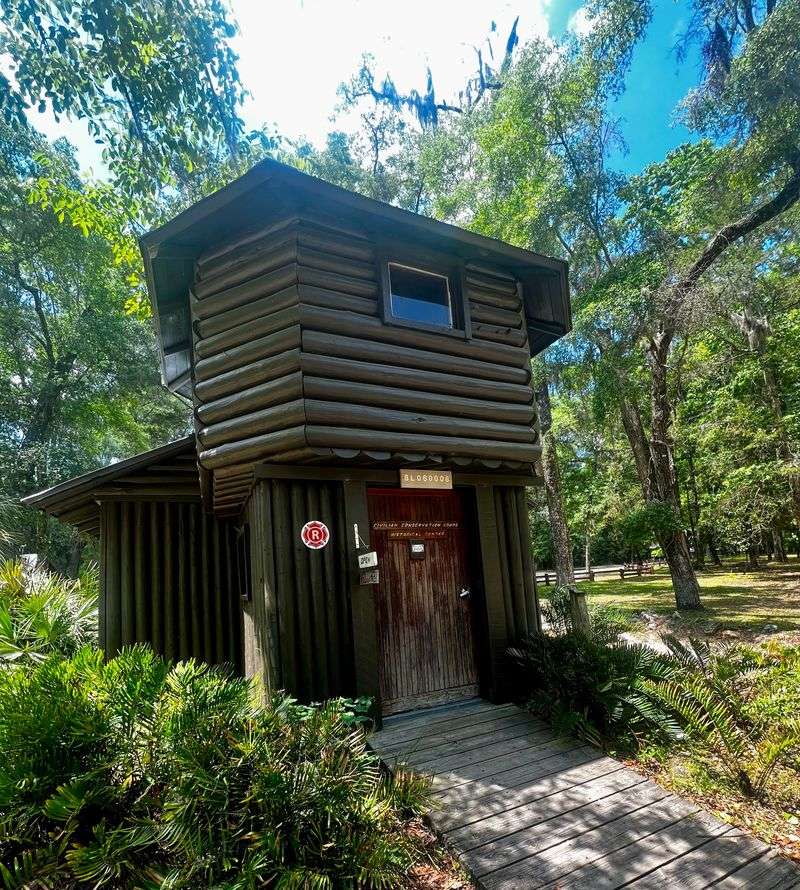
O’Leno wears its history in wood grain and stone, and the little museum helps you read it. The Civilian Conservation Corps built much of what you see, and the displays turn faces and tools into living context. Stand before a black and white photo, and you can almost hear hammers and jokes cutting through piney air.
Exhibits explain how young men earned wages, learned skills, and shaped parks across Florida during hard times. You will see hand tools, uniforms, and maps that reveal the bones of the park’s design. It makes every boardwalk and beam feel like a handshake across decades.
The museum is compact, which works in your favor because attention stays sharp. Read slowly, then step outside and spot the same joinery and stonework in the structures around you. It feels good to match artifact to landscape, like finding the answer key after a thoughtful test.
Kids can trace the timeline and try a scavenger list of details to spot outdoors. You will leave with a newfound respect for maintenance crews who keep those CCC lines true today. Bring a few dollars to donate if you can, because small museums run on love and light bills.
When the door closes behind you, the park’s quiet resumes and the bridge, pavilions, and trails carry extra weight. The story of people and place sits right alongside the river’s geologic drama. You walk away understanding that conservation is both a heritage and a job we are still in the middle of doing.
Picnicking at the Riverside Pavilions
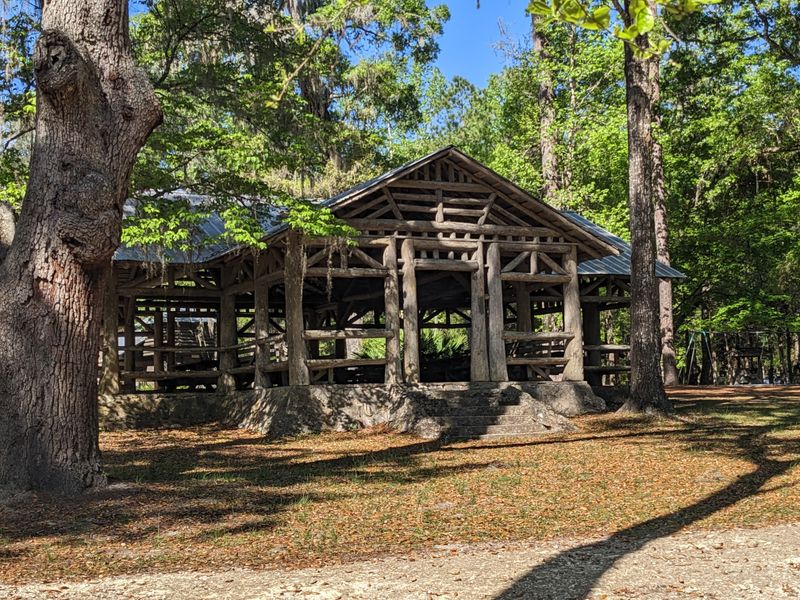
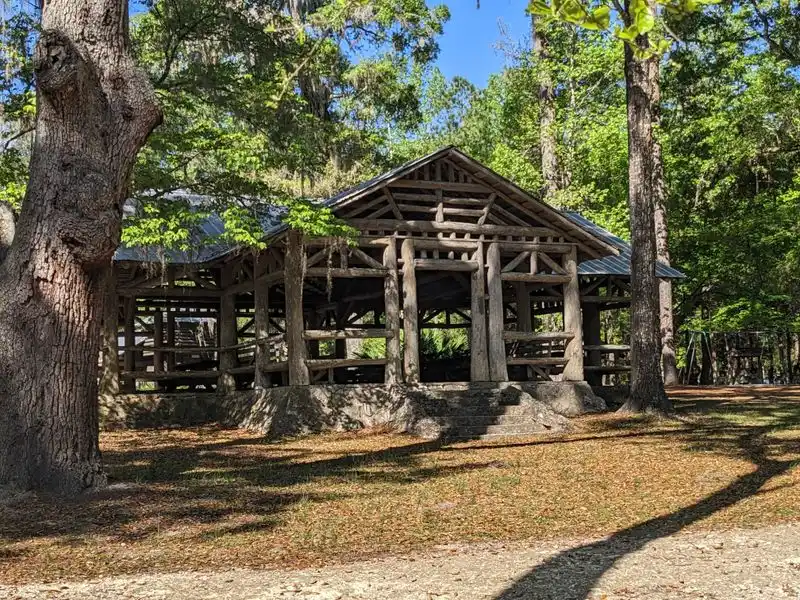
Picnics at O’Leno come with soundtrack and scenery included. The riverside pavilions offer shade, sturdy tables, and a front row seat to slow water and green margins. You spread out lunch and feel the breeze turn napkins into restless birds.
Pack simple foods that travel well, like wraps, fruit, and a cold salad tucked beside reusable ice. The nearby open lawn becomes a playground for frisbees while the older oak limbs stand guard. Between bites, you can wander to the railing and watch the Santa Fe sketch brown cursive across the day.
Facilities are close enough for convenience, far enough to keep the mood natural. Rinse hands, refill bottles, and return to your little patch of shade like it is a living room with leaf wallpaper. Bring a trash bag, because leaving no trace makes the next picnic easier for everyone.
On weekdays the quiet can feel like a private reservation. Weekends bring a cheerful chorus of families and friends, the kind of noise that belongs outdoors. If rain threatens, the roof does its job while you listen to the soft drumline on tin and wood.
After lunch, a short stroll on nearby trails helps walk off the last cookie. You can identify plants, count turtles, or sit and do absolutely nothing, which might be the point. By the time you pack up, the pavilion has turned into a memory frame holding a bright afternoon you were glad to claim.
Wildlife Watching and Quiet Corners
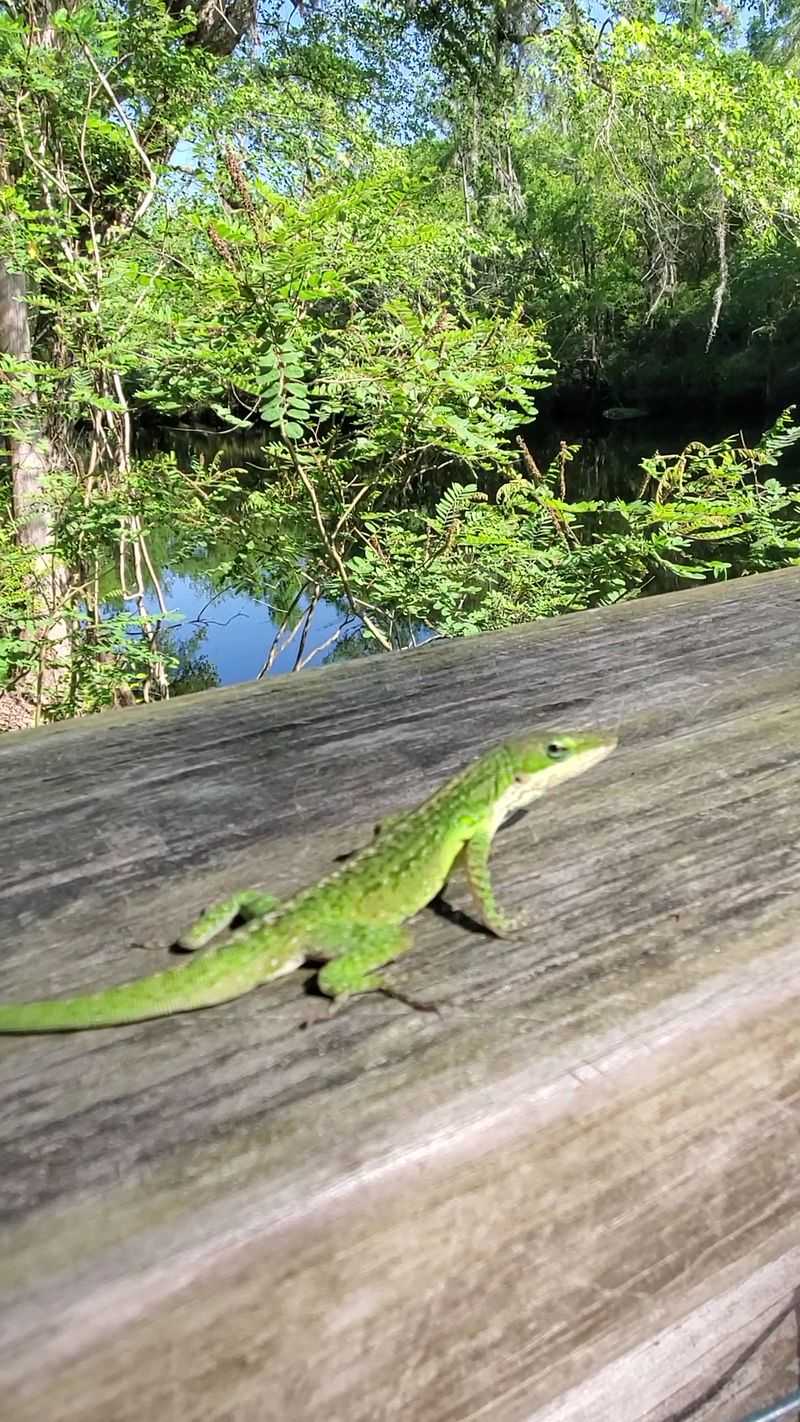
O’Leno rewards slow looking, the kind that turns background into headline. Step softly and you may catch a deer pausing at the forest edge, ears tuned to your breath. Along the river, anhinga hold their wings wide like wet cloaks, patient as statues until a fish decides otherwise.
The park’s quiet corners include hammocks where light filters like green glass, and sandy stretches where tracks write short stories. Gopher tortoises sometimes appear near their burrows, ancient as little tanks and just as purposeful. If you bring binoculars, scan the canopy for kites, hawks, and the flicker of yellow warblers stitching energy between leaves.
Dawn and late afternoon are prime time, when shadows soften and wildlife feels bolder. Sit on a bench or lean against a pine and let minutes stack up without agenda. You will hear woodpeckers drum and the cork pop of fish surfacing in dark pools.
Respect distance and never bait or crowd animals, because stress travels farther than footprints. Teach kids to use quiet voices and see how much more appears when sound drops. A simple field guide turns each sighting into a named memory instead of a blur.
Before leaving, jot a few notes about what you saw and where, because patterns reveal themselves over seasons. You might return in fall to find migratory birds swapping stories on the same branches. In a place where a whole river disappears and reappears, the subtle magic is often the best show of all.